
The Evolution of Language and Literature in Southern India: A Historical Overview

Welcome to Ancient India History, your gateway to uncovering the tapestry of remarkable civilizations that have shaped the subcontinent. Here, we embark on a fascinating journey through time, delving into the evolution of language and literature in Southern India, a subject that reveals the intricate connections between culture, society, and expression. Have you ever wondered how languages transformed over centuries, weaving together the diverse narratives of Southern India?
Prepare to be captivated as we explore this rich linguistic heritage and the profound impact it has had on the region's identity. Dive in and discover the stories waiting to be told!
Introduction to Southern India Language Evolution History
The linguistic landscape of Southern India is as rich and varied as its cultural heritage, reflecting the region's unique historical trajectory. From the ancient Dravidian languages to the emergence of modern dialects, the evolution of language in Southern India is a testament to the interplay of various influences, including migration, trade, and cultural exchange.
This article delves into the intricate history of Southern Indian languages, highlighting pivotal moments and contributions that have shaped the region's literary legacy. Understanding this evolution not only enriches our comprehension of Southern Indian culture but also underscores the significance of language as a vehicle for expression and identity throughout history.
Importance of Language in Southern Indian Culture
Language serves as a fundamental pillar of Southern Indian culture, acting as a bridge that connects generations and fosters a sense of belonging.
- Cultural Identity: The languages spoken in Southern India, such as Tamil, Telugu, Kannada, and Malayalam, are deeply intertwined with local traditions, folklore, and customs.
- Oral Traditions: Many Southern Indian communities have rich oral traditions that preserve history and heritage, often conveyed through songs, stories, and poetry.
- Religious Texts: Language has played a critical role in the transmission of religious texts and philosophies, particularly in Hinduism, Buddhism, and Jainism, which have influenced ethical and moral teachings in the region.
The above aspects illustrate that language is not merely a communication tool; it is a vital component of cultural identity and continuity in Southern India.
Overview of Literary Contributions in Southern India
Southern India boasts a vibrant literary tradition that spans centuries, showcasing a diversity of genres and styles:
- Classical Literature: The Tamil Sangam literature, dating back to the 3rd century BCE, is one of the earliest and most significant contributions, encompassing poetry that reflects the societal ethos of the time.
- Medieval Works: The period saw the rise of devotional literature, particularly in the form of Bhakti poetry, which expressed deep religious sentiments and fostered community bonds.
- Modern Literature: In the contemporary era, Southern Indian writers have gained national and international recognition, addressing social issues and personal narratives through innovative storytelling.
The literary contributions of Southern India are a reflection of its multifaceted culture and continue to inspire new generations of writers and thinkers.
Historical Context of Southern India Language Evolution
Understanding the evolution of language in Southern India requires an exploration of its historical context, which reveals the myriad influences shaping its development.
Ancient Languages of Southern India
The roots of Southern Indian languages can be traced back to ancient civilizations.
- Dravidian Languages: Predominantly spoken in the region, these languages form a distinct linguistic family with a rich heritage, including Tamil, Telugu, Kannada, and Malayalam.
- Sanskrit Influence: The arrival of Sanskrit during the Vedic period introduced a wealth of vocabulary and literary forms, impacting local languages and enriching their syntax and semantics.
The interplay between these ancient languages laid the groundwork for the diverse linguistic tapestry that characterizes Southern India today.
Key Historical Periods Influencing Language Development
Several historical epochs have significantly influenced the trajectory of language evolution in Southern India:
- The Maurya and Gupta Empires: During these periods, trade and cultural exchanges flourished, leading to the spread of languages and scripts across the region.
- The Chola and Vijayanagara Empires: These dynasties promoted art, literature, and scholarship, fostering a literary renaissance that encouraged the use of local languages in administration and culture.
- Colonial Era: The advent of colonial rule introduced new linguistic dynamics, as English became a medium of instruction and administration, influencing the evolution of regional languages.
These periods of transformation highlight the resilience and adaptability of Southern Indian languages, showcasing their ability to evolve while retaining their core identity.
Major Languages of Southern India and Their Evolution
Southern India is renowned for its linguistic diversity, with several languages that have evolved over thousands of years. The major languages spoken in this region include Tamil, Telugu, Kannada, and Malayalam, each with its unique history and literary tradition. The evolution of these languages can be traced back to ancient roots, influenced by various dynasties, cultural exchanges, and socio-political changes throughout history.
- Tamil: One of the oldest languages in the world, Tamil has a rich literary heritage that dates back over 2,000 years. It has evolved through various stages, including Old Tamil, Middle Tamil, and Modern Tamil, deeply influenced by historical events and cultural interactions.
- Telugu: Emerging around the 6th century CE, Telugu has its origins in the Dravidian language family. It has undergone significant changes over time, influenced by regional dialects and literary trends, leading to its recognition as a major Indian language.
- Kannada: Kannada's history dates back to the 5th century CE, with its earliest inscriptions discovered in the Halmidi inscription. The language has evolved through dialectical variations and literary movements, creating a rich tapestry of poetry, prose, and drama.
- Malayalam: Evolving from Tamil around the 9th century CE, Malayalam has developed its unique identity. Its growth is marked by influences from Sanskrit and other languages, resulting in a vibrant literary tradition that reflects the socio-cultural dynamics of Kerala.
Tamil Language and Its Historical Significance
Tamil is not only one of the oldest living languages but also one of the official languages of India. Its historical significance is profound, as it serves as a crucial link to the Dravidian culture and heritage. The earliest works of Tamil literature, such as the Sangam literature (circa 300 BCE to 300 CE), showcase the language's beauty and complexity through poetry and prose.
The Sangam period was marked by the contributions of various poets and scholars, who enriched the language with themes of love, valor, and ethics. The Tolkappiyam, an ancient Tamil grammar text, is a testament to the language's scholarly importance. Over the centuries, Tamil has absorbed influences from various cultures, including Sanskrit, Persian, and English, while maintaining its core identity.
In modern times, Tamil has continued to evolve, with a strong presence in literature, cinema, and politics, reflecting the vibrant cultural landscape of Tamil Nadu and the Tamil diaspora worldwide.
Telugu Language: Growth and Influence
Telugu is one of the fastest-growing languages in India, with a rich literary tradition that began around the 6th century CE. The language's evolution can be categorized into three significant periods: Old Telugu, Middle Telugu, and Modern Telugu. Each phase showcases the language's adaptability and growth.
The Kakatiya dynasty (12th to 14th centuries) played a pivotal role in promoting Telugu literature, with poets like Nannayya and Tikkana translating the Mahabharata into Telugu, which significantly shaped its literary landscape. The Bhakti movement in the 15th and 16th centuries further influenced Telugu literature, as poets like Annamacharya expressed devotion through their works.
In contemporary times, Telugu has gained prominence in Indian cinema, with the Tollywood film industry contributing significantly to its popular culture. The language continues to evolve, incorporating modern themes and narratives while honoring its rich literary heritage.
Kannada Language: A Rich Literary Tradition
Kannada boasts a literary tradition that spans over a millennium, with its earliest inscriptions dating back to the 5th century CE. The development of Kannada can be divided into several phases: Old Kannada, Middle Kannada, and Modern Kannada, each reflecting the socio-political and cultural contexts of their times.
During the Hoysala dynasty (10th to 14th centuries), Kannada literature flourished, particularly with the works of poets like Ranna and Jakanachari, who contributed richly to the epic and devotional genres. The Vachana movement in the 12th century also marked a significant period, emphasizing social reform and spiritual awakening through poetry.
In the modern era, Kannada literature has embraced various forms, including novels, short stories, and plays. Writers like Kuvempu and G.S. Shivarudrappa have made notable contributions, reflecting the language's dynamic evolution and its integral role in the cultural identity of Karnataka.
Malayalam Language: Evolution and Identity
Malayalam emerged as a distinct language around the 9th century CE, evolving from Tamil and influenced by Sanskrit and various regional dialects. The linguistic evolution of Malayalam is marked by its unique script and phonetic richness, making it distinct within the Dravidian language family.
The early literary works of Malayalam can be traced back to the Puranas and Sanskrit dramas, which laid the foundation for future literary expressions. The Ramakatha, a traditional epic, and works by poets like Thunchath Ezhuthachan in the 16th century significantly shaped Malayalam literature.
In modern times, Malayalam literature has thrived with the emergence of novelists like M.T. Vasudevan Nair and poets like O.N.V. Kurup, who have explored contemporary themes while retaining cultural roots. The language's evolution reflects the identity and heritage of Kerala, making it a vital component of Indian literature.
Literary Movements in Southern India
Southern India has been a cradle for various literary movements that have shaped its cultural and intellectual landscape. These movements often reflect the socio-political conditions of their times, as well as the philosophical and aesthetic ideals of the region.
- Classical Literature: This period, marked by the poetry of the Sangam era in Tamil and the early epics in Kannada and Telugu, laid the groundwork for literary expression. It emphasized themes of love, valor, and ethics, shaping the moral and cultural ethos of Southern India.
- Bhakti Movement: Originating in the medieval period, this movement played a crucial role in promoting spiritual and devotional literature across all Southern languages. It emphasized personal devotion to God, challenging social norms and bringing forth a wave of poets who communicated deep spiritual sentiments through their works.
- Modern Literature: The 20th century saw significant shifts with the rise of social realism, nationalism, and modernist narratives. Writers began exploring themes of identity, gender, and social justice, reflecting the changing dynamics of Southern Indian society.
Classical Literature and Its Impact
Classical literature in Southern India, particularly during the Sangam period, has left an indelible mark on the region's cultural and intellectual heritage. The Sangam texts, composed by various poets, captured the essence of life in ancient Tamil society, focusing on themes such as love, war, and ethics.
The impact of classical literature extends beyond mere poetic expression; it influenced language development, social norms, and even political thought. The Tamil epics, such as the Silappatikaram and Manimekalai, not only entertained but also imparted moral lessons and cultural values, shaping the identity of Tamil-speaking people.
In other languages, such as Kannada and Telugu, classical literature served a similar purpose. For instance, the Pampa Bharata in Kannada and the Mahabharata translations in Telugu contributed to the preservation of cultural narratives and ethical teachings. These classical works continue to inspire contemporary writers and remain central to the cultural discourse in Southern India.
Modern Literature: Shifts and Innovations
The landscape of modern literature in Southern India has undergone significant transformations, particularly in the 20th and 21st centuries. This period has been characterized by a departure from traditional themes to more contemporary issues, reflecting the complexities of modern life.
Writers such as Vaikom Muhammad Basheer in Malayalam and Vishnu Sakharam Khandekar in Kannada have challenged conventional narratives, exploring themes such as identity, existentialism, and social justice. The influence of globalization, technology, and political changes has further shaped the literary discourse, leading to innovative narrative techniques and styles.
Modern literature has also seen a rise in women writers, who have brought forth new perspectives and narratives that challenge gender norms and advocate for social change. This shift has enriched the literary scene, creating a diverse tapestry of voices that continue to evolve and resonate with readers today.
The evolution of language and literature in Southern India reflects a rich historical tapestry, influenced by cultural, social, and political currents. The major languages—Tamil, Telugu, Kannada, and Malayalam—each contribute uniquely to this heritage, showcasing a vibrant literary tradition that continues to thrive and innovate.
The Role of Religion and Philosophy in Language Development
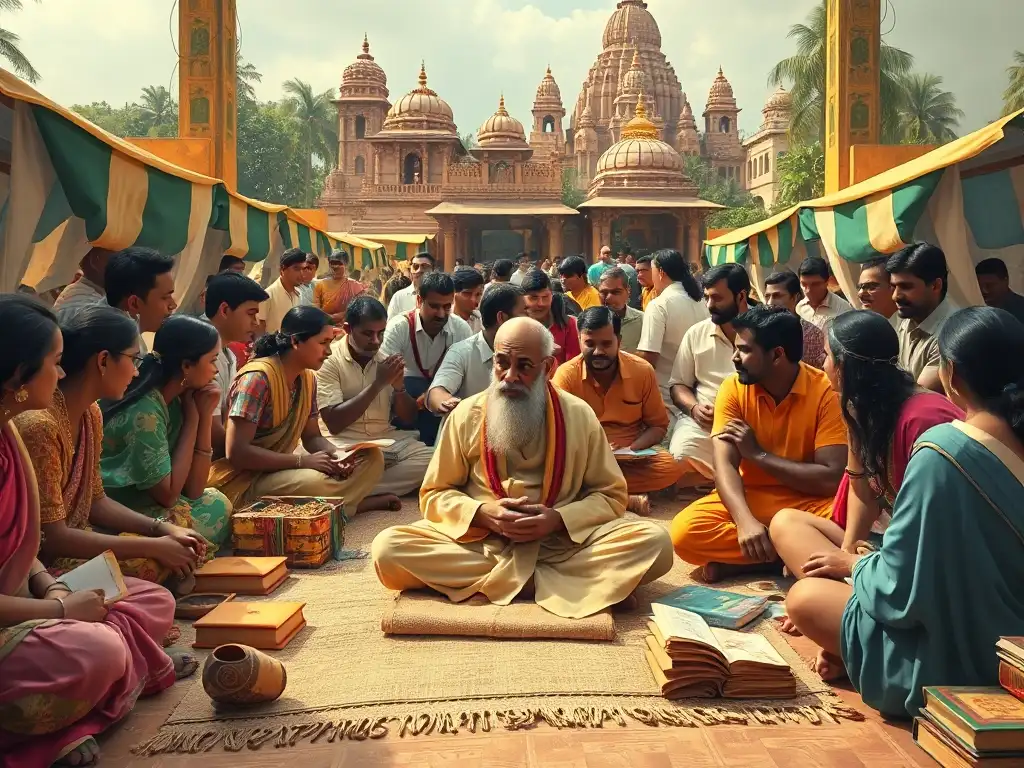
The evolution of language in Southern India is intricately linked to the region's rich religious and philosophical traditions. Throughout history, religious practices and philosophical inquiries have not only shaped the lexicon and syntax of local languages but have also provided a platform for literary expression. This interplay between language and thought has been instrumental in the development of various dialects and literary forms, reflecting the diverse beliefs and intellectual currents that have flourished in Southern India.
Religious narratives and philosophical treatises have often served as vehicles for linguistic innovation. The interactions among various faiths—such as Hinduism, Buddhism, and Jainism—have led to a linguistic confluence, enriching the vernaculars spoken in the region. Additionally, the patronage of temples and royal courts has fostered an environment conducive to literary and linguistic growth, enabling the development of languages like Tamil, Telugu, and Kannada as mediums for profound religious and philosophical discourse.
Religious Texts and Their Linguistic Contributions
Religious texts in Southern India have played a pivotal role in shaping the local languages. The Tirukkural, a classic Tamil text composed by Thiruvalluvar, is an exemplary work that combines ethical teachings with poetic beauty. Its language has influenced Tamil literature profoundly, establishing a standard for literary expression and moral philosophy.
Similarly, the Vedas, Upanishads, and Puranas have been translated and adapted into regional languages, making complex philosophical concepts accessible to a broader audience. The Bhakti movement, which emphasized devotion and personal connection to the divine, further popularized vernacular languages through the compositions of saints like Alvars and Nayanars in Tamil, who expressed their spirituality through lyrical poetry.
Moreover, the Jain Agamas and Buddhist texts contributed to the linguistic landscape by introducing new terminologies and concepts. These texts often employed vernacular languages for dissemination, which not only preserved ancient wisdom but also fostered literary traditions in languages such as Kannada and Telugu.
Philosophical Contributions to Language and Literature
Philosophical discourse in Southern India has significantly influenced language evolution and literary styles. The contributions of thinkers such as Adi Shankaracharya and Ramanuja have not only shaped religious thought but also facilitated the development of a philosophical lexicon in languages like Sanskrit and Tamil. Their commentaries and philosophical texts introduced complex ideas that required nuanced expression, thereby enriching the linguistic fabric of the region.
The Madhva tradition, which arose in the coastal regions of Karnataka, also contributed to the evolution of Kannada literature. The philosophical debates fostered a spirit of inquiry that encouraged writers to explore themes of existence, ethics, and metaphysics, leading to the production of profound literary works.
In addition, the interplay between literature and philosophy has resulted in unique forms of expression, such as poetry and prose that blend narrative storytelling with philosophical reflection. This synergy has created a rich tapestry of literary traditions that continue to influence Southern Indian languages today.
Conclusion: The Legacy of Southern India Language Evolution History
The historical evolution of language and literature in Southern India is a testament to the region's rich cultural heritage. The contributions of religion and philosophy have been fundamental in shaping linguistic practices and literary forms. As languages evolved, they became not just tools of communication but also vessels for preserving and transmitting the region's philosophical and religious ideas.
Continuing Influence of Historical Languages on Modern Southern India
The legacy of ancient languages continues to resonate in modern Southern India. Languages like Tamil, Telugu, and Kannada have retained their historical roots while evolving to accommodate contemporary usage. The influence of medieval and classical literary works is evident in modern literature, cinema, and music, where ancient texts are often referenced or adapted.
Moreover, the linguistic diversity of Southern India reflects the historical interactions among different communities. This ongoing exchange fosters a cultural richness that is vital to the region's identity, ensuring that the languages remain vibrant and relevant in today's society.
Future Directions in the Study of Southern Indian Languages and Literature
As we look to the future, the study of Southern Indian languages and literature is poised for exciting developments. Researchers are increasingly focusing on the intersection of language, culture, and technology, exploring how digital tools can aid in the preservation and dissemination of linguistic heritage.
Additionally, interdisciplinary approaches that combine linguistics, history, and cultural studies will provide deeper insights into the evolution of languages. There is also a growing interest in documenting and revitalizing endangered dialects, ensuring that the linguistic diversity of Southern India is preserved for future generations.
The evolution of language and literature in Southern India is an ongoing journey that reflects the region's rich history, cultural diversity, and intellectual depth. The legacy of this evolution will continue to shape the linguistic landscape of Southern India, inspiring future generations to explore and celebrate their heritage.
References
The evolution of language and literature in Southern India is a rich tapestry woven from centuries of cultural interaction and historical transformations. Understanding this intricate history requires careful study of various sources, including books, articles, and journals dedicated to the subject. Below are some recommended references that can provide deeper insights into the topic.
Suggested Readings on Southern Indian Language Evolution
-
"Languages of South India: A Historical Perspective" by K. S. Narayana Rao
This book offers a comprehensive overview of the Dravidian languages, detailing their origins, evolution, and the sociolinguistic factors that have influenced their development over time.
-
"The Dravidian Languages" edited by Bh. Krishnamurti
A critical examination of Dravidian languages, this anthology discusses their linguistic features, historical evolution, and the interplay between these languages and the cultures of Southern India.
-
"Tamil Language and Literature: A Historical Review" by V. R. Ramakrishnan
Focusing on Tamil, one of the oldest languages in the world, this book traces its evolution from ancient to modern times, exploring its literary traditions and contributions to Indian culture.
-
"A Grammar of the Telugu Language" by Charles Philip Brown
This text provides insights into the structure of Telugu, detailing its grammatical evolution and the influence of historical events on its development.
-
"Sanskrit and Dravidian Languages: A Historical Study" by M. A. K. S. Subrahmanyam
This work investigates the interactions between Sanskrit and the Dravidian languages, shedding light on how these relationships have shaped linguistic development in Southern India.
Academic Journals and Articles on Southern Indian Literature
-
"The Journal of South Asian Literature"
This journal publishes scholarly articles on various aspects of South Asian literature, including analysis of Southern Indian literary works, their historical contexts, and linguistic traits.
-
"Indian Literature"
Featuring a range of articles on Indian literary traditions, this journal often includes studies focused on Southern Indian authors, their contributions, and the evolution of their works through different historical periods.
-
"The Southern Review"
This journal highlights contemporary and historical literary criticism, with occasional features on the evolution of literature in Southern India, including discussions on regional languages and their literary outputs.
-
"Language in India"
An academic journal that explores the linguistic diversity of India, it includes articles on language evolution, sociolinguistics, and the literary contributions of Southern Indian languages.
-
"Literary Studies in India: A Historical Overview" by R. S. Gopalakrishnan
This article provides a concise history of literature in Southern India, tracing its evolution through various phases, including classical, medieval, and modern literature. It highlights key literary figures and movements that have influenced the region's literary landscape.
- Introduction to Southern India Language Evolution History
- Historical Context of Southern India Language Evolution
- Major Languages of Southern India and Their Evolution
- Tamil Language and Its Historical Significance
- Telugu Language: Growth and Influence
- Kannada Language: A Rich Literary Tradition
- Malayalam Language: Evolution and Identity
- Literary Movements in Southern India
- Classical Literature and Its Impact
- Modern Literature: Shifts and Innovations
- The Role of Religion and Philosophy in Language Development
- Conclusion: The Legacy of Southern India Language Evolution History
- References
- What are the key languages that evolved in Southern India?
- How did the Indus Valley civilization influence language in Southern India?
- What role did the Gupta Empire play in the evolution of language?
- How has literature evolved in Southern India over the centuries?
- What are the major contributions of Southern Indian languages to literature?
Frequently Asked Questions
What are the key languages that evolved in Southern India?
The key languages that evolved in Southern India include Tamil, Telugu, Kannada, and Malayalam, each having its unique literary traditions and historical significance.
How did the Indus Valley civilization influence language in Southern India?
The Indus Valley civilization laid the foundation for early forms of communication and script, which eventually influenced the subsequent linguistic developments in Southern India.
What role did the Gupta Empire play in the evolution of language?
The Gupta Empire was crucial in promoting Sanskrit as a scholarly and literary language, which influenced many languages in Southern India and led to a rich cultural exchange.
How has literature evolved in Southern India over the centuries?
Southern India's literature has evolved through various dynasties, showcasing a blend of poetry, prose, and drama, reflecting its cultural diversity and historical context.
What are the major contributions of Southern Indian languages to literature?
Southern Indian languages have contributed significantly to classical literature, including epics, theatrical works, and philosophical texts, enriching the cultural heritage of India as a whole.
Final Reflection: The Enduring Legacy of Southern India's Language Evolution
The evolution of language and literature in Southern India is not just a historical narrative; it is a vibrant tapestry that continues to shape our cultural identity today. As we explore the intricate layers of linguistic development and literary expression, we uncover the profound impact these elements have on our understanding of community, heritage, and self. The rich history of Southern Indian languages serves as a reminder that language is not merely a tool for communication, but a living entity that evolves with the people who speak it.
The influence of Southern India's linguistic diversity resonates deeply within our contemporary social landscape. The interplay of various languages and dialects has fostered a unique cultural synergy that enriches our literature, art, and daily interactions. This ongoing evolution reflects the resilience and adaptability of Southern Indian communities. As Mahatma Gandhi once said, Language is the road map of a culture. It tells you where its people come from and where they are going.
This sentiment underscores the importance of preserving and celebrating our linguistic heritage as we navigate the complexities of modern life.
As we conclude this exploration of Southern India's language evolution history, I invite you to reflect on your own relationship with language and literature. Consider how the words you choose and the stories you share contribute to the ongoing narrative of your community. Embrace the richness of your linguistic heritage and engage with the diverse voices around you. By doing so, you not only honor the past but also play an active role in shaping the future of language and literature in Southern India.
Embrace the Richness of Southern India’s Literary Legacy!
Thank you for diving into the fascinating journey of language and literature in Southern India! Your interest in this vibrant cultural evolution enhances our understanding and appreciation of its profound impact. Now, let’s transform this knowledge into action.
Here are some ways you can deepen your connection with Southern India's literary heritage:
- Explore a local library or online archive for works by renowned authors and poets from Southern India. Consider starting with a classic!
- Join a book club dedicated to Southern Indian literature, fostering discussions and insights with fellow enthusiasts.
- Share your newfound knowledge! Write a blog post or social media update about your favorite literary work or author from Southern India.
Which Southern Indian author has inspired you the most, and how has their work shaped your perspective? Your insights could spark an engaging conversation!