
The Intersection of Morality and Law in Ancient Indian Judicial Practices


Welcome to Ancient India History, where we delve into the fascinating tapestry of India's rich and diverse past. Our journey today takes us into the intricate world of ancient Indian judicial practices, exploring how morality intertwined with law to shape the legal systems that governed civilizations from the Indus Valley to the Gupta Empire. What were the principles that guided these early legal frameworks, and how did they reflect the cultural values of their time? Join us as we uncover the answers and more, igniting your curiosity about the profound contributions of ancient Indian law.

Introduction to Ancient Indian Judicial Practices
The exploration of ancient Indian judicial practices reveals a fascinating interplay between morality and law that has shaped the legal landscape of India for centuries. In ancient times, the judicial systems were not merely mechanisms to enforce laws but were deeply intertwined with the ethical standards of society. The laws were often derived from religious and moral principles, reflecting the values and beliefs of the time. This relationship between law and morality is critical to understanding how justice was administered in ancient Indian civilizations, from the early Indus Valley settlements to the flourishing Gupta Empire.
The significance of these judicial practices extends beyond mere historical interest; they provide insight into the cultural and philosophical underpinnings of Indian society. By examining the moral dimensions of law, we can appreciate how ancient Indian civilizations sought to maintain social order, resolve conflicts, and uphold ethical standards. This article delves into the historical context and key texts that influenced these practices, offering a comprehensive view of how morality was interwoven with law in ancient India.
Overview of Legal Systems in Ancient India
Ancient India boasted a variety of legal systems that evolved over time, shaped by regional customs, religious beliefs, and philosophical thought. The primary sources of law included:
- Vedic texts: These scriptures laid the foundation for early legal principles, emphasizing duties and ethical conduct.
- Dharmashastras: Texts such as Manusmriti provided detailed prescriptions for law and morality, guiding judicial practices.
- Local customs: Regional variations in law reflected the unique cultural contexts of different communities.
The integration of these elements created a complex legal framework that addressed various aspects of life, including family law, property rights, and criminal justice.
Importance of Morality in Judicial Framework
Morality played a pivotal role in the functioning of ancient Indian judicial practices. The concept of dharma, which encompasses duty, righteousness, and moral law, was central to legal proceedings. Judges, often seen as moral authorities, were expected to interpret laws not only based on codified texts but also in alignment with ethical principles. This moral lens ensured that justice was not only about punishment but also about restoring balance and harmony within society.
Historical Context of Morality and Law in Ancient India
To fully appreciate the intersection of morality and law in ancient Indian judicial practices, it is essential to understand the historical context that influenced these developments. Various dynasties, cultural exchanges, and philosophical schools contributed to the evolution of legal thought, creating a rich tapestry of legal traditions.
Key Texts Influencing Judicial Practices
Several key texts have profoundly influenced judicial practices in ancient India. Among them are:
- Manusmriti: Often referred to as the "Laws of Manu," this text outlines various aspects of law, including social duties and legal procedures.
- Yajnavalkya Smriti: This scripture provides insights into the legal rights of individuals and the responsibilities of judges.
- Narada Smriti: Focused on procedural law, it emphasizes the importance of fair trials and ethical adjudication.
These texts not only codified laws but also reflected the moral values of the society, emphasizing the need for justice to be administered with compassion and fairness.
The Role of Dharmashastras in Legal Morality
The Dharmashastras, a genre of texts in Hindu law, played a crucial role in shaping the moral framework of ancient Indian judicial practices. These texts served as comprehensive guides that combined legal rules with ethical considerations. They addressed various aspects of life, from personal conduct to societal obligations, ensuring that the law resonated with the moral fabric of society.
In essence, the Dharmashastras provided a blueprint for judges and legal practitioners, emphasizing that justice should be pursued not only through legal codes but also through the lens of morality and ethics. This approach fostered a legal culture that valued integrity, fairness, and social responsibility, setting the stage for the unique judicial practices observed in ancient India.
Core Principles of Ancient Indian Judicial Practices
Ancient Indian judicial practices were deeply intertwined with the moral and ethical frameworks that governed society. The core principles were rooted in the concepts of Dharma, which refers to the moral order of the universe, and Karma, the belief that actions have consequences. These principles guided not only the legal codes but also the social norms and customs of the time.
The judicial practices were designed to uphold social harmony and ensure justice. They were often influenced by religious texts, particularly the Manusmriti and the Arthashastra, which provided guidelines on law and governance. These texts emphasized that law should reflect moral values and serve the welfare of the community. The intertwining of morality with law meant that judges were expected to be not just arbiters of law but also moral exemplars, ensuring that decisions were made with consideration of ethical implications.
Furthermore, ancient Indian judicial practices recognized the importance of restoring balance and harmony in society rather than merely punishing offenders. The focus was often on reconciliation and mediation, which reflected a holistic approach to justice. Thus, the core principles of ancient Indian judicial practices were not only about enforcing laws but also about fostering a just and moral society.
Concepts of Dharma and Righteousness
Dharma, in ancient Indian philosophy, encompasses the ethical responsibilities and duties that individuals owe to themselves and society. In the context of judicial practices, Dharma served as the foundation for discerning right from wrong and just from unjust. It dictated the behavior of individuals and the expectations of rulers and judges alike.
The concept of righteousness, or Dharma, was pivotal in ensuring that laws were not merely punitive but served the greater good. For instance, the Kautilya's Arthashastra articulated that rulers should govern with a focus on Dharma, promoting justice while also considering the welfare of the populace. The enforcement of laws based on Dharma emphasized compassion and fairness, allowing for leniency in cases where strict application of the law could lead to undue hardship.
Moreover, the idea of righteousness extended beyond individual actions; it encompassed societal obligations. For example, the Varna system delineated roles within society based on Dharma, ensuring that everyone contributed to the social fabric. In this way, the legal system operated as a reflection of a collective moral compass, where the notions of good and righteousness guided judicial decisions.
The Relationship Between Justice and Ethics
Justice in ancient India was not viewed as an isolated concept; rather, it was intricately linked to ethics. Judicial practices were aimed at achieving Samanya, or universal good, which required a balance between individual rights and societal welfare. The belief was that laws should promote ethical behavior and discourage wrongdoing through moral persuasion rather than solely punitive measures.
Ethics shaped the interpretation of laws, as judges were expected to apply their discretion in a manner that aligned with the moral values of the society. This often meant that legal proceedings included not just the letter of the law but also the intent behind actions. As a result, the outcomes of judicial decisions were influenced by ethical considerations, ensuring that justice was served in a way that was consistent with societal norms.
Additionally, the philosophical underpinnings of justice were reflected in ancient Indian literature, with texts like the Mahabharata illustrating the complexities of justice and ethical dilemmas faced by individuals. These narratives provided moral lessons that informed judicial practices, emphasizing that justice should be rooted in ethical principles and aimed at achieving harmony within society.
Major Judicial Institutions in Ancient India
The structure of judicial institutions in ancient India was diverse and evolved over time, reflecting the complexities of societal needs and governance. Courts were established at various levels, catering to different types of disputes and the social stratification of the population.
The primary judicial bodies included local village councils ( panchayats), which were often the first point of adjudication for minor disputes, and royal courts, which handled more severe cases. The interplay between these institutions allowed for a multifaceted approach to justice, accommodating both local customs and the overarching legal codes prescribed by rulers.
Structure and Function of Ancient Courts
Ancient Indian courts were typically structured hierarchically, with local village assemblies known as panchayats at the grassroots level. These assemblies comprised respected elders who acted as mediators and judges in local disputes. Their decisions were based on community consensus and customary laws, emphasizing restorative justice and community welfare.
At higher judicial levels, royal courts were presided over by kings or appointed judges, who had the authority to interpret laws and enforce penalties. These courts dealt with more significant offenses, including criminal cases and serious civil disputes. The Rajadharma, or the king’s duty to uphold justice, was a crucial aspect of royal courts, ensuring that rulers acted in accordance with the principles of Dharma.
The functions of these courts extended beyond mere adjudication. They also played a role in societal governance, as they were responsible for maintaining peace, resolving conflicts, and enforcing social norms. Through their operations, ancient courts contributed to the stability and order of society.
Roles of Judges and Legal Experts in Society
Judges and legal experts in ancient India held significant responsibilities, serving as both arbiters of law and moral guides within their communities. They were often selected based on their knowledge of the law, wisdom, and ethical standing. The role of a judge extended beyond the courtroom; they were expected to educate the populace about legal principles and moral duties.
Legal experts, including scholars and advisers, were instrumental in formulating and interpreting laws. They often consulted religious texts and philosophical teachings to ensure that legal proceedings were aligned with ethical standards. Their expertise was sought in complex cases, where their insights helped shape judicial outcomes that were just and fair.
Moreover, judges played a critical role in the social fabric of ancient India by acting as mediators in disputes and promoting reconciliation. This dual role of enforcing the law while fostering community relations highlighted the essential connection between justice and morality in ancient Indian judicial practices. Thus, judges were not just legal enforcers; they were moral stewards tasked with ensuring that justice served the greater good of society.
Case Studies of Moral and Legal Intersections
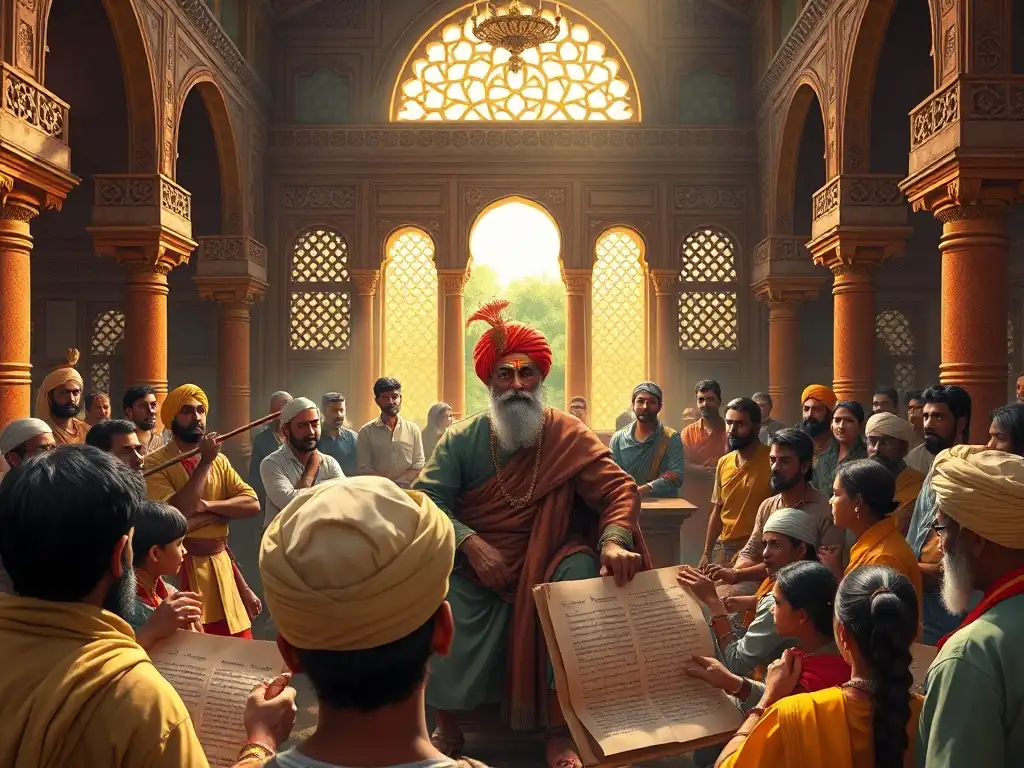
Ancient Indian judicial practices often highlighted the intricate relationship between morality and law, where ethical considerations played a significant role in legal decisions. Several case studies illustrate how morality influenced judgments, showcasing the principles of dharma (righteousness) and its pivotal role in the legal framework.
One prominent example is the case of King Ashoka during the Maurya Empire. Following his conversion to Buddhism after the Kalinga War, Ashoka implemented moral governance, emphasizing non-violence and compassion. His edicts reflected ethical standards, and he established a system of justice that prioritized reconciliation over punishment, thereby demonstrating how moral values can reshape legal frameworks.
Another noteworthy case is found in the Manusmriti, an ancient legal text that blends moral philosophy with legal codes. The text outlines various offenses and corresponding punishments, often considering the offender's caste and circumstances. This highlights the moral dimension of law, where the underlying ethical context influenced legal outcomes and enforcement.
Notable Judicial Decisions Reflecting Ethical Standards
Judicial decisions in ancient India frequently exemplified the intersection of morality and law through their alignment with societal values and ethical norms. One key decision involved the case of the stolen cow, which was brought before a village assembly. The assembly had to consider not only the legal aspects of theft but also the moral implications of harming a farmer's livelihood. The decision often reflected a restorative approach, emphasizing community harmony and ethical rectitude over mere punishment.
In the context of royal courts, King Harsha is known for his just rulings, which upheld ethical principles. His judgments often prioritized the welfare of his subjects, reflecting a moral obligation to ensure justice and fairness. Such decisions reinforced the idea that rulers were not merely enforcers of law but also guardians of moral standards within society.
Analysis of Landmark Cases in Ancient Indian History
Landmark cases in ancient India serve as significant examples of how legal decisions were influenced by moral considerations. One such case involved the dispute over property rights between two families. The resolution not only considered the legal ownership but also the ethical implications of inheritance and familial duty. The court's ruling emphasized the importance of maintaining familial harmony and social stability, illustrating the balance between legal rights and moral obligations.
Another case that stands out is that of Gautama Buddha, who addressed issues of social justice and moral responsibility in his teachings. His approach to disputes often encouraged dialogue and mediation rather than adversarial litigation, reflecting a legal philosophy deeply rooted in ethical principles.
Comparative Analysis with Other Ancient Civilizations
The examination of ancient Indian judicial practices reveals intriguing parallels and distinctions when compared to other ancient civilizations.
Similarities with Judicial Practices in Other Cultures

Many ancient civilizations, such as those in Mesopotamia and Egypt, also recognized the significance of morality in their legal systems. Like ancient India, these cultures integrated ethical considerations into their laws. For instance, the Code of Hammurabi established laws that were not only punitive but also aimed at ensuring societal order and fairness, echoing the dharmic principles found in Indian texts.
Additionally, the role of community assemblies, akin to the panchayats in India, was prevalent in various cultures, where collective moral judgment was exercised to resolve disputes and administer justice.
Unique Features of Ancient Indian Legal Systems
Ancient Indian legal systems exhibited distinct characteristics that set them apart from their counterparts. One unique feature was the emphasis on dharma, which encompassed ethical and moral duties alongside legal obligations. This holistic approach meant that laws were not merely enforced but also aligned with the moral fabric of society.
Furthermore, the reliance on oral traditions and the panchayat system allowed for localized and context-sensitive adjudication, which was often more adaptable to the ethical nuances of specific communities. This contrasts with the more rigid and codified legal systems found in other civilizations, highlighting the dynamic interplay between law and morality in ancient India.
Overall, these unique features underscore the depth of ancient Indian judicial practices in addressing moral dilemmas within the legal framework, forging a distinctive path in the evolution of legal systems.
Conclusion: Legacy of Ancient Indian Judicial Practices
The legacy of ancient Indian judicial practices is profound and multifaceted, influencing not only the legal frameworks of subsequent Indian civilizations but also contributing to the global understanding of law and morality. These practices, deeply rooted in the philosophical and ethical traditions of the time, established a framework that emphasized justice, fairness, and moral responsibility.
The incorporation of concepts like Dharma, which signifies righteousness and duty, into the judicial processes underscored the belief that law should serve a higher moral purpose. This integration of morality and law has left a lasting imprint on the way justice is perceived and administered.
Moreover, ancient Indian legal texts, such as the Manusmriti and Arthashastra, reflect a sophisticated understanding of legal principles and their application in society. The adaptability of these laws to changing social norms and conditions illustrates a dynamic legal culture that valued both tradition and progress. As societies evolved, the foundational principles laid down by these ancient practices continued to resonate, ensuring that the pursuit of justice remained intertwined with ethical considerations.
Influence on Modern Legal Systems

The influence of ancient Indian judicial practices on modern legal systems is significant, particularly in the context of restorative justice and community-based dispute resolution. Many contemporary legal frameworks around the world have begun to embrace alternative dispute resolution (ADR) mechanisms, which echo the communal and conciliatory approaches found in ancient Indian practices. This shift towards mediation and arbitration can be traced back to the emphasis on resolving conflicts harmoniously rather than through adversarial means.
Additionally, the principles of justice and equity articulated in ancient Indian texts have informed the development of constitutional law and human rights discourse in India. The framers of the Indian Constitution drew inspiration from these historical legal traditions, integrating concepts of fairness, equality, and social justice. As a result, many of the values enshrined in modern Indian law can be traced back to ancient practices, demonstrating a continuity of thought that bridges the past and the present.
Continuing Relevance of Morality in Law Today
The continuing relevance of morality in law today can be seen in the persistent debates surrounding ethical considerations in legal decisions. Modern legal systems grapple with questions of justice that go beyond mere legal compliance, reflecting a moral compass that guides the interpretation and application of laws. Issues such as environmental justice, social equity, and the rights of marginalized communities resonate with the ancient Indian understanding of Dharma, emphasizing that law should serve the greater good of society.
Furthermore, the incorporation of moral reasoning in judicial decisions is evident in landmark cases where courts have taken into account the ethical implications of their rulings. This alignment with moral principles not only enhances the legitimacy of the legal system but also fosters public trust and confidence. As societies continue to evolve, the interplay between morality and law remains a critical area of exploration, ensuring that justice is not just a legal concept but a moral imperative.
References
Recommended Reading on Ancient Indian Judicial Practices
- "The Manusmriti": A critical text that provides insights into the legal and moral codes of ancient India.
- "Arthashastra" by Kautilya: This work discusses statecraft, economics, and legal practices, offering a comprehensive view of governance and law.
- "Ancient Indian Law: A Study in Historical and Philosophical Perspectives": This book examines the evolution of legal thought in ancient India and its implications for modern law.
Key Scholars and Texts on Legal History in India
- G. S. Ghurye: His contributions to the understanding of caste and legal practices in ancient India are noteworthy.
- R. C. Majumdar: A prominent historian whose works delve into the socio-political landscape of ancient India.
- N. R. Ray: His analysis of legal texts and their historical context provides valuable insights into ancient judicial practices.
- Introduction to Ancient Indian Judicial Practices
- Historical Context of Morality and Law in Ancient India
- Core Principles of Ancient Indian Judicial Practices
- Major Judicial Institutions in Ancient India
- Case Studies of Moral and Legal Intersections
- Notable Judicial Decisions Reflecting Ethical Standards
- Analysis of Landmark Cases in Ancient Indian History
- Comparative Analysis with Other Ancient Civilizations
- Similarities with Judicial Practices in Other Cultures
- Unique Features of Ancient Indian Legal Systems
- Conclusion: Legacy of Ancient Indian Judicial Practices
- Influence on Modern Legal Systems
- Continuing Relevance of Morality in Law Today
- References
Frequently Asked Questions
What were the main features of ancient Indian judicial practices?
Ancient Indian judicial practices were characterized by a blend of moral values and legal codes. The use of dharma played a crucial role in determining justice, emphasizing ethical conduct.
How did morality influence law in ancient India?
In ancient India, morality was deeply intertwined with law. The legal system aimed to uphold dharma, ensuring that societal norms and ethical considerations were reflected in judicial decisions.
What role did local customs play in ancient Indian courts?
Local customs significantly influenced ancient Indian courts. They were often integrated into the judicial process, allowing for a more community-oriented approach to justice that respected cultural practices.
Were there any formal legal texts in ancient India?
Yes, ancient India had several legal texts, such as the Manusmriti and Yajnavalkya Smriti, which outlined laws and judicial procedures. These texts served as foundational references for understanding legal principles and practices.
How did the Gupta Empire contribute to judicial practices?
The Gupta Empire advanced ancient Indian judicial practices by codifying laws and establishing a more structured legal system. This period saw the consolidation of judicial authority and a clearer definition of legal rights.
Final Reflection: The Enduring Legacy of Ancient Indian Judicial Practices
The intersection of morality and law in ancient Indian judicial practices remains profoundly relevant today, as we navigate complex ethical dilemmas in our legal systems. The principles that governed justice in ancient India not only shaped the societal norms of their time but also laid the groundwork for contemporary discussions on the balance between legal frameworks and moral imperatives. In an era where the quest for justice often feels fraught with challenges, understanding these ancient practices can illuminate pathways toward a more equitable society.
The influence of ancient Indian judicial practices continues to resonate in our cultural and social landscapes, reminding us of the importance of integrating ethical considerations into our legal systems. The wisdom embedded in texts like the Manusmriti and Arthashastra reflects a nuanced understanding of justice that transcends mere punishment, emphasizing restoration and societal harmony. Justice is the foundation of a stable society; without it, civilization crumbles.
This observation underscores the ongoing relevance of moral considerations in law, urging us to reflect on how we can incorporate these timeless principles into our modern judicial practices.
As we contemplate the lessons drawn from ancient Indian judicial practices, I invite you to reflect on your own relationship with justice and morality. Consider how the integration of ethical principles into your daily decisions can foster a more just and compassionate world. By embracing the wisdom of the past, we can inspire future generations to uphold the values of fairness and integrity, ensuring that the legacy of ancient judicial practices continues to guide us toward a brighter, more just future.
Unveil the Wisdom of Ancient Indian Jurisprudence!
Thank you for taking the time to delve into the profound relationship between morality and law in ancient Indian judicial practices. You've explored a fascinating perspective that invites us to reflect on justice, ethics, and their evolution over time. Now it’s time to take the insights you've gained and put them into action!
Here are a few simple steps you can take to deepen your understanding and engagement:
- Dive Deeper: Explore additional resources on ancient Indian philosophy to enhance your comprehension of how moral principles shaped legal systems. Consider reading both classic texts and contemporary analyses!
- Share Your Insights: Discuss your findings with friends or on online platforms— your insights could spark enlightening conversations about the relevance of ethics and law in today's society.
- Get Involved in Local Advocacy: Connect with community organizations that focus on moral and legal issues; your voice can contribute significantly to the ongoing discourse surrounding these timeless themes.
How do you perceive the influence of ancient moral concepts on today’s legal frameworks? Join the conversation in the comments below!