
Chandragupta Maurya: The Visionary Leader Who United a Fragmented India

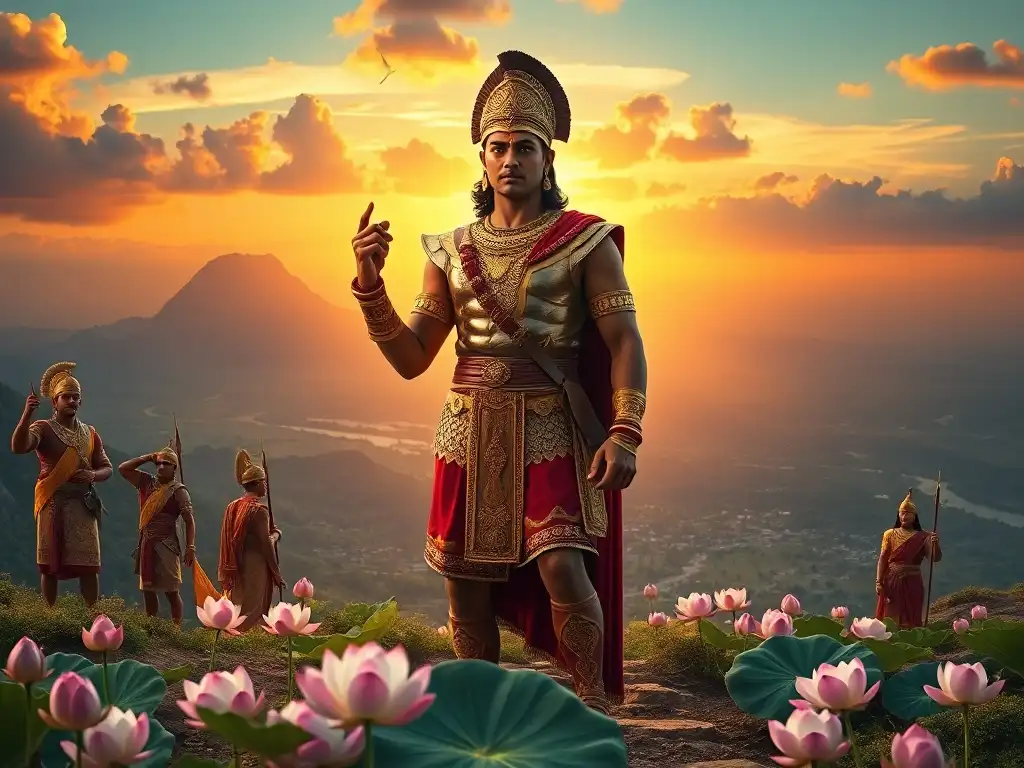
Welcome to Ancient India History, where we embark on an exhilarating journey through the rich and diverse tapestry of India's past. Today, we delve into the remarkable story of Chandragupta Maurya, a visionary leader whose contributions to leadership and unity transformed a fragmented land into a thriving empire.
As you explore the intricacies of his life and the profound impact he had on ancient Indian civilization, prepare to uncover the strategies and insights that shaped not just a nation, but a legacy that echoes through time. Join us as we unravel the threads of history and discover what made Chandragupta Maurya a pivotal figure in the evolution of ancient India.
- Introduction to Chandragupta Maurya
- The Historical Context of a Fragmented India
- Chandragupta Maurya's Rise to Power
- Leadership Contributions of Chandragupta Maurya
- Economic and Cultural Impact of Chandragupta Maurya’s Leadership
- Legacy of Chandragupta Maurya
- Conclusion
-
Frequently Asked Questions
- What were the key leadership contributions of Chandragupta Maurya?
- How did Chandragupta Maurya impact the political landscape of ancient India?
- What role did Chanakya play in Chandragupta Maurya's success?
- How did Chandragupta Maurya promote economic stability in his empire?
- What were the cultural contributions during Chandragupta Maurya's reign?
- Final Reflection: The Enduring Legacy of Chandragupta Maurya's Leadership
- Unveil the Legacy of Chandragupta Maurya!
Introduction to Chandragupta Maurya
Chandragupta Maurya stands as one of the most pivotal figures in ancient Indian history, renowned for his exceptional leadership and strategic acumen that transformed a fragmented subcontinent into a unified empire. Emerging from humble beginnings, he founded the Maurya Empire in 322 BCE, setting the stage for a new era of political stability, economic prosperity, and cultural flourishing.
His reign marked a significant departure from the chaotic political landscape that preceded him, allowing for the establishment of a centralized administration and robust governance structures. This article delves into the multifaceted contributions of Chandragupta Maurya's leadership, examining how his vision and policies not only shaped his era but also laid the groundwork for subsequent Indian civilizations.
Overview of Chandragupta Maurya's Era
Chandragupta Maurya's ascension to power coincided with a period of significant turmoil and fragmentation in the Indian subcontinent. Following the decline of the Nanda dynasty, various small kingdoms and local chieftains dominated the landscape, leading to constant warfare and instability. Chandragupta, with the guidance of his mentor Chanakya (also known as Kautilya), recognized the necessity for a unified front against external threats, particularly from the Macedonian Empire under Alexander the Great.
- Key Features of His Era:
- Political Fragmentation: Numerous small kingdoms vying for power.
- Cultural Diversity: A rich tapestry of languages, religions, and customs.
- Economic Challenges: Trade routes disrupted by conflicts, affecting commerce.
Under Chandragupta's leadership, the Maurya Empire emerged as a formidable political entity, stretching across vast territories, including the northern and central regions of India. His ability to consolidate power and implement an effective administrative framework was crucial in transitioning from a patchwork of states to a cohesive empire.
Importance of Leadership in Ancient India
Leadership in ancient India was not merely a function of power but encompassed the ability to inspire, unify, and govern diverse populations. Chandragupta Maurya exemplified these qualities, showcasing several key aspects of effective leadership:
- Visionary Governance: Chandragupta's policies were characterized by a forward-thinking approach that sought to integrate various cultures and communities within his empire. He established a system of local governance that empowered regional leaders while maintaining central authority.
- Military Strategy: His military acumen was critical in expanding and securing the empire’s borders. Utilizing innovative tactics, he successfully subdued rival powers and managed to defend against external invasions.
- Economic Policies: By promoting trade and agriculture, he facilitated economic growth, which in turn strengthened the empire's stability. His administration implemented reforms that improved infrastructure and boosted commerce.
- Cultural Patronage: Chandragupta's reign fostered a climate of cultural exchange and intellectual growth. By supporting scholars and artists, he contributed to a rich cultural legacy that would influence generations.
Chandragupta Maurya's leadership contributions were not just pivotal for his time but set a precedent for future leaders in India. His vision for a united and prosperous empire continues to resonate throughout the annals of Indian history, making him an enduring symbol of effective governance and strategic foresight.
The Historical Context of a Fragmented India
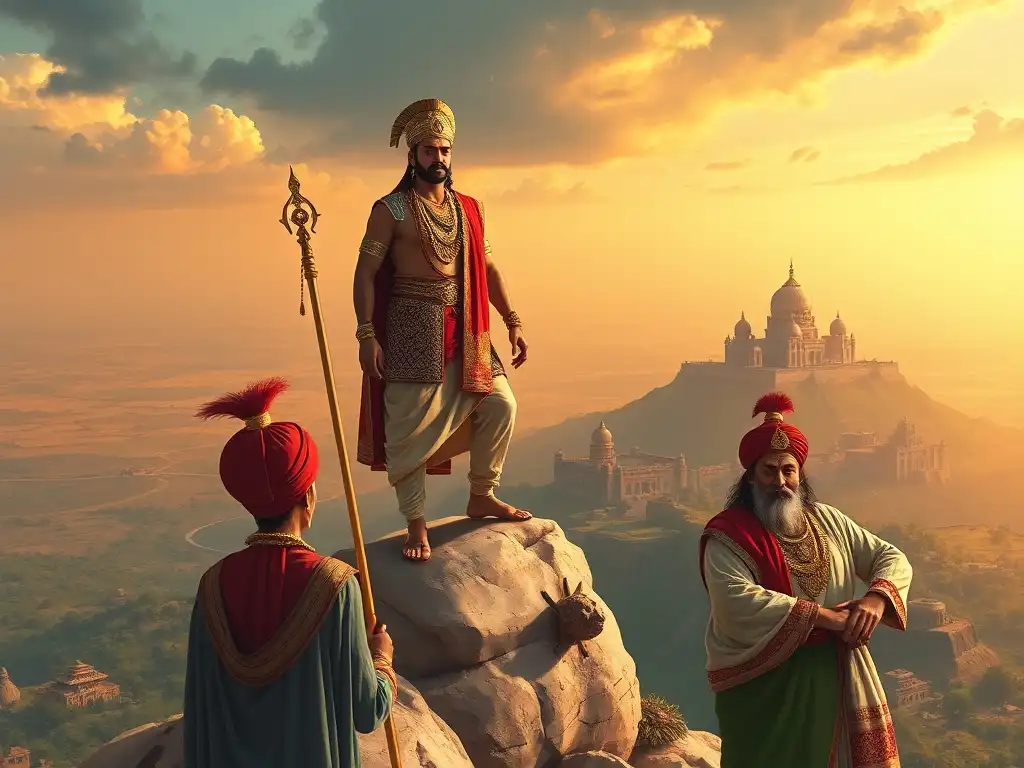
Political Landscape Before Chandragupta Maurya
Before Chandragupta Maurya's rise to power, ancient India was characterized by a fragmented political landscape. The subcontinent was divided into numerous kingdoms and republics, each with its own rulers, cultures, and military forces. This fragmentation was largely a result of historical developments, including the decline of the powerful Mauryan Empire (prior to Chandragupta), the invasions by foreign tribes, and internal conflicts among local chieftains.
- Regional Kingdoms:
- Magadha: A dominant power in the region, Magadha was ruled by various dynasties, most notably the Haryanka and later the Nanda dynasty. Its strategic location and resources made it a focal point for power struggles.
- Kosala: Known for its trade and culture, the Kingdom of Kosala was ruled by the Ikshvaku dynasty and was often in conflict with neighboring states.
- Kalinga: This coastal kingdom was renowned for its maritime trade and often clashed with the neighboring powers, particularly Magadha.
- Republics:
- Several states operated as republics, known as "Mahajanapadas," which included the Lichchhavis and the Vrijji confederacy. These entities were characterized by collective governance rather than centralized authority, leading to further political fragmentation.
- Foreign Influence:
- The incursions by the Persians and later the Greeks, particularly under Alexander the Great, contributed to instability. Local rulers often struggled to repel these invaders, leading to temporary alliances and shifting loyalties.
This chaotic political environment created a fertile ground for a unifying leader like Chandragupta Maurya, whose vision and strategic prowess would eventually reshape the map of ancient India.
The Challenges of Fragmentation in Ancient India
The fragmentation of ancient India posed a multitude of challenges that hindered political stability, economic development, and cultural cohesion. Understanding these challenges is essential to grasp the significance of Chandragupta Maurya's leadership contributions.
- Constant Warfare:
- The rivalry between various kingdoms led to frequent conflicts, draining resources and causing devastation. The continuous warfare not only weakened the states but also created a climate of fear and instability among the populace.
- Economic Disparities:
- The fragmented political landscape resulted in uneven economic development across regions. While some kingdoms thrived on trade and agriculture, others struggled to maintain basic resources. This disparity often led to discontent and uprisings among the subjects.
- Cultural Isolation:
- With each region developing its own customs and traditions, cultural exchange was limited. This isolation hindered the emergence of a unified Indian identity, as diverse languages, religions, and practices flourished independently.
- Limited Trade Opportunities:
- The lack of a centralized authority resulted in complicated trade routes and tariffs. Merchants faced challenges due to varying regulations across different states, which stunted economic growth and prosperity.
- Social Fragmentation:
- The presence of multiple systems of governance often led to social stratification and divisions among communities. These divisions were exacerbated by religious and ethnic differences, creating further obstacles to unity.
In light of these challenges, Chandragupta Maurya's leadership was instrumental in addressing the fragmentation of ancient India. His efforts not only unified the various regions but also laid the foundation for a prosperous and culturally rich empire that would flourish for centuries.
Chandragupta Maurya's Rise to Power
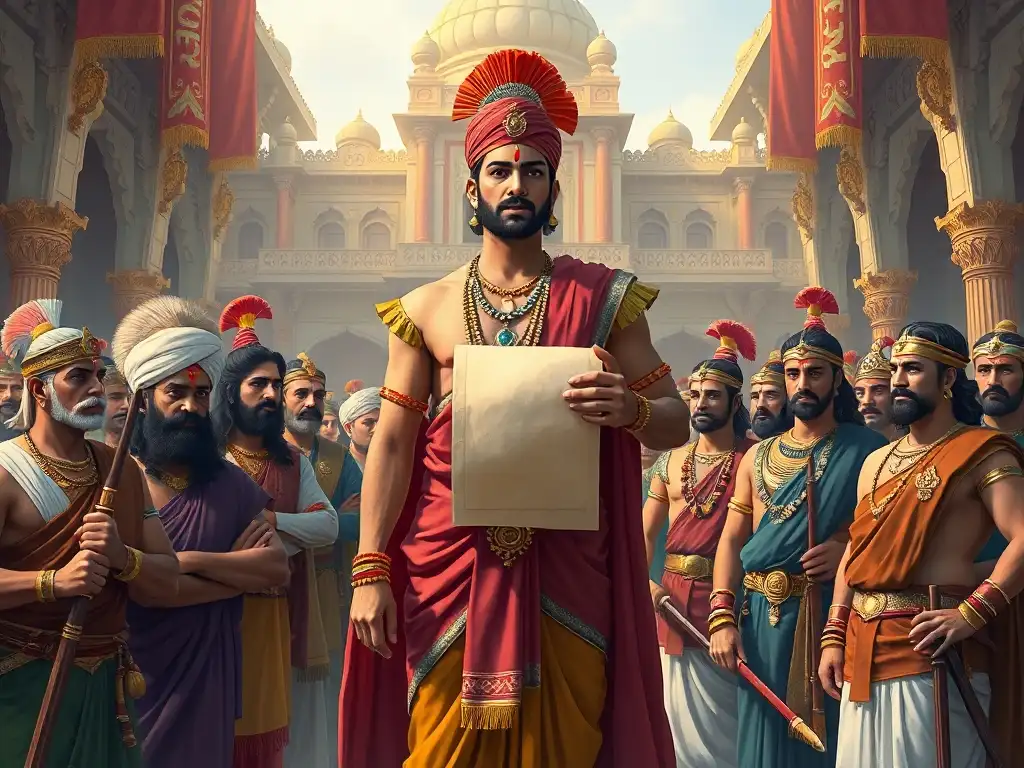
Early Life and Influences on Leadership
Chandragupta Maurya was born around 340 BCE in a humble family, with his early years spent in the region of Magadha. His upbringing was marked by the socio-political turbulence of the time, characterized by the fragmentation of various kingdoms and the looming threat of foreign invasions, particularly from the Greeks following Alexander the Great's conquests.
Chandragupta was heavily influenced by the teachings of Chanakya, a renowned scholar and strategist, who played a pivotal role in shaping his leadership philosophy. Chanakya, initially a Brahmin from the Nanda dynasty court, became disillusioned with the Nanda rulers and sought to foster a leader who could overthrow them and restore stability to India. He recognized Chandragupta's potential and took him under his wing, instilling in him principles of governance, military strategy, and diplomacy.
- Key Influences:
- Chanakya's Guidance: Chanakya taught Chandragupta the importance of shrewdness and strategic planning in leadership.
- Cultural Context: The socio-political landscape of fragmented kingdoms provided a backdrop that nurtured Chandragupta's ambitions.
- Military Training: The early exposure to military tactics and guerrilla warfare strategies played a significant role in shaping his approach to leadership.
Through these formative experiences, Chandragupta developed a vision for a unified India, which would later become a hallmark of his reign. His ability to adapt and learn from his environment was crucial in molding him into a visionary leader capable of uniting a fragmented country.
Key Events Leading to the Establishment of the Mauryan Empire
Chandragupta's journey to power was marked by several critical events that underscored his leadership contributions and strategic acumen.
- Alliance with Chanakya:
- Following his tutelage under Chanakya, Chandragupta gained a loyal following and a deeper understanding of statecraft. The duo started their campaign against the Nanda dynasty, which was then the dominant power in northern India.
- Overthrow of the Nandas (circa 322 BCE):
- With Chanakya’s guidance, Chandragupta launched a series of military campaigns, employing both conventional and guerrilla warfare. His forces successfully overthrew the Nanda dynasty, marking the beginning of the Mauryan Empire. This event is significant not only as a military victory but also as a testament to his leadership style, which combined strategic foresight with tactical adaptability.
- Expansion of Territory:
- After establishing control over Magadha, Chandragupta set his sights on expanding the empire. He engaged in numerous battles with local rulers and gradually unified much of northern India. His leadership was characterized by a keen understanding of the political landscape, allowing him to forge alliances and subdue adversaries effectively.
- Interaction with Alexander the Great:
- Chandragupta's rise coincided with Alexander the Great's incursions into India. The Mauryan leader capitalized on the weakening of local kingdoms due to external threats. Reports of Alexander’s campaigns were leveraged by Chandragupta to rally support against foreign influences, positioning him as a protector of Indian sovereignty.
- Foundation of the Mauryan Empire (circa 322 BCE):
- The culmination of Chandragupta’s efforts was the formal establishment of the Mauryan Empire, which marked a significant shift in Indian history. His governance model was innovative, introducing centralized administration, a structured tax system, and a formidable military.
The rise of Chandragupta Maurya was a confluence of personal ambition, strategic alliances, and socio-political dynamics that shaped his leadership contributions. His ability to unify a fragmented India not only laid the foundation for one of the greatest empires in ancient history but also set a precedent for future leaders in statecraft and governance.
Leadership Contributions of Chandragupta Maurya
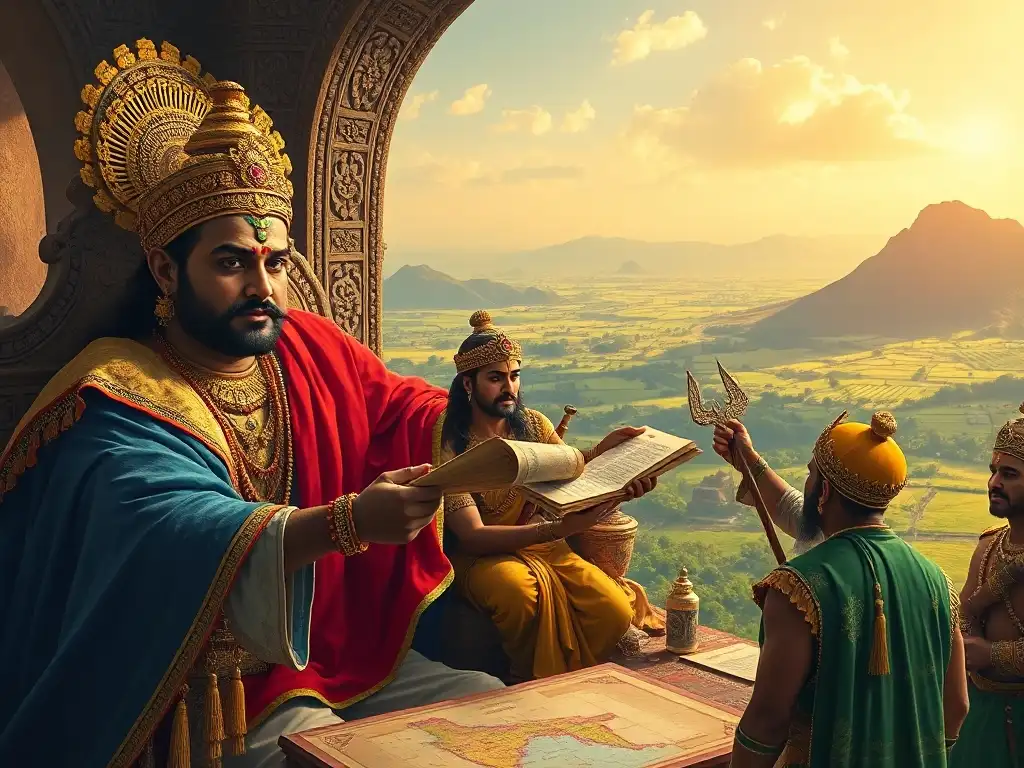
Chandragupta Maurya, the founder of the Maurya Empire, is celebrated not only for his military prowess but also for his significant leadership contributions that shaped the course of ancient Indian history. His vision and strategies were pivotal in uniting a fragmented India and laying the foundations for a centralized governance system that would influence future empires.
Unification of Diverse Kingdoms
One of Chandragupta Maurya's most remarkable achievements was his ability to unify the various kingdoms and tribes of ancient India. During his rise to power, the Indian subcontinent was characterized by numerous independent states, often engaged in conflict with each other. Chandragupta recognized the importance of unity for stability and growth.
- Diplomatic Alliances: He skillfully forged alliances with local rulers and influential leaders, using diplomacy to gain their support or neutrality. This approach minimized resistance and facilitated smoother conquests.
- Military Conquests: Chandragupta's military campaigns were instrumental in subduing rival kingdoms. His conquest of the Nanda Dynasty marked a turning point, as it allowed him to establish a dominant presence in the region.
- Cultural Integration: By promoting a sense of common identity among the diverse populations, he encouraged cultural integration, which helped in unifying different ethnic and cultural groups under one banner.
This unification laid the groundwork for a cohesive political entity, fostering trade and communication across vast territories.
Establishment of Centralized Governance
Chandragupta Maurya's vision extended beyond mere unification; he established a centralized governance system that was revolutionary for its time.
- Administrative Structure: He implemented a bureaucratic system that divided the empire into provinces, each governed by appointed officials. This hierarchical structure ensured effective administration and local governance.
- Legal Reforms: The introduction of standardized laws and regulations helped maintain order and justice across the empire. This legal framework was crucial in promoting fairness and reducing corruption.
- Taxation System: Chandragupta established a systematic approach to taxation, which not only funded the empire's military and administrative needs but also supported infrastructure development, such as roads and irrigation systems.
These governance strategies enabled the Maurya Empire to manage its vast territories efficiently, contributing to its longevity and stability.
Military Strategies and Conquests
Chandragupta Maurya's military strategies were vital in the expansion of his empire and the consolidation of power. His approach combined traditional warfare with innovative tactics that allowed him to overcome formidable opponents.
- Use of Elephants: One of the most notable aspects of his military strategy was the effective use of war elephants in battle. These massive creatures provided both a psychological advantage and physical strength in confrontations.
- Guerrilla Warfare: Chandragupta utilized guerrilla tactics to outmaneuver larger armies. By engaging in strategic ambushes and surprise attacks, he could disrupt enemy formations and gain the upper hand.
- Alliances with Mercenaries: He often enlisted the help of mercenaries, which expanded his military capabilities without the need for extensive recruitment efforts. This flexibility allowed him to adapt to various combat situations.
The combination of these strategies led to significant victories, ultimately culminating in the establishment of one of the largest empires in ancient India. Chandragupta's leadership not only transformed the political landscape but also set a precedent for future rulers in their approach to governance and military affairs.
Economic and Cultural Impact of Chandragupta Maurya’s Leadership
Trade and Economic Reforms
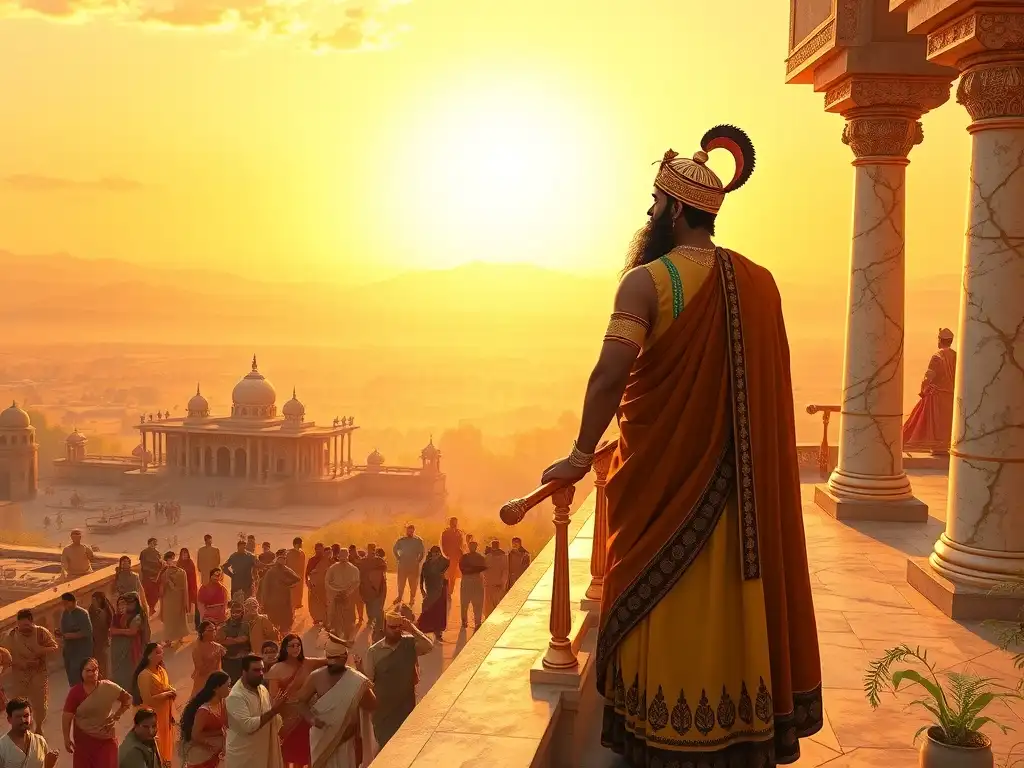
Chandragupta Maurya's reign marked a transformative era in the economic landscape of ancient India. His leadership contributions were pivotal in establishing a robust framework for trade and economic reforms that laid the groundwork for a prosperous empire.
- Standardization of Weights and Measures: One of Chandragupta’s significant reforms was the standardization of weights and measures, which facilitated trade across his vast empire. This uniformity reduced disputes among traders and fostered a more reliable trading environment.
- Infrastructure Development: Chandragupta recognized the importance of infrastructure in boosting trade. He invested in building roads, irrigation systems, and ports, enhancing connectivity and accessibility. The Grand Trunk Road, for example, became a major trade route, linking different parts of the empire and promoting commerce with neighboring regions.
- Taxation and Revenue Systems: The Mauryan administration under Chandragupta established an efficient taxation system that balanced the needs of the state with the welfare of the populace. The revenue collected was used for public works, military expenditures, and the maintenance of law and order, thereby promoting economic stability.
- Agricultural Advancements: Agriculture was the backbone of the Mauryan economy. Chandragupta implemented agricultural reforms, including enhanced irrigation practices and crop rotation methods. These innovations led to increased agricultural productivity, ensuring food security for the population.
Chandragupta's emphasis on economic reforms not only strengthened the Mauryan Empire but also set a precedent for future Indian empires, demonstrating how effective governance could lead to economic prosperity.
Promotion of Arts and Culture
Chandragupta Maurya's leadership also had a profound impact on the cultural and artistic developments during his reign. His patronage and vision contributed to a rich tapestry of cultural expression that flourished across the empire.
- Support for Artists and Scholars: Chandragupta actively encouraged artists, craftsmen, and scholars, creating an environment where creativity could thrive. This support led to advancements in various art forms, including sculpture, painting, and architecture.
- Cave Architecture: One of the notable architectural achievements of this period was the development of cave architecture, particularly in the western regions of India. The rock-cut caves, such as those at Ajanta and Ellora, began to emerge during this time, showcasing intricate carvings and elaborate murals that reflected both religious and secular themes.
- Literary Contributions: The Mauryan period also saw significant literary advancements. Scholars like Kautilya (Chanakya), who was Chandragupta's advisor, authored the "Arthashastra," a foundational text on statecraft, economic policy, and military strategy. This text not only provided insights into governance but also influenced subsequent political thought in India.
- Cultural Syncretism: Chandragupta's reign marked a period of cultural syncretism, where various regional traditions and practices began to intermingle. This fusion of cultures enriched the social fabric of the empire and laid the groundwork for a more unified cultural identity.
Through his promotion of arts and culture, Chandragupta Maurya played a crucial role in fostering a vibrant cultural milieu that celebrated diversity and creativity, leaving a lasting legacy on Indian civilization.
Religious Tolerance and Support for Buddhism
Chandragupta Maurya's leadership was characterized by a notable commitment to religious tolerance and the promotion of Buddhism, which flourished during his reign.
- Support for Buddhism: Although Chandragupta himself was a follower of Jainism, he recognized the growing influence of Buddhism within his empire. He provided patronage to Buddhist monasteries and supported the construction of stupas, which became important centers of worship and learning.
- A Policy of Tolerance: Chandragupta's administration embraced a policy of religious tolerance, allowing various faiths to coexist peacefully within his empire. This approach fostered social harmony and strengthened the bonds between different communities, enhancing the stability of the Mauryan Empire.
- Promotion of Ashoka’s Mission: Following Chandragupta's reign, his grandson Ashoka would further this legacy by promoting Buddhism on a grand scale. Chandragupta's initial support laid the groundwork for Ashoka’s later contributions, which included the spread of Buddhist teachings throughout Asia.
- Interfaith Dialogue: The Mauryan court became a hub for interfaith dialogue, where scholars and religious leaders from different traditions could engage in discussions. This exchange of ideas enriched the intellectual landscape of the empire and facilitated mutual respect among diverse religious communities.
Chandragupta Maurya’s commitment to religious tolerance and his support for Buddhism not only contributed to the cultural richness of his time but also set a precedent for future leaders, emphasizing the importance of unity in diversity within the Indian subcontinent.
Legacy of Chandragupta Maurya
Influence on Future Indian Leaders
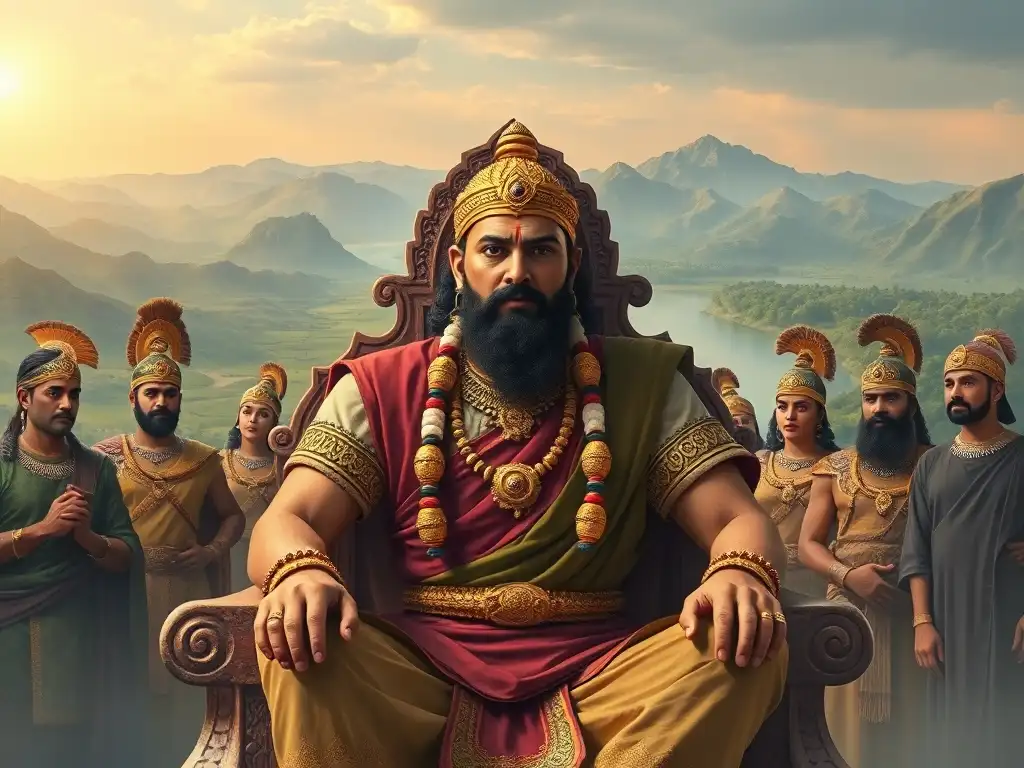
Chandragupta Maurya's leadership contributions established a paradigm that would resonate through the ages, influencing a multitude of Indian leaders in subsequent centuries. His ability to unite a fragmented India is not merely a historical footnote; it set a standard for governance that emphasized strength, strategy, and diplomacy.
- Centralized Governance:
- Chandragupta implemented a centralized administrative system that served as a model for future empires. This structure allowed for efficient tax collection, law enforcement, and public works, laying the groundwork for the complex bureaucracies of later Indian states.
- Military Strategy:
- His military tactics were revolutionary for the time. By employing a mix of guerilla warfare and traditional battle formations, he was able to not only conquer but also maintain control over vast territories. His successors, including Ashoka, adopted and refined these strategies, ensuring the Mauryan Empire's dominance in the subcontinent.
- Diplomatic Relations:
- Chandragupta understood the importance of alliances, often marrying into powerful families to secure peace and bolster his position. This diplomatic acumen helped set a precedent for future rulers who sought to expand their influence through both might and marriage.
- Cultural Integration:
- He promoted a sense of unity among diverse cultures and communities within his empire, advocating for religious tolerance and cultural exchange. This approach influenced later rulers, inspiring them to embrace the rich tapestry of India's cultural heritage.
The leadership style of Chandragupta Maurya exemplified a balance between military prowess and diplomatic finesse, which would become a hallmark of successful rulers in India.
The Mauryan Empire's Longevity and Stability
The Mauryan Empire, under the leadership of Chandragupta, established a foundation for political stability and economic prosperity that lasted for several decades. Several key factors contributed to this longevity:
- Economic Policies:
- Chandragupta's reforms in agriculture and trade stimulated economic growth. By implementing a taxation system that was fair yet effective, he ensured a steady revenue stream for the state, allowing for the maintenance of infrastructure and military.
- Legal Framework:
- The codification of laws and the establishment of a justice system helped maintain order. The Edicts of Chandragupta set a precedent for governance based on law and order, influencing future legal systems in India.
- Infrastructure Development:
- Significant investments in infrastructure, such as roads, irrigation, and trade networks, facilitated communication and commerce. This development not only enhanced trade but also connected various regions of the empire, fostering a sense of unity.
- Succession Planning:
- Chandragupta's strategic choice in succession, particularly the elevation of his son, Bindusara, ensured continuity in leadership and policy, which is crucial for any empire's stability. This foresight in governance laid the groundwork for the Mauryan Empire's resilience against external threats.
Through these measures, Chandragupta Maurya not only solidified his rule but also set the stage for one of the most powerful empires in ancient India, the effects of which are still studied and admired today.
Conclusion
Summary of Chandragupta Maurya Leadership Contributions
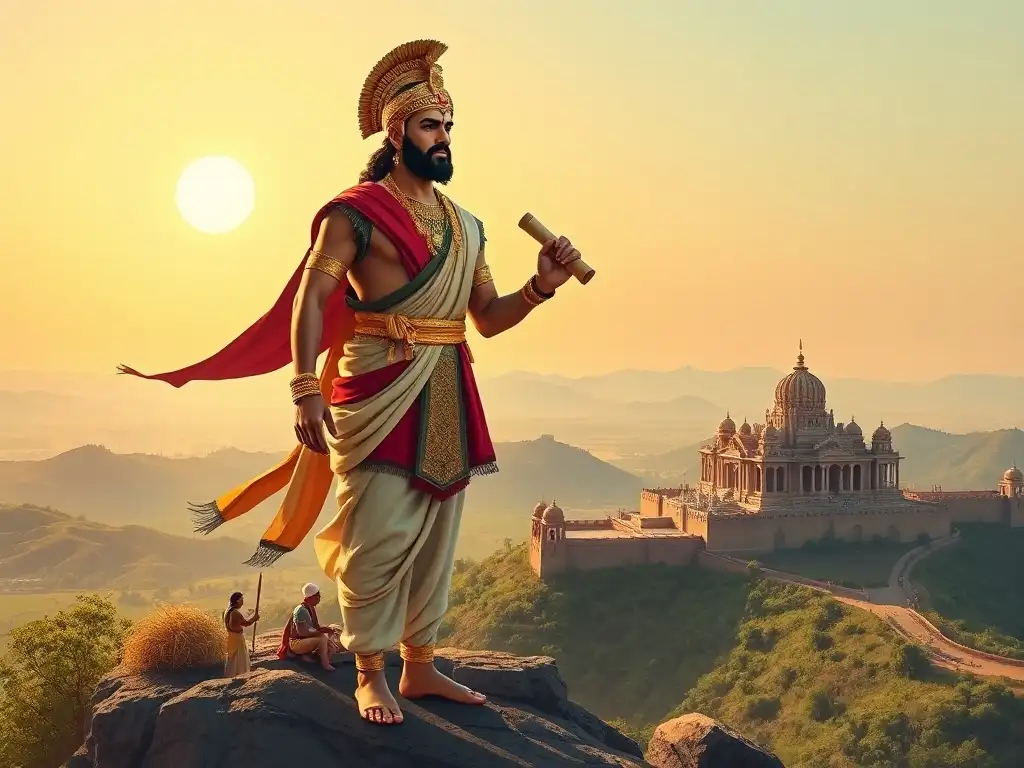
Chandragupta Maurya, the founder of the Maurya Empire, is a pivotal figure in ancient Indian history whose leadership contributions were instrumental in unifying a fragmented India around 322 BCE. His strategic prowess and visionary outlook enabled him to consolidate power, establishing a centralized empire that spanned a vast territory, including parts of modern-day India, Pakistan, and Afghanistan.
Chandragupta's leadership is characterized by several key contributions:
- Unification of Territories: By defeating the Nanda dynasty and other regional powers, Chandragupta effectively unified various kingdoms and tribes under a single banner, creating a cohesive political entity.
- Establishment of Governance: He implemented a structured administrative system, which included a bureaucracy that facilitated efficient governance. This was crucial for managing a vast empire and ensuring stability.
- Economic Reforms: Under his rule, trade flourished, and coinage was standardized, which enhanced commerce. His policies promoted agriculture and crafts, contributing to the economic prosperity of the region.
- Military Innovations: Chandragupta developed a formidable army, employing war elephants and advanced tactics that allowed him to expand his territory and defend it against external threats.
- Cultural Patronage: He encouraged the spread of culture and philosophy, setting a precedent for later rulers. His reign laid the groundwork for the flourishing of arts and sciences, particularly during the subsequent rule of his grandson, Ashoka.
The Lasting Impact on Indian History and Culture
Chandragupta Maurya's legacy extends far beyond his immediate achievements; it profoundly shaped the trajectory of Indian history and culture. His establishment of the Maurya Empire marked the beginning of a new era characterized by centralized governance and cultural exchange.
- Political Legacy: The administrative framework that Chandragupta established served as a model for future empires in India. His methods of governance influenced subsequent dynasties, including the Gupta Empire, which is regarded as a golden age in Indian history.
- Cultural Integration: Through his conquests, Chandragupta facilitated the integration of various cultural groups, leading to a rich tapestry of traditions and practices. This cultural amalgamation fostered advancements in philosophy, literature, and the arts.
- Spiritual Influence: After his conversion to Jainism later in life, Chandragupta's embrace of non-violence and spirituality influenced the sociopolitical landscape of India. His commitment to Jain principles helped promote religious tolerance and philosophical discourse.
- Historical Documentation: His life and accomplishments were chronicled by ancient historians, including Chanakya (Kautilya), whose text, the Arthashastra, remains a significant work on statecraft and military strategy. This documentation provides invaluable insights into the political and economic landscape of ancient India.
- Symbol of Unity: Chandragupta is often celebrated as a symbol of national unity and strength. His story continues to inspire leaders and movements advocating for a cohesive national identity in contemporary India.
Chandragupta Maurya's leadership contributions were not only crucial for his time but also set the stage for enduring impacts on Indian history and culture. His vision and strategies laid the groundwork for a unified Indian subcontinent, influencing countless generations and becoming a cornerstone of India's rich historical narrative.
Frequently Asked Questions
What were the key leadership contributions of Chandragupta Maurya?
Chandragupta Maurya's key contributions include the unification of fragmented Indian states, establishing a central government, and implementing administrative reforms that laid the foundation for a stable empire.
How did Chandragupta Maurya impact the political landscape of ancient India?
He significantly transformed the political landscape by effectively centralizing power, creating a strong military, and establishing a bureaucratic system that managed diverse territories.
What role did Chanakya play in Chandragupta Maurya's success?
Chanakya, also known as Kautilya, was a crucial advisor who provided strategic guidance, formulated policies, and helped Chandragupta with his political and military strategies.
How did Chandragupta Maurya promote economic stability in his empire?
He initiated trade reforms, improved agricultural productivity, and established a robust taxation system, which collectively fostered economic stability across his empire.
What were the cultural contributions during Chandragupta Maurya's reign?
Chandragupta's reign saw the flourishing of art and literature, the patronage of Buddhism, and the promotion of tolerance towards various religions, which enriched the cultural fabric of ancient India.
Final Reflection: The Enduring Legacy of Chandragupta Maurya's Leadership
Chandragupta Maurya's leadership contributions are not just historical footnotes; they resonate profoundly in today's fragmented world. As we navigate through the complexities of modern society, the lessons from his visionary leadership remind us of the power of unity and strategic foresight. In an era where division often overshadows collaboration, understanding how Chandragupta brought together diverse factions to forge a cohesive empire is more relevant than ever. His story is a testament to the transformative impact of strong leadership in overcoming adversity.
Culturally and socially, Chandragupta's legacy continues to inspire leaders across various fields. His ability to unify a fragmented India serves as a powerful reminder of the importance of vision and resilience in leadership. As we face our own challenges, his journey encourages us to seek common ground and work towards collective goals. In the midst of chaos, there is also opportunity.
This quote encapsulates the essence of Chandragupta's approach, highlighting that even in turbulent times, visionary leaders can create pathways to unity and progress.
As we reflect on the lessons from Chandragupta Maurya's life, let us challenge ourselves to embody the principles of effective leadership in our own lives. Consider how you can foster unity in your community, workplace, or personal relationships. Embrace the vision of a leader who saw potential where others saw division, and take actionable steps to create a more harmonious environment. The legacy of Chandragupta Maurya is not just a story of the past; it is a call to action for all of us to lead with purpose and integrity in our own spheres of influence.
Unveil the Legacy of Chandragupta Maurya!
Thank you for taking the time to explore the remarkable journey of Chandragupta Maurya, a leader whose vision transformed a fragmented India into a united realm. Your interest in this pivotal figure highlights the enduring impact of his leadership and the lessons we can learn from it. Now, it’s time to take the next step!
Here’s how you can engage further with this incredible legacy:
- Dive deeper into Maurya's strategies by discovering more about his administrative innovations on our website. Knowledge is power—**unleash it! **
- Share your insights! Discuss what leadership qualities you find most inspiring about Chandragupta in the comments below or on your social media channels.
- Explore similar historical figures who shaped India by checking out our other articles. You might uncover even more fascinating stories!
How has learning about Chandragupta Maurya inspired your view of leadership in today’s world?