
Understanding the Two Realities: Prakriti and Purusha in the Sankhya School


Welcome to Ancient India History, where we embark on a journey through the rich tapestry of India's past, uncovering the profound philosophies that have shaped its cultural landscape. In our featured article, Understanding the Two Realities: Prakriti and Purusha in the Sankhya School, we dive deep into the intriguing concepts of Sankhya philosophy. Discover how the duality of Prakriti and Purusha offers insights into the nature of existence and consciousness, sparking a dialogue that resonates through the ages.
Are you ready to explore the wisdom of ancient thinkers and their enduring impact on modern thought? Join us as we unveil the depths of this philosophical treasure!
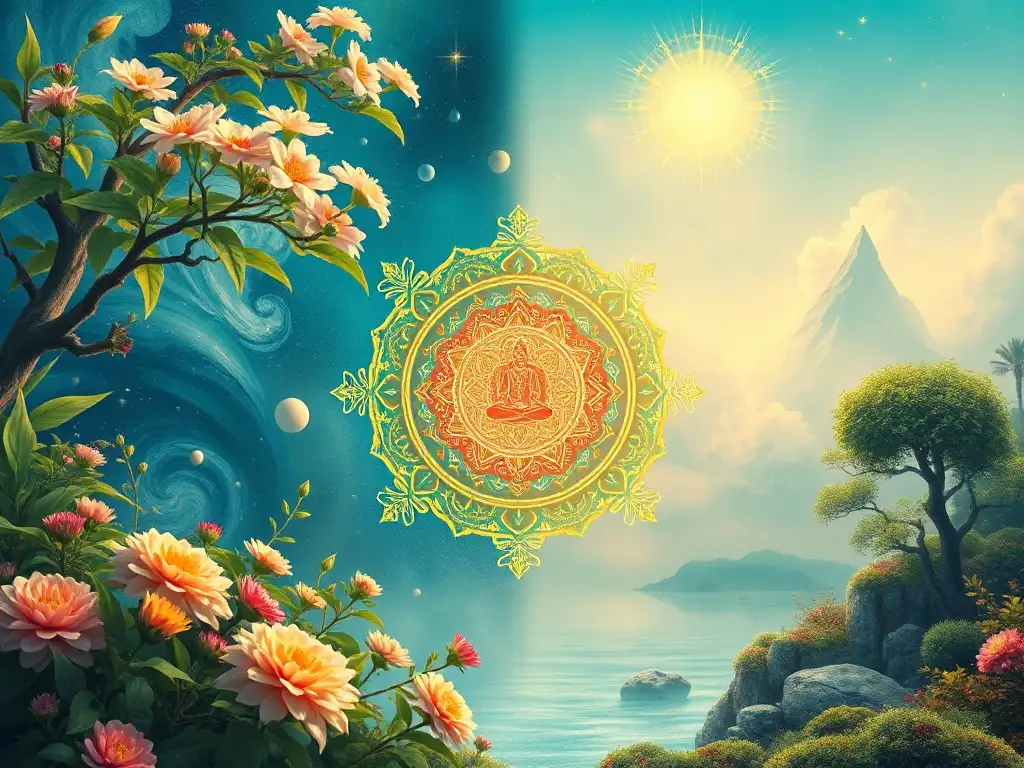
Introduction to Sankhya Philosophy
Sankhya philosophy, one of the six orthodox schools of Indian philosophy, presents a profound exploration of the nature of reality by delineating the dual aspects of existence: Prakriti and Purusha. This ancient philosophical framework, primarily articulated by the sage Kapila, serves as a foundational element in understanding not only metaphysics but also the broader spiritual and ethical dimensions of Indian thought. By examining these two realities, Sankhya offers insights into the interplay between matter and consciousness, providing a comprehensive lens through which the complexities of life can be interpreted.
This article delves into the essence of Sankhya philosophy, focusing on the definitions and significance of Prakriti and Purusha. We will explore their historical context, key concepts, and their interrelationship, highlighting how these principles contribute to the understanding of existence and consciousness in ancient Indian philosophy.
Overview of Sankhya Philosophy
The term "Sankhya" itself means "number" or "enumeration," reflecting its analytical nature in categorizing the different elements of reality. At its core, Sankhya posits that all of existence can be understood through a systematic classification of its components, primarily focusing on the dichotomy of Prakriti (the material, changing aspect of reality) and Purusha (the immutable, conscious aspect).
- Prakriti is considered the source of all material phenomena, embodying nature's dynamism and creativity.
- Purusha, on the other hand, represents the pure consciousness that witnesses and experiences existence without being influenced by it.
This dualistic framework has not only influenced Indian philosophical thought but has also impacted various spiritual traditions, including yoga and later schools of Vedanta.
Historical Context of the Sankhya School
Emerging around the 6th century BCE, the Sankhya school is deeply rooted in the spiritual and philosophical milieu of ancient India. Its origins can be traced to the Vedic texts, where early ideas of cosmology and metaphysics began to take shape. The core teachings of Sankhya were later compiled in the Sankhya Karika by Ishvara Krishna, which systematically outlines the principles of the philosophy.
- The historical development of Sankhya was influenced by various cultural and intellectual currents, including the rise of Buddhism and Jainism, which prompted a reevaluation of metaphysical concepts.
- Over time, Sankhya philosophy became intertwined with yogic practices, emphasizing the need for self-realization and liberation (moksha) through the understanding of Prakriti and Purusha.
This historical backdrop enriches the understanding of Sankhya philosophy and its relevance in the broader context of ancient Indian thought.
Key Concepts in Sankhya Philosophy
Central to the teachings of Sankhya are the concepts of Prakriti and Purusha, which encapsulate the dual nature of reality. Understanding these concepts is vital for grasping the philosophical underpinnings of Sankhya and its implications for spiritual practice.
Definition of Prakriti
Prakriti, often translated as "nature" or "matter," refers to the fundamental substance of the universe. It encompasses all physical forms and the dynamic processes of change that govern existence. Key characteristics of Prakriti include:
- Changeability: Prakriti is in a constant state of flux, manifesting in various forms and phenomena.
- Composition: It consists of three gunas (qualities) — sattva (purity, harmony), rajas (activity, passion), and tamas (inertia, darkness) — which interact to create the diversity of the material world.
By understanding Prakriti, one can discern the nature of the physical universe and the processes that shape human experience.
Definition of Purusha
Purusha represents the eternal, unchanging consciousness that observes and experiences the world. Unlike Prakriti, Purusha is not subject to change or transformation. Key aspects of Purusha include:
- Eternality: Purusha is timeless and beyond the confines of physical existence.
- Witnessing Consciousness: It serves as the observer of Prakriti's myriad manifestations without being affected by them.
The recognition of Purusha is crucial for attaining self-awareness and understanding one's true nature, separate from the transient aspects of life.
The Relationship Between Prakriti and Purusha
The relationship between Prakriti and Purusha is central to Sankhya philosophy. While they are distinct, they are also interdependent.
- Interaction: Prakriti operates under the influence of the gunas, leading to the manifestation of the universe, while Purusha provides the consciousness required to perceive and experience this manifestation.
- Liberation: The ultimate goal in Sankhya is to realize the separation between Prakriti and Purusha, leading to liberation (moksha). This understanding allows individuals to transcend the limitations of material existence and attain a state of pure awareness.
The exploration of Prakriti and Purusha not only deepens our understanding of Sankhya philosophy but also provides a framework for comprehending the complexities of existence and consciousness in ancient Indian thought.
The Nature of Prakriti
In Sankhya philosophy, Prakriti represents the fundamental, primordial nature of reality, encompassing all material existence. It is the dynamic, ever-changing aspect of the universe, contrasted with the static, unchanging consciousness represented by Purusha. Prakriti is not just a passive entity; it is considered the active principle that initiates and sustains the processes of creation, evolution, and dissolution. Understanding Prakriti is essential for grasping how the material world operates and how it interacts with the conscious observer, Purusha.
The essence of Prakriti is characterized by its inherent qualities and the interplay of these qualities. It is described as being eternal, though its manifestations are transient. In Sankhya, Prakriti is the source of all phenomena—both physical and mental—and is often depicted as the feminine principle in contrast to the masculine Purusha. This duality highlights the interdependence of consciousness and matter, forming the basis of existence as understood in Sankhya philosophy.
Characteristics of Prakriti in Sankhya Philosophy
Prakriti is defined by several key characteristics that illuminate its nature in the context of Sankhya philosophy:
- Eternality: While the forms of Prakriti are impermanent, the underlying essence of Prakriti is eternal and unchanging.
- Complexity: It consists of multiple layers, including the five great elements (earth, water, fire, air, and ether) and the subtle elements that constitute the mind and senses.
- Activity: Prakriti is inherently active, representing the forces of change and evolution in the universe.
- Duality: It embodies the dual aspects of creation and dissolution, serving as both the source and the stage for all experiences in the material realm.
Through these characteristics, Prakriti manifests the diversity of life, allowing for the complex tapestry of existence that includes not only the physical world but also the mental and emotional experiences of sentient beings.
The Role of Prakriti in Creation and Existence
In Sankhya philosophy, Prakriti plays a crucial role in the process of creation. It serves as the matrix from which the entire universe arises. According to the teachings, the interaction between Prakriti and Purusha initiates the cycle of creation, where Purusha's consciousness catalyzes the potential inherent within Prakriti. This interplay leads to the manifestation of various forms and phenomena.
Prakriti is responsible for the evolution of the universe through its innate qualities and the three Gunas (Sattva, Rajas, and Tamas). These Gunas represent different tendencies and qualities within Prakriti that influence not only the physical world but also the psychological and spiritual dimensions of existence. As such, Prakriti is integral to understanding the nature of existence and the processes that govern life and evolution.
Prakriti and the Three Gunas: Sattva, Rajas, and Tamas
The three Gunas—Sattva, Rajas, and Tamas—are essential to understanding Prakriti in Sankhya philosophy. These qualities are believed to govern the behavior of Prakriti and, by extension, all of creation.
- Sattva: Characterized by purity, harmony, and balance, Sattva promotes clarity, knowledge, and spiritual growth. It is associated with enlightenment and higher states of consciousness.
- Rajas: This Guna embodies activity, passion, and dynamism. Rajas is responsible for movement and change; it drives desires, ambitions, and restlessness, often leading to attachment and conflict.
- Tamas: Representing darkness, inertia, and ignorance, Tamas is associated with lethargy and confusion. It can lead to stagnation and a lack of awareness, hindering spiritual progress.
The interplay of these three Gunas creates the diverse experiences of life. Every individual and situation is influenced by the predominance of one or more of these qualities, shaping thoughts, behaviors, and interactions with the world. Understanding the Gunas is crucial for anyone studying Sankhya philosophy, as they provide insight into the nature of human experience and the material universe.
The Nature of Purusha
Purusha is the second fundamental reality in Sankhya philosophy, representing the principle of consciousness and awareness. Unlike Prakriti, which encompasses the material world, Purusha is unchanging, eternal, and transcendent. It is the observer, the witness to the activities and transformations of Prakriti. In this dualistic framework, Purusha is not subject to the fluctuations of the material realm, making it the source of true knowledge and liberation.
The nature of Purusha is often described as pure consciousness, devoid of attributes or qualities. It exists beyond the physical and psychological experiences, embodying the ultimate truth of existence. In this sense, Purusha plays a pivotal role in the Sankhya philosophy, as it represents the aspect of reality that seeks to understand and transcend the limitations imposed by Prakriti.
Understanding Purusha as Consciousness
In Sankhya philosophy, Purusha is often equated with the concept of consciousness itself. It is the pure, witnessing awareness that perceives the activities and changes occurring within Prakriti. Unlike the mutable nature of Prakriti, Purusha remains constant and unaltered.
This distinction emphasizes the duality in Sankhya thought, wherein Purusha is seen as the ultimate truth that experiences the transient nature of the material world. It is through the realization of Purusha that individuals can attain liberation (moksha) from the cycles of birth and rebirth, ultimately leading to a profound understanding of their true nature.
The Role of Purusha in Sankhya Philosophy
Purusha serves several critical roles in Sankhya philosophy:
- Observer: Purusha acts as the witness to the activities of Prakriti, allowing for the experience of life without becoming entangled in it.
- Source of Knowledge: It is through Purusha that true knowledge and understanding arise, illuminating the nature of reality and existence.
- Path to Liberation: Understanding the distinction between Purusha and Prakriti is essential for spiritual growth. Realizing one's identity as Purusha leads to liberation from the limitations of the material world.
In essence, Purusha provides the framework for understanding consciousness and its relationship to the physical universe, making it a cornerstone of Sankhya philosophy.
The Distinction Between Individual Purusha and Universal Purusha
In Sankhya philosophy, a significant distinction is made between individual Purusha and Universal Purusha.
- Individual Purusha refers to the unique consciousness that each sentient being possesses. It is the essence of one's identity, distinct yet connected to the Universal Purusha. Each individual Purusha experiences the material world through the lens of personal perceptions and experiences, influenced by the Gunas of Prakriti.
- Universal Purusha, on the other hand, represents the collective consciousness that permeates all existence. It is the ultimate reality, the source from which individual consciousness arises, and is often equated with the idea of Brahman in other philosophical traditions. This Universal Purusha transcends individual experiences and embodies the unity of all consciousness.
The understanding of this distinction allows practitioners of Sankhya philosophy to navigate their spiritual journeys, recognizing the interplay between their individual experiences and the greater universal truths that govern existence. It emphasizes the importance of realizing one's connection to the broader tapestry of life while also acknowledging the unique journey of each individual soul.
The Interplay Between Prakriti and Purusha
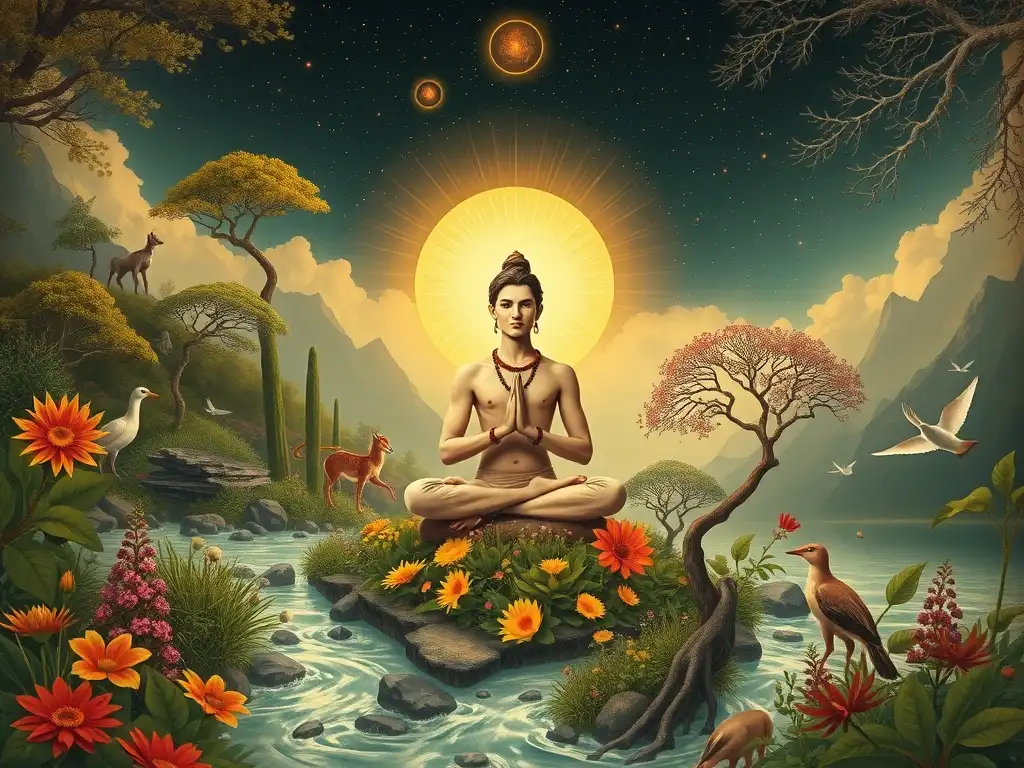
In the Sankhya philosophy, Prakriti and Purusha represent two fundamental realities that are essential for understanding the nature of existence. Prakriti refers to the material world, encompassing everything that is physical, tangible, and subject to change, while Purusha signifies the eternal, unchanging consciousness or spirit that observes and experiences the material world. The interplay between these two realities is intricate and profound, as it lays the foundation for the philosophical dialogue surrounding creation, existence, and the ultimate purpose of life.
The interaction between Prakriti and Purusha is often described as a dance, where Purusha observes the fluctuations of Prakriti, which is in constant motion and transformation. This dynamic relationship illustrates how consciousness (Purusha) is both distinct from and interwoven with the material world (Prakriti). In Sankhya philosophy, the realization of this interplay is crucial for attaining self-knowledge and understanding the true nature of reality. As individuals recognize the distinctions and connections between these two aspects, they can navigate the complexities of life more effectively.
How Prakriti and Purusha Influence Each Other
Prakriti and Purusha influence each other in several ways, shaping not only philosophical discourse but also practical life experiences. The manifestation of Prakriti is influenced by the presence of Purusha, as consciousness gives rise to the perception and experience of the material world. Through self-awareness, individuals can observe the workings of Prakriti, leading to a deeper understanding of their own nature and the nature of reality.
Conversely, Purusha is impacted by the experiences and actions that unfold within Prakriti. The evolution of individual consciousness is shaped by the experiences one undergoes in the material world. As individuals engage with their environment, they develop insights that contribute to the growth of Purusha. This cyclical relationship emphasizes the importance of self-reflection and mindfulness in one’s spiritual journey.
The Concept of Liberation (Moksha) in Sankhya Philosophy
In Sankhya philosophy, the ultimate goal is to achieve Moksha, or liberation, which is the realization of the true nature of Purusha. This liberation involves the disentanglement of Purusha from the limitations imposed by Prakriti. When individuals come to understand that their true essence is Purusha, separate from the transient experiences of the material world, they attain a state of liberation from the cycle of birth and death (samsara).
Moksha is achieved through self-inquiry and knowledge, leading to a profound understanding of the distinction between Prakriti and Purusha. By recognizing that the fluctuations of Prakriti do not define the essence of the self, individuals can transcend suffering and ignorance. This liberation is not merely an escape from the physical realm but an awakening to a higher state of consciousness, where one experiences unity with the cosmos.
Practical Implications of Understanding Prakriti and Purusha
The understanding of Prakriti and Purusha has significant practical implications in daily life. By comprehending these concepts, individuals can cultivate a sense of detachment from the material world, which fosters inner peace and resilience in the face of challenges. Recognizing the interplay between these two realities encourages mindfulness, allowing individuals to respond to life’s situations with clarity rather than being driven by emotional reactions.
Furthermore, this philosophical insight can guide ethical decision-making and personal growth. By aligning actions with the understanding of Purusha's eternal nature, individuals can contribute positively to the world around them, promoting harmony and balance. In this way, the teachings of Sankhya philosophy provide a framework for living a meaningful life, grounded in wisdom and self-awareness.
Conclusion
The exploration of Prakriti and Purusha within Sankhya philosophy reveals profound insights into the nature of existence. These two realities not only represent different aspects of life but also highlight the interconnectedness of the material and spiritual realms. Understanding this interplay is essential for personal growth and self-realization.
Summary of Key Points on Prakriti and Purusha
- Prakriti: The material, ever-changing aspect of reality.
- Purusha: The eternal, unchanging consciousness that observes.
- Their interplay forms the basis of existence, influencing self-awareness and understanding.
- Liberation (Moksha) is the realization of Purusha's true nature, leading to freedom from the cycle of samsara.
- Practical implications include fostering mindfulness, ethical living, and resilience.
The Significance of Prakriti and Purusha in Ancient Indian Philosophy
The significance of Prakriti and Purusha extends beyond the Sankhya school, resonating throughout ancient Indian philosophy. These concepts serve as foundational elements in various philosophical traditions, including Yoga and Vedanta. They encapsulate the quest for self-knowledge and the understanding of reality, making them central to the spiritual discourse of ancient India. By engaging with Prakriti and Purusha, individuals can embark on a transformative journey toward enlightenment, emphasizing the timeless relevance of these philosophical insights.
Further Reading on Sankhya Philosophy
Understanding Sankhya philosophy, particularly the concepts of Prakriti and Purusha, can be greatly enhanced by engaging with a variety of texts and resources. These materials provide a deeper insight into the foundational principles of this ancient Indian philosophical system, its historical context, and its influence on later philosophical developments. Below are some recommended texts and resources that will aid in further exploration of Sankhya philosophy.
Recommended Texts and Resources
- The Sankhya Karika: This foundational text, authored by Ishvara Krishna, is essential for anyone seeking an in-depth understanding of Sankhya philosophy. It presents the essential doctrines of the school and discusses the duality of Prakriti and Purusha in a systematic manner.
- Sankhya Philosophy: A Critical Study: by R. C. D. Sharma: This book offers a comprehensive analysis of Sankhya philosophy, exploring its metaphysical concepts, epistemological aspects, and ethical implications. It is suitable for both beginners and advanced scholars.
- Yoga Sutras of Patanjali: While primarily a text on yoga, the Yoga Sutras incorporate Sankhya philosophy's concepts, particularly the distinction between Purusha (the true self) and Prakriti (the material world). This text is invaluable for understanding how Sankhya influenced other schools of thought.
- Indian Philosophy: A Historical Survey: by Dr. R. N. Dandekar: This resource provides a broader context by exploring various schools of Indian philosophy, including Sankhya. It highlights the interconnections between different philosophical systems and their evolution over time.
- Sankhya: The Philosophy of the Upanishads: This text examines the connections between Sankhya and the Upanishadic thought, highlighting how ancient Indian philosophy evolved and how these ideas are interrelated.
- Online Courses and Lectures: Many universities and platforms offer online courses on Indian philosophy, including specific modules on Sankhya. Websites like Coursera and edX may have relevant offerings that provide structured learning experiences.
Related Topics in Ancient Indian Philosophy
Understanding Sankhya philosophy also involves exploring related topics that intersect with its ideas and teachings. Here are several significant areas worth investigating:
- Yoga Philosophy: The relationship between Sankhya and Yoga is profound, as both share fundamental concepts about the nature of reality and the self. Exploring how these two philosophies complement and contrast with each other can provide deeper insights.
- Nyaya and Vaisheshika: These schools of thought offer different perspectives on epistemology and metaphysics. Comparing their views with Sankhya can illuminate the diverse approaches to understanding knowledge and reality in ancient Indian philosophy.
- Advaita Vedanta: This non-dualistic philosophy presents a different interpretation of reality and the self. Studying Advaita alongside Sankhya can highlight the diversity in philosophical thought regarding the nature of existence.
- Buddhism: The philosophical tenets of Buddhism, particularly regarding the nature of suffering and reality, can be contrasted with Sankhya's views on Prakriti and Purusha, providing a rich ground for comparative analysis.
- Samkhya Yoga: This concept refers to the practice of yoga informed by Sankhya principles. It is essential for understanding how philosophical ideas translate into practical applications in spiritual practice.
Engaging with these related topics can deepen your understanding of Sankhya philosophy and its enduring impact on the broader landscape of ancient Indian thought.
- Introduction to Sankhya Philosophy
- Key Concepts in Sankhya Philosophy
- The Nature of Prakriti
- The Nature of Purusha
- The Interplay Between Prakriti and Purusha
- Conclusion
- Further Reading on Sankhya Philosophy
- What is Sankhya philosophy?
- How do Prakriti and Purusha interact in Sankhya philosophy?
- What role does Prakriti play in human experience according to Sankhya?
- Can you explain the significance of understanding Purusha in Sankhya philosophy?
- How has Sankhya philosophy influenced other philosophical systems in India?
Frequently Asked Questions
What is Sankhya philosophy?
Sankhya philosophy is one of the six orthodox schools of Indian philosophy that explains the nature of reality through the dual concepts of Prakriti (nature) and Purusha (consciousness).
How do Prakriti and Purusha interact in Sankhya philosophy?
In Sankhya, Prakriti represents the material world and its transformations, while Purusha is the spiritual essence or consciousness that observes and experiences reality, influencing the understanding of existence.
What role does Prakriti play in human experience according to Sankhya?
Prakriti is seen as the source of all material phenomena, encompassing the mind, body, and senses, and it is through its interaction with Purusha that individuals experience life and consciousness.
Can you explain the significance of understanding Purusha in Sankhya philosophy?
Understanding Purusha is crucial in Sankhya as it provides insight into the true self, differentiating it from Prakriti and leading to spiritual liberation (moksha) by recognizing one's eternal nature.
How has Sankhya philosophy influenced other philosophical systems in India?
Sankhya philosophy has significantly influenced various schools of thought, especially Yoga, by introducing concepts of dualism and the classification of reality, thereby shaping the discourse on spirituality and consciousness in ancient India.
Final Reflection: Embracing the Duality of Prakriti and Purusha in Sankhya Philosophy
In our exploration of Sankhya philosophy Prakriti Purusha, we uncover a profound understanding of the duality that shapes our existence. Today, as we navigate a world filled with complexities and contradictions, the insights from this ancient philosophy resonate more than ever. The interplay between Prakriti, the material world, and Purusha, the consciousness, offers a framework for comprehending our experiences and the choices we make. Recognizing this duality empowers us to find balance in our lives.
The influence of Sankhya philosophy extends beyond its historical roots, permeating contemporary discussions about identity, consciousness, and the nature of reality. As we grapple with our own identities in a rapidly changing society, the teachings of Prakriti and Purusha remind us of the importance of acknowledging both our material and spiritual selves. > “The greatest discovery of my generation is that a human being can alter his life by altering his attitude.” – William James. This quote encapsulates the essence of Sankhya philosophy: by understanding the relationship between our inner and outer worlds, we can transform our lives.
As we conclude this exploration, I invite you to reflect on your own journey through the lens of Sankhya philosophy. Consider how the concepts of Prakriti and Purusha manifest in your life and how embracing this duality can lead to greater self-awareness and harmony. Let this understanding inspire you to cultivate a deeper connection with both your material existence and your inner consciousness, paving the way for a more balanced and fulfilling life.
Unveil Deeper Insights into Prakriti and Purusha!
Thank you for diving into the fascinating world of Sankhya philosophy! You've explored the intricate relationship between **Prakriti** and **Purusha**, unlocking valuable insights into these fundamental concepts. Now, it’s time to take this knowledge further and incorporate it into your personal journey.
Here are a few actionable steps you can take right now:
- Engage with the philosophy: Consider reading a book or listening to a podcast that delves deeper into **Sankhya** and its teachings. This will enrich your understanding and inspire new ideas.
- Join a discussion group: Connect with fellow enthusiasts in online forums or local meetups to share insights and interpretations about **Prakriti** and **Purusha**.
- Reflect and journal: Take some time to write down your thoughts on how these concepts manifest in your life or in society today. This practice can lead to personal growth and a deeper understanding of the material.
What personal experiences or insights have you gained from reflecting on the dynamic interplay between **Prakriti** and **Purusha** in your own life? Share your thoughts below!