
The Influence of Vaisheshika on Indian Spiritual Practices and Rituals

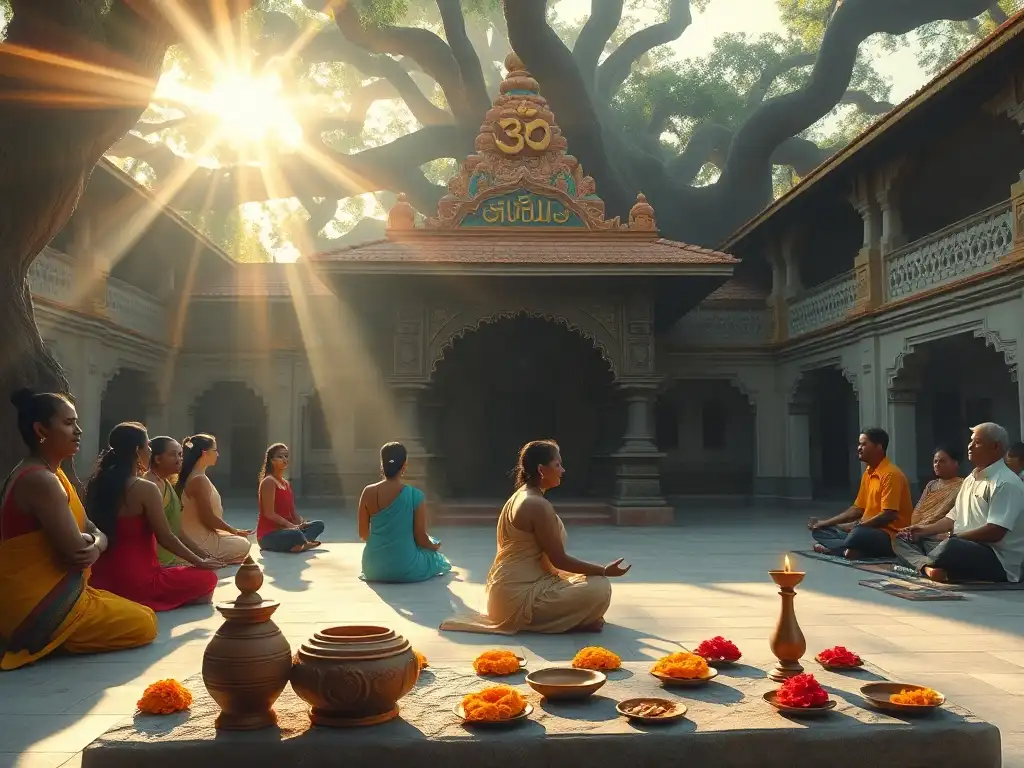
Welcome to Ancient India History, where we embark on a fascinating journey through the rich tapestry of India's past. Here, we delve into the intricate connections between philosophy and spirituality, with a special focus on the Vaisheshika influence on spirituality. This profound school of thought offers unique insights into how ancient Indian civilizations shaped their spiritual practices and rituals.
Are you curious about how the principles of Vaisheshika have withstood the test of time and continue to resonate in contemporary beliefs? Join us as we explore this captivating intersection of thought and tradition, and uncover the hidden gems of India's ancient wisdom.
Introduction to Vaisheshika Philosophy
The Vaisheshika school of thought, one of the six classical schools of Indian philosophy, has significantly influenced not only metaphysical concepts but also the spiritual practices and rituals within ancient Indian culture. Rooted in the teachings of the sage Kanada, Vaisheshika emphasizes a unique approach to understanding reality through its categorization of existence and the nature of objects.
This philosophy offers profound insights into the nature of the material world, which has been instrumental in shaping various spiritual practices and religious rituals throughout Indian history. By dissecting the essence of reality, Vaisheshika provides a framework within which the sacred and the mundane coexist, ultimately guiding practitioners toward spiritual enlightenment.
Overview of Vaisheshika School of Thought
The Vaisheshika philosophy is primarily known for its systematic categorization of the physical world into nine categories, or padarthas, which include substance, quality, action, generality, particularity, non-existence, and others. Each category serves to explain different aspects of existence and provides the groundwork for deeper philosophical inquiry. The primary aim of this school is to understand the nature of reality to achieve ultimate liberation ( moksha).
Using a logical and empirical approach, the Vaisheshika school laid the foundation for various spiritual practices, intertwining philosophy with the rituals that were prevalent during its time. This school of thought not only contributed to philosophical discourse but also significantly influenced the broader spectrum of Indian spirituality.
Historical Context of Vaisheshika in Ancient India
Emerging around the 2nd century BCE, the Vaisheshika school flourished in a time of rich intellectual activity in ancient India. It was during this period that scholars and philosophers began to explore the intersections between material existence and spiritual reality. The teachings of Vaisheshika, alongside those of contemporaneous schools like Nyaya, contributed to a dynamic philosophical environment that sought to address fundamental questions about existence, consciousness, and the divine.
The influence of Vaisheshika extended into the realms of ethics and spirituality, where its concepts were adopted and adapted by later philosophical traditions. Through the lens of Vaisheshika, many spiritual practices gained a philosophical grounding, connecting ritualistic elements with a deeper understanding of reality and existence.
Core Principles of Vaisheshika Philosophy
Concept of Categories (Padarthas)
Central to Vaisheshika philosophy is the notion of padarthas, which outlines the categories of existence. These categories are crucial for analyzing and understanding the material world, and they include:
- Dravya (Substance): The foundational elements that make up the universe.
- Guna (Quality): Attributes that describe substances.
- Karma (Action): The activities performed by substances.
- Samanya (Generality): Common characteristics shared by different entities.
- Vishesha (Particularity): Unique features that distinguish entities from one another.
- Abhava (Non-existence): The absence of a substance or quality.
By categorizing the world around us, Vaisheshika provides a structured approach to understanding reality, which has implications for how spiritual practices are conducted and interpreted.
The Role of Atomism in Vaisheshika
Vaisheshika is notable for its early formulation of atomism, positing that all matter is composed of indivisible particles called anu. This atomistic view of the universe not only influenced scientific thought but also shaped spiritual understanding. The belief in the fundamental building blocks of reality encourages practitioners to reflect on the nature of existence and the interconnectedness of all things, thus enriching spiritual rituals and practices.
Understanding the Nature of Reality in Vaisheshika
In Vaisheshika, the nature of reality is seen as a complex interplay of material and spiritual elements. The school teaches that everything in existence is subject to change and transformation, emphasizing the transient nature of the material world. This understanding fosters a sense of detachment from the physical realm, encouraging individuals to pursue higher spiritual truths. By integrating these philosophical insights into spiritual practices, adherents can cultivate a greater awareness of their own existence and the universe, ultimately leading to spiritual liberation.
The influence of Vaisheshika on spirituality can be seen as a bridge between abstract philosophical concepts and practical ritualistic applications, making it a vital component of India's rich spiritual heritage.
Vaisheshika Influence on Spirituality and Rituals
The Vaisheshika school of thought, one of the six orthodox systems of Indian philosophy, has played a significant role in shaping various aspects of spirituality and rituals in ancient Indian culture. Rooted in a systematic approach to understanding the nature of reality, Vaisheshika emphasizes the categorization of substances and their properties, which in turn influences spiritual practices. By delineating the nature of the physical and metaphysical, it provides a framework that encourages deeper introspection and understanding of the self in relation to the universe.
The principles of Vaisheshika foster a methodical exploration of existence, which aligns with many spiritual practices aimed at achieving self-realization and enlightenment. Its focus on the material world as a means to comprehend the spiritual realm promotes a holistic approach to rituals, where physical acts are imbued with philosophical significance. As such, the influence of Vaisheshika on spirituality is profound, instilling a sense of purpose and structured thought in the execution of rituals and spiritual disciplines.
The Intersection of Vaisheshika and Indian Spiritual Practices
The intersection of Vaisheshika with Indian spiritual practices can be seen in the way it harmonizes philosophical inquiry with devotional activities. Vaisheshika's exploration of categories of existence — such as substance, quality, action, and relation — encourages practitioners to reflect on their own experiences and the nature of reality during rituals. This philosophical underpinning prompts individuals to engage with their spirituality more deeply, viewing rituals not merely as mechanical acts but as opportunities for personal transformation and understanding.
Moreover, the Vaisheshika influence can be observed in the integration of logic and reason into spiritual practices. This school encourages practitioners to question, analyze, and seek clarity, promoting a culture of inquiry that complements traditional devotional practices. For instance, the emphasis on understanding the nature of the self and the cosmos allows devotees to approach rituals with a mindset that values knowledge and intentionality, further enriching their spiritual experience.
How Vaisheshika Shaped Meditation and Contemplation Techniques
Vaisheshika's contribution to meditation and contemplation techniques is significant, primarily through its analytical approach to understanding consciousness and existence. By categorizing the various elements of the universe, Vaisheshika encourages practitioners to meditate not only on the nature of the self but also on the interconnections between all forms of existence. This results in a more nuanced meditation practice that fosters a greater sense of awareness and interconnectedness.
The techniques derived from Vaisheshika philosophy emphasize the importance of discernment in meditation. Practitioners are encouraged to observe and classify their thoughts and feelings, which aligns with the Vaisheshika focus on categorization. This methodical approach aids in cultivating mindfulness, allowing individuals to gain insights into the transient nature of thoughts and the enduring essence of consciousness. As such, the influence of Vaisheshika is evident in meditation practices that prioritize clarity, focus, and an understanding of the fundamental nature of reality.
Rituals Inspired by Vaisheshika Philosophical Concepts
Rituals influenced by Vaisheshika philosophical concepts often incorporate elements that reflect its core tenets. These rituals are designed not only to honor the divine but also to engage participants in a deeper exploration of the principles that govern existence. For example, certain rituals may emphasize the significance of the five great elements (earth, water, fire, air, and space) as foundational to both the material and spiritual realms, resonating with Vaisheshika's emphasis on categorization of substances.
Furthermore, the rituals are often characterized by a systematic approach, mirroring the Vaisheshika method of inquiry. Participants may engage in specific sequences of actions that reflect the philosophical underpinnings of the rituals, promoting a sense of order and intention. This structured approach not only enhances the spiritual experience but also reinforces the connection between the practitioner, the ritual, and the broader philosophical context, thus deepening the overall impact of the ritual.
Key Figures and Texts in Vaisheshika
Important Philosophers in the Vaisheshika Tradition
The Vaisheshika school has been shaped by several key philosophers whose contributions have significantly influenced its development. One of the foremost figures is Kanada, the founder of the Vaisheshika system, who is credited with establishing its fundamental principles and categories of reality. His seminal work, the Vaisheshika Sutras, lays the groundwork for understanding the nature of substances and their attributes.
Other notable philosophers include Prashastapada, known for his commentaries on Kanada's work, which further elucidate the complexities of Vaisheshika thought. Additionally, figures like Udayana and Dharmakirti integrated Vaisheshika concepts with other philosophical traditions, enriching its discourse and expanding its relevance in the broader landscape of Indian philosophy. Their contributions highlight the dynamic nature of Vaisheshika and its ability to adapt and engage with evolving spiritual practices.
Key Texts and Commentaries on Vaisheshika
The foundational text of the Vaisheshika school is the Vaisheshika Sutras, attributed to Kanada. This text outlines the core principles of the system, including the categorization of reality into substances, qualities, and actions. It serves as a crucial reference for understanding the philosophical framework that underpins Vaisheshika thought.
In addition to the Sutras, various commentaries have been produced over the centuries to interpret and expand upon Kanada's teachings. Noteworthy among these is Prashastapada's Bhashya, which provides detailed explanations and clarifications of the Sutras, making them more accessible to practitioners. Other texts, such as Udayana's Nyayakusumanjali, integrate Vaisheshika with the Nyaya school of thought, demonstrating its interconnections with other philosophical systems. Together, these texts form a rich tapestry of knowledge that continues to inform and inspire spiritual practices rooted in Vaisheshika philosophy.
Comparative Analysis: Vaisheshika and Other Philosophical Schools
The Vaisheshika school of thought, founded by the sage Kanada, is primarily concerned with the nature of reality and the classification of substances. Its unique approach to understanding the material world has influenced various other schools of Indian philosophy. This comparative analysis highlights how Vaisheshika differentiates itself from other philosophical systems, particularly in its treatment of spirituality and ritual practices.
Whereas schools like Samkhya and Yoga focus on metaphysical dualism and the liberation of the soul from material bondage, Vaisheshika emphasizes an atomistic view of the universe. It posits that all objects are composed of indivisible particles (anu) and that understanding these elements can lead to a deeper comprehension of existence. This focus on the empirical world does not diminish its spiritual implications; instead, it creates a foundation for spiritual practices that are grounded in the understanding of nature.
Vaisheshika vs Nyaya: Influence on Spirituality
The Nyaya school, often associated with logic and epistemology, shares a historical and philosophical connection with Vaisheshika. Both schools emphasize the importance of valid reasoning and perception in understanding reality. However, their conclusions about spirituality and rituals diverge significantly.
Nyaya promotes a more analytical approach to spirituality, where the focus is on the attainment of knowledge through debate and logical reasoning. In contrast, Vaisheshika cultivates a more experiential approach, suggesting that an understanding of the material world leads to spiritual realization. This distinction influences how adherents of each school engage with spiritual practices:
- Nyaya practitioners may engage in rituals as a means to acquire knowledge and clarity about the self and the universe.
- Vaisheshika followers, however, often incorporate rituals that celebrate the material world as a manifestation of the divine, integrating physical experiences into their spiritual lives.
By blending these perspectives, Vaisheshika contributes to a more holistic understanding of spirituality that encompasses both logic and experiential knowledge.
Influence of Vaisheshika on Advaita Vedanta Practices
Advaita Vedanta, with its non-dualistic stance, stands in contrast to the pluralism of Vaisheshika. However, the influence of Vaisheshika on Advaita Vedanta is notable in its approach to reality and the nature of existence. The concept of categories (padarthas) in Vaisheshika has provided a framework for Advaita philosophers to articulate their metaphysical ideas.
Vaisheshika's classification of substances and its emphasis on the material world have encouraged Advaita thinkers to explore the relationship between the ultimate reality (Brahman) and the empirical world. This interaction has led to a richer understanding of rituals within Advaita, where material elements are not seen as mere distractions but as pathways to realizing non-duality.
Moreover, the Vaisheshika focus on observation and empirical evidence complements the Advaita practice of meditation and inquiry into the nature of the self. This synthesis highlights how Vaisheshika's contributions extend beyond its own doctrines, affecting broader spiritual practices in Indian philosophy.
Modern Interpretations of Vaisheshika Influence
The relevance of Vaisheshika in contemporary spirituality cannot be understated. As modern spiritual movements increasingly seek to ground themselves in tangible experiences, the principles of Vaisheshika resonate strongly within these contexts. Its emphasis on understanding the material world as a reflection of the divine encourages a holistic approach to spirituality that integrates science and mysticism.
Contemporary Spiritual Movements Inspired by Vaisheshika
Many contemporary spiritual movements draw inspiration from Vaisheshika's teachings, particularly those advocating for an integration of science and spirituality. These movements promote the idea that understanding the physical universe can lead to spiritual awakening. For instance:
- Eco-spirituality: This movement emphasizes the interconnectedness of all life and encourages rituals that honor nature, echoing Vaisheshika's reverence for the material world.
- Holistic healing practices: Many practitioners incorporate Vaisheshika principles by recognizing the interplay between body, mind, and spirit, thereby fostering a comprehensive approach to wellness.
These modern interpretations highlight how the ancient teachings of Vaisheshika remain relevant, offering frameworks for understanding spirituality in a contemporary context.
The Relevance of Vaisheshika in Modern Indian Spirituality
In modern India, the teachings of Vaisheshika continue to influence spiritual thought and practice. The growing interest in scientific advancements and their relationship to spirituality reflects the core tenets of Vaisheshika. As individuals seek meaning and connection in an increasingly complex world, the emphasis on empirical understanding encourages a revival of interest in ancient philosophical teachings.
Vaisheshika's focus on categorizing and understanding the material aspects of life provides a foundation for contemporary spiritual seekers to explore their own experiences. This connection fosters a dialogue between ancient wisdom and modern existential inquiries, enabling individuals to find relevance in Vaisheshika's teachings today. Thus, the influence of Vaisheshika on spirituality remains a vital thread in the tapestry of Indian philosophical thought, bridging the past with the present and guiding future explorations of existence.
Conclusion
The Vaisheshika school of thought has played a significant role in shaping Indian spirituality and rituals throughout history. By introducing a systematic approach to understanding reality through the categorization of existence, it laid a foundation for philosophical inquiry that transcended mere rituals. This analytical framework allowed practitioners to engage with spiritual concepts deeply, encouraging a more profound connection to the divine and the nature of existence.
Summary of Vaisheshika's Influence on Spiritual Practices
Vaisheshika's influence on Indian spiritual practices can be summarized through several key aspects:
- Categorization of Reality: The Vaisheshika philosophy emphasizes the categorization of all things into distinct classes, such as substance, quality, action, and relation. This classification has encouraged a more nuanced understanding of spiritual practices, allowing practitioners to recognize the interconnectedness of all elements in their rituals.
- Integration with Other Philosophies: Vaisheshika did not develop in isolation; it influenced and was influenced by other schools of thought, such as Nyaya and Vedanta. This interaction enriched the spiritual practices of the time, leading to a more holistic approach to spirituality.
- Rituals and Ethics: Vaisheshika contributed to the moral and ethical dimensions of spirituality. Its teachings encouraged followers to engage in righteous actions, which were seen as essential for achieving spiritual goals, such as liberation (moksha).
- Influence on Personal Spirituality: The emphasis on individual understanding and experience within Vaisheshika has allowed adherents to personalize their spiritual practices, leading to diverse expressions of spirituality that resonate with the individual's unique journey.
Final Thoughts on the Legacy of Vaisheshika in Indian Spirituality
The legacy of Vaisheshika in Indian spirituality is profound and enduring. Its analytical approach to understanding existence has not only influenced rituals but has also fostered a culture of inquiry and reflection in spiritual practices. In a landscape where spirituality often intersects with philosophy, Vaisheshika stands out as a key contributor to the evolution of thought regarding the nature of the self, the universe, and the divine.
As we explore the historical context and philosophical underpinnings of Vaisheshika, it becomes evident that its influence extends beyond academic discourse. It invites practitioners to delve into their own spiritual experiences, encouraging a richer engagement with the rituals and practices that define their spiritual lives. Thus, the teachings of Vaisheshika continue to resonate, shaping the spiritual landscape of India and inspiring future generations to explore the depths of their own existence.
- Introduction to Vaisheshika Philosophy
- Overview of Vaisheshika School of Thought
- Historical Context of Vaisheshika in Ancient India
- Core Principles of Vaisheshika Philosophy
- Vaisheshika Influence on Spirituality and Rituals
- Key Figures and Texts in Vaisheshika
- Comparative Analysis: Vaisheshika and Other Philosophical Schools
- Vaisheshika vs Nyaya: Influence on Spirituality
- Influence of Vaisheshika on Advaita Vedanta Practices
- Modern Interpretations of Vaisheshika Influence
- Conclusion
Frequently Asked Questions
What is Vaisheshika philosophy?
Vaisheshika is one of the six orthodox schools of Indian philosophy that emphasizes atomism and categorization of reality. It explores the nature of existence and the material world.
How did Vaisheshika influence spirituality in ancient India?
Vaisheshika's focus on categorizing existence and understanding the material world contributed to the development of spiritual practices that integrated physical reality with metaphysical concepts.
What are some key texts associated with Vaisheshika?
The primary text of Vaisheshika philosophy is the Vaisheshika Sutras written by Kanada. This text outlines the foundational principles of the philosophy and its relationship to spirituality.
How does Vaisheshika relate to other Indian philosophies?
Vaisheshika is often studied in conjunction with Nyaya, another school of thought, creating a comprehensive understanding of logic and metaphysics that influenced other spiritual traditions in India.
What role did Vaisheshika play in rituals?
Vaisheshika's emphasis on the physical aspects of reality provided a framework for understanding the rituals that connect the material and spiritual worlds, influencing how rituals were performed in ancient India.
Final Reflection: The Enduring Legacy of Vaisheshika on Spirituality
The exploration of Vaisheshika's influence on spirituality reveals its profound relevance in today's world, where the quest for understanding the self and the universe remains paramount. In an era marked by rapid technological advancements and shifting cultural paradigms, the principles of Vaisheshika continue to resonate, guiding individuals toward a deeper comprehension of existence and the interconnectedness of all things. This ancient philosophy not only enriches our spiritual practices but also invites us to reflect on the fundamental nature of reality itself.
Vaisheshika has significantly shaped the cultural and social landscape of India, intertwining with various spiritual practices and rituals that define the essence of Indian spirituality. The emphasis on categorizing and understanding the elements of the universe fosters a mindset of inquiry and introspection. As we navigate the complexities of modern life, the teachings of Vaisheshika remind us of the importance of grounding ourselves in philosophical thought. The greatest discovery of my generation is that a human being can alter his life by altering his attitude.
– William James. This quote encapsulates the transformative potential of embracing the insights offered by Vaisheshika, allowing us to shift our perspectives and cultivate a more profound spiritual connection.
As we conclude this exploration, I invite you to reflect on how the principles of Vaisheshika can be integrated into your own spiritual journey. Consider the ways in which understanding the nature of reality and the interconnectedness of all beings can enhance your rituals and practices. Let the wisdom of this ancient philosophy inspire you to seek deeper truths, fostering a sense of unity and purpose in your life. Embrace the teachings of Vaisheshika as a guiding light, illuminating your path toward spiritual fulfillment and a richer understanding of existence.
Embrace the Wisdom of Vaisheshika Today!
Thank you for exploring the rich influence of Vaisheshika on Indian spiritual practices and rituals. Your curiosity is the first step towards deepening your understanding of this profound philosophy. Now, let's take that knowledge and put it into action!
Here are some ways you can connect further with the teachings of Vaisheshika:
- Dive deeper into Vaisheshika literature: Select a classic text or commentary and dedicate time each week to reflect on its teachings.
- Engage in mindful practices: Incorporate mindfulness exercises or meditation inspired by Vaisheshika principles into your daily routine to enhance your spiritual journey.
- Share your insights: Join online communities or forums focused on Indian philosophy—discuss your thoughts and learn from others’ experiences!
What aspect of Vaisheshika resonates with you the most, and how do you plan to integrate its teachings into your everyday life?