
The Evolution of Martial Arts: Influences from Indian Kalaripayattu to Chinese Kung Fu

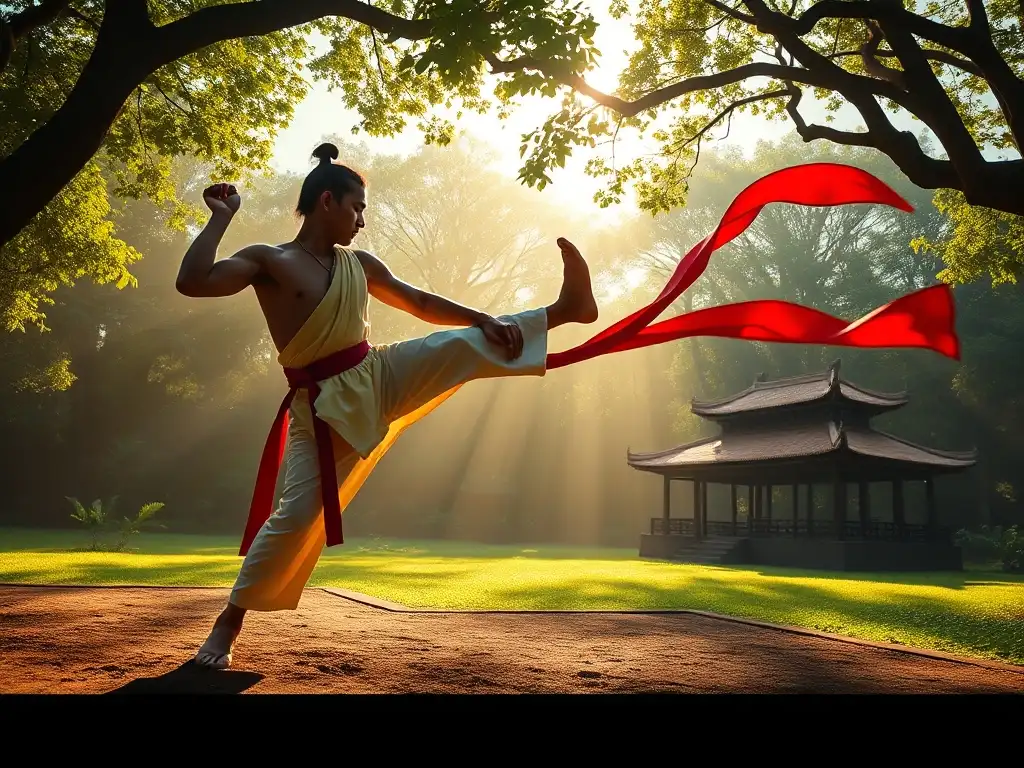
Welcome to Ancient India History, where we journey through the rich tapestry of ancient Indian civilizations and their profound contributions to the world. Today, we delve into the captivating realm of Indian martial arts history, a subject that not only showcases the physical prowess of our ancestors but also highlights the intricate exchanges between cultures. Have you ever wondered how the fluid movements of Kalaripayattu influenced the formation of Chinese Kung Fu?
Join us as we unravel this fascinating evolution, sparking curiosity and deepening your understanding of how ancient martial traditions shaped interactions across civilizations. The story is just beginning—read on to unlock the secrets of these martial arts legacies!
Introduction to Indian Martial Arts History
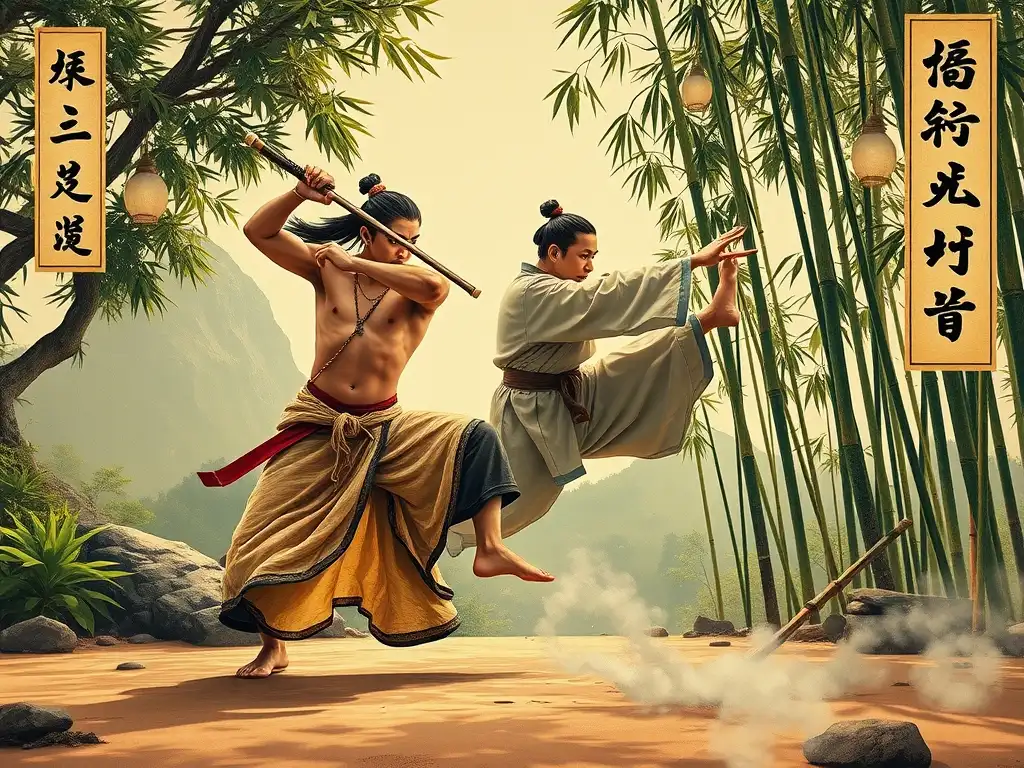
The history of martial arts is a fascinating tapestry woven from the threads of various cultures and civilizations. Among them, Indian martial arts hold a significant place, marked by their ancient origins and profound philosophies.
From the intricate movements of Kalaripayattu to the disciplined forms of Chinese Kung Fu, the evolution of these combat arts reflects not only the techniques and strategies of warfare but also the cultural exchanges that shaped their development. In this article, we will explore the rich history of Indian martial arts, particularly focusing on Kalaripayattu, and trace its influences on and connections with Chinese martial arts, highlighting the broader context of Indian-Chinese exchanges.
Overview of Martial Arts in Ancient Civilizations
Martial arts have been practiced across the globe for centuries, with each civilization developing its own unique styles and philosophies. In ancient India, martial arts were not merely combat techniques but were deeply integrated into the cultural and spiritual fabric of society.
- Indus Valley Civilization (c. 3300–1300 BCE): Earliest evidence of physical training and combat-related practices.
- Vedic Period (c. 1500–500 BCE): Texts like the Vedas and Upanishads highlight the importance of physical prowess in warriors.
- Maurya and Gupta Empires: Expansion of martial arts training, with military schools and specialized training methods.
These early forms laid the groundwork for structured systems of combat, which later influenced neighboring cultures.
Importance of Indian Martial Arts in Global Context
The global significance of Indian martial arts extends beyond their historical roots. They serve as a bridge connecting diverse cultures and philosophies. The following points illustrate their importance:
- Cultural Exchange: The migration of techniques and philosophies between India and neighboring regions, particularly China, facilitated a rich exchange of ideas.
- Philosophical Underpinnings: Many Indian martial arts emphasize not just physical combat but also mental discipline, spirituality, and self-improvement.
- Legacy: The techniques and concepts from Indian martial arts have permeated various global martial traditions, influencing numerous styles across Asia and beyond.
The study of Indian martial arts history thus provides valuable insights into the interconnectedness of human civilization.
The Origins of Kalaripayattu
Kalaripayattu, often considered one of the oldest martial arts in the world, originates from the southern state of Kerala in India. Its history is steeped in tradition and folklore, making it a crucial part of Indian martial arts history.
Historical Background of Kalaripayattu
Kalaripayattu's roots can be traced back over 3,000 years, with references in ancient texts and oral traditions. It is believed to have evolved from a combination of local fighting techniques and influences from ancient military practices.
- Influences of Ayurveda: The incorporation of Ayurvedic principles into training enhances both physical and mental health.
- Warrior Traditions: Kalaripayattu was historically taught to warriors, providing them with essential skills for combat and defense.
The art form has preserved its essence through generations, adapting to contemporary contexts while maintaining its rich heritage.
Key Techniques and Philosophy of Kalaripayattu
Kalaripayattu is characterized by a diverse range of techniques and a unique philosophy that emphasizes balance, agility, and control.
- Techniques: Includes strikes, kicks, grappling, and weaponry, utilizing a variety of tools such as swords and sticks.
- Philosophy: Rooted in the concepts of "Marmas" (vital points) and "Chikitsa" (healing), the practice promotes both physical combat skills and holistic well-being.
The integration of these elements showcases Kalaripayattu as not just a martial art but a comprehensive system of self-discipline and personal development.
Cultural Significance of Kalaripayattu in India
Kalaripayattu holds immense cultural significance in India, serving as a symbol of heritage and identity.
- Festivals and Performances: It is often showcased during cultural festivals, attracting attention for its dynamic movements and historical narratives.
- Role in Community: Kalaripayattu schools, or "Kalari," serve as centers for community gatherings, imparting both martial training and cultural education.
Thus, Kalaripayattu remains a vibrant aspect of Indian culture, reflecting the enduring legacy of martial arts in the subcontinent.
The Influence of Indian Martial Arts on Chinese Kung Fu
The influence of Indian martial arts on Chinese Kung Fu is a profound and intricate aspect of the historical exchanges between these two ancient civilizations. This relationship can be traced back to early contact between India and China, where cultural, philosophical, and military traditions began to intertwine. The foundational principles of martial arts, notably those seen in Kalaripayattu, have significantly shaped the development of various Kung Fu styles, highlighting a reciprocal exchange of techniques and philosophies that enriched both traditions.
Early Interactions between India and China
The early interactions between India and China can be largely attributed to trade routes such as the Silk Road, which facilitated not only the exchange of goods but also ideas and cultural practices. As early as the 1st century CE, Buddhist monks traveling from India to China brought with them not only religious teachings but also the physical disciplines associated with martial arts that were integral to their practices. These monks often engaged in physical training to enhance their spiritual and mental focus, laying the groundwork for what would eventually influence the martial arts in China.
Additionally, the arrival of Indian expatriates and scholars in Chinese courts during the Han Dynasty (206 BCE – 220 CE) further cemented this exchange. The integration of Indian techniques and philosophies into Chinese society opened avenues for martial arts to evolve, blending Indian movements and strategies with local traditions, thus fostering a unique evolution of martial practices.
Transmission of Martial Arts Techniques from India to China
The transmission of martial arts techniques from India to China occurred through various means, including the movement of monks and traders, as well as through the establishment of Buddhist temples. One of the key figures in this transmission was Bodhidharma, a Buddhist monk traditionally credited with bringing Indian martial arts knowledge to the Shaolin Temple in China during the 6th century CE. His teachings emphasized physical conditioning as a means of enhancing meditation and spiritual discipline, which greatly influenced the development of Shaolin Kung Fu.
Moreover, Indian martial arts emphasized fluid movements, agility, and the use of diverse weapons, elements that were gradually absorbed and adapted into Chinese martial arts. Techniques such as the use of pressure points and the concept of utilizing an opponent’s force against them can be traced back to Indian practices, illustrating a direct lineage of influence.
Notable Figures in the Indian-Chinese Martial Arts Exchange
Several notable figures played crucial roles in the Indian-Chinese martial arts exchange. As previously mentioned, Bodhidharma is perhaps the most renowned, often celebrated for his foundational influence on Shaolin Kung Fu. His arrival at the Shaolin Temple introduced rigorous physical training regimens that have persisted through centuries.
Another significant figure is the Indian warrior-king Ashoka, whose reign (circa 268–232 BCE) saw the spread of Buddhism throughout Asia. This cultural dissemination included martial practices that were integral to the training of monks who would later become warriors. Additionally, the historical accounts of various Buddhist monks who traveled between the two nations demonstrate a continued exchange of martial philosophies and techniques that shaped their respective practices.
Key Features of Chinese Kung Fu
Chinese Kung Fu is characterized by a rich tapestry of styles, philosophies, and techniques, each with distinct features that reflect the cultural heritage of its practitioners. Central to its identity is the blend of martial prowess with philosophical depth, where the practice of martial arts is seen not only as a means of physical combat but also as a pathway to personal development and spiritual enlightenment.
Overview of Different Styles of Kung Fu
Kung Fu encompasses a wide variety of styles, each with unique characteristics and techniques. Some of the most recognized styles include:
- Shaolin Kung Fu: Known for its rigorous physical training and diverse techniques, it emphasizes strong stances, fluid movements, and the use of both weaponry and empty-hand techniques.
- Wing Chun: A close-combat style that focuses on quick, direct strikes and efficient movements, utilizing the opponent's energy against them.
- Tai Chi: Often practiced for its health benefits, Tai Chi incorporates slow, flowing movements and emphasizes balance, relaxation, and mindfulness.
- Hung Gar: A style that combines powerful stances and strong strikes, often characterized by its emphasis on rootedness and stability.
Each style reflects different philosophies and techniques, showcasing the diversity within Chinese martial arts.
Philosophical Underpinnings of Chinese Martial Arts
The philosophical foundations of Chinese martial arts are deeply rooted in concepts such as Taoism, Confucianism, and Buddhism. These philosophies emphasize harmony, balance, and the importance of mental discipline.
- Taoism teaches practitioners to align themselves with the natural flow of energy (Qi), promoting a sense of inner peace and balance that is essential for effective martial practice.
- Confucianism emphasizes moral integrity and respect for tradition, guiding practitioners to approach martial arts as a means of self-cultivation and ethical behavior.
- Buddhism encourages mindfulness and spiritual awareness, which are crucial for the mental focus required in martial arts training.
Together, these philosophies create a holistic approach to martial arts, integrating physical, mental, and spiritual development.
Comparisons between Kalaripayattu and Kung Fu Techniques
Comparing Kalaripayattu and Kung Fu techniques reveals both striking similarities and notable differences. Kalaripayattu, one of the oldest martial arts forms in India, incorporates a wide range of techniques, including strikes, kicks, grappling, and weapon training. Its emphasis on fluid movements and agility mirrors the dynamics found in many Kung Fu styles.
- Technique Focus: Kalaripayattu practitioners often utilize a low stance and incorporate ground movements, whereas Kung Fu styles like Wing Chun may prioritize upright stances and close-range combat.
- Philosophical Approach: Both martial arts emphasize self-discipline and mental focus, but Kalaripayattu often integrates Ayurvedic principles that connect physical health with martial practice, while Kung Fu focuses more on Qi and energy flow.
- Weaponry: Both traditions include extensive weapon training, but the types of weapons used and the techniques for their application can vary significantly, with Kalaripayattu featuring weapons like the long staff and curved sword, while Kung Fu showcases a broader array including the broadsword and butterfly knives.
While rooted in different cultural contexts, the exchange between Indian martial arts like Kalaripayattu and Chinese Kung Fu illustrates a shared legacy of martial philosophy and technique that continues to evolve today.
The Role of Trade and Cultural Exchange
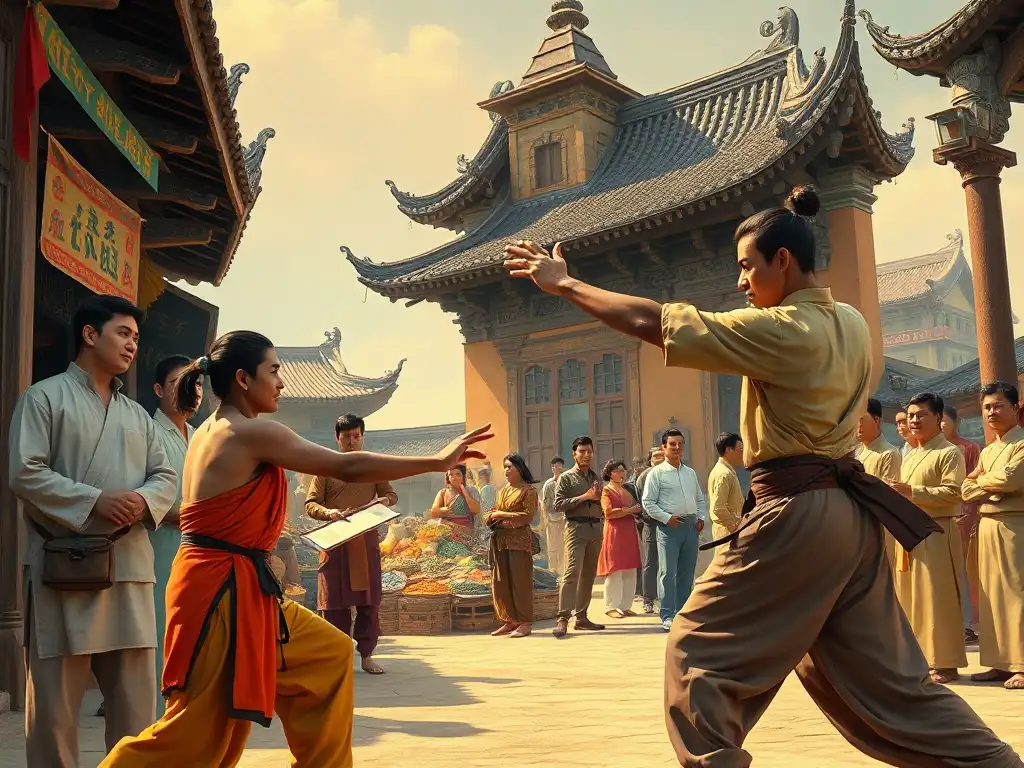
The intricate tapestry of martial arts evolution in Asia is deeply interwoven with trade and cultural exchange. As Indian martial arts, particularly Kalaripayattu, flourished, they found their way across borders, influencing various forms of combat and philosophy in neighboring regions, including China. The movement of people, goods, and ideas along trade routes facilitated not only economic transactions but also the sharing of cultural practices. This exchange is pivotal in understanding how martial arts adapted and evolved over centuries, leading to the rich diversity we see today.
Historical Trade Routes between India and China
Historically, the Silk Road stands out as a major trade route connecting India and China. This network facilitated the exchange of not just silk and spices but also cultural practices and knowledge. The maritime routes, used by traders from southern India, further expanded these exchanges. Notable routes included:
- The Northern Silk Road: Connected Central Asia to China, allowing the flow of goods and ideas.
- The Southern Maritime Route: Linked Indian ports like Calicut to Chinese provinces such as Fujian.
These routes enabled not just the trade of material goods but also the movement of scholars, monks, and martial artists who carried with them their techniques and philosophies, enriching the martial traditions of both cultures.
Impact of Cultural Exchange on Martial Arts Development
Cultural exchange between India and China significantly impacted the development of martial arts. Concepts such as yoga and meditation from Indian traditions began influencing Chinese martial practices, particularly in the development of internal martial arts like Tai Chi. This synthesis led to:
- Philosophical Integration: The incorporation of Indian philosophies, such as the concepts of energy (prana) and balance, into Chinese martial training.
- Technique Adaptation: The borrowing and adaptation of techniques, where movements from Kalaripayattu were integrated into the Chinese martial arts repertoire.
This cross-pollination allowed martial arts to evolve dynamically, leading to unique styles that retained elements of their origins while adapting to local contexts.
Case Studies of Martial Arts Evolution through Trade
Several historical case studies illustrate the evolution of martial arts through trade interactions:
- The Spread of Buddhism: The migration of Buddhist monks from India to China carried with it martial practices that emphasized discipline and self-defense, intertwining spirituality with physical training.
- The Influence of Indian Gurus: Indian martial arts experts traveling to China in search of knowledge contributed to the local fighting systems, particularly during the Tang dynasty, where records indicate the integration of Indian martial techniques into Chinese martial arts schools.
- Silk Road Martial Exchanges: As traders moved along the Silk Road, they shared not only goods but also combat techniques, leading to the development of hybrid styles that combined elements from both Indian and Chinese martial arts.
These cases exemplify the reciprocal nature of cultural exchanges and how martial arts adapted in response to these interactions.
The Legacy of Indian Martial Arts in Chinese Culture
The legacy of Indian martial arts extends beyond mere historical influence; it has left an indelible mark on the development of Chinese martial traditions. This legacy is visible in various aspects of Chinese martial arts, from techniques to philosophies.
Preservation of Indian Techniques in Chinese Martial Arts
Many techniques and philosophies rooted in Indian martial arts have been preserved within certain Chinese martial arts styles. For example:
- Stances and Movements: Some stances in Kung Fu show similarities to Kalaripayattu, emphasizing fluidity and balance.
- Meditative Practices: The incorporation of meditation and breathing techniques in Chinese martial arts reflects Indian influences, particularly from the yogic traditions.
These preserved techniques highlight the respect and integration of Indian martial arts principles within the broader spectrum of Chinese culture.
Modern Influence of Kalaripayattu on Contemporary Kung Fu
In the modern context, Kalaripayattu continues to influence contemporary forms of Kung Fu. Notably:
- Choreography in Films: The dynamic movements of Kalaripayattu have inspired martial arts choreography in Chinese cinema, showcasing the agility and grace of both styles.
- Martial Arts Training: Some Kung Fu schools incorporate Kalaripayattu techniques into their training regimens, acknowledging the historical connection and enriching their practice.
This ongoing influence underscores the lasting impact of Indian martial arts on contemporary Chinese practices.
Cross-Cultural Martial Arts Practices Today
Today, cross-cultural martial arts practices are thriving, with many practitioners exploring the roots of their discipline. Initiatives include:
- Fusion Martial Arts Schools: Schools that teach hybrid styles combining elements from both Kalaripayattu and various forms of Kung Fu.
- Cultural Workshops: Events that celebrate the martial arts heritage of both cultures, promoting understanding and cooperation among practitioners.
These practices foster a greater appreciation for the shared history of martial arts between India and China, ensuring that the legacy of these ancient traditions continues to evolve in modern times.
Conclusion: The Enduring Connection between Indian and Chinese Martial Arts
The historical trajectory of martial arts reveals a fascinating interplay between Indian and Chinese practices, underscored by a shared lineage that has shaped techniques, philosophies, and cultural narratives. Kalaripayattu, one of the oldest martial arts in India, is not just a physical discipline but a holistic approach to combat that integrates philosophy, spirituality, and health. Its influence can be traced through the evolution of various martial arts in China, indicating a reciprocal exchange of knowledge and techniques. This enduring connection underscores how ancient civilizations can transcend geographical boundaries, enriching each other’s practices and ideologies.
As we look back, it is evident that the cross-cultural interactions between India and China were pivotal in the development of martial arts, creating a rich tapestry of tradition that continues to evolve today. The exchange of skills, philosophies, and methodologies has resulted in the creation of dynamic systems that resonate with practitioners around the world, reflecting the universality of martial arts as a means of personal development, discipline, and cultural identity.
The Continuing Evolution of Martial Arts Traditions
Martial arts are not static; they evolve continuously, influenced by changing social dynamics, cultural exchanges, and technological advancements. In India, Kalaripayattu has adapted to modern times, incorporating contemporary training methods while retaining its traditional roots. This adaptability allows practitioners to engage with the art form in a way that resonates with today’s society, ensuring its relevance.
Similarly, Chinese Kung Fu has seen transformations through the integration of modern training styles, competition formats, and the influence of global martial arts trends. The ongoing dialogue between these two traditions fosters innovation and diversity, leading to hybrid styles that draw from both Indian and Chinese practices. As practitioners worldwide explore these diverse forms, they contribute to the ongoing evolution of martial arts, making them increasingly accessible and relevant to new generations.
Future Prospects for Indian Martial Arts in Global Practices
The future of Indian martial arts, particularly Kalaripayattu, appears promising in the global arena. With a growing interest in holistic health, wellness, and traditional combat systems, Kalaripayattu is gaining recognition beyond India’s borders. Workshops, demonstrations, and training camps are being organized internationally, allowing enthusiasts from various backgrounds to experience this ancient art form firsthand.
Moreover, the rise of social media and digital platforms enables practitioners to share their knowledge and experiences with a global audience. This connectivity allows for the exchange of techniques, philosophies, and cultural narratives, enriching the global martial arts community. As more educators and practitioners advocate for the inclusion of Indian martial arts in mainstream training programs, we can anticipate a broader recognition and appreciation of their historical significance and practical application in martial arts practices worldwide.
References
Key Texts on Indian Martial Arts History
- "Kalaripayattu: The Ancient Martial Art of India": by A. R. Rahman – A comprehensive overview of Kalaripayattu, its historical context, and its techniques.
- "Fighting for Honor: The History of Indian Martial Arts": by R. K. Sharma – This book delves into the evolution of various Indian martial arts and their cultural significance.
- "Indian Martial Traditions: A Historical Perspective": by L. S. Mehta – A scholarly analysis of the development of martial arts in India and their philosophical underpinnings.
Suggested Readings on Chinese Kung Fu Influences
- "The Essence of Chinese Kung Fu: A Historical Overview": by H. Chen – This book explores the roots and evolution of Kung Fu, shedding light on its influences from other traditions, including Indian martial arts.
- "Martial Arts of China: A Comprehensive Guide": by J. L. Wong – A detailed examination of various Chinese martial arts styles, their historical developments, and their connections to Indian practices.
- "Kung Fu and Beyond: The Cultural Exchanges Between India and China": by Y. T. Zhang – This text provides insights into the cultural interplay between India and China, focusing on martial arts and other forms of cultural expression.
- Introduction to Indian Martial Arts History
- The Origins of Kalaripayattu
- The Influence of Indian Martial Arts on Chinese Kung Fu
- Key Features of Chinese Kung Fu
- The Role of Trade and Cultural Exchange
- The Legacy of Indian Martial Arts in Chinese Culture
- Conclusion: The Enduring Connection between Indian and Chinese Martial Arts
- References
- What is Kalaripayattu and its significance in Indian martial arts history?
- How did Indian martial arts influence Chinese Kung Fu?
- What are some other notable forms of Indian martial arts?
- How did the Gupta Empire contribute to martial arts?
- Why is it important to study the history of Indian martial arts?
Frequently Asked Questions
What is Kalaripayattu and its significance in Indian martial arts history?
Kalaripayattu is one of the oldest martial arts in the world, originating from Kerala, India. It emphasizes both combat skills and physical fitness, showcasing the rich heritage of Indian martial arts.
How did Indian martial arts influence Chinese Kung Fu?
Indian martial arts, particularly Kalaripayattu, had a profound impact on the development of Chinese Kung Fu. Historical exchanges between India and China facilitated the transfer of techniques and philosophies.
What are some other notable forms of Indian martial arts?
Apart from Kalaripayattu, there are several other forms like Gatka, practiced by Sikhs, and Mallu Khamba, known for its unique weaponry. These styles reflect the diversity of India's martial traditions.
How did the Gupta Empire contribute to martial arts?
During the Gupta Empire, there was significant patronage of martial arts, leading to the refinement of combat techniques. The period also saw the integration of martial arts with traditional Indian dance forms.
Why is it important to study the history of Indian martial arts?
Studying the history of Indian martial arts helps us understand the cultural exchanges and influences that shaped not only India's martial traditions but also global martial arts practices, highlighting India's role in shaping combat techniques worldwide.
Final Reflection: The Timeless Journey of Martial Arts
The evolution of martial arts, from the ancient techniques of Indian Kalaripayattu to the graceful movements of Chinese Kung Fu, underscores the profound interconnectedness of cultures and philosophies. Today, as we navigate a world increasingly defined by globalization, the relevance of understanding these historical influences becomes ever more critical. The rich tapestry of martial arts not only serves as a testament to the resilience and adaptability of human expression but also as a reminder of our shared heritage and the wisdom embedded within these practices.
Cultural exchanges have always shaped societies, and the journey of martial arts is a prime example of this dynamic interplay. The techniques, philosophies, and traditions that emerged from Kalaripayattu and influenced Kung Fu illustrate the power of adaptation and innovation. As Bruce Lee once said, "> Absorb what is useful, discard what is not, add what is uniquely your own." This sentiment resonates deeply in our contemporary world, where the blending of ideas continues to foster creativity and growth in various fields, including martial arts.
As you reflect on the evolution of martial arts, consider how these ancient practices can inspire your own journey. Embrace the lessons of discipline, respect, and adaptability that martial arts embody. Whether you are a practitioner or an enthusiast, let the stories of Kalaripayattu and Kung Fu encourage you to explore your own path, cultivate resilience, and connect with the rich history that shapes our present. The journey of martial arts is not just about physical prowess; it is an invitation to engage with a deeper understanding of ourselves and the world around us.
Unlock the Secrets of Martial Arts Evolution!
Thank you for diving into the fascinating journey of martial arts with us! You’ve uncovered how the ancient techniques of Kalaripayattu paved the way for modern disciplines like Kung Fu. Now, it’s time to take that knowledge further and embrace the rich traditions of these martial arts.
Here are some exciting ways to continue your exploration:
- Dive deeper into practice: Join a local martial arts dojo or studio specializing in Kalaripayattu or Kung Fu to experience these arts firsthand!
- Share your newfound knowledge: Engage in discussions about this evolution with friends or on social media, and inspire others to discover the rich heritage of martial arts.
- Explore related topics: Read about other ancient martial arts practices from around the world and how they continue to evolve today.
What pathway will you choose to deepen your connection with martial arts and its rich history?