
Analyzing Sankhya's Cosmology: The Universe According to Ancient Indian Thought

Welcome to Ancient India History, where we embark on a captivating journey through the rich tapestry of ancient Indian civilizations. Today, we delve into the profound depths of Sankhya cosmology, a fascinating aspect of ancient Indian thought that unveils the universe's intricate workings. What secrets does this philosophical framework hold about our existence and the cosmos? Join us as we analyze the nuances of Sankhya's teachings and explore how they shaped the intellectual landscape of ancient India. Prepare to ignite your curiosity and uncover the wisdom of the ages!
The ancient Indian philosophical tradition is rich with diverse schools of thought, each offering unique insights into the nature of reality and existence. Among these, the Sankhya school stands out as one of the oldest and most influential systems of Indian philosophy, known for its systematic approach to cosmology and metaphysics. Central to Sankhya is its framework that delineates the universe's composition and the interplay between matter (Prakriti) and consciousness (Purusha).
Sankhya cosmology in ancient India presents a dualistic view of the universe, positing that all phenomena arise from the interplay of these two fundamental principles. This article will explore the intricate details of Sankhya's cosmological perspective, shedding light on its profound implications for understanding life, the cosmos, and the ultimate reality. By delving into the tenets of Sankhya, we will uncover the philosophical underpinnings that have shaped not only Indian thought but also contributed significantly to global philosophical discourse.
Overview of Sankhya Philosophy
Sankhya is one of the six orthodox schools of Indian philosophy, and it primarily focuses on knowledge and the enumeration of principles that constitute reality. It is attributed to the sage Kapila and offers a comprehensive framework that discusses the nature of the universe, the soul, and the process of liberation (moksha).
- Key Concepts:
- Purusha: The eternal, unchanging consciousness that transcends material existence.
- Prakriti: The dynamic, ever-changing nature that comprises the physical universe and all its manifestations.
- Gunasa: The three fundamental qualities (sattva, rajas, and tamas) that influence the behavior of Prakriti.
Understanding these concepts is essential for grasping how Sankhya cosmology interprets the universe's structure and functioning.
The Structure of the Universe in Sankhya
In Sankhya cosmology, the universe is systematically categorized into various elements that emerge from the interplay of Purusha and Prakriti. This classification provides a structured view of the cosmos that is both comprehensive and logical.
- Cosmic Evolution:
- The process begins with the evolution of the Mahat or intellect, which represents the first manifestation of Prakriti.
- From Mahat, the Ahamkara (ego) emerges, giving rise to the individual sense of identity.
- Manifestation of Elements:
- The subsequent phases involve the production of the five great elements (Pancha Mahabhuta):
- Earth (Prithvi)
- Water (Apas)
- Fire (Tejas)
- Air (Vayu)
- Ether (Akasha)
- The subsequent phases involve the production of the five great elements (Pancha Mahabhuta):
These elements combine to form the physical universe, shaping everything from the subatomic to the cosmic scale.
Significance of Sankhya Cosmology
The significance of Sankhya cosmology extends beyond mere metaphysical speculation; it has practical implications for the understanding of human existence and the pursuit of knowledge.
- Philosophical Impact: Sankhya's dualism influences various other philosophical systems, including Yoga and Vedanta, shaping their views on the relationship between the self and the universe.
- Practical Applications: The framework of Sankhya has been applied in various fields, including psychology, ethics, and metaphysics, offering insights into the nature of suffering and the path to liberation.
By analyzing Sankhya's cosmology, we gain valuable perspectives on ancient Indian thought and its enduring relevance in contemporary philosophical discussions.
In the following sections, we will delve deeper into the various aspects of Sankhya cosmology, examining its historical context, key texts, and the impact it has had on subsequent philosophical developments in India and beyond.
- Overview of Sankhya Philosophy
- The Structure of the Universe in Sankhya
- Significance of Sankhya Cosmology
Introduction to Sankhya Cosmology in Ancient India
Sankhya cosmology is a profound and intricate system of thought that has shaped the philosophical landscape of ancient India. Rooted in the Sankhya School, one of the six orthodox systems of Indian philosophy, this cosmology offers a unique perspective on the nature of reality, existence, and the universe. By examining the dualistic framework of purusha (consciousness) and prakriti (matter), Sankhya cosmology provides insights into the relationship between the individual self and the cosmos, illustrating how each entity interacts within the grand tapestry of existence.
Definition of Sankhya Cosmology
Sankhya cosmology can be defined as the philosophical framework that explains the structure and functioning of the universe according to the principles of the Sankhya School. At its core, it posits a dualistic ontology, where:
- Purusha: Represents pure consciousness, the eternal and unchanging observer.
- Prakriti: Refers to the material world, characterized by change, evolution, and diversity.
The interaction between purusha and prakriti is fundamental to understanding existence in Sankhya thought. This cosmology outlines the process through which the universe manifests from the unmanifested, guiding seekers in their spiritual journeys towards liberation (moksha).
Moreover, Sankhya cosmology employs a systematic classification of elements that contribute to the material world, known as the tattvas. These are often enumerated as follows:
- Mahat (Intellect): The first manifestation of prakriti.
- Ahamkara (Ego): The sense of individuality that arises from the intellect.
- Manas (Mind): The processing center for sensory experiences.
- Five Jñānendriyas (Senses): Organs of perception—hearing, touch, sight, taste, and smell.
- Five Karmendriyas (Actions): Organs of action—speech, grasping, locomotion, excretion, and procreation.
- Five Mahābhūtas (Elements): Earth, water, fire, air, and space, which form the physical basis of the universe.
Through this structured approach, Sankhya cosmology offers a comprehensive understanding of how the universe operates, emphasizing the interplay between consciousness and the material world.
Historical Context of Sankhya Philosophy
The origins of Sankhya philosophy can be traced back to ancient Indian texts, particularly the Sankhya Sutras, attributed to the sage Kapila. This school of thought emerged during a time when Indian society was increasingly exploring metaphysical questions about existence, consciousness, and the nature of reality.
Sankhya cosmology played a significant role in the intellectual milieu of ancient India, influencing various philosophical and spiritual traditions, including yoga and Vedanta. Key historical points include:
- Vedic Period (c. 1500-500 BCE): The foundational concepts of Sankhya thought began to crystallize, as texts such as the Vedas explored cosmological themes.
- Buddhist Influence (c. 5th century BCE): The development of Sankhya philosophy was contemporaneous with the rise of Buddhism, leading to dialogues and exchanges between these philosophical systems.
- Gupta Empire (c. 4th-6th century CE): Sankhya reached its zenith during this period, with significant contributions from later philosophers such as Ishvara Krishna, who further articulated and systematized its principles.
The historical evolution of Sankhya philosophy showcases its adaptability and relevance across different epochs, cementing its place in the tapestry of ancient Indian thought.
Importance of Cosmology in Ancient Indian Thought
Cosmology in ancient Indian thought, particularly within the Sankhya framework, serves multiple critical functions:
- Understanding Existence: Sankhya cosmology provides a lens through which individuals can comprehend their place within the universe, fostering a sense of connection between the self and the cosmos.
- Spiritual Development: By elucidating the relationship between purusha and prakriti, Sankhya encourages practitioners to pursue self-realization and liberation from the cycles of birth and death (samsara).
- Framework for Ethics: The dualistic nature of Sankhya cosmology informs ethical considerations, as understanding the interplay of consciousness and matter can lead to more mindful living and decision-making.
The significance of cosmology within the Sankhya School cannot be overstated. It not only enriches philosophical discourse but also serves as a guide for spiritual seekers in their quest for truth and enlightenment. Through its detailed exploration of the universe, Sankhya cosmology continues to influence contemporary philosophical thought and spiritual practice, making it a vital aspect of ancient Indian heritage.
Core Concepts of Sankhya Cosmology
Sankhya cosmology in ancient India is a profound philosophical framework that explains the nature of reality through the interplay of two fundamental principles: Purusha and Prakriti. At its core, Sankhya philosophy presents a dualistic view of the universe, where consciousness (Purusha) and materiality (Prakriti) exist as distinct yet interconnected entities. Understanding these core concepts is essential to grasping the intricacies of Sankhya cosmology.
Purusha: The Conscious Observer
Purusha is often described as the "conscious observer" or the "pure consciousness" that transcends the physical realm. It embodies the essential self, untainted by the material world. In Sankhya philosophy, Purusha is considered eternal, unchanging, and infinite, representing the true essence of individual beings.
- Multiplicity of Purushas:
- According to Sankhya, there are countless Purushas, each representing the conscious aspect of individual souls. These Purushas exist in a state of isolation, detached from the experiences of Prakriti.
- Each Purusha experiences the material world uniquely, leading to a diverse range of perceptions and realities.
- Role in Liberation (Moksha):
- The ultimate goal in Sankhya philosophy is the realization of one's true nature as Purusha. This realization leads to liberation (moksha), where the individual soul recognizes its separation from the material entanglements of Prakriti.
- The process of attaining moksha involves self-inquiry and discrimination between the transient nature of Prakriti and the eternal essence of Purusha.
Prakriti: The Material Nature
Prakriti, in contrast to Purusha, represents the material aspect of the universe. It encompasses everything that is perceivable and is characterized by change, diversity, and evolution. Prakriti is often described as the "divine feminine" or "nature," and it manifests in three fundamental gunas (qualities): Sattva (purity), Rajas (activity), and Tamas (inertia).
-
The Three Gunas:
- Sattva: Represents harmony, knowledge, and tranquility. It promotes clarity and enlightenment.
- Rajas: Associated with action, dynamism, and passion. It drives individuals towards desire and ambition.
- Tamas: Linked to darkness, ignorance, and lethargy. It leads to confusion and stagnation.
The interplay of these gunas influences all aspects of existence, including human behavior and the natural world.
-
Evolution of Prakriti:
- Prakriti is not static; it is in a constant state of flux and transformation. The Sankhya philosophy posits that the universe evolves through a series of stages, from the unmanifest (avyakta) to the manifest (vyakta).
- This evolutionary process is driven by the interplay of the gunas, giving rise to various forms of life and material phenomena.
The Interaction of Purusha and Prakriti
The interaction between Purusha and Prakriti forms the foundation of Sankhya cosmology. This relationship is characterized by a dynamic interplay that leads to the manifestation of the universe and individual experiences.
- Causative Dualism:
- Purusha and Prakriti function as a dualistic causative framework where Purusha serves as the observer and Prakriti as the observed. This relationship underlines the philosophical notion that consciousness shapes reality.
- The dualism emphasizes that while Prakriti undergoes constant change, Purusha remains unchanged and eternal.
- Manifestation of the Universe:
- The interaction of Purusha and Prakriti leads to the manifestation of various elements of the universe, including the mind (manas), intellect (buddhi), ego (ahamkara), and the five great elements (mahabhutas).
- This manifestation is seen as a result of the evolutionary process of Prakriti influenced by the presence and observation of Purusha.
- Path to Realization:
- Understanding the relationship between Purusha and Prakriti is crucial for spiritual growth within the Sankhya framework. Practitioners engage in meditation and self-awareness to discern the true nature of reality and ultimately achieve liberation.
In summary, Sankhya cosmology in ancient India presents a rich tapestry of thought, exploring the fundamental dualities of consciousness and materiality. The concepts of Purusha and Prakriti not only elucidate the nature of existence but also offer a path towards spiritual awakening and liberation.
The Structure of the Universe in Sankhya Thought
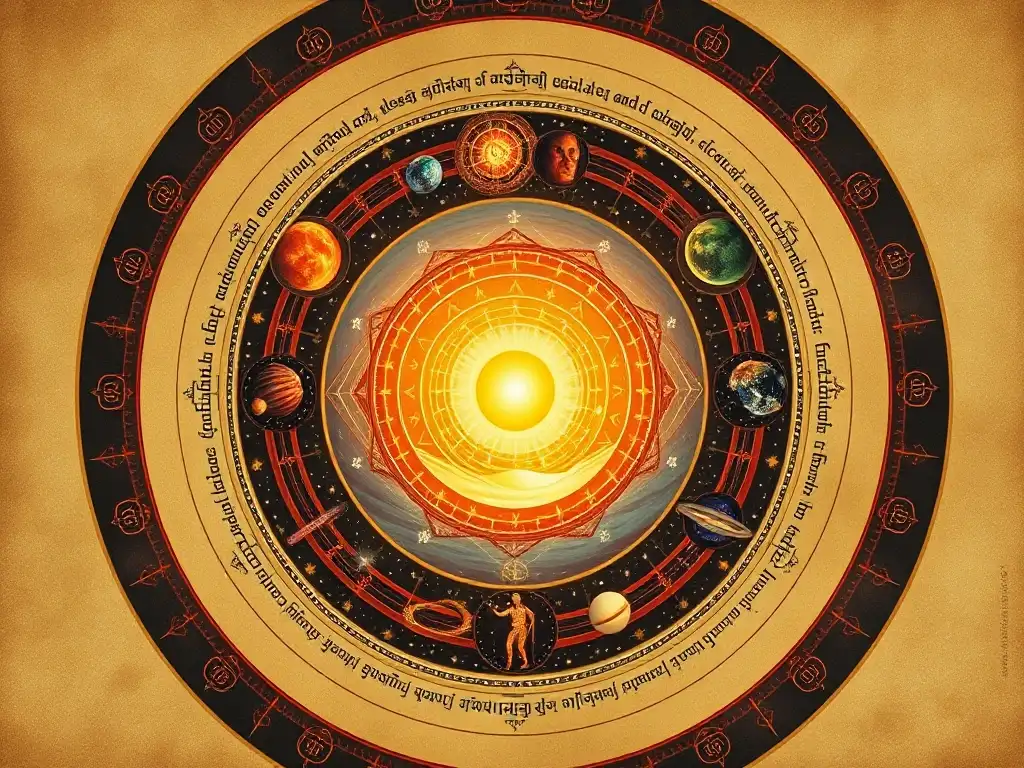
In Sankhya cosmology, the universe is understood through a dualistic framework that distinguishes between two fundamental principles: Purusha (consciousness) and Prakriti (matter). This framework provides a comprehensive understanding of reality and the processes that govern the cosmos.
Purusha represents the eternal, unchanging consciousness that transcends material existence. It is the observer, the witness of all experiences. In contrast, Prakriti is dynamic and multifaceted, embodying all physical and mental phenomena. The interplay between these two principles forms the crux of Sankhya philosophy, influencing various aspects of existence from the microcosm of individual life to the macrocosm of the universe.
The Three Gunas: Sattva, Rajas, and Tamas
Central to the Sankhya understanding of the cosmos are the three gunas—Sattva, Rajas, and Tamas. These fundamental qualities or forces characterize all aspects of Prakriti and influence the nature of existence.
- Sattva: Representing purity, knowledge, and harmony, Sattva is associated with light, wisdom, and virtue. It promotes clarity of thought and a sense of peace, facilitating spiritual growth and self-realization.
- Rajas: This quality embodies activity, passion, and dynamism. Rajas is responsible for movement and change, driving desires and ambitions. While it can lead to progress, excessive Rajas may result in chaos and unrest.
- Tamas: Symbolizing darkness, inertia, and ignorance, Tamas is the force of stagnation. It can lead to confusion and delusion, hindering spiritual awakening and understanding.
These three gunas are in constant interaction, shaping the behavior and experiences of individuals and the universe at large. The balance among them determines the quality of life, influencing everything from human behavior to the natural world.
The Evolution of the Universe: From Prakriti to Manifestation
Sankhya cosmology posits a systematic evolution of the universe, beginning with the unmanifested state of Prakriti. This process unfolds through a series of stages that lead to the manifestation of the physical world.
- Prakriti: Initially, Prakriti exists in a state of equilibrium, where the gunas are balanced. This state is unmanifest and undifferentiated, representing potential rather than actual existence.
- Gunatic Imbalance: As the gunas begin to fluctuate, the equilibrium is disrupted. This imbalance triggers the process of creation, leading to the differentiation of elements and consciousness.
- Evolution of Tattvas: The evolution proceeds through the emergence of tattvas (elements of reality), starting with the mahat (intellect) and ahamkara (ego) and progressing through the sensory and motor organs, and finally to the five great elements ( mahabhutas): earth, water, fire, air, and ether.
- Manifestation: The culmination of this process results in the manifest universe, where the interplay of the gunas gives rise to diverse forms of life and phenomena.
This evolutionary framework illustrates how the cosmos transforms from the unmanifest potential of Prakriti into the rich tapestry of existence that we perceive.
The Role of the Elements in Sankhya Cosmology
In the Sankhya system, the five elements, or mahabhutas, are fundamental to understanding the material universe. Each element represents a specific aspect of Prakriti and contributes to the formation of the physical world.
| Element | Characteristics | Corresponding Sense Organ |
|---|---|---|
| Earth | Stability, solidity, and form | Touch |
| Water | Fluidity, cohesion, and adaptability | Taste |
| Fire | Heat, transformation, and energy | Sight |
| Air | Movement, expansion, and vitality | Smell |
| Ether | Space, sound, and subtlety | Hearing |
These elements interact in complex ways, influencing not only the physical realm but also the psychological and spiritual dimensions of existence. The Sankhya philosophy emphasizes that understanding these elements and their properties is crucial for achieving harmony within oneself and with the universe.
Sankhya cosmology presents a profound and intricate understanding of the universe, rooted in the interplay between Purusha and Prakriti, the dynamics of the three gunas, the evolutionary process of manifestation, and the fundamental role of the elements. This rich conceptual framework not only elucidates the nature of reality but also offers pathways to self-awareness and spiritual growth within the tapestry of ancient Indian thought.
Comparative Analysis of Sankhya Cosmology
Sankhya vs. Other Indian Philosophical Schools
Sankhya cosmology presents a unique perspective within ancient Indian thought, characterized by its dualistic framework that distinguishes between Purusha (consciousness) and Prakriti (matter). This dichotomy sets it apart from other philosophical schools, each with its own interpretations of existence and reality.
Comparison with Yoga Philosophy
Sankhya and Yoga share a close relationship, often considered complementary systems. While Sankhya provides the metaphysical groundwork, Yoga offers practical methodologies for achieving liberation.
- Similarities:
- Both schools emphasize the importance of discerning between Purusha and Prakriti.
- Both advocate for the attainment of moksha (liberation) through self-realization.
- Differences:
- Yoga incorporates the practice of meditation, ethical disciplines, and physical postures (asanas), focusing on the experiential aspect of consciousness. In contrast, Sankhya relies more heavily on intellectual analysis and categorization of reality.
- Sankhya's cosmology is more rigid in its enumeration of principles (tattvas), whereas Yoga is more fluid in its approach to spiritual practice.
This interdependence illustrates how Sankhya cosmology serves as a philosophical foundation upon which Yoga builds its practical applications.
Contrasting Views with Vedanta
In stark contrast, Vedanta presents a monistic view, positing that all existence is ultimately one with Brahman, the absolute reality. This creates a fundamental divergence from the dualistic outlook of Sankhya.
- Core Differences:
- Nature of Reality: While Sankhya asserts a clear distinction between Purusha and Prakriti, Vedanta emphasizes the oneness of all existence, suggesting that individual souls (Atman) are ultimately identical to Brahman.
- Path to Liberation: The path in Sankhya involves knowledge and discernment, while Vedanta emphasizes devotion (bhakti) and surrender. This leads to different practices and spiritual goals in the two traditions.
- Influence on Understanding:
- Sankhya's analytical framework contributes to Vedanta's development by providing a structured approach to understanding the nature of existence, even as Vedanta critiques and expands upon Sankhya's theories.
Influence of Sankhya on Later Philosophical Thought
The impact of Sankhya cosmology extends beyond its immediate framework, influencing various later philosophical traditions and schools.
- Buddhism: Elements of Sankhya can be seen in early Buddhist thought, particularly in the understanding of anatta (non-self) and the nature of reality. The emphasis on discerning between different aspects of existence resonates with Sankhya's dualism.
- Jainism: The Jain tradition incorporates notions of duality and the multiplicity of souls, paralleling Sankhya's differentiation between the conscious self and material nature.
- Modern Philosophy: Sankhya's concepts of dualism and its analysis of consciousness have made an indelible mark on contemporary philosophical discourse, especially in discussions concerning the nature of mind and matter.
Sankhya cosmology in ancient India serves as a pivotal framework that not only defines its own philosophical stance but also shapes the contours of various subsequent schools of thought, emphasizing a rich dialogue within the broader landscape of Indian philosophy.
Practical Implications of Sankhya Cosmology
Application of Sankhya Principles in Meditation and Yoga
Sankhya cosmology provides a profound framework for understanding the nature of reality, which significantly influences meditation and yoga practices. Central to this philosophy is the distinction between Purusha (consciousness) and Prakriti (matter), which offers practitioners insights into the duality of existence.
- Meditation Techniques:
- Purusha Awareness: Techniques often focus on cultivating awareness of the Purusha, helping practitioners detach from the fluctuations of the mind and body (Prakriti). This leads to a deeper sense of peace and self-realization.
- Prakriti Observation: By observing the elements of Prakriti, such as thoughts and emotions, practitioners learn to navigate their inner landscape, fostering mindfulness and emotional regulation.
- Yoga Practices:
- Asanas and Energy Flow: Sankhya principles emphasize the balance between mind and body. Asanas are designed not just for physical health but also to harmonize the energies of Prakriti, facilitating a smoother flow of Prana (life energy).
- Breath Control (Pranayama): Incorporating Sankhya insights into breath control practices enhances the practitioner's ability to connect with both the material and spiritual aspects of their being.
The integration of Sankhya cosmology into meditation and yoga not only enriches the physical practices but also deepens the philosophical understanding of the self, leading to transformative experiences.
Insights for Understanding Human Existence and Consciousness
Sankhya cosmology offers a comprehensive perspective on human existence, emphasizing the interplay between the individual and the universe. This framework posits that:
- Dual Nature of Reality: By recognizing the distinction between Purusha and Prakriti, individuals can understand their place within the cosmos. This awareness fosters a sense of connection to the universe, promoting holistic well-being.
- Role of Gunas: The three Gunas— Sattva (purity), Rajas (activity), and Tamas (inertia)—are essential in understanding human behavior and consciousness. Each Guna influences thoughts, emotions, and actions, guiding individuals to cultivate Sattva for higher states of consciousness.
- Evolution of Consciousness: Sankhya cosmology suggests that human consciousness evolves through various stages, paralleling the development of the universe itself. This perspective encourages individuals to seek enlightenment, transcending limitations imposed by Prakriti.
The insights derived from Sankhya cosmology facilitate a deeper comprehension of not only personal existence but also the collective human experience, encouraging a journey toward self-actualization and spiritual awakening.
Relevance of Sankhya Cosmology in Modern Spiritual Practices
In contemporary spiritual practices, the principles of Sankhya cosmology remain remarkably relevant. Many modern spiritual movements draw inspiration from its teachings, applying them to various forms of self-exploration and holistic healing:
- Mindfulness and Self-Reflection: Today's mindfulness practices echo Sankhya's emphasis on self-awareness and observation of the mind. By understanding the nature of thoughts and emotions through a Sankhya lens, practitioners can develop a more profound connection to their inner selves.
- Holistic Healing: The Gunas are increasingly recognized in wellness and therapeutic contexts. Many modern therapies incorporate the balance of these qualities to promote mental, emotional, and physical health, aligning with Sankhya's holistic approach.
- Interfaith Dialogue: The universal themes found within Sankhya cosmology resonate across various spiritual traditions, fostering interfaith dialogue that emphasizes shared philosophies concerning consciousness and existence.
The relevance of Sankhya cosmology in modern spiritual practices highlights its enduring wisdom, offering pathways for individuals seeking deeper understanding and connection in an increasingly complex world.
Conclusion: The Legacy of Sankhya Cosmology in Ancient India
The legacy of Sankhya cosmology in ancient India is vast and intricate, weaving through various dimensions of philosophy, science, and spirituality. At its core, Sankhya represents one of the earliest systematic frameworks for understanding the universe, emphasizing the duality of Purusha (consciousness) and Prakriti (matter). This dichotomy not only influenced philosophical discourse but also provided a foundation for numerous other schools of thought, including Yoga and Vedanta.
Sankhya cosmology offers a unique lens through which to view the interconnectedness of existence, proposing that the universe is an interplay of different elements and principles. The classification of the five great elements (Pancha Mahabhuta), the theory of evolution (Parinama), and the enumeration of the categories of reality (Tattvas) all illustrate the comprehensive nature of this philosophical system. Its emphasis on empirical observation and categorization can be seen as a precursor to modern scientific methodologies, affirming the relevance of Sankhya thought in the broader context of human knowledge.
Summary of Key Themes in Sankhya Philosophy
Sankhya philosophy is characterized by several key themes that serve as cornerstones of its cosmological framework:
- Dualism: The fundamental distinction between Purusha and Prakriti. Purusha represents the eternal, unchanging consciousness, while Prakriti embodies the ever-changing material world.
- Evolution of Reality: The process of creation and dissolution, where Prakriti evolves into various forms of matter and consciousness, illustrating a dynamic universe.
- Tattvas: The enumeration of 25 principles that constitute reality, including Mahat (intellect), Ahamkara (ego), and the five sense organs, among others. Each Tattva plays a crucial role in the manifestation of the universe.
- Karma and Liberation: The concepts of action (Karma) and its consequences are central in Sankhya, emphasizing that understanding these principles is essential for attaining liberation (Moksha) from the cycle of birth and rebirth.
The interplay of these themes reflects a sophisticated understanding of existence and encourages individuals to explore the nature of reality through rigorous inquiry and introspection.
The Enduring Impact of Sankhya Thought on Contemporary Philosophy
Sankhya cosmology has profoundly influenced contemporary philosophical thought across various domains:
- Philosophy of Science: The analytical approach of Sankhya, particularly its emphasis on categorization and empirical observation, resonates with modern scientific methods. Researchers often draw parallels between Sankhya's Tattvas and contemporary scientific classifications.
- Psychology and Consciousness Studies: The exploration of consciousness in Sankhya has paved the way for discussions in modern psychology regarding the nature of the self, cognition, and awareness. The dualistic perspective continues to inspire debates about the mind-body relationship.
- Ethics and Moral Philosophy: The principles of Karma and moral responsibility, as outlined in Sankhya, continue to inform ethical theories, particularly in discussions surrounding action and consequence in various philosophical traditions.
- Spiritual Practices: The influence of Sankhya can be seen in contemporary spiritual practices, especially in yoga and meditation, where the understanding of the self and the material world is paramount.
This enduring impact indicates that the insights of Sankhya cosmology remain relevant and applicable, bridging ancient wisdom with modern philosophical inquiry.
Future Directions for Research on Sankhya Cosmology
As interest in Sankhya cosmology grows, several avenues for future research emerge:
- Interdisciplinary Studies: Exploring the intersections of Sankhya with fields such as neuroscience, quantum physics, and existential philosophy could yield rich insights into the nature of reality and consciousness.
- Comparative Philosophy: A comparative analysis of Sankhya with other philosophical traditions, such as Western dualism or phenomenology, may illuminate unique perspectives on existence and the universe.
- Historical Contextualization: Further studies focusing on the historical development of Sankhya and its interaction with other philosophical schools in ancient India can deepen our understanding of its evolution and significance.
- Application in Modern Contexts: Investigating the application of Sankhya principles in contemporary issues, such as environmental ethics and holistic health, could provide practical frameworks for addressing current challenges.
By pursuing these directions, scholars can contribute to the comprehensive understanding of Sankhya cosmology and its relevance in both historical and contemporary contexts, ensuring its teachings continue to resonate in an ever-evolving world.
References and Further Reading
Key Texts on Sankhya Philosophy
The foundational texts of Sankhya philosophy provide essential insights into its cosmological views and metaphysical principles. Key texts include:
- Sankhya Karika: Authored by Ishvara Krishna, this is the principal text of the Sankhya school, outlining the theory of evolution and the nature of reality. It is crucial for understanding the dualistic framework of purusha (consciousness) and prakriti (matter).
- Yoga Sutras of Patanjali: While primarily a text on yoga, it incorporates Sankhya philosophy, offering a comprehensive understanding of how the mind interacts with the material world.
- Brahma Sutras: Although not exclusively focused on Sankhya, this text engages with various schools of thought, including Sankhya, discussing the nature of reality and liberation.
- Manusmriti: This ancient legal text reflects the socio-cultural milieu of ancient India, incorporating philosophical ideas related to Sankhya, particularly in its discussions on cosmic order (dharma).
These texts collectively form the backbone of Sankhya philosophy, providing a fertile ground for further exploration of its cosmological implications.
Scholarly Articles on Ancient Indian Cosmology
Numerous scholarly articles delve into the complexities of Sankhya cosmology in ancient India. Notable works include:
- "The Nature of Reality in Sankhya Philosophy": This article analyzes the distinctions between purusha and prakriti, emphasizing their roles in the cosmological framework.
- "Sankhya and the Evolution of Cosmological Thought in Ancient India": A comprehensive study that traces the development of cosmological concepts in Sankhya and their influence on later Indian philosophies.
- "Comparative Analysis of Sankhya and Buddhist Cosmology": This research compares the cosmological views of Sankhya with those of Buddhism, highlighting both convergences and divergences.
- "The Role of Sankhya in the Development of Indian Scientific Thought": This article discusses how Sankhya philosophy contributed to early scientific inquiries in ancient India, including cosmology and natural phenomena.
These scholarly contributions provide a deeper understanding of how Sankhya philosophy shaped ancient Indian cosmology and its broader implications.
Resources for Deepening Understanding of Sankhya Thought
For those looking to deepen their understanding of Sankhya thought and its cosmological aspects, the following resources are recommended:
- Books:
- Sankhya Philosophy: A Critical Introduction by R. Balasubramanian: This book provides an in-depth analysis of Sankhya concepts and their implications for cosmology.
- The Philosophy of Yoga: A Sankhya Perspective by S. N. Dasgupta: This text explores the interrelation between Sankhya and yoga, emphasizing their cosmological dimensions.
- Online Courses:
- Coursera and edX offer courses on Indian philosophy that cover various philosophical schools, including Sankhya, providing structured learning experiences.
- Documentaries and Lectures:
- Platforms like YouTube host lectures from renowned scholars on Sankhya philosophy and cosmology, making complex ideas more accessible.
- Discussion Forums:
- Engaging in online forums such as Reddit's r/Philosophy or specialized groups on Facebook can provide opportunities for discussion and clarification of complex topics related to Sankhya.
These resources will aid readers in exploring the rich tapestry of Sankhya cosmology and its significance within the broader context of ancient Indian thought.
Frequently Asked Questions
What is Sankhya cosmology in ancient India?
Sankhya cosmology is a philosophical framework that explains the nature of the universe and existence, outlining the interplay between consciousness (Purusha) and matter (Prakriti).
How does Sankhya differ from other Indian philosophies?
Unlike other Indian philosophies, Sankhya emphasizes a dualistic approach, distinguishing between spirit and matter, and focuses on the enumeration of principles underlying reality.
What are the main components of Sankhya cosmology?
The main components include the 23 principles (tattvas) that describe the evolution of the universe, from Prakriti to the manifest world, highlighting the process of creation and dissolution.
How did Sankhya cosmology influence other philosophies?
Sankhya cosmology laid the groundwork for various Indian philosophical systems, including Yoga, which incorporates its views on the relationship between mind, body, and spirit.
Why is Sankhya considered significant in ancient Indian thought?
Sankhya is significant because it provides a systematic approach to understanding the cosmos, influencing not only philosophy but also aspects of science, psychology, and spiritual practice in ancient India.
Final Reflection: Embracing the Depths of Sankhya Cosmology
In exploring Sankhya cosmology in ancient India, we uncover a profound understanding of the universe that resonates with contemporary inquiries into existence and consciousness. The intricate framework of Sankhya philosophy not only offers insights into the nature of reality but also challenges us to reconsider our place within it. Today, as we grapple with the complexities of modern life and the universe, the wisdom of Sankhya serves as a beacon, reminding us that ancient thought can illuminate our current path.
The influence of Sankhya cosmology extends far beyond its historical roots, shaping cultural and philosophical dialogues that persist in our society. This ancient perspective encourages a holistic view of life, intertwining the material and spiritual realms. As we navigate the challenges of the present, the teachings of Sankhya urge us to seek balance and harmony. The universe is a manifestation of the interplay between Purusha and Prakriti, inviting us to recognize the unity in diversity.
This quote encapsulates the essence of Sankhya, emphasizing the interconnectedness that remains relevant in our globalized world.
As we conclude our exploration of Sankhya cosmology, I invite you to reflect on its lessons and consider how they can enrich your own life. Embrace the idea that understanding the universe is not merely an intellectual pursuit but a journey of self-discovery and connection. Let the insights gained from ancient Indian thought inspire you to seek deeper truths, cultivate awareness, and foster a sense of unity with the cosmos. The wisdom of Sankhya is not just a relic of the past; it is a guiding light for our future.
Explore the Depths of Ancient Wisdom!
Thank you for delving into the fascinating realm of Sankhya's cosmology with us! We hope you uncovered the rich layers of understanding that ancient Indian thought offers. Now, it's time to take this knowledge further and make meaningful connections with it.
Here are a few actions you can take to deepen your exploration:
- Dive Deeper: Read additional texts on Sankhya and its various interpretations to appreciate the nuances in this ancient philosophy.
- Share Your Insights: Engage in discussions about this article with friends or participate in an online community to exchange perspectives and enhance your understanding of cosmology.
- Consider a creative project inspired by Sankhya's principles, such as composing a poem or crafting a short story that reflects these timeless concepts.
What aspect of Sankhya's cosmology resonates with you the most, and how do you believe it can influence contemporary thought?