
Ancient Indian Mercantilism: Strategies for Economic Success


Welcome to Ancient India History, where we embark on an enlightening journey through the rich tapestry of ancient Indian civilizations. From the enigmatic streets of the Indus Valley to the flourishing realms of the Gupta Empire, this site invites you to delve into the diverse history and vibrant culture that shaped one of the world's oldest societies.
In our featured article, "Ancient Indian Mercantilism: Strategies for Economic Success," we uncover the innovative mercantilism strategies that propelled ancient Indian trade and economy to remarkable heights. Prepare to be captivated and inspired as you explore the intricate web of commerce and prosperity that defined ancient India—your adventure into the past begins now!

Introduction to Ancient Indian Mercantilism
Mercantilism in ancient India represents a fascinating intersection of economic strategy, trade practices, and cultural development. This system, which flourished over several millennia, showcases how ancient Indian civilizations adeptly navigated the complexities of commerce and trade to achieve economic prosperity. From the bustling markets of the Indus Valley Civilization to the flourishing trade routes established during the Gupta Empire, the strategies employed by these civilizations laid the groundwork for a rich mercantile tradition that not only contributed to their wealth but also facilitated cultural exchanges that shaped the region's history.
In this article, we will delve into the ancient Indian mercantilism strategies that were pivotal in establishing trade networks, managing resources, and fostering economic relationships with neighboring regions. Understanding these strategies provides valuable insights into the economic practices that supported the dynamic societies of ancient India.
Definition of Mercantilism in Ancient India
Mercantilism, as a concept, involves the belief that a country's wealth is best served by increasing exports and collecting precious metals in return. In the context of ancient India, this definition expands to encompass the myriad practices and policies that governed trade and commerce within and beyond its borders. Ancient Indian mercantilism was characterized by:
- Trade Regulations: Laws and guidelines that managed trade practices.
- Market Organization: The establishment of haats (weekly markets) and urban centers as trade hubs.
- Resource Management: Strategies for the sustainable use of natural resources to support trade.
These elements were intricately woven into the fabric of ancient Indian society, reflecting its sophisticated understanding of economic dynamics.
Importance of Economic Strategies in Ancient Indian Civilizations
The economic strategies employed by ancient Indian civilizations were not just about wealth accumulation; they were fundamental to societal stability and cultural exchange. Some key aspects include:
- Facilitating Trade: The creation of extensive trade networks that connected various regions, promoting the exchange of goods such as spices, textiles, and precious stones.
- Cultural Interactions: Economic engagements led to the sharing of ideas, art, and technologies, enhancing cultural richness.
- Political Power: Economic success often translated into political strength, allowing rulers to expand their territories and influence.
By examining these strategies, we gain a deeper appreciation for how economic practices shaped the trajectory of ancient Indian history.
Historical Context of Mercantilism in Ancient India
Overview of Trade and Economic Systems in Ancient India
Ancient India's trade and economic systems were remarkably sophisticated, characterized by diverse practices that evolved over time. The primary features of these systems included:
- Barter System: The initial exchange of goods without currency, gradually transitioning to the use of coins.
- Trade Routes: The establishment of both land and maritime routes that facilitated trade with regions such as the Middle East, Southeast Asia, and beyond.
- Guilds and Merchant Associations: Organizations that regulated trade practices, ensured quality, and protected the interests of merchants.
This historical context reveals a complex economic landscape where various factors contributed to the flourishing of mercantilism.
Key Civilizations Contributing to Mercantilism
Several key civilizations in ancient India played significant roles in the development of mercantilism:
- Indus Valley Civilization: Known for its advanced urban planning and trade networks, it set the foundation for economic practices in subsequent eras.
- Maurya Empire: Under rulers like Chandragupta Maurya and Ashoka, state-sponsored trade flourished, enhancing economic stability.
- Gupta Empire: Often regarded as the golden age of ancient India, it witnessed remarkable advancements in trade and commerce, supported by a robust economy.
These civilizations not only contributed to the mercantile practices of their time but also influenced future generations in their economic endeavors.
By exploring the ancient Indian mercantilism strategies, we uncover a rich tapestry of economic practices that not only fostered wealth but also laid the groundwork for cultural and societal advancements throughout history.
Core Strategies of Ancient Indian Mercantilism
Ancient Indian mercantilism was characterized by a sophisticated network of trade practices that contributed to the economic prosperity of various civilizations. The primary strategies employed included the establishment of extensive trade routes, the utilization of a barter system alongside early forms of currency, and the formation of guilds and trade associations that facilitated commerce. These strategies not only enhanced trade efficiency but also fostered cultural exchanges and technological advancements across regions.
Ancient Indian merchants were adept at navigating both land and maritime routes, connecting the subcontinent with distant markets. This network was instrumental in exporting goods such as spices, textiles, and precious stones while importing vital resources. The collaborative nature of trade among merchants, facilitated by guilds, ensured that knowledge and expertise were shared, further driving economic success.
Trade Routes and Their Significance
Trade routes in ancient India were vital arteries for economic activity, significantly contributing to the region's wealth. Key routes included the Silk Road, which connected India with Central Asia, and maritime routes that linked Indian ports with the Red Sea, Persian Gulf, and Southeast Asia.
These routes enabled not only the exchange of goods but also cultural interactions. For instance, Indian merchants traded silk, spices, and gems for horses, silver, and textiles from other regions, creating a dynamic marketplace. The significance of these routes was further amplified by the establishment of trading posts and ports, such as those in Lothal and Bharukachchha, which became hubs of commerce.
The control and protection of these trade routes by ancient Indian states facilitated the safe passage of goods and increased the volume of trade. Consequently, rulers often invested in infrastructure improvements, such as roads and ports, to further enhance the efficiency of trade.
Barter System and Currency Usage
The barter system was a foundational aspect of ancient Indian trade, where goods and services were exchanged directly without the use of money. This method was prevalent in rural areas and among local traders, allowing communities to satisfy their immediate needs. However, as trade expanded, the limitations of barter became apparent, leading to the introduction of various forms of currency.
Early currencies in ancient India included metal coins, which emerged around the 6th century BCE. These coins, made from silver, gold, and copper, standardized transactions and facilitated long-distance trade. The introduction of currency allowed for more complex economic interactions, enabling merchants to engage in larger transactions and reducing the inefficiencies associated with barter.
Additionally, the presence of standardized weights and measures further supported trade by ensuring fairness in transactions. This evolution from barter to currency marked a significant development in ancient Indian mercantilism, making trade more accessible and efficient.
Role of Guilds and Trade Associations
Guilds and trade associations played a crucial role in the organizational structure of ancient Indian commerce. These groups, known as shrenis, comprised merchants and artisans who banded together to protect their economic interests. They established rules for trade, maintained quality standards for goods, and resolved disputes among members.
The guilds also facilitated the sharing of knowledge and resources, enhancing the skills of their members. For instance, they organized training for artisans and ensured that new techniques were disseminated among craftsmen. This collective approach not only improved product quality but also allowed for the specialization of trades, leading to increased production efficiency.
Furthermore, guilds often acted as intermediaries between merchants and rulers, negotiating trade agreements and securing favorable conditions for their members. Their influence extended beyond commerce, as they sometimes played a role in local governance, contributing to the overall economic stability of the regions they operated in.
Economic Policies and Governance
Economic policies in ancient India were closely linked to mercantilism, as rulers sought to regulate and promote trade to enhance their kingdoms' wealth. These policies were often shaped by the need to protect local industries while fostering external trade relationships.
Regulation of Trade by Ancient Rulers
Ancient Indian rulers implemented regulations to oversee trade activities, ensuring that they benefited from economic exchanges. They established tariffs on goods, which served as a source of revenue for the state. Additionally, rulers provided protection to merchants, safeguarding them from theft and ensuring safe passage along trade routes.
These regulatory measures also included the appointment of officials to monitor trade practices, enforce laws, and maintain order in marketplaces. Such governance not only instilled confidence among traders but also encouraged investment in commerce, leading to economic growth.
Moreover, rulers often formed alliances with local guilds, recognizing their significance in the trade ecosystem. This collaboration ensured that regulations were fair and conducive to both state interests and the welfare of merchants.
Impact of Cultural and Religious Practices on Mercantilism
Cultural and religious practices significantly influenced ancient Indian mercantilism, shaping trade relationships and economic behaviors. The diverse religious landscape of ancient India encouraged a spirit of cooperation and exchange among different communities. For example, Hindu, Buddhist, and Jain merchants often collaborated, transcending religious boundaries to engage in trade.
Religious festivals and rituals played a role in promoting trade activities, as they attracted large gatherings of people, creating opportunities for commerce. Additionally, the patronage of temples and religious institutions often provided financial backing for trading expeditions, further intertwining commerce with cultural practices.
The ethical principles derived from religious teachings also impacted mercantile practices. For instance, the concept of dharma influenced the way merchants conducted business, emphasizing honesty and fair dealings. This ethical framework fostered trust among traders, which was essential for the sustenance of mercantile networks.
Ancient Indian mercantilism thrived on a combination of strategic trade practices, regulatory governance, and cultural influences, creating a robust economic system that laid the foundation for future trade and commerce in the region.
Challenges Faced by Ancient Indian Merchants
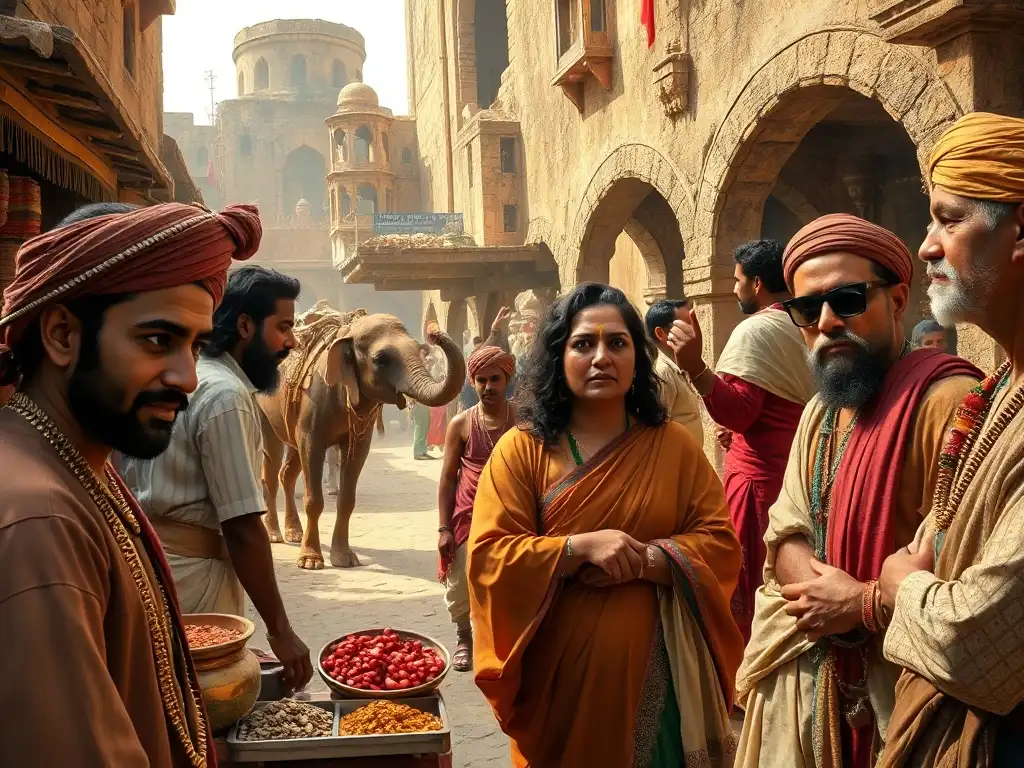
The merchants of ancient India encountered a myriad of challenges that influenced their mercantile practices and overall economic success. These difficulties stemmed from geographic, political, and competitive factors that shaped trade routes and market dynamics.
Geographic and Political Challenges
Geographic factors played a crucial role in the mercantile strategies of ancient Indian merchants. The Indian subcontinent, characterized by its diverse topography, presented both opportunities and obstacles. The Himalayas to the north acted as a natural barrier, limiting overland trade routes with Central Asia. Conversely, the extensive coastline along the Arabian Sea and the Bay of Bengal facilitated maritime trade, allowing merchants to engage with other civilizations.
Political challenges also significantly impacted trade. The fragmentation of power among various kingdoms and empires often led to inconsistent trade policies and regulations. Merchants had to navigate multiple jurisdictions, which could result in varying tax rates, tariffs, and legal requirements. For example, during the rise of the Maurya Empire, merchants faced the complexities of dealing with local rulers who imposed their own rules and taxes, complicating trade efforts.
Additionally, the threat of invasions and conflicts among kingdoms further destabilized trade routes. This uncertainty made it challenging for merchants to maintain consistent supply chains, as safety along trade routes could not be guaranteed. Overall, these geographic and political challenges necessitated the development of adaptive strategies for merchants to ensure their economic success.
Competition with Other Civilizations
Ancient Indian merchants were not only competing among themselves but also with traders from neighboring civilizations. The competition from regions such as Persia, Greece, and later the Roman Empire posed significant challenges to Indian trade dynamics. These civilizations often had established trade networks and economic systems, which necessitated that Indian merchants develop unique strategies to differentiate themselves.
One method employed by Indian merchants was the establishment of trade alliances and partnerships. By collaborating with foreign traders, they could tap into established networks, gaining access to new markets and resources. For instance, Indian merchants often engaged in trade with Arab traders who controlled the spice routes, facilitating the exchange of goods like silk, spices, and precious stones.
Moreover, Indian merchants had to innovate in their product offerings and marketing strategies to remain competitive. The introduction of superior quality textiles, such as cotton and silk, allowed Indian goods to stand out in foreign markets. Additionally, the use of packaging and branding techniques helped promote Indian products, ensuring they were recognized and valued in international trade.
Legacy of Ancient Indian Mercantilism
The mercantile practices of ancient India left a profound legacy that continues to influence economic systems and trade practices today. This legacy is evident in modern economic practices and the contributions made to global trade.
Influence on Modern Economic Practices
Ancient Indian mercantilism has had a lasting impact on contemporary economic practices, particularly in the realm of trade and commerce. The principles of trade networks established by ancient merchants can be seen in today's globalized economy. Indian merchants demonstrated the importance of building relationships and networks, which remain essential in modern business practices.
Furthermore, the emphasis on quality and branding initiated by ancient Indian traders laid the foundation for modern marketing strategies. Businesses today recognize the significance of product differentiation and branding, principles that were effectively utilized by ancient merchants to establish their goods in various markets.
The use of diverse payment systems, including barter and currency, also traces its roots back to ancient Indian mercantilism. This adaptability in financial transactions continues to be relevant as global trade evolves, incorporating various forms of currency and payment methods.
Contributions to Global Trade
Ancient Indian mercantilism significantly contributed to global trade patterns and the exchange of goods and culture. India was a crucial player in the trade of spices, textiles, and precious stones, which were highly sought after in international markets. The maritime routes established by Indian merchants facilitated the flow of goods between the East and the West, enriching not only Indian economies but also those of other civilizations involved in trade.
The cultural exchanges that occurred through trade were equally important. Indian merchants acted as conduits for the dissemination of ideas, technologies, and cultural practices. For example, the introduction of Indian numerals and mathematical concepts to the Middle East and Europe had a lasting impact on global mathematics and science.
The strategies employed by ancient Indian merchants not only ensured their economic success but also laid the groundwork for future trade practices. The legacy of their mercantilism continues to resonate in modern economies, highlighting the enduring significance of their contributions to global trade.
Conclusion
Ancient Indian mercantilism was not merely an economic system but a sophisticated blend of trade practices, cultural exchanges, and strategic governance that allowed ancient civilizations to flourish. The various strategies employed by merchants and traders—from the establishment of trade routes to the adoption of locally adapted financial instruments—demonstrate a deep understanding of the dynamics of commerce and economics. The legacy of these practices continues to influence modern economic thought and trade strategies, underscoring their significance in the historical narrative of India.
Summary of Key Ancient Indian Mercantilism Strategies
Ancient Indian mercantilism encompassed several pivotal strategies that contributed to its economic success:
- Trade Route Development: The establishment of extensive trade networks, both land and maritime, facilitated the exchange of goods not only within the Indian subcontinent but also with distant regions such as Southeast Asia, the Middle East, and Africa. Key routes like the Silk Road were vital for the exchange of spices, textiles, and precious stones.
- Cultural Exchange and Diplomacy: Merchants often acted as cultural ambassadors, fostering diplomatic relations through trade. This not only enhanced economic ties but also promoted the sharing of ideas, technology, and culture.
- Regulation and Standardization: The introduction of standardized measures and weights, alongside regulatory frameworks, enabled fair trade practices. The Arthashastra, an ancient treatise on statecraft and economics, emphasizes the importance of regulation in maintaining market order.
- Adoption of Advanced Financial Instruments: The use of promissory notes and bills of exchange facilitated long-distance trade, allowing merchants to conduct transactions with increased security and efficiency. This reflected a sophisticated understanding of financial systems.
- Local Adaptation and Resource Utilization: Merchants often adapted their strategies based on local resources and market demands. This localized approach allowed for the optimization of trade goods, catering to the specific needs of various regions.
Reflection on the Importance of Understanding Ancient Economic Practices
Understanding ancient Indian mercantilism strategies is crucial for several reasons. Firstly, it provides insights into how early civilizations navigated complex economic landscapes and adapted to changing environments. By examining these historical practices, modern economies can learn valuable lessons about sustainability, resource management, and trade diplomacy.
Moreover, the study of ancient economic systems highlights the interconnectedness of cultures and economies that transcended geographical boundaries. This reflection encourages contemporary societies to appreciate the rich tapestry of global trade and cultural exchange that has shaped human history.
Lastly, recognizing the achievements of ancient Indian mercantilism fosters a deeper appreciation for the historical contributions of Indian civilizations to the global economy. It emphasizes the need to preserve and learn from these traditions, ensuring that the wisdom of the past informs future economic practices. Understanding these strategies not only enriches our knowledge of history but also provides a foundation for more equitable and effective economic systems today.
- Introduction to Ancient Indian Mercantilism
- Historical Context of Mercantilism in Ancient India
- Core Strategies of Ancient Indian Mercantilism
- Economic Policies and Governance
- Challenges Faced by Ancient Indian Merchants
- Legacy of Ancient Indian Mercantilism
- Conclusion
- What were the main mercantilism strategies used in ancient India?
- How did the Indus Valley Civilization contribute to ancient Indian mercantilism?
- What role did guilds play in ancient Indian trade?
- How did the Gupta Empire influence ancient Indian economic strategies?
- What were the impacts of foreign trade on ancient Indian societies?
Frequently Asked Questions
What were the main mercantilism strategies used in ancient India?
Ancient Indian mercantilism strategies included trade network expansion, barter trade, and establishing market centers. These approaches facilitated the exchange of goods and services across regions.
How did the Indus Valley Civilization contribute to ancient Indian mercantilism?
The Indus Valley Civilization was pivotal in establishing early trade routes and urban centers. Their advanced urban planning and craftsmanship enabled extensive trade with neighboring regions, laying the groundwork for future mercantilism.
What role did guilds play in ancient Indian trade?
Guilds were essential in regulating trade and commerce. They provided standardization, ensured quality control, and protected the interests of merchants and artisans, fostering a stable economic environment.
How did the Gupta Empire influence ancient Indian economic strategies?
The Gupta Empire enhanced economic prosperity through improved infrastructure, such as roads and ports. Their support for arts and science also contributed to a flourishing trade economy.
What were the impacts of foreign trade on ancient Indian societies?
Foreign trade introduced new goods, ideas, and cultures, enriching ancient Indian societies. It led to greater cultural exchange and economic diversity, significantly enhancing the mercantile practices of the time.
Final Reflection: Embracing the Wisdom of Ancient Indian Mercantilism Strategies
The strategies of ancient Indian mercantilism are not just relics of the past; they resonate profoundly with today's global economy. In an era where trade dynamics are constantly shifting, the principles of collaboration, sustainability, and ethical practices that characterized ancient Indian mercantilism offer invaluable insights. Understanding these strategies can empower modern entrepreneurs and policymakers to navigate the complexities of contemporary commerce.
The influence of ancient Indian mercantilism is evident in today's cultural and social landscapes, where the values of trade and commerce continue to shape our interactions and economic frameworks. As we witness a resurgence of interest in sustainable and ethical business practices, the teachings from this ancient system remind us of the importance of community and integrity in trade. Trade is not just about goods; it is about relationships and trust.
This quote encapsulates the essence of mercantilism, urging us to prioritize connections over mere transactions.
As we reflect on the lessons of ancient Indian mercantilism, I invite you to consider how these strategies can be applied in your own life and work. What practices can you adopt to foster collaboration and sustainability in your endeavors? By embracing these timeless principles, we can create a more equitable and prosperous future, honoring the wisdom of our ancestors while paving the way for innovative economic success.
Unleash Your Economic Potential Today!
Thank you for diving into the fascinating world of ancient Indian mercantilism with us! You’ve uncovered valuable strategies that not only shaped the economy of the past but can also inspire your own journey toward financial success. Now, it's time to take meaningful action and apply these insights in your life!
- Start your own venture: Explore entrepreneurship by utilizing traditional mercantile strategies. Take the first step by brainstorming a business idea that reflects your cultural values.
- Join a community: Connect with like-minded individuals by participating in local or online trade groups. Engage in discussions, share insights, and expand your knowledge about the modern applications of these ancient strategies.
- Share the wisdom: Discuss this article with friends and family! Organize a small workshop or create a social media post showcasing what you learned—who knows who might be inspired to embrace these timeless principles?
How will you implement these ancient strategies into your modern life to carve your own path toward success? We would love to hear your thoughts in the comments!