
Unraveling the Mysteries of Nyaya: The Art and Science of Reasoning

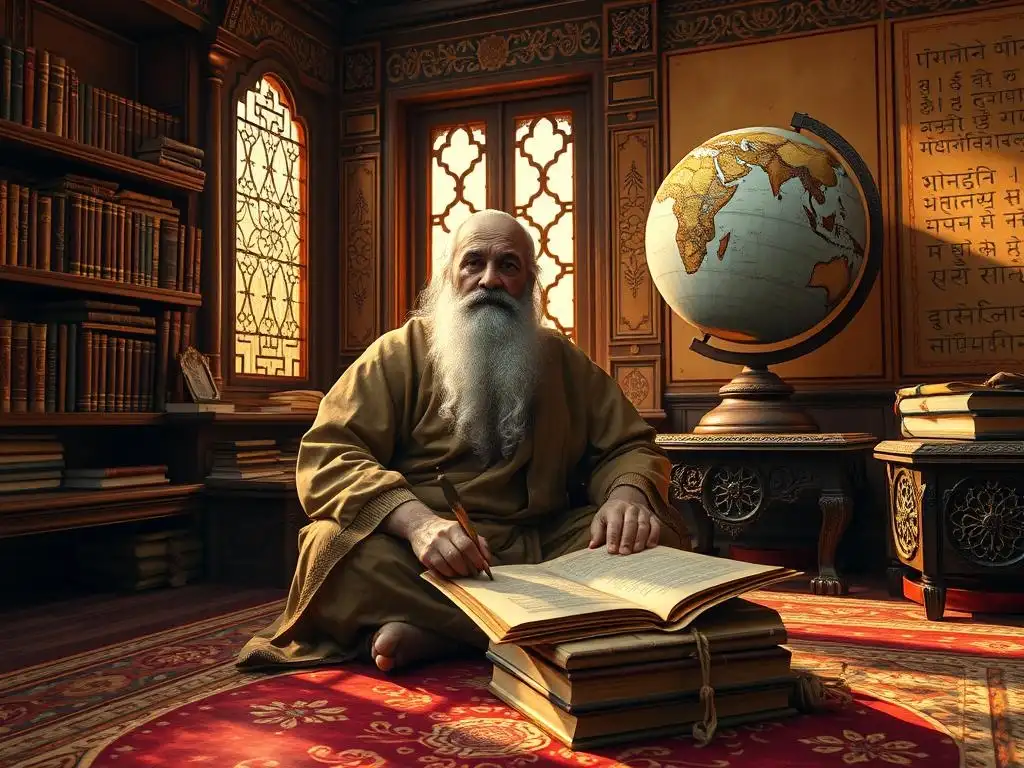
Welcome to Ancient India History, where we embark on a fascinating journey through the rich tapestry of ancient Indian civilizations. Here, we delve into the profound contributions that have shaped our understanding of philosophy, culture, and science. In our featured article, “Unraveling the Mysteries of Nyaya: The Art and Science of Reasoning,” we invite you to explore the intricate world of Nyaya philosophy—a cornerstone of logical thought in ancient India.
What insights did ancient thinkers uncover about reasoning and truth? Join us as we unravel these mysteries, igniting your curiosity to learn more about this critical aspect of philosophical heritage.
- Introduction to Nyaya Philosophy in Ancient India
- Historical Context of Nyaya Philosophy
- Core Principles of Nyaya Philosophy
- Comparing Nyaya with Other Schools of Thought
- The Art of Reasoning in Nyaya
- Influence of Nyaya Philosophy on Later Thinkers
- Misconceptions about Nyaya Philosophy
- Conclusion: The Legacy of Nyaya Philosophy in Ancient India
- References and Further Reading
- Frequently Asked Questions
- Final Reflection: Embracing the Wisdom of Nyaya Philosophy
- Unleash the Power of Reasoning Today!
Introduction to Nyaya Philosophy in Ancient India
Nyaya philosophy, one of the six orthodox schools of Indian philosophy, plays a crucial role in understanding the intellectual landscape of ancient India. Emerging around the 2nd century BCE, Nyaya provides a systematic framework for reasoning, debate, and logic, significantly influencing various fields such as epistemology, ethics, and metaphysics.
As a discipline dedicated to the art and science of reasoning, Nyaya emphasizes the importance of valid arguments and sound judgment, establishing a foundation that would shape philosophical discourse for centuries. This article aims to unravel the mysteries surrounding Nyaya philosophy, exploring its core tenets, its significance in ancient Indian thought, and its lasting impact on contemporary philosophical inquiry.
Overview of Nyaya Philosophy
Nyaya, derived from the Sanskrit word for "rule" or "method," is primarily concerned with the principles of logic and epistemology. Developed by the sage Gautama (also known as Akṣapāda), the Nyaya Sutras serve as the foundational text of this school of thought.
Key aspects of Nyaya philosophy include:
- Pramanas (Sources of Knowledge): Nyaya identifies four valid means of acquiring knowledge:
- Pratyakṣa (perception)
- Anumana (inference)
- Upamana (comparison)
- Shabda (testimony)
- Nyaya's Logical Framework: The philosophy offers a structured way to analyze arguments, categorizing them into valid and invalid forms. This rigorous approach enables practitioners to discern truth from falsehood.
- Debate and Dialogue: Central to Nyaya is the practice of debate, where scholars engage in discussions to refine their understanding and challenge preconceived notions.
Through these elements, Nyaya philosophy not only outlines a method for logical reasoning but also emphasizes the pursuit of truth, making it a vital part of ancient Indian intellectual tradition.
Importance of Reasoning in Ancient Indian Thought
The emphasis on reasoning in Nyaya philosophy reflects a broader cultural and intellectual milieu in ancient India, where critical thinking was seen as essential for personal and societal growth. The significance of reasoning can be highlighted through several points:
- Foundation of Knowledge: Reasoning is regarded as the bedrock of knowledge acquisition. In a time when oral tradition was predominant, the principles of Nyaya provided a systematic approach to validate and preserve knowledge.
- Ethical Decision-Making: The application of logical reasoning was crucial in ethical discussions, helping individuals arrive at moral conclusions through rational deliberation rather than blind adherence to tradition.
- Interdisciplinary Influence: Nyaya's principles transcended philosophical boundaries, influencing fields such as law, science, and politics, where logical reasoning and structured argumentation were essential for governance and societal order.
- Cultural Exchange: The rigorous methodologies developed by Nyaya scholars facilitated dialogue with other philosophical schools, enriching the overall discourse within ancient Indian philosophy.
Nyaya philosophy represents a vital component of ancient Indian thought, underscoring the importance of reasoning as a tool for knowledge, ethics, and cultural exchange. Its rigorous methodologies and focus on logical discourse continue to inspire contemporary philosophical inquiry, affirming its relevance and significance in the ongoing exploration of human understanding.
Historical Context of Nyaya Philosophy

The Nyaya philosophy, one of the six classical schools of Indian philosophy, emerged as a significant system of thought in ancient India. It primarily focuses on the science of reasoning and logic, offering a framework for understanding knowledge and its acquisition. The historical context of Nyaya is deeply intertwined with the cultural and intellectual milieu of ancient Indian civilizations, particularly during the post-Vedic period.
Origins of Nyaya Philosophy
The origins of Nyaya philosophy can be traced back to the foundational text known as the Nyaya Sutras, attributed to the sage Gautama (or Gotama), who lived around the 2nd century BCE. This text serves as the cornerstone of Nyaya thought, outlining the principles of logic, epistemology, and argumentation. The Nyaya Sutras consist of numerous aphorisms that delve into various aspects of knowledge, including its sources and validity.
- Key Concepts:
- Pramana: Means of obtaining knowledge.
- Prameya: The objects of knowledge.
- Anumana: Inference, which is a crucial aspect of logical reasoning in Nyaya.
The Nyaya school arose in response to the need for a systematic approach to understanding reality, particularly in a society rich with diverse philosophical views, such as those presented by Buddhism and Jainism. Nyaya's emphasis on logical analysis and debate represented a significant shift towards rational inquiry in philosophical discourse.
Key Figures in the Development of Nyaya
Several influential thinkers contributed to the evolution of Nyaya philosophy, each adding depth and nuance to its doctrines:
- Gautama (Gotama): The founder of Nyaya, he established the foundational principles in the Nyaya Sutras, emphasizing the importance of logic and reasoning.
- Uddyotakara: A later philosopher who expanded on Gautama's ideas, focusing on the nature of perception and inference. His work, the Nyaya Varttika, provided commentaries that further clarified Nyaya concepts.
- Vatsyayana: Another significant figure, Vatsyayana is best known for his Nyaya Bhashya, a comprehensive commentary on the Nyaya Sutras. He offered critical insights into the epistemological aspects of Nyaya, particularly the categories of knowledge.
- Jayanta Bhatta: A medieval scholar who integrated Nyaya with other philosophical traditions, further solidifying its relevance and application in broader philosophical debates.
These philosophers played a crucial role in refining and propagating Nyaya philosophy, ensuring its place in the intellectual heritage of ancient India.
The Role of Nyaya in Ancient Indian Civilizations
Nyaya philosophy was not merely an abstract system of thought; it played a vital role in various aspects of ancient Indian civilizations:
- Legal Framework: The principles of Nyaya were instrumental in shaping the legal system, influencing the formulation of laws based on logical reasoning and justice. The concept of Nyaya (justice) itself is derived from this philosophical tradition.
- Educational Institutions: Nyaya schools became centers of learning, where students engaged in rigorous debates and discussions. These institutions fostered a culture of intellectual inquiry and were pivotal in the transmission of knowledge.
- Interdisciplinary Influence: Nyaya philosophy interacted with other schools of thought such as Buddhism and Jainism, leading to a rich tapestry of philosophical discourse. Its focus on logic and epistemology influenced various fields, including metaphysics, ethics, and theology.
- Cultural Identity: As one of the six orthodox systems of Indian philosophy, Nyaya contributed to the cultural identity of ancient Indian civilization, fostering a shared understanding of knowledge and reasoning among scholars and laypersons alike.
Nyaya philosophy not only provided a robust framework for understanding reasoning and knowledge but also significantly impacted ancient Indian societies, shaping their legal, educational, and cultural landscapes.
Core Principles of Nyaya Philosophy

Nyaya philosophy, one of the six orthodox schools of Indian philosophy, emphasizes the importance of logic and reasoning in the pursuit of knowledge. At its core, Nyaya is not merely a system of thought but a comprehensive framework for understanding reality through rigorous analysis and debate. The key principles of Nyaya revolve around the concepts of pramana (sources of knowledge), pratyaksha (perception), anumana (inference), and the role of logical reasoning in establishing truths.
The Nyaya system is built upon the belief that knowledge can be attained through valid means, which are classified into different types. This classification serves as a guide for scholars and philosophers seeking to discern truth from falsehood. The objective is to cultivate a clear understanding of reality, thereby allowing individuals to navigate the complexities of existence with wisdom and insight.
The Concept of Pramana (Sources of Knowledge)
In Nyaya philosophy, the term pramana refers to the various means through which knowledge can be acquired. The Nyaya school identifies four primary sources of knowledge:
- Pratyaksha (Perception): This is the direct experience or observation of an object, which provides immediate knowledge.
- Anumana (Inference): This refers to knowledge obtained through logical reasoning and deduction based on prior knowledge.
- Upamana (Comparison): This involves knowledge gained through analogy or comparison with a known object.
- Shabda (Verbal Testimony): This source rests on the authority of reliable sources, such as scriptures or knowledgeable individuals.
These pramanas serve as the foundation for Nyaya's epistemology, providing a structured approach to acquiring knowledge. Each source has its own validity and limitations, and a comprehensive understanding of these sources is crucial for engaging in philosophical discourse.
Types of Pratyaksha (Perception) in Nyaya
In Nyaya, pratyaksha is further categorized into two types:
- Savikalpaka Pratyaksha: This type of perception involves the recognition of an object with its distinguishing features. For example, seeing a tree and recognizing it as a "mango tree" based on its characteristics.
- Nirvikalpaka Pratyaksha: This represents a non-conceptual form of perception where the observer experiences an object without any conceptualization or categorization. An example would be the immediate visual experience of a color or shape without identifying it.
These distinctions are significant as they highlight the different levels of understanding that can arise from direct experience. The ability to discern between these two types of perception is essential for establishing the validity of knowledge in the Nyaya framework.
The Role of Anumana (Inference) in Reasoning
Anumana plays a critical role in Nyaya philosophy as it allows individuals to draw conclusions based on established premises. It is the process of reasoning from the known to the unknown, and it can be broken down into three primary components:
- Pratijna (Proposition): This is the initial statement or claim that is being made.
- Hetu (Reason): The reason or justification that supports the proposition.
- Uddeshya (Conclusion): The conclusion that logically follows from the premise and the reason.
For example, consider the syllogism: "All humans are mortal" (pratijna), "Socrates is a human" (hetu), therefore "Socrates is mortal" (uddeshya). Such logical structures not only form the backbone of reasoning in Nyaya but also exemplify the meticulous nature of argumentation that characterizes this school of thought.
The Nyaya philosophy in ancient India illustrates a sophisticated understanding of knowledge and reasoning. By exploring the core principles of pramana, the types of pratyaksha, and the significance of anumana, we can appreciate the depth of inquiry that has shaped philosophical discourse in Indian tradition.
Understanding Upamana (Analogy) and its Significance
Upamana, or analogy, is a pivotal concept within Nyaya philosophy that refers to the process of knowledge acquisition through comparison. It plays a crucial role in how individuals derive understanding by relating unfamiliar subjects to those that are already known. This method of reasoning is essential for grasping concepts that are not directly observable or comprehensible.
In the Nyaya tradition, Upamana is classified as one of the five valid means of knowledge (pramanas). By employing analogy, philosophers illustrate how one can infer characteristics of an unknown object based on its similarities to a known one. For instance, when a person encounters a new animal, say a "horse," they may draw upon their prior knowledge of similar animals, like "donkeys" or "zebras," to infer traits such as size, shape, or behavior. This reasoning is not merely speculative; it is grounded in the logical relationship between the known and the unknown.
The significance of Upamana extends beyond mere description; it serves as a foundation for understanding complex ideas and fostering communication. By establishing common ground through analogies, philosophers and scholars are able to convey intricate philosophical concepts in a more accessible manner. This technique not only aids in teaching but also enriches philosophical discourse by allowing for deeper exploration of ideas through established comparisons.
In the broader context of Nyaya philosophy, Upamana is not just a cognitive tool; it reflects the inherent interconnectedness of knowledge. It emphasizes that understanding is often a relational process, where new insights are built upon existing frameworks. This principle underscores the dynamic nature of learning, highlighting how analogy can bridge the gap between the known and the unknown, fostering a more comprehensive understanding of the world.
The Importance of Shabda (Word) in Knowledge Acquisition
Shabda, or word, is another fundamental aspect of Nyaya philosophy that underscores the significance of language in the process of knowledge acquisition. In this philosophical paradigm, words are not merely sounds or symbols; they are vital instruments of communication that convey meaning and facilitate understanding.
According to Nyaya thinkers, words hold a crucial place in the epistemological framework. They are viewed as a legitimate means of knowledge (pramana) that allows individuals to access information and concepts articulated by others. The proper use of language enables the transmission of ideas across generations, making it possible to preserve and expand upon philosophical thought.
The importance of Shabda is particularly evident in the context of sacred texts and philosophical discourse. Scriptures, such as the Vedas, are considered authoritative because they are believed to convey eternal truths through divine revelation. In this regard, the words of these texts are not only vehicles of knowledge but also serve as a means of connecting individuals to the broader metaphysical realities they describe.
Moreover, the Nyaya school emphasizes the need for clarity and precision in the use of language. Ambiguities and vagueness in expression can lead to misunderstandings and misinterpretations, undermining the pursuit of knowledge. Therefore, Nyaya philosophers advocate for a rigorous analysis of language, encouraging practitioners to dissect and comprehend the meanings of words to achieve accurate understanding.
In essence, Shabda is integral to the Nyaya philosophy as it encapsulates the relationship between language, thought, and reality. It highlights the role of words in shaping knowledge and illustrates how effective communication is essential for philosophical inquiry and the transmission of wisdom. Through the lens of Shabda, Nyaya philosophy presents a comprehensive framework for understanding how language influences our perception of reality and our ability to acquire knowledge.
Comparing Nyaya with Other Schools of Thought

Nyaya vs. Advaita Vedanta: A Philosophical Dialogue
The Nyaya school of thought and Advaita Vedanta represent two significant philosophical traditions in ancient India, each offering unique perspectives on reality, knowledge, and liberation. While Nyaya is primarily concerned with logic and epistemology, Advaita Vedanta emphasizes non-dualism and the nature of ultimate reality.
- Epistemology:
- Nyaya outlines four valid means of knowledge (pramanas): perception, inference, comparison, and testimony. Each is meticulously analyzed to determine its reliability and validity.
- In contrast, Advaita Vedanta primarily stresses the importance of direct experience (anubhava) as a means of understanding the non-dual nature of Brahman.
- Nature of Reality:
- Nyaya posits a pluralistic reality where multiple entities exist independently. The focus is on understanding the nature of these entities through logical reasoning.
- Advaita Vedanta, however, asserts that the apparent multiplicity of the world is an illusion (Maya), and that ultimately, there is only one reality—Brahman.
- Goal of Philosophy:
- The goal in Nyaya is to attain liberation (moksha) through the right knowledge and understanding of the world, thus leading to a just and rational life.
- For Advaita Vedanta, liberation is achieved through the realization of the unity of the self (Atman) with Brahman, transcending all dualistic distinctions.
While both schools contribute richly to Indian philosophy, their methodologies and conclusions offer distinct pathways to understanding existence and the nature of knowledge.
The Relationship between Nyaya and Buddhism
The relationship between Nyaya philosophy and Buddhism is intricate, marked by both mutual influence and critical opposition. Both traditions emerged in ancient India and address similar questions related to the nature of knowledge, reality, and suffering.
- Common Ground:
- Both schools emphasize the importance of logical reasoning and debate as tools for philosophical inquiry.
- They also share a focus on the impermanence of phenomena and the quest for understanding suffering and its cessation.
- Differences in Ontology:
- Nyaya asserts a pluralistic ontology where both eternal and transient entities exist, emphasizing the validity of perception and inference.
- Buddhism, particularly in its early forms, tends to reject the notion of a permanent self or soul (Anatta) and focuses on the concept of dependent origination, where all phenomena arise in relation to one another.
- Epistemological Divergences:
- Nyaya's epistemological framework presents a systematic categorization of knowledge sources, which is more structured compared to the Buddhist approach that emphasizes experience and meditation as pathways to insight.
- Buddhist epistemology, represented by figures like Dharmakirti, often critiques the Nyaya position, arguing for a more subjective understanding of perception.
Through their interactions, Nyaya and Buddhism have enriched the philosophical landscape of ancient India, each inviting rigorous examination of concepts like reality, knowledge, and liberation.
Contrasts between Nyaya and Jain Philosophy
Nyaya and Jain philosophy present contrasting views on epistemology, metaphysics, and ethics, despite both being influential within the broader context of Indian philosophy.
- Epistemological Differences:
- Nyaya recognizes four valid means of knowledge (pramanas) and places a strong emphasis on logical inference (anumana) as a critical tool for understanding reality.
- Jain philosophy, on the other hand, introduces a more nuanced approach with its theory of multiple viewpoints (anekantavada), suggesting that truth can be perceived from various angles, and thus no single perspective can encapsulate the entirety of reality.
- Metaphysical Perspectives:
- Nyaya posits a realistic ontology where individual souls (jivas) and substances (dravya) exist independently and interact through causal relationships.
- Jainism emphasizes the eternal nature of souls but insists on their individualism and the strict non-violence (ahimsa) that governs their interactions. The Jain view sees the world as a complex interplay of numerous substances, each with its own inherent qualities.
- Ethical Implications:
- Nyaya ethics often revolves around the idea of justice and rationality, advocating for a logical approach to moral dilemmas.
- Jain philosophy, however, is deeply rooted in asceticism and strict adherence to non-violence, shaping a worldview that prioritizes compassion and restraint in all actions.
In essence, while both Nyaya and Jain philosophy contribute to the rich tapestry of ancient Indian thought, their foundational principles and ethical frameworks highlight significant contrasts that continue to influence philosophical discourse today.
The Art of Reasoning in Nyaya

Nyaya philosophy, one of the six orthodox schools of Indian philosophy, is fundamentally concerned with the art and science of reasoning. Rooted in ancient texts, particularly the Nyaya Sutras attributed to the sage Gautama, Nyaya provides a structured approach to logical thinking and argumentation. This philosophy emphasizes the importance of valid reasoning as a means to attain knowledge and truth.
Central to Nyaya is the notion of pramana, or means of knowledge, which identifies four primary sources: perception ( pratyaksha), inference ( anumana), comparison ( upamana), and verbal testimony ( shabda). Each source contributes to a comprehensive framework for understanding and evaluating arguments. The Nyaya philosophers meticulously categorized various types of logical fallacies, aiming to refine the process of reasoning and ensure that conclusions drawn are both valid and reliable.
In essence, the art of reasoning within Nyaya is not merely an academic exercise; it is a practical tool designed to navigate the complexities of life. By employing rigorous methods of inquiry and debate, adherents of Nyaya cultivate a deeper understanding of reality, enabling them to engage thoughtfully with philosophical and existential questions.
The Process of Logical Argumentation in Nyaya
The Nyaya system presents a systematic method for constructing and deconstructing arguments. This process is typically articulated through a five-step approach known as the panchavayava, which includes:
- Pratijna (Assertion): The initial claim or proposition that is to be established.
- Hetu (Reason): The logical basis or evidence supporting the assertion.
- Udaharana (Example): Examples that illustrate the validity of the reason.
- Upanaya (Application): The application of the reasoning to the specific case at hand.
- Nigamana (Conclusion): The final inference drawn from the argument.
Through this structured format, Nyaya philosophers emphasize clarity and coherence, ensuring that arguments are not only persuasive but also logically sound. An example of this process in action can be seen in epistemological discussions, where Nyaya practitioners might argue for the existence of an external world by presenting perceptual evidence (pratyaksha) and employing inference (anumana) to draw conclusions from that evidence.
The Role of Debate (Vada) in Nyaya Philosophy
Debate, or vada, holds a central position in Nyaya philosophy, functioning as a vital method for testing and validating arguments. This dialectical approach encourages the exchange of ideas, allowing participants to challenge one another's assertions and reasoning. Nyaya philosophers categorized debates into three primary forms:
- Vada: Constructive debate aimed at discovering truth through logical reasoning.
- Jalpa: A contentious debate where the focus is more on winning than on truth.
- Vitanda: A critical debate that seeks to refute another's argument without providing an alternative.
The ideal of vada promotes a respectful and thoughtful discourse, facilitating the collaborative pursuit of knowledge. This emphasis on debate not only enriches philosophical discussions but also cultivates critical thinking skills essential for personal and intellectual growth. Participants are encouraged to listen, reflect, and engage thoughtfully, aligning with the Nyaya belief that truth emerges from rigorous examination and reasoned dialogue.
Practical Applications of Nyaya Reasoning in Daily Life
Nyaya reasoning extends beyond philosophical discourse; it has practical implications for everyday life. The principles of logical thinking, clarity of expression, and critical analysis fostered by Nyaya can be applied in various contexts, including:
- Conflict Resolution: Employing structured reasoning to address disagreements constructively, allowing parties to understand each other's perspectives and find common ground.
- Decision Making: Utilizing inference and evidence-based reasoning to make informed choices in personal and professional settings.
- Education: Encouraging students to engage in critical thinking and logical argumentation, enhancing their analytical skills.
By integrating the methodologies of Nyaya into daily practices, individuals can cultivate a more reasoned approach to challenges, fostering a culture of thoughtful inquiry and dialogue. As a result, the legacy of Nyaya philosophy continues to resonate, providing timeless tools for navigating the complexities of contemporary life.
Influence of Nyaya Philosophy on Later Thinkers
Contributions to Indian Philosophy and Logic
Nyaya philosophy, with its rigorous methodology and emphasis on logical reasoning, significantly influenced later Indian philosophical thought. The Nyaya Sutras, composed by Gautama (also known as Akṣapāda), laid the groundwork for a systematic approach to epistemology and logic that would later be expanded upon by numerous scholars.
- Integration with Other Schools:
- The Nyaya school often engaged in dialogues with rival philosophical schools, such as the Vedanta and the Samkhya. This interaction led to the refinement of concepts and methods. For instance:
- Vedanta: The Nyaya system's logical framework was adopted to support metaphysical claims made in Vedanta texts, thereby enhancing their argumentative structure.
- Buddhism: Nyaya's emphasis on inference (anumana) and perception (pratyaksha) influenced Buddhist philosophers, who integrated these concepts into their own epistemological frameworks.
- The Nyaya school often engaged in dialogues with rival philosophical schools, such as the Vedanta and the Samkhya. This interaction led to the refinement of concepts and methods. For instance:
- Key Thinkers and Their Contributions:
- Udayana: A prominent Nyaya philosopher, Udayana's work "Nyaya Kusumanjali" synthesized Nyaya logic with theistic philosophy, showcasing how reasoning could substantiate the existence of God.
- Gangesha Upadhyaya: In his treatise, Gangesha further developed the principles of Nyaya, addressing the nature of knowledge and establishing a foundation for later debates in Indian philosophy.
- Logical Techniques:
- The techniques developed by Nyaya thinkers, such as the use of syllogisms (vyapti), became fundamental to Indian logic. They introduced structured arguments that were not only influential in philosophy but also in fields like law and debate, influencing how arguments were constructed and understood.
Nyaya's Impact on Modern Philosophical Thought
The legacy of Nyaya philosophy extends beyond ancient discussions, resonating with modern philosophical discourse. Its rigorous analytical techniques and emphasis on clear reasoning have left an indelible mark on contemporary thought.
- Influence on Modern Logic:
- Scholars argue that Nyaya's logical systems predate many Western logical frameworks. For instance, the Nyaya method of syllogism has parallels with modern formal logic, leading to discussions about the universality of logical principles across cultures.
- Relevance in Contemporary Philosophy:
- Current philosophical debates, particularly in epistemology and ethics, draw upon Nyaya principles. The focus on reliable knowledge sources and justifiable beliefs resonates with modern epistemological inquiries about truth and evidence.
- Additionally, the dialogical nature of Nyaya, which values rebuttal and counter-argumentation, is relevant in today's discussions around discourse ethics and constructive debate.
- Interdisciplinary Applications:
- Nyaya's emphasis on reasoning and inquiry has been applied in various fields beyond philosophy, including cognitive science, artificial intelligence, and law. The principles of logical reasoning outlined by Nyaya philosophers provide a framework for developing algorithms and models that require structured thinking and problem-solving.
The profound influence of Nyaya philosophy on later thinkers and its enduring impact on modern philosophical thought exemplify its significance in the intellectual tradition of India. The methodologies and concepts developed by Nyaya philosophers continue to inspire and challenge contemporary scholars, affirming the relevance of ancient Indian philosophy in today's world.
Misconceptions about Nyaya Philosophy

Nyaya philosophy, one of the six orthodox schools of Indian philosophy, often faces various misconceptions that can lead to misunderstandings of its principles and contributions. This section aims to highlight common myths and clarify the realities surrounding Nyaya thought, providing a more nuanced understanding of its significance in ancient Indian intellectual history.
Common Myths Surrounding Nyaya in Ancient India
-
Nyaya is Only About Logic
A prevalent myth is that Nyaya revolves solely around logic and reasoning. While the Nyaya Sutras, authored by Gautama (also known as Akṣapāda), emphasize logical inference as a means to attain knowledge, Nyaya philosophy encompasses much more. It addresses epistemology, metaphysics, and ethics, integrating various aspects of human understanding and experience.
-
Nyaya is a Rejection of Other Philosophies
Another misunderstanding is that Nyaya dismisses other philosophical traditions. In reality, Nyaya engages in dialogues with various schools of thought, including Buddhism and Jainism. This engagement demonstrates its role in the broader philosophical landscape of ancient India, where cross-pollination of ideas was common.
-
Nyaya is Irrelevant Today
Some argue that Nyaya philosophy holds no relevance in contemporary discussions. On the contrary, Nyaya's principles of reasoning and epistemology continue to influence modern philosophy, especially in areas such as logic, argumentation, and the philosophy of science. Its emphasis on critical thinking remains vital in various academic disciplines.
-
Nyaya is Exclusively Theoretical
Many believe that Nyaya is purely a theoretical discipline with no practical applications. However, Nyaya's focus on practical reasoning and real-world applications, such as legal and ethical reasoning, underscores its pragmatic relevance. For instance, Nyaya's methods of debate and dialectics have been crucial in shaping judicial processes in ancient Indian society.
Clarifying the Realities of Nyaya Thought
Nyaya philosophy is rich and multifaceted, contributing significantly to Indian philosophical discourse. Here are key aspects that clarify its essence:
- Epistemology and Pramanas: At the core of Nyaya is the study of knowledge (jnana) and the means of acquiring it (pramanas). Nyaya identifies four primary pramanas—perception (pratyakṣa), inference (anumāna), comparison (upamana), and testimony (śabda)—which are essential for establishing valid knowledge. This systematic approach to understanding knowledge is a hallmark of Nyaya thought.
- Dialectical Methodology: Nyaya employs a rigorous dialectical method, encouraging the formulation of arguments and counterarguments. This methodology not only strengthens reasoning but also fosters a culture of critical inquiry, allowing for a deeper exploration of truth.
- Influence on Other Schools: Nyaya's impact extends beyond its own domain. The principles of Nyaya have been instrumental in shaping the thoughts of other philosophical schools, including Vedanta and Buddhism. Its discussions on perception and inference have informed various aspects of metaphysical inquiry across traditions.
- Ethics and Morality: Contrary to the notion that Nyaya is devoid of ethical considerations, it addresses moral philosophy through the lens of reasoning. Nyaya emphasizes the importance of rational deliberation in ethical decision-making, asserting that sound reasoning leads to virtuous actions.
Nyaya philosophy in ancient India is a complex and integral part of the philosophical heritage, deserving of recognition and respect. By dispelling common misconceptions and clarifying its realities, we can appreciate the depth and breadth of Nyaya thought and its enduring legacy in contemporary philosophical discourse.
Conclusion: The Legacy of Nyaya Philosophy in Ancient India

The legacy of Nyaya philosophy in ancient India is profound, influencing numerous fields such as logic, epistemology, and metaphysics. Originating from the ancient texts known as the Nyaya Sutras, attributed to the sage Gautama, this school of thought established a systematic approach to reasoning and debate. The contributions of Nyaya extend beyond mere philosophical discourse; they laid the groundwork for rigorous methods of inquiry and debate that are still relevant in contemporary discussions on logic and philosophy.
Nyaya’s emphasis on the importance of pramanas (means of knowledge) has shaped the epistemological frameworks of subsequent philosophical systems. The meticulous categorization of valid and invalid arguments has not only influenced Indian philosophy but has also drawn interest from Western philosophers, who recognize the sophisticated nature of Nyaya's logical analyses. This legacy is evident in various texts and commentaries produced by later philosophers, which further refined and expanded upon Nyaya principles.
The Enduring Relevance of Nyaya Reasoning Today
Today, the principles of Nyaya reasoning remain relevant, particularly in fields such as artificial intelligence, law, and critical thinking. The structured approach to argumentation and the emphasis on clarity in reasoning are essential components in these disciplines.
- Artificial Intelligence: In AI, understanding human reasoning and argumentation is crucial for developing systems that can simulate human-like decision-making. The logical frameworks established by Nyaya can contribute to building more sophisticated algorithms that mimic human reasoning processes.
- Law: Legal discourse often hinges on the ability to construct and deconstruct arguments. Nyaya's methodologies provide valuable insights into logical reasoning, helping legal practitioners evaluate evidence and build compelling cases.
- Critical Thinking: The educational sector has increasingly recognized the importance of teaching critical thinking skills. By incorporating Nyaya principles into curricula, educators can foster a generation that is adept at reasoning, argumentation, and analytical thinking.
The enduring relevance of Nyaya philosophy underlines its importance not just as a historical artifact but as a living tradition that continues to inform contemporary discourse.
Future Directions for the Study of Nyaya Philosophy
The study of Nyaya philosophy is poised for growth, with several avenues ripe for exploration. Future research could focus on the following areas:
- Comparative Analysis: Scholars could undertake comparative studies between Nyaya and other philosophical traditions, both Eastern and Western, to highlight similarities and differences in reasoning and logic.
- Interdisciplinary Approaches: Engaging with disciplines such as cognitive science, linguistics, and sociology can provide deeper insights into the implications of Nyaya reasoning in understanding human thought processes and societal interactions.
- Modern Applications: Investigating modern applications of Nyaya principles in technology, especially in areas like machine learning and ethics, could yield practical outcomes that bridge ancient wisdom with contemporary challenges.
- Translation and Interpretation: There is a need for more translations and interpretations of Nyaya texts, making them accessible to a wider audience and fostering greater engagement with this rich philosophical tradition.
By pursuing these directions, scholars can ensure that Nyaya philosophy continues to thrive and influence future generations, reaffirming its place as a cornerstone of Indian intellectual heritage.
References and Further Reading
Recommended Texts on Nyaya Philosophy
To delve deeper into Nyaya philosophy and its intricate principles of reasoning, several texts stand out as essential resources. These works not only articulate the foundational aspects of Nyaya but also explore its implications in various fields such as logic, epistemology, and metaphysics. Here are some highly recommended texts:
-
"Nyaya Sutras" by Gautama
This foundational text of the Nyaya school outlines the basic tenets of logical reasoning and offers a comprehensive framework for understanding the nature of knowledge and reality. The commentary by later scholars provides additional insights into its interpretation.
-
"The Nyaya Philosophy: A Critical Study" by Raghunathan
This book offers a critical analysis of Nyaya philosophy, contrasting it with other Indian philosophical systems. The author discusses the evolution of Nyaya thought and its relevance in contemporary philosophical discourse.
-
"Logic and Philosophy in Ancient India" by Mohan Matthen
Matthen's work investigates the intersections of logic and philosophy in ancient Indian thought, with a significant focus on the Nyaya school. This text is particularly useful for understanding how Nyaya logic influenced later philosophical developments.
-
"An Introduction to Nyaya Philosophy" by A. N. Dandekar
This introductory text provides an accessible overview of Nyaya concepts and methods. It serves as an excellent starting point for those new to the subject.
-
"The Nyaya System of Philosophy" by K. D. Joshi
This comprehensive guide covers the historical context, key doctrines, and debates within the Nyaya tradition. Joshi's work is praised for its clarity and thoroughness.
Key Researchers and Scholars in Nyaya Studies
The study of Nyaya philosophy has been enriched by the contributions of various scholars who have dedicated their careers to exploring this intricate field. Here are some key researchers whose works have significantly advanced the understanding of Nyaya thought:
-
B. K. Matilal
A prominent philosopher known for his extensive research on Indian logic and epistemology. Matilal's writings have played a crucial role in bridging traditional Nyaya thought with contemporary philosophical discussions.
-
G. C. Pande
Pande's scholarship on ancient Indian philosophies, particularly Nyaya, has been influential in highlighting the relevance of these ideas in modern philosophical contexts. His works often explore the relationship between Nyaya and other Indian schools of thought.
-
J. N. Mohanty
Mohanty has contributed significantly to the understanding of Indian philosophy, focusing on logic and epistemology within the Nyaya framework. His analyses often draw parallels between Nyaya and Western philosophical traditions.
-
A. K. Ramanujan
Although primarily known for his contributions to literature, Ramanujan's insights into the philosophical underpinnings of Nyaya have offered unique perspectives on its cultural significance and its role in shaping Indian intellectual history.
-
R. N. Dandekar
Dandekar's research has explored the historical development of Nyaya thought and its implications for contemporary philosophy, making his work essential for anyone interested in the evolution of Indian philosophy.
These texts and scholars provide a robust foundation for anyone looking to explore the depths of Nyaya philosophy in ancient India.
Frequently Asked Questions
What is Nyaya philosophy in ancient India?
Nyaya philosophy, rooted in ancient Indian thought, emphasizes logic and reasoning as a means to acquire knowledge and truth. It forms one of the six orthodox schools of Indian philosophy.
How did Nyaya philosophy influence Indian culture?
Nyaya significantly impacted debate and discourse in ancient India, shaping fields like theology, ethics, and law. Its principles encouraged critical thinking and rational analysis in various cultural aspects.
Who were the key figures in Nyaya philosophy?
Gautama is considered the founder of Nyaya, and his work, the Nyaya Sutras, laid the foundation for subsequent thinkers like Vatsyayana and Bhadanta who expanded on his ideas.
What are the main components of Nyaya logic?
Nyaya logic includes concepts such as pramana (means of knowledge), anumana (inference), and upamana (comparison), which are essential for a structured approach to reasoning and argumentation.
How does Nyaya philosophy relate to other Indian philosophies?
Nyaya interacts with other schools, such as Vaisheshika, by sharing ideas on epistemology and metaphysics. This philosophical dialogue enriched the overall landscape of Indian philosophy during ancient times.
Final Reflection: Embracing the Wisdom of Nyaya Philosophy
In a world increasingly driven by rapid technological advancements and complex societal challenges, the principles of Nyaya philosophy remain profoundly relevant today. This ancient Indian system of reasoning not only provides a framework for logical thought but also encourages critical inquiry into our beliefs and assumptions. As we navigate the complexities of modern life, the insights of Nyaya remind us that the pursuit of truth and understanding is timeless.
The influence of Nyaya philosophy extends far beyond its historical context; it continues to shape contemporary discourse in ethics, law, and education. By fostering a culture of rational debate and analytical thinking, Nyaya has the power to transform our social landscape. As philosopher Jayanta Bhatta once said, The path of reasoning is the path to liberation.
This enduring wisdom challenges us to engage with ideas critically and to seek clarity in our judgments, ultimately enriching our collective understanding.
As we reflect on the teachings of Nyaya, I invite you to consider how you can incorporate its principles into your daily life. Take a moment to question your assumptions, engage in thoughtful dialogue, and embrace the art of reasoning. By doing so, you not only honor the legacy of Nyaya philosophy but also empower yourself to contribute meaningfully to the world around you. Let us carry forward this ancient wisdom, allowing it to guide our quest for knowledge and truth in the present and future.
Unleash the Power of Reasoning Today!
Thank you for diving into the fascinating world of Nyaya with us! We hope you’ve gained invaluable insights into this intricate art of reasoning that shapes our understanding of logic and debate. Now, it’s your turn to take this knowledge further and apply it!
Here are some practical steps you can take right now:
- Engage with your mind: Challenge yourself to analyze a recent argument or debate you encountered. Break it down using Nyaya principles and discover how this enhances your understanding!
- Share your insights: Join our community by posting your thoughts on Nyaya in the comments, or share this article with anyone who appreciates philosophy.
- Explore deeper: Check out our recommended readings section for more resources on Nyaya and related philosophical theories. Consider immersing yourself in daily philosophical discussions to deepen your understanding!
Are you ready to put your reasoning skills to the test? What argument or topic are you most excited to analyze using the principles of Nyaya?