
Unraveling the Mysteries of Ancient Indian Astronomy During the Gupta Period

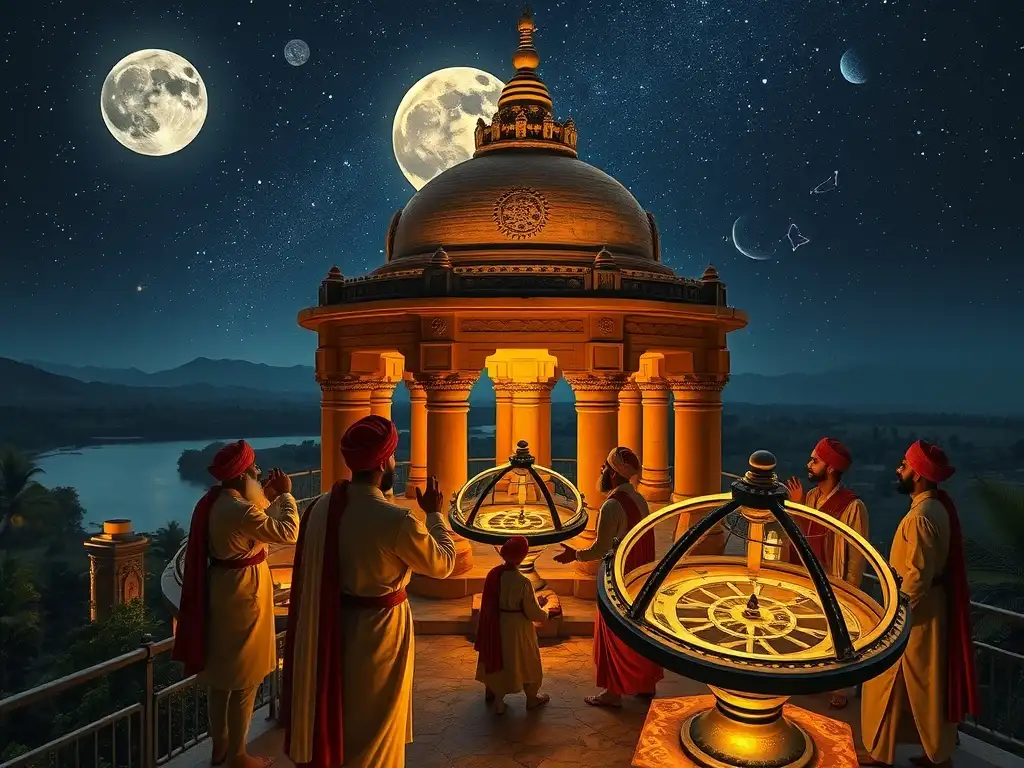
Welcome to Ancient India History, where we embark on a fascinating journey through the vibrant tapestry of one of the world's oldest civilizations. In this exploration, we focus on the intriguing realm of ancient Indian astronomy during the Gupta period, a time of remarkable scientific advancement and intellectual flourishing. Are you ready to uncover the celestial wonders and the brilliant minds that shaped our understanding of the cosmos? Dive deeper with us as we unravel the mysteries that lie at the intersection of culture, science, and history. Your adventure into the past begins here!
The Gupta Period, often hailed as the Golden Age of India, is renowned not only for its advancements in art, literature, and philosophy but also for its remarkable contributions to science and mathematics. Within this rich tapestry of intellectual achievement, ancient Indian astronomy emerges as a pivotal field that reflects the ingenuity and sophistication of Gupta scholars.
This article delves into the fascinating world of ancient Indian astronomy during the Gupta period, exploring how astronomers of this era made significant strides in understanding celestial phenomena, developing mathematical models, and crafting elaborate astronomical texts that laid the groundwork for future generations.
The Gupta Empire, spanning roughly from the 3rd to the 6th century CE, witnessed a flourishing of knowledge that was characterized by a blend of indigenous and external influences. Scholars such as Aryabhata and Varahamihira played crucial roles in advancing astronomical thought, producing works that not only recorded observations but also offered groundbreaking theories that challenged contemporary understandings. In this exploration, we will uncover the methodologies, tools, and philosophical underpinnings that defined ancient Indian astronomy, particularly its alignment with mathematics, astrology, and the broader cultural context of the Gupta period.
As we embark on this journey through time, we invite you to join us in unraveling the mysteries of ancient Indian astronomy, a captivating subject that speaks to the brilliance of Gupta scholars and their lasting impact on the world of science and beyond.
- Introduction to Ancient Indian Astronomy
- The Gupta Period: A Golden Age of Science
- Notable Astronomers of the Gupta Period
- Key Concepts in Ancient Indian Astronomy
- Texts and Treatises on Astronomy from the Gupta Period
- Techniques and Instruments Used in Gupta Astronomy
- The Influence of Ancient Indian Astronomy on Other Cultures
- Challenges and Misconceptions in Ancient Indian Astronomy
- Common Myths about Gupta Period Astronomy
- Clarifying Misconceptions: The Reality of Ancient Indian Astronomy
- Conclusion: The Enduring Legacy of Ancient Indian Astronomy
- References and Further Reading
-
Frequently Asked Questions
- What is the significance of ancient Indian astronomy during the Gupta period?
- Who were some prominent astronomers from the Gupta period?
- How did ancient Indian astronomers measure time and celestial movements?
- What texts from the Gupta period focus on astronomy?
- How did the contributions of Gupta period astronomy influence later civilizations?
- Final Reflection: Illuminating the Legacy of Ancient Indian Astronomy
- Explore the Wonders of Ancient Indian Astronomy!
Introduction to Ancient Indian Astronomy
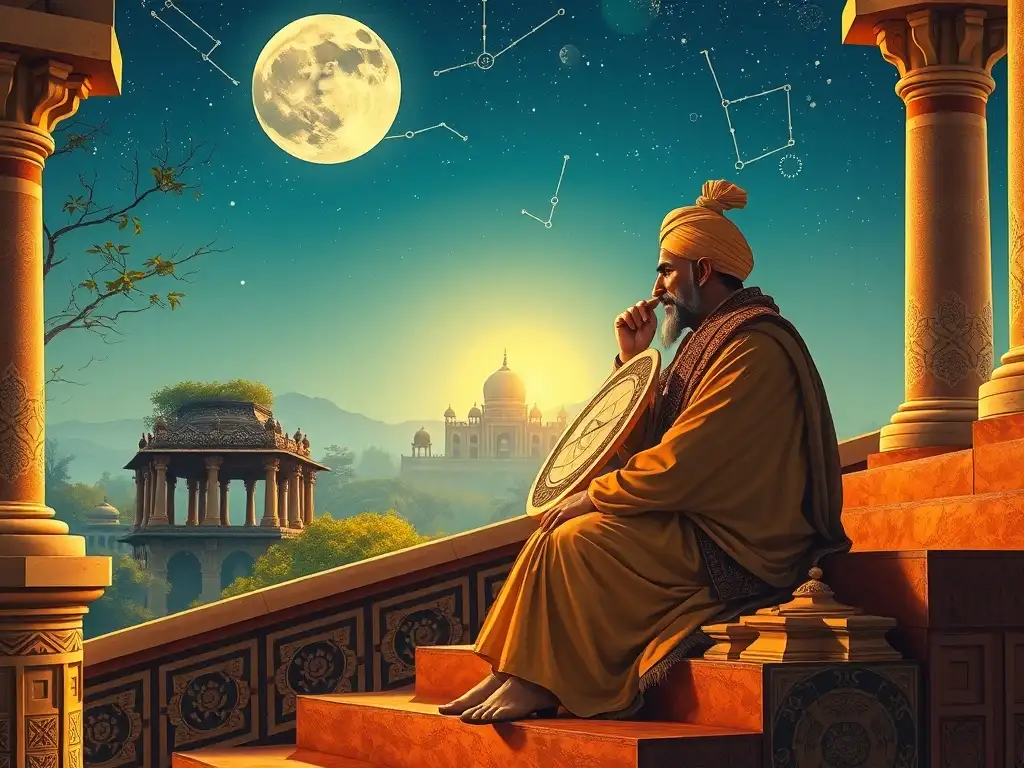
The study of ancient Indian astronomy reveals a fascinating tapestry woven into the very fabric of Indian civilization. During the Gupta period, which spanned from approximately 320 to 550 CE, astronomy flourished as a discipline, marked by significant advancements and the integration of scientific thought with cultural practices. This era is often referred to as a golden age of science and mathematics in India, and its contributions to astronomy are noteworthy, influencing both contemporary and later scientific thought across the globe.
Overview of Astronomy in Ancient India
Ancient Indian astronomy can be traced back to the Vedic period, where the early texts referred to celestial phenomena and their significance. However, it was during the Gupta period that astronomy evolved into a more systematic and mathematical discipline.
Key figures like Aryabhata, who wrote the Aryabhatiya around 499 CE, played a pivotal role in this development. His work introduced concepts such as:
- The heliocentric model: Aryabhata proposed that the Earth rotates on its axis, which was a groundbreaking idea at the time.
- Accurate calculations of astronomical constants: Aryabhata provided methods to calculate the circumference of the Earth and the lengths of the solar and lunar years with remarkable precision.
- Trigonometry: He introduced sine and cosine functions, which were essential for astronomical calculations.
Other notable astronomers of the Gupta period included Varahamihira, who authored the Brhat Samhita, a comprehensive text that merged astrology with astronomy, showcasing the cultural significance of celestial observations.
| Key Contributions | Astronomer | Text/Work |
|---|---|---|
| Heliocentric theory | Aryabhata | Aryabhatiya |
| Sine and cosine functions | Aryabhata | Aryabhatiya |
| Astrology and astronomy | Varahamihira | Brhat Samhita |
This period also saw the establishment of observatories and the use of instruments like the gnomon and the armillary sphere, further advancing observational astronomy.
Importance of Astronomy in Ancient Indian Culture
The significance of astronomy in ancient Indian culture extended far beyond mere scientific inquiry; it was intricately linked with religious and agricultural practices.
- Calendrical Systems: Astronomy played an essential role in the development of calendars. The lunar and solar calendars were crucial for agricultural societies, determining the timing of sowing and harvesting crops. Accurate astronomical observations allowed farmers to optimize their agricultural practices, which was vital for sustaining the population.
- Religious Observances: Celestial events such as eclipses and planetary alignments were closely monitored and often held spiritual significance. Temples and rituals were scheduled according to astronomical calculations, reflecting the intertwining of science and spirituality in ancient Indian life.
- Cultural Narratives: Astronomy influenced various art forms, including literature and architecture. Cosmic themes were prevalent in mythological texts, and the design of many temples incorporated astronomical alignments, showcasing the reverence for celestial phenomena.
- Intellectual Exchange: The advancements in astronomy during the Gupta period facilitated intellectual exchange with other cultures, particularly through trade routes. This interaction enriched not only Indian astronomy but also contributed to the global body of astronomical knowledge.
Ancient Indian astronomy during the Gupta period was characterized by significant mathematical innovations and a profound cultural integration that underscored its importance in society. The legacy of this era continues to resonate, serving as a testament to the intellectual achievements of ancient Indian civilization.
The Gupta Period: A Golden Age of Science
The Gupta Period, often referred to as a golden age of ancient Indian civilization, spanned from approximately 320 CE to 550 CE. This era was marked by significant advancements in various fields, including science, mathematics, and astronomy. The Gupta Empire, under the rule of notable emperors such as Chandragupta I and Samudragupta, fostered an environment where scholars and scientists could flourish.
Historical Context of the Gupta Empire
The Gupta Empire emerged in a time of relative stability and prosperity following the decline of the Mauryan Empire. The consolidation of power by the Gupta rulers allowed for the establishment of a strong centralized government, which promoted trade, cultural exchange, and intellectual pursuits.
- Cultural Flourishing: The Gupta period witnessed a renaissance in art, literature, and science. This cultural flourishing was supported by royal patronage, which encouraged scholars to pursue knowledge and innovation.
- Political Stability: The political landscape of the Gupta Empire provided a conducive environment for the development of scientific thought. The emperors valued education and actively supported institutions of learning, such as Nalanda University, which became a hub for scholars from various regions.
- Religious Tolerance: The Gupta emperors practiced religious tolerance, which allowed for the exchange of ideas among different faiths, including Hinduism, Buddhism, and Jainism. This openness contributed to the advancement of scientific thought, as scholars from various backgrounds collaborated and shared their knowledge.
The combination of these factors created a fertile ground for the growth of ancient Indian astronomy during the Gupta period, leading to remarkable contributions that would influence future generations.
Key Contributions of the Gupta Period to Science and Mathematics
The Gupta period was characterized by groundbreaking contributions to science and mathematics, particularly in the fields of astronomy and mathematics. The advancements made during this time laid the foundation for future developments in these disciplines.
- Astronomical Texts:
- The period saw the composition of significant astronomical texts, such as Aryabhata's Aryabhatiya (499 CE), which introduced concepts like the rotation of the Earth and the calculation of the value of pi (π) as 3.1416.
- Aryabhata also proposed the heliocentric theory, which posited that the Earth rotates on its axis, a revolutionary idea that would not gain widespread acceptance in the West until centuries later.
- Mathematical Innovations:
- The Gupta mathematicians developed the decimal system and the concept of zero, which were crucial in the evolution of mathematics.
- Notably, Brahmagupta's Brahmasphutasiddhanta (628 CE) presented rules for arithmetic operations involving zero and negative numbers, expanding mathematical understanding significantly.
- Astronomical Observations:
- Scholars such as Varahamihira made extensive observations of celestial bodies and compiled them into works like the Pancha Siddhantika, which synthesized knowledge from various earlier texts and offered insights into planetary motions and eclipses.
- Influence on Later Civilizations:
- The astronomical and mathematical advancements of the Gupta period had a lasting impact on both Islamic scholars and later European scientists. The transmission of these ideas through translations and adaptations allowed for the dissemination of ancient Indian knowledge across cultures.
The Gupta period stands out as a pivotal time in the history of ancient Indian astronomy, characterized by profound advancements in scientific thought and methodology. The contributions made during this era not only enriched ancient Indian knowledge but also had far-reaching effects on the scientific developments that followed in other civilizations.
Notable Astronomers of the Gupta Period
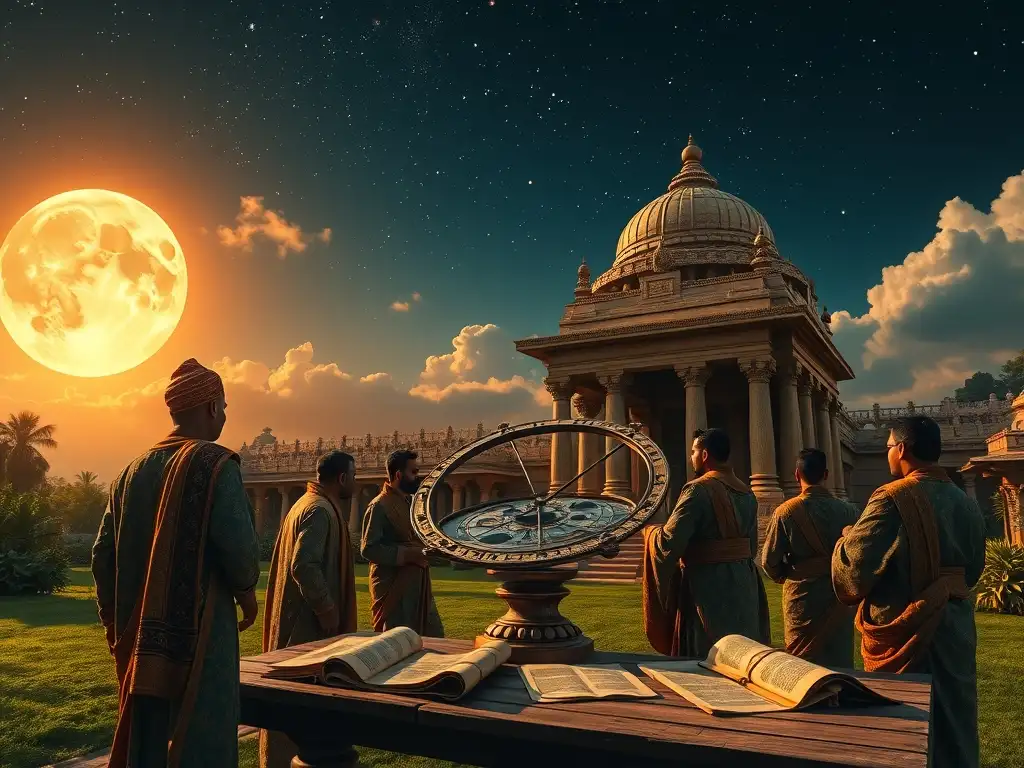
The Gupta period, often referred to as the Golden Age of India, witnessed significant advancements in various fields, including astronomy. Notable astronomers emerged, contributing to a legacy that combined scientific inquiry with philosophical thought. Their works laid the foundation for future generations and influenced both Indian and global scientific developments.
Aryabhata: Pioneer of Ancient Indian Astronomy
Aryabhata, one of the most renowned figures in ancient Indian astronomy, was born in 476 CE. His seminal work, the Aryabhatiya, is a treatise encompassing mathematics and astronomy.
- Key Contributions:
- Heliocentric Theory: Aryabhata proposed that the Earth rotates on its axis, which was revolutionary compared to the geocentric views prevalent at the time.
- Calculation of Pi: He provided an approximation of π (pi) as 3.1416, showcasing significant mathematical prowess.
- Astronomical Models: Aryabhata developed models for calculating the positions of celestial bodies, which included detailed explanations of solar and lunar eclipses.
Aryabhata’s influence extended beyond India; his calculations and theories would later be referenced by astronomers in the Islamic world and Renaissance Europe, further cementing his role as a pioneer in ancient Indian astronomy.
Varahamihira and His Contributions to Astronomy
Varahamihira, born around 505 CE, was a polymath whose contributions spanned astrology, astronomy, and mathematics. His major work, the Bṛhatsamhitā, is a comprehensive text that integrates various astronomical observations and predictions.
- Key Contributions:
- Planetary Motion: He provided detailed descriptions of the movements of planets and their impacts on earthly events, merging astronomy with astrology.
- Weather Predictions: Varahamihira made significant advancements in meteorology by observing and documenting seasonal changes and their effects on agriculture.
- Star Catalog: He compiled a catalog of stars, which included descriptions of their positions and brightness, contributing to the field of celestial navigation.
Varahamihira's integration of astronomy with practical applications, such as agriculture and meteorology, highlights the multifaceted nature of ancient Indian astronomy during the Gupta period.
Brahmagupta: Innovations in Astronomical Calculations
Brahmagupta, who lived in the 7th century CE, was another significant figure in ancient Indian astronomy. His work, the Brahmasphutasiddhanta, provided a systematic approach to astronomical calculations and introduced several key concepts in mathematics and astronomy.
- Key Contributions:
- Zero and Negative Numbers: Brahmagupta’s treatment of zero as a number and his rules for using negative numbers laid the groundwork for modern arithmetic and algebra.
- Lunar and Solar Calculations: He refined methods for calculating the movements of the moon and planets, which were crucial for calendar-making and astrology.
- Eclipse Predictions: Brahmagupta developed algorithms for predicting eclipses, enhancing the accuracy of celestial event forecasting.
His contributions not only advanced astronomical knowledge but also influenced mathematical practices in India and beyond, marking a pivotal moment in the development of ancient Indian astronomy during the Gupta period.
Key Concepts in Ancient Indian Astronomy
Ancient Indian astronomy during the Gupta period is a fascinating subject that reveals the sophisticated understanding and contributions of Indian scholars to the field of astronomy. This period, often regarded as a golden age of science and culture, witnessed significant advancements in astronomical knowledge, which were intricately linked to the socio-cultural and religious contexts of the time. Below, we delve into key concepts that defined ancient Indian astronomy during this remarkable era.
The Concept of Time and Calendars in Gupta Astronomy
The Gupta period saw the refinement of timekeeping and the development of accurate calendars, which were crucial for agricultural, religious, and societal activities. Indian astronomers employed various methods to measure time, including:
- Lunar Calendars: The lunar calendar was predominantly used, where months were based on the phases of the moon. This system emphasized the importance of lunar cycles in daily life and religious observances.
- Solar Calendars: The transition to solar calendars was also noted, particularly for agricultural purposes. The Siddhanta texts, such as the Surya Siddhanta, provided mathematical formulas to calculate the solar year accurately.
- Yugas: Ancient Indian scholars conceptualized time in vast cycles known as Yugas, which included the Satya Yuga, Treta Yuga, Dvapara Yuga, and Kali Yuga. This philosophical approach to time influenced their astronomical observations and calculations.
The meticulous nature of timekeeping in Gupta astronomy reflects a profound understanding of celestial movements and their implications for earthly existence.
Geocentric vs. Heliocentric Models in Ancient Indian Thought
During the Gupta period, Indian astronomers primarily adhered to a geocentric model of the universe, where Earth was considered the center of the cosmos. This view was supported by several key texts and observations:
- Aryabhata's Perspective: Aryabhata, a prominent mathematician and astronomer of the Gupta period, presented a geocentric model in his work, the Aryabhatiya. He described the daily rotation of the Earth and its implications on celestial phenomena.
- Limitations of the Geocentric Model: While the geocentric model was predominant, there were early inklings of heliocentric ideas. Some scholars speculated about the sun's central role in the solar system, yet these concepts did not gain widespread acceptance until much later.
The debates surrounding these models illustrate the evolving nature of astronomical thought in ancient India, with a gradual shift towards more complex understandings of the universe.
Planetary Motion and Celestial Phenomena
Planetary motion and the observation of celestial phenomena were central to ancient Indian astronomy. Gupta astronomers made significant contributions to understanding these concepts through observation and mathematics:
- Epicycles and Eccentric Circles: To explain the apparent retrograde motion of planets, Indian astronomers employed models that included epicycles and eccentric circles. This mathematical approach allowed for more accurate predictions of planetary positions.
- Planetary Configurations: Texts from the Gupta period describe various celestial phenomena, including eclipses, conjunctions, and the movements of celestial bodies. Observations of eclipses were particularly important for validating astronomical calculations.
- Influence of Indian Astrology (Jyotisha): The intertwining of astronomy and astrology during this period highlights the cultural significance of celestial observations. The positions of planets were believed to influence earthly events, leading to a rich tradition of astrological practices.
Through these observations and theoretical advancements, ancient Indian astronomers during the Gupta period laid the groundwork for future studies in astronomy, showcasing their remarkable contributions to the understanding of celestial mechanics.
Texts and Treatises on Astronomy from the Gupta Period
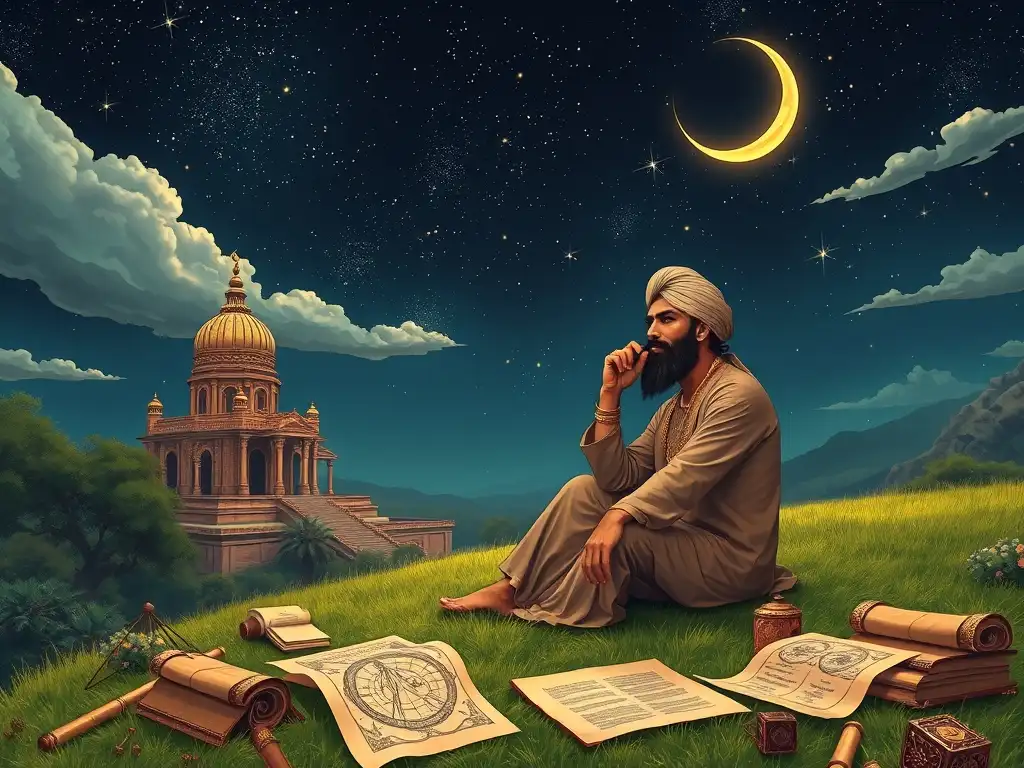
The Gupta period (approximately 320 to 550 CE) is often celebrated as a golden age of Indian science and mathematics, particularly in the field of astronomy. During this time, several prominent scholars emerged, producing seminal texts that laid the groundwork for astronomical thought not only in India but also influenced subsequent cultures. The contributions of Aryabhata, Varahamihira, and Brahmagupta stand out, showcasing the sophistication of ancient Indian astronomy and its practical applications.
Aryabhata's "Aryabhatiya": A Landmark Work
Aryabhata, one of the most renowned astronomers of ancient India, composed the "Aryabhatiya" around 499 CE. This treatise is notable for its innovative approach and profound impact on the study of mathematics and astronomy.
- Structure and Content: The "Aryabhatiya" is divided into four sections: Gitika, Ganitaka, Kalakriya, and Grahaganita. Each section addresses different aspects of astronomy and mathematics, from the calculation of planetary positions to the determination of time.
- Key Contributions:
- Aryabhata introduced the concept of the zero as a numeral, a revolutionary idea that transformed mathematics.
- He accurately calculated the length of the solar year to be approximately 365.358 days, showcasing advanced observational techniques.
- Aryabhata's model of the solar system proposed that the Earth rotates on its axis, countering the geocentric models prevalent in other cultures.
- Influence: The "Aryabhatiya" not only influenced Indian scholars but also reached the Arab world, where it was translated and studied, thus contributing to the global history of astronomy.
Varahamihira's "Brihat Samhita": A Comprehensive Guide
Varahamihira, another luminary of the Gupta period, authored the "Brihat Samhita" in the 6th century CE. This extensive work serves as a compendium of knowledge across various fields, including astronomy, astrology, and meteorology.
- Scope of the Text: The "Brihat Samhita" consists of 106 chapters, covering topics such as:
- Astronomical phenomena, including eclipses and planetary conjunctions.
- The impacts of celestial bodies on earthly events, integrating astrology with astronomy.
- Practical applications like agricultural calendars based on celestial movements.
- Innovative Techniques:
- Varahamihira emphasized the use of observational data to predict natural phenomena, blending empirical observation with theoretical astronomy.
- He also introduced methods for determining the latitude and longitude of locations, enhancing navigation and geographic knowledge.
- Cultural Impact: The "Brihat Samhita" remains a critical resource in understanding ancient Indian cosmology and its integration with daily life, illustrating the deep connection between astronomy and culture.
Brahmagupta's "Brahmasphutasiddhanta": Innovations in Calculation
Brahmagupta, a mathematician and astronomer who flourished in the 7th century CE, built upon the foundations laid by Aryabhata and Varahamihira in his work, the "Brahmasphutasiddhanta." This treatise is pivotal for its advancements in both astronomy and mathematics.
- Mathematical Innovations:
- Brahmagupta made significant contributions to the rules of arithmetic, particularly the operations involving negative numbers and zero, thus formalizing concepts that are foundational in modern mathematics.
- He developed algorithms for solving quadratic equations and provided methods for calculating areas and volumes, which were crucial for practical applications in astronomy.
- Astronomical Insights:
- The "Brahmasphutasiddhanta" contains detailed descriptions of the lunar and solar eclipses, offering calculations that improve upon previous works.
- Brahmagupta proposed a model of planetary motion that included a geocentric view of the universe, but one that acknowledged the motion of planets in relation to the stars.
- Legacy: His work laid the groundwork for later astronomers and mathematicians in India and beyond, influencing Islamic scholars during the medieval period.
Through these texts, the Gupta period emerges as a significant epoch in the history of ancient Indian astronomy, marked by innovation and the blending of scientific inquiry with cultural practices. The works of Aryabhata, Varahamihira, and Brahmagupta not only reflect the astronomical knowledge of their time but also the enduring legacy of ancient Indian scholarship.
Techniques and Instruments Used in Gupta Astronomy
Astronomical Instruments of the Gupta Period
During the Gupta period (approximately 320 to 550 CE), significant advancements in astronomy were made, largely due to the development of various instruments. These instruments facilitated precise observations and calculations, laying the groundwork for future astronomical studies.
Some of the prominent instruments used by astronomers of this era include:
- Gnomon: A simple yet effective device, the gnomon was primarily used to measure the angle of the sun's shadow, helping to determine the time of day and the seasons. The principles behind its operation were foundational for later sundials.
- Astrolabe: Although its origins can be traced back to earlier civilizations, the astrolabe was refined during the Gupta period. This intricate device was used for solving problems related to time and the position of celestial bodies. It allowed astronomers to make calculations regarding latitude and longitude, aiding in navigation and understanding celestial movements.
- Armillary Sphere: This complex model represented the celestial sphere, illustrating the apparent motions of the stars and planets. The armillary sphere was essential for teaching astronomy, allowing scholars to visualize and understand the cosmos more effectively.
- Water Clock (Khalindu): An innovative timekeeping device, the water clock utilized the consistent flow of water to measure time intervals. This instrument helped astronomers schedule observations more accurately, ensuring that data collection was systematic and reliable.
The combination of these instruments not only enhanced observational accuracy but also contributed to a more profound understanding of celestial phenomena. The scientific approaches taken during the Gupta period reflect a significant leap in ancient Indian astronomy.
Observational Techniques and Their Impact on Astronomy
The Gupta period marked a pivotal era in the development of observational techniques that significantly impacted ancient Indian astronomy. Scholars employed various methods to observe celestial bodies, leading to advancements in both theoretical and practical aspects of the field.
- Geometric Observation: Astronomers utilized geometric principles to analyze celestial movements. By observing the positions of stars and planets at different times, they were able to establish predictive models of celestial phenomena, such as eclipses and planetary transits. This approach was foundational for future astronomical calculations.
- Empirical Observation: Gupta astronomers relied heavily on empirical observation, meticulously recording their findings over extended periods. This practice allowed them to refine their understanding of celestial cycles, such as the lunar phases and the synodic periods of planets. Such detailed records contributed to the development of accurate astronomical tables.
- Integration of Mathematics: The use of mathematics was central to Gupta astronomy. Astronomers like Aryabhata employed trigonometric functions and algorithms to solve complex astronomical problems. This integration of mathematics not only enhanced the accuracy of their observations but also allowed for the development of sophisticated models of celestial mechanics.
- Cultural and Religious Influences: The Gupta period's astronomical observations were often intertwined with cultural and religious beliefs. Many festivals and rituals were timed according to astronomical events, reflecting the society’s deep connection with the heavens. This cultural aspect provided additional motivation for accurate celestial observations.
The impact of these observational techniques is evident in the works of notable astronomers like Aryabhata and Varahamihira, whose contributions laid the groundwork for future generations of scientists. The synthesis of rigorous observation, mathematical precision, and cultural relevance during the Gupta period represents a high point in the history of ancient Indian astronomy, reflecting an era of intellectual flourishing and scientific inquiry.
The Influence of Ancient Indian Astronomy on Other Cultures

Exchange of Astronomical Knowledge with Other Civilizations
During the Gupta period, ancient Indian astronomy reached remarkable heights, characterized by significant advancements in both theoretical and observational astronomy. This era saw a vibrant exchange of knowledge with other cultures, particularly through trade routes and scholarly interactions. Indian astronomers such as Aryabhata and Varahamihira not only contributed to the field but also influenced neighboring civilizations.
- Transmission of Texts:
- Key astronomical texts like Aryabhata's Aryabhatiya were translated into Arabic and later into Latin, facilitating the dissemination of Indian astronomical concepts. This exchange introduced sophisticated ideas regarding the heliocentric model and the calculation of planetary positions.
- Integration with Greek Astronomy:
- The interaction between Indian and Greek astronomers was particularly fruitful. For instance, the Indian concept of zero and the decimal system were integrated with Greek astronomical models, enhancing the precision of astronomical calculations in both cultures.
- Cultural Exchanges:
- Trade routes connecting India with regions such as Persia and the Middle East fostered not only economic exchanges but also intellectual ones. Astronomical observations made by Indian scholars were shared during these interactions, leading to a mutual enrichment of knowledge.
- Adoption in Islamic Astronomy:
- The impact of Gupta astronomy can be traced in the works of Islamic astronomers like Al-Battani and Al-Khwarizmi, who adopted and expanded upon earlier Indian methods of calculation and observation. This cross-cultural exchange laid the groundwork for the later European Renaissance.
The Legacy of Gupta Astronomy in the Medieval Period
The contributions of ancient Indian astronomy during the Gupta period had a lasting impact that resonated throughout the medieval period and beyond. Several key aspects illustrate this enduring legacy:
- Mathematical Innovations:
- The introduction of the concept of zero and the decimal numeral system by Indian mathematicians during the Gupta period revolutionized mathematics and astronomy globally. These innovations enabled more accurate astronomical calculations and observations, influencing scholars across cultures.
- Astronomical Instruments:
- The Gupta period also saw advancements in astronomical instruments, such as the gnomon and the astrolabe. These tools were adopted and further refined in various cultures, including Islamic and European civilizations, aiding in the development of observational astronomy.
- Influential Texts:
- Texts from this period, including the Surya Siddhanta, continued to be referenced by scholars into the medieval period. The methods and concepts outlined in these texts were critical for subsequent advancements in astronomy and navigation.
- Continuity of Knowledge:
- The knowledge cultivated during the Gupta period was preserved and built upon by later Indian astronomers, ensuring a continuity of astronomical inquiry. Scholars like Bhaskara II in the 12th century further expanded upon Gupta ideas, demonstrating their relevance and applicability in later contexts.
Through this intricate tapestry of knowledge exchange and innovation, ancient Indian astronomy during the Gupta period not only shaped the scientific landscape of its time but also left an indelible mark on the astronomical traditions of subsequent civilizations. This legacy is a testament to the profound influence of ancient Indian astronomy on the world.
Challenges and Misconceptions in Ancient Indian Astronomy
The study of ancient Indian astronomy during the Gupta period reveals a rich tapestry of scientific achievement and cultural significance. However, this history is often clouded by challenges and misconceptions that can obscure the true contributions of Indian scholars to the field of astronomy. These challenges stem from a variety of factors, including the limited availability of primary sources, the impact of colonial narratives, and a general lack of awareness about the sophistication of ancient Indian astronomical practices.
One major challenge is the scarcity of original texts and artifacts from the Gupta period, which limits researchers’ ability to fully understand the astronomical knowledge of the time. Many ancient manuscripts were lost or destroyed, and those that survived often exist only in later copies that may not accurately reflect the original work. This has led to an incomplete picture of the advancements made by Gupta astronomers.
Additionally, misconceptions about the nature of ancient Indian science often arise from a Eurocentric perspective that undervalues non-Western contributions. For instance, the narrative surrounding the history of astronomy has frequently highlighted Western achievements while downplaying or ignoring the significant developments made in India. This has perpetuated myths that ancient Indian astronomy was primitive or derivative, rather than recognizing its innovative and original contributions.
Common Myths about Gupta Period Astronomy

Myth 1: Ancient Indian Astronomy Was Primarily Based on Mythology
One prevalent myth is that ancient Indian astronomy was largely based on mythology and religious beliefs, with little grounding in empirical observation or scientific reasoning. While it is true that mythology played a role in the cultural context of astronomy, many ancient Indian astronomers, such as Aryabhata and Varahamihira, emphasized observation and mathematical calculations in their work.
Myth 2: Gupta Astronomers Were Not Considered Influential
Contrary to this belief, Gupta astronomers made significant contributions that influenced not only Indian but also global astronomical thought. The works of Aryabhata, particularly his treatise Aryabhatiya, laid the groundwork for later developments in mathematics and astronomy, including concepts of zero and the heliocentric model.
Myth 3: Indian Astronomy Lacked Advanced Instruments
Another common misconception is that ancient Indian astronomers did not possess advanced instruments for observation. In reality, they developed sophisticated tools such as the gola (spherical model) and various types of armillary spheres, which allowed for precise astronomical observations and calculations.
Clarifying Misconceptions: The Reality of Ancient Indian Astronomy
Emphasis on Empirical Observation
Ancient Indian astronomy during the Gupta period was characterized by a strong emphasis on empirical observation. Scholars meticulously recorded celestial events, such as eclipses and planetary movements, and used these observations to refine their models of the cosmos. The methodical approach of astronomers like Aryabhata demonstrates a clear understanding of mathematics and its application to astronomy.
The Role of Mathematics
Mathematics was at the core of ancient Indian astronomy, with Gupta mathematicians developing concepts that were highly advanced for their time. The use of trigonometry, for instance, played a crucial role in celestial navigation and the calculation of planetary positions. Aryabhata’s introduction of sine functions was revolutionary, influencing both Indian and Islamic astronomical practices.
Interdisciplinary Connections
The Gupta period also saw a remarkable interplay between astronomy and other fields of study, such as astrology, mathematics, and even art. Texts like the Brahmasphutasiddhanta by Brahmagupta integrated astronomical knowledge with practical applications, showcasing the interconnectedness of various disciplines in ancient Indian scholarship.
Global Influence
The influence of ancient Indian astronomy extended beyond regional boundaries. The knowledge disseminated by Gupta scholars traveled along trade routes, reaching the Middle East and eventually impacting European astronomy. The translation of Indian texts into Arabic played a pivotal role in the transmission of this knowledge, further dispelling the myth that Indian astronomy was isolated or unrecognized.
While challenges and misconceptions persist regarding ancient Indian astronomy during the Gupta period, a closer examination reveals a vibrant and sophisticated field of study. By acknowledging the realities of this history, we can better appreciate the profound contributions of ancient Indian astronomers to the broader narrative of scientific achievement.
Conclusion: The Enduring Legacy of Ancient Indian Astronomy

The Gupta period, often referred to as the Golden Age of India, was a time of remarkable advancements in various fields, particularly in astronomy. The discoveries and innovations made during this era not only enriched ancient Indian astronomy but also laid the groundwork for future generations. Scholars such as Aryabhata and Varahamihira made significant contributions that influenced not only their contemporaries but also future astronomical studies across the world.
The Impact of Gupta Period Discoveries on Modern Astronomy
The astronomical principles established during the Gupta period have had a profound impact on modern astronomy. For instance, Aryabhata's work, particularly his seminal text Aryabhatiya, introduced concepts such as the rotation of the Earth on its axis and the calculation of the circumference of the Earth. His methods of calculating eclipses and planetary positions laid essential foundations for later astronomical models.
| Discovery | Description | Modern Relevance |
|---|---|---|
| Aryabhata's Earth Rotation | Proposed the Earth rotates around its axis, not the heavens. | Influences current understanding of celestial mechanics. |
| Approximation of π | Aryabhata calculated π (pi) to an accurate approximation. | Essential for modern mathematics and engineering. |
| Eclipses Calculation | Developed methods for predicting solar and lunar eclipses. | Basis for contemporary eclipse prediction methods. |
These contributions reflect how ancient Indian astronomy during the Gupta period not only advanced knowledge but also influenced the scientific inquiries of later civilizations, including those in the Islamic Golden Age and Renaissance Europe.
Continuing Relevance of Ancient Indian Astronomy in Contemporary Studies
The relevance of ancient Indian astronomy extends beyond mere historical interest; it continues to inspire contemporary studies in various fields. Modern astronomers and mathematicians explore ancient texts to uncover lost methods and techniques that could enrich current astronomical practices.
Moreover, the philosophical and cosmological perspectives of ancient Indian thinkers offer unique insights into the nature of the universe, prompting interdisciplinary dialogues between astronomy, philosophy, and even spirituality. The meticulous observations recorded during this period serve as valuable data for researchers studying the evolution of astronomical thought.
In educational contexts, the incorporation of ancient Indian astronomy in curricula enhances the appreciation of diverse scientific heritages. It encourages students to recognize the contributions of different civilizations, promoting a more inclusive understanding of global scientific progress.
The legacy of ancient Indian astronomy during the Gupta period is not confined to its historical context; rather, it continues to resonate within contemporary studies, highlighting its enduring significance in the quest for knowledge and understanding of the cosmos.
References and Further Reading
Recommended Texts on Ancient Indian Astronomy
For those interested in delving deeper into the fascinating realm of ancient Indian astronomy during the Gupta period, a selection of texts provides rich insights and scholarly perspectives. Here are some highly recommended titles:
-
"The History of Astronomy in Ancient India" by J. D. Bhattacharya
This book offers a comprehensive overview of the development of astronomical knowledge in ancient India, focusing on key figures and texts from the Gupta period.
-
"Astronomy and Astrophysics in Ancient India" by K. V. Sarma
This work meticulously examines the astronomical techniques and instruments used during the Gupta era, highlighting the contributions of notable astronomers like Aryabhata.
-
"Indian Astronomy: A Comprehensive History" by S. R. Sharma
A detailed account of Indian astronomy from the Vedic period to the Gupta era, this text provides insights into the mathematical foundations that supported astronomical observations.
-
"Aryabhata: The Astronomer" by D. C. Gupta
This biography of Aryabhata explores his contributions to mathematics and astronomy, offering context to his works and their impact during the Gupta period.
-
"Ancient Indian Science and Technology" by R. N. Roy
While not exclusively about astronomy, this book covers various scientific advancements during the Gupta period, including astronomical practices.
Online Resources for Exploring Gupta Period Science
Numerous online platforms and resources provide valuable information about ancient Indian astronomy, especially during the Gupta period. Here are some notable resources to explore:
-
Digital Library of India
A vast repository of texts and manuscripts, this online library allows users to access historical documents related to ancient Indian astronomy and mathematics.
-
Indian Culture Portal
This platform offers articles and resources on the scientific achievements of ancient Indian civilizations, including detailed sections on astronomy during the Gupta period.
-
NASA's Solar System Exploration
While primarily focused on modern astronomy, NASA includes features on historical astronomy, including contributions from ancient cultures such as the Indians during the Gupta era.
-
The Internet Archive
A treasure trove of digitized books and manuscripts, the Internet Archive includes works on Indian astronomy that can provide context and additional knowledge about the Gupta period.
-
Academia.edu
A platform for researchers to share papers, where many scholars publish their studies on ancient Indian astronomy, providing access to current research and findings.
By utilizing these texts and online resources, readers can gain a more profound understanding of the advancements and contributions of ancient Indian astronomy during the Gupta period, enriching their knowledge of this significant aspect of ancient Indian civilization.
Frequently Asked Questions
What is the significance of ancient Indian astronomy during the Gupta period?
The Gupta period is often regarded as a golden age for science and mathematics, notably in astronomy, where scholars made significant advancements in understanding celestial phenomena.
Who were some prominent astronomers from the Gupta period?
Notable figures include Aryabhata and Varahamihira, who contributed extensively to astronomy and formulated theories that influenced both Indian and global astronomical thought.
How did ancient Indian astronomers measure time and celestial movements?
Ancient Indian astronomers used sundials, water clocks, and observational techniques to track celestial bodies, leading to refined calendar systems and timekeeping practices.
What texts from the Gupta period focus on astronomy?
Key texts include Aryabhata's Aryabhatiya and Varahamihira's Brihat Samhita, which encompass mathematics, astronomy, and astrology, showcasing the integration of these disciplines.
How did the contributions of Gupta period astronomy influence later civilizations?
The advancements made during the Gupta period laid the groundwork for future astronomical studies, influencing both Islamic and European scholars in their understanding of the cosmos.
Final Reflection: Illuminating the Legacy of Ancient Indian Astronomy
The exploration of ancient Indian astronomy during the Gupta period reveals not only the brilliance of early scientific thought but also its profound relevance in today's world. As we navigate an era increasingly defined by technology and innovation, the insights gleaned from this rich historical tapestry remind us that the quest for knowledge transcends time and culture. The Gupta period stands as a testament to human curiosity and intellectual achievement, urging us to appreciate our past as we forge ahead into the future.
Cultural and social landscapes are continually shaped by the ideas and discoveries of those who came before us. The astronomical advancements made during the Gupta period not only laid the groundwork for future scientific inquiry but also fostered a sense of wonder about the universe that resonates to this day. The stars are not just distant suns; they are the echoes of our ancestors' dreams.
This quote encapsulates the enduring influence of ancient Indian astronomy, reminding us that every star we gaze upon carries the weight of history and the aspirations of generations.
As we reflect on the lessons of ancient Indian astronomy, let us embrace the spirit of inquiry and innovation that characterized the Gupta period. I invite you to explore the cosmos with a sense of wonder, to seek knowledge relentlessly, and to recognize the interconnectedness of our past and present. By doing so, we honor the legacy of those who paved the way for our understanding of the universe, inspiring future generations to continue unraveling the mysteries that lie beyond our reach.
Explore the Wonders of Ancient Indian Astronomy!
Thank you for diving into the fascinating world of Ancient Indian Astronomy during the Gupta Period! We hope you gained insights that not only enriched your knowledge but also ignited your curiosity about this incredible era. Now, it’s time to take action and further your exploration!
- Join a local astronomy club or participate in stargazing events to experience the magic of celestial bodies just as ancient astronomers did.
- Share your newfound knowledge with friends and family—consider hosting a themed discussion night or writing a blog post to spark conversations.
- Delve deeper: explore texts such as the “Surya Siddhanta” or other ancient manuscripts to uncover their significant contributions to modern science.
Which aspect of ancient astronomy fascinates you the most, and how do you believe it influences our understanding of the stars today?