
Exploring the Mathematical Mind of Mahavira: Contributions to Number Theory

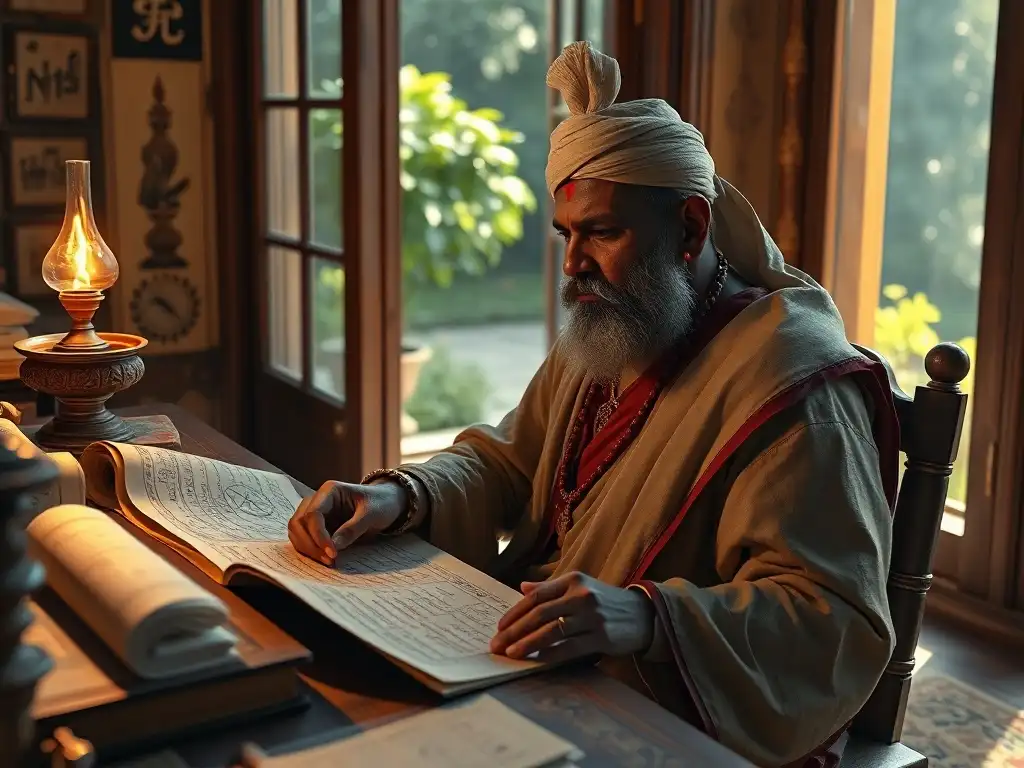
Welcome to Ancient India History, where we embark on a fascinating journey through the rich tapestry of India’s past! In this corner of our website, we delve into the remarkable contributions of ancient civilizations, shedding light on their cultural and intellectual achievements. Our featured article, "Exploring the Mathematical Mind of Mahavira: Contributions to Number Theory," invites you to discover how this brilliant mathematician transformed the landscape of mathematics with his groundbreaking ideas.
Prepare to unravel the mysteries of number theory and gain insights into Mahavira's profound legacy that continues to influence the world today. Curious to learn more? Dive in and let the exploration begin!
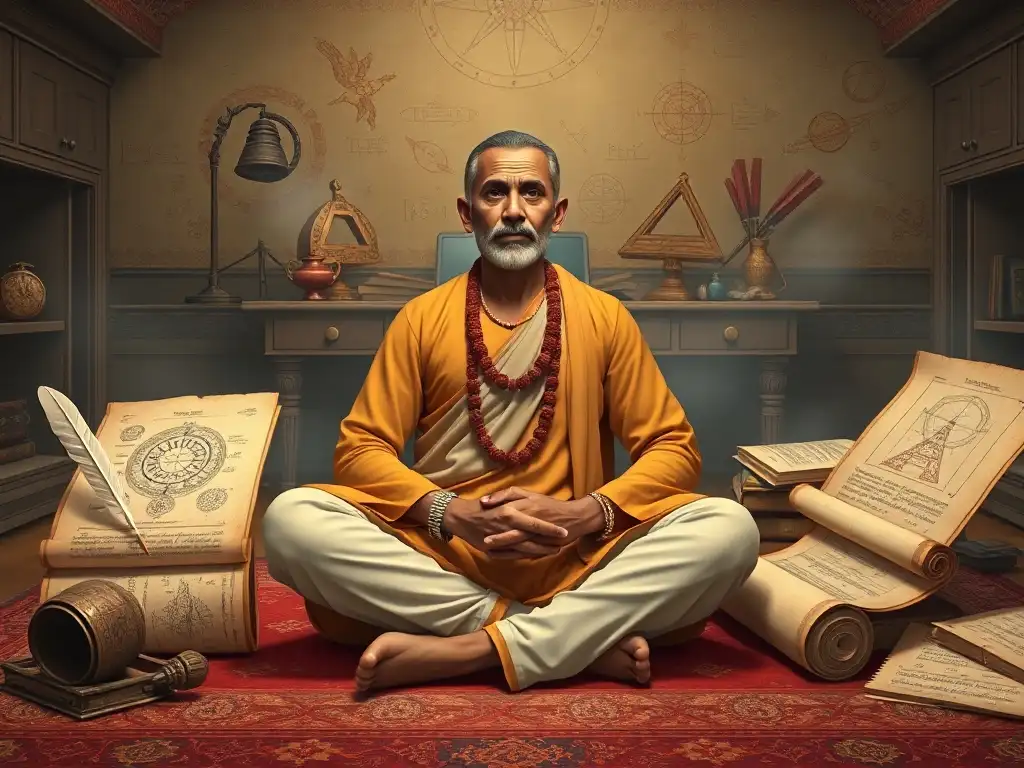
Introduction to Mahavira and His Mathematical Legacy
The realm of ancient Indian mathematics is rich with brilliant minds, among which Mahavira stands out as a pivotal figure. Renowned for his contributions to number theory during the 9th century CE, Mahavira was not just a mathematician; he was a visionary who played a crucial role in shaping mathematical thought in India. His work laid the groundwork for subsequent generations, influencing both Indian and global mathematical practices. This article delves into Mahavira's life, his significant contributions, and the enduring impact of his work on the field of mathematics, particularly focusing on his contributions to number theory.
Overview of Mahavira’s Life and Era
Mahavira, often regarded as one of the foremost mathematicians of ancient India, emerged during a time when mathematics was evolving rapidly. He was likely born in the region of Karnataka, where the rich cultural and intellectual environment fostered scholarly pursuits. Mahavira authored the influential text "Ganita Sara Sangraha", which translates to "Essentials of Mathematics," where he systematically compiled mathematical knowledge and introduced new concepts. This period in Indian history witnessed the intersection of culture, philosophy, and science, creating a fertile ground for mathematical exploration.
Significance of Mahavira in Ancient Indian Mathematics
Mahavira's significance extends beyond merely his contributions; he represents a crucial link in the historical progression of mathematical thought. His systematic approach to problem-solving and his emphasis on clarity and logic were revolutionary for his time. He is credited with refining existing mathematical concepts and introducing new methods that would resonate throughout the centuries. By placing a strong emphasis on practical applications, Mahavira's work bridged the gap between theoretical mathematics and its real-world applications, thereby enhancing its relevance in daily life.
Mahavira’s Contributions to Mathematics
Mahavira's contributions to mathematics are diverse and profound, particularly in the realm of number theory. His work encompassed various topics, including arithmetic, algebra, and geometry, showcasing his versatility as a mathematician. He was not only a thinker but also a teacher, conveying complex mathematical ideas in a manner that was accessible to his contemporaries and future scholars.
Key Areas of Focus in Mahavira’s Work
- Number Systems: Mahavira's exploration of number systems, particularly his treatment of zero and negative numbers, was groundbreaking. He demonstrated how these concepts could be utilized in calculations, laying the foundation for modern arithmetic.
- Fractions and Ratios: His work on fractions included methods for addition, subtraction, and simplification, which were essential for trade and commerce during his era. Mahavira emphasized the importance of understanding ratios, a concept that is vital in various fields today.
- Algebraic Practices: Mahavira's advancements in algebra included the formulation of equations and algorithms for solving practical problems. His methods of solving quadratic equations were particularly noteworthy and influenced later mathematicians.
- Geometric Insights: Although primarily known for his work in number theory, Mahavira also made significant contributions to geometry, including the calculation of areas and volumes, which were essential for architecture and land measurement.
Mahavira's contributions to mathematics not only reflect his genius but also highlight the sophisticated mathematical understanding that existed in ancient India. His legacy continues to inspire mathematicians and scholars around the world, making him a pivotal figure in the history of mathematics.
Detailed Analysis of Mahavira’s Mathematical Texts
Mahavira, an eminent mathematician of ancient India, made substantial contributions to the field of mathematics, particularly through his seminal texts, which have been critical for understanding the evolution of mathematical concepts in India. His major work, the Ganita Sara Samgraha, serves as a comprehensive treatise on arithmetic and geometry, encapsulating various mathematical concepts that were pioneering for his time.
In his writings, Mahavira utilized clear and systematic methods to present mathematical ideas, emphasizing practical applications and problem-solving techniques. His approach not only laid the groundwork for future mathematicians but also provided insights into the mathematical practices of his era. The clarity and structure of Mahavira's texts reflect a deep understanding of number theory and arithmetic, showcasing the advanced state of mathematical knowledge in ancient India.
Moreover, Mahavira's texts include numerous examples and problems that illustrate the principles he advocated. These examples serve as a bridge between theoretical mathematics and its application in everyday life, highlighting the importance of mathematics in commerce, trade, and architecture during the time.
Overview of Mahavira’s Major Works
Mahavira's most notable work, the Ganita Sara Samgraha, is considered a cornerstone in the study of mathematics. Written in Sanskrit, this text is divided into several chapters that cover a wide array of topics, including arithmetic, geometry, and the properties of numbers.
In addition to the Ganita Sara Samgraha, Mahavira is credited with other significant works that contributed to the mathematical discourse of his time. These include:
- Ganita Sutras: A collection of aphorisms that provide foundational principles of mathematics.
- Shisyadhividhana: A text focusing on mathematics for students, outlining various mathematical concepts and their applications.
- Mathematical Commentaries: Mahavira also wrote commentaries on the works of previous mathematicians, further elaborating on their theories and concepts.
These works collectively reflect Mahavira's profound influence on mathematics, serving as vital resources for both contemporary scholars and future generations.
Mahavira’s Contributions to Number Theory
Mahavira's contributions to number theory are characterized by his innovative ideas and systematic approach. He introduced concepts that significantly advanced the understanding of numbers, their properties, and their applications. His work laid the foundation for later developments in mathematics, influencing both Indian and global mathematical traditions.
One of the key aspects of Mahavira's contributions was his focus on practical arithmetic, which facilitated calculations essential for trade, agriculture, and daily life. His methods for solving problems involving numbers were not only theoretical but also pragmatic, making mathematics accessible to a wider audience.
Development of Decimal System and Place Value
Mahavira played a crucial role in the development of the decimal system, which is the foundation of modern mathematics. He adeptly utilized the base-10 system, which allowed for efficient calculations and representation of numbers. This system is characterized by:
- Place Value: Mahavira emphasized the importance of place value in the decimal system, where the position of a digit in a number determines its value. This innovation simplified arithmetic operations and calculations, making them faster and more accurate.
- Zero as a Placeholder: Although the concept of zero was already in use, Mahavira's writings highlighted its significance in the decimal system, allowing for clearer representation of larger numbers and facilitating complex calculations.
The adoption and promotion of the decimal system by Mahavira had a lasting impact on mathematics, paving the way for future advancements in numerical representation and calculation methods.
Innovations in Fractions and Ratios
Mahavira made significant strides in the understanding and application of fractions and ratios, which were essential for commerce and trade in ancient India. His approach included:
- Simplification of Fractions: Mahavira provided methods for simplifying fractions, making it easier for traders and merchants to conduct transactions. He introduced techniques for finding common denominators and converting between different types of fractions.
- Understanding Ratios: He explored the concept of ratios in depth, illustrating their application in comparing quantities and solving problems related to proportions. Mahavira's work on ratios laid the groundwork for future mathematicians to develop more complex theories in algebra and geometry.
These innovations in fractions and ratios not only enhanced mathematical understanding but also contributed to the practical applications of mathematics in everyday life.
Mahavira's Theorems and Their Impact on Future Mathematics
Mahavira's theorems are notable for their clarity and applicability, influencing the trajectory of mathematics well beyond his time. Some of his significant contributions include:
- Theorem on Arithmetic and Geometric Means: Mahavira explored the relationship between arithmetic and geometric means, providing insights that would later be fundamental in various areas of mathematics, including calculus and statistics.
- Pythagorean Theorem: Although commonly attributed to Pythagoras, Mahavira's work also touched upon concepts related to this theorem, demonstrating the advanced understanding of geometry prevalent in ancient Indian mathematics.
The impact of Mahavira's theorems extended into subsequent generations, influencing mathematicians in India and around the world. His systematic methods and clear presentation of mathematical ideas fostered a culture of mathematical inquiry that would flourish in the centuries to come.
Mahavira's contributions to mathematics, particularly in number theory, reflect a remarkable blend of theoretical knowledge and practical application, solidifying his legacy as a pivotal figure in the history of mathematics.
Influence of Mahavira on Later Mathematicians

Mahavira’s contributions to mathematics, particularly in number theory, laid a foundational framework that influenced future generations of mathematicians. His work in the Ganita Sara Sangraha serves as a bridge between ancient practices and more advanced mathematical concepts. Mahavira's emphasis on systematic methods and clear explanations made his texts accessible and instrumental for scholars who followed.
Mathematicians like Bhaskara II, who lived in the 12th century, drew heavily from Mahavira's principles. The clarity and organization of Mahavira's work provided a model for subsequent mathematical writings, leading to the development of more sophisticated techniques in algebra and arithmetic. The focus on practical applications of mathematics, seen in Mahavira’s work, encouraged later scholars to explore theoretical concepts through a pragmatic lens, fostering a culture of applied mathematics.
Mahavira's Role in Shaping Indian Mathematics
Mahavira is often credited with formalizing the methods of arithmetic and geometry that were pivotal in the development of Indian mathematics. His systematic approach to problems, particularly in number theory, created a structured methodology that was crucial for later advancements. He introduced rules for operations with fractions, square roots, and cube roots, which were foundational for future mathematicians.
Moreover, Mahavira's work highlighted the importance of zero and positional notation, which were critical innovations in Indian mathematics. His texts not only preserved earlier knowledge but also expanded upon it, creating a comprehensive reference that influenced the educational practices of his time. This role as both a synthesizer and innovator established Mahavira as a key figure in the historical narrative of Indian mathematics, ensuring a lasting impact on the field.
Comparisons with Other Significant Mathematicians
When comparing Mahavira with contemporaries like Aryabhata and later figures such as Brahmagupta, it becomes evident that Mahavira's contributions were distinctively practical and methodical. While Aryabhata focused on astronomy and provided groundbreaking theories, Mahavira concentrated on arithmetic and number theory, making his work more accessible to the general populace.
In contrast, Brahmagupta's work built upon Mahavira's findings, particularly in the realm of quadratic equations and solutions to mathematical problems involving negative numbers. Mahavira's influence is seen in Brahmagupta’s Brahmasphutasiddhanta, where he acknowledges Mahavira’s earlier concepts and expands them further. Thus, Mahavira can be seen as a vital link in the evolution of Indian mathematics, providing tools and methods that became foundational for later scholars.
Conclusion: The Enduring Legacy of Mahavira’s Contributions to Mathematics
The legacy of Mahavira in mathematics extends far beyond his lifetime, influencing not only Indian scholars but also mathematicians across the globe. His systematic approach to number theory and problem-solving techniques established a framework that has been built upon through the centuries. Mahavira's contributions reflect a deep understanding of mathematical principles and their practical applications, which has continued to resonate in modern mathematical thought.
Reflection on Mahavira’s Impact on Modern Number Theory
Modern number theory, characterized by its complexity and depth, owes a significant debt to the groundwork laid by Mahavira. His exploration of numerical relationships and operations established important concepts that have evolved into contemporary theories. The methods he formulated for manipulating numbers and solving equations are echoed in today's mathematical practices, illustrating the timeless nature of his contributions.
Moreover, the emphasis on clear, logical reasoning in Mahavira's work is mirrored in modern mathematical pedagogy, which prioritizes the clarity of thought and process in teaching mathematics. His influence is thus a testament to the relevance of ancient knowledge in shaping modern disciplines.
Mahavira’s Relevance in Today’s Mathematical Discourse
In today's mathematical discourse, Mahavira remains a significant figure, particularly in discussions surrounding the history of mathematics and its cultural contexts. As mathematicians and historians explore the origins of mathematical concepts, Mahavira's role as a pioneer in number theory is frequently highlighted. His methodologies continue to inspire educational frameworks that seek to integrate historical perspectives into the teaching of mathematics.
Furthermore, Mahavira's work is increasingly recognized in the context of global mathematics, as scholars acknowledge the contributions of non-Western mathematicians to the field. By studying Mahavira’s texts and methodologies, modern mathematicians can gain insights into the diverse intellectual traditions that have shaped mathematical thought throughout history. His relevance is thus affirmed not only in the context of Indian mathematics but also in the broader narrative of the discipline worldwide.
Additional Resources for Further Exploration
To delve deeper into the mathematical contributions of Mahavira and the broader context of ancient Indian mathematics, a variety of resources are available. These include books, scholarly articles, and online repositories that provide valuable insights into the works of Mahavira and his contemporaries, as well as the mathematical practices of ancient Indian civilization.
Recommended Reading on Mahavira and Ancient Indian Mathematics
-
"A History of Indian Mathematics" by C. N. Srinivasiengar
This book offers a comprehensive overview of the evolution of mathematics in India, highlighting important figures like Mahavira and their contributions to number theory.
-
"Mathematics in India" by Kim Plofker
Plofker's work examines the development of mathematical ideas in India, providing a detailed account of Mahavira’s contributions within the larger framework of Indian mathematics.
-
"The History of Mathematics: A Brief Course" by Roger L. Cooke
This text includes sections dedicated to the contributions of ancient mathematicians, with specific references to Mahavira's work in number theory.
-
"The Mathematics of Ancient India" by S. R. Sarma
This book focuses on the historical context of mathematical developments in ancient India, featuring Mahavira's theories and calculations.
-
"Mahavira's Ganita Sara Samgraha"
A critical translation and commentary on Mahavira's seminal work, this resource elucidates his mathematical concepts and methods.
Online Archives and Databases of Ancient Mathematical Texts
-
Indian Mathematical Society
This organization provides access to a wealth of resources, including original texts and translations of ancient Indian mathematics, featuring the works of Mahavira.
-
Digital Library of India
An extensive archive that hosts a variety of ancient texts, including mathematical treatises, where Mahavira's contributions can be explored in their original context.
-
Project Gutenberg
This free eBook library includes historical texts, some of which pertain to ancient Indian mathematics, offering translations and original writings related to Mahavira.
-
Internet Archive
A treasure trove of digitized books and manuscripts, the Internet Archive features collections that include ancient Indian mathematical works, allowing researchers to access Mahavira’s contributions.
-
ArXiv.org
While primarily a repository for modern scientific papers, ArXiv also hosts research articles and papers that discuss ancient Indian mathematics, including studies on Mahavira’s theories.
By exploring these resources, enthusiasts and scholars alike can gain a more comprehensive understanding of Mahavira’s significant contributions to mathematics and the rich mathematical heritage of ancient India.
- Introduction to Mahavira and His Mathematical Legacy
- Mahavira’s Contributions to Mathematics
- Detailed Analysis of Mahavira’s Mathematical Texts
- Mahavira’s Contributions to Number Theory
- Influence of Mahavira on Later Mathematicians
- Conclusion: The Enduring Legacy of Mahavira’s Contributions to Mathematics
- Additional Resources for Further Exploration
Frequently Asked Questions
What were Mahavira's main contributions to mathematics?
Mahavira is known for his pioneering work in number theory, particularly in developing place value and decimal systems. His contributions laid the groundwork for future mathematical advancements in India.
How did Mahavira influence later mathematicians?
His innovative concepts in mathematics, especially in algebra and arithmetic, significantly influenced later scholars, including Brahmagupta and Bhaskara, shaping the evolution of Indian mathematics.
What is the significance of Mahavira's work in number theory?
Mahavira's work is considered crucial for the development of zero as a number and the introduction of negative numbers, which are fundamental to modern mathematics.
Did Mahavira contribute to any other fields besides mathematics?
Yes, Mahavira was also a prominent figure in Jain philosophy, promoting ethics and non-violence, which intertwined with his mathematical teachings, encouraging a holistic approach to knowledge.
How is Mahavira's legacy remembered today?
Mahavira's contributions are celebrated in mathematical circles and educational institutions, as he is recognized not only as a mathematician but also as a visionary thinker who influenced various fields of study.
Final Reflection: The Enduring Legacy of Mahavira's Contributions to Mathematics
Mahavira's contributions to mathematics resonate profoundly in today's world, where the foundations of number theory shape our understanding of complex systems and technology. His pioneering work not only laid the groundwork for future mathematicians but also continues to influence various fields, from computer science to cryptography. The relevance of Mahavira's insights into numbers and their properties is a testament to the timeless nature of mathematical inquiry and its ability to transcend cultural and temporal boundaries.
The impact of Mahavira's work extends far beyond the confines of ancient texts; it has woven itself into the very fabric of our modern mathematical landscape. His innovative approaches to number theory have inspired generations of scholars and practitioners alike. As we navigate an increasingly data-driven world, the principles established by Mahavira remind us of the power of mathematical thought. Mathematics knows no races or geographic boundaries; for mathematics, the cultural world is one country.
- David Hilbert. This quote encapsulates the universal nature of Mahavira's contributions, highlighting their significance across cultures and eras.
As we reflect on Mahavira's remarkable legacy, I invite you to consider how his insights can inspire your own journey in mathematics and beyond. Embrace the curiosity that drives exploration and innovation, and allow the lessons of the past to guide your future endeavors. Whether you are a student, educator, or simply a lover of knowledge, let Mahavira's contributions motivate you to delve deeper into the world of numbers and their profound implications in our lives. Together, we can honor his legacy by continuing to explore, question, and expand the boundaries of mathematical understanding.
Unleash Your Curiosity About Number Theory!
Thank you for diving into the fascinating world of Mahavira and his incredible contributions to number theory! Your interest not only highlights the rich history of mathematics but also inspires a deeper understanding of how ancient insights shape our modern world. Now, let’s harness that curiosity and take action!
- Explore Mahavira's Legacy: Delve into his texts or available online resources to uncover more of his mathematical innovations.
- Share Your Insights: Discuss Mahavira's impact with friends or on social media—help spread the knowledge!
- Connect with the Community: Join forums or groups dedicated to ancient mathematics to engage in vibrant discussions.
In what ways do you believe Mahavira’s contributions can influence contemporary mathematical practices? We invite you to share your thoughts!