
The Mysteries of the Vedas: Unraveling Ancient Knowledge Systems


Welcome to Ancient India History, where we embark on a fascinating journey through the rich tapestry of ancient Indian civilizations. Here, we invite you to delve into the mysteries of the Vedas and uncover the profound ancient Indian knowledge systems that have shaped not only a culture but the very essence of wisdom through the ages.
From the enigmatic scripts of the Indus Valley to the philosophical depths of the Gupta Empire, our exploration promises to ignite your curiosity and deepen your understanding. Join us as we unravel the secrets of the past and discover how these timeless teachings continue to resonate in our world today.

Introduction to Ancient Indian Knowledge Systems
Exploring the vast and intricate landscape of ancient Indian knowledge systems reveals a treasure trove of wisdom that has shaped the spiritual, philosophical, and scientific foundations of India. The ancient texts, particularly the Vedas, serve as a cornerstone of this rich cultural heritage, encapsulating a profound understanding of the universe, human existence, and the principles of dharma.
The Vedas are not merely religious scriptures; they represent a holistic approach to knowledge that integrates various disciplines, including philosophy, ethics, and cosmology. This article delves into the mysteries of the Vedas, illuminating their significance in the context of ancient Indian knowledge systems and their enduring legacy in Hinduism.
Definition and Importance of Ancient Indian Knowledge
Ancient Indian knowledge systems refer to the compilation of wisdom, practices, and philosophies that emerged from the subcontinent's diverse cultural milieu. These systems encompass various fields such as:
- Philosophy: Addressing existential queries and the nature of reality.
- Astronomy: Developing advanced astronomical theories and calendars.
- Medicine: Including systems like Ayurveda, which emphasize holistic health.
- Mathematics: Introducing concepts like zero and advanced algebra.
The significance of these knowledge systems lies in their ability to provide insights into not only spiritual matters but also practical aspects of daily life. They promote a balanced approach, emphasizing the interconnectedness of all knowledge, and offer frameworks for understanding the world.
Overview of Vedas and Their Role in Hinduism
The Vedas, comprising four primary texts— Rigveda, Samaveda, Yajurveda, and Atharvaveda—are the oldest sacred scriptures of Hinduism. They are revered as the ultimate source of spiritual knowledge and guidance. Each Veda serves a unique purpose:
- Rigveda: A collection of hymns praising deities and natural forces.
- Samaveda: Focused on melodies and chants for rituals.
- Yajurveda: Concerned with the procedures and rituals of sacrifices.
- Atharvaveda: Contains spells, charms, and philosophical discussions.
These texts not only lay the foundation for Hindu rituals and beliefs but also provide insights into ancient Indian society, its values, and its understanding of the cosmos.
Historical Context of the Vedas
To appreciate the depth of the Vedas, it is essential to understand their historical context, including their origin and the timeline of their literature.
Origin and Composition of the Vedas
The Vedas are believed to have been composed between 1500 BCE and 500 BCE, during the Vedic period, when Indo-Aryan tribes settled in the Indian subcontinent. The texts were orally transmitted for centuries before being written down, highlighting the importance of oral tradition in preserving knowledge. The Vedas evolved through various stages, reflecting the socio-political and spiritual dynamics of the time. Their composition involved contributions from different sages and scholars, emphasizing collective wisdom over individual authorship.
Timeline of Vedic Literature in Ancient India
The timeline of Vedic literature can be categorized into distinct phases:
- Early Vedic Period (1500 BCE - 1000 BCE): Formation of the core Vedic texts.
- Later Vedic Period (1000 BCE - 500 BCE): Expansion of Vedic literature, including the Brahmanas and Upanishads, which delve into rituals and philosophical inquiries.
- Post-Vedic Period (500 BCE onwards): Development of philosophical schools and texts, such as the Darshanas, that build upon Vedic principles.
This timeline illustrates the evolution of thought and knowledge in ancient India, showcasing how the Vedas laid the groundwork for subsequent philosophical and spiritual traditions.
Structure of the Vedas
The Vedas are the oldest sacred texts of Hinduism, composed in Sanskrit and dated to around 1500-500 BCE. They are revered as the ultimate authority in Vedic literature, embodying a vast array of knowledge systems that include rituals, philosophy, and guidance for living a righteous life. The structure of the Vedas is intricate, comprising four main texts along with various commentaries and supplements that elaborate on the core teachings.
The Vedic texts are divided into two primary categories: Samhitas and Brahmanas. The Samhitas are collections of hymns and verses, while the Brahmanas provide explanations and instructions regarding rituals and ceremonies. Additionally, the Upanishads, which form the concluding part of the Vedic literature, delve into philosophical inquiries and metaphysical concepts, marking a transition from ritualistic practices to spiritual understanding.
Four Main Vedas: Rigveda, Samaveda, Yajurveda, Atharvaveda
- Rigveda: The oldest and most significant of the four Vedas, the Rigveda consists of hymns dedicated to various deities and natural forces. It is composed of 1,028 hymns grouped into ten books (Mandalas), covering topics such as cosmology, creation, and the nature of divinity. The Rigveda serves as a rich source for understanding the early spiritual and cultural milieu of ancient India.
- Samaveda: Known as the "Veda of Melodies," the Samaveda is primarily a collection of chants and melodies derived from the Rigveda. It consists of 1,875 verses, which are meant to be sung during rituals. The emphasis on musicality highlights the importance of sound and rhythm in Vedic rituals, aiming to invoke divine presence through auditory resonance.
- Yajurveda: This Veda serves as a guide for rituals and sacrifices, containing prose formulas and verses that provide detailed instructions for performing Vedic ceremonies. The Yajurveda is divided into two main parts: the Shukla Yajurveda (White Yajurveda), which presents the verses in a more systematic format, and the Krishna Yajurveda (Black Yajurveda), which combines hymns and prose instructions.
- Atharvaveda: Distinct from the other three Vedas, the Atharvaveda includes hymns, spells, and incantations that address daily life, health, and protection. It emphasizes practical knowledge and the use of magic and healing practices, reflecting the diverse needs of society during ancient times.
Key Components of Vedic Texts: Mantras, Brahmanas, Aranyakas, Upanishads
The Vedic texts comprise several key components, each serving a unique purpose in the transmission of ancient Indian knowledge systems:
- Mantras: These are sacred verses or hymns recited during rituals to invoke divine powers. Each mantra is believed to carry specific vibrational energy, making its correct pronunciation essential for effective ritual performance.
- Brahmanas: Serving as prose commentaries on the Samhitas, the Brahmanas explain the rituals' significance, detailing the procedures and meanings behind Vedic sacrifices. They provide insights into the philosophy of ritualism and the symbolic interpretation of various practices.
- Aranyakas: Often considered transitional texts, the Aranyakas are philosophical treatises that bridge ritual practices and spiritual understanding. They explore deeper metaphysical ideas and serve as preparatory texts for the study of the Upanishads.
- Upanishads: The Upanishads are a collection of philosophical texts that delve into the nature of existence, the self, and ultimate reality. They emphasize meditation, ethical living, and the quest for knowledge, marking a shift from ritualistic practices to introspective spiritual inquiry.
Philosophical Insights from the Vedas
The Vedas contain profound philosophical insights that have shaped Indian thought and spirituality. Their teachings address fundamental questions about existence, morality, and the universe, forming a foundation for subsequent philosophical developments within Hinduism.
Concepts of Dharma and Karma in Vedic Literature
Dharma and karma are central concepts in Vedic literature, providing a framework for ethical living and understanding the consequences of one's actions.
- Dharma refers to the moral and ethical duties that an individual must uphold based on their position in society, age, and stage of life. It encompasses righteousness, justice, and adherence to one's responsibilities, guiding individuals in making decisions that contribute to societal harmony.
- Karma, on the other hand, represents the law of cause and effect, where every action has consequences that influence one's future experiences. The Vedas articulate the significance of performing one's dharma to create positive karma, ultimately affecting one's spiritual evolution and rebirth.
The Nature of Reality: Brahman and Atman
One of the most profound philosophical discussions in the Vedas revolves around the concepts of Brahman and Atman.
- Brahman is the ultimate, unchanging reality that underlies the universe. It is described as infinite, transcendent, and the source of all creation. The Vedas emphasize that understanding Brahman is essential for spiritual liberation.
- Atman, or the individual self, is considered a manifestation of Brahman within each person. The Vedic texts teach that realizing the unity of Atman and Brahman leads to liberation (moksha) from the cycle of birth and death (samsara). This realization emphasizes the interconnectedness of all beings and the importance of self-inquiry in the pursuit of truth.
Together, these concepts form a comprehensive understanding of existence and the spiritual journey, reflecting the advanced nature of ancient Indian knowledge systems.
The Vedas and Ancient Indian Science
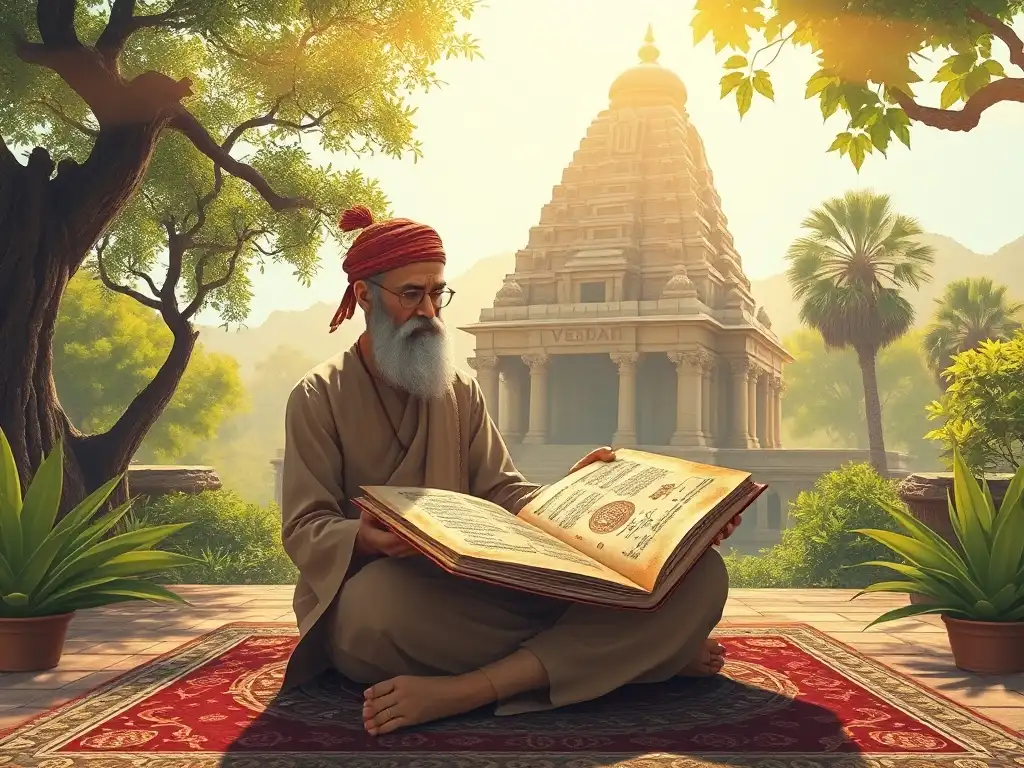
The Vedas, composed over a vast timeline, are not merely religious texts but also repositories of ancient Indian knowledge systems across various disciplines, including science, mathematics, and philosophy. The Vedic literature provides insights into the worldview of ancient Indians, reflecting their understanding of nature, cosmology, and human existence. This profound body of work is divided into four primary texts: Rigveda, Samaveda, Yajurveda, and Atharvaveda, each contributing uniquely to the intellectual landscape of ancient India.
The methodologies employed in the Vedas are indicative of a systematic approach to knowledge. They include empirical observations and logical deductions, showcasing early forms of scientific inquiry. For instance, the Vedic texts explore the properties of sound and its relation to the universe, paving the way for developments in acoustics. Furthermore, the intricate rituals described in the Vedas often align with astronomical events, demonstrating a sophisticated understanding of celestial phenomena, which informed agricultural practices and seasonal rituals.
Contributions to Mathematics and Astronomy
The Vedas made significant contributions to mathematics and astronomy, laying the groundwork for future advancements in these fields. Concepts such as zero, infinity, and the decimal system can be traced back to Vedic literature. The Sulba Sutras, which are part of the Yajurveda, detail the construction of altars with precise geometrical measurements, showcasing advanced mathematical knowledge. These texts highlight the use of various shapes, including squares, circles, and triangles, and provide theorems akin to those found in modern geometry.
In astronomy, the Vedas contain references to celestial bodies and their movements. The Nakshatras (lunar mansions) and the calculation of time based on astronomical observations are extensively detailed in Vedic texts. The Jyotisha, or Vedic astrology, emphasizes the significance of celestial alignments in influencing earthly events, reflecting the ancients' deep integration of astronomy with daily life and decision-making. This early understanding of astronomy and mathematics profoundly influenced later Indian scholars, contributing to the rich legacy of ancient Indian knowledge systems.
Medical Knowledge: Ayurveda in the Vedic Texts
Ayurveda, one of the oldest medical systems in the world, finds its roots in the Vedic texts, particularly the Atharvaveda. This ancient knowledge system emphasizes a holistic approach to health, incorporating physical, mental, and spiritual well-being. The Vedic texts present a variety of herbal remedies, surgical techniques, and dietary guidelines, illustrating a sophisticated understanding of human anatomy and physiology.
The Atharvaveda contains numerous hymns that describe ailments and their cures, often attributing illness to supernatural causes and prescribing rituals alongside medicinal treatments. This dual approach underscores the Vedic belief in the interconnectedness of the physical and spiritual realms. The foundational principles of Ayurveda, such as the concepts of doshas (body constitutions), dhatus (tissues), and srotas (channels), are echoed in the Vedic literature, revealing an intricate understanding of human health that remains influential even today.
Rituals and Practices in Vedic Traditions
Rituals and practices form a crucial part of the Vedic tradition, serving as a means to connect the material and spiritual worlds. The Vedas prescribe various rituals that are not only ceremonial but also imbued with deep philosophical significance. These practices are designed to maintain cosmic order (Rita) and ensure harmony between the human and divine realms. The meticulous nature of these rituals reflects the Vedic emphasis on precision and intention, with every action performed with careful deliberation to invoke desired outcomes.
Sacrificial Rituals and Their Significance
Sacrificial rituals, or Yajnas, hold a central place in Vedic practices. These elaborate ceremonies involve offerings to deities, often accompanied by chanting of mantras, and are believed to sustain the universe's balance. The Vedas articulate the significance of these sacrifices as a means of reciprocating the gifts of nature and maintaining cosmic harmony. The act of sacrifice symbolizes the surrender of the ego and the acknowledgment of a higher power, fostering a sense of community and shared purpose among participants.
The intricate details of these rituals, including the selection of offerings, timing, and recitation of specific mantras, underscore their complexity and importance. Such practices were not only spiritual but also served to reinforce social structures and cultural identity within ancient Indian society. The significance of sacrifices extends beyond religious observance; they embody a profound philosophical understanding of interdependence and reciprocity within the cosmos.
Role of Vedic Chanting and Mantra Recitation
Vedic chanting and mantra recitation are fundamental components of the Vedic tradition, believed to hold transformative power. The rhythmic recitation of mantras is thought to resonate with cosmic vibrations, facilitating a connection between the individual and the divine. Each mantra, composed in ancient Sanskrit, is laden with meaning and intention, serving as a tool for meditation, healing, and spiritual awakening.
The practice of chanting is deeply rooted in the belief that sound has inherent power, capable of influencing both the external world and the inner self. Vedic texts outline specific guidelines for proper pronunciation, intonation, and timing, emphasizing the importance of discipline in the practice. This meticulous attention to detail reflects a broader understanding of language as a vital component of the ancient Indian knowledge systems, where words are viewed as living entities with the ability to create and transform reality.
The Vedas encapsulate a wealth of ancient Indian knowledge systems, ranging from scientific inquiry to spiritual practices. Their teachings continue to resonate, offering invaluable insights into the complexities of life and the universe.
Influence of the Vedas on Later Indian Thought
The Vedas, as the oldest sacred texts of Hinduism, have profoundly influenced subsequent philosophical and religious developments in India. Their teachings laid the foundational principles for various schools of thought, including Vedanta, Samkhya, and Yoga. Through the intricate interplay of ritual, philosophy, and spirituality found in the Vedas, later thinkers were able to explore concepts such as dharma (duty), karma (action and consequence), and moksha (liberation).
Moreover, the Vedic texts introduced a systematic approach to understanding the universe, human existence, and the divine. This philosophical groundwork facilitated the emergence of diverse interpretations, leading to rich debates and discussions that characterized Indian intellectual history. The Vedas not only shaped religious practices but also inspired literary works, art, and even political thought, showcasing their integral role in the evolution of Indian civilization.
Impact on Upanishads and Other Philosophical Systems
The Upanishads, which are considered the concluding part of the Vedic literature, represent a significant evolution in Indian philosophical thought. They delve deeper into the metaphysical inquiries initiated by the Vedas, exploring the nature of reality (Brahman) and the individual self (Atman). This transition marks a shift from ritualistic practices to a more contemplative approach, emphasizing knowledge and meditation as paths to understanding.
The teachings found in the Upanishads further influenced various philosophical systems such as Advaita Vedanta, which posits the non-duality of Atman and Brahman, and Dvaita Vedanta, which emphasizes dualism. Additionally, the ideas articulated in the Upanishads have permeated other Indian philosophical traditions, including Buddhism and Jainism, demonstrating the extensive reach of Vedic thought beyond its own texts.
Legacy of Vedic Knowledge in Modern Hindu Practices
The legacy of Vedic knowledge continues to permeate modern Hindu practices and rituals. Many contemporary ceremonies, such as weddings, funerals, and religious festivals, incorporate Vedic hymns and mantras, reflecting the enduring reverence for these ancient texts. The recitation of Vedic verses is believed to invoke spiritual energy and blessings, linking practitioners with their ancestral heritage.
Moreover, the principles of yoga and meditation, which have gained worldwide popularity, can trace their roots back to Vedic teachings. Concepts like "pranayama" (breath control) and "dhyana" (meditative focus) are integral to both Vedic texts and modern spiritual practices, illustrating how ancient knowledge systems continue to shape contemporary life.
Conclusion: The Enduring Legacy of Vedic Knowledge
The Vedas have left an indelible mark on the tapestry of Indian thought and spirituality, creating a profound legacy that transcends time. Their influence is visible not only in various philosophical schools but also in cultural practices, societal norms, and spiritual pursuits. The Vedas serve as a bridge connecting ancient wisdom with modern understanding, highlighting the relevance of ancient Indian knowledge systems in today's world.
Relevance of Ancient Indian Knowledge Systems Today
As society grapples with modern challenges, the principles embedded in ancient Indian knowledge systems offer valuable insights. Concepts such as mindfulness, ethical living, and the interconnectedness of all beings resonate with contemporary movements towards sustainability and holistic well-being. The Vedic emphasis on balance, harmony, and self-realization provides a framework for addressing the complexities of modern life, encouraging individuals to seek deeper meaning and purpose.
Encouraging Further Exploration of Vedic Texts and Their Wisdom
To fully appreciate the richness of ancient Indian knowledge systems, it is essential to encourage further exploration of the Vedas and related texts. Engaging with these scriptures not only fosters a deeper understanding of Indian philosophy but also invites individuals to reflect on their own lives and beliefs. Initiatives such as study groups, workshops, and online platforms can help demystify these texts, making them accessible to a broader audience. By embracing the wisdom of the Vedas, we can cultivate a more profound connection to our shared human heritage and the timeless quest for knowledge.
- Introduction to Ancient Indian Knowledge Systems
- Historical Context of the Vedas
- Structure of the Vedas
- Philosophical Insights from the Vedas
- The Vedas and Ancient Indian Science
- Rituals and Practices in Vedic Traditions
- Influence of the Vedas on Later Indian Thought
- Conclusion: The Enduring Legacy of Vedic Knowledge
- What are the Vedas and their significance in ancient Indian knowledge systems?
- How did ancient Indian civilizations contribute to mathematics and science?
- In what ways did the Indus Valley civilization influence later Indian cultures?
- What role did the Gupta Empire play in the advancement of ancient Indian knowledge?
- How can we explore ancient Indian knowledge systems in contemporary contexts?
Frequently Asked Questions
What are the Vedas and their significance in ancient Indian knowledge systems?
The Vedas are a collection of ancient texts that form the foundation of Hindu knowledge systems. They encompass various subjects including philosophy, rituals, and medicine, reflecting the depth of ancient Indian wisdom.
How did ancient Indian civilizations contribute to mathematics and science?
Ancient Indian civilizations made significant contributions in mathematics and science, particularly through the development of the decimal system and concepts of zero. These innovations are crucial to the evolution of modern scientific thought.
In what ways did the Indus Valley civilization influence later Indian cultures?
The Indus Valley civilization established early urban planning, drainage systems, and trade practices that influenced later Indian cultures. Its artifacts and societal structures laid the groundwork for future development in the region.
What role did the Gupta Empire play in the advancement of ancient Indian knowledge?
The Gupta Empire, often referred to as the Golden Age of India, saw a flourish in arts, literature, and science. The period was marked by significant advancements in astronomy, mathematics, and medicine that enhanced the ancient Indian knowledge systems.
How can we explore ancient Indian knowledge systems in contemporary contexts?
Exploring ancient Indian knowledge systems today can be done through the study of classical texts, philosophical teachings, and cultural practices. This exploration helps in understanding their relevance and application in modern society, particularly in areas like sustainable living and holistic health.
Final Reflection: Embracing the Wisdom of Ancient Indian Knowledge Systems
The exploration of ancient Indian knowledge systems is not just a journey into the past; it is a vital key to understanding our present and shaping our future. In a world increasingly driven by technology and rapid change, the profound insights embedded within the Vedas and other ancient texts offer timeless wisdom that can guide us through contemporary challenges. The relevance of these teachings is undeniable, as they provide a holistic framework for living harmoniously with nature and each other, reminding us that the essence of knowledge transcends time.
The influence of these ancient texts continues to resonate in our cultural and social landscapes, shaping philosophies, practices, and even modern sciences. The Vedas, with their intricate understanding of life, ethics, and the cosmos, serve as a foundation for many disciplines today, from yoga to Ayurveda. As we navigate the complexities of modern existence, we can draw inspiration from these teachings to cultivate mindfulness and balance in our lives. The greatest gift is not knowledge, but the wisdom to apply it.
This quote encapsulates the essence of how we can harness ancient wisdom to enrich our contemporary lives.
As you reflect on the insights shared in this article, I invite you to consider how you can incorporate the principles of ancient Indian knowledge systems into your daily life. Take a moment to explore the teachings of the Vedas, not just as historical artifacts, but as living wisdom that can inspire your personal growth and community engagement. Let these ancient lessons guide you toward a more mindful, connected, and harmonious existence, ensuring that the mysteries of the Vedas continue to illuminate our paths for generations to come.
Unveil the Wisdom of the Vedas: Take Action Today!
Thank you for delving into the fascinating world of the Vedas with us! Your curiosity about these ancient knowledge systems is the first step toward embracing their profound wisdom. Now, let’s transform that newfound knowledge into action!
- Dive deeper into the Vedas by selecting a specific text and dedicating a week to explore its teachings—consider jotting down your reflections each day.
- Join our community by sharing your insights on social media or in the comments below. Connect with fellow seekers who are on the same journey!
- Attend a local workshop or webinar on Vedic studies—it’s a fantastic way to learn alongside others and enrich your understanding.
As you immerse yourself further, we’d love to hear your thoughts: Which aspect of the Vedas resonates most with you, and how do you plan to integrate that wisdom into your life?