
The Interdependence of Agriculture and Urbanization in Ancient India


Welcome to Ancient India History, where we embark on a captivating journey through the intricate tapestry of India's past. Here, we delve into the profound interdependence of agriculture and urbanization in ancient India, exploring how these two pillars shaped the foundations of civilization. From the fertile plains of the Indus Valley to the bustling streets of Gupta cities, discover the innovations and cultural contributions that emerged from this dynamic relationship. Are you ready to uncover the secrets of how ancient agricultural practices fueled urban growth and transformed societies? Let’s dive deeper into this fascinating chapter of history!
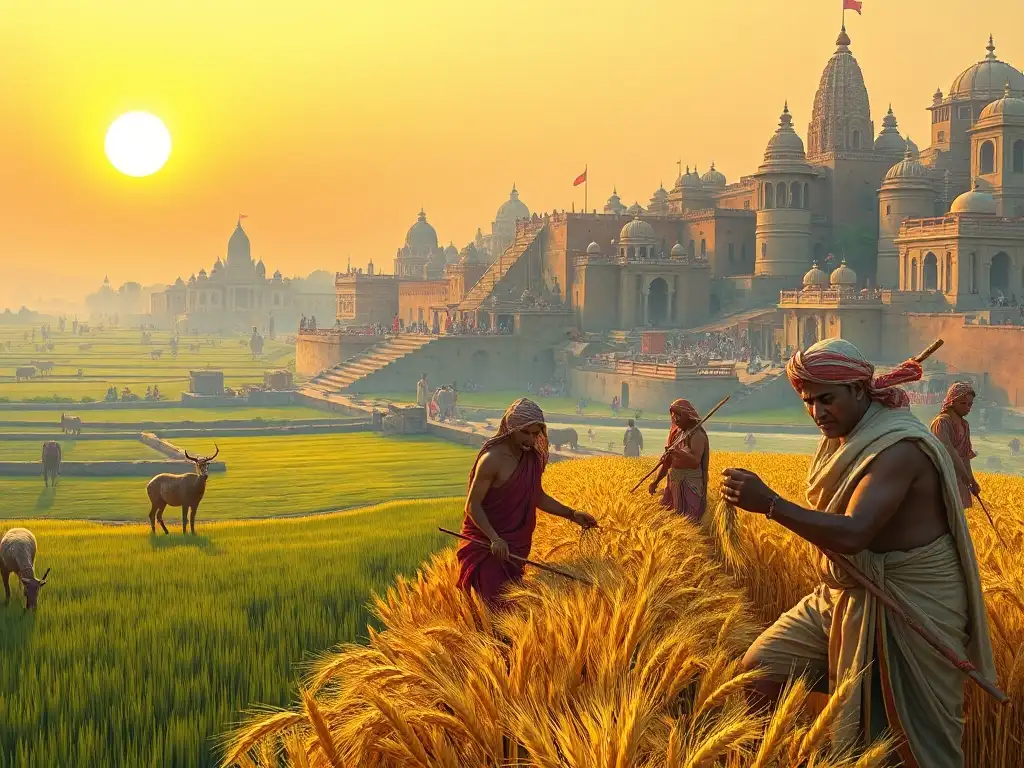
Introduction to Ancient Indian Agriculture and Urbanization
The relationship between agriculture and urbanization in ancient India is a critical theme that underscores the complexity and richness of its historical narrative. Agriculture served as the backbone of ancient Indian societies, shaping not only their economies but also their social structures, cultural practices, and urban development. From the fertile plains of the Indus Valley to the expansive agricultural fields of the Gupta Empire, the interplay between farming and the growth of cities illustrates a dynamic process of interdependence. Understanding this relationship provides valuable insights into how ancient Indian civilizations thrived and evolved, laying the groundwork for future societies.
Overview of Ancient Indian Civilizations
Ancient India was home to several remarkable civilizations, each contributing uniquely to the tapestry of its history. The Indus Valley Civilization (c. 3300–1300 BCE), known for its advanced urban planning and drainage systems, emerged alongside agricultural practices that supported large populations. Following this was the Vedic period (c. 1500–500 BCE), where agriculture expanded, driven by the development of iron tools and plowing techniques. The subsequent Maurya (c. 322–185 BCE) and Gupta Empires (c. 320–550 CE) further exemplified the significance of agriculture as a foundation for political and economic stability, fostering trade, industry, and urban centers.
Importance of Agriculture in Early Societies
Agriculture played a pivotal role in the sustainability of early Indian societies. It not only provided food security but also generated surplus yields that facilitated trade and interaction among communities. This surplus allowed for the specialization of labor, leading to the emergence of various crafts and professions. As a result, social stratification began to take shape, with farmers, artisans, and merchants occupying distinct roles within society. Thus, agriculture was not merely a means of sustenance; it was a catalyst for social organization and cultural development, enabling civilizations to flourish.
The Role of Agriculture in Urban Growth
The growth of urban centers in ancient India was intrinsically linked to agricultural practices. As agricultural techniques improved and crop yields increased, populations began to concentrate in urban areas, leading to the rise of cities. These urban centers became hubs of trade and cultural exchange, thriving on the agricultural surplus produced by surrounding rural areas. The synergy between agriculture and urbanization fostered a vibrant economy, facilitating the development of infrastructure, governance, and social institutions.
Agricultural Innovations in Ancient India
Innovations in agriculture were crucial to supporting urban growth. Techniques such as crop rotation, irrigation systems, and the domestication of various plants and animals significantly enhanced productivity. The introduction of rice, wheat, barley, and lentils as staple crops exemplifies the ingenuity of ancient farmers. Additionally, advancements in tools, such as the plow and sickle, improved efficiency in farming, allowing communities to cultivate larger areas and support burgeoning urban populations.
Crop Cultivation Techniques and Their Impact on Urbanization
The techniques employed in crop cultivation had profound implications for urbanization. For instance, the practice of terracing in hilly regions maximized arable land, while canal irrigation systems allowed for extensive farming in arid zones. These methods not only increased agricultural output but also attracted people to urban centers, where opportunities for trade, employment, and cultural exchange flourished. As cities grew, they became centers of governance, education, and religion, further solidifying the link between agriculture and urban development.
Case Study: The Indus Valley Civilization's Agricultural Practices
The Indus Valley Civilization stands as a prime example of the interdependence of agriculture and urbanization. Archaeological evidence reveals sophisticated agricultural techniques, including the use of irrigation and crop diversification. The civilization's cities, such as Harappa and Mohenjo-Daro, were strategically located near fertile riverbanks, allowing for efficient farming. The surplus produced supported large populations and enabled trade with distant regions, illustrating how agricultural practices were foundational to the civilization's economic and urban success. This case study highlights the essential role of agriculture in fostering urban growth, a theme that resonates throughout ancient Indian history.
Urbanization and Its Influence on Agricultural Practices
The rise of urban centers in ancient India significantly transformed agricultural practices, leading to a dynamic interplay between rural and urban areas. As cities developed, they became hubs of commerce and trade, necessitating a more organized and efficient agricultural system to support growing populations. This urbanization catalyzed advancements in farming techniques, crop selection, and resource management, ultimately enhancing productivity.
The Development of Urban Centers and Trade
Urban centers, such as Mohenjo-Daro and Harappa during the Indus Valley Civilization, emerged as pivotal locations for trade and commerce. These cities facilitated the exchange of goods, including agricultural products, which in turn motivated farmers to increase crop yields and diversify what they cultivated. The establishment of marketplaces allowed for surplus produce to be sold, promoting economic growth and the establishment of a more complex social structure.
The development of trade routes further connected rural areas to urban markets, leading to the introduction of new agricultural techniques and crops. Farmers adopted innovative methods, such as irrigation systems and crop rotation, to meet the demands of urban populations and traders. This interdependence fostered not only economic prosperity but also cultural exchanges that enriched both agricultural practices and urban lifestyles.
How Urbanization Affected Crop Cultivation Methods
As cities expanded, urban demand for food grew, prompting significant changes in crop cultivation methods. Farmers began to adopt more intensive agricultural practices to maximize output. Techniques such as terrace farming, particularly in hilly regions, were utilized to increase arable land and improve drainage, leading to better crop yields.
Additionally, the introduction of tools made from advanced metallurgy enhanced farming efficiency. Farmers employed plows and irrigation systems, which were crucial in transforming the agricultural landscape. The need to supply urban centers also encouraged the cultivation of cash crops, which were often more profitable than subsistence farming, leading to a shift in focus for many agrarian communities.
The Relationship Between Population Growth and Agricultural Demand
The growth of urban populations directly influenced agricultural demand in ancient India. As cities became more populated, the pressure on agricultural systems intensified. This relationship created a feedback loop where increased urbanization led to a higher demand for food, prompting farmers to innovate and expand their production capabilities.
Population booms often resulted from improved health and sanitation in urban areas, which were in part due to agricultural surpluses. In turn, these improved conditions further fueled urban expansion. The necessity to sustain larger communities drove advancements in agricultural technology and practices, which became essential for balancing the needs of both urban and rural populations.
The Interdependence of Agriculture and Urbanization
The relationship between agriculture and urbanization in ancient India was characterized by a profound interdependence that shaped both economic and social landscapes. This connection underscored how agricultural practices not only supported urban growth but also influenced the cultural and social dynamics within these civilizations.
Economic Implications of Agricultural Surplus
Agricultural surplus played a crucial role in the economic framework of ancient Indian urban centers. Surpluses allowed for trade beyond immediate local needs, fostering economic networks that extended across regions. This abundance led to the establishment of specialized professions, as not all individuals needed to be involved in farming; artisans, traders, and other professions flourished in urban settings.
Moreover, the surplus supported the development of complex economic systems, including taxation and state control over resources. Rulers often relied on agricultural productivity to fund public works, maintain armies, and support urban infrastructure, demonstrating the critical role of agriculture in sustaining urban economies.
Social Structures: Farmers and Urban Dwellers
The interdependence of agriculture and urbanization also shaped social structures in ancient India. Farmers and urban dwellers developed distinct roles within society, yet their fates were intertwined. Urban populations relied on farmers for sustenance, while farmers depended on urban centers for trade and access to goods.
This relationship fostered a sense of community that transcended geographical boundaries. Festivals, markets, and social gatherings often brought together rural and urban populations, facilitating cultural exchanges and strengthening communal bonds. The social fabric of ancient Indian civilizations was thus woven from the contributions of both farmers and city dwellers, highlighting the significance of their interrelationship.
Cultural Exchanges Between Rural and Urban Areas
Cultural exchanges between rural and urban areas were vital in shaping the identity of ancient Indian civilizations. As urban centers thrived, they became melting pots of ideas, customs, and practices. Innovations in agriculture, such as new crop varieties and farming techniques, were often shared in these urban spaces, which also served as venues for the dissemination of knowledge.
The migration of people between rural and urban settings further facilitated these exchanges. Urban markets attracted farmers, who brought with them traditions, stories, and agricultural practices. This interaction enriched the cultural landscape of urban areas, while rural communities often adopted new ideas and technologies from the cities, enhancing their agricultural practices.
The interplay between agriculture and urbanization in ancient India was dynamic and multifaceted. It fostered economic growth, shaped social structures, and facilitated cultural exchanges, ultimately contributing to the rich tapestry of ancient Indian civilization.
Case Studies of Key Ancient Indian Cities

The interdependence of agriculture and urbanization in ancient India can be best understood through the lens of key urban centers that flourished due to their agricultural foundations. Cities such as Harappa, Mohenjo-Daro, Pataliputra, and those from the Gupta Empire exemplify how agricultural practices not only supported but also prompted urban growth, showcasing a dynamic relationship that shaped the civilization's trajectory.
Harappa and Mohenjo-Daro: Agricultural Foundations of Urban Life
The Indus Valley Civilization, represented by the cities of Harappa and Mohenjo-Daro, serves as a prime example of early urbanization rooted in agriculture. These cities, dating back to around 2500 BCE, were strategically located near the fertile plains of the Indus River, which provided the necessary resources for crop cultivation.
- Irrigation Systems: The sophisticated drainage and irrigation systems found in these cities suggest a high level of agricultural planning. The inhabitants cultivated wheat, barley, and pulses, indicating a diverse agricultural base. This surplus in food production enabled a population increase, fostering urban growth.
- Trade and Commerce: The agricultural prosperity of Harappa and Mohenjo-Daro allowed for the development of trade networks. Surplus grains were traded for goods, creating a robust economy that further encouraged urbanization. This trade was not limited to local exchanges but extended to distant regions, including Mesopotamia, showcasing the interconnectedness of agriculture and urban centers.
The Role of Agriculture in the Growth of Pataliputra
Pataliputra, the capital of ancient Magadha and later the Mauryan Empire, emerged as a significant urban center around the 5th century BCE. Its growth was intricately linked to advancements in agricultural practices.
- Agricultural Innovations: The introduction of new agricultural techniques, such as crop rotation and the use of iron tools, enhanced productivity. This innovation not only increased food supply but also supported a burgeoning population that flocked to the city in search of opportunities.
- Economic Hub: As a result of its agricultural wealth, Pataliputra became an economic hub. The city facilitated trade in agricultural products, textiles, and crafts, drawing merchants and farmers alike. This economic activity contributed to Pataliputra's reputation as one of the largest cities of its time.
The Gupta Empire: Balancing Agriculture and Urban Development
The Gupta Empire (approximately 320-550 CE) epitomized a period of prosperity in ancient India marked by a delicate balance between agricultural advancements and urban development.
- Agricultural Policies: The Gupta rulers implemented effective agricultural policies that promoted irrigation and land reclamation. These policies led to increased agricultural output, which in turn supported urban centers like Ujjain and Kannauj.
- Cultural Flourishing: The wealth generated from agriculture allowed for cultural and intellectual advancements. Cities became centers of learning and commerce, highlighting a symbiotic relationship between agriculture and urbanization. This flourishing resulted in notable contributions to art, literature, and science, reflecting the holistic development of society.
Conclusion: Legacy of Ancient Indian Agriculture and Urbanization
The interplay between agriculture and urbanization in ancient India laid down a foundation that continues to influence the region's socio-economic landscape. The case studies of cities like Harappa, Mohenjo-Daro, Pataliputra, and those during the Gupta Empire illustrate how agricultural practices were pivotal in shaping urban growth and cultural development.
Lasting Impacts on Modern Indian Agricultural Practices
The agricultural techniques and systems developed during ancient times have left a lasting imprint on modern Indian agricultural practices. Techniques such as crop rotation and irrigation systems continue to be fundamental in contemporary farming, reflecting a legacy that has persisted through centuries. Additionally, the principles of sustainable agriculture observed in ancient times are increasingly relevant today as India navigates challenges related to food security and environmental sustainability.
Reflections on Urbanization Trends in Contemporary India
Modern India is witnessing rapid urbanization reminiscent of ancient trends, albeit on a different scale. The growth of mega-cities parallels the historical relationship between agriculture and urban development. Urban centers continue to rely on surrounding agricultural areas for their sustenance, reinforcing the need for sustainable agricultural practices. As India continues to evolve, reflecting on the interdependence observed in ancient times can provide valuable insights into balancing growth and sustainability in contemporary urbanization.
References and Further Reading
Understanding the intricate relationship between agriculture and urbanization in ancient India is essential for grasping the broader dynamics of its civilizations. A variety of resources, including books, articles, and online materials, can provide valuable insights into this topic.
Suggested Books and Articles on Ancient Indian Agriculture and Urbanization
-
"The Indus Valley Civilization: A Contemporary Perspective" by Gregory L. Possehl
This book offers a comprehensive overview of the Indus Valley Civilization, focusing on its agricultural practices and urban development, providing context for how these two elements influenced each other.
-
"Agriculture and Urbanization in Ancient India" by R. S. Sharma
This scholarly article delves into the historical interplay between agriculture and urban growth in ancient India, examining how agricultural innovations spurred urban planning and development.
-
"The Urbanization of Ancient India" by R. S. Gupta
An insightful resource that explores the evolution of cities in ancient India, emphasizing the role of agriculture in shaping urban landscapes and economies.
-
"Ancient Indian Agriculture: A Historical Perspective" by A. K. Sharma
This book presents an in-depth look at the agricultural techniques used in ancient India, discussing how these methods supported burgeoning urban centers.
-
"The Role of Agriculture in the Development of Indian Civilization" by R. N. Sinha
A critical exploration of agricultural practices and their significance in the rise of ancient Indian civilizations, including case studies on major urban centers.
Online Resources for Further Exploration of the Topic
-
Digital South Asia Library (DSAL)
An online repository that provides access to a wealth of resources related to South Asian studies, including publications on ancient Indian agriculture and urbanization.
-
The Archaeological Survey of India Website
This site offers a range of resources, including research papers and excavation reports that reveal insights into the agricultural and urban planning practices of ancient Indian civilizations.
-
JSTOR
An extensive digital library of academic journals, books, and primary sources that includes numerous articles on ancient Indian agriculture and urbanization.
-
The British Museum’s Online Collection
This collection features artifacts and documents related to ancient Indian civilizations, providing context for understanding agricultural tools and urban artifacts.
-
Ancient India: A Historical Overview (YouTube Channel)
A channel dedicated to exploring various aspects of ancient Indian history, including videos on agriculture and urban development that are both informative and engaging.
These resources collectively enhance our understanding of how ancient Indian agriculture and urbanization were deeply interdependent, shaping the civilizations that emerged in the Indian subcontinent.
- Introduction to Ancient Indian Agriculture and Urbanization
- The Role of Agriculture in Urban Growth
- Urbanization and Its Influence on Agricultural Practices
- The Interdependence of Agriculture and Urbanization
- Case Studies of Key Ancient Indian Cities
- Conclusion: Legacy of Ancient Indian Agriculture and Urbanization
- References and Further Reading
- What was the role of agriculture in ancient Indian urbanization?
- How did ancient Indian civilizations influence agricultural practices?
- What were the major urban centers in ancient India?
- How did trade relate to agriculture in ancient India?
- What were the effects of urbanization on agricultural development?
Frequently Asked Questions
What was the role of agriculture in ancient Indian urbanization?
Agriculture played a crucial role in the development of urban centers, providing the necessary food surplus that supported larger populations and stimulated trade.
How did ancient Indian civilizations influence agricultural practices?
Ancient Indian civilizations introduced advanced irrigation techniques and crop rotation, which significantly improved yields and fostered sustainable farming practices.
What were the major urban centers in ancient India?
Key urban centers included Harappa and Mohenjo-Daro in the Indus Valley, and later cities like Pataliputra during the Maurya and Gupta empires, showcasing the interdependence of agriculture and urban life.
How did trade relate to agriculture in ancient India?
Trade was heavily reliant on agricultural products, with surplus crops being exchanged for goods and services, linking agriculture directly to the economic prosperity of urban areas.
What were the effects of urbanization on agricultural development?
Urbanization led to the specialization of agricultural practices and the emergence of market systems, enhancing productivity and allowing for more diverse crops and farming techniques.
Final Reflection: The Interwoven Legacy of Ancient Indian Agriculture and Urbanization
The intricate relationship between agriculture and urbanization in ancient India is not just a historical narrative; it is a testament to the resilience and adaptability of human societies. Today, as we grapple with rapid urbanization and its impact on agricultural practices, understanding this interdependence offers critical insights into sustainable development. The lessons from ancient Indian civilization remind us that the balance between urban growth and agricultural sustainability is essential for our future.
The legacy of ancient Indian agriculture and urbanization continues to shape our cultural and social landscapes, influencing everything from food security to urban planning. As we witness the challenges posed by modern urban expansion, it is crucial to recognize the wisdom embedded in our past. The past is not dead; it is not even past.
This quote by William Faulkner resonates deeply, as it highlights how the echoes of ancient practices can guide contemporary solutions. By acknowledging the interconnectedness of these two domains, we can foster a more harmonious relationship with our environment.
As we reflect on the lessons of ancient India, I invite you to consider how you can contribute to this balance in your own life. Think about the ways in which your choices impact both urban spaces and agricultural practices. Whether it's supporting local farmers, advocating for sustainable urban policies, or simply being mindful of your consumption habits, each action counts. Together, we can honor the legacy of our ancestors while paving the way for a sustainable future.
Uncover the Secrets of Ancient Interdependence!
Thank you for diving into the fascinating world of agriculture and urbanization in Ancient India! You've gained valuable insights into how these two forces shaped societies and influenced each other throughout history. Now, it's time to take that knowledge and put it into action!
Here’s how you can explore this topic further and share your newfound understanding:
- Join a local agricultural group or workshop to connect with practices that reflect ancient methods and learn how they can be applied in today's context.
- Share your insights with friends or on social media—discuss how historical interdependencies can inform modern urban planning and promote sustainable agriculture.
- Develop a simple project where you trace the evolution of agriculture and urbanization in your community, comparing it to the patterns observed in Ancient India.
What discoveries about agriculture and urbanization can you uncover in your own community that resonate with the lessons from Ancient India? Your reflections could spark an enlightening conversation!