
Comparing the Maurya Political Structure with Other Ancient Civilizations

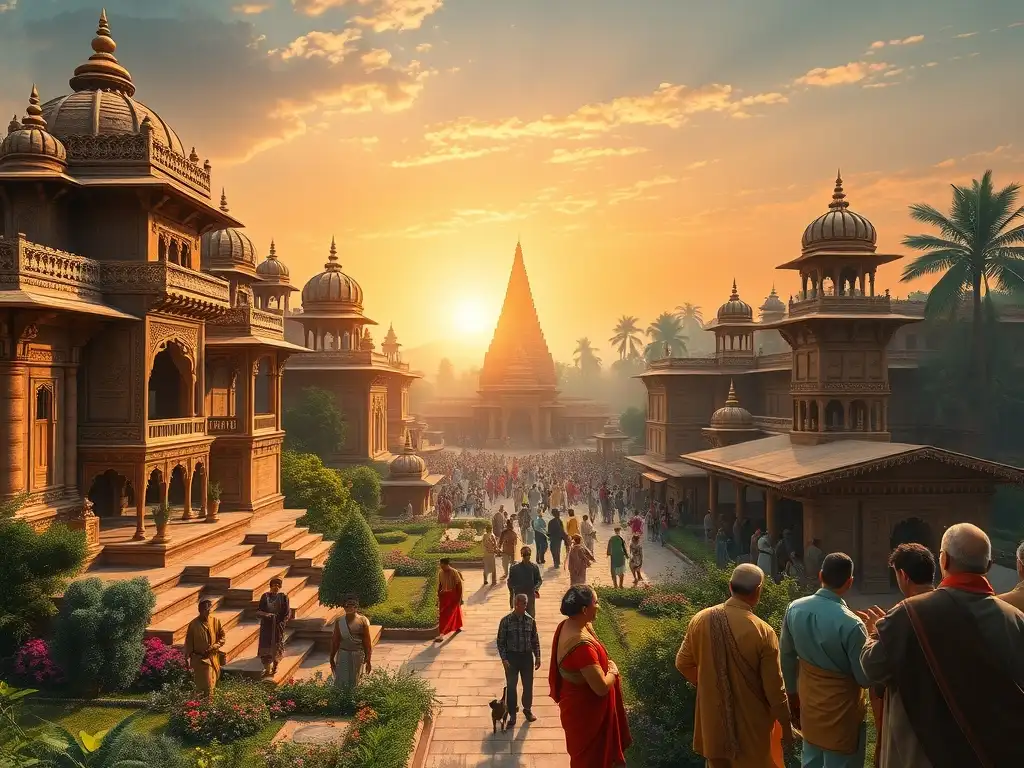
Welcome to Ancient India History, where we embark on a journey through the vibrant tapestry of ancient Indian civilizations! Dive deep into the fascinating world of the Maurya political structure, as we uncover its distinctive features and how it stands in comparison to other ancient civilizations. What made the Mauryan Empire a beacon of governance and administration? Explore with us and satisfy your curiosity about the intricate web of power, culture, and innovation that shaped one of history's most remarkable eras. Your adventure into the past begins here!
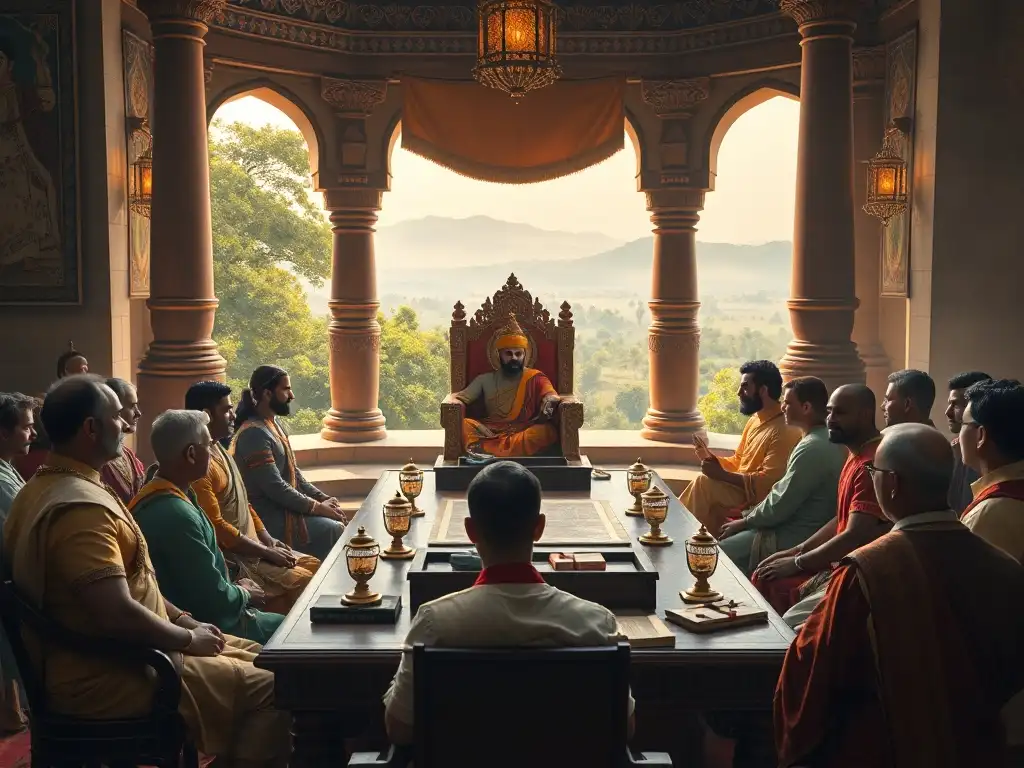
Introduction to Maurya Political Structure
The political structure of the Maurya Empire, which flourished from 322 to 185 BCE, stands out as a remarkable example of governance in ancient times. This period saw the establishment of a centralized and sophisticated administration that not only unified a vast territory but also laid the groundwork for subsequent political frameworks in India. By examining the Maurya political structure, we can better understand its unique characteristics and how it compares to the political systems of other ancient civilizations, such as those in Mesopotamia, Egypt, and China.
Overview of the Maurya Empire
The Maurya Empire was founded by Chandragupta Maurya and reached its zenith under the reign of Ashoka the Great. Spanning much of the Indian subcontinent, the empire is notable for its significant contributions to governance, culture, and economics. The Maurya Empire is characterized by its:
- Size: At its peak, it covered nearly 5 million square kilometers.
- Diversity: The empire encompassed a variety of cultures, languages, and religions.
- Economy: It boasted a thriving economy based on agriculture, trade, and craftsmanship.
This vast empire required a complex and effective political structure to manage its diverse population and maintain order.
Importance of Political Structures in Ancient Civilizations
Political structures are fundamental to the functioning of any civilization, serving as the backbone of governance and societal organization. In ancient civilizations, these structures were crucial for:
- Maintaining order: Effective governance ensures stability and security within a society.
- Resource allocation: Political systems facilitate the distribution of resources and services to the population.
- Cultural development: A well-organized political framework can promote advancements in arts, sciences, and philosophy.
By comparing the Maurya political structure with those of other ancient civilizations, we can gain insights into how different societies approached governance and the impact of these systems on their historical trajectories.
Key Features of the Maurya Political Structure
The Maurya political structure was marked by several key features that distinguished it from other ancient systems:
Centralized Governance in the Maurya Empire
At the heart of the Maurya political structure was a strong central authority. This centralization was vital for managing the vast territories of the empire. Key aspects included:
- Unified administration: The empire was governed from a central location, with officials appointed by the emperor to oversee various regions.
- Standardized laws and policies: Centralized governance allowed for uniformity in laws and policies, facilitating trade and communication across the empire.
Role of the Emperor in Maurya Politics
The emperor played a pivotal role in the political system of the Maurya Empire. His authority was derived from a combination of military power, religious legitimacy, and administrative efficiency. Important aspects of the emperor's role included:
- Supreme authority: The emperor was the ultimate decision-maker and held the power to enact laws and policies.
- Cultural patronage: Emperors, especially Ashoka, promoted Buddhism and other cultural practices, influencing the moral and ethical framework of the empire.
Administrative Divisions and Local Governance
To manage the vast empire effectively, the Maurya political structure included a well-defined hierarchy of administrative divisions. This structure involved:
- Provinces and governors: The empire was divided into several provinces, each governed by a viceroy or governor who acted on behalf of the emperor.
- Local councils: Local governance was facilitated through councils that addressed community needs and reported back to the provincial authorities.
This intricate web of governance allowed the Maurya Empire to maintain control over its diverse regions while promoting local participation in administration.
Comparing Maurya Political Structure with Other Ancient Civilizations
The Maurya Empire (c. 322–185 BCE) is recognized for its unique political structure that facilitated centralized governance over a vast territory. This structure can be compared to those of other ancient civilizations, such as Ancient Egypt, the Roman Republic, and Ancient China. Each civilization developed its political systems influenced by geographical, cultural, and social factors, leading to distinct governance models.
Comparison with Ancient Egypt's Political System
Ancient Egypt's political system was characterized by a theocratic monarchy, wherein the Pharaoh was deemed a divine ruler and the embodiment of gods on earth. This centralization allowed for a stable and enduring political structure, heavily reliant on religious legitimacy. In contrast, the Maurya Empire, although centralized under a monarch, did not position its rulers as divine. Instead, Mauryan emperors, like Chandragupta Maurya and Ashoka, focused on administrative efficiency and welfare policies.
- Centralization: Both civilizations had a centralized authority, but while Egypt’s power stemmed from divine right, Maurya's was based on administrative merit and military strength.
- Bureaucracy: The Mauryan bureaucracy was heavily structured, with officials appointed based on merit and loyalty, contrasting with Egypt's reliance on noble families and priestly classes for governance.
Comparison with the Roman Republic
The political structure of the Roman Republic (509–27 BCE) was marked by a complex system of checks and balances, featuring elected officials such as consuls and senators. This system encouraged participation from various social classes, particularly the patricians and plebeians. In comparison, the Maurya Empire was a monarchy with a single ruler at the helm.
- Political Participation: While the Roman Republic allowed for a broader base of political participation through elections, the Maurya Empire was more autocratic, although it sought to ensure stability through public welfare initiatives.
- Legal Framework: The Romans developed a robust legal code, influencing modern legal systems, whereas the Maurya Empire relied on dharma, or moral law, to guide governance, with Ashoka significantly promoting these principles.
Comparison with Ancient China’s Dynastic Rule
Ancient China's dynastic rule, particularly during the Zhou (1046–256 BCE) and Qin (221–206 BCE) dynasties, employed a feudal system that emphasized loyalty to the emperor and regional lords. The Maurya Empire, while also centralized, utilized a more unified administrative approach, employing a vast bureaucratic network to manage its territories.
- Feudalism vs. Centralization: The Chinese system often devolved power to regional lords, which could lead to fragmentation, while the Maurya Empire maintained tighter control through a well-organized bureaucracy.
- Philosophical Underpinnings: Confucianism in China emphasized moral governance and hierarchical relationships, contrasting with the Mauryan emphasis on dharma and the welfare of the populace, especially under Ashoka's rule.
The Impact of Religion on Political Structures
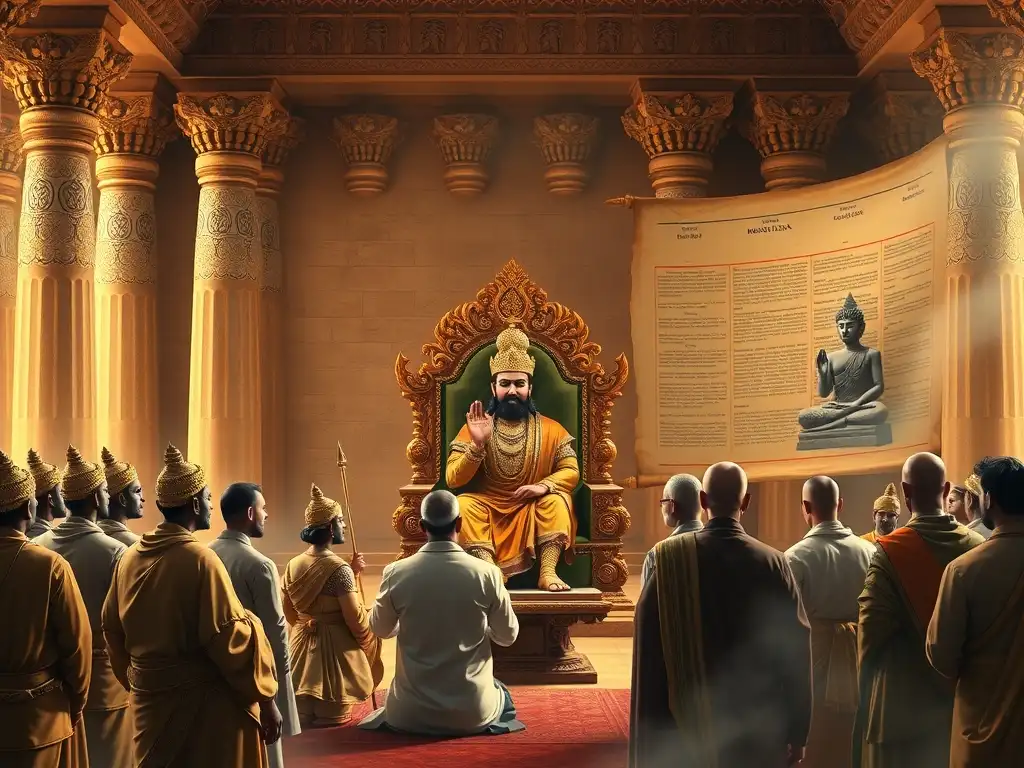
Religion played a critical role in shaping the political structures of ancient civilizations, influencing governance, law, and societal norms.
Role of Buddhism in Maurya Governance
Buddhism, particularly during the reign of Ashoka, deeply influenced the Mauryan political structure. Ashoka's conversion to Buddhism led to significant reforms aimed at promoting ethical governance and social welfare. His policies emphasized non-violence (ahimsa), compassion, and the welfare of all beings, integrating Buddhist principles into the fabric of state governance.
- Dharma as Governance: Ashoka's edicts, inscribed on pillars throughout the empire, advocated for moral conduct and social responsibility, merging religious tenets with political policy.
- Promotion of Social Welfare: The Maurya Empire established hospitals, roads, and educational institutions, demonstrating a governance model that prioritized the well-being of its citizens through a religious lens.
Comparison with Religious Influences in Other Civilizations
In contrast to the Maurya Empire, where Buddhism shaped governance, other ancient civilizations also integrated religion into their political structures, albeit in different ways.
- Egypt: The Pharaoh's divine status dictated that governance be intertwined with religious practice, where laws were often seen as manifestations of divine will.
- Rome: Religion played a role in legitimizing political authority, with emperors often deified posthumously, but the Republic allowed for a more secular approach to governance through its legal frameworks.
The comparisons highlight how religion influenced political structures across different civilizations, with each adopting unique methods to integrate spiritual beliefs into governance, reflecting their cultural contexts.
Conclusion
Comparing the Maurya political structure with other ancient civilizations reveals significant similarities and differences that highlight the unique attributes of the Maurya Empire. While many ancient societies exhibited centralized governance and bureaucratic systems, the Maurya Empire stands out due to its extensive administrative organization, effective taxation policies, and the promotion of a unified cultural identity under Chandragupta Maurya and his grandson Ashoka.
The Maurya Empire's political strategies, particularly its ability to integrate diverse cultures and populations, created a lasting impact on the subcontinent's governance models. The legacy of the Maurya political structure can be seen in subsequent Indian dynasties, influencing how power was exercised and how kingdoms interacted with one another. Understanding these dynamics provides critical insights into the evolution of governance in ancient India and its lasting significance in shaping modern political thought.
Summary of Key Comparisons
- Centralization vs. Decentralization: The Maurya Empire was highly centralized, especially under Ashoka, contrasting with the more decentralized structures of some contemporary civilizations, such as the Greek city-states.
- Bureaucratic Efficiency: The Mauryan administration was characterized by a complex bureaucracy that ensured effective governance over vast territories, similar to the Roman Empire but differing in its emphasis on moral governance and welfare.
- Cultural Integration: Unlike some ancient civilizations that maintained rigid social hierarchies, the Maurya political structure encouraged the integration of various cultures, fostering a sense of unity and shared identity.
- Legal Framework: The Mauryas implemented a codified legal system, which was progressive compared to the customary laws of other civilizations, reflecting an advancement in political thought and social justice.
The Legacy of Maurya Political Structure in Historical Context
The political structure of the Maurya Empire has left a profound legacy in both historical and contemporary contexts. Its emphasis on a centralized state with a strong bureaucracy set a precedent for future Indian empires, such as the Gupta Empire, which adopted and adapted many Mauryan administrative practices.
Moreover, Ashoka's promotion of Dhamma, which emphasized ethical governance and the welfare of subjects, influenced not only Indian politics but also the spread of Buddhism across Asia. The principles of governance established by the Mauryas resonate even today, as they laid the groundwork for discussions around statecraft, moral leadership, and social responsibility in governance.
References
- Kangle, R. P. (1963). The Kautiliya Arthashastra. Delhi: Motilal Banarsidass.
- Mukherjee, R. (2007). The Maurya Empire: A Historical Perspective. New Delhi: Oxford University Press.
- Thapar, R. (2002). Asoka and the Decline of the Mauryas. New Delhi: Oxford University Press.
Suggested Readings on Maurya Political Structure and Ancient Civilizations
- Basham, A. L. (1954). The Wonder That Was India. New York: Grove Press.
- Reddy, K. R. (2011). Ancient Indian Political Thought. New Delhi: Academic Foundation.
- Ramesh, K. (2018). Understanding the Maurya Dynasty. New Delhi: Sage Publications.
These readings provide a comprehensive overview of the Maurya political structure and its comparisons with other ancient civilizations, enhancing understanding of the complexities and legacy of this influential period in Indian history.
- Introduction to Maurya Political Structure
- Key Features of the Maurya Political Structure
- Comparing Maurya Political Structure with Other Ancient Civilizations
- The Impact of Religion on Political Structures
- Conclusion
- References
- What was the political structure of the Maurya Empire?
- How does the Maurya political structure compare to that of the Indus Valley Civilization?
- What were the key administrative features of the Maurya Empire?
- How did the Maurya political structure influence later Indian empires?
- What were the major contributions of the Maurya political structure to governance?
Frequently Asked Questions
What was the political structure of the Maurya Empire?
The Maurya Empire had a centralized political system with a strong monarchy at its core. The emperor held absolute power, supported by a council of ministers and an extensive bureaucracy.
How does the Maurya political structure compare to that of the Indus Valley Civilization?
Unlike the Indus Valley Civilization, which is believed to have had a more decentralized and possibly theocratic system, the Maurya Empire featured a well-defined hierarchy under a single ruler.
What were the key administrative features of the Maurya Empire?
The Maurya Empire implemented a comprehensive administrative framework, including districts governed by officials, a system of spies, and standardized tax collection, enhancing political efficiency.
How did the Maurya political structure influence later Indian empires?
The political organization established by the Maurya Empire laid the groundwork for subsequent empires, such as the Gupta Empire, which adopted similar bureaucratic practices and centralized governance.
What were the major contributions of the Maurya political structure to governance?
The Maurya political structure contributed significantly to statecraft, including the development of legal systems, administrative divisions, and promoting trade, which fostered economic growth and stability.
Final Reflection: Understanding the Maurya Political Structure in a Broader Context
The exploration of the Maurya political structure not only sheds light on the governance of one of ancient India's most powerful empires but also reveals its enduring relevance in today's political discourse. The intricate systems of administration, law, and social organization that characterized the Maurya Empire offer valuable lessons for contemporary governance, illustrating how effective leadership and civic responsibility can shape societies. As we navigate the complexities of modern political landscapes, understanding these historical frameworks can inspire innovative approaches to governance.
The Maurya Empire's political structure has left an indelible mark on the cultural and social fabric of India, influencing subsequent dynasties and modern political thought. The principles of centralized governance and bureaucratic efficiency established during this era continue to resonate in today's political systems. As historian Romila Thapar aptly noted, The Mauryan state was not merely a political entity but a complex web of social relations that shaped the lives of its citizens.
This observation underscores the significance of the Maurya political structure as a foundational pillar that has influenced the evolution of governance in the region and beyond.
As we reflect on the lessons from the Maurya political structure, I invite you to consider how these insights can be applied in your own life and community. What aspects of governance and civic engagement can you adopt to foster a more equitable and effective society? By embracing the principles of accountability, inclusivity, and strategic leadership exemplified by the Maurya Empire, we can contribute to building a future that honors the lessons of the past while addressing the challenges of our time. Let us take inspiration from history and actively engage in shaping a better tomorrow.
Unveil the Legacy of Ancient Governance!
Thank you for taking the time to explore the fascinating intricacies of the Maurya political structure! You've gained valuable insights into how this ancient civilization shaped governance, not just in India, but across the world. Now, it's time to deepen your interest and explore the captivating world of ancient political systems further.
Here’s how you can expand your knowledge and engage with this topic:
- Dive deeper into Ancient Civilizations: Read more articles on Ancient Indian History that compare various governing systems and discover the common threads that link these societies.
- Share your insights: Engage with friends or on social media by sharing what you've learned—spark discussions on how these ancient structures influence modern governance!
- Join the conversation: Participate in our community forum where you can discuss the strategies of the Maurya Empire with other enthusiasts and historians.
Are you ready to uncover how ancient political strategies still resonate in today’s governments? Share your thoughts below—what aspect of the Maurya political structure intrigues you the most?