
The Cultural Exchange of Scientific Ideas Between Gupta India and the World

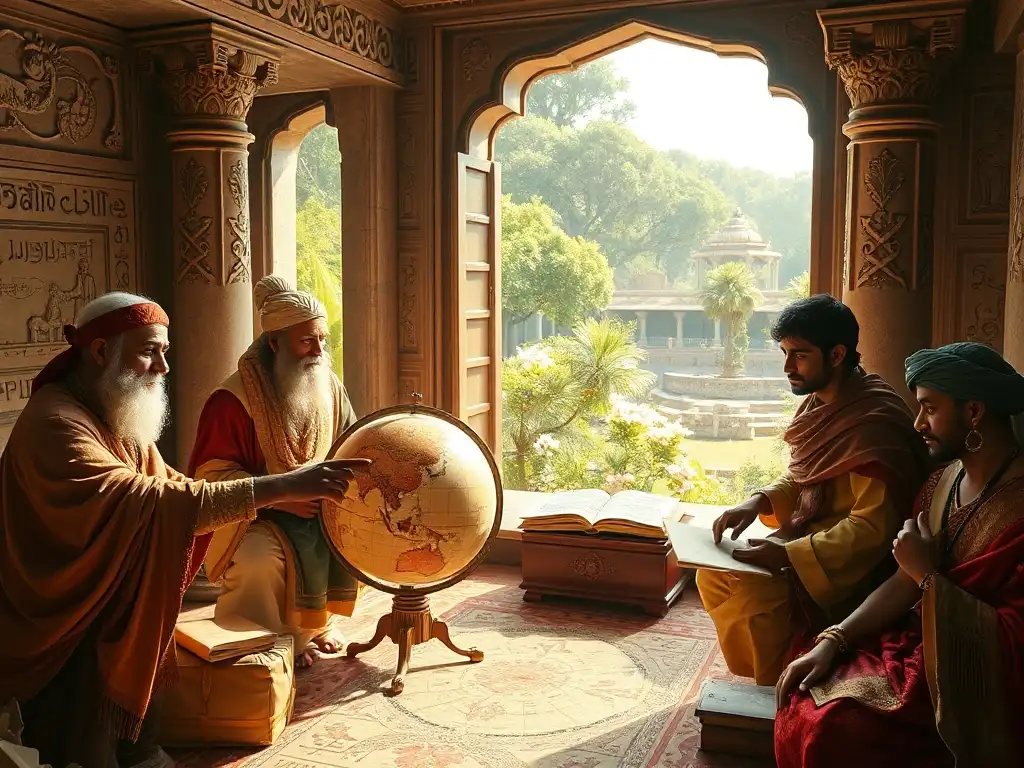
Welcome to Ancient India History, where we embark on a fascinating journey through time to uncover the rich tapestry of ancient Indian civilizations. In this article, we delve into the captivating world of Gupta India, a period renowned not only for its cultural and artistic achievements but also for its remarkable scientific ideas exchange with the rest of the world. What were the groundbreaking contributions of the Gupta Empire, and how did they shape the course of history?
Join us as we explore the intricate web of knowledge that connected ancient India to global thought, and discover how these exchanges continue to influence us today. Dive in and let your curiosity lead the way!

Introduction to Gupta India and Its Scientific Contributions
The Gupta Empire, which flourished from approximately 320 to 550 CE, is often referred to as the "Golden Age" of India due to its remarkable achievements in various fields, including science, mathematics, literature, and art. During this period, Gupta India became a vibrant center for intellectual pursuits and cultural exchanges, facilitating the flow of scientific ideas both within the Indian subcontinent and beyond its borders. The Gupta India scientific ideas exchange was marked not only by innovation and discovery but also by the synthesis of knowledge from diverse cultures, leading to advancements that would influence civilizations worldwide.
Overview of the Gupta Empire's Historical Context
The Gupta Empire emerged at a time when India was transitioning from the fragmented states following the decline of the Maurya Empire. Under the leadership of notable rulers like Chandragupta I, Samudragupta, and Chandragupta II, the empire expanded its territory and established a strong centralized government. This political stability created an environment conducive to trade, education, and cultural exchange, which were pivotal for the flourishing of scientific thought.
- Key Periods:
- Chandragupta I (c. 320-335 CE): Established the empire and promoted trade.
- Samudragupta (c. 335-375 CE): Renowned for military conquests and cultural patronage.
- Chandragupta II (c. 375-415 CE): Furthered cultural and scientific pursuits.
Significance of Scientific Ideas in Ancient India
The scientific ideas that emerged during the Gupta period were not isolated; they were a culmination of earlier knowledge from the Indus Valley civilization and the Vedic texts, enriched by interactions with other cultures through trade routes. This exchange of ideas was crucial for the development of various disciplines, including:
- Mathematics: Introduction of the decimal system and concepts of zero.
- Astronomy: Advances in understanding planetary motions and eclipses.
- Medicine: The compilation of texts like the Sushruta Samhita that laid the foundations for surgical practices.
The significance of these contributions extends beyond India's borders, influencing neighboring civilizations and later European thought during the Renaissance.
The Landscape of Scientific Ideas in Gupta India
The Gupta Empire was characterized by a rich tapestry of scientific inquiry that spanned multiple fields. Scholars and thinkers engaged in dialogue that transcended regional boundaries, facilitating a vibrant exchange of knowledge.
Major Fields of Study in Gupta India
Several key fields flourished during the Gupta period, each contributing uniquely to the scientific landscape:
- Mathematics:
- Development of the numeral system that included the concept of zero.
- Notable mathematicians like Aryabhata, who calculated the value of π (pi) and the length of the solar year.
- Astronomy:
- Aryabhata's work in astronomy and the heliocentric theory.
- Accurate predictions of eclipses and planetary positions.
- Medicine and Surgery:
- Texts like the Sushruta Samhita and Charaka Samhita that detailed surgical techniques and medicinal practices.
- Emphasis on herbal remedies and holistic healing.
- Metallurgy:
- Advances in the extraction and purification of metals, including the creation of high-quality steel.
This robust environment of intellectual exchange not only fostered advancements in science and technology but also laid the groundwork for future generations to build upon the Gupta legacy. The implications of this exchange continue to resonate, showcasing the enduring impact of Gupta India on the global stage.
Key Figures in Gupta Scientific Thought

The Gupta Empire, often referred to as the Golden Age of India, was marked by significant advancements in science and mathematics. This period saw the emergence of several key figures whose contributions laid the foundation for future developments. Among these scholars, Aryabhata, Varahamihira, and Brahmagupta stand out for their influential work in mathematics and astronomy.
Aryabhata (476–550 CE) is perhaps the most renowned mathematician and astronomer of the Gupta period. His seminal work, the Aryabhatiya, introduced revolutionary concepts such as the place value system and the concept of zero, which were pivotal for the advancement of mathematics not only in India but also globally. Aryabhata's calculations of the Earth's circumference and his theories on the lunar and solar eclipses showcased the scientific rigor of his time.
Varahamihira (505–587 CE) was another prominent figure, known for his contributions to astrology, astronomy, and mathematics. His treatise, the Brihat Samhita, compiled astronomical observations and astrological predictions, reflecting the synthesis of scientific knowledge and cultural beliefs prevalent during the Gupta era. Varahamihira's work emphasized the interrelationship between science and daily life, particularly in agricultural practices.
Brahmagupta (598–668 CE) further expanded the mathematical discourse with his work, the Brahmasphutasiddhanta. He is credited with formalizing rules for arithmetic operations involving zero and negative numbers, thus advancing algebra. His exploration of quadratic equations and solutions laid the groundwork for future mathematicians.
These scholars not only contributed to scientific thought but also served as bridges for the exchange of knowledge between India and other civilizations, making Gupta India a hub of intellectual activity.
Prominent Scholars of the Gupta Empire
The Gupta Empire fostered an environment conducive to scholarly pursuits, leading to the emergence of many prominent scholars. Aside from Aryabhata, Varahamihira, and Brahmagupta, other notable figures included Vatsyayana and Bhaskara I.
Vatsyayana is best known for his work on the Kamasutra, which, while primarily a text on love and relationships, also discusses human behavior and social order. His insights reflect the philosophical underpinnings of Gupta society, where science and culture intersected.
Bhaskara I contributed significantly to astronomy and mathematics, particularly through his commentary on Aryabhata's work. He played a crucial role in expanding Aryabhata's theories and made notable contributions to trigonometry, laying the groundwork for future developments in this field.
These scholars exemplify the rich intellectual tradition of the Gupta Empire, where scientific inquiry was not isolated but interwoven with cultural and philosophical dimensions, promoting a holistic understanding of the world.
Mechanisms of Cultural Exchange Between Gupta India and the World
The Gupta Empire was a melting pot of cultures and ideas, facilitating the exchange of scientific knowledge with various regions, including the Middle East, Central Asia, and beyond. Several mechanisms contributed to this vibrant cultural exchange.
Trade Routes and Their Impact on Scientific Collaboration
The trade routes established during the Gupta period were instrumental in fostering connections between India and other civilizations. The Silk Road and maritime trade routes connected Gupta India with regions such as Persia, China, and Southeast Asia. These pathways enabled not only the exchange of goods but also ideas, technologies, and scholarly works.
Merchants and travelers acted as conduits for scientific knowledge. For instance, the exchange of mathematical concepts and astronomical techniques occurred alongside the trading of spices, textiles, and other commodities. The introduction of Indian mathematical ideas to the Islamic world, particularly through trade, played a significant role in the development of mathematics in medieval Europe.
Additionally, the movement of scholars between regions facilitated collaboration and dialogue. Indian astronomers and mathematicians traveled to other cultures, sharing their knowledge and learning from local traditions. This cross-pollination of ideas enriched the scientific landscape of the time, leading to advancements that benefited multiple civilizations.
Influence of Religion and Philosophy on Scientific Exchange
Religion and philosophy also played pivotal roles in the cultural exchange of scientific ideas during the Gupta Empire. The prevailing Hindu and Buddhist philosophies fostered an environment that valued knowledge and inquiry. This intellectual curiosity encouraged scholars to explore various scientific fields, including mathematics, astronomy, and medicine.
The patronage of rulers and wealthy merchants supported educational institutions, such as Nalanda University, which became a center for learning and exchange. Scholars from different backgrounds converged at these institutions, engaging in discussions that transcended cultural boundaries. The synthesis of religious and philosophical thought with scientific inquiry created a rich tapestry of knowledge that influenced not only India but also neighboring regions.
Moreover, the translations of texts into different languages facilitated the dissemination of ideas. For example, Indian astronomical treatises were translated into Arabic, which later influenced Islamic scholars and, subsequently, European thinkers during the Renaissance.
The interplay between trade, religion, and philosophy significantly shaped the mechanisms of cultural exchange during the Gupta Empire, enabling a flourishing of scientific ideas that resonated across the globe.
Case Studies of Scientific Ideas Exchanged
The Gupta Empire, often referred to as the Golden Age of India, was a remarkable period that saw significant advancements in various fields of science and mathematics. The exchange of scientific ideas during this time was not confined to the Indian subcontinent; it extended across borders, influencing diverse cultures. Here, we delve into specific case studies that exemplify this rich exchange of knowledge.
The Transmission of Indian Numerals to the West
One of the most profound contributions of Gupta India to the world is the introduction of the decimal numeral system, which included the concept of zero. This system was transmitted to the West through Arabic intermediaries, primarily during the 7th to 9th centuries.
The Indian numeral system was notably more efficient than the Roman numeral system, allowing for simpler calculations and record-keeping. Scholars such as Brahmagupta and Aryabhata played critical roles in the development of this system, which was later adopted and adapted by Islamic mathematicians. Notably, Al-Khwarizmi, a Persian mathematician, wrote extensively about Indian numerals, which eventually laid the groundwork for modern mathematics in Europe. The transition from cumbersome numeral systems to the elegant simplicity of Indian numerals revolutionized mathematics and commerce in the West.
The Influence of Gupta Medicine on Ancient Greece
The medical practices and texts from Gupta India had a significant impact on ancient Greece, particularly during the period of Hellenistic influence. The Ayurvedic texts, such as the Sushruta Samhita, detailed surgical techniques and medicinal practices that were unprecedented at the time.
Greek scholars, including Galen, were introduced to these ideas, which emphasized a holistic approach to health and wellness. The extensive documentation of surgical procedures, herbal remedies, and anatomical studies in Gupta texts inspired further inquiry and adaptation in Greek medicine. This cross-cultural exchange not only enriched Greek medical knowledge but also laid foundational principles that would inform medical practices in Europe for centuries.
Astronomy: Gupta Insights in Islamic Golden Age
The astronomical advancements made during the Gupta period had a lasting impact on the Islamic Golden Age. Indian astronomers like Aryabhata formulated theories about planetary motion and eclipses that were later translated into Arabic. The introduction of the sine function, derived from Indian trigonometry, revolutionized astronomical calculations in the Islamic world.
Notably, scholars such as Al-Battani and Al-Fazari built upon these Indian insights, leading to enhanced accuracy in astronomical predictions and navigation. The shared knowledge facilitated by translations and scholarly discourse significantly advanced Islamic astronomy, which in turn influenced European astronomy during the Renaissance.
The Role of Translation and Textual Transmission

The role of translation and textual transmission was crucial in the dissemination of Gupta scientific ideas to the wider world. The translation of critical texts into Arabic and later into Latin allowed for a more extensive reach and understanding of these concepts beyond their original cultural context.
Key Texts That Facilitated Exchange of Knowledge
Several key texts from the Gupta period played a pivotal role in the exchange of scientific ideas. Prominent among them were:
- Aryabhata's Aryabhatiya: This seminal work on mathematics and astronomy laid the groundwork for future studies in both fields.
- Brahmagupta's Brahmasphutasiddhanta: Known for its contributions to arithmetic and algebra, this text was crucial in the development of mathematical principles.
- Sushruta's Sushruta Samhita: A comprehensive text on surgery and medicine that provided insights into advanced medical practices.
These texts were translated into Arabic and later into Latin, becoming foundational works in the Islamic and European scientific traditions.
The Impact of Language and Translation on Scientific Ideas
The impact of language and translation on the exchange of scientific ideas cannot be overstated. The translation movement that occurred during the Gupta period facilitated the transfer of knowledge and ideas between cultures.
- Language as a Bridge: The use of Arabic as a lingua franca allowed scholars from diverse backgrounds to collaborate and build upon each other's work, fostering a spirit of inquiry and innovation.
- Preservation of Knowledge: Translations ensured that Gupta scientific ideas did not languish in obscurity but instead became part of the global intellectual heritage.
This linguistic and cultural exchange laid the groundwork for future scientific advancements, demonstrating the interconnectedness of human knowledge across civilizations.
Challenges and Limitations in Scientific Exchange
The cultural and scientific exchanges during the Gupta Empire were not without their challenges. While Gupta India was a hub of innovation, several obstacles hindered the full potential of scientific collaboration. These challenges were intertwined with political dynamics, cultural contexts, and the socio-economic landscape of the time.
Political and Cultural Barriers to Knowledge Distribution
Political instability and varying levels of power among different regions played a significant role in the dissemination of knowledge. The Gupta Empire, while powerful, faced numerous external threats that diverted attention away from intellectual pursuits. Additionally, the cultural differences between neighboring regions often created barriers to effective communication and collaboration.
- Regional Conflicts: Frequent wars and territorial disputes led to a fragmented academic landscape. Scholars in different regions sometimes refrained from sharing ideas due to mistrust or fear of being co-opted by rival states.
- Religious Influences: The Gupta period was marked by the flourishing of Hinduism, Buddhism, and Jainism. While these religions contributed to the rich tapestry of thought, they also sometimes created divisions. Certain scientific ideas were viewed through the lens of religious doctrine, limiting their acceptance across different communities.
- Language Differences: The diversity of languages spoken across India and in neighboring regions posed a challenge to the exchange of scientific ideas. Translations were often necessary but not always accurate, leading to misinterpretations and confusion.
The Decline of Gupta Influence and Its Effect on Scientific Collaboration
As the Gupta Empire began to decline in the late fifth century, the effects on scientific collaboration became increasingly pronounced. The political fragmentation that followed weakened the centralized authority that had previously fostered intellectual growth.
- Loss of Patronage: Many scholars relied on royal patronage for their work. The decline of Gupta power meant that fewer resources were available to support scientific research and collaboration.
- Migration of Scholars: As instability increased, many scholars migrated to more secure regions. This brain drain meant that the concentration of knowledge and expertise diminished within Gupta territories, further stalling scientific progress.
- Cultural Isolation: With the fragmentation of the empire, regions became more insular. The once-thriving exchange of ideas with neighboring cultures, such as those in Persia and Central Asia, significantly decreased, leading to a stagnation in scientific innovation.
Conclusion: Legacy of Gupta India’s Scientific Ideas Exchange
Despite the challenges faced, the Gupta Empire's contributions to scientific thought and its exchanges with the world left a lasting legacy. The intellectual pursuits of this period laid the groundwork for future developments in various fields, from mathematics to astronomy.
Lasting Impact on Global Scientific Community
The scientific ideas that emerged during the Gupta Empire were not contained within its borders. They resonated across continents, influencing scholars in the Islamic Golden Age and later European Renaissance. Key contributions include:
- Mathematics: The concept of zero and the decimal system, which originated in Gupta India, became foundational elements of mathematics worldwide.
- Astronomy: Gupta scholars like Aryabhata made significant advancements in astronomy, including calculations of the Earth’s circumference and concepts of planetary motion that informed later astronomical studies.
Lessons from Gupta India for Modern Scientific Collaboration
The Gupta Empire's experience offers valuable lessons for contemporary scientific collaboration:
- Fostering Inclusivity: Encouraging collaboration across diverse cultural backgrounds can lead to innovative solutions and ideas.
- Sustaining Support: Continuous institutional support and funding for research are crucial for the advancement of scientific knowledge, especially in times of political or economic instability.
- Embracing Diversity in Thought: Recognizing the value of different perspectives in scientific discussions can enhance creativity and lead to groundbreaking discoveries.
In essence, the Gupta Empire's legacy serves as a reminder of the importance of fostering an environment conducive to scientific exchange, one that transcends political and cultural boundaries.
- Introduction to Gupta India and Its Scientific Contributions
- Overview of the Gupta Empire's Historical Context
- Significance of Scientific Ideas in Ancient India
- The Landscape of Scientific Ideas in Gupta India
- Key Figures in Gupta Scientific Thought
- Mechanisms of Cultural Exchange Between Gupta India and the World
- Case Studies of Scientific Ideas Exchanged
- The Role of Translation and Textual Transmission
- Challenges and Limitations in Scientific Exchange
- Conclusion: Legacy of Gupta India’s Scientific Ideas Exchange
- What was the significance of Gupta India in the context of scientific ideas exchange?
- How did Gupta India influence the scientific ideas of other cultures?
- What were some notable scientific contributions from Gupta India?
- How did the exchange of ideas occur between Gupta India and other civilizations?
- What role did cultural factors play in the scientific ideas exchange during Gupta India?
Frequently Asked Questions
What was the significance of Gupta India in the context of scientific ideas exchange?
Gupta India is often referred to as the Golden Age of Indian Science, where significant scientific advancements and cultural exchanges occurred, particularly in fields like mathematics, astronomy, and medicine.
How did Gupta India influence the scientific ideas of other cultures?
Gupta scholars engaged in extensive trade and cultural interactions with neighboring regions, leading to a mutual exchange of knowledge that enriched both Indian and foreign scientific communities.
What were some notable scientific contributions from Gupta India?
Key contributions from Gupta India include the concept of zero, advancements in algebra, and notable works in astronomy, such as Aryabhata's calculations of planetary movements.
How did the exchange of ideas occur between Gupta India and other civilizations?
The exchange occurred through trade routes, pilgrimages, and scholarly interactions, where ideas were shared and adapted, leading to a synergy of knowledge across cultures.
What role did cultural factors play in the scientific ideas exchange during Gupta India?
Cultural factors such as religion, philosophy, and art fostered an environment of intellectual curiosity, encouraging scholars to engage in collaborative learning and the dissemination of ideas across regions.
Final Reflection: The Enduring Legacy of Gupta India’s Scientific Exchange
The exchange of scientific ideas during Gupta India is not merely a historical footnote; it is a testament to the power of collaboration and innovation across cultures. In today's interconnected world, the lessons from this vibrant period remind us of the importance of sharing knowledge and fostering dialogue among diverse communities. The scientific advancements that emerged from Gupta India, such as advancements in mathematics and astronomy, continue to influence modern science, demonstrating that the pursuit of knowledge knows no boundaries.
The cultural and intellectual exchanges that characterized Gupta India have left an indelible mark on the global landscape. This period serves as a powerful reminder that the sharing of ideas can lead to groundbreaking discoveries that transcend geographical and cultural divides. As the historian Joseph Needham famously stated, "> Every great civilization has had its own unique contributions to the world, and the synthesis of these contributions is what propels humanity forward." The ongoing relevance of Gupta India's scientific legacy encourages us to embrace collaboration and innovation in our own pursuits.
As we reflect on the rich tapestry of knowledge shared between Gupta India and the world, I invite you to consider how you can contribute to this ongoing dialogue. Let us strive to cultivate a spirit of curiosity and openness in our own lives, seeking out opportunities to learn from others and share our insights. By doing so, we honor the legacy of Gupta India and ensure that the exchange of scientific ideas continues to thrive in the future.
Unleash the Power of Knowledge: Engage with Ancient Ideas!
Thank you for exploring the fascinating world of Gupta India's scientific exchange! You've uncovered rich insights into how ideas transcended borders to shape civilizations. Now, it's time to take your newfound knowledge a step further.
Here are some actions you can take to deepen your connection and contribute to this vibrant community:
- Dive deeper: Explore specific inventions and their impacts on modern science. Delve into additional articles on our site to broaden your understanding of ancient innovations.
- Share your thoughts: Engage in discussions with friends or fellow enthusiasts! Start a conversation on social media or in local history clubs to inspire others.
- Join the conversation: Leave a comment below! Share your insights on how these ancient ideas continue to influence the world today.
Which ancient scientific idea do you believe has had the most significant impact on our current practices?