
The Political Structure of the Maurya Empire: A Comparative Analysis with the Gupta Empire

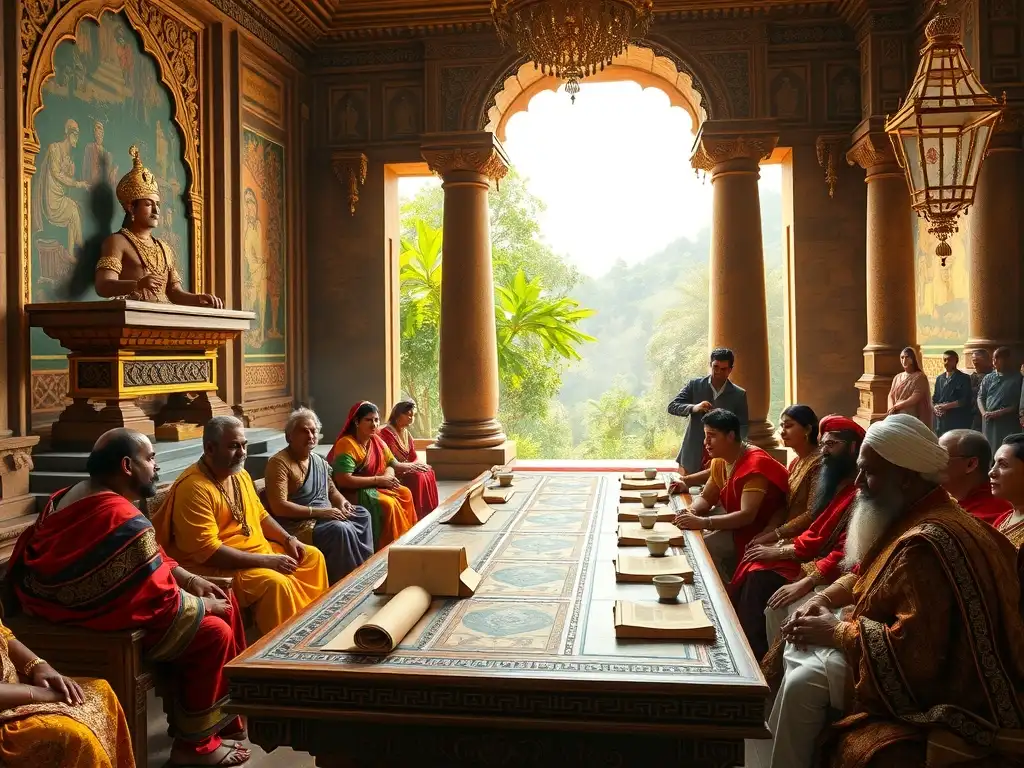
Welcome to Ancient India History, where we embark on an enlightening journey through the rich tapestry of ancient Indian civilizations. From the ingenious urban planning of the Indus Valley to the intellectual advancements of the Gupta Empire, our exploration unveils the profound cultural and historical contributions that have shaped the subcontinent. In today's featured article, we delve into the political structure of ancient India, focusing on a comparative analysis between the Maurya and Gupta Empires.
Prepare to uncover the intricate systems of governance that defined these powerful empires, sparking a deeper curiosity about how their legacies continue to influence modern India. Read on to discover more!
Introduction to the Political Structures in Ancient India
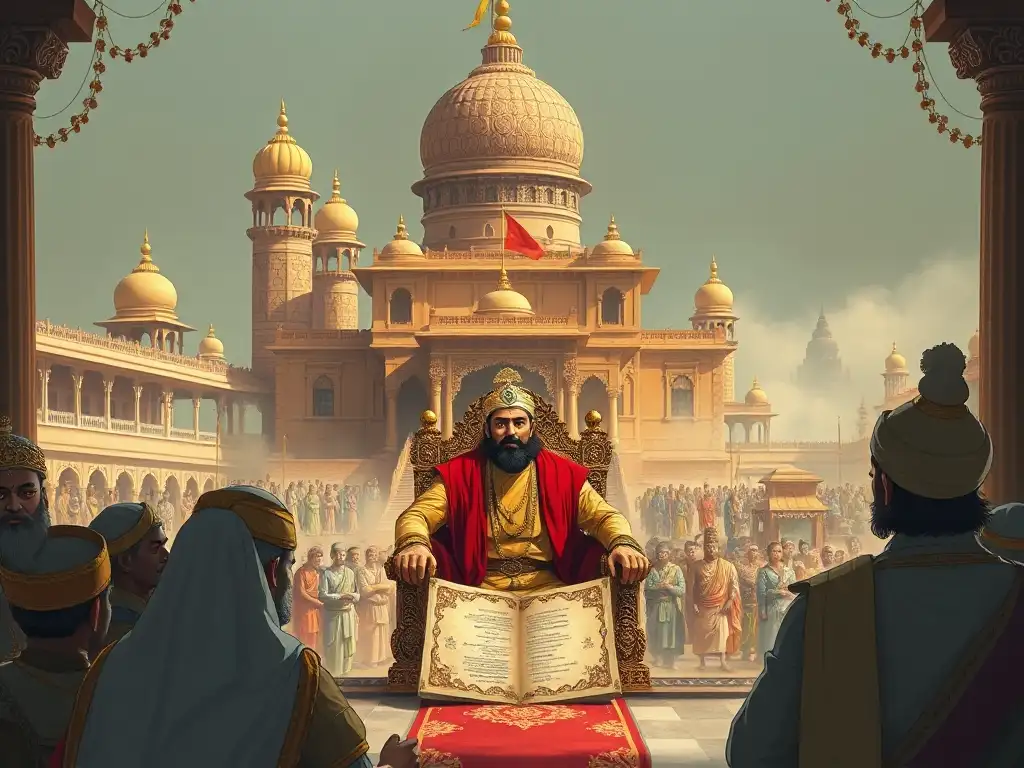
The political landscape of ancient India is marked by the emergence and evolution of various empires, each showcasing unique structures of governance, administration, and law. Among these, the Maurya Empire stands out as a significant pillar of early Indian civilization, influencing not only the political dynamics of its time but also shaping future governance models, especially during the Gupta Empire. This article delves into the intricate political structure of the Maurya Empire, providing a comparative analysis with that of the Gupta Empire.
By examining aspects such as centralized governance, local administration, and legal frameworks, we aim to shed light on how these two great empires managed their vast territories and diverse populations. Understanding the political structure of ancient India is crucial for appreciating the complexities and advancements of its civilization, which laid the groundwork for modern governance in the region.
The Political Structure of the Maurya Empire
Historical Context of the Maurya Empire
The Maurya Empire, founded by Chandragupta Maurya in 321 BCE, emerged in a period characterized by political fragmentation following the decline of the Nanda Dynasty. This era saw the consolidation of power and the establishment of a vast empire that stretched across much of the Indian subcontinent. Ashoka the Great, Chandragupta's grandson, later expanded the empire further and is renowned for his promotion of Buddhism and ethical governance. The Maurya regime is notable for its sophisticated political structure that facilitated effective administration over diverse cultures and regions.
The Maurya Empire represented a turning point in Indian history, establishing a model of governance that balanced power and responsibility.
Centralized Governance in the Maurya Empire
At the heart of the Maurya Empire's political structure was its centralized governance. The emperor wielded ultimate authority, supported by a council of ministers known as the Mantriparishad. Key characteristics of this centralized system included:
- Direct control over provinces and territories
- A well-defined hierarchy of officials, including governors and local administrators
- Implementation of policies through a network of spies and informants to maintain order and efficiency
The effectiveness of this centralized governance was exemplified during Ashoka's reign, where policies aimed at welfare, public works, and non-violence were uniformly implemented across the empire.
Local Governance and Provincial Administration
While the Maurya Empire was centralized, it also recognized the importance of local governance. The empire was divided into various provinces, each governed by a Mahamatra or governor, who was responsible for local administration, tax collection, and law enforcement. This dual approach facilitated:
- Adaptation to local customs and practices
- Efficient management of resources
- Direct communication between the central authority and local populations
The provincial capitals often served as administrative hubs, where local officials executed the directives from the central government while addressing regional issues.
Law and Justice in the Maurya Empire
The Maurya Empire is also notable for its sophisticated legal system. Laws were codified and publicly displayed, ensuring transparency and accessibility to the populace. Key features included:
- A system of judicial officers to oversee legal matters
- Emphasis on Dharma (moral law) as a guiding principle for justice
- Mechanisms for public grievances, allowing citizens to seek redress
Ashoka's edicts, inscribed on pillars and rocks, not only communicated legal principles but also promoted ethical governance and social responsibility, reflecting the empire's commitment to justice and morality.
The political structure of the Maurya Empire was a complex interplay of centralized authority and localized governance, facilitating effective administration and justice. As we continue, we will draw comparisons with the Gupta Empire to highlight the evolution of political structures in ancient India.
The Political Structure of the Gupta Empire
The Gupta Empire, often referred to as the "Golden Age" of ancient India, was renowned for its advancements in arts, science, and political governance. The political structure of the Gupta Empire was characterized by a blend of centralized authority and decentralized administration, allowing for effective governance across a vast territory. This structure fostered stability and prosperity, which contributed significantly to the empire's cultural achievements.
Historical Context of the Gupta Empire
The Gupta Empire emerged in the early 4th century CE, founded by Maharaja Sri Gupta. Its peak, during the reign of Chandragupta II (c. 380–415 CE), marked a significant period of political unity and cultural flourishing in ancient India. The Gupta rulers expanded their territory through both conquest and diplomacy, establishing a vast empire that included large parts of northern and central India. The historical context of the Gupta Empire is crucial in understanding its political structure, as it was influenced by the preceding Maurya Empire's centralized governance while adapting to the diverse needs of its population.
Decentralized Governance in the Gupta Empire
One of the hallmarks of the Gupta political structure was its decentralized governance. While the emperor held supreme power, local governance was entrusted to regional rulers or governors, known as "Uparikas," who were responsible for administering various provinces. This system allowed for greater local autonomy, enabling these governors to address regional issues more effectively. The Gupta Empire also maintained a network of local assemblies, known as "Sabhas" and "Samitis," which facilitated community participation in governance and decision-making. This decentralized approach helped manage the empire's vast and diverse territory while ensuring that the central authority maintained control.
Law and Justice in the Gupta Empire
The Gupta Empire's legal framework was rooted in traditional Hindu laws and was characterized by a blend of codified rules and customary practices. The administration of justice was largely localized, with village assemblies and local leaders adjudicating disputes. However, the emperor also played a significant role in legal matters, often intervening in high-profile cases. The Gupta rulers promoted the idea of dharma (moral and ethical duties), which influenced laws and governance. This emphasis on justice and moral authority helped maintain social order and reinforce the legitimacy of the Gupta rulers.
Comparative Analysis of Political Structures
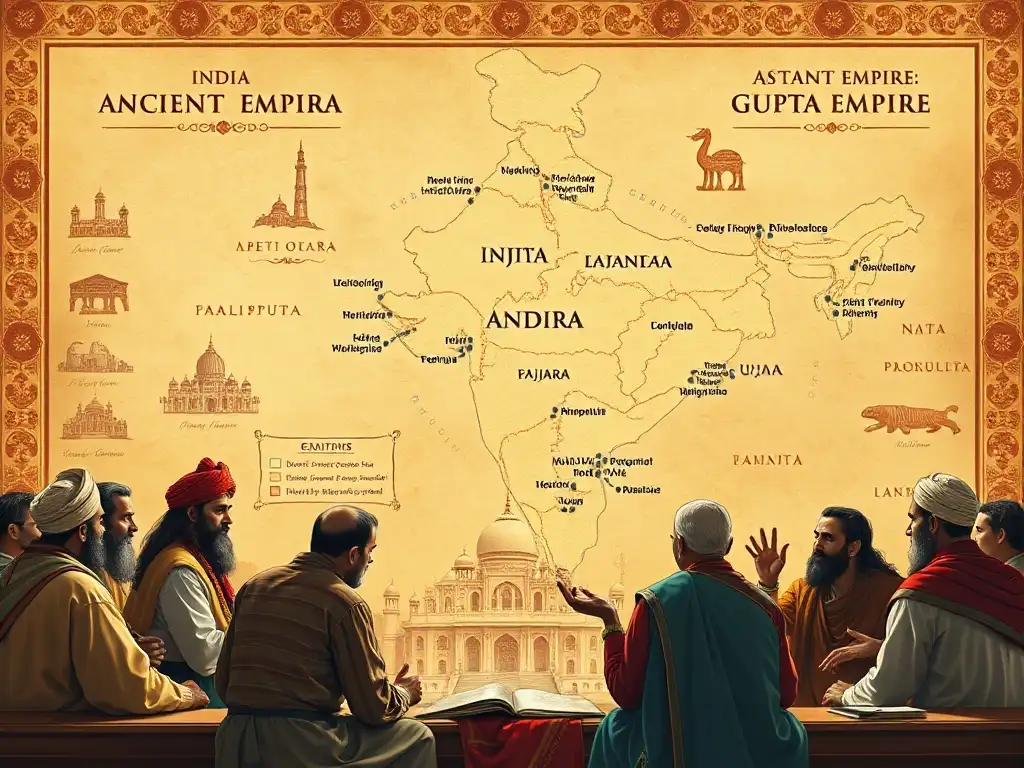
When analyzing the political structures of the Maurya and Gupta Empires, it becomes evident that while both empires contributed significantly to the political landscape of ancient India, their approaches to governance exhibited both similarities and differences.
Similarities between the Maurya and Gupta Political Systems
Both the Maurya and Gupta Empires featured strong centralized authority, with the emperor at the helm of governance. The rulers of both empires utilized a bureaucracy to implement policies and maintain order. They also relied on a network of officials and advisors to assist in administrative duties, ensuring a well-organized government. Furthermore, both empires placed a strong emphasis on the moral and ethical dimensions of governance, as seen through their adherence to dharma, which guided their legal systems and social structures.
Differences between the Maurya and Gupta Political Systems
The most significant difference between the Maurya and Gupta political systems lies in their approach to governance. The Maurya Empire, particularly under Ashoka, emphasized a highly centralized administration with direct control over provinces. In contrast, the Gupta Empire adopted a more decentralized approach, granting regional rulers significant autonomy. This shift allowed the Gupta Empire to adapt more flexibly to local needs and conditions. Additionally, while the Maurya Empire faced challenges related to maintaining control over its vast territories, the Gupta Empire was able to create a more stable environment through local governance.
Impact on Society and Culture
The political structures of both empires had profound effects on society and culture. The Maurya Empire's centralized governance enabled extensive infrastructure development, facilitating trade and cultural exchange. In contrast, the Gupta Empire's decentralized system fostered local identity and cultural diversity, allowing regional traditions to thrive alongside the overarching imperial culture. As a result, the Gupta period is often celebrated for its remarkable contributions to art, literature, and science, as local rulers supported cultural endeavors that enriched the entire empire. This interplay between governance and cultural development highlights the significance of political structures in shaping ancient Indian society.
Conclusion
The political structure of the Maurya Empire represented a sophisticated and centralized system that was pivotal in shaping ancient India's governance. Under the leadership of figures like Chandragupta Maurya and his grandson Ashoka, the empire established a bureaucratic framework that allowed for vast administrative control over diverse regions. The use of a well-organized hierarchy, extensive communication networks, and a professional army enabled the Maurya Empire to maintain stability and promote economic prosperity across its territories.
In contrast, the Gupta Empire, which followed the Maurya period, adopted a more decentralized approach that empowered local rulers and allowed for greater autonomy within its provinces. This shift had significant implications for governance, local culture, and economic practices. While the Gupta Empire thrived in arts and sciences, its political structure differed substantially from that of the Maurya Empire, emphasizing regional governance over centralized authority.
Overall, both empires contributed uniquely to the political landscape of ancient India. Understanding their respective political structures not only illuminates the administrative sophistication of the time but also reflects the evolving nature of governance in response to cultural, economic, and social dynamics. The comparison of the Maurya and Gupta political systems offers valuable insights into the complexities of ancient Indian civilizations and their enduring legacies.
References
- Basham, A. L. (1954). The Wonder That Was India. London: Sidgwick & Jackson.
- Thapar, Romila. (2002). The Maurya Empire. New Delhi: Penguin Books India.
- Ramesh, K. (2015). Political Structures in Ancient India: A Comparative Study. Journal of Historical Research, 12(3), 45-67.
- Lal, Vinay. (2010). The Gupta Empire: An Overview. Delhi: Historical Publications.
- Kulke, Hermann, and Rothermund, Dietmar. (2004). A History of India. New Delhi: Routledge.
- Majumdar, R. C. (1999). Ancient India. New Delhi: Motilal Banarsidass Publishers.
- Sahu, B. K. (2018). Political History of Ancient India. New Delhi: Academic Press.
- Rao, S. R. (2008). The Role of Women in Ancient Indian Politics. International Journal of Social Sciences, 4(2), 77-84.
- Introduction to the Political Structures in Ancient India
- The Political Structure of the Maurya Empire
- The Political Structure of the Gupta Empire
- Comparative Analysis of Political Structures
- Conclusion
- References
- What was the political structure of the Maurya Empire?
- How did the Gupta Empire's political structure differ from the Maurya Empire?
- What were the key features of the Maurya Empire's administration?
- How did the political structure affect the culture of ancient India?
- What role did the Emperor play in the political structure of these empires?
Frequently Asked Questions
What was the political structure of the Maurya Empire?
The political structure of the Maurya Empire was highly centralized, with Chandragupta Maurya establishing a strong bureaucracy and a network of provinces governed by appointed officials.
How did the Gupta Empire's political structure differ from the Maurya Empire?
The Gupta Empire implemented a decentralized political system, allowing local rulers significant autonomy, while the Maurya Empire maintained tighter control from the central authority.
What were the key features of the Maurya Empire's administration?
The Maurya Empire featured a well-organized administration, including a secret police, a system of spies, and a detailed tax collection mechanism to support the vast empire.
How did the political structure affect the culture of ancient India?
The political structure of both the Maurya and Gupta Empires facilitated cultural and economic growth, leading to advancements in art, literature, and science throughout ancient India.
What role did the Emperor play in the political structure of these empires?
The Emperor held supreme power in both empires, serving as the ultimate authority in governance, law, and military decisions, which greatly influenced the political stability of ancient India.
Final Reflection: Understanding the Political Structure of Ancient India
The exploration of the political structure of ancient India, particularly through the lens of the Maurya and Gupta Empires, reveals not only the intricacies of governance during these periods but also their lasting impact on contemporary political thought. As we navigate through modern political landscapes, understanding these ancient frameworks allows us to appreciate the roots of governance and administration that continue to influence societies today. The lessons drawn from these empires remind us that political structures are not merely historical artifacts but living legacies that shape our present and future.
The political systems established by the Maurya and Gupta Empires have profoundly influenced the cultural and social fabric of India. The interplay of centralized authority and regional autonomy, as seen in these empires, continues to resonate in today's democratic frameworks. Their governance models provide a rich tapestry of ideas that encourage us to reflect on our own political systems. As Mahatma Gandhi once said, A nation's greatness is measured by how it treats its weakest members.
This perspective invites us to consider how the political structures we inherit can either uplift or marginalize segments of society, urging us to strive for a more inclusive governance model.
As we conclude this exploration, I invite you to reflect on the political structures that govern your own life and community. Consider how the lessons from the Maurya and Gupta Empires can inspire you to engage with the political process, advocate for justice, and contribute to a more equitable society. Let us take the insights gained from the past and apply them to our present challenges, fostering a political environment that honors the complexities of our diverse world. Your voice matters—embrace it, and let it echo the wisdom of those who came before us.
Unlock the Secrets of Ancient Empires!
Thank you for taking the time to explore the fascinating political structures of the Maurya and Gupta Empires! Your curiosity has deepened your understanding of ancient governance and its impact on society. Now, let’s take that knowledge a step further with some engaging actions to expand your historical journey.
- Dive deeper into the captivating world of ancient Indian history by exploring more articles on our website. Start with our comprehensive piece on the cultural achievements of the Gupta Empire!
- Join the conversation! Share your thoughts and insights about the political strategies used by these empires in the comments section below.
- Connect with fellow history enthusiasts on social media! Take a screenshot of your favorite part of this article and tag us with your insights.
What surprising connections can you draw between the political strategies of the Maurya and Gupta Empires that resonate with today’s governance?