
The Role of Military Leaders in Expanding the Maurya Empire

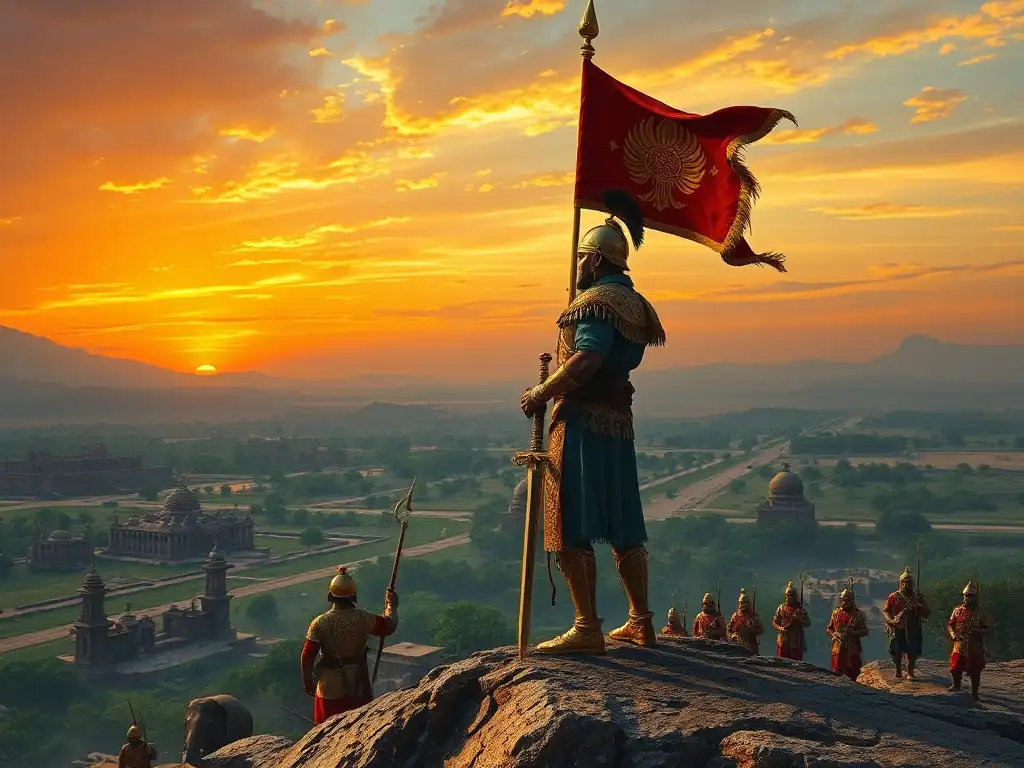
Welcome to Ancient India History, where we invite you to embark on a fascinating journey through time to uncover the rich and diverse tapestry of ancient Indian civilizations. In this exploration, we delve into the remarkable contributions and vibrant cultures that shaped the subcontinent, from the enigmatic Indus Valley to the illustrious Gupta Empire. Today, we shine a spotlight on the Maurya Empire military leaders, whose strategic prowess and visionary leadership played a pivotal role in expanding one of India’s greatest empires.
Ready to uncover the secrets behind their success? Join us as we unravel the intriguing tales of these formidable figures and the legacy they left behind!
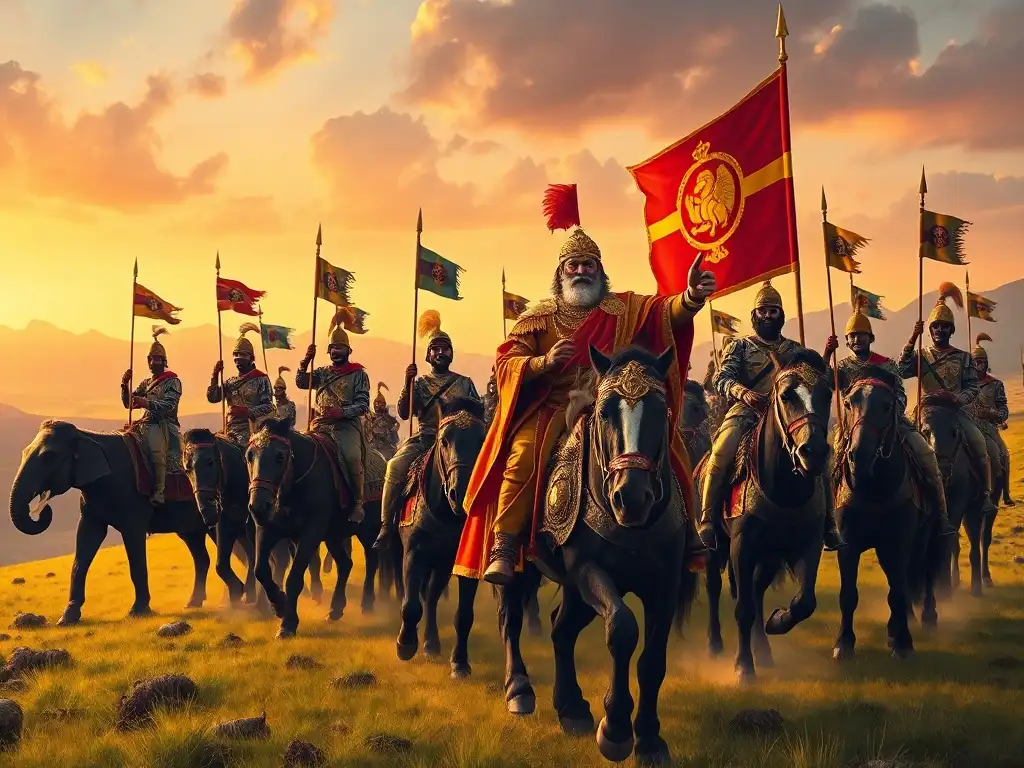
The Maurya Empire stands as one of the most significant empires in ancient Indian history, known for its vast territorial expanse and remarkable governance. Central to the empire's success were its military leaders, whose strategies and leadership transformed the political landscape of the Indian subcontinent.
This article will delve into the pivotal roles played by these military leaders in expanding the Maurya Empire, highlighting their contributions and the impact of their military strategies on the empire's growth from its inception to its zenith. By examining the lives and achievements of key figures such as Chandragupta Maurya, Bindusara, and Ashoka the Great, we will gain a deeper understanding of how military prowess shaped the Maurya Empire's legacy.
Introduction to the Maurya Empire
Overview of the Maurya Empire's Formation
The Maurya Empire was established in 322 BCE following the successful unification of various small kingdoms in northern India by Chandragupta Maurya. This unification marked a significant shift in the political structure of the region, transitioning from fragmented states to a centralized authority. Under Chandragupta's leadership, the empire expanded rapidly, incorporating territories that stretched from present-day Afghanistan to Bengal. The Maurya Empire's formation was characterized by strategic alliances, military campaigns, and the establishment of a bureaucratic governance system that facilitated effective administration.
Significance of Military Leadership in Ancient India
Military leadership played a crucial role in ancient Indian civilizations, particularly within the context of the Maurya Empire. Leaders were not only responsible for warfare but also for maintaining order, securing trade routes, and consolidating power. The strategic decisions made by military leaders often determined the fate of empires, influencing territorial expansion and cultural diffusion. Their ability to inspire troops, manage resources, and navigate complex political landscapes was essential for the success and longevity of the Maurya Empire.
Key Military Leaders of the Maurya Empire
Chandragupta Maurya: The Founder and Strategist
Chandragupta Maurya, the founder of the Maurya Empire, was a military genius who laid the foundation for one of the largest empires in ancient India. His strategic acumen was evident in his ability to gather a formidable army and employ innovative tactics against adversaries, including the Nanda Dynasty. Chandragupta's alliances, particularly with the help of his advisor Chanakya, were instrumental in his campaigns, which not only established the empire but also set the stage for its future expansions.
Bindusara: Continuation of Expansion
Following Chandragupta, his son Bindusara continued the legacy of military expansion. Ascending to the throne around 297 BCE, Bindusara focused on consolidating and extending the empire’s territories. His reign witnessed military campaigns in the southern regions of India, exemplifying the Maurya Empire's vast reach. Bindusara's diplomatic skills complemented his military endeavors, allowing him to forge alliances that further enhanced the empire's strength.
Ashoka the Great: The Transformational Leader
Perhaps the most renowned of the Maurya emperors, Ashoka the Great, began his reign with a military campaign to expand the empire's territories. However, following the devastating Kalinga War, Ashoka underwent a profound transformation, embracing Buddhism and promoting a policy of non-violence and moral governance. His leadership marked a significant turning point in the empire's approach to expansion, focusing on diplomatic relations and cultural integration rather than mere military conquest. Ashoka's legacy not only solidified the Maurya Empire's territorial integrity but also left an enduring impact on Indian culture and philosophy.
In examining these military leaders, we can appreciate the intricate relationship between military strategy and political expansion within the Maurya Empire, highlighting their contributions to shaping one of ancient India's most influential civilizations.
Strategies Employed by Maurya Empire Military Leaders
The Maurya Empire's military leaders were pivotal in crafting strategies that allowed for swift and effective territorial expansion. Central to their success was a combination of tactical adaptability and political acumen. They employed a multi-faceted approach that included forming alliances, utilizing guerilla tactics, and engaging in direct confrontations when necessary.
One prominent strategy was the divide-and-conquer approach, which involved exploiting divisions within enemy territories. By forming strategic alliances with local rulers or discontent factions, Maurya commanders could weaken their opponents before engaging them militarily. This was particularly effective against the Nanda Empire, where internal strife facilitated the Mauryan advance.
Additionally, the Maurya military leaders emphasized intelligence gathering and reconnaissance to understand enemy movements and strengths. This intelligence allowed them to plan ambushes and surprise attacks, often catching their adversaries off-guard. The use of spies and scouts was integral to their military strategy, ensuring that they were always a step ahead of their foes.
Military Organization and Structure
The military organization of the Maurya Empire was sophisticated and hierarchical, reflecting the empire's administrative capabilities. At its core, the army was divided into various branches, including infantry, cavalry, and chariotry, each led by experienced commanders. This structure allowed for efficient command and control, ensuring that orders could be swiftly disseminated across the ranks.
The Mauryan military was also known for its large standing army, which was one of the most formidable of its time. Estimates suggest that the army could have numbered as many as 600,000 soldiers, comprising foot soldiers, horsemen, and war elephants. This vast force enabled the Maurya leaders to maintain dominance over large territories and deter potential invaders.
Furthermore, the Maurya military employed a system of reward and promotion based on merit rather than solely on aristocratic lineage. This encouraged loyalty and competence within the ranks, leading to a more motivated and effective fighting force. The emphasis on discipline and training also contributed to the overall success of the Maurya military organization.
Use of Elephants in Warfare
War elephants were a distinctive feature of the Maurya Empire's military strategy, playing a crucial role in both offense and defense. These majestic beasts were not only symbols of power but also formidable assets on the battlefield. The use of elephants provided several tactical advantages:
- Psychological Impact: The mere sight of war elephants could instill fear and panic among enemy troops. Their size and strength made them effective at breaking enemy formations.
- Mobility and Versatility: Elephants could traverse diverse terrains, making them versatile in various combat situations. They could carry archers and other soldiers into battle, allowing for a multi-pronged attack.
- Defensive Capabilities: In addition to their role in attack, elephants were used to protect key leaders and maintain order within the ranks during chaotic battles. Their presence helped to stabilize formations and provide support.
The Mauryan leaders, such as Chandragupta Maurya and Ashoka the Great, recognized the importance of training and maintaining a dedicated corps of elephant handlers, ensuring that these animals were well-prepared for the rigors of warfare.
Major Military Campaigns and Their Impact
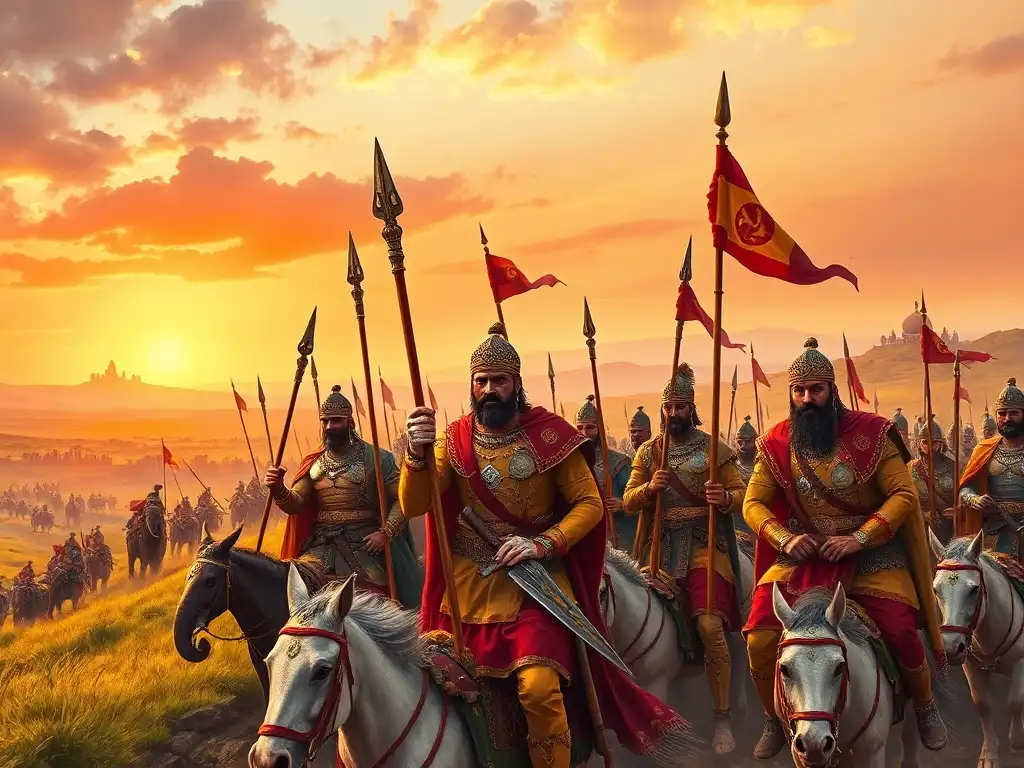
The military campaigns undertaken by the Maurya Empire were instrumental in establishing its dominance across the Indian subcontinent. These campaigns not only expanded the empire's territory but also shaped the region's political landscape for centuries to come.
Conquest of the Nanda Empire
The conquest of the Nanda Empire marked a significant turning point in the rise of the Maurya Empire. Chandragupta Maurya, with the guidance of his mentor, Chanakya, strategically targeted the weakened Nanda rule. The campaign involved a series of battles that showcased the Mauryan military's tactical prowess.
By employing guerrilla tactics and forming alliances with disgruntled factions within the Nanda Empire, Chandragupta was able to successfully overthrow the Nandas around 322 BCE. This victory not only brought vast resources and territory under Mauryan control but also established a new political order in India. The fall of the Nanda Empire set the stage for the Maurya Empire's rapid expansion.
Campaigns in the Northwest: Alexander's Legacy
Following Alexander the Great's incursions into India, the Maurya Empire faced a unique opportunity to expand its influence in the northwest. The Mauryan military leaders capitalized on the power vacuum left by Alexander's exit.
Chandragupta Maurya's campaigns in this region were characterized by swift military action and strategic diplomacy. Rather than engaging in direct confrontation with the remnants of Alexander's forces, Chandragupta chose to consolidate power through alliances with local rulers and tribes. This approach facilitated the Maurya Empire's expansion into areas like present-day Afghanistan and parts of Punjab.
The impact of these campaigns was profound, as they not only expanded the empire's territory but also introduced new cultural and economic exchanges between the regions.
Expansion into South India
The Maurya Empire's expansion into South India was spearheaded by Ashoka the Great, who furthered the military campaigns initiated by his grandfather, Chandragupta. Ashoka sought to unify the Indian subcontinent under Mauryan rule, leading to military campaigns against various kingdoms in South India.
These campaigns were marked by significant battles, including the conquest of the powerful Tamil kingdoms. Ashoka's military strategies involved both direct confrontation and the use of diplomacy to secure alliances. This dual approach allowed for the efficient incorporation of diverse cultures into the Maurya Empire.
The impact of Ashoka's campaigns in South India was immense, facilitating trade, cultural exchange, and the spread of Buddhism. Following his conquests, Ashoka adopted a policy of non-violence and dharma, which transformed the empire's approach to governance and left a lasting legacy in the region.
The Influence of Military Leaders on Maurya Empire Governance
The Maurya Empire, one of the largest and most powerful empires in ancient India, was greatly shaped by its military leaders. These figures not only played crucial roles in expanding the empire's territories but also influenced its governance structure. The military leaders were pivotal in establishing control over newly acquired lands, ensuring stability, and enforcing the policies set forth by the central authority. Their military expertise allowed them to effectively manage resources, maintain order, and integrate diverse cultures within the empire.
Integration of Conquered Territories
The integration of conquered territories was a significant challenge faced by the Maurya military leaders. Following successful campaigns, leaders such as Chandragupta Maurya and his generals were tasked with merging various regions into a cohesive administrative framework. This involved:
- Cultural Assimilation: Military leaders worked to blend the local customs and practices with the Maurya governance model, promoting a sense of unity among diverse populations.
- Infrastructure Development: They initiated the construction of roads, irrigation systems, and trade routes, facilitating economic integration and mobility across the empire.
- Local Governance: By appointing local governors (often military leaders themselves) to oversee these territories, the empire ensured that military strength complemented administrative functions, fostering loyalty to the Maurya rule.
Role of Military Leaders in Administration
Military leaders held significant administrative roles within the Maurya Empire, often acting as intermediaries between the emperor and the local populations. Their responsibilities encompassed:
- Enforcement of Law and Order: They were responsible for maintaining peace and security in newly acquired territories, deterring rebellions, and quelling dissent.
- Tax Collection and Resource Management: Military leaders oversaw the collection of taxes and the distribution of resources, ensuring that the empire's economic needs were met while supporting local welfare.
- Military Recruitment and Training: They also played a vital role in recruiting and training soldiers from various regions, leveraging the diverse skill sets and cultural backgrounds to create a formidable army.
Legacy of Military Leadership in Maurya Governance
The legacy of military leadership in the Maurya Empire is profound. It established a model of governance where military might was closely linked to administrative efficiency. This dual role of military leaders contributed to:
- Stability: The strong military presence in governance helped maintain order and deter external threats, ensuring the longevity of the empire.
- Cultural Exchange: Military campaigns brought various cultures into contact, leading to a rich tapestry of traditions and practices that influenced subsequent Indian civilizations.
- Political Framework: The administrative strategies developed by military leaders laid the groundwork for future empires in India, highlighting the importance of a well-structured military-administrative system.
Conclusion: The Lasting Impact of Maurya Empire Military Leaders
The military leaders of the Maurya Empire were instrumental in shaping not only the empire's expansion but also its governance and cultural identity. Their contributions remain significant in the context of ancient Indian history.
Summary of Contributions to the Empire's Expansion
The Maurya Empire's expansion can be attributed largely to the strategic acumen and leadership of its military figures. Through decisive battles, effective integration of territories, and robust administration, these leaders facilitated the growth of one of history's most remarkable empires. Their ability to adapt military strategies to governance challenges exemplified a sophisticated understanding of power dynamics in ancient India.
Reflection on Military Leadership in Ancient Indian History
Reflecting on the role of military leadership in the Maurya Empire provides valuable insights into ancient Indian history. It underscores the interplay between military might and governance, illustrating how effective leadership can shape the trajectory of an empire. The Maurya military leaders set a precedent for future generations, demonstrating that successful governance necessitates not only military strength but also strategic vision and adaptability. Their legacy continues to influence the understanding of leadership and administration in the context of ancient civilizations.
- Introduction to the Maurya Empire
- Key Military Leaders of the Maurya Empire
- Strategies Employed by Maurya Empire Military Leaders
- Major Military Campaigns and Their Impact
- The Influence of Military Leaders on Maurya Empire Governance
- Conclusion: The Lasting Impact of Maurya Empire Military Leaders
- What was the significance of military leaders in the Maurya Empire?
- Who were some notable military leaders of the Maurya Empire?
- How did the military strategies of the Maurya Empire differ from previous empires?
- What impact did the military leaders have on the culture of the Maurya Empire?
- How did the Maurya Empire's military leaders contribute to its administration?
Frequently Asked Questions
What was the significance of military leaders in the Maurya Empire?
Military leaders played a crucial role in the expansion of the Maurya Empire, implementing strategies that led to significant territorial gains and the consolidation of power across ancient India.
Who were some notable military leaders of the Maurya Empire?
Key figures included Chandragupta Maurya, the founder, and Ashoka, known for his conquests and later for promoting Buddhism after the Kalinga War. Their leadership was instrumental in shaping the empire's legacy.
How did the military strategies of the Maurya Empire differ from previous empires?
The Maurya Empire utilized innovative tactics and a well-organized military structure, focusing on cavalry and war elephants, which enhanced their combat effectiveness and allowed them to control larger territories.
What impact did the military leaders have on the culture of the Maurya Empire?
Military leaders influenced the cultural landscape by facilitating the spread of Buddhism and other religions, as well as supporting various artistic and architectural developments throughout the empire.
How did the Maurya Empire's military leaders contribute to its administration?
Military leaders often held administrative roles, helping to maintain order in conquered regions, collect taxes, and implement legal systems, which ensured the stability and longevity of the empire.
Final Reflection: The Enduring Legacy of Maurya Empire Military Leaders
The strategic brilliance and leadership of military figures in the Maurya Empire not only shaped the course of ancient Indian history but also resonate with contemporary themes of leadership and governance. Today, as we navigate complex global challenges, the lessons learned from the military leaders of the Maurya Empire remind us of the importance of vision, strategy, and unity in achieving monumental goals. Their ability to inspire and mobilize forces serves as a powerful reminder that effective leadership transcends time and context.
The influence of these military leaders extends beyond their immediate victories; they have left an indelible mark on the cultural and social fabric of India. Their tactics and philosophies continue to inspire modern military strategies and leadership principles. As we reflect on their contributions, we are reminded of the words of Chanakya, a key figure during the Maurya Empire: There is some self-interest behind every friendship. There is no friendship without self-interests.
This quote encapsulates the intricate balance of alliances and strategies that defined the Maurya military landscape, encouraging us to consider the motivations that drive our own relationships and collaborations today.
As we conclude this exploration of the Maurya Empire's military leaders, I invite you to reflect on the qualities that define effective leadership in your own life. Consider how you can embody the strategic thinking, resilience, and unity exemplified by these historical figures. Whether in personal endeavors or professional pursuits, let their legacy inspire you to lead with purpose and vision, fostering collaboration and strength in your own communities. The lessons of the past are not just historical footnotes; they are guiding principles for our future.
Unleash the Legacy of Military Leadership!
Thank you for exploring the fascinating world of the Maurya Empire and the pivotal role military leaders played in its expansion. Your engagement not only highlights their strategies but also enhances our understanding of leadership throughout history. Now, it’s time to turn that knowledge into action!
Here are a few powerful steps you can take:
- Explore more: Delve into related resources and articles about ancient military strategies or the impact of leadership in historical contexts to expand your learning!
- Share your insights: Connect with fellow history enthusiasts by sharing this article on social media or in discussion groups. Your perspective might spark meaningful conversations!
- Reflect and implement: Consider how the leadership qualities demonstrated by these military figures can inspire your own life. Write down one leadership trait that resonates with you and think of ways to apply it today.
What aspect of military leadership in the Maurya Empire inspires you the most, and how can it influence your understanding of leadership in today's world?