
The Decline of the Gupta Empire: Lessons from the Golden Age


Welcome to Ancient India History, where we embark on a fascinating journey through time to uncover the rich and diverse tapestry of ancient Indian civilizations. Today, we delve into a pivotal moment in history with our featured article, “The Decline of the Gupta Empire: Lessons from the Golden Age.” Discover the intricate factors that led to the fall of one of India's most illustrious empires and what it reveals about the resilience and evolution of culture in this remarkable era.
As we peel back the layers of history, prepare to be intrigued by the lessons that echo through time, inviting you to explore further into the depths of ancient India's legacy.

Introduction to the Gupta Empire
The Gupta Empire, often referred to as the "Golden Age" of ancient India, flourished from approximately 320 to 550 CE. This period is celebrated for its remarkable achievements in various fields, including art, science, mathematics, and literature. The Gupta rulers, particularly Chandragupta II and his successors, presided over a time of prosperity and cultural refinement that left a lasting legacy on Indian civilization.
However, despite its impressive zenith, the Gupta Empire ultimately faced a gradual decline that raises important questions about the dynamics of power, governance, and cultural achievement in ancient societies. Understanding the factors that contributed to the decline of the Gupta Empire not only sheds light on this pivotal historical moment but also offers valuable lessons that resonate through the ages.
Overview of the Gupta Empire's Golden Age
The Golden Age of the Gupta Empire is characterized by a flourishing of intellectual and artistic pursuits. Scholars such as Aryabhata and Varahamihira made significant contributions to mathematics and astronomy, while the literary works of Kalidasa set new standards for classical poetry and drama. This era also witnessed advancements in medicine, with texts like the Sushruta Samhita detailing surgical techniques and medicinal practices. The Gupta period was marked by the establishment of a thriving trade network, which facilitated cultural exchanges with other civilizations, enhancing the richness of Indian culture.
Key Contributions of the Gupta Empire:
- Mathematics: Introduction of the concept of zero and the decimal system.
- Astronomy: Development of accurate astronomical observations and calculations.
- Literature: Creation of enduring literary classics that continue to be studied today.
- Art: Flourishing of sculpture and temple architecture, exemplified by the intricate carvings at sites like Khajuraho.
Significance of the Gupta Empire in Ancient India
The Gupta Empire's influence extended beyond its immediate geographical boundaries, shaping the cultural and political landscape of ancient India and leaving an indelible mark on subsequent generations. The principles of governance, art, and scholarship established during this period became foundational for later Indian empires. Moreover, the Gupta era fostered a sense of unity and identity among diverse communities, promoting the spread of Hinduism and the revival of Vedic traditions.
Understanding the Decline of the Gupta Empire
The decline of the Gupta Empire is a complex historical phenomenon that resulted from a combination of internal strife and external pressures. As the empire expanded, it faced challenges in maintaining control over its vast territories, leading to political fragmentation and social unrest. Additionally, invasions by foreign powers, such as the Huns, significantly weakened the Gupta dynasty's hold on power.
Factors Leading to the Decline of the Gupta Empire
- Political Instability: The death of strong rulers led to a power vacuum, resulting in succession disputes and weakened central authority.
- Economic Decline: Heavy taxation and depletion of resources strained the economy, reducing the empire's capacity to fund military and administrative needs.
- Invasions: The incursion of nomadic tribes, particularly the Huns, disrupted trade routes and destabilized the region, presenting a formidable challenge to Gupta sovereignty.
- Cultural Fragmentation: The vast diversity within the empire made it difficult to maintain a cohesive identity, as regional cultures began to assert their independence.
By examining these factors, we gain insights into the intricate dynamics that led to the decline of the Gupta Empire, highlighting the importance of strong leadership, economic stability, and cultural cohesion in the longevity of civilizations.
Key Events Marking the Decline
The decline of the Gupta Empire was marked by a series of significant events that not only contributed to its fragmentation but also reflected the shifts in power dynamics within the region. The period of decline began around the late 5th century AD, following a prolonged phase of prosperity known as the Golden Age. Key events include:
- The Death of Chandragupta II (also known as Vikramaditya): His death around c. c. 475 AD marked the beginning of instability. He was a patron of arts and literature, and his passing left a leadership vacuum that weakened the administrative structure.
- The Invasions of the Huns: The Hun invasions, beginning in the late 5th century, were pivotal in destabilizing the empire. They attacked various regions, causing widespread destruction and leading to significant territorial losses.
- Rise of Local Rulers: As central authority weakened, local rulers began to assert their independence. This fragmentation of power led to the emergence of smaller kingdoms, undermining the Gupta's ability to govern effectively.
These events collectively illustrate the multifaceted nature of the Gupta Empire's decline, driven by both external pressures and internal strife.
The Role of External Invasions in the Gupta Empire's Downfall
External invasions played a critical role in the decline of the Gupta Empire, particularly the incursions by the Huns in the 5th century AD. The Huns, a nomadic warrior group from Central Asia, exploited the weakened state of the Gupta Empire, launching a series of attacks that devastated key territories.
- Impact on Trade and Economy: The invasions disrupted trade routes, which were vital for economic stability. The loss of revenue from trade weakened the Gupta treasury, making it difficult to sustain the military and administrative functions of the empire.
- Territorial Losses: Significant regions, including parts of northern India, fell to the Huns. This loss of territory not only diminished the empire's power but also emboldened other local rulers to break away from Gupta control.
- Cultural Disruption: The invasions led to a decline in the cultural and scientific advancements that marked the Golden Age. The instability created an environment where intellectual pursuits were often sidelined in favor of survival and defense.
Thus, the external invasions were a critical factor that precipitated the Gupta Empire's downfall, fundamentally altering the landscape of northern India.
Internal Conflicts and Civil Wars
In addition to external pressures, internal conflicts significantly contributed to the decline of the Gupta Empire. These conflicts often stemmed from succession disputes, regional power struggles, and the weakening of centralized authority.
- Succession Issues: Following the death of Chandragupta II, questions regarding succession led to infighting among potential heirs. This lack of a clear successor created divisions and encouraged rival factions within the empire.
- Regional Power Struggles: As the central authority weakened, regional governors and local leaders began to assert their power, leading to conflicts that further fragmented the empire. These internal rivalries diluted the effectiveness of Gupta governance.
- Civil Wars: The culmination of these internal conflicts often resulted in civil wars, which drained resources and weakened military capabilities. The infighting not only destabilized the political landscape but also diminished public confidence in the Gupta leadership.
Overall, the internal conflicts highlighted the vulnerabilities within the Gupta Empire and contributed to its inability to respond effectively to external challenges.
The Cultural and Scientific Contributions During the Golden Age
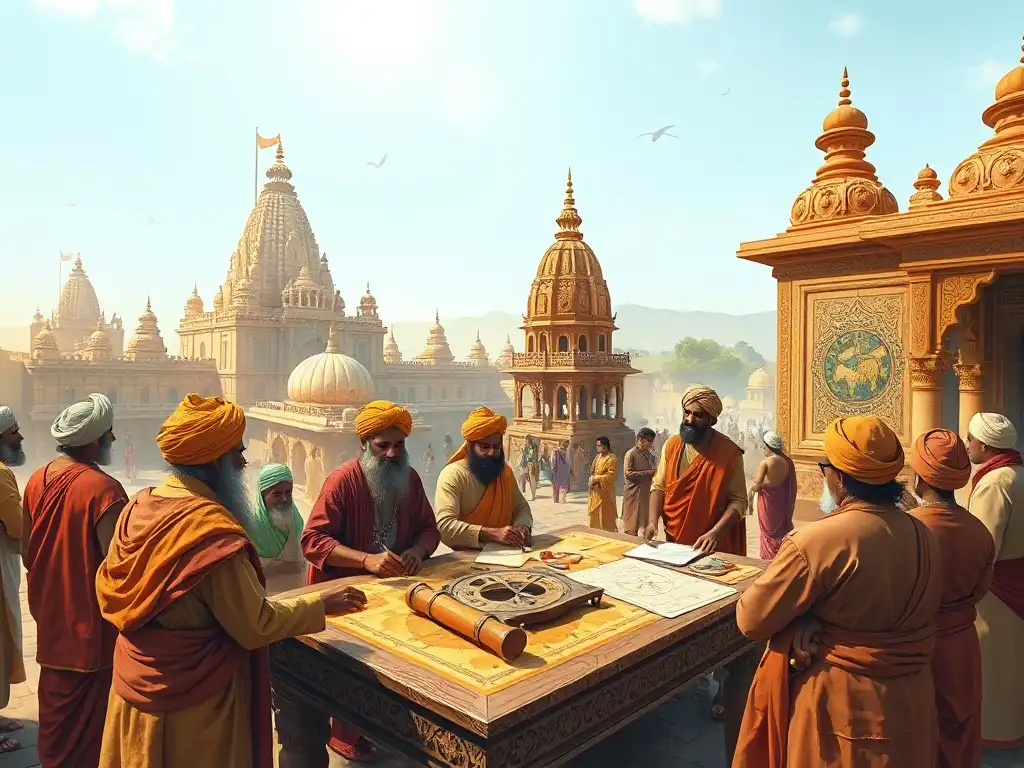
Despite the decline, the Gupta Empire's Golden Age is remembered for its remarkable cultural and scientific contributions, which laid the foundation for future advancements in India and beyond. This period saw significant achievements in various fields, underscoring its legacy.
Achievements in Science and Mathematics
The Gupta Empire was a significant period for scientific and mathematical advancements that would influence generations. Notable achievements include:
- Aryabhata's Contributions: Aryabhata, one of the most prominent mathematicians and astronomers of this era, introduced concepts such as zero and the place value system. His work laid the groundwork for modern mathematics.
- Advancements in Astronomy: Gupta scholars made significant strides in astronomy, including calculations of the circumference of the Earth and theories about planetary motion. These contributions were essential in shaping future astronomical studies.
- Medical Knowledge: The period also saw notable advancements in medicine, with texts like the "Sushruta Samhita" detailing surgical techniques and medical practices that were remarkably advanced for their time.
These scientific contributions not only reflect the intellectual environment of the Gupta Empire but also had a lasting impact on various fields long after its decline.
Advances in Art and Literature
The Golden Age of the Gupta Empire is renowned for its rich artistic and literary heritage, characterized by the flourishing of various forms of art and literature.
- Sculpture and Architecture: Gupta artisans produced exquisite sculptures, often depicting Hindu deities and mythological scenes. The architectural innovations of this period are epitomized by the construction of intricate temples, which remain significant cultural landmarks today.
- Literary Flourishing: This era witnessed the emergence of great poets and playwrights, including Kalidasa, whose works like "Shakuntala" exemplify the artistic expression of the time. The literature of the Gupta period is marked by its sophistication and depth, exploring themes of love, nature, and morality.
- Cave Paintings and Frescoes: The Ajanta and Ellora caves showcase stunning frescoes that reflect the artistic prowess of the time. These artworks not only illustrate religious narratives but also provide insight into the daily life and culture of ancient India.
The advances in art and literature during the Golden Age highlight the cultural richness of the Gupta Empire, leaving a legacy that continues to inspire.
The Influence of Gupta Philosophy
Gupta philosophy emerged as a pivotal force during the Golden Age, influencing not only religious thought but also cultural and intellectual pursuits. The period is marked by a synthesis of various philosophical ideas, particularly within Hinduism and Buddhism.
- Integration of Ideas: The Gupta period saw the integration of diverse philosophical concepts, fostering a climate of intellectual dialogue. This amalgamation enriched both Hindu and Buddhist traditions, leading to new interpretations and practices.
- Promotion of Classical Texts: Philosophers and scholars during this time worked to systematize and comment on classical texts, such as the Vedas and Upanishads. This scholarly activity helped preserve ancient knowledge and made it accessible to future generations.
- Ethical and Moral Philosophy: Gupta thinkers emphasized ethics and morality, addressing the complexities of human existence and societal responsibilities. Their ideas contributed to the development of dharma, which became a central tenet in Indian philosophy.
The philosophical advancements of the Gupta Empire played a significant role in shaping the cultural and intellectual landscape of ancient India, influencing future thought and traditions.
Lessons Learned from the Decline of the Gupta Empire
The decline of the Gupta Empire presents a myriad of lessons that can be applied to modern governance and societal structures. This period, often referred to as the "Golden Age" of India due to its remarkable achievements in art, science, and culture, also serves as a cautionary tale about the fragility of such prosperity. Understanding these lessons can provide valuable insights for contemporary societies striving for stability and cohesion.
The Importance of Strong Governance
One of the primary reasons for the decline of the Gupta Empire was the weakening of central authority. As regional governors gained more power, they often acted independently, leading to fragmentation and conflict. Strong governance is crucial in maintaining unity and ensuring that policies are effectively implemented across all levels of society.
- Centralized Leadership: A strong central authority can deter insubordination among regional rulers, fostering a sense of collective responsibility.
- Effective Administration: An efficient bureaucratic system enables better resource management and communication, vital for addressing local grievances before they escalate.
- Responsive Policies: Governance that adapts to changing circumstances—such as economic challenges or social unrest—can sustain stability and public support.
The Gupta experience shows that neglecting governance structures can lead to chaos and eventual disintegration, emphasizing the need for a robust and adaptable leadership framework.
Economic Stability and Trade Relations
The Gupta Empire thrived on economic prosperity driven by trade, agriculture, and innovation. However, as external pressures mounted, including invasions and internal strife, the economy began to falter.
- Diversification of Economy: Relying on a single economic sector can be perilous. The Gupta Empire's heavy dependence on agriculture made it vulnerable to climatic changes and invasions.
- Strengthening Trade Networks: Maintaining strong trade relations with neighboring regions not only boosts the economy but also fosters diplomatic ties that can provide support during crises.
- Infrastructure Development: Investment in infrastructure, such as roads and trade routes, is essential for facilitating commerce and ensuring the smooth flow of goods and services.
The Gupta decline illustrates that economic resilience is fundamental to sustaining a civilization's strength, necessitating a multifaceted approach to economic development.
Cultural Unity as a Foundation for Strength
The Gupta Empire was renowned for its cultural achievements, which fostered a sense of pride and unity among its people. However, as the empire began to decline, regional differences and religious factions emerged, fracturing this unity.
- Promoting Inclusivity: A culture that embraces diversity can strengthen societal bonds. The Gupta period's patronage of various religions and philosophies showcased a level of tolerance that contributed to its cultural richness.
- Education and Scholarship: Investment in education and the arts can unify a population around shared values and ideals, enhancing social cohesion.
- Cultural Heritage Preservation: Protecting cultural heritage can instill a sense of identity and continuity, crucial for maintaining unity during turbulent times.
The Gupta Empire's fragmentation highlights the necessity of cultural unity as a bedrock for enduring strength and resilience.
Conclusion
The decline of the Gupta Empire offers significant lessons on governance, economics, and cultural unity. By reflecting on these aspects, modern societies can glean insights that foster stability and growth, ensuring that the mistakes of the past are not repeated.
Reflecting on the Legacy of the Gupta Empire
The Gupta Empire's legacy is marked by remarkable advancements in science, mathematics, literature, and the arts. Despite its eventual decline, the cultural and intellectual achievements of this era laid the groundwork for future developments in Indian history.
- Influence on Subsequent Dynasties: The governance models and cultural practices established during the Gupta period influenced subsequent Indian empires, shaping their policies and societal structures.
- Cultural Renaissance: The seeds of cultural revival planted during the Gupta period continue to inspire artistic and intellectual endeavors in modern India.
Reflecting on the Gupta Empire's legacy encourages a deeper appreciation for its contributions and an understanding of how historical narratives shape contemporary society.
The Lasting Impact of the Gupta Decline on Subsequent Indian History
The decline of the Gupta Empire had profound implications for the trajectory of Indian history.
- Rise of Regional Kingdoms: The power vacuum left by the Gupta decline led to the emergence of numerous regional kingdoms, each with its own cultural and political dynamics.
- Invasions and Foreign Influence: The weakening of central authority opened the door for invasions, such as those by the Huns, which altered the course of Indian history, introducing new cultural influences and conflicts.
- Legacy of Fragmentation: The lessons learned from the Gupta decline resonate throughout Indian history, influencing political thought and governance in subsequent centuries.
Understanding the lasting impact of the Gupta decline not only enriches our knowledge of ancient India but also provides context for the complex tapestry of its historical evolution.
- Introduction to the Gupta Empire
- Understanding the Decline of the Gupta Empire
- Key Events Marking the Decline
- The Cultural and Scientific Contributions During the Golden Age
- Lessons Learned from the Decline of the Gupta Empire
- Conclusion
- What were the main factors contributing to the decline of the Gupta Empire?
- How did the Golden Age of the Gupta Empire influence its decline?
- What lessons can modern societies learn from the decline of the Gupta Empire?
- What role did foreign invasions play in the downfall of the Gupta Empire?
- How did the cultural achievements during the Gupta Empire relate to its eventual decline?
Frequently Asked Questions
What were the main factors contributing to the decline of the Gupta Empire?
The decline was primarily due to internal strife, economic difficulties, and external invasions, particularly by the Huns, which weakened the empire's stability.
How did the Golden Age of the Gupta Empire influence its decline?
While the Golden Age brought prosperity and cultural achievements, it led to overextension and administrative challenges that contributed to the empire's eventual decline.
What lessons can modern societies learn from the decline of the Gupta Empire?
The decline highlights the importance of strong governance, adaptability, and addressing internal issues to prevent the collapse of a flourishing civilization.
What role did foreign invasions play in the downfall of the Gupta Empire?
Foreign invasions, especially by the Huns, significantly weakened military defenses and disrupted trade, exacerbating the empire's economic decline.
How did the cultural achievements during the Gupta Empire relate to its eventual decline?
While the cultural achievements enriched society, the focus on art and literature may have diverted attention from political and military stability, contributing to the empire's downfall.
Final Reflection: Lessons from the Decline of the Gupta Empire
The decline of the Gupta Empire serves as a powerful reminder of how even the most prosperous civilizations can falter. In today's rapidly changing world, the lessons learned from this historical period resonate more than ever. The factors that contributed to the Gupta Empire's decline—political instability, economic challenges, and external pressures—are not just relics of the past; they mirror the complexities and vulnerabilities that modern societies face. As we navigate our own challenges, understanding these historical dynamics can provide invaluable insights into the resilience required to sustain growth and stability.
Culture and society are often shaped by the rise and fall of empires, and the Gupta Empire is no exception. Its rich contributions to art, science, and philosophy continue to influence contemporary thought and creativity. The decline of this once-great empire reminds us of the fragility of cultural achievements in the face of adversity. As historian Romila Thapar aptly stated, The past is not just a record of what has been; it is a guide to what we can become.
This reflection encourages us to appreciate the legacies of past civilizations while recognizing the ongoing impact of their successes and failures on our current cultural landscape.
As we conclude our exploration of the decline of the Gupta Empire, I invite you to reflect on the lessons it imparts. Consider how the challenges faced by this empire can inform your own life and the societies we inhabit today. Whether it’s fostering resilience in the face of adversity or nurturing the cultural achievements that define us, let us strive to learn from history. Embrace the opportunity to build a future that honors the lessons of the past while remaining vigilant against the pitfalls that led to the decline of a once-great civilization.
Unveil the Lessons of the Gupta Empire’s Decline!
Thank you for diving into the intriguing story of the Gupta Empire and exploring the profound lessons from its decline. Understanding this pivotal era not only enriches your knowledge of ancient India but also equips you with insights applicable to today’s world. Now, it’s time to take action!
- Reflect on these lessons: Take a moment to jot down **three key insights** that resonate with you from this article. Consider how they apply to your personal or professional life.
- Engage with history! Share this article with friends or on social media to ignite discussions about the Gupta Empire’s legacy.
- Explore further: Visit a local library or browse online resources to discover more about other great civilizations and their influences on modern society.
As you reflect on the trajectory of the Gupta Empire, what strategies do you think could prevent modern societies from experiencing similar declines?