
The Role of Astronomy in Gupta Agriculture: Predicting Seasons and Harvests


Welcome to Ancient India History, where we embark on an extraordinary journey through the rich tapestry of ancient Indian civilizations. Here, you'll uncover the remarkable contributions of the past, from the sophisticated societies of the Indus Valley to the flourishing Gupta Empire. Dive deep into our featured article, "The Role of Astronomy in Gupta Agriculture: Predicting Seasons and Harvests," and discover how the stars guided the agricultural practices of this influential era.
Prepare to be captivated by the intricate connections between celestial phenomena and crop cycles, as we unravel the secrets of a civilization that harmonized with the cosmos. Your adventure into the depths of history begins now—let's explore together!
- Introduction to Gupta Empire Agriculture and Astronomy
- Historical Context of Gupta Agriculture
- The Role of Astronomy in Agricultural Planning
- Techniques Used by Gupta Astronomers
- Predicting Seasons and Harvests Using Astronomy
- The Interconnection Between Astronomy and Agriculture
- Conclusion: The Legacy of Gupta Agriculture and Astronomy
-
Frequently Asked Questions
- What was the significance of astronomy in Gupta agriculture?
- How did Gupta astronomers contribute to agricultural practices?
- What tools or methods did the Gupta civilization use to observe astronomy?
- How did the Gupta Empire influence agricultural techniques?
- Are there any surviving texts that discuss astronomy in Gupta agriculture?
- Final Reflection: The Celestial Connection in Gupta Agriculture
- Unlock the Secrets of Ancient Farming!
Introduction to Gupta Empire Agriculture and Astronomy
The Gupta Empire, often heralded as a golden age in Indian history, was marked by significant advancements in various fields, including science, mathematics, and agriculture. Central to the prosperity of this era was the intricate relationship between agriculture and astronomy. As farming was the backbone of the Gupta economy, understanding celestial patterns played a pivotal role in optimizing agricultural practices.
This article delves into how the Gupta civilization harnessed the stars and celestial events to predict seasons and harvests, ultimately enhancing food production and societal stability. By exploring the synergy between Gupta Empire agriculture and astronomy, we can appreciate the sophisticated methods employed by ancient Indian farmers to align their practices with the rhythms of nature.
The Importance of Agriculture in the Gupta Empire
Agriculture was not merely a means of sustenance in the Gupta Empire; it was the foundation of its economy and the bedrock of its society. The empire thrived on the cultivation of crops such as rice, wheat, barley, and pulses, which were essential for feeding the growing population and supporting trade.
- Economic Significance:
- Agriculture contributed significantly to the GDP of the Gupta Empire.
- Surplus production allowed for trade with neighboring regions, enhancing economic ties and cultural exchanges.
- Social Structure:
- The agrarian lifestyle influenced social hierarchies, with landowners and farmers forming the backbone of society.
- Festivals and rituals often revolved around agricultural cycles, showcasing the cultural importance of farming.
- Technological Innovations:
- The Guptas implemented advanced irrigation techniques, such as canal systems and wells, to improve crop yields.
- Tools like plows made from iron facilitated more efficient farming practices.
Overview of Astronomy in Ancient India
Astronomy in ancient India was not just a scientific pursuit but was deeply intertwined with religious and cultural beliefs. The Gupta period saw remarkable progress in the field of astronomy, with scholars making significant contributions that would lay the groundwork for future advancements.
- Celestial Observations:
- Ancient Indian astronomers meticulously observed celestial bodies, noting their movements and the changing seasons.
- This knowledge was crucial for agricultural planning, enabling farmers to determine the optimal times for planting and harvesting.
- Calendrical Systems:
- The development of lunar and solar calendars helped in organizing agricultural activities around seasonal changes.
- Festivals often coincided with astronomical events, aligning religious practices with agricultural needs.
- Notable Astronomers:
- Scholars like Aryabhata and Varahamihira made significant contributions to the understanding of planetary motions and eclipses, influencing both astronomy and agronomy.
The intersection of agriculture and astronomy during the Gupta Empire highlights a sophisticated understanding of natural cycles that not only ensured food security but also enriched the cultural tapestry of ancient India. This article will further explore the implications of these practices and their lasting legacy.
Historical Context of Gupta Agriculture

The Gupta Empire, which thrived from approximately 320 to 550 CE, is often hailed as a golden age in Indian history, marked by significant advancements in various fields, including science, mathematics, and agriculture. During this period, agriculture became a cornerstone of the Gupta economy, providing sustenance for the population and generating surplus food that fueled trade and urban development. The prosperity of the Gupta Empire can be largely attributed to its sophisticated agricultural practices, heavily influenced by astronomical observations.
Understanding the relationship between astronomy and agriculture was crucial for the Guptas, as it helped them predict seasonal changes, which in turn informed agricultural activities. The alignment of agricultural cycles with celestial events, such as solstices and lunar phases, allowed farmers to optimize planting and harvesting times. This integration of astronomy into agricultural planning not only increased productivity but also ensured food security for the growing population of the empire.
Agricultural Practices in the Gupta Empire
Agricultural practices during the Gupta Empire were advanced and diverse, reflecting the environmental conditions and the needs of the populace. Key aspects of these practices included:
- Irrigation Techniques:
- The Gupta agrarians employed various irrigation methods, including canals and wells, to ensure a steady water supply to their crops. This was particularly essential in regions where monsoon rains were insufficient.
- Crop Rotation and Fertility Management:
- Farmers practiced crop rotation and employed organic fertilizers to maintain soil fertility. This not only enhanced crop yields but also reduced the risk of soil degradation over time.
- Community Farming:
- Agriculture was often organized around community efforts, where villagers would work together in cooperative farming. This communal approach facilitated the sharing of resources and knowledge among farmers.
- Astronomical Calendars:
- The Guptas developed sophisticated calendars based on astronomical observations, which were crucial for determining the best times for sowing and harvesting. These calendars included information on lunar cycles and seasonal changes, allowing farmers to plan their activities with precision.
The application of astronomical knowledge in these agricultural practices highlights how the Gupta Empire effectively utilized science to enhance productivity and sustainability in farming.
Key Crops Grown During the Gupta Period
The Gupta Empire was known for its agricultural diversity, with various crops cultivated to meet the dietary and economic needs of its population. Some of the key crops grown during this period included:
- Rice:
- A staple food in many regions of India, rice was widely cultivated, especially in the fertile valleys near rivers. The cultivation of rice required careful water management, which the Gupta farmers adeptly handled through irrigation systems.
- Wheat:
- Wheat was another major crop, particularly in the northern regions. Its cultivation was enhanced by the use of crop rotation, which helped maintain soil health and increase yields.
- Barley:
- Barley was cultivated both as a food source and as fodder for livestock. Its hardiness allowed it to be grown in less fertile soils, making it a reliable crop for many farmers.
- Legumes:
- Pulses such as lentils and chickpeas were commonly grown, providing essential protein to the diet of the Gupta people. The inclusion of legumes in crop rotations also improved soil nitrogen, further benefiting agricultural productivity.
- Spices and Fruits:
- The empire also saw the cultivation of various spices and fruits, which were not only important for local diets but also played a crucial role in trade. Spices such as black pepper and cardamom became highly sought after in both domestic and international markets.
The agriculture of the Gupta Empire was deeply intertwined with astronomical knowledge, which allowed for more effective farming practices. The combination of diverse crops and advanced agricultural techniques contributed significantly to the empire's economic prosperity and stability.
The Role of Astronomy in Agricultural Planning

Understanding Celestial Events and Their Impact on Farming
In the Gupta Empire, agriculture was not merely an economic activity; it was intricately linked to the celestial bodies and their movements. Farmers relied on astronomical observations to predict seasonal changes, which were crucial for effective agricultural planning. The position of the sun, moon, and stars provided essential cues about the timing of sowing, harvesting, and other farming activities.
The Gupta agriculturists observed several celestial events, such as:
- Solar and Lunar Cycles: The solar year was divided into distinct seasons, while lunar phases marked specific periods within these seasons.
- Star Constellations: Certain constellations were believed to signify the arrival of monsoons or the start of the harvest season.
This careful observation allowed them to anticipate:
- Rainfall Patterns: Understanding when the monsoon would arrive influenced crucial decisions about crop planting.
- Temperature Fluctuations: Astronomical knowledge helped predict seasonal temperature changes, which were vital for selecting the right crops.
The use of astronomy in agriculture was not isolated; it was part of a broader cultural context that included religious and social practices. For instance, festivals were often timed according to celestial events, reinforcing the connection between the cosmos and agricultural cycles.
Seasonal Changes and the Gupta Agricultural Calendar
The Gupta agricultural calendar was a sophisticated system that integrated astronomical knowledge with agricultural practices. It was divided into six main seasons, each associated with specific agricultural activities, which included:
- Grishma (Summer):
- Activities: Preparation of fields and planting of summer crops.
- Astronomical Significance: Farmers monitored the sun's position as it began to rise higher in the sky.
- Varsha (Monsoon):
- Activities: Sowing of Kharif crops like rice and pulses.
- Astronomical Significance: The onset of the southwest monsoon was tracked using the moon's phases and specific star alignments.
- Sharad (Autumn):
- Activities: Harvesting of Kharif crops and preparation for Rabi planting.
- Astronomical Significance: The clarity of the night sky indicated favorable weather conditions for harvesting.
- Hemant (Pre-Winter):
- Activities: Sowing of Rabi crops, such as wheat and barley.
- Astronomical Significance: The position of planets was used to determine the best times for planting.
- Shishir (Winter):
- Activities: Harvesting of Rabi crops and preparation for the next planting cycle.
- Astronomical Significance: Changes in star visibility indicated the transition to the next agricultural phase.
- Vasant (Spring):
- Activities: Fertilization and crop management.
- Astronomical Significance: The appearance of certain constellations marked the ideal time for nurturing crops.
This calendar not only helped in scheduling agricultural activities but also served as a framework for community life, reinforcing social cohesion among farmers. By aligning agricultural practices with celestial events, the Gupta Empire maximized crop yields, ensuring food security and economic stability.
The intersection of astronomy and agriculture during the Gupta Empire played a vital role in enhancing agricultural productivity and sustaining civilization. Through careful observation of celestial events, the Guptas developed a systematic approach to farming that recognized the importance of timing and seasonal changes.
Techniques Used by Gupta Astronomers

The Gupta Empire, often regarded as a golden age of Indian science and mathematics, witnessed significant advancements in astronomy that played a crucial role in agriculture. The techniques employed by Gupta astronomers were primarily focused on observing celestial bodies to predict seasonal changes and optimize agricultural practices.
Tools and Instruments for Astronomical Observations
Gupta astronomers utilized a variety of tools and instruments that enabled them to make precise observations of the heavens. Among these were:
- Gnomons: These were simple sundials used to measure the angle of the sun's shadow, which helped in determining the time of day and the changing seasons.
- Astrolabes: Though more common in later periods, early versions of astrolabes were developed during this time to measure the altitude of stars, aiding in navigation and timekeeping.
- Quadrants: Used for measuring angles, these instruments allowed astronomers to track the positions of celestial bodies more accurately.
- Water Clocks: Known as "ghatikas," these devices were essential for timekeeping and understanding the passage of time relative to celestial movements.
These instruments were pivotal in compiling astronomical data, which was crucial for agricultural planning. The ability to predict seasonal changes allowed farmers to sow and harvest crops at optimal times, thus enhancing productivity.
Contributions of Notable Astronomers in the Gupta Empire
The Gupta Empire was home to several eminent astronomers whose contributions laid the foundation for future advancements in the field. Notable figures include:
- Aryabhata: Perhaps the most renowned astronomer of the Gupta era, Aryabhata authored the "Aryabhatiya," a seminal work that discussed various astronomical concepts, including the calculation of the length of the year, the positions of planets, and the prediction of eclipses. His sophisticated methods of calculation helped refine agricultural calendars.
- Varahamihira: A prominent figure in both astronomy and astrology, Varahamihira's work "Brihat Samhita" includes detailed descriptions of weather patterns and seasonal changes. His observations provided critical insights into the relationship between celestial phenomena and agricultural cycles.
- Brahmagupta: Another key scholar, Brahmagupta is known for his treatise "Brahmasphutasiddhanta," which discusses the motion of planets and the calculation of eclipses. His contributions were instrumental in enhancing the understanding of lunar and solar cycles, which were vital for agricultural planning.
These astronomers not only contributed to the understanding of celestial mechanics but also helped integrate this knowledge into agricultural practices, thereby supporting the sustenance and growth of the Gupta Empire's economy. Their legacy continues to influence modern astronomy and agriculture today.
Predicting Seasons and Harvests Using Astronomy
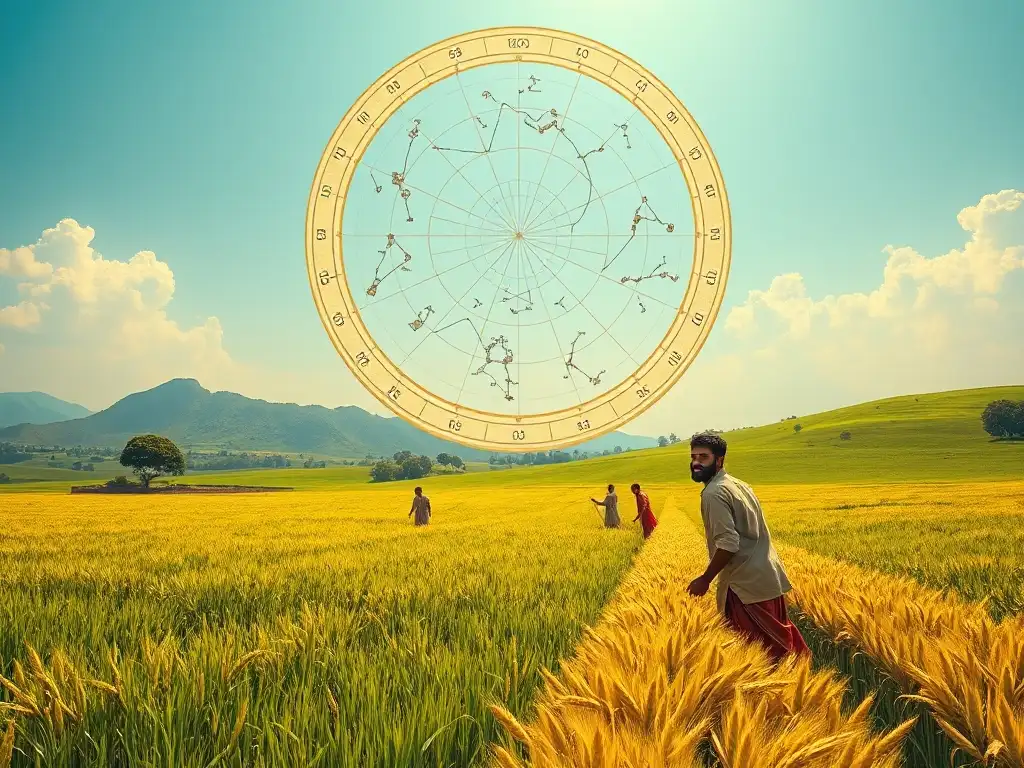
The Gupta Empire, known for its remarkable advancements in science and mathematics, also demonstrated a profound understanding of astronomy, which played a crucial role in agriculture. Accurate predictions of seasons and harvests were vital for farmers, as they directly influenced crop yield and food security. This predictive capability stemmed from meticulous observations of celestial bodies and their movements, allowing farmers to align their agricultural practices with seasonal changes effectively.
Methods of Season Prediction Based on Astronomical Events
Farmers during the Gupta period employed various methods to predict seasonal changes based on astronomical events. These methods included:
- Lunar Calendar Observations:
- The lunar calendar was extensively used to mark the phases of the moon, which correlated with agricultural activities. For instance, the new moon often signified the best time for sowing seeds.
- The Gupta astronomers developed detailed lunar calendars that outlined favorable days for planting, watering, and harvesting crops, which were based on lunar cycles.
- Solar Phenomena:
- The position of the sun during solstices and equinoxes was a key indicator of seasonal changes. The summer solstice, for instance, marked the onset of the monsoon rains, vital for crop irrigation.
- Farmers observed the sun's trajectory to determine the optimal time for planting crops that thrived in wet conditions.
- Star Constellations:
- Certain constellations were linked to specific agricultural tasks. For example, the appearance of specific stars in the night sky signaled the right time for harvesting particular crops.
- The Gupta astronomers kept meticulous records of star patterns and their implications for agricultural activities, creating a celestial guide for farmers.
- Weather Patterns:
- Observations of celestial bodies were often combined with weather patterns. The appearance of certain constellations or planets was seen as indicators of impending weather changes, such as rainfall or drought.
- This integration of astronomy and meteorology helped farmers make informed decisions about when to plant or harvest their crops, maximizing yield and minimizing loss.
Case Studies: Successful Harvests Through Astronomical Predictions
The application of astronomical predictions in agriculture yielded notable successes within the Gupta Empire. Several case studies exemplify how these methods directly impacted harvest outcomes:
- Monsoon Timing:
- In regions reliant on monsoon rains, such as the Gangetic plains, farmers successfully predicted the arrival of rain by observing the position of the sun and specific constellations.
- In one documented case, a village that adhered strictly to these predictions experienced a bumper harvest of rice during a particularly wet season, while neighboring villages that relied on traditional methods faced crop failures.
- Crop Rotation Strategies:
- By correlating the appearance of certain stars with the growth cycles of various crops, farmers developed effective crop rotation strategies. For instance, they rotated legumes with cereals based on lunar phases, enhancing soil fertility and maximizing land use.
- A recorded instance from a Gupta agricultural manual indicates that farmers who followed these astronomical guidelines noted a 20% increase in yield due to improved soil health and optimized planting schedules.
- Pest Control:
- Farmers also noted that certain celestial events coincided with peak pest populations. By predicting these events, they timed their pest control measures more effectively, reducing crop damage.
- A study of agricultural records from the Gupta period revealed that timely interventions based on astronomical predictions led to a significant decrease in locust invasions, safeguarding the year’s harvest.
The Gupta Empire’s integration of astronomy into agriculture not only enhanced crop yield but also demonstrated a sophisticated understanding of the natural world. By predicting seasonal changes through meticulous astronomical observations, the Gupta farmers could optimize their agricultural practices, ensuring food security and prosperity within their civilization.
The Interconnection Between Astronomy and Agriculture
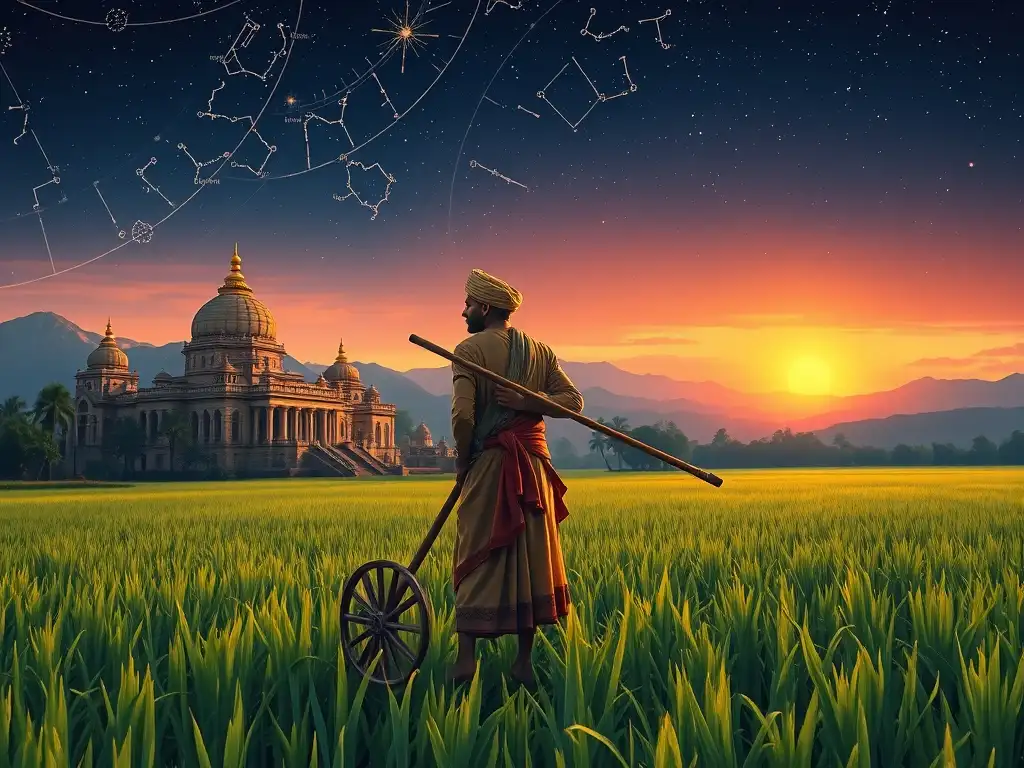
The Gupta Empire, flourishing from approximately 320 to 550 CE, is renowned for its remarkable advancements in various fields, including science and mathematics. Among these, the connection between astronomy and agriculture played a pivotal role in enhancing farming practices, productivity, and societal organization. In ancient Indian civilization, particularly during the Gupta period, the observation of celestial bodies was not merely a scientific endeavor but a fundamental aspect of agricultural planning and execution.
How Astronomy Influenced Farming Techniques
Astronomy significantly influenced farming techniques in the Gupta Empire by providing crucial information for planting, harvesting, and seasonal preparation. Farmers relied on the positions of the sun, moon, and stars to determine the best times for sowing seeds and reaping crops.
- Seasonal Calendars:
- The Gupta astronomers developed sophisticated calendars that correlated celestial events with seasonal changes. This allowed farmers to predict the onset of monsoons, which were critical for crop growth.
- For instance, the appearance of certain constellations indicated the ideal times for planting rice and wheat, staples of Gupta agriculture.
- Lunar Phases:
- The phases of the moon were also integral in agricultural planning. Many farmers in the Gupta Empire believed that planting during specific lunar phases would enhance crop yield.
- For example, sowing seeds during the waxing moon was thought to result in a more vigorous growth cycle.
- Astronomical Instruments:
- The use of astronomical instruments, such as the gola (spherical astrolabe), allowed for precise measurements of celestial bodies. This knowledge empowered farmers to optimize their planting and harvesting schedules based on meticulous observations.
The integration of astronomy into agricultural practices not only improved yields but also fostered a deeper understanding of the natural world, which was reflected in the texts produced during this period, such as the Aryabhatiya by Aryabhata.
The Cultural Significance of Astronomy in Agricultural Rituals
In addition to its practical applications, astronomy held profound cultural significance in agricultural rituals during the Gupta Empire. The celestial movements were often intertwined with religious practices and societal customs, reflecting the holistic worldview of the time.
- Rituals and Festivals:
- Agricultural festivals were often aligned with astronomical events. For instance, the harvest festival celebrated during the full moon symbolized gratitude towards celestial bodies for a bountiful harvest.
- These festivals not only marked the changing seasons but also reinforced community bonds and cultural identity.
- Astrological Beliefs:
- The Gupta populace believed in the influence of celestial phenomena on human affairs. Astrological readings informed crucial decisions regarding farming, such as when to plant or when to take preventive measures against pests.
- Many farmers consulted astrologers to choose auspicious days for agricultural activities, thus integrating astronomy into the spiritual fabric of their lives.
- Symbolism in Art and Literature:
- The influence of astronomy on agriculture was also reflected in Gupta art and literature. Depictions of celestial bodies in sculptures and paintings often symbolized fertility and abundance.
- Texts from this period frequently referenced astronomical events, intertwining them with narratives about agriculture and prosperity.
The role of astronomy in Gupta agriculture extended beyond practical applications, deeply influencing cultural rituals and societal practices. This rich interconnection highlights the significance of celestial observations in shaping the agricultural landscape of the Gupta Empire, embodying a profound relationship between humanity and the cosmos.
Conclusion: The Legacy of Gupta Agriculture and Astronomy

The Gupta Empire, often referred to as the Golden Age of India, witnessed significant advancements in various fields, particularly astronomy and agriculture. The integration of astronomical knowledge into agricultural practices not only improved crop yield but also laid a foundation for agricultural calendars that would influence subsequent civilizations. The synthesis of these two domains exemplifies the Gupta's innovative spirit and their ability to harmonize scientific understanding with practical applications.
Lasting Impacts on Subsequent Indian Civilizations
The legacy of Gupta agriculture and astronomy can be observed in various aspects of later Indian civilizations. The calendrical systems developed during this period, which were based on celestial observations, became integral for agricultural planning. These systems helped farmers predict seasonal changes, leading to more efficient planting and harvesting cycles.
- Influence on Agricultural Techniques: The methods of crop rotation and the timing of sowing influenced the agricultural practices of later dynasties. The emphasis on seasonal awareness ensured that subsequent civilizations could maintain food security during challenging climatic conditions.
- Integration into Cultural Practices: Festivals and rituals related to agriculture were often tied to astronomical events, such as solstices and equinoxes. These traditions persisted through generations, signifying the importance of astronomy in agrarian societies.
- Scientific Texts and Knowledge Dissemination: The astronomical texts produced during the Gupta period, such as the "Aryabhatiya" by Aryabhata, not only focused on celestial phenomena but also included agricultural guidance. These texts served as crucial references for future scholars and continued to shape agricultural practices long after the fall of the Gupta Empire.
Reflection on Gupta Contributions to Science and Agriculture
The Gupta Empire's contributions to science and agriculture represent a remarkable fusion of practical knowledge and theoretical understanding.
- Innovative Agricultural Practices: The application of astronomy to predict seasonal variations underscores the Gupta's commitment to enhancing agricultural productivity. By meticulously observing celestial bodies, they could determine the optimal times for planting and harvest, thus ensuring better yields.
- Astronomy as a Tool for Agriculture: It is essential to appreciate how Gupta astronomers viewed the stars not merely as celestial entities but as instrumental in agricultural success. This perspective led to a deeper understanding of the cosmos, which was intricately linked to the earth's cycles.
- Cultural and Scientific Renaissance: The Gupta period was a time of cultural and scientific renaissance, where agriculture and astronomy thrived side by side. This synergy not only advanced agricultural efficiency but also fostered a broader appreciation for the sciences, influencing countless future generations.
The interplay between Gupta Empire agriculture and astronomy has left an indelible mark on the history of India. The advancements made during this period not only enhanced agricultural yields but also enriched cultural practices and laid the groundwork for future scientific inquiry. This legacy continues to resonate, illustrating the profound impact of ancient Indian civilization on the world.
Frequently Asked Questions
What was the significance of astronomy in Gupta agriculture?
Astronomy played a crucial role in Gupta agriculture by helping farmers predict seasons and optimal times for planting and harvesting crops.
How did Gupta astronomers contribute to agricultural practices?
Gupta astronomers developed calendrical systems that allowed farmers to align their agricultural activities with celestial events, enhancing crop yield and efficiency.
What tools or methods did the Gupta civilization use to observe astronomy?
The Gupta civilization utilized simple instruments such as gnomons and water clocks, along with mathematical calculations, to track celestial movements relevant to agriculture.
How did the Gupta Empire influence agricultural techniques?
The Gupta Empire introduced innovative techniques and improved irrigation methods, which, combined with astronomical knowledge, led to increased agricultural productivity.
Are there any surviving texts that discuss astronomy in Gupta agriculture?
Yes, ancient texts like the Aryabhatiya by Aryabhatta include references to astronomical observations and their applications in agriculture, showcasing the intertwined nature of these fields.
Final Reflection: The Celestial Connection in Gupta Agriculture
The intricate relationship between astronomy and agriculture during the Gupta Empire underscores the profound impact of celestial observations on agricultural practices today. In an era where technology dominates our understanding of nature, the ancient wisdom of predicting seasons and harvests through the stars remains remarkably relevant. As we face the challenges of climate change and food security, revisiting these ancient techniques can inspire innovative solutions in modern agriculture.
The influence of astronomy on Gupta agriculture not only shaped the agricultural landscape of its time but also laid the groundwork for future generations. The meticulous observations of celestial bodies guided farmers in their planting and harvesting schedules, fostering a deep connection between humanity and the cosmos. The study of the stars is not merely a pursuit of knowledge; it is a journey into understanding our place in the universe.
This quote resonates with the ongoing dialogue about sustainable practices and the need to harmonize our agricultural methods with natural rhythms, reminding us that the lessons of the past are invaluable in navigating the complexities of the present.
As we reflect on the role of astronomy in Gupta agriculture, let us consider how we can integrate these timeless principles into our own lives. I invite you to explore the rhythms of nature around you, to observe the changing seasons, and to appreciate the celestial patterns that influence our world. By embracing this connection, we can cultivate a more sustainable future, honoring the legacy of our ancestors while nurturing the earth for generations to come.
Unlock the Secrets of Ancient Farming!
Thank you for exploring the fascinating connection between astronomy and agriculture in ancient India! You've gained invaluable insight into how celestial observations shaped the farming practices of the Gupta period. Now, it's time to take this knowledge and put it into action!
- Explore more about astronomical methods that can be applied in modern gardening. Look for local workshops or online courses to deepen your understanding!
- Share your newfound knowledge with friends or on social media. Initiate a discussion about how ancient practices can inspire today’s sustainable farming!
- Consider visiting a local planetarium or observatory, where you can engage with astronomy enthusiasts and witness the stars that guided our ancestors.
What do you think is the most surprising way ancient astronomical practices could influence our modern approach to agriculture?