
The Gupta Empire and Its Role in the Silk Road Trade


Welcome to Ancient India History, where we embark on a journey through the rich tapestry of ancient Indian civilizations! Here, we delve deep into the Gupta Empire and its pivotal role in the Silk Road trade, exploring how this remarkable era shaped cultural exchanges and economic prosperity across vast regions. What secrets of trade and innovation did the Gupta Empire unveil?
As you navigate through our content, prepare to uncover fascinating insights that will not only enrich your understanding of ancient India but also leave you eager to learn more about its enduring legacy. Join us in unraveling the mysteries of the past!
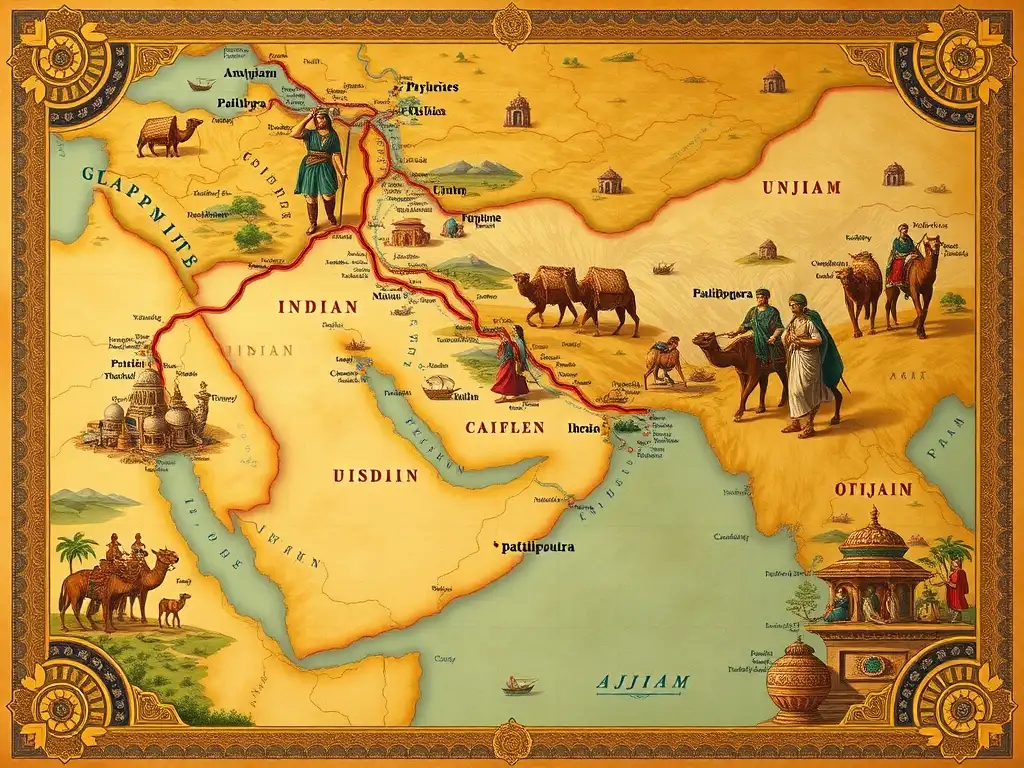
Introduction to the Gupta Empire
The Gupta Empire, often hailed as the Golden Age of India, flourished between approximately 320 and 550 CE. This period is characterized by remarkable advancements in art, science, mathematics, and culture, which left an indelible mark on the Indian subcontinent and beyond.
One of the most significant aspects of the Gupta Empire was its strategic role in facilitating trade, particularly along the Silk Road—a network of trade routes that connected the East and West. The Gupta Empire's contributions to the Silk Road trade not only bolstered its economy but also promoted cultural exchanges that enriched Indian civilization and influenced global interactions.
Overview of the Gupta Empire's Historical Context
The Gupta Empire emerged after the decline of the Maurya Empire, becoming a powerful political entity in northern India. Founded by Sri Gupta, the empire expanded under notable rulers such as Chandragupta I, Samudragupta, and Chandragupta II. The Gupta dynasty is renowned for its patronage of arts and sciences, giving rise to eminent scholars like Aryabhata and Kalidasa. The establishment of a well-organized administrative system and the promotion of trade routes facilitated not only economic prosperity but also cultural and intellectual growth.
- Key Historical Events:
- Formation of the Gupta Empire (c. 320 CE)
- Expansion under Samudragupta (c. 335-375 CE)
- Cultural and scientific advancements during Chandragupta II's reign (c. 375-415 CE)
Importance of the Gupta Empire in Ancient Indian Civilizations
The Gupta Empire played a pivotal role in shaping the course of ancient Indian civilizations. It is widely regarded as a period of unparalleled achievements in various fields, including:
- Mathematics: Introduction of the numeral system and the concept of zero.
- Astronomy: Development of astronomical theories and calculations.
- Literature: Flourishing of Sanskrit literature, with notable works in poetry and drama.
- Art and Architecture: Creation of exquisite sculptures and temples that reflect the artistic excellence of the period.
The stability and prosperity of the Gupta Empire created an environment conducive to trade, particularly along the Silk Road, linking India with distant lands such as China, Persia, and the Mediterranean.
The Silk Road: A Brief Overview
The Silk Road was not just a single road but a complex network of trade routes connecting the East and West, facilitating the exchange of goods, ideas, and cultures. It played a crucial role in the development of ancient civilizations, including that of the Gupta Empire.
Definition and Significance of the Silk Road
The Silk Road derived its name from the lucrative trade in silk that was carried out along its routes, but it also facilitated the trade of various other commodities, such as spices, textiles, precious stones, and metals. The Silk Road was significant for several reasons:
- Cultural Exchange: It enabled the exchange of philosophies, religions, and cultures, leading to a rich tapestry of shared knowledge and practices.
- Economic Interactions: The trade routes contributed to economic prosperity for multiple regions, including the Gupta Empire, which became a central hub for trade.
Key Trade Routes and Cultural Exchanges
The Silk Road consisted of both overland and maritime routes, connecting major cities such as Ctesiphon, Bukhara, Chang'an, and Samarqand. The Gupta Empire's strategic position allowed it to facilitate trade between China, Central Asia, and the Mediterranean.
- Cultural Exchanges:
- Spread of Buddhism from India to East Asia.
- Influence of Indian art and architecture on neighboring regions.
- Exchange of scientific knowledge, particularly in mathematics and medicine.
Through these interactions, the Gupta Empire not only enriched its own culture but also contributed to the broader narrative of human history along the Silk Road.
The Gupta Empire and Its Influence on Silk Road Trade
The Gupta Empire, which flourished from approximately 320 to 550 CE, stands as a pivotal period in Indian history, often referred to as a "Golden Age" due to its remarkable achievements in various fields including science, mathematics, art, and literature. One of the significant aspects of this era was its role in the Silk Road trade, which facilitated the exchange of goods, ideas, and cultures between the East and West. The Gupta Empire's strategic geographic positioning, along with its economic and cultural contributions, played a crucial role in enhancing trade activities along this ancient trade route.
Geographic Location and Its Strategic Importance
The Gupta Empire was strategically located in the northern part of the Indian subcontinent, with its heartland around the modern-day regions of Uttar Pradesh and Bihar. This location served as a critical junction for trade routes connecting the Indian subcontinent to Central Asia, the Middle East, and beyond.
- Access to Trade Routes: The empire's proximity to important trade corridors allowed merchants and traders to easily navigate between India and other regions, facilitating the movement of goods such as silk, spices, and precious stones.
- Natural Resources: The rich natural resources of the Gupta Empire, including textiles, metalwork, and agricultural products, made it a desirable trading partner for other civilizations along the Silk Road.
- Urban Centers: Major urban centers like Pataliputra (the capital) and Ujjain emerged as bustling trade hubs, providing infrastructure and markets that supported commercial activities. These cities played a vital role in trade dynamics, attracting merchants from distant lands.
Economic Contributions of the Gupta Empire to Silk Road Trade
The Gupta Empire significantly contributed to the Silk Road trade through its vibrant economy, which was characterized by agricultural surplus, craftsmanship, and a flourishing trade network.
- Agricultural Prosperity: The empire's advancements in agriculture led to surplus production, which not only fed the local population but also provided goods for trade. Crops such as rice, wheat, and sugarcane became key exports.
- Craftsmanship and Trade Goods: Gupta artisans were renowned for their high-quality textiles, metalwork, and pottery. The production of fine silk garments and intricate jewelry attracted traders from various regions, enhancing the empire's reputation as a center of luxury goods.
- Monetary System: The introduction of a standardized currency system facilitated trade transactions, making trade along the Silk Road more efficient. The Gupta coins, often made of gold and silver, were widely accepted and circulated in trade networks.
Cultural Exchange Through the Silk Road During the Gupta Period
The Gupta Empire's involvement in the Silk Road trade was not just limited to economic transactions; it also fostered significant cultural exchanges that enriched both Indian and foreign societies.
Art, Religion, and Philosophy: Major Influences
The Silk Road served as a conduit for the exchange of artistic ideas, religious beliefs, and philosophical thoughts between the Gupta Empire and other civilizations.
- Artistic Interactions: Gupta art, characterized by its finesse and intricate carvings, influenced artistic styles across Asia. The blending of Indian artistic techniques with those of Central Asia resulted in unique art forms, particularly in Buddhist sculpture.
- Religious Syncretism: The spread of Buddhism along the Silk Road saw the establishment of monasteries and stupas, which not only facilitated spiritual exchanges but also served as centers for trade. The Gupta period saw the flourishing of Hinduism and Buddhism, with both religions adapting and influencing local cultures along the trade routes.
- Philosophical Ideas: Key philosophical texts and ideas from the Gupta period, especially those related to Vedanta and Buddhism, were transmitted along the Silk Road, impacting scholars and thinkers in distant lands.
The Spread of Indian Culture Along the Silk Road
The cultural impact of the Gupta Empire extended far beyond its borders, significantly shaping societies along the Silk Road.
- Language and Literature: Sanskrit, the language of the Gupta Empire, began to spread along trade routes, influencing local dialects and literary traditions. Indian epics and texts were translated and adapted, leading to a rich literary exchange.
- Culinary Influences: The exchange of spices and culinary techniques along the Silk Road introduced Indian flavors to other cultures, while also allowing Indian cuisine to evolve with new ingredients from distant lands.
- Cultural Festivals: The interaction of different cultures along the Silk Road led to the adoption and adaptation of festivals and rituals, fostering a sense of unity among diverse populations.
The Gupta Empire's strategic location, economic prosperity, and cultural richness not only enhanced its role in the Silk Road trade but also facilitated a dynamic exchange of ideas and traditions that would leave a lasting legacy on the civilizations connected through this ancient trade route.
Major Goods Traded Along the Silk Road During the Gupta Empire
The Gupta Empire, flourishing from approximately 320 to 550 CE, played a pivotal role in the extensive trade networks of the Silk Road. This ancient trade route facilitated the exchange of a variety of goods between the East and West, significantly impacting the economies and cultures of the regions involved. During this period, the Gupta Empire was known for its wealth and prosperity, which was largely fueled by the trade of several key commodities.
Key Commodities: Spices, Textiles, and Precious Metals
Among the most sought-after goods during the Gupta period, spices held a prominent position. India was renowned for its diverse range of spices, including black pepper, cardamom, and cinnamon. These spices were not only valued for their flavor but also for their preservative qualities, making them highly desirable across different cultures and regions.
Textiles were another major commodity traded along the Silk Road. Indian weavers produced exquisite fabrics, such as silk and cotton, which were intricately designed and favored by both local and foreign markets. The art of dyeing and weaving in India was advanced, leading to the production of textiles that were unique and luxurious, thus garnering high demand from traders and consumers alike.
Precious metals and gemstones also constituted a significant portion of the trade. India was a notable source of gold, silver, and a variety of gemstones, including diamonds and rubies. These precious items not only served as currency but were also utilized in jewelry and decorative arts, further enhancing their value in global trade.
Role of Indian Merchants in Silk Road Trade Networks
Indian merchants played an essential role in the Silk Road trade networks, acting as intermediaries between various cultures and regions. They were instrumental in the movement of goods, ideas, and cultural practices between India, Central Asia, and beyond. With their extensive knowledge of trade routes and markets, these merchants facilitated transactions that connected diverse civilizations.
The involvement of Indian merchants in the Silk Road was characterized by their ability to establish trade links and networks that spanned vast distances. They often formed partnerships with merchants from other regions, resulting in a collaborative environment for trade. Through these relationships, they were able to not only trade goods but also exchange cultural and religious ideas, further enriching the tapestry of ancient civilizations.
Moreover, the presence of Indian merchants in the Silk Road trade contributed to the establishment of urban centers along the route. Cities such as Taxila and Pataliputra became bustling trade hubs, where merchants would gather to exchange goods, culture, and knowledge, leading to the flourishing of local economies and societies.
The Impact of Silk Road Trade on the Gupta Empire's Economy
The trade along the Silk Road had a profound impact on the economy of the Gupta Empire. It facilitated not only the exchange of goods but also the transfer of wealth and resources, contributing to the overall prosperity of the empire. The influx of luxury items and resources from various regions helped enhance the quality of life for many within the empire's borders.
Economic Prosperity and Urban Development
As trade flourished during the Gupta Empire, urban development experienced significant growth. Cities became vibrant centers of commerce, attracting artisans, traders, and scholars. The increased economic activity led to the establishment of markets, workshops, and educational institutions, transforming cities into thriving cultural and economic hubs.
This urbanization was accompanied by advancements in infrastructure, including improved roads and caravanserais, which facilitated easier movement of goods and people. The increased prosperity also allowed for investment in public works, such as temples and palaces, further contributing to the cultural richness of the Gupta Empire.
Trade Policies and Their Influence on the Silk Road
The Gupta rulers implemented effective trade policies that promoted and regulated commerce along the Silk Road. They recognized the importance of trade for economic stability and growth, leading to the establishment of favorable conditions for merchants. These policies included taxation structures that were designed to encourage trade while ensuring the empire benefited from the economic activity.
Additionally, the Gupta Empire maintained diplomatic relations with neighboring regions, enhancing trade opportunities. By fostering peaceful interactions and trade agreements, the Gupta rulers were able to create a conducive environment for merchants, which further solidified India's role in the Silk Road trade network.
The Gupta Empire's involvement in Silk Road trade not only enriched its own economy but also facilitated the exchange of goods and ideas across vast distances, leaving a lasting legacy on ancient trade practices and cultural exchanges.
Challenges Faced by the Gupta Empire in Silk Road Trade
The Gupta Empire, despite its significant contributions to trade along the Silk Road, faced numerous challenges that impacted its ability to maintain a dominant position in this vital trade network. These challenges stemmed from both internal and external factors, ranging from political instability to natural disasters. Understanding these hurdles provides a more comprehensive view of the Gupta Empire's complex relationship with Silk Road trade.
Political Instabilities and External Threats
One of the foremost challenges the Gupta Empire encountered was political instability. Internal dissent and succession disputes weakened the central authority, making it difficult to manage trade effectively. As rival factions vied for power, the resulting chaos led to a breakdown in trade agreements and safety along the routes.
Additionally, external threats from neighboring kingdoms and nomadic tribes posed significant risks to trade. The Huns, for example, began to invade and disrupt trade routes during the later years of the Gupta Empire. These incursions not only jeopardized the safety of merchants and caravans but also led to the loss of critical trade outposts, diminishing the empire's control over Silk Road commerce. The inability to protect trade routes from such threats resulted in decreased economic stability and a decline in the prosperity that the Gupta Empire had enjoyed.
Natural Disasters and Their Impact on Trade Routes
Natural disasters also played a crucial role in hindering the Gupta Empire's trade activities. The region experienced various calamities, including floods, droughts, and earthquakes, which could devastate agricultural production and disrupt supply chains. Such events not only affected local economies but also had a ripple effect on trade routes, making it challenging for merchants to transport goods reliably.
For instance, severe flooding could render a trade route impassable, leading to delays and increased costs for traders attempting to traverse the Silk Road. Similarly, droughts would impact the availability of essential commodities, which were crucial for trade. As a result, both merchants and the Gupta economy suffered, highlighting the vulnerability of the Silk Road trade to environmental factors.
Conclusion: The Lasting Legacy of the Gupta Empire in Silk Road Trade
The Gupta Empire's role in Silk Road trade, while fraught with challenges, left an indelible mark on the economic landscape of ancient India and beyond. The empire's efforts to engage with this extensive network facilitated not only the exchange of goods but also the transfer of ideas and culture.
Reflection on the Gupta Empire's Contributions
Reflecting on the Gupta Empire's contributions to Silk Road trade reveals a legacy of cultural and intellectual exchange that transcended borders. The empire was a melting pot of ideas, with trade fostering interactions between diverse cultures. This exchange enriched the Gupta civilization, as evidenced by advancements in art, science, and philosophy. The establishment of trade networks helped to spread Indian innovations, such as mathematics and astronomy, influencing various regions along the Silk Road.
The Enduring Influence of Gupta Trade on Future Civilizations
The impact of Gupta trade was profound, laying the groundwork for future civilizations to build upon. The routes established during this period continued to facilitate trade long after the decline of the Gupta Empire. Successor states and empires, such as the Chalukyas and the Mauryas, utilized these extensive networks, ensuring that the legacy of the Gupta Empire's trade contributions endured.
Moreover, the cultural exchanges initiated during the Gupta period set the stage for the flourishing of trade in subsequent centuries, illustrating the lasting influence of the Gupta Empire on the dynamics of Silk Road commerce and the interconnectedness of ancient civilizations.
- Introduction to the Gupta Empire
- Overview of the Gupta Empire's Historical Context
- Importance of the Gupta Empire in Ancient Indian Civilizations
- The Silk Road: A Brief Overview
- The Gupta Empire and Its Influence on Silk Road Trade
- Cultural Exchange Through the Silk Road During the Gupta Period
- Major Goods Traded Along the Silk Road During the Gupta Empire
- Role of Indian Merchants in Silk Road Trade Networks
- The Impact of Silk Road Trade on the Gupta Empire's Economy
- Challenges Faced by the Gupta Empire in Silk Road Trade
- Conclusion: The Lasting Legacy of the Gupta Empire in Silk Road Trade
- What was the Gupta Empire's significance in ancient history?
- How did the Gupta Empire influence Silk Road trade?
- What were some key goods traded on the Silk Road during the Gupta Empire?
- How did the Gupta Empire support trade?
- What cultural exchanges occurred due to Silk Road trade in the Gupta Empire?
Frequently Asked Questions
What was the Gupta Empire's significance in ancient history?
The Gupta Empire is often referred to as the Golden Age of India due to its advancements in science, art, and literature during the 4th to 6th centuries CE.
How did the Gupta Empire influence Silk Road trade?
The Gupta Empire played a crucial role in facilitating trade along the Silk Road, promoting the exchange of goods, ideas, and culture between the East and West.
What were some key goods traded on the Silk Road during the Gupta Empire?
Merchants traded a variety of luxury items, including silk, spices, and precious stones, which were highly valued in both Eastern and Western markets.
How did the Gupta Empire support trade?
The Gupta rulers established a stable political environment and built infrastructure, such as roads and trading posts, to enhance trade efficiency and security.
What cultural exchanges occurred due to Silk Road trade in the Gupta Empire?
Trade along the Silk Road led to significant cultural exchanges, including the spread of Buddhism, art styles, and scientific knowledge, enriching Gupta society.
Final Reflection: The Gupta Empire's Enduring Legacy in Silk Road Trade
The Gupta Empire's role in the Silk Road trade is not merely a historical footnote; it is a testament to the interconnectedness of civilizations. In today's globalized world, where trade and cultural exchange continue to shape societies, understanding the Gupta Empire's contributions to the Silk Road illuminates the importance of collaboration and mutual growth among diverse cultures. The thriving trade networks established during this period remind us that the sharing of ideas, goods, and traditions is fundamental to human progress.
Cultural exchanges facilitated by the Gupta Empire have left an indelible mark on our social landscape. The fusion of art, science, and philosophy that emerged during this era continues to inspire modern thought and creativity. As we navigate an increasingly complex world, the lessons from the Gupta Empire remind us of the value of dialogue and cooperation. Trade is not just about goods; it’s about the exchange of ideas that can transform societies.
As we reflect on the Gupta Empire's legacy, I invite you to consider how you can foster connections in your own life. Embrace the spirit of the Silk Road by seeking out diverse perspectives and engaging in meaningful exchanges with those around you. Whether through travel, conversation, or collaboration, let the lessons of the past inspire you to build bridges that enrich your understanding of the world and its myriad cultures.
Unveil the Secrets of the Silk Road Today!
Thank you for exploring the fascinating world of the Gupta Empire and its pivotal role in the Silk Road trade! By diving into this rich history, you've uncovered not just a story of trade and culture, but the enduring legacy of connection that shaped ancient civilizations.
Now, it’s your turn to take action and deepen your understanding. Here are some steps to embark on your journey:
- Explore more: Check out additional resources or articles on our website to expand your knowledge about the Gupta Empire's trade network and other influential empires of the past.
- Share your discoveries: Engage with friends or your online community about the significance of the Silk Road. Your insights could inspire others to delve into history!
- Join the conversation: Consider participating in historical forums or social media groups focused on ancient trade routes to exchange ideas and learn from fellow history enthusiasts.
How do you think the Gupta Empire's influence on the Silk Road trade can inspire modern trade relationships today?