
The Significance of Mauryan Coinage in Administration and Trade

Welcome to Ancient India History, where we embark on a fascinating journey through the rich tapestry of ancient Indian civilizations. Here, you will uncover the profound cultural and historical contributions that have shaped our world, from the marvels of the Indus Valley to the grandeur of the Gupta Empire.
In our featured article, we delve into the significance of Mauryan coinage in administration and trade, revealing how this innovative currency system revolutionized commerce and governance. Prepare to be captivated as we explore the intricate connections between trade, economy, and the vibrant society of ancient India—your adventure into the past begins now!
Introduction to Mauryan Coinage
The Mauryan Empire, which thrived from 322 to 185 BCE, stands as one of the most remarkable empires in ancient Indian history. It was notable not only for its vast territorial expanse but also for its sophisticated administrative systems and economic frameworks. A pivotal element in the economic landscape of the Mauryan Empire was its coinage, which played a critical role in facilitating trade and administrative functions. Understanding the importance of Mauryan coinage in trade offers valuable insights into the economic practices and governance structures of this ancient civilization.
Overview of the Mauryan Empire
The Mauryan Empire, established by Chandragupta Maurya, reached its zenith under the reign of his grandson, Ashoka the Great. Spanning much of the Indian subcontinent, the empire was characterized by a centralized administration, extensive trade routes, and a flourishing economy. The Mauryans implemented a variety of innovations in governance, including a well-organized bureaucracy and a system of taxation that supported public works and infrastructure development. This empire also witnessed the spread of Buddhism, which influenced various aspects of Mauryan society, including trade practices.
Definition and Types of Mauryan Coinage
Mauryan coinage primarily consisted of metal coins, predominantly made of silver and copper. The coins varied in size, weight, and design, reflecting the diverse economic activities and trade relationships of the time. Key types of Mauryan coins include:
- Punch-marked coins: These were the most common form of currency, featuring various symbols stamped onto them, indicating their authenticity and value.
- Cast coins: Made by pouring molten metal into molds, these coins often displayed intricate designs and were used for larger transactions.
- Regional coins: Different provinces produced their coins, which helped facilitate local trade while maintaining a connection to the wider Mauryan economy.
The Role of Mauryan Coinage in Trade
The significance of Mauryan coinage extended far beyond mere currency; it was instrumental in shaping trade practices and enhancing economic interactions both within and outside the empire.
Economic Significance of Mauryan Coinage in Trade
Mauryan coinage served as a standard medium of exchange, which simplified trade transactions. It provided a reliable measure of value, reducing the complexities involved in barter systems. The introduction of coinage allowed merchants to conduct trade over larger distances, thereby expanding their markets. Additionally, the stability of Mauryan coinage encouraged investment in trade ventures, leading to increased economic activity and the growth of urban centers.
How Mauryan Coinage Facilitated Trade Networks
The presence of a unified currency system under the Mauryan Empire facilitated the establishment of extensive trade networks. Merchants could traverse vast distances, trading goods such as textiles, spices, and precious stones. Moreover, the standardized coinage promoted trust among traders, minimizing disputes related to currency exchange. The Mauryan administration also supported trade by improving infrastructure, such as roadways and ports, which further bolstered commercial activities.
Comparison of Mauryan Coinage with Other Ancient Coinage Systems
When compared to other ancient coinage systems, such as those of the Persian Empire or the Greek city-states, Mauryan coinage demonstrated unique characteristics. While Persian coins were often based on weight, Mauryan coins utilized a more standardized approach, making them more accessible for everyday transactions. Additionally, the punch-marked design of Mauryan coins set them apart, reflecting the local artistic styles and cultural significance of the region. This comparison highlights the innovative nature of Mauryan coinage and its critical role in establishing a robust trade environment in the ancient world.
Mauryan Coinage and Administration
The Mauryan Empire, known for its remarkable administrative structure, utilized coinage as a crucial element in its governance. The introduction of standardized coins under the Mauryan dynasty not only facilitated trade but also played a pivotal role in the functioning of the state. Coinage became a symbol of authority and legitimacy, enabling the central government to exert control over distant regions. The coins, often made from silver, gold, and copper, bore the image of the ruling monarch, which reinforced the emperor's status and power across the vast empire.
The Use of Coinage in Administrative Functions
Coinage served various administrative functions within the Mauryan Empire. It simplified transactions, making it easier for merchants and traders to conduct business. The uniformity of the coins allowed for a standard measure of value, which was essential for tax collection and trade regulation. Furthermore, the presence of inscriptions on the coins often included edicts and messages from the emperor, disseminating important information to the populace. This integration of coinage into daily administrative tasks ensured that the empire's governance was both efficient and effective, fostering a sense of unity among its diverse subjects.
Coinage as a Tool for Revenue Collection
The Mauryan administration effectively utilized coinage as a tool for revenue collection. Taxes were often levied in the form of coins, making it easier for the state to gather resources necessary for various public expenditures, including infrastructure development and military maintenance. The system of taxation was streamlined through the use of coins, which reduced the chances of corruption and ensured that the revenue reached the central treasury.
Additionally, the ability to mint coins allowed local governors to exercise some degree of financial autonomy while still being accountable to the central authority. This dual system not only enhanced revenue generation but also promoted economic stability across the empire.
The Influence of Coinage on Economic Policies
Mauryan coinage significantly influenced the economic policies of the empire. The availability of standardized currency led to an increase in trade and commerce, as merchants could engage in transactions without the complexities of barter. The state recognized the importance of a thriving economy, which prompted policies that encouraged trade routes and market development.
The establishment of trade links with regions outside the Mauryan Empire, including Persia and Central Asia, was facilitated by the trust and reliability that coinage provided. Economic policies during this era were thus closely tied to the management and regulation of coinage, ensuring that the empire reaped the benefits of a prosperous trading environment.
The Impact of Mauryan Coinage on Society
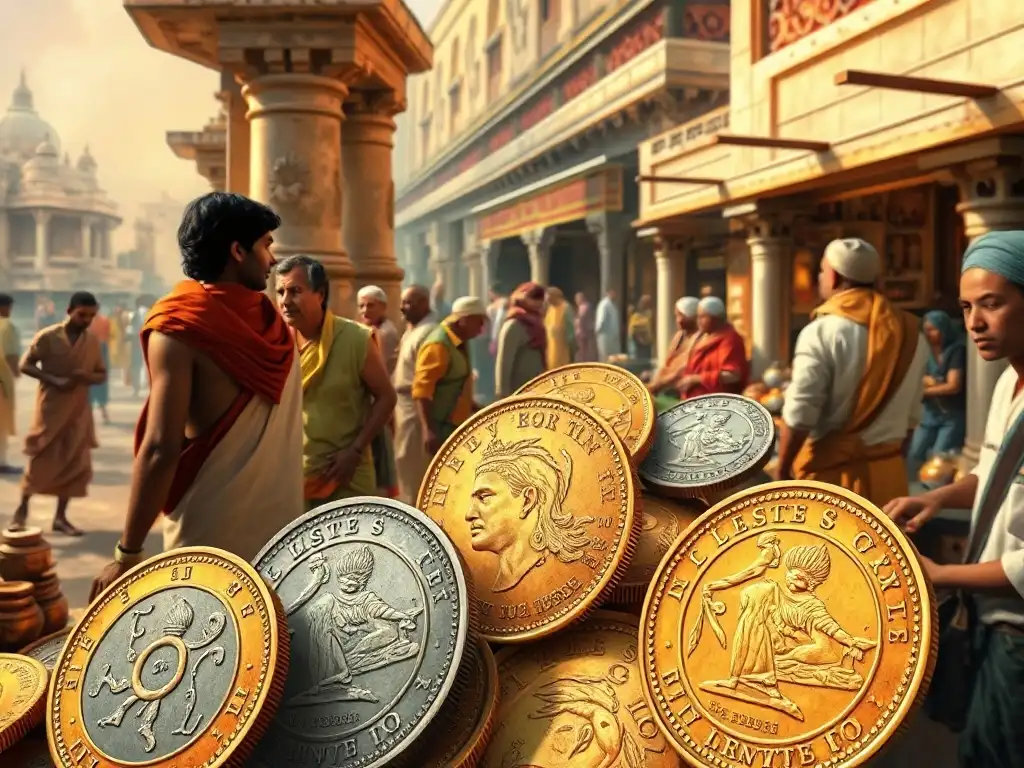
The introduction and widespread use of Mauryan coinage had profound effects on society. It not only transformed economic transactions but also influenced social structures and cultural practices.
Social Stratification and Coinage
The availability of coinage contributed to social stratification within the Mauryan society. Wealth became more easily quantifiable, allowing for distinctions between different social classes. Merchants and traders who dealt in coins could amass wealth, elevating their social status compared to agrarian communities. This stratification was further emphasized as the ruling elite used coinage as a means to display their wealth and power, often commissioning coins that reflected their status. Thus, while coinage facilitated trade, it also marked the divisions within society, leading to a more complex social hierarchy.
The Cultural Significance of Coins in Mauryan Society
Coins in Mauryan society were not just economic tools; they held significant cultural value as well. The artistic designs and inscriptions on coins often depicted religious symbols, animals, and royal imagery, which conveyed cultural narratives and societal values. These coins served as a medium for the dissemination of art and culture, reflecting the aesthetics of the period. Additionally, they played a role in rituals and ceremonies, where coins could be offered in religious practices, symbolizing prosperity and abundance. The cultural significance of coinage thus transcended its monetary function, embedding itself into the very fabric of Mauryan life.
Mauryan Coinage and its Influence on Trade Practices
The influence of Mauryan coinage on trade practices was profound, leading to the expansion of both domestic and international commerce. As merchants began to use coins for transactions, trade became more efficient and widespread. The standardization of currency reduced the complexities associated with barter systems, allowing for easier exchange of goods and services.
Furthermore, the Mauryan Empire established trade networks that extended beyond its borders, facilitating the exchange of goods such as textiles, spices, and precious metals. The reliability of Mauryan coinage played a crucial role in building trust among traders, which was essential for the growth of a vibrant marketplace. Consequently, Mauryan coinage was integral to the economic dynamism that characterized the empire, ultimately contributing to its enduring legacy in the history of ancient India.
Technological and Artistic Aspects of Mauryan Coinage
Mauryan coinage represents a significant advancement in both technology and artistic expression during its time. The coins produced under the Maurya Empire not only facilitated trade and commerce but also served as a canvas for artistic representation reflecting the empire's culture and ideology. Understanding the technological and artistic aspects of Mauryan coinage provides insight into its importance in administration and trade.
Minting Techniques and Innovations
The Mauryan Empire showcased remarkable innovations in minting techniques, which were critical to the widespread circulation and acceptance of its coins. One of the primary methods employed was the die-striking technique, where metal blanks were struck with engraved dies to imprint intricate designs. This process allowed for uniformity in size and weight, which was essential for trade, ensuring that merchants and customers could trust the currency.
Additionally, the Mauryans introduced coins made from various metals, including silver, copper, and gold. The silver punch-marked coins are particularly notable for their simplicity and effectiveness, featuring a series of punches that created distinct designs, including symbols and inscriptions. This innovation not only enhanced the security of the coins but also allowed for mass production, making coinage accessible to a broader population.
Artistic Representations on Mauryan Coins
The artistic representations found on Mauryan coins are a testament to the empire's cultural richness and religious diversity. The coins often featured symbolic motifs, such as the lion, representing power and sovereignty, and the wheel (Ashoka Chakra), symbolizing the moral law and the pursuit of righteousness. These designs were significant in promoting the legitimacy of Mauryan authority and the ideology of dharma.
Moreover, some coins depicted images of deities and important symbols from various religious traditions, including Buddhism and Hinduism. For instance, coins from the later Mauryan period began incorporating Buddhist symbols, reflecting the empire's embrace of Buddhism under Emperor Ashoka. The artistic diversity on these coins not only illustrated the empire's religious tolerance but also reinforced the importance of coinage as a medium for disseminating cultural values and beliefs.
The Evolution of Coinage Through the Mauryan Period
Coinage in the Mauryan period evolved significantly, reflecting the changing economic and political landscape of the empire. Initially, the coinage was primarily focused on facilitating trade within the empire and with neighboring regions. However, as the empire expanded, the need for a standardized currency became apparent, leading to the development of more sophisticated coins.
During the reign of Ashoka, there was a notable shift towards the promotion of Buddhist ideals through coinage. This period saw the introduction of coins that not only served as currency but also as instruments for political propaganda, promoting Ashoka’s policies and the spread of Buddhism. The evolution of Mauryan coinage thus mirrored the empire's growth, adapting to the needs of administration and commerce while also reflecting the ideological shifts within the society.
Conclusion: The Lasting Legacy of Mauryan Coinage
The legacy of Mauryan coinage extends far beyond its immediate economic functions; it played a pivotal role in shaping the administrative framework and trade practices of ancient India. The innovations and artistic representations found in Mauryan coins continue to be studied for their historical significance and their impact on subsequent Indian civilizations.
Summary of Mauryan Coinage Importance in Trade and Administration
The importance of Mauryan coinage in trade and administration cannot be overstated. It facilitated the standardization of currency, which was crucial for trade expansion both within the vast Mauryan Empire and with external regions. The technological advancements in minting and the artistic representations on the coins contributed to a cohesive identity for the empire while enhancing commercial interactions. Moreover, the regulatory mechanisms surrounding coinage under the Mauryan administration established a model for future governance and economic systems in India.
Reflection on the Influence of Mauryan Coinage in Subsequent Indian Civilizations
The influence of Mauryan coinage reverberated through subsequent Indian civilizations, setting a precedent for future dynasties. Following the Mauryan period, various Indian empires adopted and adapted the minting techniques and artistic styles established by the Mauryas. The use of coinage as a means of promoting political ideology and cultural values became a norm, which can be seen in the coinage of later empires such as the Gupta and Mughal empires. The legacy of Mauryan coinage not only contributed to economic stability but also enriched the cultural tapestry of India, leaving an indelible mark on its history.
- Introduction to Mauryan Coinage
- The Role of Mauryan Coinage in Trade
- Mauryan Coinage and Administration
- The Impact of Mauryan Coinage on Society
- Technological and Artistic Aspects of Mauryan Coinage
- Conclusion: The Lasting Legacy of Mauryan Coinage
Frequently Asked Questions
What was the purpose of Mauryan coinage?
Mauryan coinage served as a standardized medium of exchange, facilitating trade and commerce across various regions of ancient India.
How did Mauryan coinage impact trade?
The introduction of coinage allowed for easier trading practices, enhancing economic interactions between different areas and promoting a more integrated market.
What materials were used in Mauryan coins?
Mauryan coins were primarily made of silver, gold, and copper, with each metal indicating a different value and purpose in trade.
How did Mauryan rulers regulate coinage?
Mauryan rulers implemented strict standards for coin weight and quality, ensuring the trustworthiness of currency and stability in the economy.
What are some key features of Mauryan coins?
Mauryan coins often featured symbols, inscriptions, and images of rulers, which not only indicated their value but also played a role in political propaganda and identity.
Final Reflection: The Enduring Legacy of Mauryan Coinage in Trade
The significance of Mauryan coinage in administration and trade remains a cornerstone of understanding ancient economic systems. As we navigate the complexities of modern economies, the lessons drawn from the Mauryan period remind us of the foundational role that currency plays in facilitating trade and governance. The intricate designs and standardization of Mauryan coins were not merely artistic expressions; they were vital instruments that fostered economic growth and social cohesion in a diverse empire.
The influence of Mauryan coinage extends far beyond its historical context, shaping our understanding of trade dynamics and economic relationships. Today, we see echoes of this ancient practice in the way currencies function as symbols of trust and value in global markets. The Mauryan coins served as a unifying force, bridging diverse cultures and communities through commerce. Currency is the lifeblood of trade, and in its evolution, we find the story of human connection.
This observation highlights how the principles of trade established during the Mauryan era continue to resonate in our interconnected world.
As we reflect on the importance of Mauryan coinage in trade, I invite you to consider how the lessons from this ancient civilization can be applied to our contemporary lives. How can we foster trust and collaboration in our own economic exchanges?
Let the legacy of Mauryan coinage inspire you to appreciate the value of currency not just as a medium of exchange, but as a powerful tool for building relationships and promoting mutual understanding in our diverse societies. Embrace the spirit of trade, and let it guide your interactions, both personal and professional, as we strive for a more connected and harmonious world.
Unveil the Rich Heritage of Mauryan Coinage!
Thank you for diving into the fascinating world of Mauryan coinage! You've uncovered key insights into its vital role in administration and trade in ancient India. Now, it's time to put that knowledge into action!
- Explore more: Delve deeper into the history of other empires and their economic systems by checking out related articles on our website.
- Share your thoughts: Engage with us on social media or in the comments section—tell us about your favorite aspect of Mauryan coinage!
- Take the discussion further: Challenge yourself by researching a specific type of coin and its impact on trade routes across ancient civilizations.
Which aspect of Mauryan coinage do you believe was most influential in shaping trade practices? Let's get the conversation going!