
The Gupta Empire: Unraveling the Secrets of the Golden Age


Welcome to Ancient India History, where we embark on a captivating journey through the rich and diverse tapestry of ancient Indian civilizations. Dive into the remarkable era of the Gupta Empire—a time often referred to as the Golden Age of India.
In our featured article, "The Gupta Empire: Unraveling the Secrets of the Golden Age," we will explore the extraordinary achievements, cultural advancements, and enduring legacies that shaped not only India but the world. Get ready to uncover the mysteries and marvels of a civilization that thrived in art, science, and philosophy, and let your curiosity lead you deeper into the annals of history!

The Gupta Empire stands as one of the most significant periods in ancient Indian history, often celebrated for its remarkable advancements in various fields, including science, mathematics, art, and literature. Known as the Golden Age of India, this era, which flourished from approximately the 4th to the 6th centuries CE, was characterized by unprecedented achievements that laid the foundation for modern Indian culture and society.
The Gupta rulers, particularly Chandragupta I and his successors, played a pivotal role in unifying the Indian subcontinent, fostering an environment of intellectual growth and cultural prosperity. This article delves into the intricate tapestry of the Gupta Empire's contributions, exploring how its rich legacy continues to influence contemporary India.
Introduction to the Gupta Empire
The Gupta Empire emerged in the wake of the Mauryan Empire's decline, marking a transition towards regional governance and cultural renaissance in ancient India. The empire was founded by Chandragupta I, who established his reign around 320 CE. Under his rule and that of his successors, the Gupta Empire expanded its territory, encompassing large parts of northern and central India.
Overview of the Gupta Empire's Influence on Ancient India
The Gupta Empire's influence is profound and multifaceted. It acted as a catalyst for advancements across several domains:
- Cultural Flourishing: The period saw a resurgence in arts, literature, and religion, with notable figures such as Kalidasa emerging.
- Scientific Innovations: The Gupta period is credited with significant contributions to mathematics, including the concept of zero and advancements in algebra and trigonometry.
- Political Unity: The empire's political stability facilitated trade and cultural exchange, enhancing regional interactions.
Overall, the Gupta Empire played a crucial role in shaping the cultural and intellectual landscape of ancient India.
Significance of the Gupta Empire in Indian History
The significance of the Gupta Empire in Indian history cannot be overstated. It is often seen as the zenith of Indian civilization, where:
- Religious Harmony: Hinduism and Buddhism coexisted, leading to the flourishing of both faiths and their associated arts and literature.
- Economic Prosperity: The empire's trade routes thrived, connecting India with other regions, thereby enhancing economic exchanges.
- Intellectual Legacy: The educational institutions established during this time, such as Nalanda, became centers of learning attracting scholars from all over the world.
Understanding the Golden Age of the Gupta Empire
The term “Golden Age” denotes a period of great achievements and prosperity in a culture or society. In the context of the Gupta Empire, it reflects a time when the arts, sciences, and political stability reached remarkable heights.
Definition of the Golden Age in Historical Context
The Golden Age of the Gupta Empire is defined by:
- Cultural Renaissance: A revival of classical art and literature marked by creativity and innovation.
- Scientific Advancements: Groundbreaking discoveries in mathematics, astronomy, and medicine that had lasting impacts.
This period has been recognized as a pivotal moment in history that set the stage for future developments in Indian civilization.
Key Characteristics of the Gupta Empire Golden Age
The Gupta Empire's Golden Age is characterized by several key features:
- Art and Architecture:
- Stunning sculptures and intricate temple designs emerged, showcasing the skill of artisans.
- Notable examples include the rock-cut caves of Ajanta and Ellora.
- Literature:
- The period produced literary masterpieces, with poets like Kalidasa setting high standards for Sanskrit literature.
- Mathematics and Astronomy:
- The invention of the numeral system and significant contributions to astronomy, such as Aryabhata's work on the heliocentric model.
- Medicine:
- The compilation of texts like the Sushruta Samhita, which laid the groundwork for surgery and medical practices.
The Gupta Empire's Golden Age is celebrated not only for its historical achievements but also for its enduring impact on subsequent generations, making it a vital subject of study in ancient Indian history.
Major Contributions of the Gupta Empire
The Gupta Empire, often hailed as the "Golden Age" of Indian civilization, is renowned for its significant contributions across various fields. Emerging around the 4th century CE, the Gupta period witnessed remarkable advancements in science, mathematics, arts, literature, philosophy, and governance. These contributions not only enriched Indian culture but also laid foundational principles that influenced subsequent societies in India and beyond. The achievements of the Gupta Empire reflect a flourishing of intellect, creativity, and stability, which provided an environment conducive to innovation.
Advances in Science and Mathematics
One of the most notable achievements during the Gupta Empire was in the realm of science and mathematics. Scholars such as Aryabhata made groundbreaking contributions, particularly in the fields of astronomy and mathematics. Aryabhata's work, "Aryabhatiya," introduced concepts like the place value system and the concept of zero, revolutionizing mathematical thought. His accurate calculations of the solar year and the circumference of the Earth showcased a sophisticated understanding of celestial mechanics.
Additionally, the Gupta period saw the development of trigonometry and algebra, with mathematicians like Brahmagupta further advancing these fields. His book "Brahmasphutasiddhanta" provided algorithms for solving quadratic equations and included rules for arithmetic operations with positive and negative numbers. These mathematical innovations not only enhanced scholarly pursuits but also had practical applications in trade and architecture.
Flourishing of Arts and Literature
The Gupta Empire was a vibrant hub for artists and writers, marking a high point in Indian art and literature. The period is characterized by exquisite sculptures, intricate carvings, and stunning cave paintings, exemplified by the Ajanta and Ellora caves. These artworks often depicted religious themes, showcasing the mastery of Gupta artisans in stone and metalwork.
In literature, the Gupta period produced some of the most celebrated works in Sanskrit. Notable authors like Kalidasa, whose plays and poems such as "Shakuntala" and "Meghaduta" have transcended time, significantly contributed to the literary landscape. The flourishing of poetry, drama, and prose during this era not only enriched Indian literature but also influenced later literary forms across Asia. The establishment of educational institutions, such as Nalanda University, further facilitated the growth of literature and attracted scholars from various regions.
Developments in Philosophy and Religion
The Gupta Empire also witnessed significant developments in philosophy and religion. This era saw the growth of Hindu philosophy, particularly the synthesis of various schools of thought, including Vedanta and Nyaya. Philosophers like Adi Shankaracharya emerged, promoting the idea of non-dualism, which emphasized the unity of the individual soul (Atman) and the ultimate reality (Brahman).
In addition to Hinduism, Buddhism continued to thrive during this period, with the construction of stupas and monasteries. The Gupta rulers were known for their patronage of both religions, leading to a climate of religious tolerance and intellectual exchange. This era also marked the spread of ideas and practices across Asia, influencing cultures in regions such as Southeast Asia.
Political Structure and Governance of the Gupta Empire
The political structure of the Gupta Empire was a sophisticated system that balanced central authority with local governance. The empire was characterized by a decentralized administration, where local rulers were given significant autonomy while still acknowledging the Gupta rulers' supremacy. This system allowed the empire to maintain control over vast territories while fostering regional governance.
Administration and Political Strategies
The Gupta Empire employed a well-defined administrative structure that facilitated governance across its expansive territories. The emperor, regarded as a semi-divine figure, was supported by a council of ministers and local governors known as "Uparikas." These officials were tasked with maintaining law and order, collecting taxes, and managing resources in their respective regions.
Additionally, the Gupta rulers implemented strategic marriages and alliances to consolidate power and expand their influence. Diplomatic relations with neighboring kingdoms and tribes were common, promoting stability and trade. By fostering economic growth and cultural exchange, the Guptas ensured loyalty from various regions, further enhancing the empire's strength.
The Role of Rulers in Promoting Culture and Education
The Gupta rulers played a pivotal role in the promotion of culture and education, recognizing that a flourishing society was essential for a stable empire. They established extensive patronage systems for artists, scholars, and religious leaders, creating an environment rich in creativity and intellectualism.
Institutions such as Nalanda University became centers of learning, attracting students and scholars from across Asia. The Gupta emperors actively supported the translation of texts, the establishment of libraries, and the dissemination of knowledge. Their commitment to education and culture not only enriched the Gupta Empire but also left a lasting legacy that shaped the cultural and intellectual landscape of India for centuries to come.
Economic Prosperity During the Gupta Empire

The Gupta Empire, often referred to as the Golden Age of India, witnessed remarkable economic prosperity that laid the foundation for its cultural and intellectual achievements. This period, which roughly spanned from the 4th to the 6th century CE, was characterized by a flourishing economy supported by trade, agriculture, and advancements in various sectors.
One of the most significant aspects of the Gupta economy was its strong emphasis on trade and commerce. The empire was strategically located along key trade routes that connected it to regions such as Southeast Asia, the Middle East, and even parts of Europe. This connectivity facilitated the exchange of goods, culture, and ideas, enriching the economic landscape of the empire.
Additionally, the Gupta rulers implemented progressive policies that encouraged agricultural productivity. With advancements in irrigation techniques and crop rotation, agricultural output surged, leading to surplus production. This not only ensured food security but also supported a growing population and urbanization, further stimulating economic growth.
Trade and Commerce in the Golden Age
During the Gupta Empire, trade and commerce flourished, driven by both internal and external factors. The empire established a robust network of trade routes that enabled the exchange of a variety of goods, including textiles, spices, precious stones, and metalwork. Cities such as Pataliputra (the capital), Ujjain, and Taxila became bustling trade hubs, attracting merchants from different parts of Asia and beyond.
The Gupta Empire also engaged in maritime trade, with ports along the eastern and western coasts facilitating trade with regions like the Roman Empire, Southeast Asia, and Africa. This exchange not only brought wealth but also cultural influences, contributing to the cosmopolitan nature of Gupta society.
Moreover, the use of standardized currency during this period facilitated easier transactions and boosted economic activity. The Gupta coins, often adorned with intricate designs and symbols, became a medium of exchange that further integrated the economy.
Agricultural Advancements and Their Impact on Society
Agriculture played a pivotal role in the economic prosperity of the Gupta Empire. The period saw significant advancements in agricultural techniques, including improved irrigation systems, which allowed for more effective water management. The introduction of new crops, such as rice and sugarcane, diversified agricultural production and made it more resilient to climatic fluctuations.
These advancements led to increased agricultural yields, which not only supported the empire's population but also generated surplus resources for trade. The surplus enabled the growth of urban centers, as people migrated from rural areas to cities in search of new opportunities.
The prosperity derived from agriculture also allowed the Gupta rulers to invest in infrastructure, such as roads and irrigation canals, enhancing connectivity and facilitating trade. As a result, the society became more interconnected, promoting cultural exchanges and contributing to the overall richness of the Gupta Golden Age.
The Decline of the Gupta Empire
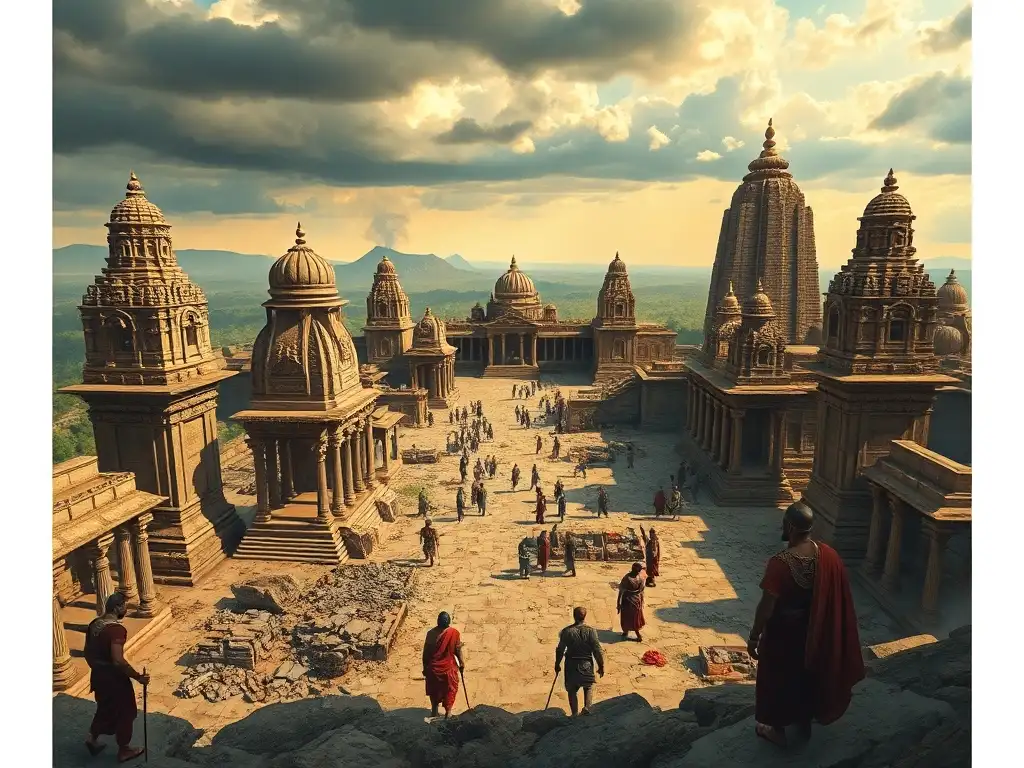
Despite its remarkable achievements, the Gupta Empire eventually faced a decline that marked the end of its Golden Age. Several factors contributed to this downturn, leading to the fragmentation of the empire and the loss of stability.
Factors Leading to the End of the Golden Age
Several interrelated factors precipitated the decline of the Gupta Empire. One of the most significant was the increasing pressure from external invasions, particularly by the Huns in the 5th century CE. These invasions destabilized the empire and weakened its military capabilities, leading to territorial losses.
Internally, the Gupta Empire faced political fragmentation as regional governors began to assert their autonomy, undermining central authority. This lack of cohesion made it difficult for the empire to respond effectively to external threats and manage its vast territories.
Additionally, economic challenges arose due to a decline in trade and agricultural output, which were critical for maintaining the empire’s prosperity. As resources dwindled, the Gupta rulers struggled to support their military and administrative structures, further exacerbating the decline.
Legacy of the Gupta Empire in Subsequent Indian History
The legacy of the Gupta Empire is profound and continues to influence Indian history long after its decline. The cultural, scientific, and artistic advancements made during this period laid the groundwork for future developments in Indian civilization.
The Gupta period is often celebrated for its remarkable contributions to literature, mathematics, and astronomy. Scholars like Aryabhata and Kalidasa emerged during this time, producing works that would shape Indian thought and culture for centuries. The decimal system and the concept of zero, both attributed to Gupta mathematicians, revolutionized mathematics not only in India but across the world.
Moreover, the Gupta Empire's emphasis on art and architecture led to the creation of intricate sculptures and temples that reflected the rich spiritual and cultural life of the time. These artistic traditions would influence subsequent dynasties, perpetuating the Gupta legacy in the realms of art and religion.
The Gupta Empire's Golden Age was characterized by exceptional economic prosperity, significant cultural and intellectual achievements, and a lasting legacy that shaped the trajectory of Indian history.
Conclusion
The Gupta Empire stands as a monumental period in the history of ancient India, often celebrated as the "Golden Age" due to its profound contributions to art, science, literature, and governance. This era not only fostered a climate of creativity and intellectual pursuit but also laid the foundational framework for many facets of modern Indian culture and society. The achievements during this time, including advancements in mathematics, astronomy, and political administration, have had lasting impacts that resonate even today.
Summary of the Gupta Empire's Golden Age Contributions
The contributions of the Gupta Empire span various domains that significantly advanced Indian civilization. Key achievements include:
- Mathematics: The introduction of the concept of zero, the decimal system, and advancements in algebra and geometry.
- Astronomy: Pioneering work by scholars like Aryabhata, who accurately calculated the length of the solar year and proposed heliocentric theories.
- Literature: Flourishing of Sanskrit literature, with notable works such as Kalidasa's plays and the Puranas, which enriched Indian culture and storytelling.
- Art and Architecture: Stunning developments in sculpture and temple architecture, exemplified by the intricate carvings found in places like Khajuraho and Ajanta caves.
- Medicine: Innovations in medical practices and texts, including the compilation of the "Sushruta Samhita," which laid the groundwork for surgical techniques.
These contributions highlight the Gupta Empire's role as a beacon of knowledge and culture, influencing not just India but also neighboring regions.
Reflection on the Importance of Gupta Empire Golden Age History in Understanding Ancient India
Understanding the Gupta Empire's golden age history is crucial for comprehending the evolution of ancient Indian civilization. This period served as a catalyst for cultural, scientific, and philosophical growth, which has been integral to the identity of modern India. The Gupta era exemplifies how governance, patronage of the arts, and intellectual inquiry can foster a thriving society.
By studying this period, we gain insights into the values, beliefs, and innovations that shaped not only India but also the broader historical narrative of human civilization. This understanding prompts a deeper appreciation of the interconnectedness of cultures and the timeless nature of inquiry and creativity.
References
Recommended Reading on Gupta Empire History
- "The Gupta Empire" by R. C. Majumdar: An in-depth exploration of the political, cultural, and economic aspects of the Gupta period.
- "A History of Ancient India: From the Earliest Times to the Sixteenth Century" by R. S. Sharma: Comprehensive coverage of India's ancient history with a focus on the Gupta Empire.
- "The Golden Age of India" by R. C. Sharma: A detailed examination of the artistic and scientific achievements during the Gupta period.
Sources for Further Exploration of Ancient Indian Civilization
- "The Wonder That Was India" by A. L. Basham: A classic text that provides a vivid picture of ancient Indian society, including the Gupta period.
- "Ancient India: Culture and Civilization" by R. K. Sharma: A thorough analysis of cultural developments from the Indus Valley to the Gupta Empire.
- "The History of India" by John Keay: An accessible narrative that covers the entire scope of Indian history, with significant emphasis on the Gupta Empire.
These readings and sources offer valuable perspectives on the Gupta Empire and its contributions, serving as essential tools for anyone interested in delving deeper into the rich history of ancient India.
- Introduction to the Gupta Empire
- Understanding the Golden Age of the Gupta Empire
- Major Contributions of the Gupta Empire
- Political Structure and Governance of the Gupta Empire
- Economic Prosperity During the Gupta Empire
- Trade and Commerce in the Golden Age
- Agricultural Advancements and Their Impact on Society
- The Decline of the Gupta Empire
- Conclusion
- References
Frequently Asked Questions
What was the Gupta Empire known for during its golden age?
The Gupta Empire is renowned for its remarkable achievements in art, science, and literature, marking a period of cultural flourishing and intellectual advancement.
How did the Gupta Empire contribute to mathematics?
During its golden age, the Gupta Empire made significant advancements in mathematics, including the invention of the concept of zero and developments in algebra.
What role did religion play in the Gupta Empire?
Religion, particularly Hinduism, played a crucial role in the Gupta Empire, influencing its art, architecture, and overall cultural identity during the golden age.
Who were some notable figures from the Gupta Empire?
Prominent figures include Kalidasa, a celebrated poet and playwright, and Aryabhata, a pioneering mathematician and astronomer who made groundbreaking contributions during the golden age.
How did the Gupta Empire impact trade and economics?
The Gupta Empire fostered trade by establishing trade routes and promoting commerce, which significantly contributed to its economic prosperity during the golden age.
Final Reflection: Embracing the Legacy of the Gupta Empire's Golden Age
The Gupta Empire's golden age serves as a profound reminder of the heights human civilization can achieve through innovation, culture, and unity. Today, as we navigate an increasingly complex world, the lessons from this remarkable period resonate more than ever. The Gupta Empire exemplifies how a society can flourish when it prioritizes knowledge, art, and collaboration, inspiring us to foster similar values in our own communities.
Cultural and intellectual advancements during the Gupta Empire have left an indelible mark on our world. The achievements in mathematics, astronomy, and literature from this era continue to influence modern thought and innovation. As we reflect on this rich history, we are reminded of the words of the great historian Will Durant: Civilization exists by geological consent, subject to change without notice.
This quote underscores the importance of cherishing and learning from our past, as the foundations laid by the Gupta Empire still shape our understanding of progress today.
As we conclude our exploration of the Gupta Empire's golden age, I invite you to reflect on how the values of knowledge, creativity, and unity can be applied in your own life. Consider how you can contribute to a culture of learning and collaboration in your community, ensuring that the legacy of the Gupta Empire continues to inspire future generations. Together, let us honor this remarkable chapter in history by embodying its principles and striving for a brighter, more enlightened future.
Unveil the Secrets of the Gupta Empire!
Thank you for joining us on this journey through the fascinating world of the Gupta Empire! We hope you feel inspired by the incredible achievements and the cultural richness of this Golden Age. Now it’s time to take the next steps in your exploration and deepen your understanding of this remarkable period in history.
Here are some exciting actions you can take today:
- Dive deeper: Read our detailed articles on Gupta innovations in science and art—expand your historical knowledge!
- Share your insights: Discuss your favorite Gupta facts with friends or on social media using the hashtag #GuptaGoldenAge.
- Join a community: Connect with fellow history enthusiasts in our forums and exchange thoughts on how the Gupta Empire has influenced modern India.
What aspects of the Gupta Empire intrigue you the most, and in what ways do you believe its legacy continues to shape our world today?