
The Indus Valley's Contributions to Mathematics: Understanding Their Numerical System

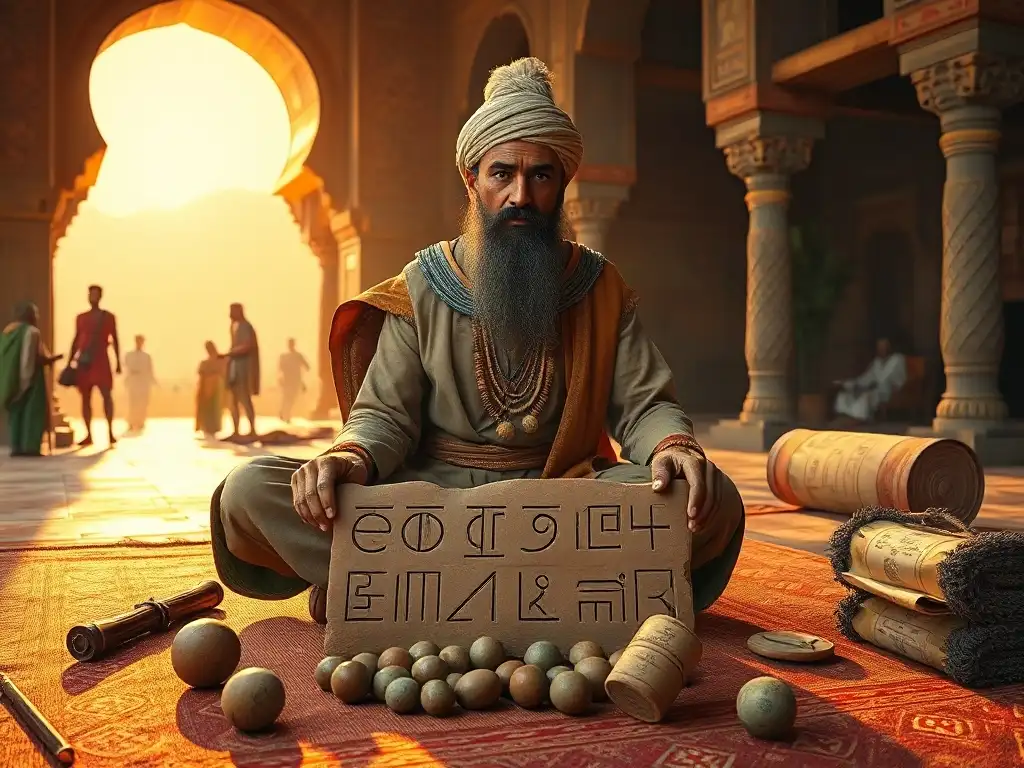
Welcome to Ancient India History, where we embark on a fascinating journey through the rich tapestry of India's past! Delve into the remarkable contributions of the Indus Valley civilization, where innovative minds laid the groundwork for modern mathematics. In our featured article, "The Indus Valley's Contributions to Mathematics: Understanding Their Numerical System," you'll uncover the secrets of their advanced numerical practices and how they shaped the world of mathematics as we know it today. Prepare to be intrigued and inspired as you explore the profound legacy of ancient Indian civilizations that still resonate in our lives!
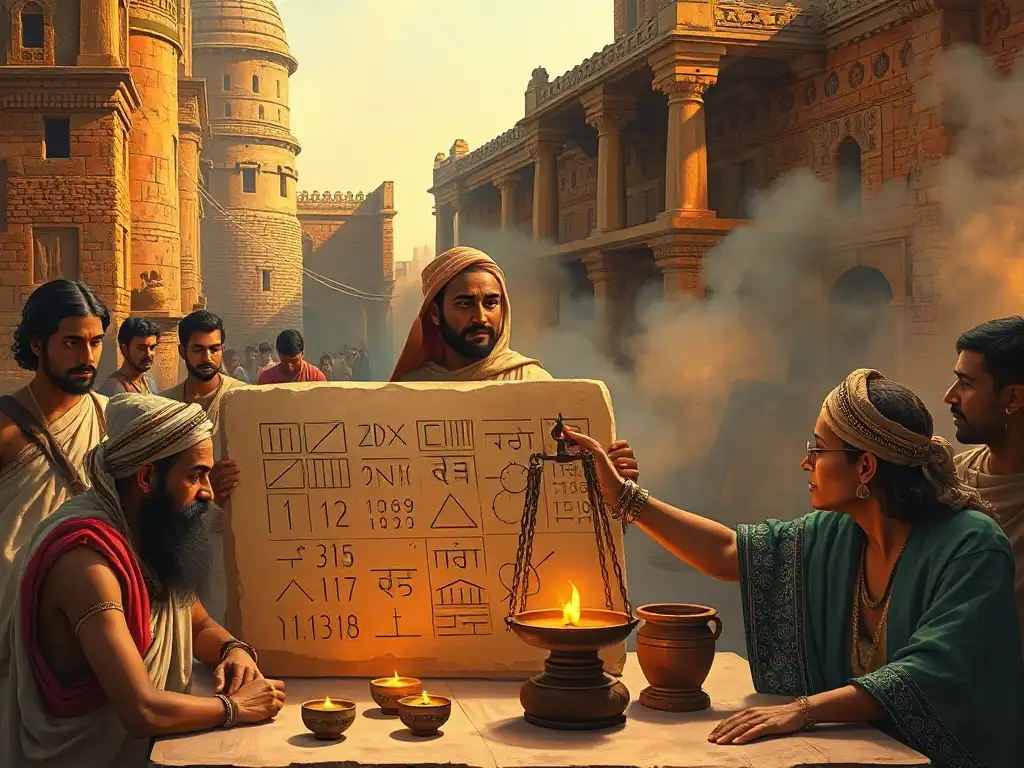
Introduction to Indus Valley Mathematics Contributions
The Indus Valley Civilization, one of the world's earliest urban cultures, flourished around 2500 BCE in what is now modern-day Pakistan and northwest India. This remarkable civilization is renowned for its advanced urban planning, sophisticated drainage systems, and notable trade networks. However, its contributions to mathematics, particularly the development of numerical systems, are often overlooked. Understanding the mathematical achievements of the Indus Valley not only sheds light on the civilization itself but also illustrates the profound impact these early innovations had on subsequent cultures and scientific advancements.
In this article, we will delve into the ways in which the Indus Valley Civilization contributed to mathematics, focusing on their numerical system and its significance. By exploring the foundations laid by this ancient society, we can appreciate their role in shaping mathematical concepts that continue to resonate in modern times.
Overview of the Indus Valley Civilization
The Indus Valley Civilization, also known as the Harappan Civilization, thrived between approximately 3300 BCE and 1300 BCE. Covering a vast area that includes the cities of Harappa, Mohenjo-Daro, and Dholavira, this civilization showcased remarkable achievements in various fields, including architecture, agriculture, and trade.
- Urban Planning: Indus Valley cities were meticulously planned with grid layouts and advanced drainage systems.
- Trade: The civilization engaged in extensive trade with neighboring regions, facilitating cultural exchange and economic prosperity.
- Script and Language: Although the Indus script remains undeciphered, its existence indicates a form of written communication.
The impressive infrastructure and social organization of the Indus Valley Civilization suggest a high level of mathematical understanding, particularly in areas such as measurement and geometry.
Importance of Mathematics in Ancient Civilizations
Mathematics has always been a cornerstone of civilization, serving as a critical tool in various domains such as trade, astronomy, and architecture. For ancient civilizations, including the Indus Valley, mathematics played a vital role in:
- Trade and Commerce: Accurate measurements and calculations were essential for fair trading practices.
- Agriculture: Mathematical concepts aided in the planning of irrigation systems and crop rotations.
- Architecture: Geometry was crucial for constructing buildings and public works, ensuring structural integrity and aesthetic appeal.
Understanding these applications highlights the necessity of mathematical knowledge in the progress and sustainability of ancient societies.
Historical Context of Indus Valley Mathematics
The Timeline of the Indus Valley Civilization
The timeline of the Indus Valley Civilization can be divided into three main phases:
- Early Harappan Phase (3000 - 2600 BCE): Marked by the development of proto-urban settlements and early agricultural practices.
- Mature Harappan Phase (2600 - 1900 BCE): Characterized by urbanization, trade, and significant advancements in technology and mathematics.
- Late Harappan Phase (1900 - 1300 BCE): A period of decline, leading to the eventual disintegration of urban centers.
This timeline provides a context for understanding the evolution of mathematical concepts within the civilization.
Key Discoveries Related to Mathematics
Several archaeological findings have shed light on the mathematical capabilities of the Indus Valley Civilization:
- Weights and Measures: Standardized weights, made from stone, have been discovered, indicating a sophisticated understanding of measurement.
- Seal Inscriptions: The presence of various symbols and possible numerical notations on seals suggests an early form of record-keeping and trade documentation.
- Planning and Geometry: The layout of cities demonstrates the use of geometric principles in urban design, pointing to advanced spatial awareness and planning skills.
These discoveries highlight how the Indus Valley Civilization not only utilized mathematics but also contributed to its development as a discipline, laying the groundwork for future mathematical advancements in subsequent cultures.
The Numerical System of the Indus Valley
The Indus Valley Civilization, known for its advanced urban planning and engineering, also exhibited a sophisticated numerical system that played a crucial role in their society. This system reflected their understanding of mathematics and its application in daily life, trade, and administration. Evidence of this numerical system can be found in various artifacts, including seals, weights, and inscriptions, which provide insights into how the Indus Valley people quantified and organized their world.
Overview of the Indus Valley Numerical System
The numerical system of the Indus Valley is believed to be one of the earliest forms of mathematics used in ancient civilizations. Although the complete understanding of their numerical system remains elusive, scholars have identified that it was likely based on a decimal system. Archaeological findings suggest that the Indus people utilized a combination of symbols to represent numbers, possibly indicating a count system that extended beyond simple enumeration.
The existence of standardized weights and measures supports the idea that the Indus Valley civilization had developed a coherent system for trade and commerce. This numerical system enabled them to conduct transactions efficiently, which was essential for their economy, especially given the extensive trade networks they established with neighboring regions.
Symbols and Their Meanings in Indus Valley Mathematics
The symbols used in the Indus Valley numerical system, primarily found on seals and pottery, are yet to be fully deciphered. However, research indicates that these symbols may represent numbers from one to nine, with additional symbols possibly denoting larger quantities or specific measurements. The symbols exhibit a level of complexity and variety, suggesting a well-thought-out approach to mathematics.
For example, some scholars propose that certain symbols could represent specific weights or measures, reflecting their practical applications in trade. While the exact meanings of many symbols remain a mystery, it is clear that the Indus Valley people had a method of recording numerical information that was integral to their society.
Comparison with Other Ancient Numerical Systems
When comparing the Indus Valley numerical system with other ancient numerical systems, such as those used in Mesopotamia or Egypt, several similarities and differences emerge. Like the Indus Valley, both Mesopotamia and Egypt utilized base-10 systems, but their approaches to notation and calculation varied significantly.
The Indus Valley's reliance on symbols rather than a fully developed written numerical system sets it apart from Mesopotamian cuneiform or Egyptian hieroglyphs, which contained more elaborate numerical representations. Despite these differences, the fundamental need for mathematics in trade, governance, and daily life is a common thread among these ancient civilizations, highlighting the universal significance of mathematical development in human history.
Mathematical Practices in the Indus Valley

The mathematical practices of the Indus Valley civilization extended beyond mere counting. They integrated mathematics into various aspects of their daily life, including urban planning, trade, and construction. The evidence of their mathematical practices showcases a sophisticated understanding of geometry, measurement, and other mathematical concepts.
Geometry and Urban Planning
The cities of the Indus Valley Civilization, such as Harappa and Mohenjo-Daro, exemplify the application of geometric principles in urban planning. The layout of these cities was remarkably organized, featuring grid patterns and well-planned streets that suggest a deep understanding of spatial relationships and geometry.
Archaeological evidence indicates that the Indus Valley people employed precise measurements to construct their buildings and public spaces. The use of standardized bricks and uniform street widths not only demonstrates their knowledge of geometry but also reflects their commitment to creating functional urban environments.
Measurement and Trade Practices
Measurement was a critical component of trade in the Indus Valley civilization. Artifacts such as stone weights and scales reveal that the Indus people had developed a system for measuring goods accurately, which facilitated trade both locally and with distant regions.
The standardization of weights and measures likely played a significant role in the economic stability of the Indus Valley. By ensuring that all parties in a transaction understood the value of goods exchanged, the civilization could maintain a thriving marketplace, further indicating the importance of mathematics in their society.
Evidence of Mathematical Tools and Techniques
Several archaeological discoveries provide evidence of the mathematical tools and techniques used by the Indus Valley civilization. The presence of small weights, measuring rods, and marked stones suggests that they had practical applications for measurement and calculation.
These tools indicate that the Indus Valley people were not only engaged in theoretical mathematics but also applied their knowledge in everyday practices. The use of such tools underscores their innovative approach to mathematics, reflecting a civilization that valued precision and practicality in their mathematical endeavors.
The Indus Valley Civilization's contributions to mathematics, particularly through their numerical system and practices, highlight their advanced understanding of mathematical concepts. Their legacy continues to influence our understanding of ancient mathematics and its role in the development of civilization.
Contributions to Mathematics and Science
The Indus Valley Civilization, which thrived around 2500 BCE, is often celebrated for its advanced urban planning, architecture, and social organization. However, its contributions to mathematics and science are equally significant yet less recognized. Archaeological evidence indicates that the Indus Valley people possessed a sophisticated understanding of mathematics, demonstrated through their use of standardized weights and measures, which facilitated trade and commerce.
Their numerical system appeared to include a base-10 counting framework, which is crucial in the development of mathematics. Evidence of this is found in various seals, inscriptions, and artifacts that suggest they were employing numbers for record-keeping and accounting. Furthermore, the construction of their cities, with precise layouts and drainage systems, implies a strong grasp of geometry and spatial reasoning.
The use of geometry in land surveying and architecture indicates that the Indus Valley civilization had not only a practical application of mathematics but also an abstract understanding of mathematical principles. The remains of their well-planned cities reveal that they applied mathematical concepts to optimize urban living, showcasing their contributions to engineering and technology as well.
Influence on Later Indian Mathematics
The mathematical innovations of the Indus Valley Civilization laid the groundwork for later developments in Indian mathematics. The number system that emerged from this civilization influenced subsequent cultures, including the Vedic and post-Vedic societies. The concepts of zero and the decimal system, which are vital in mathematics today, can trace their lineage back to the numerical practices established during this early civilization.
In particular, the exchange of ideas along trade routes helped the diffusion of mathematical knowledge beyond the Indus Valley, influencing neighboring regions. Texts from later periods, such as the Aryabhatiya by Aryabhata, reflect the growing complexity of mathematical thought that likely evolved from the foundations laid by the Indus Valley mathematicians. This continuity underscores the significance of the Indus Valley in shaping the trajectory of mathematics in India.
The Role of Mathematics in Trade and Economy
Mathematics played a crucial role in the economic activities of the Indus Valley Civilization. The presence of standardized weights and measures suggests that the Indus people engaged in sophisticated trade practices. By employing a uniform system for measuring goods, they were able to facilitate trade both within their own cities and with neighboring regions.
The mathematical skills necessary for accurate accounting and inventory management were essential for the functioning of their economy. Archaeological findings, such as seal inscriptions that likely indicated quantities or prices, further illustrate the application of mathematics in commerce. This reliance on mathematical principles not only enabled efficient trade but also laid the groundwork for economic systems in subsequent Indian civilizations.
Preservation of Knowledge: Indus Valley and Beyond
The mathematical knowledge of the Indus Valley Civilization was not entirely lost despite the decline of the civilization around 1900 BCE. As cultures evolved, many of the mathematical concepts and techniques were absorbed into the broader tapestry of Indian knowledge. The subsequent civilizations, including the Vedic society, inherited and built upon the mathematical foundations established by the Indus Valley.
Additionally, the preservation of mathematical knowledge was facilitated through oral traditions and later written texts. The transition from oral to written forms of mathematics in ancient India helped safeguard these concepts, ensuring that they would inform future generations of mathematicians and scholars. This continuity highlights the resilience of knowledge and its ability to transcend the fall of individual civilizations.
Conclusion: The Legacy of Indus Valley Mathematics Contributions
The contributions of the Indus Valley Civilization to mathematics are profound and far-reaching. Their innovative approaches to numerical systems, trade, and engineering illustrate a civilization that was not only advanced in its time but also pivotal in the evolution of mathematical thought in India and beyond.
Summary of Key Points
- The Indus Valley Civilization developed a sophisticated numerical system, including a base-10 framework.
- Their contributions influenced later Indian mathematics, including the introduction of concepts such as zero and the decimal system.
- Mathematics played a vital role in facilitating trade and economic activities, showcasing practical applications of mathematical principles.
- Knowledge preservation through oral traditions and written texts ensured that the mathematical innovations of the Indus Valley continued to impact future generations.
Final Thoughts on the Impact of Indus Valley Mathematics on Future Civilizations
The mathematical achievements of the Indus Valley Civilization serve as a testament to the ingenuity of ancient cultures. Their legacy resonates in modern mathematics and continues to inspire scholars and researchers. As we explore the rich history of ancient Indian civilizations, it is essential to recognize the Indus Valley's role as a foundational pillar in the development of mathematical knowledge, influencing not only India but also the broader world. The contributions of the Indus Valley Civilization remind us of the interconnected nature of human knowledge and the importance of preserving and building upon the achievements of our ancestors.
- Introduction to Indus Valley Mathematics Contributions
- Historical Context of Indus Valley Mathematics
- The Numerical System of the Indus Valley
- Mathematical Practices in the Indus Valley
- Contributions to Mathematics and Science
- Conclusion: The Legacy of Indus Valley Mathematics Contributions
- What were the key mathematics contributions of the Indus Valley civilization?
- How did the numerical system of the Indus Valley differ from others?
- What evidence exists of the mathematical practices in the Indus Valley?
- Did the Indus Valley civilization influence later mathematical traditions in India?
- How does the study of Indus Valley mathematics help us today?
Frequently Asked Questions
What were the key mathematics contributions of the Indus Valley civilization?
The Indus Valley civilization made significant contributions, particularly in the development of a numerical system that included advanced techniques for measurement and trade.
How did the numerical system of the Indus Valley differ from others?
Their numerical system was unique as it utilized a base-10 system, which facilitated complex calculations and trade, setting a foundation for later mathematical developments.
What evidence exists of the mathematical practices in the Indus Valley?
Archaeological findings, including weights, measures, and clay tablets with possible numerical symbols, provide insight into their mathematical practices and understanding of geometry.
Did the Indus Valley civilization influence later mathematical traditions in India?
Yes, the principles of mathematics established by the Indus Valley likely influenced subsequent civilizations, contributing to the rich mathematical traditions that emerged in ancient India.
How does the study of Indus Valley mathematics help us today?
Studying their mathematics contributions enhances our understanding of the evolution of numerical systems and highlights the essential role of ancient civilizations in shaping modern mathematics.
Final Reflection: The Enduring Legacy of Indus Valley Mathematics
The contributions of the Indus Valley civilization to mathematics are not merely historical footnotes; they resonate profoundly in our contemporary understanding of numerical systems and mathematical principles. As we navigate an increasingly complex world, the foundational concepts established by this ancient civilization remind us of the timeless nature of mathematical inquiry. The sophistication of their numerical system and its applications in trade, architecture, and daily life underscore the essential role that mathematics plays in human progress.
The influence of Indus Valley mathematics extends far beyond its geographical and temporal confines, shaping the cultural and social landscapes of subsequent civilizations. The precision and innovation of their numerical system laid the groundwork for future mathematical advancements, fostering a legacy that continues to inspire scholars and practitioners alike. As we reflect on this rich heritage, we are reminded of the words of mathematician Carl Friedrich Gauss: Mathematics is the queen of the sciences.
This sentiment encapsulates the profound impact that the Indus Valley's contributions have had on the evolution of mathematical thought and its significance in our lives today.
As we contemplate the lessons drawn from the Indus Valley's mathematical achievements, I invite you to reflect on how these ancient insights can inform your own understanding of mathematics and its applications. Consider how the principles of clarity, precision, and innovation can be integrated into your daily life, whether in problem-solving, critical thinking, or creative endeavors.
Embrace the challenge of exploring mathematics not just as a subject, but as a vital tool for navigating the complexities of the modern world. Let the legacy of the Indus Valley inspire you to pursue knowledge with curiosity and determination, ensuring that their contributions continue to illuminate our paths forward.
Uncover the Secrets of Ancient Mathematics!
Thank you for diving into the fascinating world of the Indus Valley's contributions to mathematics! You've gained valuable insights into their unique numerical system and its significance. Now, it's time to take that knowledge further.
Here are some actionable steps you can take right now:
- Explore the rich history of various ancient civilizations and their mathematical advancements— you might be surprised by the discoveries awaiting you!
- Share this article with friends or fellow history enthusiasts so they can appreciate the brilliance of the Indus Valley as well!
- Join our online community to engage in discussions about ancient mathematical systems and their relevance in today's world.
What aspect of the Indus Valley's numerical system intrigues you the most, and how do you think it compares to modern mathematical practices?