
From Local to Imperial: Understanding the Administrative Hierarchy of the Maurya Empire


Welcome to Ancient India History, where we delve into the rich tapestry of civilizations that have shaped the Indian subcontinent. Today, we invite you to explore the intricate administrative structure of the Maurya Empire, a pivotal force that transformed local governance into an imperial framework. What secrets lie within the hierarchical systems that governed one of history's greatest empires? Join us as we unfold the layers of this fascinating topic and uncover how the Maurya Empire's innovations in administration laid the groundwork for future civilizations. Your journey through the annals of ancient Indian history starts now!

Introduction to the Administrative Structure of the Maurya Empire
The administrative structure of the Maurya Empire stands as a testament to the sophistication and effectiveness of governance in ancient India. Spanning from approximately 322 BCE to 185 BCE, the Maurya Empire was a vast and influential empire that marked a significant period in Indian history.
Understanding its administrative hierarchy not only sheds light on the governance of one of the largest empires in the ancient world but also highlights the innovations that shaped the political landscape of the time. The Mauryan administration was characterized by a well-defined structure that ensured effective control over its extensive territories, allowing for both local governance and imperial oversight.
Through this exploration, we will delve into the intricacies of the Maurya Empire's administrative framework, examining how local administrations functioned within the larger imperial context. The insights gained from this analysis will contribute to our understanding of the political organization of ancient civilizations and their enduring legacies.
Overview of the Maurya Empire
The Maurya Empire emerged in the wake of the Nanda Dynasty and reached its zenith under the leadership of Ashoka the Great, who is renowned for his promotion of Buddhism and the spread of its principles throughout Asia. At its height, the empire encompassed a vast region that included modern-day India, Pakistan, and parts of Afghanistan and Bangladesh. The Maurya Empire's capital, Pataliputra, served as a political and cultural hub, symbolizing the empire's grandeur and administrative prowess.
The Mauryan administration was notable for its bureaucratic efficiency, which enabled the central authority to maintain control over diverse populations and vast territories. The empire's strategic organization allowed for effective communication and resource management, ensuring that local leaders could implement imperial policies while addressing the unique needs of their communities.
Importance of Administrative Hierarchy in Ancient Civilizations
The concept of an administrative hierarchy is fundamental to understanding how ancient civilizations maintained order and governance. In the case of the Maurya Empire, a well-structured administrative system was essential for:
- Centralized Control: Ensuring that imperial decrees were carried out efficiently across vast distances.
- Resource Management: Facilitating the collection of taxes, allocation of land, and distribution of resources to support local economies.
- Conflict Resolution: Providing a framework for addressing disputes and maintaining law and order within diverse cultural and social contexts.
By analyzing the administrative hierarchy of the Maurya Empire, we can better appreciate how ancient Indian civilizations managed complexity and diversity, laying the groundwork for future governance models.
The Foundation of the Maurya Empire's Administrative Structure
The Role of Chandragupta Maurya in Establishing Governance
Chandragupta Maurya, the founder of the Maurya Empire, played a pivotal role in establishing a strong governance framework. His strategic alliances and military conquests laid the foundation for a unified state, but it was his administrative reforms that truly defined the empire's success. Chandragupta recognized the importance of a structured bureaucracy and employed skilled officials to oversee various departments, including finance, agriculture, and law enforcement.
His advisor, Kautilya (Chanakya), authored the Arthashastra, a seminal text that outlined principles of governance, economic policy, and military strategy. This work provided a comprehensive guide to maintaining order and efficiency, emphasizing the need for a robust administrative structure that could respond to the challenges of governance.
Influences from Predecessors: Nanda Dynasty and Others
The administrative framework of the Maurya Empire was not developed in isolation; it drew inspiration from previous dynasties, particularly the Nanda Dynasty, which preceded the Mauryas. The Nandas established a centralized administration that was marked by a focus on taxation and resource management. The Mauryas inherited and refined these systems, incorporating innovative strategies to enhance governance.
Furthermore, the Maurya Empire was influenced by other regional powers and cultures, including practices from the Persian Empire and local tribal governance. This blending of ideas allowed the Mauryan administration to adapt and thrive in a multicultural environment, showcasing the empire's ability to integrate diverse administrative practices into a cohesive structure.
Hierarchical Levels in the Administrative Structure of the Maurya Empire
The administrative structure of the Maurya Empire was meticulously organized into several hierarchical levels, each responsible for different aspects of governance. This layered approach facilitated effective management across the vast territories of the empire, enabling the central authority to maintain control over distant provinces and localities. The three primary levels of administration included the imperial level, provincial level, and local level. Each of these levels played a crucial role in ensuring the smooth functioning of the empire, allowing for both centralized decision-making and localized governance.
The Imperial Level: The Emperor and His Authority
At the apex of the administrative hierarchy was the Emperor, who wielded supreme authority over the Maurya Empire. Chandragupta Maurya, the founder of the dynasty, and his grandson Ashoka, are notable emperors who exemplified the absolute power of this position. The Emperor was not only a political leader but also considered a divine figure, embodying the moral and ethical standards of the empire. His primary responsibilities included formulating policies, overseeing military campaigns, and ensuring the welfare of his subjects.
The Emperor's authority was supported by a council of ministers, known as the Mantriparishad, which advised him on various matters, ranging from statecraft to military strategy. This council enabled the Emperor to make informed decisions, balancing his personal judgment with expert opinions. Furthermore, the Emperor's edicts were disseminated throughout the empire, reinforcing his authority and ensuring compliance among both officials and citizens.
The Provincial Level: Governors and Their Responsibilities
Beneath the Emperor were the provincial governors, known as Uparikas, who were appointed to oversee different regions of the empire. Each governor was tasked with implementing the Emperor's policies, collecting taxes, and maintaining law and order within their jurisdiction. The provinces were often vast and diverse, requiring governors to possess a deep understanding of local customs and practices.
In addition to administrative duties, governors were responsible for addressing the grievances of the populace and fostering economic development. They worked closely with local officials and village assemblies to ensure that the needs of the people were met. Importantly, the governors also acted as a vital link between the central authority and the local populace, facilitating communication and ensuring that the Emperor's directives were effectively executed.
The Local Level: Village Assemblies and Local Governance
At the grassroots level, the Maurya Empire featured a robust local governance system centered around village assemblies, known as Sabhas. These assemblies were composed of local leaders and citizens, allowing for participatory governance. The Sabhas played a crucial role in addressing local issues, managing communal resources, and implementing agricultural policies.
Local governance was essential for maintaining stability and ensuring that the needs of the population were met. Decisions regarding land disputes, taxation, and local law enforcement were managed by these assemblies, which provided a platform for villagers to voice their concerns and participate in the decision-making process. This structure not only empowered local communities but also fostered loyalty to the empire, as citizens felt their voices were heard.
Key Features of the Administrative Structure of the Maurya Empire
The administrative structure of the Maurya Empire was characterized by several key features that contributed to its efficiency and effectiveness. Understanding these features provides insight into how the empire managed its vast territories and diverse populations.
Centralized vs. Decentralized Administration
The Maurya Empire employed a unique blend of centralized and decentralized administration. While the Emperor held ultimate authority, the delegation of responsibilities to provincial governors allowed for localized governance and adaptability to regional needs. This balance enabled the empire to maintain control over distant territories without overwhelming the central government with micromanagement.
Decentralization was particularly important in a vast empire like Maurya, as it facilitated faster decision-making and responsiveness to local issues. Governors had the autonomy to manage their provinces while still being accountable to the Emperor, ensuring that imperial interests were upheld.
The Use of Bureaucracy in the Maurya Empire
A hallmark of the Maurya Empire's administrative structure was its sophisticated bureaucracy. The empire employed a vast network of officials and clerks who managed various administrative tasks, from tax collection to maintaining public records. This bureaucratic system ensured that the empire could function efficiently, even amid its expansive territory.
The bureaucratic framework was characterized by specialized departments, each focusing on key areas such as finance, military, and public works. This specialization allowed for increased efficiency and accountability, as officials were trained to handle specific administrative functions. The use of written records and documentation further enhanced the effectiveness of governance, providing a clear trail for decision-making and resource allocation.
The Role of Spies and Informants in Governance
An essential aspect of the Maurya Empire's governance was the extensive use of spies and informants, known as Dandakas. The Emperor and his advisors relied on this network to gather intelligence about political, social, and economic conditions throughout the empire. Spies were instrumental in monitoring the activities of governors, local leaders, and even the general populace.
This system of surveillance allowed the central authority to remain informed about potential dissent, uprisings, or administrative inefficiencies. By maintaining a watchful eye over the empire, the Maurya rulers could take proactive measures to prevent unrest and ensure the stability of their vast domain. The use of spies not only contributed to governance but also instilled a sense of fear among potential adversaries, reinforcing the Emperor's authority.
Administrative Divisions within the Maurya Empire
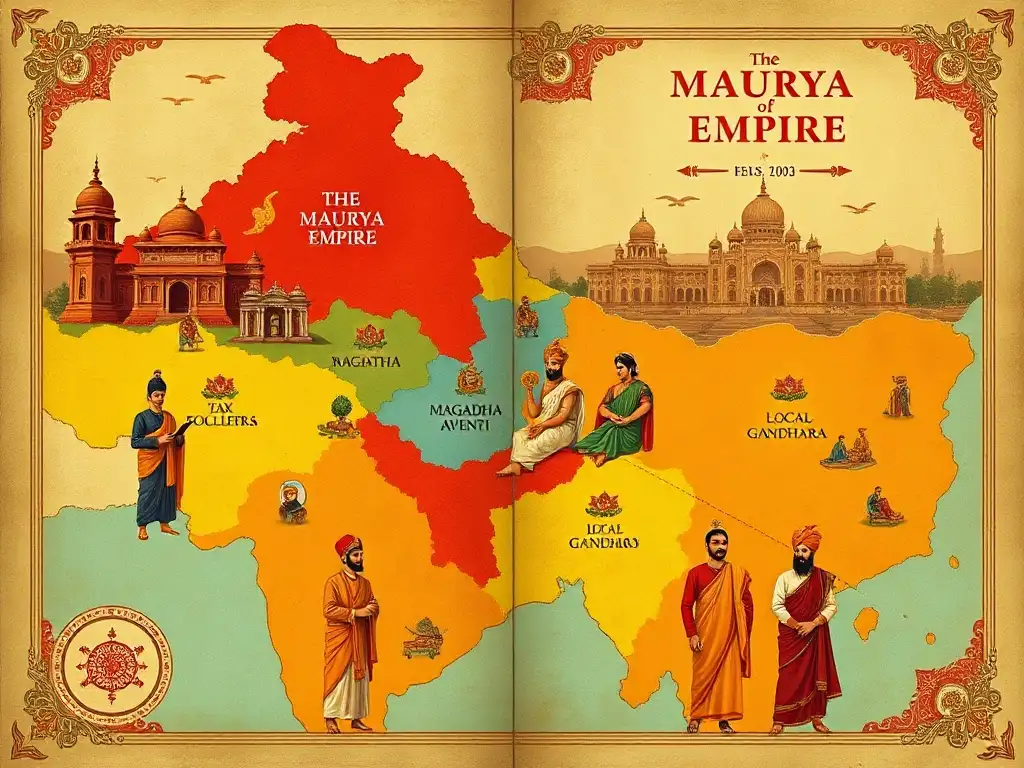
The Maurya Empire, one of the largest and most influential empires in ancient India, established a complex administrative structure that played a crucial role in managing its vast territories. The empire was divided into several administrative divisions, ranging from the central authority established in Pataliputra to various provinces (Mahajanapadas) and districts. This hierarchical system facilitated governance, tax collection, law enforcement, and the implementation of policies across diverse regions, each with its own unique cultural and societal characteristics.
Overview of Provincial Administration
At the helm of the administrative hierarchy was the emperor, who wielded supreme authority. Below the emperor were the provincial governors (Mahamatras or Kumara), responsible for overseeing large regions called provinces. Each province was further subdivided into districts (Janapadas) and smaller administrative units. This layered governance model ensured efficient administration, allowing local leaders to address specific regional issues while adhering to the central policies dictated by the emperor.
The provincial governors were typically members of the royal family or trusted officials who had demonstrated loyalty and capability. They were tasked with maintaining law and order, collecting taxes, and implementing the emperor's decrees. This decentralized approach not only aided in the swift management of the empire's affairs but also helped in fostering a sense of local governance, which was essential given the diverse cultures and languages within the empire.
Major Provinces: Taxila, Ujjain, and Pataliputra
The Maurya Empire comprised several significant provinces, of which Taxila, Ujjain, and Pataliputra were the most prominent:
- Taxila: Located at the crossroads of trade routes, Taxila was not only a vital administrative center but also a hub of learning and culture. It played a crucial role in trade and commerce, contributing significantly to the treasury of the Maurya Empire.
- Ujjain: Another pivotal province, Ujjain, served as a major trading center and was strategically important due to its location. It was known for its astronomical observatories and was a center for cultural and religious activities, which helped in stabilizing the administration through local alliances.
- Pataliputra: As the capital of the Maurya Empire, Pataliputra was the political heart of the empire. It was a well-planned city and a melting pot of various cultures, serving as the main administrative center where major decisions were made, and policies were formulated.
Each of these provinces had unique characteristics and contributed differently to the empire's stability and prosperity, showcasing the Maurya Empire's ability to manage diverse regions effectively.
Districts and Local Governance: Their Function and Importance
The administrative efficiency of the Maurya Empire can be attributed significantly to its district-level governance. Each district, known as a Janapada, was headed by an officer known as a Pradesika or Dharmadhikrita, who was responsible for local administration.
Functions of District Governance:
- Tax Collection: Local officers were tasked with collecting taxes from the populace, which were essential for maintaining the empire's economy.
- Law Enforcement: They ensured the enforcement of laws and maintained peace within their jurisdictions, addressing local disputes and crimes.
- Public Welfare: Officers also oversaw infrastructure projects, including roads and irrigation, and were responsible for the welfare of the citizens, ensuring the basic needs of the populace were met.
The importance of local governance in the Maurya Empire cannot be overstated. It allowed for responsive administration that could adapt to the needs of individual communities, fostering loyalty among the populace and enhancing the overall stability of the empire.
The Role of Religion and Culture in the Administrative Framework
Religion and culture played a significant role in shaping the administrative framework of the Maurya Empire. The empire's policies often reflected the prevailing religious beliefs, particularly Buddhism, which influenced various aspects of governance and societal norms.
Influence of Buddhism on Governance and Administration
Buddhism, which gained prominence during the reign of Emperor Ashoka, had a profound impact on the Maurya administrative structure. Ashoka's embrace of Buddhist principles led to the incorporation of moral and ethical considerations into governance.
- Dhamma: The concept of Dhamma became central to governance, promoting non-violence, tolerance, and welfare for all beings. This moral framework guided officials in their duties and interactions with the populace.
- Public Inscription: Ashoka’s edicts, inscribed on pillars and rocks, communicated his governance philosophy, emphasizing justice, moral conduct, and the welfare of the people, establishing a direct connection between religious principles and administrative policies.
This integration of Buddhist ideals not only strengthened the legitimacy of the Maurya rule but also provided a cohesive framework for governance that resonated with the diverse population of the empire.
The Impact of Religion on Law and Order in the Maurya Empire
Religion significantly influenced law and order within the Maurya Empire. The integration of religious values into the legal system fostered a sense of moral responsibility among officials and citizens alike.
- Legal Codes: The Mauryan legal codes were often influenced by religious texts, promoting ethical conduct and social harmony. This helped in reducing crime rates and maintaining order.
- Conflict Resolution: Religious leaders often played a role in mediating disputes, reinforcing the importance of ethical behavior and community cohesion.
The emphasis on moral governance derived from religious teachings contributed to the stability of the Maurya Empire, ensuring that law and order were upheld in a manner that aligned with the cultural and spiritual values of its citizens.
Challenges Faced by the Administrative Structure of the Maurya Empire
The administrative structure of the Maurya Empire, while sophisticated and effective for its time, encountered several significant challenges that threatened its stability and efficiency. These challenges can be broadly categorized into internal struggles, such as rebellions and resistance from various factions within the empire, and external threats, including invasions and the need for strategic military responses to safeguard the empire's vast territories.
Internal Struggles: Rebellions and Resistance
Internally, the Maurya Empire faced numerous rebellions and resistance movements, primarily from local rulers and powerful clans that had been subdued during the initial conquests. These groups often resented the centralized authority imposed by the Mauryan administration and sought to reclaim their autonomy. Notable instances include:
- Regional Uprisings: Various regions, especially in the fringes of the empire like the Deccan Plateau and the northwestern territories, experienced uprisings led by local chieftains who resisted Mauryan control.
- Challenges to Authority: The centralized governance model sometimes alienated local populations, leading to dissent. The imposition of taxes and strict regulations often fueled resentment and sparked protests.
- Political Assassinations: Internal power struggles occasionally resulted in political assassinations, which destabilized local governance and disrupted the administrative framework.
These internal challenges required the Mauryan administration to adapt its strategies, employing a combination of military might and diplomatic negotiations to quell unrest and maintain control over its territories.
External Threats: Invasions and Strategic Responses
The Maurya Empire also faced significant external threats that tested its administrative structure and military capabilities. The empire's vast borders made it vulnerable to invasions from neighboring regions and nomadic tribes. Key challenges included:
- Invasions from the North-West: The most notable external threat came from the Greco-Bactrian invaders and later from the Scythians, who posed serious challenges to Mauryan sovereignty in the northwestern regions.
- Diplomatic Alliances: To counter such invasions, the Mauryan administration often resorted to forming strategic alliances with neighboring kingdoms, which sometimes helped in repelling invasions or mitigating their impacts.
- Military Reforms: Faced with external threats, the Mauryan Empire undertook military reforms to enhance its defensive capabilities. This included improvements in logistics, fortification of borders, and the establishment of a standing army capable of rapid mobilization.
These challenges necessitated a flexible administrative approach, allowing the Mauryan Empire to adapt to changing circumstances while striving to maintain its territorial integrity.
Legacy of the Administrative Structure of the Maurya Empire

The administrative structure of the Maurya Empire left a profound legacy that influenced both contemporary governance and future Indian dynasties. Its innovative approaches to administration and governance served as a model for subsequent empires.
Influence on Subsequent Indian Dynasties and Empires
The Maurya Empire's administrative practices established a foundation that many subsequent dynasties and empires would emulate. Key influences include:
- Centralized Administration: The emphasis on a centralized governance model became a hallmark of later Indian empires, including the Gupta Empire, which adopted similar administrative techniques to manage their territories effectively.
- Bureaucratic Framework: The Mauryan bureaucracy, characterized by its division into various departments and roles, influenced the administrative systems of future rulers, promoting efficiency and accountability in governance.
- Legal Codes and Taxation: The development of legal codes and taxation systems during the Maurya period set precedents that would be refined and expanded upon in later Indian states.
The Maurya Empire's administrative legacy can be seen in the organizational structures of these later dynasties, emphasizing the importance of a well-functioning state apparatus.
The Significance of Mauryan Administration in Modern Governance
The Mauryan administrative structure also holds relevance in the context of modern governance. Its principles can be observed in contemporary administrative practices in various ways:
- Decentralization vs. Centralization: The historical debate on the balance between centralized authority and local autonomy, as practiced by the Mauryan Empire, continues to inform modern governance discussions, particularly in multi-ethnic and multi-regional states.
- Administrative Efficiency: The Mauryan focus on an efficient bureaucratic system is echoed in modern administrative reforms aimed at improving public service delivery and enhancing accountability.
- Legal Frameworks: The establishment of comprehensive legal frameworks during the Maurya period can be seen as a precursor to modern legal systems, emphasizing the rule of law and structured governance.
The Maurya Empire's administrative structure not only shaped its own political landscape but also laid the groundwork for future governance systems in India and beyond. Its legacy continues to resonate in discussions about effective administration and governance practices today.
Conclusion: The Impact of the Administrative Structure on the Maurya Empire's Success
The administrative structure of the Maurya Empire was a pivotal factor in its ability to maintain control over a vast and diverse territory. The comprehensive system of governance allowed for efficient management of resources, law enforcement, and tax collection, which in turn facilitated economic stability and growth. By employing a well-defined hierarchy, the Mauryan administration was able to implement policies effectively across different regions, ensuring that local needs were met while maintaining central authority.
The integration of various provinces under a unified administration fostered a sense of cohesion among the diverse populations of the empire. This was crucial not only for maintaining peace and order but also for promoting trade and cultural exchange. The use of a bureaucracy staffed by skilled officials ensured that administrative tasks were executed efficiently, further solidifying the empire's strength. Ultimately, the Maurya Empire’s success can be attributed to its robust administrative structure, which laid the foundation for governance that balanced local autonomy with imperial oversight.
Summary of Key Points
- The Maurya Empire's administrative structure was hierarchical and centralized, facilitating effective governance across its vast territory.
- A network of provincial governors (known as Mahamatras) allowed for localized administration while still adhering to the emperor's directives.
- The emphasis on meritocracy in appointments helped maintain a skilled bureaucracy, crucial for the empire’s economic and political stability.
- Economic policies, including taxation and trade regulation, were managed effectively through this structured approach, contributing to the empire's prosperity.
- The integration of diverse cultures and communities under a single administrative framework promoted unity and social cohesion.
Final Thoughts on the Administrative Hierarchy and Its Importance in Ancient India
The administrative hierarchy of the Maurya Empire serves as a significant case study in the political organization of ancient civilizations. Its effectiveness in managing a large and culturally diverse empire has provided valuable lessons in governance that resonate even in contemporary contexts. The Maurya model illustrates how a structured approach to administration can yield stability, promote economic development, and enhance social cohesion among varied populations. As historians and scholars continue to explore the intricacies of the Mauryan political structure, the legacy of its administrative practices remains a vital part of understanding ancient Indian history.
References
Suggested Readings on the Maurya Empire's Political Structure
- "The Maurya Empire: A Political History": by R.S. Sharma - This book provides an in-depth analysis of the political dynamics and administrative practices of the Maurya Empire.
- "The Arthashastra" by Kautilya - An essential text that outlines political philosophy and administrative strategies during the Maurya period.
- "The History of Ancient India" by Upinder Singh - A comprehensive examination of India’s ancient history with a focus on the Maurya Empire's governance.
Important Historical Texts Related to Mauryan Administration
- "Ashoka: The Search for Truth": by Charles Allen - A detailed account of Emperor Ashoka's reign and his administrative policies that shaped the Maurya Empire.
- "The Edicts of Ashoka" - A collection of inscriptions that provide insight into the moral and administrative standards upheld during Ashoka's rule.
- "Kautilya's Arthashastra" - A foundational text on ancient Indian statecraft that discusses administration, economics, and military strategy within the Mauryan context.
- Introduction to the Administrative Structure of the Maurya Empire
- The Foundation of the Maurya Empire's Administrative Structure
- Hierarchical Levels in the Administrative Structure of the Maurya Empire
- Key Features of the Administrative Structure of the Maurya Empire
- Administrative Divisions within the Maurya Empire
- The Role of Religion and Culture in the Administrative Framework
- Challenges Faced by the Administrative Structure of the Maurya Empire
- Legacy of the Administrative Structure of the Maurya Empire
- Conclusion: The Impact of the Administrative Structure on the Maurya Empire's Success
- References
- What was the administrative structure of the Maurya Empire?
- Who were the key figures in the Maurya Empire's administration?
- How did the Maurya Empire ensure effective governance?
- What role did the spies and informants play in the Maurya administration?
- How did the administrative practices of the Maurya Empire influence later Indian states?
Frequently Asked Questions
What was the administrative structure of the Maurya Empire?
The administrative structure of the Maurya Empire was highly organized, featuring a centralized government led by the emperor and supported by various officials who managed local provinces.
Who were the key figures in the Maurya Empire's administration?
Key figures included the Chandragupta Maurya, the founder, and his advisor Kautilya, who outlined effective governance strategies in the Arthashastra, emphasizing bureaucratic efficiency.
How did the Maurya Empire ensure effective governance?
The Maurya Empire implemented a system of provinces and local governors, allowing for localized administration while maintaining strong control from the central authority, ensuring effective governance across vast territories.
What role did the spies and informants play in the Maurya administration?
Spies and informants were crucial for maintaining order and gathering intelligence, enabling the Maurya rulers to make informed decisions and efficiently manage their vast empire.
How did the administrative practices of the Maurya Empire influence later Indian states?
The administrative practices of the Maurya Empire set a precedent for future Indian states, emphasizing centralized control, bureaucratic organization, and the importance of local governance, which influenced subsequent dynasties.
Final Reflection: The Enduring Legacy of the Maurya Empire's Administrative Structure
The administrative structure of the Maurya Empire serves as a powerful reminder of how effective governance can shape societies and influence civilizations. In today’s world, where we often grapple with issues of governance and administration, the lessons from the Maurya Empire resonate profoundly. The intricate hierarchy and organization that characterized this ancient empire not only facilitated its vast expansion but also laid the groundwork for future administrative systems. The Maurya Empire exemplifies how a well-structured administration can lead to stability and prosperity, a lesson that remains relevant in our contemporary political landscape.
The influence of the Maurya Empire's administrative structure is still felt in various cultural and social contexts today. Understanding the complexities of governance is essential for fostering effective leadership and community engagement. The principles of accountability, organization, and strategic planning that were evident in the Maurya Empire continue to inspire modern governance models. As Mahatma Gandhi once said, “The best way to find yourself is to lose yourself in the service of others.” This quote encapsulates the essence of leadership that the Maurya Empire exemplified, where the rulers were expected to serve their subjects and maintain order and justice.
As we reflect on the administrative structure of the Maurya Empire, let us consider how we can apply these lessons in our own lives and communities. Take a moment to think about how effective organization and leadership can impact your surroundings. Whether in our personal endeavors, workplaces, or civic responsibilities, we have the power to implement structured approaches that promote harmony and efficiency. Embrace the legacy of the Maurya Empire by striving for excellence in your own administrative practices, fostering a sense of responsibility, and contributing positively to the world around you.
Dive Deeper into the Legacy of the Maurya Empire!
Thank you for exploring the fascinating world of the Maurya Empire with us! We hope you gained insight into its intricate administrative hierarchy and its lasting impact on ancient governance. Now, it's time to take your curiosity further and uncover even more historical treasures.
Here are a few suggestions to continue your journey:
- Join our community: Subscribe to our newsletter for exclusive articles and insights on ancient Indian history that you won't find anywhere else.
- Share your newfound knowledge: Discuss what intrigued you most about the Maurya Empire with friends or on social media to spark engaging conversations.
- Explore further: Check out related articles on the dynasties and cultural influences of ancient India to broaden your understanding of this rich history.
What aspect of the Maurya Empire’s administration do you find most relevant to contemporary governance?