
The Concept of Sovereignty in the Maurya Empire: A Historical Analysis

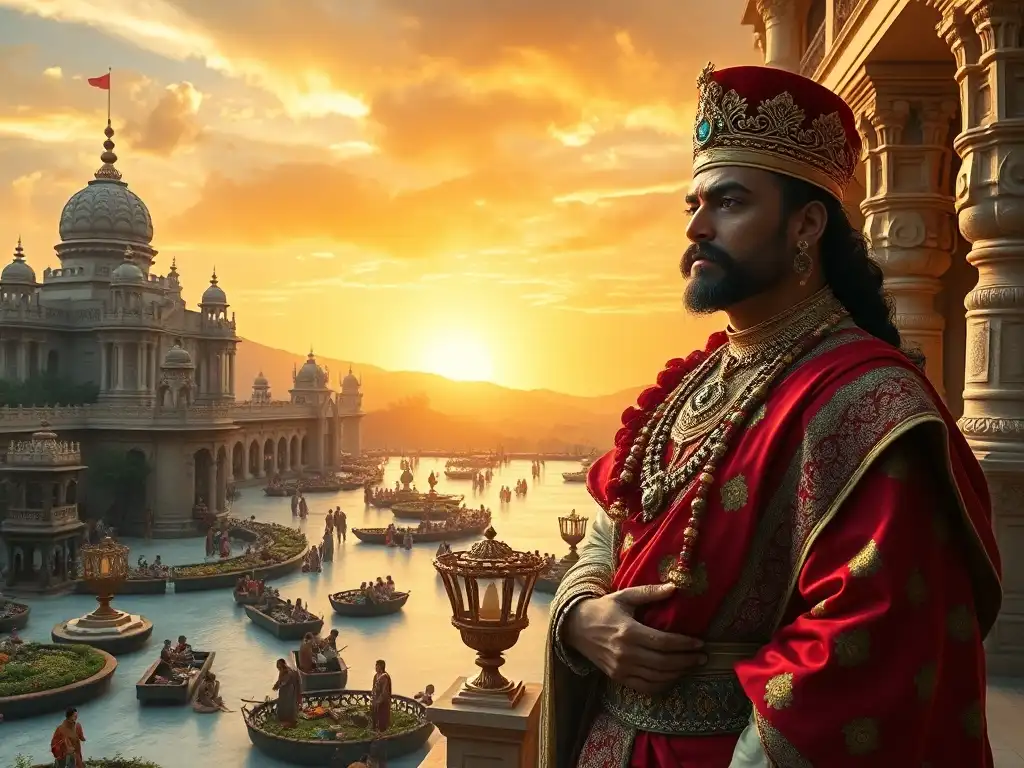
Welcome to Ancient India History, where we embark on a fascinating journey through the rich tapestry of ancient Indian civilizations! From the enigmatic Indus Valley to the illustrious Gupta Empire, our exploration unveils the remarkable contributions and cultural depths of this vibrant past. In our featured article, "The Concept of Sovereignty in the Maurya Empire: A Historical Analysis," we delve into the intricate nature of governance and power that defined one of the most significant empires in history.
What did sovereignty truly mean in the context of Maurya rule? Join us as we unravel the complexities of this pivotal era and discover the legacies that continue to shape our world today. Your adventure into the heart of ancient India awaits!
Introduction to Sovereignty in the Maurya Empire
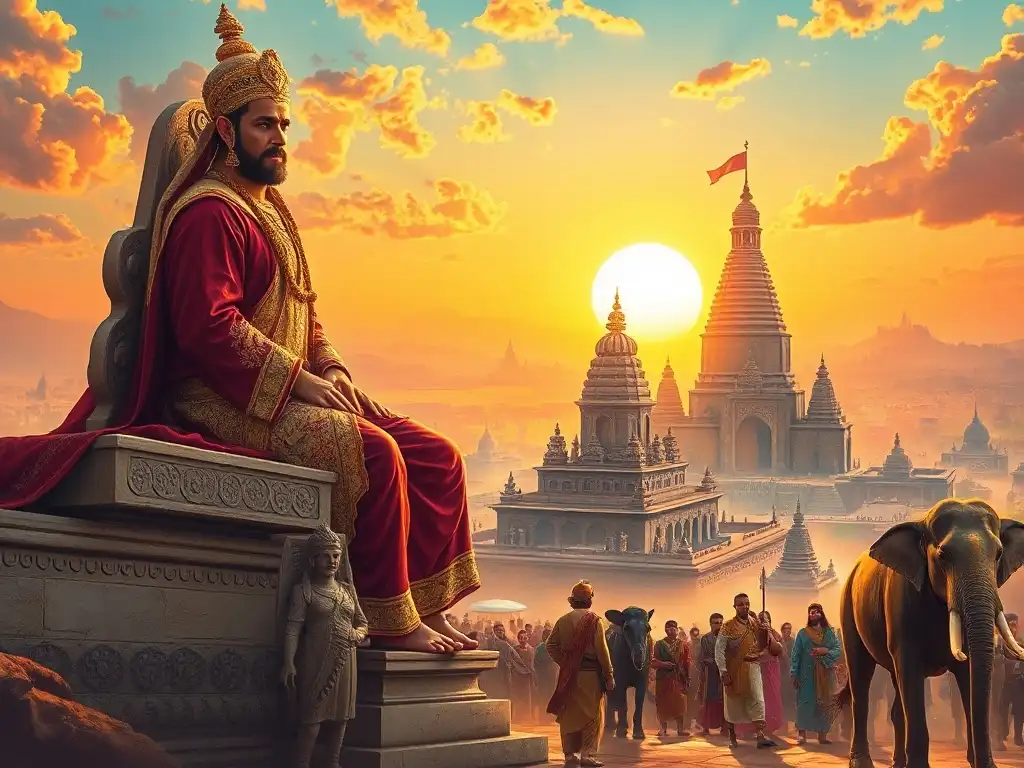
The concept of sovereignty in the Maurya Empire holds a significant place in the study of ancient Indian governance, reflecting the intricate dynamics of power, authority, and administration during one of the subcontinent's most influential civilizations. As a political entity that flourished from approximately 322 BCE to 185 BCE, the Maurya Empire not only unified a vast territory but also established a framework of governance that influenced subsequent Indian states.
This article aims to delve into the multifaceted aspects of sovereignty within the Maurya Empire, exploring how it was defined, its historical importance, and the key figures who shaped its evolution.
Definition of Sovereignty in Historical Context
Sovereignty, in the context of the Maurya Empire, can be understood as the supreme authority and power exercised by a ruler or governing body over a defined territory. It encompasses both the legal and political dimensions of authority, which were crucial for maintaining order and facilitating governance in a diverse and vast empire. The Mauryan rulers, particularly Chandragupta Maurya and his grandson Ashoka, exemplified this concept through their centralized control and administrative innovations.
Key elements of sovereignty in this historical framework include:
- Centralized Power: The concentration of authority in the hands of the emperor, ensuring efficient governance and policy implementation.
- Legal Authority: The establishment of laws and regulations that governed the populace, reflecting the ruler's sovereignty.
- Military Control: The ability to maintain a standing army for defense and enforcement of the ruler's decree.
Importance of Sovereignty in Ancient Indian Governance
Understanding sovereignty in the Maurya Empire is essential for several reasons:
- Political Stability: Sovereignty enabled the Mauryan rulers to maintain control over diverse populations and regions, fostering political stability throughout the empire.
- Cultural Integration: The exercise of sovereign authority facilitated the integration of various cultures and traditions under a unified administrative framework, promoting a sense of identity among subjects.
- Administrative Innovations: The Mauryan approach to sovereignty led to significant advancements in administrative practices, including the establishment of a bureaucratic system that influenced future governance in India.
Historical Background of the Maurya Empire
The Maurya Empire emerged as a dominant force in ancient India, characterized by its impressive territorial expansion and sophisticated governance mechanisms. To fully appreciate the concept of sovereignty within this context, it is essential to examine the historical backdrop that set the stage for its rise.
The Rise of the Maurya Empire
The Maurya Empire began with the unification of various regional states under Chandragupta Maurya around 322 BCE. This unification was marked by military conquests and strategic alliances, allowing the Mauryas to establish a vast empire that stretched from modern-day Afghanistan to Bengal. The establishment of a centralized authority was crucial in asserting sovereignty over this expansive territory.
Key Figures Influencing Sovereignty: Chandragupta Maurya and Ashoka
Two pivotal figures in the Maurya Empire's history were Chandragupta Maurya and his grandson Ashoka. Chandragupta's approach to governance laid the groundwork for a centralized system that emphasized strong sovereign authority. In contrast, Ashoka's reign marked a transformative phase where the concept of sovereignty was intertwined with moral governance, promoting the welfare of his subjects and the spread of Buddhism.
- Chandragupta Maurya: Initiated the establishment of a centralized state, employing effective military and administrative strategies to consolidate power.
- Ashoka: Known for his edicts promoting non-violence and ethical governance, he redefined sovereignty to include the welfare of the people as a central aspect of rulership.
Geopolitical Landscape of Ancient India
The geopolitical landscape during the Maurya Empire was complex, characterized by interactions with various kingdoms, tribes, and external powers. The ability of the Mauryan rulers to assert sovereignty in this dynamic environment was pivotal to their success. The empire's strategic location along trade routes and its proximity to influential regions such as Persia and the Hellenistic world further enhanced its significance in ancient geopolitics.
The concept of sovereignty in the Maurya Empire is a rich field of study that reflects the interplay of authority, governance, and cultural integration. By examining the historical context and key figures, we can gain a deeper understanding of how sovereignty shaped one of ancient India's most remarkable civilizations.
Theoretical Framework of Sovereignty in the Maurya Empire
The concept of sovereignty in the Maurya Empire is deeply intertwined with its administrative and philosophical foundations. The Maurya Empire, which flourished from the 4th to the 2nd century BCE, established a sophisticated system of governance that emphasized the centralization of power and the moral responsibilities of rulers. This theoretical framework of sovereignty was not merely about authority; it encompassed the ethical obligations of the sovereign towards the state and its citizens, creating a unique blend of political and moral governance.
The Mauryan rulers, particularly Ashoka, viewed sovereignty as an extension of their moral duty to ensure the welfare of their subjects. This perspective marked a departure from the more autocratic notions of sovereignty seen in other contemporary states. Instead, the Maurya Empire's sovereignty was characterized by a paternalistic approach, where the king was seen as a guardian of the people, responsible for their wellbeing and prosperity. This understanding of sovereignty played a crucial role in shaping the policies and practices of the empire.
Philosophical Underpinnings of Sovereignty
The philosophical underpinnings of sovereignty in the Maurya Empire can be traced back to ancient Indian texts and teachings that emphasized the importance of dharma, or righteousness. The rulers were expected to adhere to the principles of dharma, which provided a moral compass for governance. This alignment with dharma not only legitimized their authority but also reinforced the idea that true sovereignty is derived from ethical governance.
In addition to dharma, the notion of rajadharma (the duty of a king) was integral to the Mauryan conception of sovereignty. Rulers were taught that their power was not absolute but rather a trust from the people, which they had to wield responsibly. This philosophical approach ensured that the ruler's actions were constantly measured against the welfare of the subjects, thereby creating a governance model that was both authoritative and accountable.
The Role of Dharma in Governance and Sovereignty
Dharma played a pivotal role in the governance of the Maurya Empire, influencing the way sovereignty was conceptualized and exercised. The state was seen as a manifestation of dharma, with the king as its chief proponent. Rulers were expected to promote justice, uphold social order, and maintain the moral fabric of society. This link between dharma and sovereignty meant that any deviation from ethical governance could undermine the ruler's legitimacy.
Ashoka's reign epitomizes the integration of dharma into governance. After the Kalinga War, Ashoka adopted a policy of Dhamma, emphasizing non-violence, tolerance, and welfare for all living beings. This shift not only redefined his sovereignty but also established a new paradigm of rule where moral authority became paramount. The Mauryan state thus became a vehicle for promoting dharma, reinforcing the idea that sovereignty is inherently tied to ethical governance.
Sovereignty and Authority: A Comparative Analysis with Other Indian States
When comparing the sovereignty of the Maurya Empire with other Indian states, several distinctions emerge. Unlike the smaller regional kingdoms, which often operated on feudal principles and were marked by local power struggles, the Maurya Empire maintained a centralized authority that unified diverse cultures and regions under a single sovereign entity. This structure allowed for greater stability and coherence in governance.
In contrast to states like the Kuru and Panchala, where sovereignty was more fragmented and reliant on the consent of local chiefs, the Mauryan system emphasized the monarch's absolute authority, albeit tempered by moral responsibility. The centralized bureaucratic framework of the Maurya Empire facilitated the implementation of policies across vast territories, promoting a sense of unity and collective identity. This comparative analysis highlights how the Maurya Empire's approach to sovereignty not only reinforced its authority but also set a precedent for the governance models of future Indian empires.
Administrative Structure Supporting Sovereignty
The administrative structure of the Maurya Empire was critical in supporting its concept of sovereignty. A well-organized government, characterized by a robust bureaucracy and a clear hierarchy, allowed the Mauryan rulers to exercise effective control over their vast territories. This structure ensured that the principles of sovereignty were not merely theoretical but were enacted through practical governance.
The Mauryan administration was designed to facilitate the implementation of the sovereign's will while also being responsive to the needs of the populace. This balance of power and responsibility was key in maintaining the legitimacy of the rulers and their governance.
Centralized Government and Sovereignty
Centralization was a hallmark of the Mauryan governance model, enabling the effective exercise of sovereignty. The emperor held supreme power, supported by a network of officials and local governors who were responsible for various administrative functions. This centralized approach allowed the Maurya Empire to maintain control over extensive territories, ensuring that the sovereign's directives were implemented uniformly across regions.
The central government's authority was reinforced by a clear legal framework and an efficient tax system, which provided the resources necessary for maintaining order and executing royal policies. The Mauryan rulers understood that a strong central authority was essential for upholding sovereignty, particularly in a diverse empire where local customs and practices varied widely.
Role of the Mauryan Bureaucracy in Upholding Sovereignty
The Mauryan bureaucracy played a crucial role in upholding sovereignty by facilitating the smooth functioning of the state. Comprising various departments and officials, the bureaucracy was responsible for law enforcement, tax collection, and public works. This system ensured that the emperor’s policies were effectively communicated and executed at all levels of administration.
Officials were selected based on merit, and their accountability to the central authority was a key factor in maintaining the integrity of the governance system. The bureaucratic framework allowed the Maurya Empire to effectively manage its resources, enforce laws, and respond to the needs of its citizens, thereby reinforcing the notion of sovereign authority.
Legal Framework: The Arthashastra and its Influence on Sovereignty
The Arthashastra, attributed to Kautilya (Chanakya), is a seminal text that significantly influenced the legal and administrative framework of the Maurya Empire. The text outlines strategies for governance, statecraft, and the principles of economic and political power. Its emphasis on pragmatic governance and realpolitik provided a blueprint for exercising sovereignty effectively.
The Arthashastra delineates the responsibilities of the ruler, highlighting the importance of maintaining order, justice, and economic stability. By integrating these principles into the governance model, the Maurya Empire ensured that sovereignty was not merely a matter of authority but also of responsibility towards the state and its people. This legal framework underpinned the empire's administrative structure and enhanced the legitimacy of the rulers, thus solidifying the concept of sovereignty in the Maurya Empire.
The Exercise of Sovereignty in Military and Diplomacy
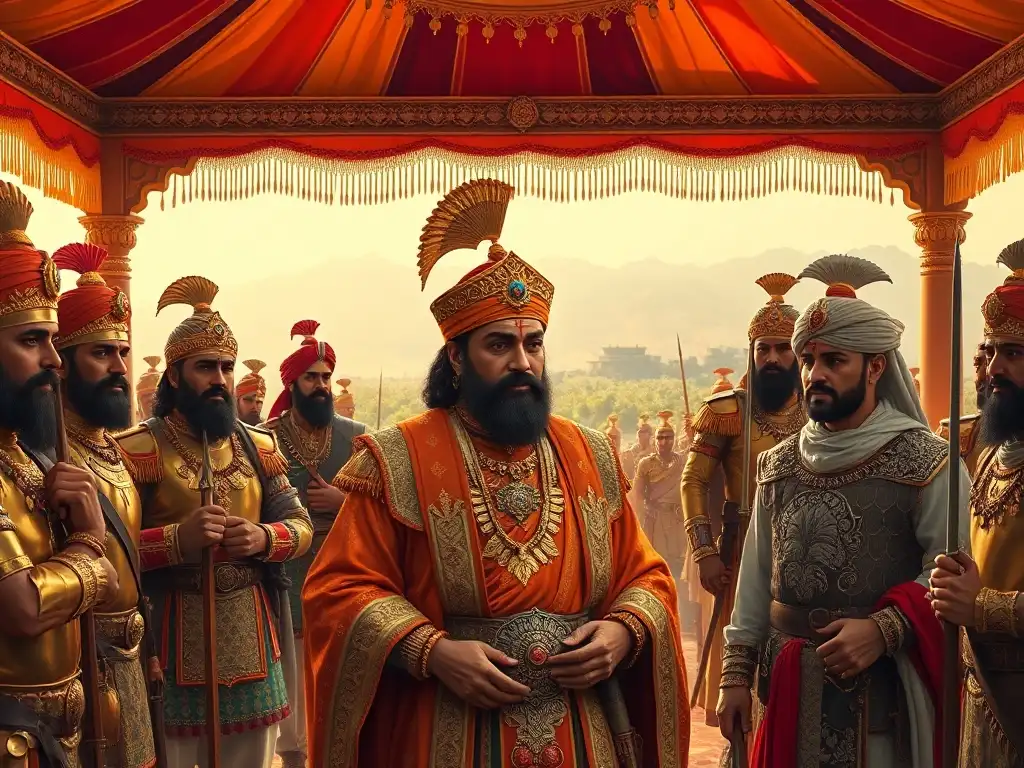
The Maurya Empire, one of the most significant and powerful empires in ancient India, showcased a sophisticated understanding of sovereignty through its military and diplomatic strategies. The exercise of sovereignty in this context was not merely about territorial acquisition but also involved the maintenance of authority, stability, and influence over diverse regions and peoples. The Mauryan rulers, particularly Chandragupta Maurya and his grandson Ashoka, adeptly utilized military prowess and diplomatic relationships to solidify their sovereignty and expand their empire.
Military Strategy as a Tool of Sovereignty
Military strategy played a critical role in establishing and maintaining sovereignty in the Maurya Empire. The empire's military was characterized by its organization, discipline, and innovative tactics. Chandragupta Maurya's successful campaigns against the Nanda Dynasty and subsequent conquests laid the groundwork for Mauryan sovereignty.
The empire employed a variety of military strategies, including:
- Formation of a Standing Army: The Mauryan military was one of the first to establish a fully professional standing army, allowing for rapid mobilization and sustained military campaigns.
- Use of Elephants and Cavalry: The strategic incorporation of war elephants and cavalry units provided a tactical advantage in battles, enhancing the empire's military capabilities.
- Fortification of Cities: The construction of fortified cities ensured control over conquered territories, reinforcing the sovereign power of the Mauryan rulers.
These military strategies not only facilitated territorial expansion but also instilled a sense of fear and respect among rival states, thereby reinforcing the sovereignty of the Maurya Empire.
Diplomatic Relations and Sovereignty in the Maurya Empire
In addition to military might, diplomacy was a vital aspect of the Mauryan approach to sovereignty. The empire engaged in various diplomatic relations with neighboring states, employing a mixture of alliances, treaties, and marriages to secure its influence.
- Alliances with Local Rulers: The Mauryas often formed alliances with regional kings, which helped to pacify conquered territories and integrate them into the empire.
- Envoys and Treaties: The establishment of diplomatic envoys and treaties was crucial for maintaining peace and facilitating trade, thus enhancing the empire's economic and political sovereignty.
- Cultural Exchange: Diplomatic relations also led to cultural exchanges, which further solidified the Mauryan influence over its vassals and allies, embedding the concept of Mauryan sovereignty into the broader cultural landscape of ancient India.
The effective use of diplomacy allowed the Maurya Empire to navigate complex political landscapes, ensuring its sovereignty was respected and recognized by other states.
Case Studies of Key Military Campaigns and Their Impact on Sovereignty
Several key military campaigns during the Maurya Empire significantly impacted its sovereignty and territorial integrity. Notable examples include:
- Conquest of the Nanda Dynasty (c. 321 BCE): Chandragupta's overthrow of the Nandas marked the establishment of Mauryan sovereignty in northern India, setting a precedent for future military conquests.
- Battle of Kalinga (c. 261 BCE): Perhaps the most famous campaign, this battle showcased Ashoka's military might but also led to a profound transformation in his approach to governance and sovereignty. The immense loss of life prompted Ashoka to adopt a policy of non-violence and diplomacy.
- Campaigns in the Deccan and South India: The Mauryan expansion into southern regions further consolidated their sovereignty, spreading their influence and administrative practices.
These campaigns not only expanded the territory of the Maurya Empire but also reinforced the central authority of the rulers, establishing a legacy of sovereignty that would influence future Indian empires.
Challenges to Sovereignty in the Maurya Empire
Despite its strengths, the Maurya Empire faced various challenges that threatened its sovereignty. Internal strife, external threats, and shifts in governance philosophy all played crucial roles in shaping the empire's stability and authority.
Internal Conflicts and Their Effect on Sovereign Authority
Internal conflicts within the Maurya Empire posed significant challenges to sovereign authority. The vastness of the empire, coupled with its diverse population, often led to regional dissent and rebellion.
- Regional Rivalries: Local governors and powerful regional leaders sometimes resisted central authority, seeking autonomy or power for themselves. This fragmentation could weaken the overall sovereignty of the empire.
- Succession Crises: The transition of power between rulers was not always smooth, leading to potential power struggles that could undermine the legitimacy and authority of the sovereign.
- Religious and Cultural Tensions: The empire's diverse religious landscape sometimes led to conflicts, challenging the central authority's ability to maintain harmony and cohesion among its subjects.
These internal challenges necessitated a careful balancing act by Mauryan rulers to preserve their sovereignty while managing regional aspirations and conflicts.
External Threats and the Defense of Sovereignty
The Maurya Empire also faced external threats that tested its sovereignty. Neighboring kingdoms and emerging powers often sought to challenge Mauryan dominance.
- Invasions from External Forces: The presence of rival kingdoms, such as the Seleucid Empire, posed a direct threat to Mauryan sovereignty. The successful diplomatic resolution of conflicts with the Seleucids, including the Treaty of 305 BCE, exemplifies how the Mauryas navigated these external challenges.
- Border Security: The vast borders of the Maurya Empire required constant vigilance and military readiness to defend against potential invasions and incursions, ensuring the integrity of the empire's sovereignty.
The Mauryan rulers implemented strategic military defenses and diplomatic initiatives to counter these external threats and maintain their sovereign status.
The Impact of Ashoka’s Conversion on Imperial Sovereignty
Ashoka's conversion to Buddhism after the Kalinga War marked a significant turning point in the exercise of sovereignty within the Maurya Empire. This transformation influenced both internal governance and external relations.
- Shift from Military to Moral Sovereignty: Ashoka's adoption of non-violence and ethical governance softened the military approach traditionally associated with sovereignty. His emphasis on dharma (moral law) reshaped the nature of authority, focusing on benevolence over conquest.
- Promotion of Buddhism: By promoting Buddhism and spreading its principles, Ashoka not only sought to unify his subjects under a common ethical framework but also established a form of sovereignty that transcended mere territorial control.
- Diplomacy through Religion: Ashoka’s efforts to send missionaries abroad exemplified a form of sovereign influence that extended beyond military might, promoting peace and cultural exchange as tools of Imperial sovereignty.
Ashoka's reign illustrates how the concept of sovereignty can evolve, reflecting broader philosophical and ethical considerations while still maintaining the essence of authority and governance.
Legacy of Sovereignty in the Maurya Empire
The Maurya Empire, which flourished from 322 to 185 BCE, is often regarded as one of the most significant empires in ancient India, primarily due to its profound concept of sovereignty. This legacy is multifaceted, resting not only on the political structures established by the Mauryan rulers but also on their philosophical and administrative innovations. The notion of sovereignty during this period transcended mere territorial control; it encompassed the idea of a ruler's moral and ethical responsibilities towards their subjects.
Chandragupta Maurya, the empire's founder, set the stage for a centralized autocracy, which was further refined by his grandson, Ashoka the Great. Ashoka's reign brought a unique dimension to sovereignty, as he embraced Buddhism and promoted the concept of Dharma (moral law) as integral to governance. This approach positioned the ruler as a paternal figure, tasked with the welfare of the populace, thus reinforcing the idea that true sovereignty is rooted in ethical governance.
Influence on Subsequent Indian Empires
The influence of the Mauryan concept of sovereignty can be seen in subsequent Indian empires, particularly the Gupta Empire and later dynasties. The Gupta rulers adopted many administrative practices from the Mauryans, including the centralization of power and the emphasis on a ruler’s moral authority. This continuity reflected a broader acceptance of the idea that sovereign authority must be exercised in the service of the people, a principle that resonated through centuries.
Moreover, the Mauryan model of governance laid the foundation for the regional kingdoms that emerged post-Maurya, where local rulers often emulated the central authority's emphasis on moral governance. This legacy is evident in texts like the Arthashastra, attributed to Kautilya (Chanakya), which continued to influence political philosophy in India long after the fall of the Maurya Empire. The ethical dimensions of sovereignty established during this era continued to shape the discourse around governance and the responsibilities of rulers in later periods.
Continuity and Change in Sovereignty Concepts

While the Maurya Empire established a robust framework for sovereignty that emphasized ethical governance, subsequent empires experienced both continuity and change in these concepts. As the political landscape evolved, the rigidity of Mauryan sovereignty began to adapt to local contexts and cultural influences.
For instance, the rise of regional powers during the post-Mauryan period saw an increased focus on local customs and practices, leading to a more decentralized approach to governance. This shift reflected a changing notion of sovereignty, where local rulers gained prominence and the idea of a singular moral authority became more fragmented. However, the ethical underpinnings initiated by the Mauryas persisted, influencing how rulers viewed their relationships with their subjects.
Furthermore, the dialogue surrounding sovereignty also began to incorporate diverse philosophical perspectives, including Hindu, Jain, and later Islamic influences. This interplay of ideas marked a significant evolution in the understanding of sovereignty, illustrating how the legacy of the Maurya Empire continued to inform political thought while adapting to new realities.
The Maurya Empire’s Sovereignty in Modern Historical Discourse
In contemporary historical discourse, the concept of sovereignty in the Maurya Empire is often analyzed through various lenses, including political theory, ethics, and historical governance. Scholars emphasize the empire's innovative approach to statecraft and its impact on subsequent Indian history. The Mauryan emphasis on Dharma has been particularly noted for its progressive stance on governance, highlighting the importance of moral responsibility in leadership.
Modern interpretations also explore the implications of Mauryan sovereignty on contemporary governance models. The ethical considerations established during this period resonate with modern discussions on the role of leaders in promoting social welfare and justice. This dialogue underscores the relevance of ancient concepts of sovereignty in understanding current political dynamics in India and beyond.
Additionally, the Maurya Empire's sophisticated administrative systems are studied for their efficiency and effectiveness, providing a framework that modern states can learn from. The interplay between authority and ethics in governance continues to be a pivotal theme in discussions surrounding the legitimacy and authority of modern states.
Conclusion
Summary of the Concept of Sovereignty in the Maurya Empire
The concept of sovereignty in the Maurya Empire was characterized by a blend of centralized authority and ethical governance. Under rulers like Chandragupta Maurya and Ashoka, sovereignty was not merely about territorial control, but rather encompassed moral obligations towards subjects, as exemplified by the promotion of Dharma. This integrated approach left a lasting legacy on subsequent Indian empires and shaped the political discourse in ancient India.
Final Thoughts on the Relevance of Mauryan Sovereignty in Ancient Indian History
The Mauryan Empire's sovereignty remains a critical area of study in ancient Indian history, not only for its historical significance but also for its philosophical contributions to governance. The ethical dimensions of sovereignty established during this period continue to inspire modern thought on leadership and governance. As we explore the rich tapestry of ancient Indian civilizations, the Maurya Empire's legacy serves as a foundational pillar, illustrating the enduring importance of moral responsibility in the exercise of power.
- Introduction to Sovereignty in the Maurya Empire
- Historical Background of the Maurya Empire
- Theoretical Framework of Sovereignty in the Maurya Empire
- Administrative Structure Supporting Sovereignty
- The Exercise of Sovereignty in Military and Diplomacy
- Challenges to Sovereignty in the Maurya Empire
- Legacy of Sovereignty in the Maurya Empire
- Influence on Subsequent Indian Empires
- Continuity and Change in Sovereignty Concepts
- The Maurya Empire’s Sovereignty in Modern Historical Discourse
- Conclusion
- What was the significance of sovereignty in the Maurya Empire?
- How did Ashoka the Great contribute to the idea of sovereignty?
- What were the key features of governance in the Maurya Empire?
- How did the concept of sovereignty evolve during the Maurya Empire?
- What impact did the Maurya Empire's sovereignty have on later Indian civilizations?
Frequently Asked Questions
What was the significance of sovereignty in the Maurya Empire?
The sovereignty in the Maurya Empire marked a shift towards a centralized political authority, establishing strong governance and administration that influenced subsequent Indian states.
How did Ashoka the Great contribute to the idea of sovereignty?
Ashoka the Great reinforced the concept of sovereignty by promoting Buddhism and ethical governance, emphasizing moral responsibilities of rulers towards their subjects, which shaped the empire's policies.
What were the key features of governance in the Maurya Empire?
The Maurya Empire showcased a highly organized bureaucracy, legal systems, and taxation policies that ensured effective administration and maintained the sovereignty of the empire.
How did the concept of sovereignty evolve during the Maurya Empire?
During the Maurya Empire, sovereignty evolved from feudal systems to a more unified state control, enabling the emperor to exert influence over a vast territory and diverse populations.
What impact did the Maurya Empire's sovereignty have on later Indian civilizations?
The sovereignty established by the Maurya Empire set a precedent for centralized governance in India, influencing later empires and contributing to the subcontinent's political landscape.
Final Reflection: The Enduring Legacy of Sovereignty in the Maurya Empire
The concept of sovereignty in the Maurya Empire remains profoundly relevant today, as it shapes our understanding of governance and authority. In an era where nations grapple with issues of autonomy and power dynamics, the historical lessons from the Maurya Empire illuminate the complexities of sovereignty. The Mauryan rulers, particularly Ashoka, exemplified how sovereignty can be wielded not just as a means of control, but as a tool for promoting welfare and ethical governance. This duality of power—both a privilege and a responsibility—resonates deeply in our contemporary political landscape.
The influence of the Maurya Empire's approach to sovereignty can be seen in modern discussions about statehood, rights, and the balance of power. The principles of governance established during this period continue to inspire leaders and scholars alike, reminding us of the importance of ethical leadership and the welfare of the populace. As Ashoka famously stated, “Let all beings be happy; let all beings be without disease.” > This quote encapsulates the essence of sovereign responsibility, urging us to consider the broader implications of our actions as leaders and citizens in a global society.
As we reflect on the lessons of sovereignty from the Maurya Empire, I invite you to consider how these historical insights can inform your own understanding of authority and responsibility in your life. Embrace the idea that sovereignty is not merely about power, but about the ethical obligation to uplift and protect those we govern or influence. Let us strive to embody the principles of compassion and justice that characterized the Mauryan approach, ensuring that our actions contribute to a more equitable and harmonious world.
Unveil the Secrets of Sovereignty – Take Action Today!
Thank you for exploring the fascinating realm of the Maurya Empire with us! We hope you gained invaluable insights into the intricate concept of sovereignty and its profound impact on ancient governance. Now it's time to transform that knowledge into action!
Here’s how you can continue your journey of discovery:
- Dive Deeper: Explore more about the governance styles of various ancient empires. Research how their concepts of sovereignty compare to that of the Maurya Empire.
- Engage with Others: Share your newfound insights on social media or with friends — spark a conversation about the complexities of sovereignty throughout history.
- Join Our Community: Subscribe to our newsletter to stay updated on the latest articles and discussions surrounding ancient history. Your journey doesn’t have to end here!
What aspect of sovereignty in the Maurya Empire intrigues you the most, and how do you think it shapes our understanding of modern governance?