
The Maurya Empire's Legal System: Influential Figures in Law and Justice


Welcome to Ancient India History, where we embark on a captivating journey through the vibrant tapestry of India's past. Today, we delve into the intricate legal system of the Maurya Empire, a cornerstone of governance that shaped justice and societal order in ancient times. Discover the influential figures who stood at the helm of this transformative era, and how their contributions resonate even in contemporary legal frameworks. Ready to unlock the secrets of one of history's most significant civilizations? Join us as we explore the profound impact of the Maurya Empire on law and justice!
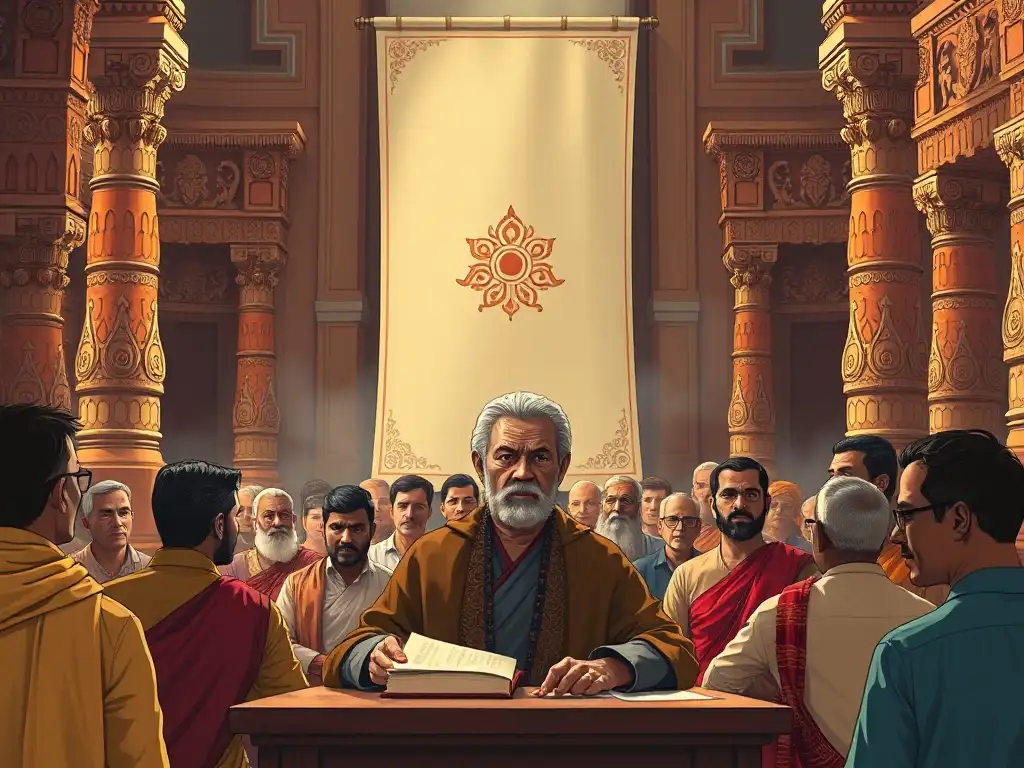
Introduction to the Maurya Empire Legal System
The Maurya Empire, which flourished from approximately 322 to 185 BCE, is considered one of the most remarkable periods in ancient Indian history. This empire was not only known for its vast territorial expanse but also for its sophisticated governance and legal frameworks. The Mauryan legal system laid the groundwork for many principles of law that have persisted through the ages, influencing subsequent legal traditions in India and beyond. The Maurya Empire legal system history reveals a complex interplay of morality, ethics, and governance, spearheaded by influential figures who shaped the legal landscape of their time.
Overview of the Maurya Empire and its Significance
The Maurya Empire emerged after the decline of the Nanda Dynasty and was founded by Chandragupta Maurya. Under his leadership and that of his grandson, Ashoka the Great, the empire expanded to encompass most of the Indian subcontinent. The Maurya Empire is significant for several reasons:
- Political Unity: It established a centralized form of governance that united diverse regions and cultures under a single political entity.
- Economic Prosperity: The empire thrived on trade and agriculture, creating a vibrant economy that supported its legal and administrative systems.
- Cultural Flourishing: This period witnessed remarkable advancements in art, literature, and philosophy, with the legal system reflecting the ethical values of the time.
Importance of Law and Justice in Ancient Indian Civilizations
In ancient Indian civilizations, law and justice were not merely mechanisms for social order; they were deeply intertwined with the philosophical and ethical beliefs of the society. The principles of Dharma (duty/righteousness) played a pivotal role in shaping legal practices. Key aspects include:
- Moral Framework: Laws were often based on moral values and religious principles, ensuring that justice was not just punitive but restorative.
- Social Order: The legal system served to maintain social harmony by resolving disputes and upholding rights.
- Influence of Texts: Ancient texts like the Arthashastra by Kautilya provided critical insights into governance and law, establishing standards for justice that were ahead of their time.
Historical Context of the Maurya Empire Legal System
The legal system of the Maurya Empire did not develop in isolation; it was influenced by earlier traditions and the socio-political climate of the time. Understanding this historical context is essential for grasping the intricacies of Mauryan law.
Evolution of Legal Practices in Ancient India
The evolution of legal practices in ancient India can be traced back to the Vedic period, where customs and rituals formed the basis of law. Over time, these practices were codified into more structured legal systems. Key developments include:
- Vedic Texts: Early legal concepts were embedded within religious texts, guiding societal conduct.
- Regional Variations: Different regions developed distinct legal customs, influenced by local traditions and needs.
- Integration of Ideas: The Maurya Empire synthesized various legal traditions, creating a more unified and comprehensive legal framework.
Key Historical Events Influencing the Legal System
Several pivotal events shaped the legal system during the Maurya Empire, including:
- Conquests and Administration: The vast conquests of Chandragupta Maurya necessitated the establishment of a formal legal system to manage diverse populations.
- Ashoka's Edicts: Ashoka’s conversion to Buddhism led to a significant shift in legal philosophy, emphasizing non-violence and ethical governance. His edicts carved on pillars across the empire serve as early examples of legal codification.
Understanding these historical influences is crucial for appreciating the complexity and significance of the Maurya Empire's legal system, as it laid the foundation for future legal developments in India.
Influential Figures in the Maurya Empire's Legal System
The Maurya Empire, known for its remarkable administration and governance, had several key figures who played pivotal roles in shaping its legal system. These individuals not only influenced the laws and justice system but also left a lasting legacy that informed subsequent legal frameworks in India. Among them, Chanakya and Ashoka the Great stand out as towering personalities whose contributions were instrumental in establishing a just and organized legal system.
Chanakya: The Architect of Mauryan Law
Chanakya, also known as Kautilya, was a brilliant philosopher, economist, and political strategist who is often regarded as the principal architect behind the Maurya Empire's legal system. His seminal work, the Arthashastra, is a comprehensive treatise on statecraft, economics, and military strategy, but it also delves deeply into law and justice.
Chanakya emphasized the importance of a robust legal framework to maintain order and stability within the empire. He proposed a system of laws that were designed to be practical, ensuring that they could be effectively enforced. His philosophy was grounded in the belief that the king should act as a protector of dharma (moral law) while ensuring the welfare of his subjects. This perspective laid the groundwork for a legal system that balanced authority with justice.
Moreover, Chanakya's insights into administration extended to the appointment of judges and legal authorities, advocating for individuals who were not only knowledgeable in law but also possessed moral integrity. His influence on legal thought was profound, and his principles continued to resonate in the governance of subsequent Indian empires.
Ashoka the Great: A Champion of Justice
Ashoka, the third Mauryan emperor, is celebrated not only for his military conquests but also for his transformative approach to governance, particularly in the realm of justice and law. Following his conversion to Buddhism, Ashoka adopted a policy of non-violence and compassion, which significantly influenced his legal reforms.
He is well-known for the Edicts of Ashoka, which were inscribed on pillars and rocks throughout the empire. These edicts outlined his vision for a just society, emphasizing moral behavior, ethical governance, and the need for judicial fairness. Ashoka's legal philosophy was centered on the principles of ahimsa (non-violence) and dharma, advocating for the humane treatment of all individuals, regardless of their status.
Under Ashoka's reign, the legal system became more accessible to the common people, with provisions for public hearings and the right to appeal. His commitment to justice was reflected in his efforts to ensure that laws were not only punitive but also rehabilitative, focusing on the reintegration of offenders into society. This approach marked a significant departure from previous legal practices and laid the groundwork for a more equitable system of justice.
Structure of the Maurya Empire Legal System
The legal system of the Maurya Empire was characterized by a hierarchical structure that ensured the efficient administration of justice. This organization allowed for a clear delineation of responsibilities among various legal authorities, facilitating the enforcement of laws and the resolution of disputes.
Hierarchical Organization of Legal Authorities
At the apex of the Maurya Empire's legal system was the emperor, who served as the ultimate authority in legal matters. Below him was a structured hierarchy of officials responsible for the administration of justice at different levels:
- Rajukas: These were local magistrates responsible for overseeing justice in villages and small towns. They had the authority to resolve disputes, impose penalties, and ensure that local laws were upheld.
- Dharma Mahamatras: Appointed by the emperor, these officials were tasked with promoting dharma and overseeing the implementation of Ashoka's edicts. They played a crucial role in ensuring that ethical standards were maintained throughout the empire.
- Pradhanas: Serving as advisors to the Rajukas and Dharma Mahamatras, the Pradhanas offered legal counsel and assisted in the administration of justice at regional levels. Their expertise was vital in interpreting the laws and ensuring fair trials.
- Judicial Assemblies: In larger cities, judicial assemblies composed of learned individuals were established to hear cases, deliberate on legal matters, and deliver judgments. This collective approach ensured that justice was administered fairly and transparently.
This hierarchical organization not only ensured that laws were enforced effectively but also allowed for a system of checks and balances within the legal framework. By establishing clear lines of authority and responsibility, the Maurya Empire’s legal system fostered a sense of order and justice that contributed to the stability of the empire.
Key Features of the Maurya Empire Legal System

The legal system of the Maurya Empire, which flourished from 322 to 185 BCE, was characterized by a blend of codified laws, a structured judicial framework, and a focus on justice and social order. One of the most notable aspects was its emphasis on Dharma, which referred to the moral and ethical duties prescribed by ancient Indian texts. The Mauryan legal system aimed to maintain societal harmony and protect the rights of individuals, thereby reflecting the values of the empire.
Key features included:
- Centralized Authority: The Maurya Empire had a strong central government that played a crucial role in law enforcement and administration, with the Emperor at the top of the legal hierarchy.
- Codification of Laws: This period marked the codification of laws into written texts, making legal principles accessible and standardized across the vast empire.
- Public Participation: The Maurya legal system encouraged public participation in legal matters, allowing individuals to voice grievances and seek justice through defined channels.
- Role of Officials: There were designated officials responsible for law enforcement, including judges and village heads, who were tasked with administering justice at local levels.
These features collectively contributed to a legal framework that was not only systematic but also adaptable to the diverse cultures and communities within the empire.
Codification of Laws: Standards and Practices
The codification of laws during the Maurya Empire was a significant advancement in the history of Indian jurisprudence. The most prominent figure associated with this development was Emperor Ashoka, who is known for inscribing a series of edicts on pillars and rocks throughout his empire. These edicts served as a foundational legal code and were aimed at ensuring justice and ethical governance.
Key aspects of the codification process included:
- Inscriptions and Edicts: Ashoka’s edicts, written in various languages and scripts, outlined moral principles, legal standards, and administrative practices. They emphasized non-violence, truthfulness, and compassion.
- Inclusivity: The laws were designed to cater to a diverse population, reflecting different customs and practices across various regions.
- Accessibility: By making laws public through inscriptions, Ashoka ensured that the citizenry was aware of their rights and responsibilities, fostering a more informed society.
This codification laid down a framework that influenced legal practices for centuries, establishing a precedent for future legal systems in India.
Justice Administration: Courts and Procedures
The justice administration in the Maurya Empire was an organized and systematic process, reflecting the empire's commitment to law and order. The legal structure comprised various levels of courts, each with specific jurisdictions and responsibilities.
Key elements of the justice administration included:
- Hierarchy of Courts: The legal system featured a tiered court structure, with local courts handling minor disputes and higher courts addressing serious offenses. The Emperor himself often acted as the supreme judge in significant cases.
- Judicial Procedures: Legal proceedings were characterized by formal procedures, including the presentation of evidence, witness testimonies, and legal representation. This structure facilitated fair trials and equitable judgments.
- Role of Judges: Judges were appointed based on merit and knowledge of the law, ensuring that justice was administered by capable individuals. They were responsible for interpreting laws and delivering verdicts in accordance with established standards.
This organized judicial framework not only served to resolve disputes but also reinforced the rule of law, contributing to the stability and governance of the Maurya Empire.
Punishments and Legal Consequences: A Comparative Study
In the Maurya Empire, punishments were designed to serve as deterrents to crime while also aiming to rehabilitate offenders. The legal consequences varied based on the severity of the offense and the social status of the individuals involved.
Key aspects of the punishment system included:
- Severity and Proportionality: The principle of proportionality was essential, where punishments were matched to the gravity of the crime. For instance, theft might result in fines or restitution, while more severe crimes could lead to harsher penalties.
- Varied Punishments: The legal system included a range of punishments, from fines and public shaming to imprisonment and capital punishment for the most serious offenses. This variety allowed for flexibility in addressing different types of crime.
- Comparative Perspectives: When compared to other ancient legal systems, such as those of Mesopotamia or Persia, the Mauryan system showed a notable emphasis on ethical rehabilitation over mere retribution, reflecting a more progressive approach to justice.
This comparative approach highlights the Maurya Empire's unique position in the context of ancient legal traditions, showcasing its commitment to moral and just governance.
The Maurya Empire Legal System's Influence on Subsequent Indian Laws
The legal principles established during the Maurya Empire left a lasting legacy on subsequent Indian legal systems. The codification of laws, emphasis on justice, and ethical considerations became foundational elements in the evolution of Indian jurisprudence.
Legacy of Mauryan Legal Principles in Later Dynasties
The legacy of Mauryan legal principles can be observed in various later dynasties, such as the Gupta Empire, which adopted many aspects of Mauryan law. The following points illustrate this influence:
- Continuity of Codification: Subsequent rulers continued the practice of codifying laws, drawing inspiration from Ashoka's edicts and adapting them to their contexts.
- Judicial Structures: The hierarchical judicial structures established during the Maurya period were mirrored in later empires, ensuring that legal administration remained organized and effective.
- Ethical Governance: The emphasis on Dharma and ethical governance persisted, influencing the moral frameworks within which laws were interpreted and enforced.
These elements demonstrate how the Maurya Empire's legal system laid the groundwork for future legal developments in India.
Comparison with Other Ancient Indian Legal Systems
When compared to other ancient Indian legal systems, the Maurya Empire's legal framework was distinctive for its breadth and inclusivity.
Key points of comparison include:
- Dharma Shastras: While earlier legal texts like the Manusmriti outlined societal norms, the Maurya Empire's laws were more practical and focused on governance and administration, reflecting a shift towards a more organized legal system.
- Regional Variability: Unlike the more localized legal practices of earlier civilizations, the Maurya Empire's codified laws were applicable across vast territories, accommodating diverse customs and practices.
- Integration of Ethics and Law: The Maurya legal system uniquely integrated ethical principles with legal statutes, emphasizing justice not only as a legal concept but also as a moral imperative.
This comparison illustrates the Maurya Empire's significant role in shaping the trajectory of legal thought and practice in ancient India, influencing the development of a more cohesive and comprehensive legal framework.
Conclusion: The Lasting Impact of the Maurya Empire's Legal System
The legal system of the Maurya Empire has left a profound and lasting impact on the judicial frameworks of subsequent Indian civilizations and modern legal practices. The emphasis on codified laws, justice, and administration under the Maurya Empire set a precedent for governance that prioritized fairness and order. The contributions of key figures, particularly Ashoka, not only shaped the legal landscape of their time but also influenced ethical governance principles that resonate today. The Maurya Empire's legal system emphasized a balance between state authority and individual rights, fostering a sense of social responsibility that has permeated Indian culture.
The establishment of a comprehensive legal framework facilitated trade, supported agricultural practices, and promoted social stability, which were essential for the empire's prosperity. Furthermore, the Mauryan philosophy of law, which integrated moral values with legal principles, continues to be relevant in contemporary discussions around law and justice in India. As such, the legacy of the Maurya Empire's legal system is evident not only in historical context but also in modern judicial practices.
Summary of Key Figures and Their Contributions
The Maurya Empire was marked by several influential figures whose contributions to the legal system were significant.
- Chandragupta Maurya: The founder of the empire, he established a strong centralized authority and laid the groundwork for a structured legal system that would be further developed by his successors.
- Kautilya (Chanakya): As a chief advisor to Chandragupta, Kautilya's work, Arthashastra, is a seminal text that discusses the nature of law, governance, and statecraft. His insights into political strategy and law provided a framework for effective governance.
- Ashoka the Great: Perhaps the most notable ruler of the Maurya Empire, Ashoka's reign marked a significant transformation in legal principles. His edicts, inscribed on rock pillars, promoted non-violence, moral governance, and social welfare, emphasizing the importance of ethical conduct in law.
These figures collectively contributed to a legal system that was not only advanced for its time but also laid the foundation for future legal practices in India.
Reflection on the Importance of Legal Systems in Ancient India
The importance of legal systems in ancient India cannot be overstated. They served as the backbone of social order and governance, reflecting the values and norms of society. In the context of the Maurya Empire, the legal system played a crucial role in maintaining unity across a vast and diverse territory. It facilitated trade and commerce by establishing clear regulations, thus fostering economic growth. Moreover, the legal texts produced during this period, such as the Dharma Shastras, highlighted the intersection of law, morality, and duty, which was essential for social cohesion.
The Maurya Empire's legal system also illustrated the dynamic relationship between rulers and their subjects, as it sought to balance authority with justice. This balance is vital for any functioning society and remains a critical consideration in contemporary legal frameworks. By studying the Maurya Empire's legal system, we gain insight into the foundational principles that have shaped not only Indian law but also the broader concepts of justice and governance around the world.
References for Further Study on the Maurya Empire Legal System History
Recommended Books and Articles
- "The Arthashastra" by Kautilya - A classic text that provides insights into statecraft, economics, and law during the Maurya Empire.
- "The History of Ancient India" by Radha Kumud Mookerji - A comprehensive overview of the political and social structures of ancient Indian civilizations, including the Maurya Empire.
- "Ashoka: The Search for Truth" by Charles Allen: - An exploration of Ashoka's life and the moral governance he promoted, including his contributions to the legal system.
Online Resources and Academic Journals
- Journal of Ancient Indian History - A scholarly journal featuring articles on various aspects of ancient Indian civilizations, with a focus on legal history.
- Digital South Asia Library - An online repository of resources related to South Asian history, including texts on the Maurya Empire's legal system.
- Project Gutenberg - A source for various public domain texts, including translations of significant works related to ancient Indian law and governance.
- Introduction to the Maurya Empire Legal System
- Historical Context of the Maurya Empire Legal System
- Influential Figures in the Maurya Empire's Legal System
- Structure of the Maurya Empire Legal System
- Key Features of the Maurya Empire Legal System
- The Maurya Empire Legal System's Influence on Subsequent Indian Laws
- Conclusion: The Lasting Impact of the Maurya Empire's Legal System
- References for Further Study on the Maurya Empire Legal System History
- What was the Maurya Empire's legal system primarily based on?
- Who were some influential figures in the Maurya Empire's legal system?
- How did the Maurya Empire's legal system impact later Indian law?
- What was the role of royal edicts in the Maurya Empire?
- How did Ashoka's Dhamma influence the legal system?
Frequently Asked Questions
What was the Maurya Empire's legal system primarily based on?
The Maurya Empire's legal system was based on a combination of traditional customs, religious texts, and royal edicts, which aimed to maintain order and justice across the vast empire.
Who were some influential figures in the Maurya Empire's legal system?
Chandragupta Maurya, the founder, and Ashoka the Great, known for his Dhamma, played crucial roles in shaping the empire's legal and moral frameworks, promoting justice and compassion.
How did the Maurya Empire's legal system impact later Indian law?
The legal principles established during the Maurya Empire laid the foundation for subsequent legal systems in India, influencing codes and practices well into the medieval period.
What was the role of royal edicts in the Maurya Empire?
Royal edicts were significant as they communicated the emperor's laws and policies to the subjects, emphasizing the importance of justice, morality, and public welfare.
How did Ashoka's Dhamma influence the legal system?
Ashoka's Dhamma introduced a unique blend of moral guidance and legal governance, promoting non-violence and ethical conduct, which became integral to the Maurya Empire’s legal philosophy.
Final Reflection: The Enduring Legacy of the Maurya Empire's Legal System
The Maurya Empire's legal system stands as a testament to the sophistication and foresight of ancient governance, influencing legal frameworks that resonate even in contemporary society. As we navigate a world increasingly defined by complex legal challenges, the principles established during the Maurya period remind us of the foundational role that law and justice play in maintaining order and equity. The insights gleaned from this historical narrative not only illuminate our past but also guide our present and future endeavors in the realm of justice.
The impact of the Maurya Empire's legal system is profound and continues to shape our cultural and social landscapes. The emphasis on justice, fairness, and the rule of law during this era has set a precedent that resonates in modern judicial systems across the globe. As we reflect on the contributions of influential figures like Ashoka, we recognize that their commitment to ethical governance and social welfare remains relevant today. Injustice anywhere is a threat to justice everywhere.
– Martin Luther King Jr. This quote encapsulates the ongoing relevance of the Maurya Empire's legal principles, reminding us that the fight for justice is a continuous journey.
As we conclude this exploration of the Maurya Empire's legal system, I invite you to reflect on the lessons of history and consider how they can be applied in your own life. Embrace the values of justice, equity, and ethical responsibility that were championed by the Maurya rulers.
Let us strive to embody these principles in our communities, advocating for a fairer and more just society. The legacy of the Maurya Empire is not just a chapter in history; it is a call to action for each of us to contribute to the ongoing pursuit of justice in our world.
Unlock the Secrets of Justice in Ancient India!
Thank you for diving into the fascinating legal tapestry of the Maurya Empire! You’ve explored how influential figures shaped law and justice, offering insights that resonate even today. Now, let’s take your newfound knowledge further and make a difference!
Here are some empowering steps you can take:
- Engage with the past: Research and analyze the justice systems of various ancient civilizations. How do they compare to the Maurya Empire?
- Share your insights: Discuss your thoughts about the influence of these legal figures with friends or in online communities. Which aspects do you believe are most relevant in today’s society?
- Explore modern implications: Consider writing a blog post or article about how ancient laws have shaped contemporary legal structures.
What is one way you believe today’s legal systems can learn from the principles of justice established during the Maurya Empire?