
The Significance of Mathematics in Gupta Literature and Poetry

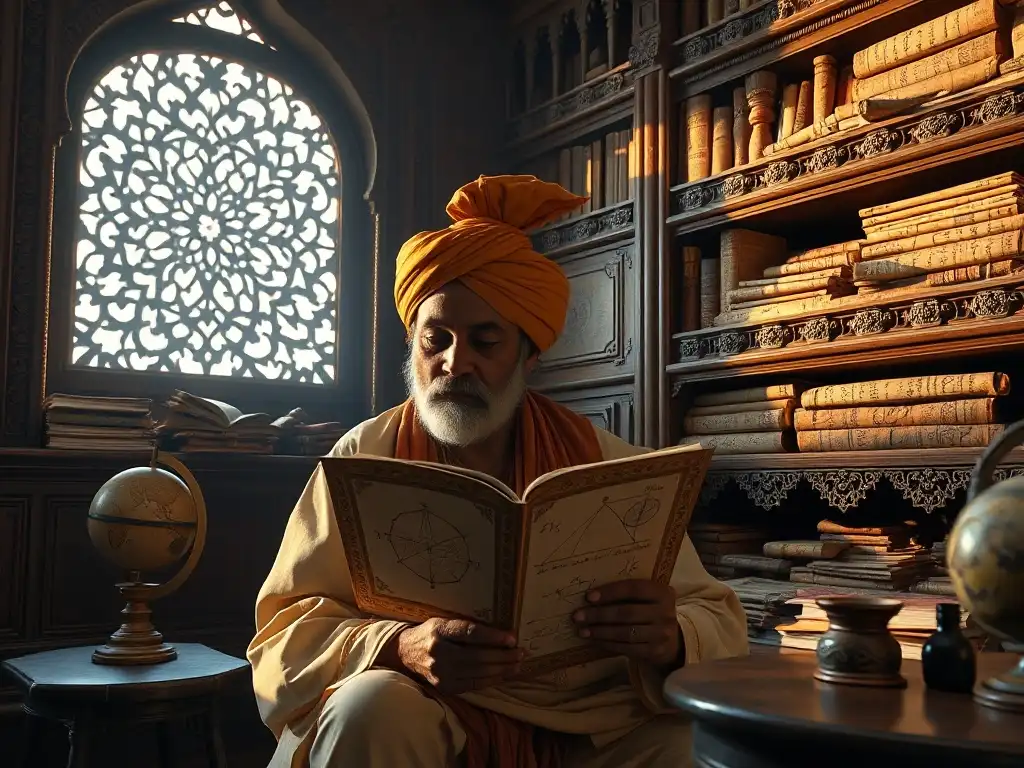
Welcome to Ancient India History, where we embark on a journey through the rich tapestry of ancient Indian civilizations. Dive into the profound significance of mathematics in Gupta literature and poetry, a topic that not only highlights the intellectual brilliance of the era but also unveils the creative interplay between numbers and words. What hidden insights can we uncover about the Gupta Empire's contributions to mathematics? Join us as we explore this fascinating intersection and reveal how these ancient texts continue to influence our understanding today. Your adventure into the past awaits!
- Introduction to Mathematics in Gupta Literature
- Historical Background of Mathematics in Gupta Literature
- The Role of Mathematics in Gupta Poetry
- Mathematical Concepts Explored in Gupta Literature
- Case Studies: Examples of Mathematics in Gupta Literary Works
- The Impact of Mathematics on Gupta Literature and Culture
- Conclusion: The Lasting Significance of Mathematics in Gupta Literature
-
Frequently Asked Questions
- What is the significance of Mathematics in Gupta literature?
- How did mathematics contribute to ancient Indian literature?
- What are some notable mathematical texts from the Gupta era?
- How did Gupta poets incorporate mathematical concepts into their work?
- In what ways did mathematics influence Indian culture during the Gupta Empire?
- Final Reflection: The Enduring Legacy of Mathematics in Gupta Literature
- Unlock the Wonders of Mathematics in Gupta Literature!
Introduction to Mathematics in Gupta Literature
The Gupta Empire, known as a golden age of ancient Indian civilization, was a period marked by remarkable advancements in various fields, including science, mathematics, and the arts. During this era, which spanned from approximately 320 to 550 CE, scholars and poets alike began to weave intricate mathematical concepts into their literary works, reflecting the profound influence of mathematics in shaping cultural and intellectual pursuits. This article delves into the significance of mathematics in Gupta literature, revealing how these mathematical principles not only enriched poetic expression but also contributed to the overall advancement of knowledge during this illustrious period.
Overview of the Gupta Empire’s Cultural Context
The Gupta Empire emerged as a beacon of prosperity and cultural achievement in ancient India. With its capital at Pataliputra, the empire fostered an environment conducive to intellectual growth and artistic expression.
- Cultural Flourishing: The Gupta period saw the rise of renowned scholars such as Aryabhata and Varahamihira, whose works laid the foundational principles of mathematics and astronomy.
- Patronage of Arts: The emperors of the Gupta dynasty were great patrons of the arts, promoting literature, sculpture, and architecture, which allowed mathematics to permeate these disciplines.
- Religious Influence: The intertwining of literature with religious themes during this time also provided a unique backdrop for the exploration of mathematical ideas, often using numerical symbolism in poetry and prose.
This vibrant cultural milieu set the stage for the innovative integration of mathematics into literature, which would leave a lasting legacy in both fields.
Importance of Mathematics in Ancient Indian Literature
Mathematics played a crucial role in ancient Indian literature, particularly during the Gupta period, as it influenced various aspects of poetic composition and narrative structure.
- Structural Elements:
- Poets employed mathematical techniques in the structuring of verses, utilizing rhythm and meter that often relied on numerical patterns.
- The Shlokas, or verses, are prime examples where mathematical precision in syllable counts enhances the aesthetic quality of the poetry.
- Symbolism and Themes:
- Mathematical concepts were often embedded in the thematic exploration of literary works, using numbers to convey deeper philosophical meanings.
- For instance, the use of specific numbers in references to deities or cosmic principles showcased the significance of mathematics in a spiritual context.
- Educational Impact:
- Literature served as a vehicle for disseminating mathematical knowledge, making complex concepts accessible through poetic forms.
- Texts like Aryabhata’s Aryabhatiya not only presented mathematical theories but also inspired literary interpretations that further propagated understanding.
The interplay between mathematics and literature during the Gupta Empire was profound, reflecting a unique synthesis that enriched both disciplines and contributed to the enduring legacy of ancient Indian civilization.
Historical Background of Mathematics in Gupta Literature
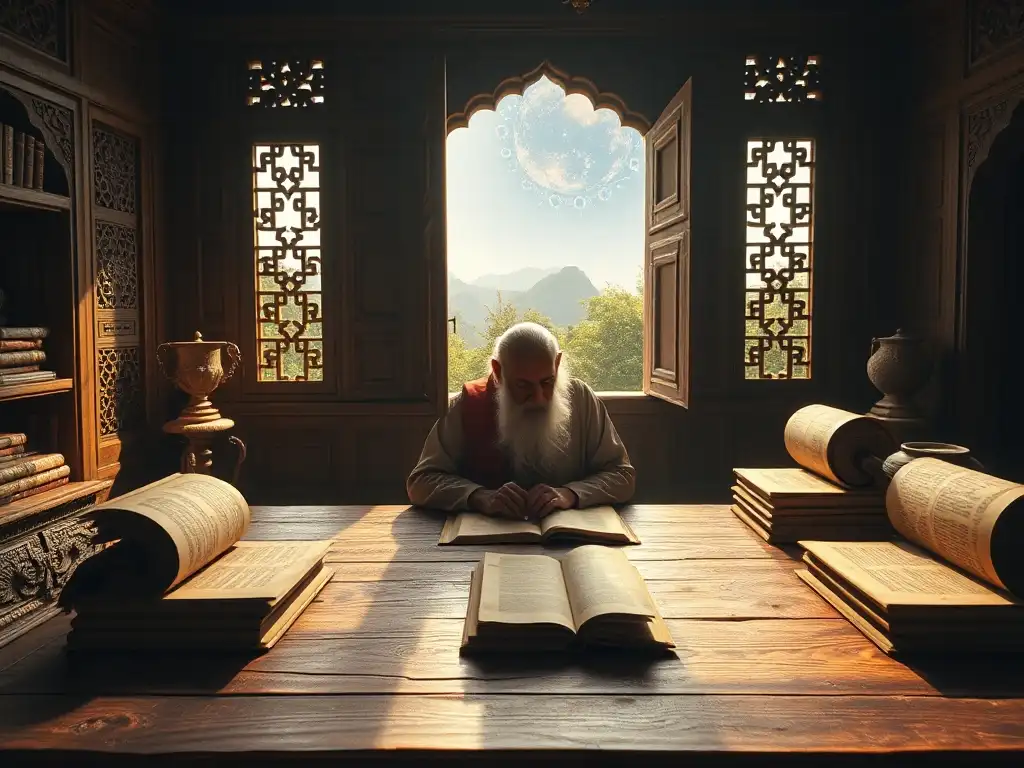
During the Gupta Empire, which flourished from approximately 320 to 550 CE, mathematics saw significant advancements that were intricately woven into the fabric of literature and poetry. The Gupta period is often referred to as a golden age of Indian culture, where the confluence of art, philosophy, and science fostered an environment ripe for intellectual growth. Mathematical concepts were not merely isolated academic pursuits; they permeated various aspects of life, including literature, thereby enhancing the richness of poetic forms and narrative structures.
The Gupta scholars built upon the foundations laid by earlier civilizations, particularly the achievements of the Vedic period and the advancements in mathematics from the Indus Valley civilization. This historical context is vital to understanding how mathematical principles were adapted and advanced in Gupta literature, showcasing not only the technical expertise of the time but also the aesthetic dimensions of mathematics as an art form.
Influence of Earlier Mathematical Concepts
Mathematics in Gupta literature was heavily influenced by prior mathematical concepts established in ancient Indian texts. The Vedic texts, dating back to around 1500 BCE, contained early references to arithmetic and geometry, which laid the groundwork for subsequent mathematical exploration. Notably, concepts such as place value, zero, and decimal systems were critical innovations that originated earlier but were refined during the Gupta period.
The Sulbasutras, ancient texts that focused on geometry and construction, also played a pivotal role. These texts provided rules for constructing altars and were concerned with the measurement of land, which necessitated a deep understanding of geometric principles. This geometric knowledge found its way into the poetic expressions of the time, where mathematical harmony and symmetry were celebrated.
Additionally, the Gupta mathematicians embraced concepts from Greek mathematics, which had spread through trade and conquest. The interaction with Hellenistic scholars introduced new mathematical ideas, particularly in geometry, which influenced the literary forms of poetry that utilized mathematical structures, such as metres that were counted and organized much like numeric sequences.
Key Figures in Gupta Mathematics and Literature
Several prominent figures emerged during the Gupta Empire, whose contributions to mathematics and literature left an indelible mark on the cultural landscape.
- Aryabhata (476–550 CE): A renowned mathematician and astronomer, Aryabhata is best known for his work Aryabhatiya, where he introduced concepts such as the place value system and the approximation of π (pi). His writings influenced not only mathematical theory but also poetic forms that employed numerical symbolism and rhythmic structures.
- Brahmagupta (598–668 CE): Following the Gupta period, Brahmagupta's contributions in the Brahmasphutasiddhanta further developed arithmetic and algebra. His works often incorporated poetic elements, illustrating mathematical concepts through verse, thus blending the disciplines of literature and mathematics seamlessly.
- Varahamihira (505–587 CE): A polymath who contributed to astronomy and astrology, Varahamihira's Brihat Samhita includes mathematical calculations that were critical for astrological predictions, often presented in poetic form. His ability to intertwine mathematics with literature exemplifies the era's intellectual richness.
The interplay of these key figures highlights the synergistic relationship between mathematics and literature during the Gupta Empire. Their works not only advanced mathematical thought but also enriched the poetic traditions, illustrating how mathematics in Gupta literature served both practical and aesthetic purposes.
In essence, the significance of mathematics in Gupta literature lies in its ability to transcend mere calculations, becoming an integral part of cultural expression and intellectual discourse. The legacy of this era continues to inspire contemporary discussions around the relationship between mathematics and the arts.
The Role of Mathematics in Gupta Poetry
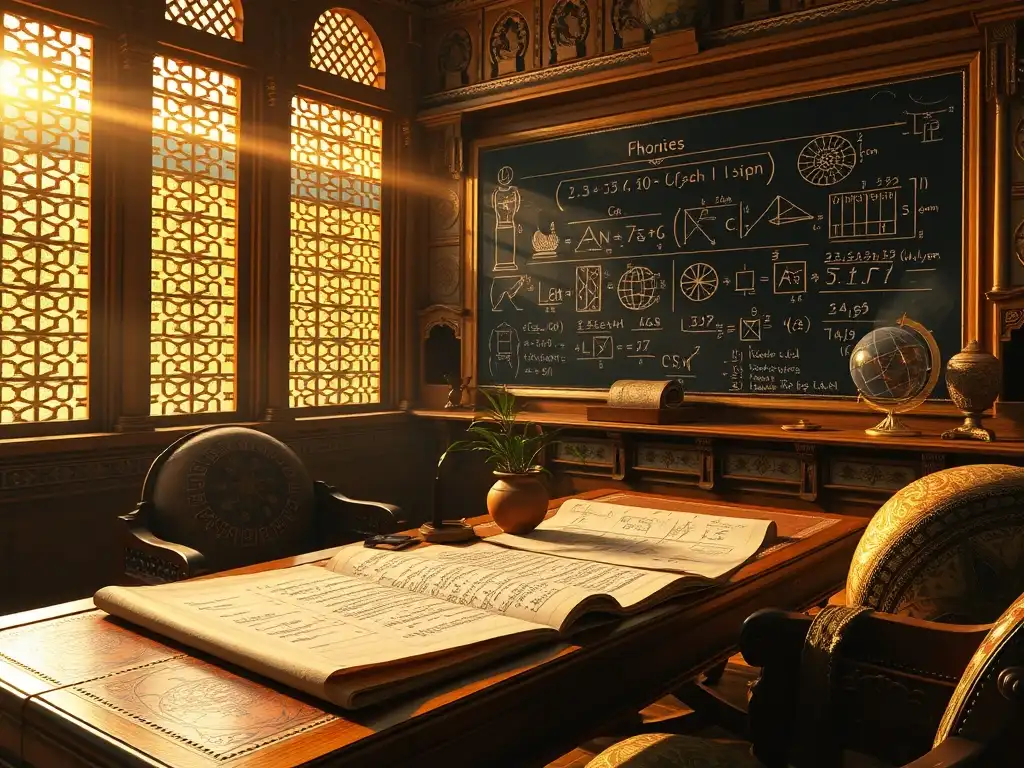
During the Gupta Empire (approximately 320-550 CE), mathematics flourished alongside literature and poetry, profoundly influencing the artistic expressions of the time. This period is often referred to as a golden age of Indian culture, where the integration of mathematical concepts into poetry not only enriched the literary landscape but also reflected the intellectual advancements of the civilization. The interplay of mathematics and poetry served various purposes, such as enhancing aesthetic appeal, conveying philosophical ideas, and creating deeper layers of meaning.
In Gupta poetry, mathematical principles often manifested through structure, rhythm, and thematic content. Poets used numbers and calculations not just as mere embellishments but as essential components that shaped the narrative and emotional depth of their works. The precision and symmetry found in mathematics resonated with the poets' desire for harmony and balance in their creations, embodying the era's values of order and beauty.
Mathematical Imagery and Symbolism in Poetry
Mathematical imagery in Gupta poetry is prevalent, with poets employing numerical symbolism to convey complex ideas and emotions. One of the most notable aspects is the use of numbers to represent cosmic principles and philosophical concepts. For instance, the number three often symbolizes the triad of creation—Brahma (the creator), Vishnu (the preserver), and Shiva (the destroyer)—which is a recurring theme in various poetic works.
Moreover, poets utilized geometric shapes and patterns as metaphors for love, beauty, and the universe. The circle, representing wholeness and eternity, frequently appears in verses to illustrate the cyclical nature of life and existence. The concept of symmetry in mathematics is mirrored in poetic structures, where balanced meter and rhyme schemes create a sense of unity and coherence, drawing readers into the intricate beauty of the language.
For example, in one of the famed works, poets like Kalidasa intricately weave mathematical ideas into their descriptions of nature, employing precise measurements—like the distance between celestial bodies—creating vivid imagery that resonates with the audience's imagination. This mathematical precision not only enhances the visual aspect of the poetry but also evokes a sense of awe and wonder at the natural world.
Notable Poets Incorporating Mathematical Themes
Several notable poets from the Gupta period skillfully incorporated mathematical themes into their works, reflecting the era's intellectual richness.
- Kalidasa: Often regarded as one of the greatest poets of ancient India, Kalidasa's works, such as "Shakuntala" and "Meghaduta," exhibit mathematical precision in their descriptive imagery. He employs numerical references and geometric symbolism to evoke emotions and depict the beauty of nature.
- Bhasa: Known for his dramatic plays and poetic compositions, Bhasa often integrated mathematical concepts into his narratives. His use of numerical symbolism emphasizes themes of fate and destiny, mirroring the deterministic nature of mathematical equations.
- Bhavabhuti: Another prominent figure, Bhavabhuti's poetry often reflects the interconnectedness of life and mathematics. His works demonstrate how numbers can symbolize deeper philosophical ideas, showcasing the intellectual depth of Gupta literature.
The incorporation of mathematics in Gupta literature not only reflects the intellectual advancements of the era but also enriches the poetic expressions through imagery and symbolism. This unique blend of art and science highlights the profound impact that mathematical concepts had on the cultural and literary achievements of ancient India, making the study of "Mathematics in Gupta literature" an essential part of understanding this remarkable period.
Mathematical Concepts Explored in Gupta Literature

The Gupta Empire, often referred to as the Golden Age of India, witnessed remarkable advancements in various fields, including mathematics. The intersection of mathematics and literature during this period is a fascinating area of study, revealing how mathematical concepts were not only practical tools but also sources of inspiration for poets and writers. This section delves into the specific mathematical concepts explored in Gupta literature, highlighting their significance and impact.
Arithmetic and Number Theory in Literary Works
Arithmetic and number theory played a crucial role in Gupta literature, manifesting in various forms such as poetry, fables, and philosophical texts. The mathematical prowess of this era is evident in the way authors incorporated numerical concepts into their narratives, often using them to symbolize deeper meanings and cultural values.
-
Representation of Numbers
Gupta poets frequently employed numbers symbolically, reflecting the importance of numerology in their culture. For instance, the use of the number seven was prevalent in many texts, often representing completeness or perfection. This symbolic representation of numbers is not merely artistic; it also demonstrates an understanding of number theory that extends beyond basic arithmetic.
-
Mathematical Riddles and Puzzles
Literary works from the Gupta period often included riddles that challenged the reader's numerical reasoning. These riddles not only entertained but also served as educational tools, promoting mathematical literacy among the populace. For example, collections of fables might contain problems that require the application of arithmetic operations, encouraging readers to engage with mathematics in a playful yet educational manner.
-
Incorporation of Zero
The concept of zero, a significant mathematical innovation of the Gupta Empire, found its way into literary texts. Writers used zero to explore themes of emptiness and potential, illustrating how mathematical concepts could be intertwined with philosophical and spiritual ideas. This dual representation of zero reflects the depth of thought that characterized Gupta literature.
Geometric Principles Reflected in Poetry and Prose
Geometric principles are another vital aspect of Gupta literature, showcasing how mathematics influenced artistic expression and literary creativity. Poets and writers employed geometric imagery and concepts to convey complex ideas and emotions, making their works rich with layers of meaning.
-
Metaphorical Use of Shapes
In various poetic forms, shapes such as circles, triangles, and squares are used metaphorically to represent concepts like unity, change, and stability. For example, a circle might symbolize the cyclical nature of life, while a triangle could represent the balance between spiritual and material pursuits. This metaphorical employment of geometric shapes highlights the integration of mathematical thought into literary expression.
-
Spatial Awareness in Descriptive Imagery
Gupta poets often demonstrated a keen awareness of spatial relationships, employing geometric principles to create vivid imagery. Descriptions of nature, architecture, and human emotions frequently included references to geometric forms, enhancing the reader's visualization and emotional connection. Such descriptions can be seen in works that detail the grandeur of temples or the beauty of landscapes, where geometry serves as a foundation for artistic representation.
-
Mathematical Structures in Narrative Form
The structure of narratives during the Gupta period often mirrored mathematical principles. Writers utilized symmetry and balance in their storytelling, reflecting geometric concepts in the arrangement of verses and the development of plots. This structural approach not only enhanced the aesthetic appeal of the literature but also emphasized the interconnectedness of mathematical and literary artistry.
The significance of mathematics in Gupta literature is profound, encompassing a range of concepts from arithmetic and number theory to geometric principles. The incorporation of these mathematical ideas not only enriches the literary landscape of the Gupta Empire but also illustrates the advanced understanding of mathematics that characterized this remarkable period in ancient Indian history. As we continue to study these texts, we uncover the intricate ways in which mathematics and literature coalesced, offering insights into the cultural and intellectual achievements of the Gupta civilization.
Case Studies: Examples of Mathematics in Gupta Literary Works
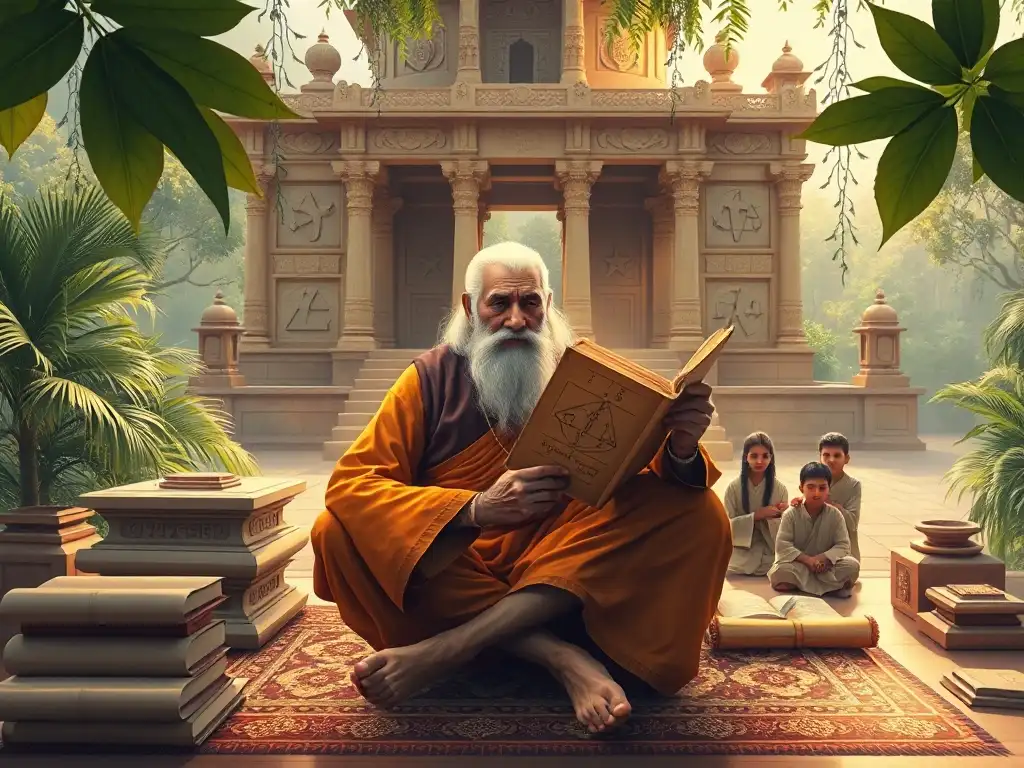
Examination of Specific Poems with Mathematical Elements
The Gupta period, renowned for its cultural and intellectual advancements, produced a rich tapestry of poetry that intricately wove mathematical concepts into its fabric. One notable example is the work of Kalidasa, whose poetry often reflects a deep understanding of nature and the cosmos, frequently employing mathematical imagery to enhance the aesthetic experience.
For instance, in his famous poem, "Raghuvamsa," Kalidasa utilizes numerical symbolism to convey the grandeur of royal lineage and the vastness of time. The poem includes references to the Kalpa, a term denoting an immense period in Hindu cosmology equivalent to millions of years, which can be interpreted as a reflection on the infinite nature of time through a mathematical lens.
Additionally, Bhavabhuti’s work, particularly in "Malatimadhava," showcases the use of geometric imagery to illustrate love and longing. The poet draws parallels between the angles and proportions of love and the mathematical principles underlying aesthetics, highlighting how mathematics and art are interwoven in Gupta literature.
Mathematical elements in these poems serve not only as metaphors but also enrich the text's philosophical depth, prompting readers to ponder the interconnectedness of human emotions and the universe's numerical framework.
Analysis of Prose that Integrates Mathematical Concepts
The prose of the Gupta period also demonstrates a sophisticated integration of mathematical concepts, particularly in works like "Brahmasphutasiddhanta" by Brahmagupta. This seminal work is significant for its systematic approach to mathematics, including arithmetic, algebra, and geometry, and its influence on subsequent literary and scientific traditions.
In "Brahmasphutasiddhanta," Brahmagupta discusses the concept of zero and its role in calculations, a revolutionary idea that transformed mathematical thought. His prose is rich with examples that illustrate the practical applications of mathematics in everyday life, such as land measurement and taxation, showcasing how mathematics was not only theoretical but also a vital tool for governance and society during the Gupta Empire.
Furthermore, the narrative style of "Vikramorvasiyam" by Kalidasa incorporates mathematical allegories to explore themes of fate and destiny. The geometric progression of events parallels mathematical sequences, creating a philosophical commentary on the inevitability of fate, which can be expressed through mathematical inevitability.
Through these prose works, the Gupta writers not only demonstrated their mathematical acumen but also highlighted the integral role of mathematics in understanding the world around them. The fusion of mathematical thought with literary expression in Gupta prose underscores the era's commitment to intellectual exploration and cultural richness, making it a significant chapter in the history of mathematics in Gupta literature.
The Impact of Mathematics on Gupta Literature and Culture

Mathematics during the Gupta Empire (circa 320 to 550 CE) was not merely a tool for calculations, but a profound influence that permeated various aspects of literature and culture. The Gupta period is often regarded as a golden age of Indian history, characterized by remarkable advancements in science, art, and literature. The integration of mathematical concepts into literary works reflects a sophisticated understanding of numerical systems and their applications, which served to enrich the cultural fabric of this era.
The flourishing of mathematics in Gupta literature can be seen in various forms, including poetry, drama, and philosophical texts. Mathematicians like Aryabhata and Brahmagupta not only contributed significantly to mathematical theories but also inspired literary works that celebrated these intellectual achievements. Their writings often included verses and narratives that combined mathematical concepts with poetic expression, creating a unique genre of literature that highlighted the importance of mathematics in everyday life and philosophical thought.
Influence on Subsequent Indian Literature
The legacy of mathematics in Gupta literature profoundly influenced subsequent Indian literary traditions. The mathematical concepts and poetic forms established during this period set a precedent for future writers.
- Integration of Mathematical Concepts: Later poets and writers incorporated mathematical ideas into their works, often using them as metaphors or allegories. For instance, the use of symmetry, proportions, and patterns in poetry can be traced back to the mathematical explorations of the Gupta period.
- Educational Texts: The mathematical treatises produced during the Gupta Empire, such as Aryabhata's Aryabhatiya, became educational cornerstones. These texts were often used in schools, influencing generations of scholars and poets who drew upon their mathematical insights in literary creations.
- Cultural Reflection: The emphasis on mathematics in Gupta literature also served to reflect the broader cultural and intellectual pursuits of the time. As literature began to explore abstract concepts, the mathematical underpinnings provided a framework for discussing themes such as infinity, time, and space.
This rich intermingling of mathematics and literature laid the groundwork for a literary tradition that would continue to evolve, incorporating complex mathematical ideas into poetic and prose forms well into the medieval period and beyond.
Cross-Cultural Exchanges and Their Effects on Mathematics in Literature
The Gupta Empire was a melting pot of ideas and cultures, enhancing the exchange of knowledge, particularly in mathematics and literature. The interactions between Indian scholars and those from other cultures, such as the Greeks and Persians, facilitated the transfer of mathematical concepts that enriched Gupta literary works.
- Transmission of Knowledge: As Indian mathematicians engaged with foreign scholars, they adopted and adapted various mathematical techniques. This cross-pollination of ideas led to the development of new mathematical frameworks that were often reflected in the literature of the time.
- Literary Themes: The inclusion of foreign mathematical ideas in Gupta literature often resulted in new themes and narrative styles. For example, Indian poets began to explore concepts such as the golden ratio and geometric patterns, weaving them into their literary compositions.
- Cultural Synthesis: The synthesis of diverse mathematical traditions within Gupta literature created a unique cultural identity. This convergence not only enriched the literary landscape but also established a shared intellectual heritage that would resonate through subsequent ages.
The significance of mathematics in Gupta literature extends far beyond mere calculations; it represents an essential component of the cultural and intellectual achievements of the Gupta Empire. The intricate relationship between mathematics and literature during this period has had a lasting impact, shaping literary traditions and fostering a broader understanding of knowledge across cultures.
Conclusion: The Lasting Significance of Mathematics in Gupta Literature
Summary of Key Contributions
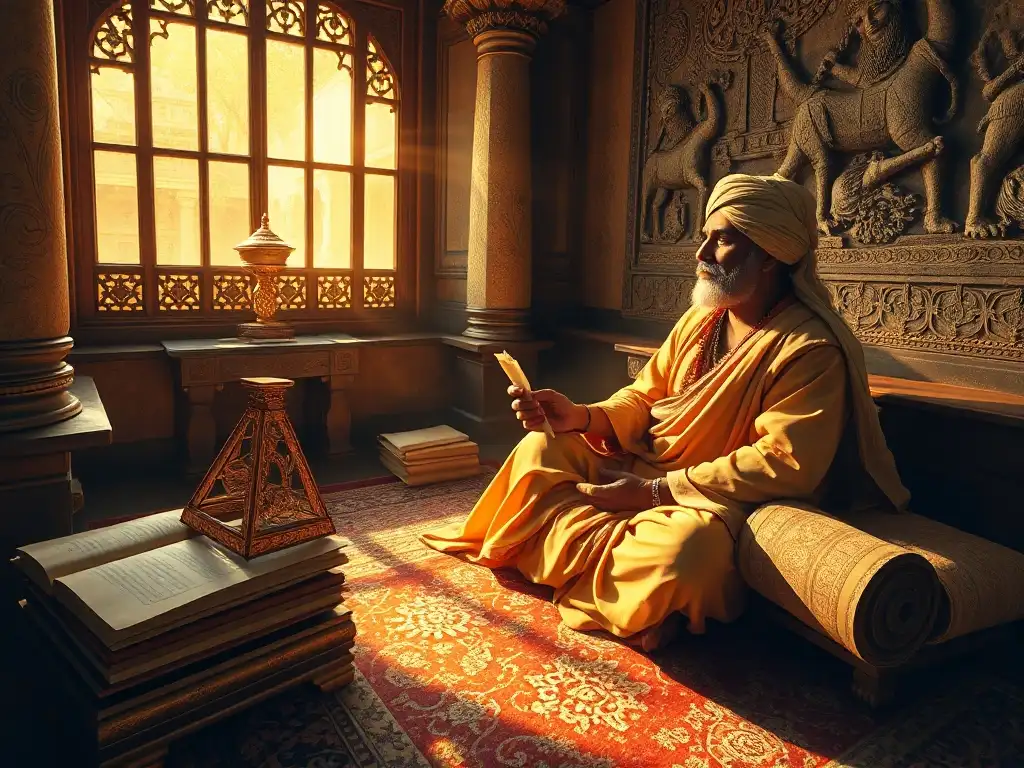
The Gupta Empire, often regarded as a golden age of Indian civilization, made remarkable contributions to various fields, including mathematics. The significance of mathematics in Gupta literature can be traced through several key figures and texts that have influenced both literary and scientific domains.
- Aryabhata: One of the most celebrated mathematicians of the Gupta era, Aryabhata's seminal work, the Aryabhatiya, introduced innovative concepts like the place value system and zero. His poetic verses not only conveyed mathematical theories but also integrated them seamlessly into the broader cultural context.
- Brahmagupta: Following in Aryabhata's footsteps, Brahmagupta's Brahmasphutasiddhanta further developed arithmetic and algebra. His contributions to solving quadratic equations and understanding negative numbers were groundbreaking, and he presented these ideas in a poetic format, making them accessible and memorable.
- Varahamihira: A polymath who contributed extensively to astronomy and mathematics, Varahamihira's Brihat Samhita contained mathematical calculations intertwined with astrological predictions, showcasing how mathematics served practical purposes in society.
- Kalidasa: Although primarily known as a poet, Kalidasa's works reflect a sophisticated understanding of mathematical concepts. His poems often utilized numerical symbolism, illustrating the interconnectedness of mathematics and art during the Gupta period.
These contributions highlight how mathematics in Gupta literature was not merely a mathematical exercise but an integral part of cultural expression, enhancing the aesthetic and intellectual fabric of the time.
Reflection on the Legacy of Gupta Mathematics in Literary Contexts
The legacy of Gupta mathematics extends far beyond the confines of numerical calculations; it resonates deeply within the literary contexts of the period. The intermingling of mathematical principles with poetic expression demonstrates a unique cultural synthesis that characterized Gupta literature.
- Cultural Synthesis: The inclusion of mathematical concepts in poetry and literature signifies a broader understanding of knowledge during the Gupta period. This blending reflects a society that valued both scientific inquiry and artistic expression, laying the groundwork for future intellectual pursuits.
- Educational Foundations: The poetic format of mathematical texts played a vital role in education. By embedding mathematical theories within verses, scholars ensured that these concepts were not only taught but also celebrated, facilitating their transmission across generations.
- Influence on Future Generations: The innovative mathematical approaches established during the Gupta period influenced later scholars in India and beyond. The poetic representation of mathematics inspired future literary and scientific works, reinforcing the idea that mathematics is not just a tool for calculations but a fundamental aspect of human creativity.
The mathematics in Gupta literature serves as a testament to the era's intellectual richness, illustrating how the Gupta Empire harmonized scientific rigor with literary beauty. This legacy continues to inspire contemporary scholars and poets, emphasizing the enduring impact of ancient Indian civilizations on the global stage.
Frequently Asked Questions
What is the significance of Mathematics in Gupta literature?
The Gupta period is known for its advancements in mathematics, which were intricately woven into literature and poetry, influencing various fields such as astronomy and architecture.
How did mathematics contribute to ancient Indian literature?
Mathematics played a crucial role in structuring poetry, where metrics and rhythmic patterns relied on numerical principles, showcasing the blend of art and science.
What are some notable mathematical texts from the Gupta era?
The Gupta period produced significant works like Aryabhatiya by Aryabhata and Brahmasphutasiddhanta by Brahmagupta, both of which greatly contributed to the field of mathematics.
How did Gupta poets incorporate mathematical concepts into their work?
Poets often used mathematical imagery and concepts to enhance their narrative structures, making their work rich in meaning and aesthetic appeal.
In what ways did mathematics influence Indian culture during the Gupta Empire?
The advancements in mathematics during the Gupta Empire fostered a sense of intellectual growth and influenced various domains, including astronomy, architecture, and even philosophy.
Final Reflection: The Enduring Legacy of Mathematics in Gupta Literature
The exploration of mathematics in Gupta literature reveals its profound significance in shaping not only the intellectual landscape of its time but also its lasting impact on contemporary thought. The intricate interplay between mathematical concepts and poetic expression during the Gupta period highlights a remarkable fusion of logic and creativity that continues to resonate today. This rich heritage serves as a reminder that the realms of art and science are not mutually exclusive; rather, they can enhance and elevate one another in ways that inspire innovation and understanding.
The influence of mathematics in Gupta literature is a testament to the era's cultural richness and intellectual curiosity. It has laid the groundwork for future generations to appreciate the beauty of numbers and their applications in various forms of expression. As we delve deeper into this fascinating intersection, we can see how it has shaped not only literary traditions but also the broader cultural narratives that define our understanding of knowledge. Mathematics is the language with which God has written the universe.
– Galileo Galilei. This quote encapsulates the essence of how mathematics transcends mere numbers and equations, becoming a vital part of our shared human experience.
As we reflect on the significance of mathematics in Gupta literature, I invite you to consider how this ancient wisdom can inform your own life and pursuits. Embrace the idea that creativity and logic can coexist harmoniously, and seek to apply the lessons learned from this rich historical context to your own endeavors. Whether you are a student, a professional, or simply a curious mind, let the legacy of Gupta literature inspire you to explore the connections between disciplines, fostering a deeper appreciation for the intricate tapestry of knowledge that surrounds us.
Unlock the Wonders of Mathematics in Gupta Literature!
Thank you for investing your time in exploring the fascinating connection between mathematics and Gupta literature and poetry! You’ve unearthed the significance of numbers in an era that richly contributed to art, science, and culture. Now, it’s time to deepen your understanding and share this knowledge with others.
Here are some exciting ways to take action:
- Dive Deeper: Explore a renowned work of Gupta literature that incorporates mathematical concepts, such as the writings of Aryabhata or the poetic forms that utilize numerical patterns. Consider how these concepts enhance the narrative or poetry.
- Join the Conversation: Share your insights and thoughts on our forums or social media platforms! Engage with fellow history enthusiasts who are passionate about the Gupta period and its rich literary contributions.
- Create and Share: Challenge yourself to write a short poem or story inspired by the mathematical principles you discovered in your reading. Encourage creativity by merging literature with mathematical ideas!
As you continue your journey through the beauty of Gupta literature, consider this: How can understanding the interplay between mathematics and poetry enhance our appreciation of ancient cultures? Share your thoughts below!