
The Role of Military Strategy in the Political Ascendancy of the Maurya Empire

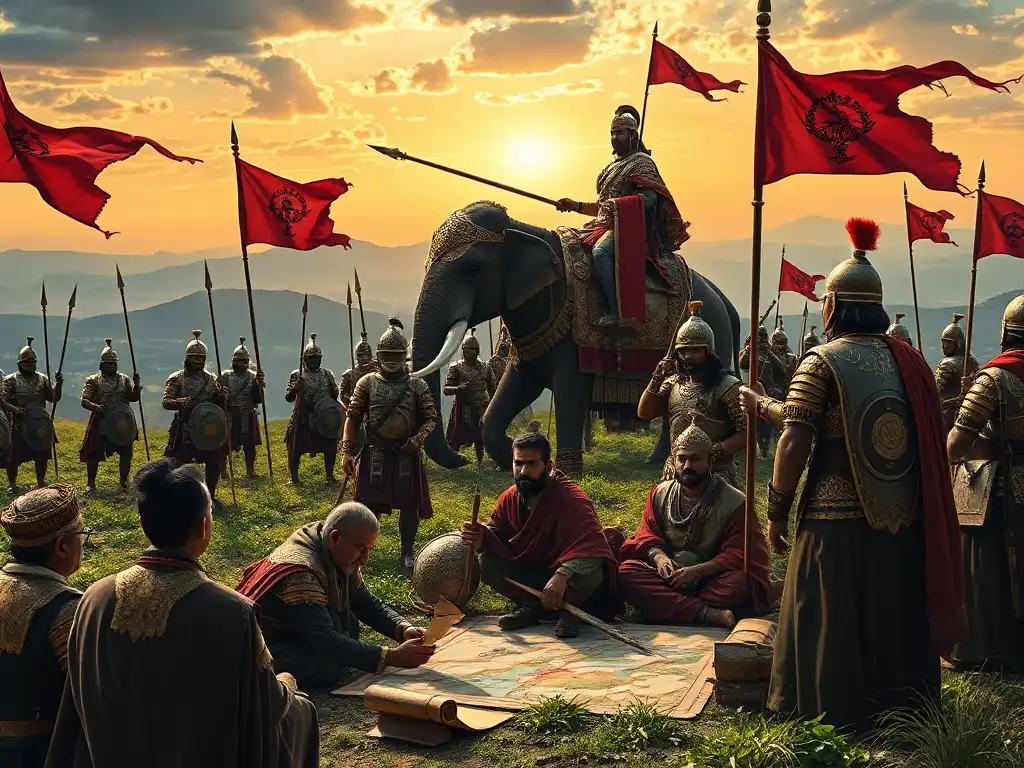
Welcome to Ancient India History, where we embark on an enthralling journey through the rich tapestry of ancient Indian civilizations. Delve into the intricate world of the Maurya Empire, particularly as we uncover the pivotal role of military strategy in its remarkable political ascendance. What tactics propelled this mighty empire to greatness? Join us as we explore the innovative strategies that shaped its destiny and laid the groundwork for a legacy that continues to influence the world today. Prepare to be captivated by the stories that await you!
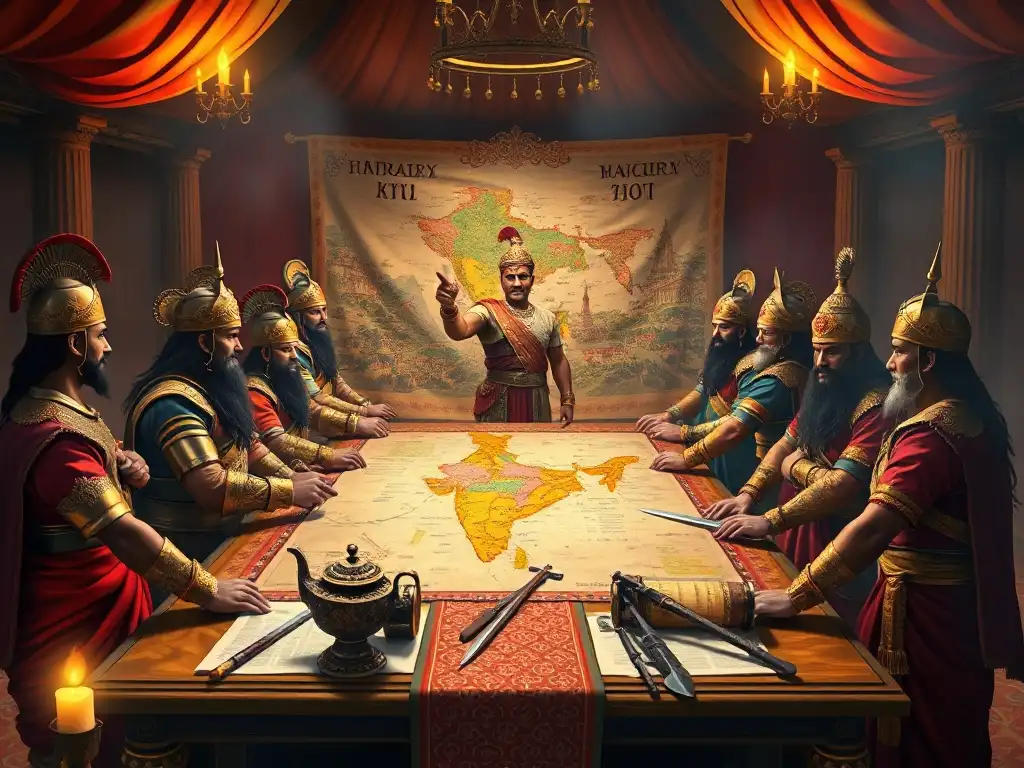
Introduction to the Maurya Empire
The Maurya Empire, one of the most significant empires in ancient Indian history, is renowned for its remarkable achievements in governance, culture, and military prowess. Established in 322 BCE by Chandragupta Maurya, this empire not only unified a large portion of the Indian subcontinent but also laid the groundwork for political and military strategies that would influence future generations.
The role of military strategy in the Maurya Empire was pivotal, serving as both a tool for expansion and a means of consolidating power. By analyzing the military tactics employed by the Mauryan rulers, we can gain insight into how these strategies facilitated their political ascendancy and shaped the historical narrative of ancient India.
Overview of Ancient Indian Civilizations
Ancient Indian civilizations, including the Indus Valley and Vedic cultures, were characterized by their rich cultural heritage, advanced urban planning, and social structures. The emergence of the Maurya Empire marked a transformative period, wherein these civilizations coalesced into a more centralized political system. This transition was not merely a change in governance but also an evolution in military organization and strategy. The Maurya Empire emerged during a time of fragmentation and conflict among smaller kingdoms, providing a fertile ground for the rise of military-focused leadership.
Emergence of the Maurya Empire
The Maurya Empire's rise can be traced back to the efforts of Chandragupta Maurya, who, with the guidance of his mentor Chanakya, strategically united various territories through a combination of military conquests, alliances, and political acumen. The empire expanded rapidly, capitalizing on the weaknesses of rival states and employing innovative strategies to maintain control over vast regions. This period of unification was characterized by the establishment of a centralized administration and a strong military infrastructure, which were essential for sustaining the empire's political strength.
Understanding Military Strategy in the Maurya Empire
To fully appreciate the military strategy in the Maurya Empire, it is crucial to define what military strategy entails and examine its significance in the context of ancient empires.
Definition of Military Strategy
Military strategy can be defined as the planning and execution of operations to achieve political and military objectives. It encompasses various elements, including troop deployment, logistics, intelligence gathering, and combat tactics. In the context of the Maurya Empire, military strategy was not only about engaging in battles but also about the art of diplomacy, resource management, and the psychological aspects of warfare.
Importance of Military Strategy in Ancient Empires
The importance of military strategy in ancient empires cannot be overstated. For the Maurya Empire, effective military strategies allowed for:
- Expansion of Territory: The ability to conquer and integrate new regions into the empire.
- Consolidation of Power: Maintaining control over vast areas and ensuring loyalty among diverse populations.
- Cultural Exchange: Facilitating the transfer of ideas, technologies, and cultural practices among conquered peoples.
- Political Stability: Providing a framework within which the empire could operate effectively, minimizing internal strife and resistance.
Through a combination of innovative strategies and effective leadership, the Maurya Empire exemplified how military prowess can significantly influence political outcomes and contribute to the legacy of a civilization.
Key Elements of Military Strategy in the Maurya Empire
The military strategy of the Maurya Empire, particularly under the leadership of Chandragupta Maurya and his grandson Ashoka, was characterized by several key elements that facilitated their political ascendancy. One of the primary components was the integration of a well-organized military structure that allowed for efficient command and control. This organization was crucial for executing complex campaigns across diverse terrains.
Another significant aspect was the emphasis on intelligence and reconnaissance. The Mauryan military utilized spies and scouts to gather information about enemy positions, resources, and movement patterns, enabling them to make informed strategic decisions. Additionally, the Maurya Empire placed a strong focus on adaptability in warfare, allowing their forces to employ various tactics based on the specific challenges posed by different adversaries.
Logistics also played a vital role in their military strategy. The Mauryan army was supported by a robust supply chain that ensured troops had access to necessary resources, including food, weapons, and medical supplies. This logistical efficiency was essential for sustaining prolonged campaigns and maintaining troop morale.
Organizational Structure of the Mauryan Army
The organizational structure of the Mauryan army was hierarchical and sophisticated, reflecting the empire's administrative capabilities. At the top of this hierarchy was the supreme commander, often the emperor himself, who had ultimate authority over military decisions. Below him were various generals and commanders responsible for different divisions of the army, including infantry, cavalry, and chariot corps.
The infantry formed the backbone of the Mauryan military, consisting of well-trained soldiers equipped with a variety of weapons such as swords, spears, and bows. The cavalry, comprising horsemen, provided mobility and the ability to execute flanking maneuvers, while the chariot units were crucial for shock value in battle, often used to break enemy lines.
Supporting these combat units were specialized divisions, such as engineers responsible for siege warfare and fortifications, as well as medical personnel to care for the wounded. This structured approach allowed the Mauryan army to deploy large forces effectively and respond to changing battlefield conditions.
Types of Military Units and Their Functions
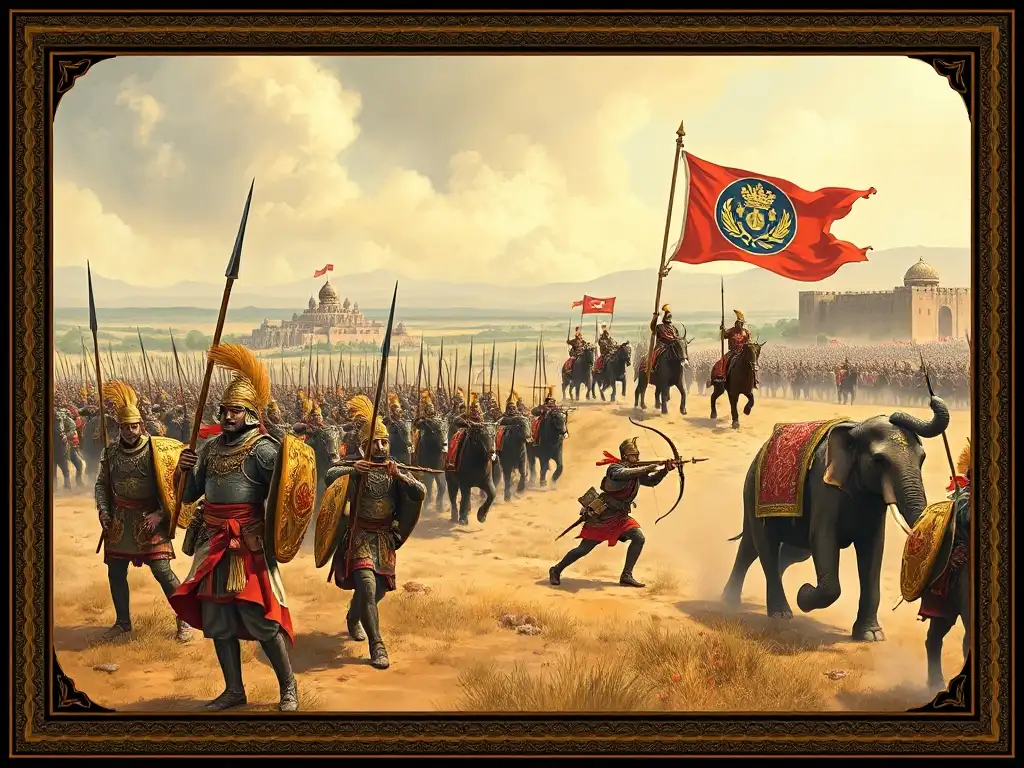
The Maurya Empire's military was composed of various specialized units, each designed to fulfill specific roles in warfare.
- Infantry: The largest segment of the army, infantry units engaged in direct combat and were equipped for both offense and defense. Their training emphasized discipline and coordination.
- Cavalry: These mounted units provided speed and flexibility on the battlefield. Cavalrymen were crucial for reconnaissance missions and were often used to pursue retreating enemies or to flank opposing forces.
- Chariots: Chariot units were typically used in the initial phases of battle to create chaos among enemy ranks. They were manned by skilled drivers and archers who delivered ranged attacks from a mobile platform.
- Siege Engineers: Responsible for constructing siege engines and fortifications, these units played a vital role during protracted sieges and defensive operations. Their expertise allowed the Mauryans to breach enemy walls or protect their own cities effectively.
- Special Forces: The Mauryan army also employed specialized troops for specific missions, including assassins and scouts. These forces were vital for espionage and executing covert operations.
Innovations in Warfare and Tactics
The Maurya Empire was marked by significant innovations in warfare and tactics that set it apart from its predecessors. One of the most notable advancements was the development of sophisticated siege machinery, such as battering rams and catapults, which enabled the Mauryan forces to conduct effective sieges against fortified cities.
Additionally, the Mauryans adopted a range of military formations and battle strategies that emphasized flexibility and adaptability. The use of the "Phalanx" formation allowed for the creation of a solid front line that was difficult for enemies to penetrate. This tactical arrangement was particularly effective against numerically superior foes.
The Mauryan military also benefitted from the integration of various combat techniques, including archery, cavalry charges, and coordinated attacks, allowing them to exploit weaknesses in enemy defenses. Furthermore, the emphasis on psychological warfare and morale-boosting strategies helped maintain troop cohesion and deter enemy forces.
Major Military Campaigns and Their Political Implications
The military campaigns of the Maurya Empire were not merely military endeavors; they were deeply intertwined with political objectives that shaped the empire's expansion and consolidation of power. Each campaign had significant ramifications for both the empire and the regions it sought to control.
The Conquest of Magadha: A Strategic Move
Chandragupta Maurya's conquest of Magadha marked the foundation of the Maurya Empire. This strategic move not only provided access to fertile lands and resources but also positioned Chandragupta as a formidable power in northern India. By defeating the Nanda dynasty, he established a legacy of strength and set the stage for future conquests. The consolidation of Magadha allowed for a centralized administration, facilitating the collection of taxes and the mobilization of military resources.
Expansion into North-West India: Challenges and Strategies
The Maurya Empire's expansion into North-West India was fraught with challenges, including resistance from local rulers and the harsh geographical terrain. However, through a combination of military prowess and strategic alliances, the Mauryas were able to overcome these hurdles. This expansion not only increased the empire's territory but also its influence over trade routes, allowing for economic prosperity.
The Mauryan strategy often involved a blend of military might and diplomacy. By forging alliances with local chieftains and tribes, they were able to secure loyalty and reduce the need for prolonged military campaigns. This approach not only minimized conflict but also facilitated smoother governance in newly acquired territories.
The Role of Diplomacy and Alliances in Military Strategy
Diplomacy played a crucial role in the Mauryan military strategy, complementing their military campaigns. The Mauryas recognized the importance of alliances in achieving their political goals. By marrying into local royal families or forming pacts with influential leaders, they were able to secure peace and stability in regions they sought to control.
Moreover, the use of emissaries and diplomats to negotiate terms with rival states often resulted in beneficial outcomes without the need for conflict. This diplomatic engagement allowed the Mauryan Empire to expand its influence while conserving military resources for more significant threats. The balance between warfare and diplomacy was a hallmark of Mauryan strategy, showcasing a sophisticated understanding of political dynamics in ancient India.
The Influence of Military Strategy on the Political Landscape
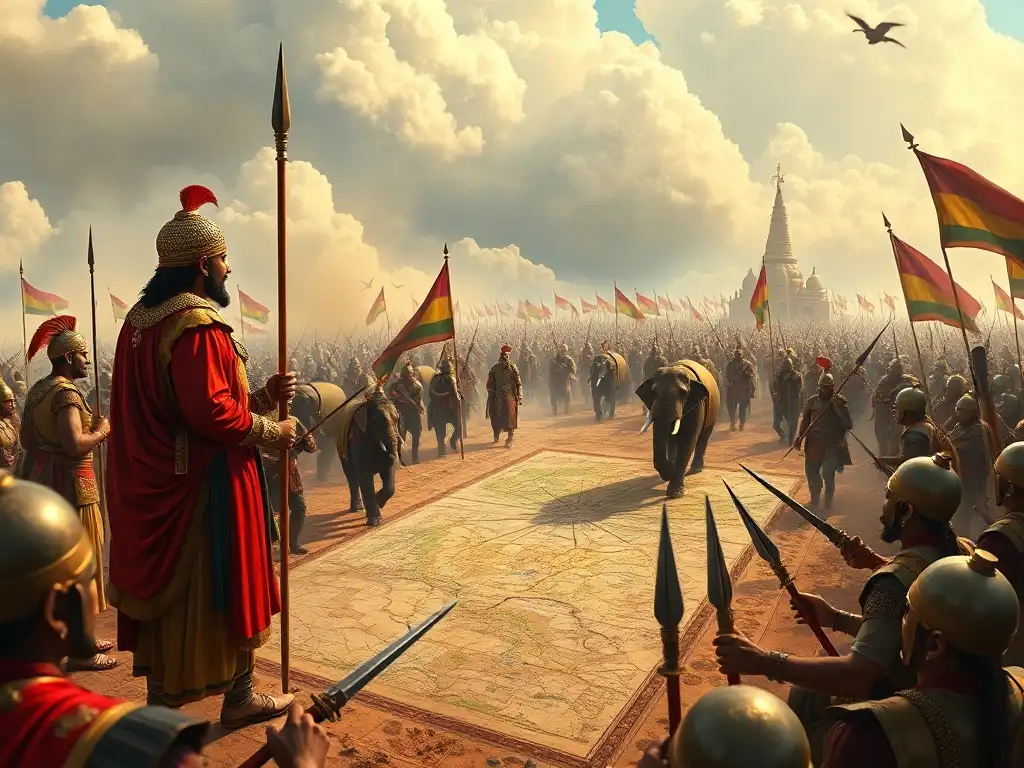
The military strategy employed by the Maurya Empire played a pivotal role in shaping its political landscape. Under the leadership of Chandragupta Maurya and later his grandson Ashoka, the Mauryan dynasty leveraged military might not merely for conquest but as a tool for establishing and maintaining governance across a vast territory. This strategy allowed the empire to consolidate its power, suppress dissent, and expand its influence through calculated military campaigns.
Effective military organization and tactics were essential in controlling the diverse regions of India, which presented unique challenges in terms of geography, culture, and political structures. The Mauryan military was characterized by a well-structured hierarchy, a diverse army comprising infantry, cavalry, and war elephants, and innovative strategies that included espionage and psychological warfare. These elements combined to create a formidable force that enabled the Maurya Empire to navigate the complexities of ancient Indian politics successfully.
Centralization of Power through Military Control
The centralization of power in the Maurya Empire was heavily reliant on military control. Chandragupta Maurya, with the guidance of his advisor Chanakya, established a centralized administration that utilized military strength to reinforce the authority of the emperor. The military served not only as a defense mechanism but also as a means of enforcing law and order, thereby preventing regional rebellions and local power struggles.
The establishment of a strong capital, Pataliputra, further facilitated this centralization. The city became the heart of administrative and military operations, allowing for swift mobilization of forces when necessary. By controlling the military, the Mauryan rulers could project power and maintain the loyalty of various regional governors and local chieftains, ensuring that the empire remained cohesive and unified despite its vast geographical expanse. This centralization also laid the groundwork for effective taxation and resource allocation, which were crucial for sustaining the military and the administration.
Military Strategy and the Rise of Chandragupta Maurya
Chandragupta Maurya’s ascent to power was intricately tied to his military strategy. Initially starting as a regional leader, he recognized the need for a well-planned military campaign to overthrow the Nanda Dynasty, which ruled over northern India. With the tactical guidance of Chanakya, Chandragupta devised a series of strategic moves, including forming alliances with local rulers and exploiting the weaknesses of his enemies.
His military campaigns were marked by surprise attacks and the use of guerrilla tactics, which allowed him to undermine the Nanda forces effectively. The successful conquest of Pataliputra and the subsequent establishment of the Maurya Empire demonstrated the effectiveness of his military strategy. Furthermore, the incorporation of war elephants and a disciplined infantry helped consolidate his power, enabling him to expand his control over a significant part of India, which was crucial for the future stability and expansion of the empire.
Ashoka's Shift from Military Conquest to Political Stability
Ashoka, Chandragupta's grandson, represents a significant transformation in the Maurya Empire's approach to military strategy. Initially, Ashoka followed in his grandfather's footsteps, engaging in military conquests to expand the empire. The most notable of these was the Kalinga War, which resulted in a massive loss of life and profoundly affected Ashoka's outlook on warfare.
Following the Kalinga War, Ashoka shifted his focus from military conquest to the promotion of political stability and social welfare. He embraced the principles of Buddhism, advocating for non-violence and moral governance. This strategic pivot not only helped to quell potential uprisings but also fostered a sense of unity and loyalty among his subjects. Ashoka’s edicts, which emphasized ethical governance and welfare policies, became instrumental in consolidating his rule without the reliance on military force, marking a significant evolution in the role of military strategy within the Maurya Empire.
Military Strategy in the Maurya Empire: A Comparative Analysis
The military strategy of the Maurya Empire can be compared with that of other ancient Indian kingdoms to highlight its unique characteristics and effectiveness. Unlike smaller kingdoms that relied primarily on local militias and traditional warfare, the Maurya Empire developed a more organized and professional military that integrated various elements of warfare.
Comparison with Other Ancient Indian Kingdoms
When compared to contemporaneous states such as the Nanda or the Gupta Empires, the Maurya military strategy stood out due to its scale and coordination. The Nanda Dynasty, known for its wealth, had a large army but lacked the strategic innovation that characterized the Mauryan approach. In contrast, the Mauryans combined effective logistics, intelligence operations, and a well-disciplined military force.
Furthermore, while the Guptas later adopted a similar structured military system, they often relied on feudal alliances and local rulers to maintain their power. The Maurya Empire, however, maintained direct control over its military forces, allowing for rapid response to threats and more cohesive governance across its territories. This centralization of military power established a template that influenced subsequent Indian empires.
Lessons from Mauryan Military Strategy for Future Empires
The military strategies employed by the Maurya Empire offer valuable lessons for future empires regarding the importance of a cohesive military structure, strategic flexibility, and the ability to adapt to changing political landscapes. The emphasis on centralization, logistical support, and innovative tactics can serve as a blueprint for any empire aiming to achieve and maintain political ascendancy.
Moreover, Ashoka's transition from military conquest to governance through welfare emphasizes the significance of public sentiment in sustaining power. Future leaders can learn from the Mauryan experience that military strength alone is not sufficient; the ability to govern ethically and effectively can ultimately lead to long-lasting stability and prosperity. The balance between military might and political acumen remains a crucial lesson from the Maurya Empire’s history.
Conclusion
The Maurya Empire, one of the largest and most influential empires in ancient India, owes much of its political ascendance to its innovative military strategies. These strategies not only facilitated territorial expansion but also played a crucial role in consolidating power and maintaining control over a vast and diverse population. The effectiveness of military tactics employed by leaders like Chandragupta Maurya and his grandson Ashoka laid the groundwork for a centralized governance structure that thrived for centuries.
Summary of Military Strategy's Role in Political Ascendancy
Military strategy was integral to the Maurya Empire's rise, beginning with Chandragupta Maurya's initial unification of smaller kingdoms. His approach included:
- Guerrilla Warfare: Utilizing knowledge of local terrains, Chandragupta employed guerrilla tactics to ambush larger, more established armies, which allowed him to gain the upper hand despite being outnumbered.
- Alliances and Diplomacy: Forming strategic alliances with regional powers enabled Chandragupta to expand his influence without direct confrontation, conserving resources and manpower.
- Professional Army: The establishment of a standing army comprised of trained soldiers ensured that the Maurya Empire could respond swiftly to threats and maintain order within its territories.
- Innovative Siege Techniques: The Mauryan military was adept at employing advanced siege techniques, allowing for the successful capture of fortified cities, which was crucial in expanding their domain.
These military strategies not only resulted in territorial gains but also contributed to the establishment of a strong administrative framework that facilitated governance across diverse regions.
Reflections on the Legacy of the Maurya Empire in Ancient Indian History
The military strategies that propelled the Maurya Empire to prominence left an indelible mark on ancient Indian history. The empire's ability to integrate various cultures and ethnic groups under a single political entity set a precedent for future Indian empires.
- Cultural Synthesis: The Maurya Empire's conquests led to cultural exchanges that enriched Indian civilization, influencing art, literature, and religion. The spread of Buddhism, particularly during Ashoka's reign, exemplifies how military conquests can lead to profound cultural transformations.
- Administrative Innovations: The military organization of the Maurya Empire paved the way for innovative administrative practices. The centralization of power and establishment of a bureaucratic system were direct outcomes of the military's influence, which facilitated efficient governance.
- Historical Influence: The military strategies of the Maurya Empire influenced subsequent Indian empires, setting a standard for military organization and tactics that persisted for centuries. The legacy of their strategies can be seen in the military doctrines of later dynasties, showcasing the enduring impact of the Maurya Empire.
The military strategy in the Maurya Empire was not only a vehicle for territorial expansion but also a catalyst for cultural integration and administrative evolution, shaping the course of ancient Indian history.
- Introduction to the Maurya Empire
- Understanding Military Strategy in the Maurya Empire
- Key Elements of Military Strategy in the Maurya Empire
- Organizational Structure of the Mauryan Army
- Types of Military Units and Their Functions
- Innovations in Warfare and Tactics
- Major Military Campaigns and Their Political Implications
- The Influence of Military Strategy on the Political Landscape
- Military Strategy in the Maurya Empire: A Comparative Analysis
- Conclusion
- What was the significance of military strategy in the Maurya Empire?
- Who were the key figures in shaping the military tactics of the Maurya Empire?
- How did the Maurya Empire ensure its military was well-organized?
- What role did war elephants play in the Maurya Empire's military strategy?
- How did the Gupta Empire learn from the military tactics of the Maurya Empire?
Frequently Asked Questions
What was the significance of military strategy in the Maurya Empire?
The military strategy was crucial for the political ascendance of the Maurya Empire, enabling them to expand territory and consolidate power effectively.
Who were the key figures in shaping the military tactics of the Maurya Empire?
Key figures like Chandragupta Maurya and his advisor Chanakya played pivotal roles in developing innovative military tactics that strengthened the Empire's defenses and offensive capabilities.
How did the Maurya Empire ensure its military was well-organized?
The Maurya Empire implemented a structured military hierarchy and established efficient supply lines, which ensured that their armies were well-prepared for both defensive and offensive operations.
What role did war elephants play in the Maurya Empire's military strategy?
War elephants were essential in the Maurya military strategy; they not only served as a psychological weapon but also offered significant advantages in battlefield mobility and intimidation.
How did the Gupta Empire learn from the military tactics of the Maurya Empire?
The Gupta Empire adopted and refined the successful military strategies of the Maurya Empire, leading to a period of stability and further territorial expansion through improved administration and military organization.
Final Reflection: The Enduring Legacy of Military Strategy in the Maurya Empire
The intricate relationship between military strategy and political power is as relevant today as it was during the rise of the Maurya Empire. The strategic prowess displayed by leaders like Chandragupta Maurya and his grandson Ashoka not only shaped the political landscape of ancient India but also set a precedent for how military might can influence governance and statecraft. In an era where geopolitical tensions continue to shape global dynamics, understanding the historical context of military strategy offers invaluable insights into contemporary political maneuvers.
The Maurya Empire's military strategies were not merely tools of conquest; they were foundational elements that forged a cohesive identity and unity among diverse populations. The legacy of these strategies resonates through time, influencing not just military doctrines but also the very fabric of societal organization and governance. As historian Romila Thapar aptly noted, The Mauryan Empire exemplifies how military strategy can be a catalyst for political stability and cultural integration.
This observation underscores the profound impact that military decisions have on the broader social and cultural landscape, a lesson that remains pertinent in today's world.
As we reflect on the lessons drawn from the Maurya Empire, let us consider how we can apply these insights to our own lives and societies. How can we harness the power of strategic thinking to foster unity and resilience in our communities? I invite you to contemplate the role of strategy in your own endeavors—be it in leadership, conflict resolution, or community building. By embracing the principles of thoughtful planning and decisive action, we can create pathways for progress that echo the enduring legacy of the Maurya Empire.
Unveil the Secrets of Mauryan Military Genius!
Thank you for diving into the fascinating world of the Maurya Empire! By exploring the intricate relationship between military strategy and political power, you've uncovered valuable insights that shape our understanding of ancient leadership. Now, it's time to take those insights further and put them into action.
- Engage with history: Join local historical societies or participate in online forums to discuss the tactics that contributed to the success of the Maurya Empire and their relevance in contemporary times.
- Share your knowledge: Create a blog post or a social media update about a military strategy that captivated you, encouraging others to share their perspectives.
- Explore further: Visit a museum or historical site that showcases artifacts or exhibits related to ancient military tactics and their political implications.
What do you believe is the most crucial military strategy that influences the political landscape in today's world? We invite you to share your thoughts below!