
The Concept of Prakriti: Nature and Its Philosophical Implications in Hinduism


Welcome to Ancient India History, where we delve into the rich tapestry of civilizations that shaped the subcontinent. Today, we invite you to journey into the profound depths of Hindu philosophy as we explore the Philosophical implications of Prakriti. What does nature mean in the context of ancient Indian thought, and how does it influence our understanding of existence? Unravel the mysteries surrounding this pivotal concept and discover the insights it offers into the interconnectedness of life and the universe. Join us as we uncover the layers of wisdom that define our past and continue to resonate today.
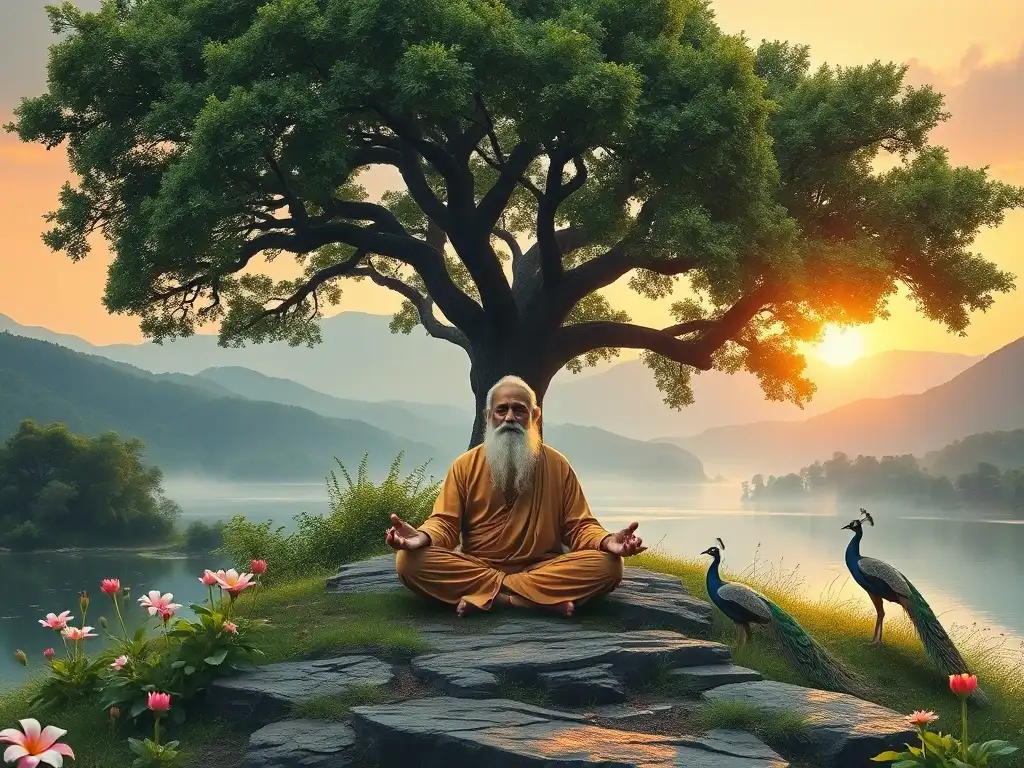
Understanding the concept of Prakriti is essential to grasping the philosophical framework of Hinduism and its view of the natural world. Prakriti, often translated as nature or the material universe, embodies the dynamic and ever-changing aspects of existence. This foundational idea has profound implications for various philosophical discourses within Hindu thought, particularly concerning the relationship between the material world and the spiritual realm.
In this article, we will explore the rich tapestry of meanings associated with Prakriti, its historical context in ancient Indian texts, and its philosophical implications, particularly focusing on the duality of Purusha (consciousness) and Prakriti, the role of Prakriti as the source of all creation, and its interconnectedness with human existence. By delving into this concept, we aim to illuminate how ancient Indian civilizations understood and articulated their relationship with nature and the cosmos.
Introduction to Prakriti in Hindu Philosophy
Defining Prakriti: The Essence of Nature
Prakriti is often understood as the material nature that encompasses all physical phenomena. In Hindu philosophy, it is not merely the physical environment but a complex interplay of elements, energies, and forces that constitute the universe. This includes everything from the earth, water, fire, air, and space, to the subtle qualities that govern life and consciousness.
- Key Characteristics of Prakriti:
- Dynamic: Prakriti is constantly changing and evolving.
- Creative: It is the source of all forms and manifestations.
- Interdependent: Prakriti exists in relation to Purusha, the universal spirit or consciousness.
Historical Context of Prakriti in Ancient Indian Texts
The concept of Prakriti finds its roots in various ancient texts, most notably the Samkhya philosophy, which presents a dualistic view of existence.
- Key Texts:
- Bhagavad Gita: Discusses the interplay between Prakriti and Purusha.
- Upanishads: Explore the nature of reality and consciousness.
- Puranas: Elaborate on the creation narratives and the role of Prakriti.
These texts illustrate how ancient Indian thinkers perceived the world around them, framing nature not as a separate entity but as an integral part of the cosmic order.
Importance of Understanding Prakriti in Hinduism
Grasping the concept of Prakriti is vital for several reasons:
- Cognitive Framework: It provides a lens through which to interpret human existence and the universe.
- Spiritual Significance: Understanding Prakriti aids in comprehending the spiritual practices aimed at harmonizing oneself with nature.
- Ethical Implications: Recognizing the interconnectedness of all beings fosters a sense of responsibility towards the environment.
Philosophical Implications of Prakriti
The Duality of Purusha and Prakriti
In Hindu philosophy, the relationship between Purusha and Prakriti is central to understanding existence.
- Purusha: Represents pure consciousness, the observer.
- Prakriti: Represents the observed, the material universe.
This duality reflects the dynamic interplay of consciousness and matter, where each is incomplete without the other. The liberation of the soul (moksha) is often discussed in terms of realizing one's true nature beyond the limitations imposed by Prakriti.
Prakriti as the Source of All Creation
Prakriti is viewed as the origins of all creation, embodying the forces that drive the universe's evolution.
- Creation Myths: Many ancient texts narrate how the cosmos emerged from Prakriti, illustrating its role as the fertile ground from which life springs forth.
- Cycles of Creation and Destruction: In Hindu cosmology, Prakriti undergoes cycles of creation, preservation, and dissolution, symbolizing the eternal rhythm of life.
Interconnectedness of Prakriti with Human Existence
Understanding Prakriti extends to recognizing how it intertwines with human life.
- Natural Laws: The laws governing nature also govern human behavior and ethics.
- Holistic Perspective: Ancient Indian philosophy promotes a holistic view, suggesting that human health and well-being are connected to the health of the environment.
By appreciating the philosophical implications of Prakriti, we can cultivate a deeper awareness of our place within the universe and the responsibilities that come with it.
Different Interpretations of Prakriti
Prakriti, a fundamental concept in Hindu philosophy, encapsulates various interpretations that enrich our understanding of nature and existence. Its meanings and implications extend across different philosophical schools, each offering unique insights. This diversity reflects the complexity of nature, perceived both as a physical entity and as a metaphysical principle. Understanding these interpretations is crucial for grasping the philosophical implications of Prakriti, particularly in how they relate to the cosmos, human behavior, and the moral fabric of society.
Prakriti in Samkhya Philosophy
In Samkhya philosophy, Prakriti is understood as the primordial matter, the source of all creation. It is the dynamic, ever-changing aspect of reality, composed of three gunas (qualities): sattva (purity), rajas (activity), and tamas (inertia). These gunas interact to create the material world and influence human behavior.
The dualistic nature of Samkhya posits that Prakriti exists alongside Purusha, the conscious self or spirit. While Purusha is unchanging and eternal, Prakriti is seen as the evolving and manifesting force. This interplay between Purusha and Prakriti leads to the cycle of birth, death, and rebirth, emphasizing the need for self-realization and liberation (moksha) from the material entanglements caused by Prakriti.
Prakriti in Yoga Philosophy
In Yoga philosophy, particularly as articulated in the Yoga Sutras of Patanjali, Prakriti is viewed as a manifestation of the mind and body complex. The practice of Yoga aims to transcend the fluctuations of Prakriti by achieving a state of stillness and clarity in the mind. Here, Prakriti is seen not just as an external force but as an internal one that influences thought patterns and emotional responses.
The philosophical implication of Prakriti in Yoga emphasizes the necessity of self-discipline and meditation. By controlling the mind and its tendencies, one can attain a union with Purusha, leading to liberation. This perspective highlights the transformative potential of recognizing and understanding Prakriti as a means to achieve higher states of consciousness.
Prakriti in Vedanta Philosophy
In Vedanta, Prakriti is often analyzed in relation to Brahman, the ultimate reality. Here, Prakriti is considered an illusory aspect of the material world (Maya), which distracts individuals from realizing their true nature as part of the non-dual Brahman. Vedanta posits that while Prakriti is real in the empirical sense, it is ultimately transient and deceptive.
The interaction between Prakriti and Brahman leads to the manifestation of the universe, where Prakriti acts as the dynamic substrate through which the divine expresses itself. The philosophical implications here suggest that understanding Prakriti can lead to liberation through the realization of the oneness of all existence. This perspective encourages individuals to seek knowledge and wisdom to transcend the limitations imposed by the material world.
The Role of Prakriti in Hindu Cosmology
Prakriti plays a pivotal role in Hindu cosmology, providing a framework for understanding the universe's structure and processes. It is not merely a passive backdrop but an active participant in the cosmic drama, influencing all forms of existence and their evolution.
The Evolution of the Universe through Prakriti
According to Hindu cosmology, the universe undergoes cycles of creation, preservation, and destruction, often referred to as the cycles of Yugas. Prakriti is integral to this process, as it is through the interplay of the gunas that the cosmos evolves. Each cycle begins with the dissolution of the universe, where Prakriti returns to its unmanifest state, followed by a new creation where the gunas re-emerge and interact to form diverse life forms and natural phenomena.
This cyclical view of evolution underscores the idea that nature is both a creative and destructive force, emphasizing the transient nature of existence. The philosophical implications of this evolution through Prakriti reflect the interconnectedness of all beings and the continuous flow of life.
Prakriti's Influence on Time and Cycles of Creation
Prakriti is also intricately linked to the concept of time in Hindu cosmology. The rhythmic cycles of nature, such as the changing of seasons and the lunar phases, are manifestations of Prakriti's influence. Time is seen as cyclical rather than linear, with each cycle representing a new opportunity for growth and transformation.
This understanding of time affects how individuals perceive their existence and responsibilities. Recognizing the cyclical nature of time encourages a deeper appreciation for the present moment and the importance of aligning one’s actions with the natural rhythms of the universe.
The Impact of Prakriti on Dharma and Moral Order
Prakriti significantly impacts the concept of Dharma, or moral order, in Hindu philosophy. The gunas of Prakriti influence human behavior, shaping ethical frameworks and societal norms. Each individual's nature, influenced by the predominance of a particular guna, determines their duties and responsibilities within their family and society.
The philosophical implications of Prakriti on Dharma suggest that understanding one's own nature is essential for fulfilling one’s role in the cosmic order. By aligning personal Dharma with the principles of Prakriti, individuals can contribute positively to society and maintain harmony in the universe. This intricate relationship underscores the importance of self-awareness and moral integrity in navigating life’s complexities.
Modern Perspectives on Prakriti and Its Relevance

The concept of Prakriti, which translates to "nature" or "matter," has evolved significantly in contemporary discussions, particularly in relation to environmental philosophy and the sciences. This evolution reflects a growing recognition of interconnectedness between human beings and the natural world, as well as the philosophical implications that arise from this relationship. Modern perspectives on Prakriti not only honor its ancient roots in Hindu thought but also contextualize its relevance in today's rapidly changing world.
Prakriti in Contemporary Environmental Philosophy
In recent years, the idea of Prakriti has gained traction within contemporary environmental philosophy, emphasizing the intrinsic value of nature beyond mere utility for human beings. Environmental ethicists advocate for a worldview that respects the autonomy of Prakriti, promoting a deeper understanding of ecological balance and sustainability. This perspective aligns with ancient Hindu teachings that view nature as a living entity, deserving of reverence and protection.
Prominent philosophers, like Arne Naess and Aldo Leopold, have echoed similar sentiments, urging for a shift from anthropocentric to ecocentric approaches. The concept of Prakriti serves as a necessary foundation for these discussions, prompting us to recognize our responsibilities towards the environment and encouraging practices that honor the delicate interplay between all forms of life.
The Reflection of Prakriti in Modern Science
Modern scientific discourse increasingly reflects themes associated with Prakriti, particularly in fields like ecology, biology, and physics. For instance, the principles of systems thinking and holistic ecology resonate with the idea that all elements of nature are interconnected and interdependent, akin to the ancient understanding of Prakriti as a dynamic force that encompasses both the material and the energetic aspects of existence.
Moreover, the study of ecosystems and biodiversity reinforces the notion that the health of Prakriti is essential to the well-being of humanity. Research in areas such as climate change and sustainability demonstrates the urgent need to reevaluate our relationship with nature, highlighting the philosophical implications of Prakriti as a guiding framework for addressing contemporary environmental challenges.
Philosophical Implications of Prakriti in Today's World
The philosophical implications of Prakriti in today's world extend beyond environmental concerns and touch upon ethical, social, and spiritual dimensions. As societies grapple with issues such as climate change, resource depletion, and social justice, the ancient wisdom embodied in the concept of Prakriti offers valuable insights. It encourages a holistic view that recognizes the interconnectedness of all beings and promotes harmony between humans and nature.
Furthermore, Prakriti invites reflection on the nature of existence, encouraging individuals to consider their roles within the larger tapestry of life. This introspection can lead to a more mindful and responsible approach to living, fostering a sense of stewardship towards the earth and its resources.
Conclusion: The Enduring Legacy of Prakriti in Hindu Thought
The legacy of Prakriti in Hindu thought is profound and multifaceted, extending from ancient texts to contemporary discussions. As a foundational concept, Prakriti continues to inform philosophical inquiries, ethical considerations, and ecological practices. Its enduring relevance underscores the importance of integrating ancient wisdom into modern frameworks for understanding our relationship with nature.
Summary of the Philosophical Implications of Prakriti
The philosophical implications of Prakriti encompass a spectrum of ideas that emphasize the interconnectedness of all life, the value of nature, and the ethical responsibilities that arise from this understanding. By revisiting the teachings of ancient Indian philosophy, we can derive valuable insights that address current ecological and social challenges, fostering a more harmonious existence with the natural world.
Future Directions for the Study of Prakriti in Hinduism
Looking ahead, future directions for the study of Prakriti in Hinduism may involve interdisciplinary approaches that bridge philosophy, ecology, and social justice. Scholars and practitioners alike can explore how the principles of Prakriti can inform sustainable practices and ethical frameworks in contemporary society. Additionally, further research on the interpretations of Prakriti across various Hindu texts and traditions could enrich our understanding of its implications in both historical and modern contexts, ensuring that this vital concept continues to inspire and guide future generations.
References and Further Reading
Understanding the philosophical implications of Prakriti in Hinduism requires a thorough exploration of its foundational texts and scholarly interpretations. Below are some essential texts and resources that provide deeper insight into the multifaceted nature of Prakriti and its significance in Hindu philosophy.
Key Texts on Prakriti and Philosophy
-
The Bhagavad Gita
This seminal text is pivotal in exploring the relationship between Prakriti (nature) and Purusha (consciousness). Key verses delve into the interplay of these two forces, highlighting their roles in the cosmic order and human existence.
-
Sankhya Karika by Ishvara Krishna
The Sankhya philosophy, which significantly discusses Prakriti, is meticulously outlined in this text. It elaborates on the dualistic nature of existence and the evolution of the universe through the interaction between Prakriti and Purusha.
-
Yoga Sutras of Patanjali
This foundational work on yoga philosophy discusses the mind and its relation to Prakriti. It emphasizes the importance of understanding one's nature (Prakriti) for attaining spiritual liberation (Kaivalya).
-
Shankara's Commentary on the Upanishads
Adi Shankaracharya's interpretations of the Upanishads provide profound insights into the non-dualistic view of Prakriti. His commentaries elucidate the concept of Maya and the illusory nature of the material world.
-
Taittiriya Upanishad
This Upanishad offers a detailed description of the layers of existence, including the physical, mental, and spiritual aspects, which are all manifestations of Prakriti.
Recommended Resources for Deeper Understanding of Hindu Philosophy
- Books
- The Essence of Hinduism by Mahatma Gandhi: A comprehensive guide that outlines key philosophical concepts, including the role of Prakriti.
- Hindu Philosophy: A Beginner's Guide by Michael C. Williams: This book serves as an excellent introduction to various philosophical schools in Hinduism and their views on Prakriti.
- Academic Journals
- Journal of Hindu Studies: Regularly publishes articles exploring various aspects of Hindu philosophy, including detailed discussions on Prakriti.
- Philosophy East and West: This journal offers comparative studies that include Hindu philosophical concepts and their implications in contemporary discussions.
- Online Resources
- Stanford Encyclopedia of Philosophy: A valuable online resource that provides scholarly articles on Prakriti and its philosophical implications within the broader context of Hindu thought.
- Internet Archive: Hosts a variety of texts related to Hindu philosophy, including translations of ancient scriptures discussing Prakriti.
Engaging with these texts and resources will deepen your understanding of the philosophical implications of Prakriti, enriching your exploration of ancient Indian thought and its relevance today.
- Introduction to Prakriti in Hindu Philosophy
- Philosophical Implications of Prakriti
- Different Interpretations of Prakriti
- The Role of Prakriti in Hindu Cosmology
- Modern Perspectives on Prakriti and Its Relevance
- Conclusion: The Enduring Legacy of Prakriti in Hindu Thought
- References and Further Reading
Frequently Asked Questions
What is Prakriti in Hinduism?
Prakriti refers to nature or the material world in Hindu philosophy, encompassing all physical phenomena and the universe's essence.
How does Prakriti relate to Purusha?
In Hindu thought, Prakriti represents matter, while Purusha symbolizes consciousness. Their interaction is central to understanding the creation and evolution of the universe.
What are the philosophical implications of Prakriti?
The philosophical implications of Prakriti include insights into existence, consciousness, and the relationship between material and spiritual realms, guiding ethical and moral frameworks.
How does the concept of Prakriti influence Indian culture?
The idea of Prakriti is foundational in various aspects of Indian culture, including art, literature, and spiritual practices, emphasizing a deep connection between humanity and nature.
Where can I learn more about Prakriti and its significance?
To explore the concept of Prakriti further, consider studying ancient texts like the Bhagavad Gita or Upanishads, which delve into its philosophical significance and impact on Hindu thought.
Final Reflection: Embracing the Philosophical Implications of Prakriti
The concept of Prakriti remains profoundly relevant today, as it invites us to explore the intricate relationship between nature and our existence. In a world increasingly dominated by technology and urbanization, the philosophical implications of Prakriti remind us of our intrinsic connection to the natural world. This connection is not merely a backdrop for our lives; it is the very essence of our being, urging us to recognize that our actions have far-reaching consequences on the environment and ourselves.
The teachings surrounding Prakriti have significantly shaped cultural and social landscapes, encouraging a deeper understanding of our role within the cosmos. As we navigate the complexities of modern life, the wisdom of Prakriti serves as a guiding light, fostering a sense of responsibility and stewardship toward nature. Nature does not hurry, yet everything is accomplished.
This quote encapsulates the essence of Prakriti, reminding us that patience and harmony with the natural world can lead to profound insights and fulfillment.
As we reflect on the philosophical implications of Prakriti, I invite you to consider how this ancient wisdom can be woven into the fabric of your daily life. Take a moment to reconnect with nature, to appreciate its beauty, and to contemplate your place within it. By embracing the lessons of Prakriti, we can cultivate a more harmonious existence, not only for ourselves but for future generations. Let us act with intention, fostering a deeper respect for the natural world and its philosophical teachings, as we strive to create a sustainable future.
Unveil the Wisdom of Prakriti in Your Life!
Thank you for taking the time to explore the profound concept of Prakriti and its implications within Hindu philosophy. We hope this article has enriched your understanding of nature's role in the universe and your own life. Now, it’s time to take your newfound knowledge to the next level!
- Embrace Nature: Spend at least 30 minutes outdoors this week, connecting with the elements and reflecting on your personal relationship with the natural world.
- Dive Deeper: Read a book or listen to a podcast that delves into the philosophical aspects of nature across various cultures.
- Spread the Word: Share your insights with friends or on social media to inspire others to contemplate their own connection to the environment!
What does Prakriti mean to you personally, and how can you integrate its principles into your daily life? We encourage you to share your thoughts in the comments!