
Exploring the Manusmriti in Relation to Vedic Texts and Indian Society

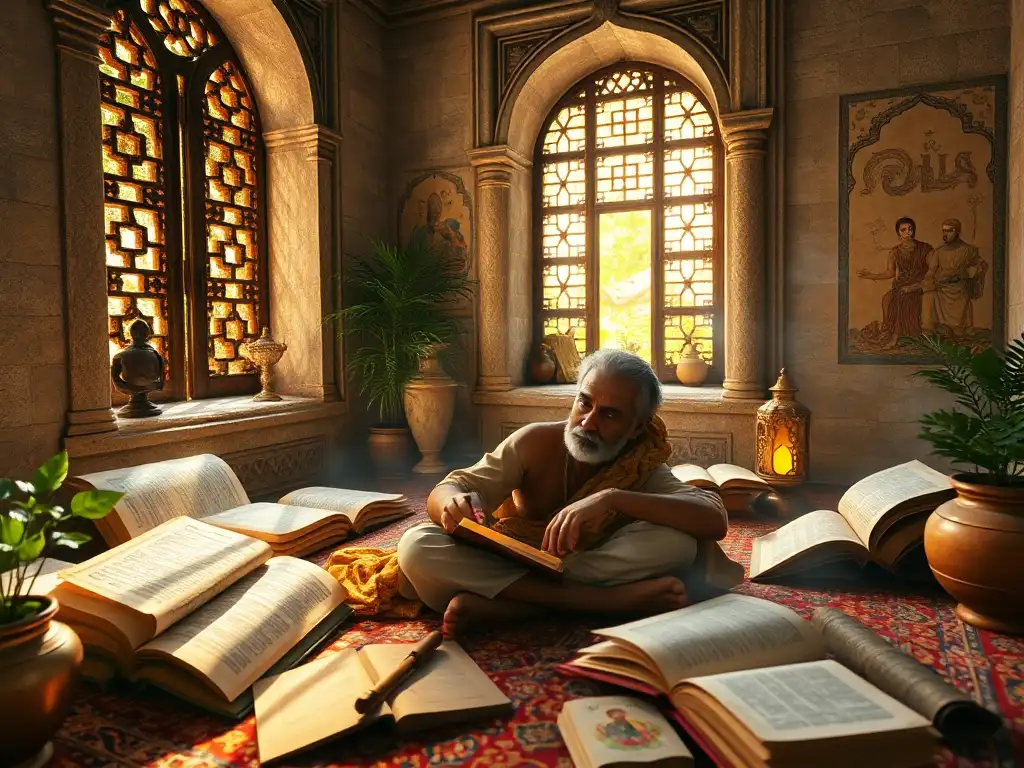
Welcome to Ancient India History, where we dive deep into the rich tapestry of ancient Indian civilizations. In this exploration, we invite you to unravel the complexities of the Manusmriti and its relationship with Vedic texts, a topic that sheds light on the profound influence these writings have had on Indian society. What secrets do these ancient scriptures hold, and how do they reflect the values and beliefs of their time?
As you embark on this journey with us, prepare to discover insights that will not only enhance your understanding of ancient Indian religions but also spark your curiosity about the cultural legacy that continues to shape modern India. Let’s explore together!
Introduction to Manusmriti and Vedic Texts
The Manusmriti, also known as the Manu Smriti, is a critical text in the study of ancient Indian law, philosophy, and societal norms, providing insight into the moral and ethical frameworks that governed early Indian civilization. It stands alongside the Vedic texts, which form the foundational scriptures of Hinduism, encompassing a vast array of hymns, rituals, and philosophical teachings that date back to the Vedic period. This article aims to delve into the intricate relationship between the Manusmriti and Vedic texts, exploring how these ancient writings influenced and shaped Indian society throughout history.
The analysis of the Manusmriti in relation to Vedic texts illuminates the evolution of social structures, religious practices, and legal systems in ancient India. By examining key themes, historical contexts, and social interpretations inherent in these texts, we can better understand the complexities of Hindu society and its cultural heritage.
The Manusmriti: Structure and Content
Overview of Manusmriti
The Manusmriti is traditionally attributed to Manu, the legendary lawgiver in Hindu mythology, and is considered one of the earliest texts on jurisprudence and ethics in India. Composed around 200 BCE to 200 CE, it encapsulates various aspects of law, duty, and conduct for different strata of society, often delineated by caste and gender.
Key features of the Manusmriti include:
- Social Order and Dharma: It outlines the duties ( dharma) of individuals based on their varna (caste) and ashrama (stage of life).
- Legal Codes: The text provides guidelines on legal matters, marriage, inheritance, and punishment for crimes.
- Moral Conduct: Emphasizes virtues and ethical behavior essential for maintaining social harmony.
Historical Context of Vedic Texts
The Vedic texts, composed over a millennium earlier, represent the spiritual and cultural foundations of ancient Indian society. They are divided into four main collections: the Rigveda, Samaveda, Yajurveda, and Atharvaveda. These texts were primarily oral in nature, evolving into written forms around 600 BCE.
Understanding the historical context of Vedic texts is crucial because:
- Cultural Significance: They reflect the rituals, beliefs, and societal structures of early Indo-Aryans.
- Development of Philosophy: The Upanishads, which are part of the Vedic tradition, introduce concepts like Brahman (the ultimate reality) and Atman (the self), influencing later philosophical thought.
- Societal Norms: Vedic texts lay the groundwork for the stratified society that the Manusmriti later codifies.
Importance of Manusmriti in Ancient Indian Society
The Manusmriti holds a significant place in the history of Indian civilization, serving as a reference point for social norms and legal principles. Its importance can be highlighted through:
- Influence on Law: It became a cornerstone for subsequent legal texts and practices in India.
- Cultural Legacy: The values and norms articulated in the Manusmriti continued to resonate through various historical periods, influencing societal roles and expectations.
- Religious Authority: It is often cited in religious discourses and is viewed as an authoritative guide on dharma.
The Manusmriti: Structure and Content
Key Themes in the Manusmriti
The Manusmriti encompasses several key themes that provide insights into the values and beliefs of ancient Indian society:
- Caste System: It elaborates on the duties and privileges of the four varnas (Brahmins, Kshatriyas, Vaishyas, and Shudras).
- Gender Roles: The text discusses the roles of men and women, often reflecting patriarchal views.
- Ritual Purity: Emphasizes the importance of rituals and purity in daily life and religious practices.
Comparison with Vedic Texts
When comparing the Manusmriti with Vedic texts, several distinctions and continuities emerge:
| Feature | Manusmriti | Vedic Texts |
|---|---|---|
| Focus | Social order and law | Rituals and hymns |
| Structure | Legalistic and prescriptive | Poetic and philosophical |
| Caste and Gender | Explicitly defined roles and duties | Varied views on social structure |
Interpretation of Social Norms in Manusmriti
The interpretation of social norms in the Manusmriti has evolved over time, often leading to debates among scholars and practitioners. Key interpretations include:
- Traditionalist Views: Upholding Manusmriti as a divine guide for moral and social order.
- Critical Perspectives: Examining the text for its role in perpetuating inequalities and questioning its applicability in modern contexts.
- Reformist Approaches: Advocating for reinterpretation and adaptation of its principles to align with contemporary values.
Through this exploration of the Manusmriti and its relationship with Vedic texts, we can gain a deeper understanding of the intricate tapestry of ancient Indian history and the evolving dynamics of Hindu society.
Vedic Texts: A Foundation of Hindu Philosophy
The Vedic texts are a collection of ancient scriptures that form the cornerstone of Hindu philosophy and religious practices. These texts, composed in Sanskrit, encompass a wide range of knowledge, including hymns, rituals, and philosophical discourses. The Vedas, which include the Rigveda, Samaveda, Yajurveda, and Atharvaveda, provide insights into the early spiritual, social, and cultural fabric of Indian civilization.
The significance of the Vedic texts extends beyond mere religious teachings; they offer a comprehensive worldview that encompasses cosmology, ethics, and the nature of reality. Central to Vedic philosophy is the concept of Dharma, which refers to the moral order and duties that govern individual behavior and societal functioning. As such, these texts not only shaped religious practices but also influenced legal systems, social norms, and philosophical discourse in ancient India.
Moreover, the Vedic texts laid the groundwork for later philosophical developments, including the Upanishads, which delve into metaphysical inquiries and the relationship between the individual self ( Atman) and the universal reality ( Brahman). This foundational role of the Vedas is crucial for understanding their impact on subsequent texts, including the Manusmriti.
Major Vedic Texts Overview
The Vedic literature is categorized into four main collections known as the Vedas, each serving distinct purposes:
- Rigveda: The oldest of the Vedas, consisting of hymns dedicated to various deities, highlighting the importance of ritual and devotion.
- Samaveda: Primarily a liturgical text, it focuses on melodies and chants used during rituals, emphasizing the musical aspect of worship.
- Yajurveda: A manual for rituals that combines prose and verse to guide the performance of sacrifices, outlining the practical aspects of Vedic worship.
- Atharvaveda: This Veda diverges from the others by including hymns and incantations related to everyday life, encompassing medicine, magic, and domestic rituals.
These texts are further divided into Brahmanas, which explain the rituals, and Upanishads, which explore philosophical ideas. Each Vedic text contributes to a multifaceted understanding of early Hindu spirituality and practice.
Philosophical Concepts in Vedic Literature
Vedic literature is rich in philosophical concepts that have shaped Hindu thought for millennia. Key ideas include:
- Brahman: The ultimate reality or cosmic spirit that pervades everything, foundational to understanding existence.
- Atman: The individual soul or self, which is considered eternal and divine, and its realization is pivotal to achieving liberation ( Moksha).
- Karma: The principle of cause and effect, where every action has consequences that influence future rebirths.
- Dharma: The ethical and moral responsibilities that guide individuals and society, emphasizing the importance of righteous living.
These concepts not only inform personal spiritual practices but also influence the legal and social frameworks within which ancient Indian society operated.
Influence of Vedic Texts on Manusmriti
The Manusmriti, often referred to as the "Laws of Manu," extensively draws upon the philosophical underpinnings of the Vedic texts. It synthesizes Vedic principles with practical guidelines for governance, social order, and personal conduct.
- Dharma and Law: The Manusmriti elaborates on the concept of Dharma as it pertains to legal and ethical obligations. It translates Vedic ideals into actionable laws that govern both individual behavior and societal structure.
- Social Order: The text reflects the Vedic understanding of social order, including the caste system, which is articulated with an emphasis on the duties and responsibilities of each class.
- Ritual and Conduct: Many rituals prescribed in the Manusmriti are rooted in Vedic practices, reinforcing the importance of ritual purity and adherence to established customs.
By embedding Vedic philosophy within its legal framework, the Manusmriti not only preserves ancient traditions but also adapts them to the evolving societal context of ancient India.
Analysis of Manusmriti's Influence on Indian Society
The Manusmriti played a pivotal role in shaping Indian society, particularly in terms of social structure, governance, and individual roles. Its extensive codification of laws and norms established a framework that influenced various aspects of daily life and societal organization.
Social Hierarchies and Caste System in Manusmriti
One of the most significant aspects of the Manusmriti is its codification of the caste system. The text outlines a hierarchical social order divided into four main varnas:
- Brahmins: Priests and scholars responsible for spiritual and educational leadership.
- Kshatriyas: Warriors and rulers tasked with protection and governance.
- Vaishyas: Merchants and agriculturists responsible for economic activities.
- Shudras: Laborers and service providers who support the other three varnas.
This classification not only delineated social roles but also prescribed specific duties and rights, influencing the socio-economic dynamics of ancient India. The Manusmriti’s endorsement of the caste system has had lasting implications, affecting social relations and mobility throughout Indian history.
Roles and Duties Outlined in Manusmriti
The Manusmriti meticulously details the roles and duties associated with each varna, emphasizing the importance of fulfilling one's dharma. For example:
- Brahmins are expected to engage in study, teaching, and performing rituals.
- Kshatriyas must protect and govern the land, ensuring justice and order.
- Vaishyas are tasked with trade and agriculture, fostering economic stability.
- Shudras are required to serve the other three varnas, ensuring the functioning of society.
This framework not only provided clarity on social responsibilities but also reinforced the belief that adherence to one's prescribed duties was essential for societal harmony and individual salvation.
Women's Status: Manusmriti vs. Vedic Texts
The Manusmriti presents a complex view of women's status, contrasting with earlier Vedic texts. While the Vedic literature reflects a relatively egalitarian perspective, acknowledging women's roles in rituals and society, the Manusmriti imposes stricter boundaries.
- Vedic Perspective: Women in Vedic texts are often depicted as learned and capable of performing rituals. Figures like Gargi and Maitreyi are celebrated for their philosophical contributions.
- Manusmriti’s View: In stark contrast, the Manusmriti emphasizes women's roles primarily as caretakers and subordinate to men. It prescribes restrictions on their independence, often linking their virtue to their relationships with male figures—fathers, husbands, and sons.
This shift in perspective has had profound implications for women's rights and societal roles in subsequent Indian history, contributing to ongoing debates about gender and social justice in contemporary society.
Critical Perspectives on Manusmriti
The Manusmriti, often referred to as the Laws of Manu, has attracted critical perspectives from scholars, sociologists, and activists throughout its history. This ancient text, while foundational to Hindu law and ethics, is frequently critiqued for its hierarchical social structure and gender roles. Critics argue that the Manusmriti reinforces a rigid caste system, promoting inequalities that have persisted through generations.
Furthermore, the text's prescriptions regarding women's rights and duties have drawn significant scrutiny. Many interpretations suggest that the Manusmriti enforces a patriarchal society, limiting women's autonomy and agency. These critiques have led to broader discussions about the text's relevance in contemporary society and the need for reform in how its teachings are applied or interpreted.
In contrast, some scholars advocate for a contextual reading of the Manusmriti, arguing that it reflects the socio-political realities of its time rather than a timeless blueprint for social order. This perspective encourages a nuanced understanding that considers the historical and cultural backdrop against which the Manusmriti was written.
Modern Interpretations of Manusmriti
Modern interpretations of the Manusmriti often seek to reconcile its ancient teachings with contemporary values, particularly concerning human rights and social justice. Some scholars emphasize the text's philosophical dimensions, highlighting its discussions on dharma (duty/righteousness) and moksha (liberation), which can provide valuable insights into ethical living today.
In educational and reformist circles, there is a push to reinterpret the Manusmriti through a lens that promotes gender equality and social justice. For instance, initiatives aimed at empowering women within Hindu communities often invoke a re-examination of the text, focusing on passages that advocate for moral and ethical living over those that reinforce hierarchy.
Moreover, some modern interpretations advocate for a selective reading of the Manusmriti, encouraging practitioners to adopt its more progressive aspects while challenging its regressive elements. This approach seeks to preserve the text's cultural heritage while promoting an inclusive and equitable understanding of Hinduism.
Controversies Surrounding Manusmriti
The Manusmriti has been at the center of numerous controversies, particularly in the context of caste and gender issues. Critics argue that the text's endorsement of a stratified society fosters discrimination and social injustice, particularly against marginalized communities. The language used in the Manusmriti regarding the "untouchables" has been a focal point of debate, leading to calls for its reevaluation in modern Hindu practice.
Additionally, the portrayal of women in the Manusmriti has sparked significant backlash. Many interpret the text's views on women's subservience and duty as an outdated reflection of a patriarchal society. Activists and feminists within India have challenged these interpretations, advocating for a reinterpretation that respects women's rights and freedoms.
This ongoing controversy has prompted legal and social movements aimed at reforming how the Manusmriti is understood and applied, further complicating its status as a religious and legal authority within Hinduism.
Scholarly Debates on Vedic Texts and Manusmriti
Scholarly debates surrounding the Vedic texts and the Manusmriti often revolve around their respective roles in shaping Hindu thought and practice. Scholars examine the connections between the Vedic scriptures and the Manusmriti, exploring how the latter draws from and diverges from Vedic principles.
A significant debate is whether the Manusmriti should be viewed as a continuation of Vedic thought or as a distinct legal and ethical framework that emerged in response to changing societal norms. Some scholars argue that the Manusmriti reflects a synthesis of Vedic ideas with local customs and practices, while others contend that it represents a departure from the more egalitarian ideals found in early Vedic texts.
Furthermore, discussions on the historical context of the Manusmriti often lead to questions about its authorship and dating. These scholarly inquiries contribute to a deeper understanding of the interplay between the Vedas and the Manusmriti, enriching the discourse on ancient Indian philosophy and law.
Conclusion: The Legacy of Manusmriti in Relation to Vedic Texts
The Manusmriti's legacy is complex and multifaceted, as it occupies a critical place in the history of Hindu law and ethics while simultaneously provoking ongoing debates and reinterpretations. Its relationship with Vedic texts is particularly significant, as it both draws from and challenges earlier ideas, reflecting the evolution of Hindu thought over centuries.
Lasting Impact on Hindu Society
The Manusmriti has left an indelible mark on Hindu society, influencing social structures, legal systems, and cultural practices. Its principles continue to be referenced in discussions about caste and gender roles, highlighting its enduring relevance. While many aspects of the Manusmriti have been criticized, the text nevertheless serves as a historical reference point that informs contemporary Hindu identity and practice.
Manusmriti's Relevance in Contemporary Discussions
In modern discourse, the Manusmriti is often invoked in debates surrounding social justice, gender equality, and the caste system. Activists and scholars alike engage with the text to highlight its implications for contemporary society, urging a critical examination of its teachings. This relevance underscores the need for a thoughtful approach to ancient texts, recognizing both their historical significance and their potential for influencing modern values.
Future Directions for Manusmriti and Vedic Texts Analysis
The analysis of the Manusmriti and its relationship with Vedic texts is likely to evolve as scholars continue to explore new interpretations and methodologies. Future research may focus on comparative studies with other ancient legal texts, interdisciplinary approaches involving anthropology and sociology, and critical readings that prioritize marginalized voices. This ongoing inquiry will not only enrich our understanding of these texts but also contribute to broader discussions about the role of ancient scriptures in shaping modern society.
References
The study of the Manusmriti in relation to Vedic texts and its influence on Indian society has been enriched by a diverse array of scholarly works, translations, and commentaries. Key references include:
- Manusmriti (The Laws of Manu): Various translations and interpretations provide insight into the text's historical context and legal framework.
- Vedic Texts: The Rigveda, Samaveda, Yajurveda, and Atharvaveda are essential for understanding the foundational elements of Hindu philosophy and social order.
- Commentaries by Classical Scholars: Notable commentaries by figures such as Medhatithi, Kulluka Bhatta, and Haradatta offer interpretations that reflect the societal norms of their respective periods.
- Modern Analyses: Recent studies by contemporary scholars provide critical perspectives on the Manusmriti's relevance in modern Indian society and its implications for gender and caste issues.
Suggested Further Reading on Manusmriti and Vedic Texts
For readers interested in delving deeper into the Manusmriti and its connection with Vedic texts, the following resources are highly recommended:
- "The Manusmriti: A New Translation" by Brian K. Smith
- An accessible translation that contextualizes the Manusmriti within the broader spectrum of Hindu law.
- "Hindu Law: A New History of Dharma Shastra" by Dharmakirti
- This book provides a comprehensive analysis of Hindu law, including the Manusmriti's role within it.
- "The Vedas: An Introduction to Hinduism's Sacred Texts" by R. C. Hazra
- A foundational text exploring the Vedas, their philosophies, and their influence on later scriptures, including the Manusmriti.
- "Gender and Social Hierarchy in the Manusmriti" by Upendra Baxi
- A critical examination of issues related to gender and caste as presented in the Manusmriti, making it relevant for contemporary discussions.
- "The Laws of Manu and Their Historical Context" by Patrick Olivelle
- This work investigates the historical circumstances under which the Manusmriti was composed and its implications on society.
Key Scholars in Manusmriti Studies
The exploration of the Manusmriti and its relationship with Vedic texts has been significantly advanced by the contributions of various scholars. Notable figures include:
- Patrick Olivelle: Known for his translation and commentary on the Manusmriti, Olivelle's work emphasizes the text's historical context and its evolution over time.
- G. R. Sharma: A prominent scholar whose studies focus on the social and cultural dimensions of the Manusmriti, particularly its implications for caste and gender.
- V. K. Subramanian: His analyses draw connections between the Manusmriti and Vedic texts, highlighting their intertextual relationships and the evolution of Hindu law.
- J. C. Heesterman: A critical scholar whose research on the Vedic texts provides foundational insights into the societal constructs that influenced the Manusmriti.
- Uma Chakravarti: A feminist scholar who critiques the Manusmriti’s perspectives on women, contributing to contemporary discourses on gender in Hinduism.
These scholars have collectively enriched the discourse surrounding the Manusmriti, providing insights that bridge ancient texts with modern interpretations and societal impacts.
- Introduction to Manusmriti and Vedic Texts
- The Manusmriti: Structure and Content
- The Manusmriti: Structure and Content
- Vedic Texts: A Foundation of Hindu Philosophy
- Analysis of Manusmriti's Influence on Indian Society
- Critical Perspectives on Manusmriti
- Conclusion: The Legacy of Manusmriti in Relation to Vedic Texts
- References
- Suggested Further Reading on Manusmriti and Vedic Texts
- Key Scholars in Manusmriti Studies
Frequently Asked Questions
What is the Manusmriti?
The Manusmriti is an ancient Indian legal text that outlines social norms, laws, and ethical guidelines for individuals and society, playing a significant role in Hindu law.
How do the Vedic texts relate to the Manusmriti?
The Vedic texts serve as foundational scriptures in Hindu philosophy, and the Manusmriti is often viewed as a commentary on these texts, reflecting their values and principles in the context of societal structure.
What are the main themes discussed in the Manusmriti?
The Manusmriti covers themes such as dharma (duty), social hierarchy, and rituals, emphasizing the importance of maintaining order and morality in society based on various stages of life.
How did the Manusmriti influence Indian society?
The Manusmriti has significantly influenced Indian social structure and laws, promoting a system of caste and gender roles that shaped societal norms for centuries, although it has been a subject of criticism in modern contexts.
Why is the analysis of the Manusmriti important today?
Analyzing the Manusmriti in relation to Vedic texts is crucial for understanding the evolution of Indian society, its cultural heritage, and the ongoing discussions about social justice and equity in contemporary times.
Final Reflection: Understanding the Manusmriti's Legacy in Modern Society
The exploration of the Manusmriti in relation to Vedic texts is not merely an academic exercise; it is a vital inquiry into the foundations of Indian society and its evolving identity. As we navigate the complexities of contemporary social dynamics, the principles enshrined in the Manusmriti continue to resonate, challenging us to critically assess their implications in today's world. This ongoing dialogue between ancient texts and modern values underscores the urgency of understanding our cultural heritage.
The Manusmriti has profoundly influenced the social fabric of India, shaping norms, values, and practices that persist in various forms today. The interplay between these ancient texts and contemporary society invites us to reflect on our collective identity and the narratives that guide our lives. As Mahatma Gandhi once said, "> A nation's greatness is measured by how it treats its weakest members." This sentiment highlights the need for a critical evaluation of the Manusmriti's teachings in light of modern human rights and social justice movements.
As we conclude this exploration, I invite you to engage with the lessons of the Manusmriti and Vedic texts in your own life. Consider how these ancient teachings can inform your understanding of justice, equality, and ethical living in today's world. By reflecting on these texts, we can foster a more inclusive society that honors our past while striving for a better future. Let us carry forward this dialogue, ensuring that the wisdom of our ancestors guides us toward a more equitable and compassionate world.
Unveil the Connections: Take Action Today!
Thank you for diving into our exploration of the Manusmriti and its intricate ties to Vedic texts and Indian society. By engaging with this rich tapestry of history, you’ve opened a door to understanding the cultural practices and philosophies that have shaped centuries. Now, let’s take actionable steps to deepen your journey!
- Engage with the Text: Consider reading various translations of the Manusmriti to appreciate the differences in interpretation.
- Join the Discussion: Contribute your insights or questions in our community forum to spark meaningful conversations with fellow enthusiasts.
- Expand Your Knowledge: Dive into other related Vedic texts to understand the broader context and see how these ancient writings continue to influence modern society.
What aspect of the Manusmriti do you find most fascinating and relevant to today's world?