
The Influence of Hindu Philosophy on Buddhist Thought and Practices


Welcome to Ancient India History, where we embark on a fascinating journey through the vibrant tapestry of India's past. Here, we delve deep into the intricate connections between Hindu philosophy and Buddhist practices, exploring how these ancient belief systems have shaped the spiritual landscape of India. Prepare to uncover the profound influences that have intertwined these two rich traditions, revealing insights that continue to resonate today. Are you ready to discover the transformative power of ancient wisdom? Let’s dive into the remarkable world of Ancient Indian Religions and explore the profound legacy left by these civilizations!
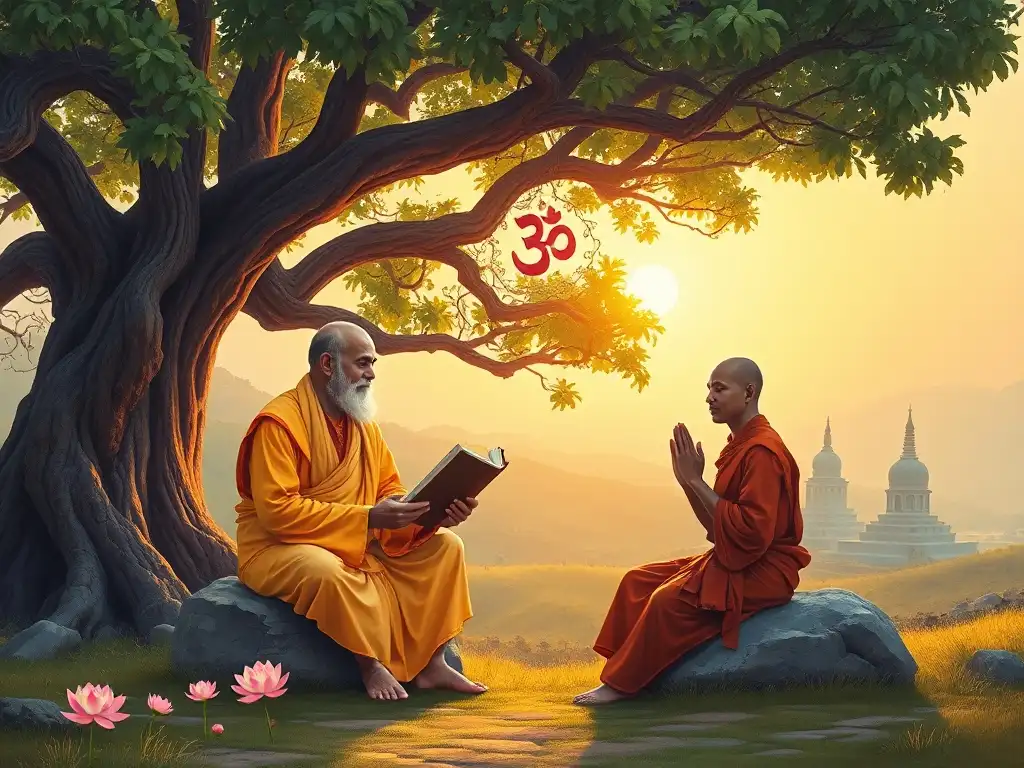
Introduction to Hindu Philosophy and Buddhist Practices
The interplay between Hindu philosophy and Buddhist practices is a fascinating subject that reveals the rich tapestry of ancient Indian thought. Both traditions, rooted in the soil of ancient India, have influenced each other over centuries, shaping the spiritual landscape of the region. Hindu philosophy, with its diverse schools of thought, has laid the groundwork for many concepts that later found expression in Buddhist practices. Understanding this intricate relationship not only sheds light on the evolution of these philosophies but also provides insight into their lasting impact on contemporary spiritual and philosophical discourse.
Overview of Hindu Philosophy
Hindu philosophy encompasses a wide range of ideas, spanning various schools such as Vedanta, Samkhya, and Yoga. At its core, Hindu thought emphasizes concepts like Dharma (duty/righteousness), Karma (action and its consequences), and Moksha (liberation).
- Key Concepts:
- Brahman: The ultimate reality or cosmic spirit.
- Atman: The individual soul, which is seen as a part of Brahman.
- Karma: The law of cause and effect that governs actions.
Hindu philosophy also explores the nature of existence, self, and the universe through texts like the Upanishads and the Bhagavad Gita. These foundational texts examine the interconnectedness of life and the pursuit of truth.
Overview of Buddhist Thought
Buddhism, founded by Siddhartha Gautama (the Buddha), arose in the 5th century BCE as a response to prevailing Hindu philosophies. Central to Buddhist thought is the Four Noble Truths and the Eightfold Path, which provide a framework for understanding suffering and the means to overcome it.
- Key Concepts:
- Dukkha: The reality of suffering.
- Anatta: The doctrine of non-self, rejecting the notion of a permanent soul.
- Nirvana: The ultimate goal, representing liberation from the cycle of rebirth.
Buddhism emphasizes mindfulness, ethical conduct, and meditation, focusing on personal experience and insight into the nature of reality.
The Intersection of Hinduism and Buddhism
The lines between Hindu philosophy and Buddhist practices are often blurred, with many ideas being shared or adapted over time. For instance, the concepts of Karma and Dharma resonate in both traditions, albeit with different interpretations.
- Shared Ideas:
- Meditation Techniques: Both traditions utilize meditation but differ in their goals and methods.
- Ethical Principles: Values like compassion and non-violence are emphasized in both, influenced by the broader Indian cultural context.
This intersection reveals how these two great traditions have shaped each other, fostering a dynamic philosophical dialogue that continues to evolve.
Historical Context of Hindu Philosophy and Buddhism
Understanding the historical context in which Hindu philosophy and Buddhism developed is crucial to grasping their interconnectedness. Their origins and evolution were deeply influenced by the socio-cultural and political landscape of ancient India.
Origins of Hindu Philosophy in Ancient India
Hindu philosophy traces its roots back to the Vedic texts, which date as far back as 1500 BCE. These texts laid the foundation for many philosophical inquiries, exploring the nature of reality, the self, and the cosmos.
- Vedic Influence:
- Rituals and hymns that emphasize the relationship between humans and the divine.
- Early philosophical speculation about the nature of existence and consciousness.
As time progressed, the Upanishads emerged, marking a shift from ritualistic practices to introspective thought, focusing on meditation and the pursuit of knowledge.
Emergence of Buddhism: A Reaction to Hindu Philosophical Ideas
Buddhism emerged in a context marked by the dominance of Vedic rituals and the caste system, which many sought to reform. Siddhartha Gautama's teachings presented a radical departure, advocating for a path accessible to all, regardless of societal status.
- Key Motivations:
- Critique of ritualism and the caste system.
- Emphasis on personal experience over blind adherence to tradition.
This reaction not only shaped Buddhism but also prompted a reevaluation of certain Hindu philosophical tenets, leading to a rich exchange of ideas between the two traditions.
Key Historical Figures Influencing Both Traditions
Throughout history, several figures have played a pivotal role in the development of both Hindu and Buddhist thought. Their contributions have significantly influenced the philosophical landscape of ancient India.
- Notable Figures:
- Adi Shankaracharya: A key proponent of Advaita Vedanta, who emphasized non-dualism and influenced Buddhist philosophy.
- Ashoka the Great: His support for Buddhism helped to spread its teachings, while also promoting principles found in Hindu philosophy.
These figures exemplify how the traditions not only coexisted but also interacted and evolved through shared ideas and practices.
Hinduism and Buddhism, both originating in ancient India, share a rich tapestry of philosophical concepts that have shaped their respective traditions. At the heart of both religions are fundamental ideas regarding the nature of reality, existence, and the spiritual journey of individuals. Key among these concepts are karma, dharma, and the ultimate goal of liberation from the cycle of birth and rebirth.
Karma, the law of cause and effect, underpins the moral framework in both traditions, asserting that actions have consequences that influence future rebirths. Dharma, often translated as duty or righteousness, serves as a guiding principle for ethical living in both faiths, although its interpretation varies significantly. Meditation, a central practice in both religions, facilitates spiritual growth and self-realization. The interplay of these concepts highlights how Hindu philosophy has significantly influenced Buddhist thought, leading to a profound exchange of ideas that continues to resonate in both traditions.
Karma and Rebirth: Similarities and Differences
Karma and rebirth are pivotal concepts in both Hindu and Buddhist philosophies, though they are understood and articulated in distinct ways. In Hinduism, karma refers to the cumulative effect of a person's actions, which dictates the circumstances of their future lives. This belief is closely intertwined with the notion of a permanent self (atman) that reincarnates through various lifetimes, experiencing the consequences of past actions.
In contrast, Buddhism presents a more dynamic interpretation of karma, emphasizing the transient nature of existence and the concept of anatta, or non-self. Here, karma influences future rebirths, but it is not tied to an eternal soul; instead, it is the continuity of consciousness that carries karmic imprints. This divergence illustrates a fundamental difference in how both religions perceive identity and continuity, leading to different ethical implications in their respective practices.
The Concept of Dharma in Hindu and Buddhist Contexts
Dharma plays a crucial role in both Hinduism and Buddhism, but its interpretation and application can vary widely. In Hinduism, dharma encompasses a broad range of duties, responsibilities, and moral laws tailored to an individual’s stage of life (ashrama) and social class (varna). It is seen as essential for maintaining cosmic order (rita) and achieving personal and communal welfare.
Conversely, Buddhism understands dharma primarily as the teachings of the Buddha and the path to enlightenment. It emphasizes ethical conduct, mental discipline, and wisdom. While both traditions value dharma as a means of guiding behavior and promoting social harmony, the Buddhist perspective prioritizes individual spiritual development over social roles, focusing on the cessation of suffering as the ultimate goal.
The Role of Meditation in Hindu and Buddhist Practices
Meditation is a foundational practice in both Hinduism and Buddhism, serving as a means to achieve spiritual insight and self-realization. In Hinduism, meditation techniques, such as dhyana and yoga, aim to unite the individual soul (atman) with the universal consciousness (Brahman). The practice often emphasizes devotion (bhakti) and the contemplation of deities, leading to personal transformation and liberation (moksha).
In Buddhism, meditation (especially mindfulness and concentration practices) is central to the path toward enlightenment (nirvana). It is used to cultivate awareness, insight, and emotional regulation. While both traditions employ meditation to transcend ordinary consciousness, the objectives differ significantly: Hindu meditation seeks union with the divine, while Buddhist meditation focuses on the cessation of suffering through insight into the nature of reality.
Influence of Hindu Texts on Buddhist Practices
The influence of Hindu texts on the development of Buddhist practices is significant, as many foundational Buddhist ideas emerged in dialogue with earlier Hindu philosophies. Key sacred texts, such as the Vedas and Upanishads, provide philosophical frameworks that have informed Buddhist thought, while later texts, like the Bhagavad Gita, also contributed to the evolution of Buddhist practices and beliefs.
Vedas and Upanishads: Their Relevance in Buddhist Thought
The Vedas and Upanishads, foundational texts of Hindu philosophy, have had a lasting impact on Buddhist thought. The Upanishads, in particular, delve into metaphysical questions concerning the nature of reality, the self, and the ultimate purpose of life. Concepts such as Brahman and atman from the Upanishads resonate with Buddhist ideas of ultimate reality and the nature of existence, albeit with significant differences in interpretation.
Buddhism both adopts and adapts these ideas, often reframing them to fit its own philosophical framework. For instance, the Upanishadic focus on the self can be contrasted with the Buddhist doctrine of anatta, or non-self. Thus, while the Vedas and Upanishads provide a philosophical backdrop, Buddhism’s reinterpretation of these concepts marks a distinct evolution in ancient Indian thought.
The Influence of the Bhagavad Gita on Buddhist Philosophy
The Bhagavad Gita, a revered text of Hindu philosophy, has also influenced Buddhist thought, particularly in its ethical and spiritual teachings. The dialogue between Arjuna and Krishna emphasizes the importance of performing one's duty without attachment to the results, a concept that resonates with the Buddhist principle of non-attachment.
Moreover, the Gita’s exploration of devotion (bhakti) and selfless action aligns with Buddhist practices aimed at cultivating compassion and altruism. While Buddhism does not incorporate bhakti in the same way as Hinduism, the ethical imperatives found in the Gita reflect a shared moral landscape that has shaped Buddhist practices over time.
Adaptation of Hindu Rituals in Buddhist Practices
As Buddhism spread across India and beyond, it absorbed various cultural and ritualistic elements from Hinduism. Many Buddhist practices, such as offerings, chants, and communal rituals, have their roots in Hindu traditions. This syncretism is evident in the adaptation of Hindu deities and symbols within Buddhist contexts, where they are often reinterpreted to fit Buddhist teachings.
The incorporation of rituals can be seen as a means to bridge the divide between the two traditions, allowing for a shared cultural heritage while maintaining distinct philosophical identities. Consequently, the rituals in Buddhism reflect an evolution of Hindu practices, emphasizing the fluidity of religious expression in ancient India.
Comparative Analysis of Hindu and Buddhist Practices

The interplay between Hindu philosophy and Buddhist practices has been a subject of extensive analysis and debate among scholars and practitioners alike. Both traditions emerged in ancient India and share a common cultural and religious milieu, which has led to significant overlaps in their practices, rituals, and ethical frameworks. Despite their distinct identities, the comparative analysis reveals a rich tapestry of shared beliefs and diverging paths that shaped the spiritual landscape of the region.
Rituals and Worship: Hindu vs. Buddhist Approaches
Rituals and worship form the backbone of religious expression in both Hinduism and Buddhism, yet they exhibit notable differences in execution and intent.
- Hinduism emphasizes a plethora of rituals (pujas) that are often elaborate and involve offerings to various deities. These rituals are deeply rooted in Vedic traditions and are seen as a means to attain favor from the divine, enhance spiritual merit, and maintain cosmic order.
- Buddhism, on the other hand, tends to focus more on meditation and mindfulness practices than on ritualistic worship. While some forms of Buddhism, particularly in Mahayana traditions, incorporate rituals and devotional practices, the core tenet remains centered on the Four Noble Truths and the Eightfold Path, promoting an internal journey towards enlightenment.
The differences highlight how Hindu practices often seek external validation and divine intervention, whereas Buddhism encourages self-realization and personal responsibility.
Ethical Teachings: Parallels in Hindu and Buddhist Morality
Both Hinduism and Buddhism share profound ethical teachings, yet they frame their moral constructs differently.
- Hindu ethics, based on the concepts of Dharma (duty/righteousness) and Karma (action and its consequences), emphasize adherence to social duties and the importance of one's role in the cosmic order. This ethical framework is often contextual and varies according to one’s caste, age, and gender.
- Buddhist morality is encapsulated in the Five Precepts, which provide a more universal approach to ethical living, focused on the alleviation of suffering. The emphasis is on non-attachment, compassion, and mindfulness, which are seen as essential to achieving Nirvana.
Despite these differences, both traditions advocate for non-violence (ahimsa) and compassion towards all sentient beings, showcasing a shared moral foundation that transcends their individual doctrines.
The Role of Monastic Life in Hinduism and Buddhism
Monastic life plays a critical role in both Hinduism and Buddhism, albeit with different emphases and practices.
- In Hinduism, monasticism is often associated with the renunciation of worldly life, as seen in the ascetic traditions (sannyasa). Monks and ascetics practice self-discipline and devotion, often engaging in meditation and philosophical inquiry. However, Hindu monasticism is less formalized compared to Buddhism, and many adherents may still participate in household life while pursuing spiritual goals.
- In Buddhism, monastic life is more structured and serves as a primary path for individuals seeking enlightenment. Monks (bhikkhus) adhere to strict codes of conduct, including celibacy and communal living. The monastic community (sangha) is considered one of the Three Jewels of Buddhism, playing a vital role in preserving teachings and guiding lay practitioners.
This distinction underscores the varying attitudes towards renunciation and community life in both traditions, reflecting their unique spiritual priorities.
The Evolution of Buddhist Thought Through Hindu Influence
The evolution of Buddhist thought has been significantly shaped by Hindu philosophical tenets, particularly during its formative period and subsequent developments.
Changes in Buddhist Philosophy Over Time
Buddhist philosophy has undergone substantial changes since its inception, influenced by the prevailing Hindu thought. Early Buddhism, rooted in the teachings of Siddhartha Gautama (the Buddha), focused primarily on the Four Noble Truths and the Eightfold Path. Over time, as Buddhism spread across Asia, it absorbed various elements from local cultures and religious practices, including Hindu concepts.
- The introduction of ideas such as Brahman (ultimate reality) and the Atman (soul) can be seen in later Buddhist texts, particularly within Mahayana Buddhism, which adapted to include a more cosmological view of reality.
- Additionally, the emergence of the concept of Buddha-nature reflects Hindu influences, suggesting an inherent potential for enlightenment within all beings, akin to the idea of the divine spark present in all individuals in Hindu thought.
These changes highlight the dynamic nature of Buddhist philosophy as it interacted with Hindu ideas, leading to a rich and diverse tradition.
How Hindu Philosophy Shaped Mahayana and Theravada Buddhism
The impact of Hindu philosophy is particularly evident in the development of Mahayana and Theravada traditions, each reflecting different aspects of this influence.
- Mahayana Buddhism incorporates various Hindu philosophical concepts, such as the notion of bodhisattvas who embody compassion and altruism, paralleling Hindu deities who assist devotees. This tradition emphasizes the importance of communal salvation and the idea of universal enlightenment, which resonates with Hindu ideals of collective spiritual progression.
- Theravada Buddhism, while more conservative, also exhibits Hindu influence in its rituals and cosmology. The veneration of the Buddha and the concept of merit-making through offerings echo similar practices found in Hinduism.
The synthesis of these philosophies showcases how Buddhism has evolved by integrating Hindu ideas, thus enriching its spiritual framework.
Contemporary Reflections of Hindu Influences in Modern Buddhism
In contemporary contexts, the influence of Hindu philosophy on Buddhism continues to manifest in various ways.
- Many modern Buddhist practitioners in regions like India and Nepal often engage in rituals that reflect Hindu traditions, such as festivals and communal worship, highlighting the syncretic nature of religious practices in the region.
- Furthermore, the resurgence of interest in traditional practices has led to a revival of Hindu-inspired meditation techniques within Buddhist communities, blending approaches to mindfulness and spiritual development.
This ongoing interaction between Hinduism and Buddhism exemplifies the enduring legacy of their philosophical and cultural exchanges, shaping modern spiritual landscapes and practices.
Conclusion: The Lasting Impact of Hindu Philosophy on Buddhist Practices
The interplay between Hindu philosophy and Buddhist practices has resulted in a profound and lasting impact that continues to shape spiritual and philosophical discourses today. As both traditions emerged from the same cultural and historical milieu, their mutual influences are evident in various doctrines, rituals, and ethical frameworks. The synthesis of ideas between these two schools of thought has allowed for a rich tapestry of beliefs that not only define their respective identities but also contribute to a broader understanding of spirituality in ancient India.
Hindu philosophy’s emphasis on concepts like Dharma, Karma, and Moksha has significantly influenced Buddhist thought, particularly in the ethical dimensions of Buddhist practices. The integration of these concepts has led to a unique convergence where both philosophies address fundamental questions about existence, morality, and the nature of reality. This enduring legacy highlights the importance of understanding how these traditions inform and enrich each other, paving the way for a more comprehensive exploration of ancient Indian spirituality.
Summary of Key Influences
The influence of Hindu philosophy on Buddhist thought can be encapsulated in several key areas:
- Concept of Dharma:
- Both traditions value the notion of Dharma, although their interpretations differ. In Hinduism, Dharma often pertains to duty and righteousness within the social order, while Buddhism emphasizes the moral law that governs individual conduct and the path toward enlightenment.
- Karma and Rebirth:
- The principles of Karma and the cycle of rebirth are central to both philosophies. Hindu thought posits that actions in this life determine one's future existences, a concept that Buddhism adopts while also introducing the notion of non-self (Anatta) to challenge the permanence of the self in these cycles.
- Meditative Practices:
- Techniques such as meditation and ascetic practices are prevalent in both traditions. Hindu influences can be seen in Buddhist meditation practices, which often draw from Vedic and Upanishadic traditions, emphasizing the importance of disciplined mental focus and ethical living.
- The Pursuit of Liberation:
- Both philosophies share a common goal of liberation—Moksha in Hinduism and Nirvana in Buddhism—though their paths to achieving this state differ. Hinduism often involves devotion to deities and adherence to societal duties, while Buddhism emphasizes personal insight and the cessation of suffering through the Eightfold Path.
The Ongoing Dialogue Between Hinduism and Buddhism
The relationship between Hinduism and Buddhism is characterized by an ongoing dialogue that has evolved over centuries. This dialogue is not just historical but continues to thrive in contemporary discussions about spirituality, ethics, and philosophy. Scholars and practitioners from both traditions engage in comparative studies, exploring the nuances and intersections of their beliefs.
Modern interpretations of these ancient philosophies often seek to reconcile differences while celebrating the shared ideals of compassion, non-violence, and the quest for understanding. Interfaith dialogues have emerged, fostering a spirit of cooperation and mutual respect. Additionally, the resurgence of interest in ancient wisdom has led to new interpretations that draw from both traditions, highlighting their relevance in addressing modern existential dilemmas.
Future Directions in the Study of Hindu and Buddhist Philosophies
As academic and spiritual interest in Hindu and Buddhist philosophies continues to grow, several future directions can be anticipated in their study:
- Interdisciplinary Approaches:
- Integrating insights from psychology, sociology, and anthropology can deepen our understanding of how these philosophies have influenced and shaped human behavior across time.
- Digital Humanities:
- Utilizing technology to analyze ancient texts and practices can uncover new interpretations and connections, bridging gaps in historical knowledge.
- Comparative Spirituality:
- Exploring the relevance of Hindu and Buddhist practices in today’s globalized world can provide fresh perspectives on how these ancient traditions can inform modern spiritual needs.
- Cultural Exchange:
- Continued exploration of the cultural exchanges between Hinduism and Buddhism, particularly in regions where both traditions coexist, will enrich our understanding of their dynamic relationship.
The influence of Hindu philosophy on Buddhist practices remains a rich field for exploration, offering insights into the complexities of spiritual development and human understanding. As scholars and practitioners continue to engage with these traditions, the dialogue between them will persist, revealing new dimensions and applications of ancient wisdom.
- Introduction to Hindu Philosophy and Buddhist Practices
- Historical Context of Hindu Philosophy and Buddhism
- Core Philosophical Concepts Shared Between Hinduism and Buddhism
- Influence of Hindu Texts on Buddhist Practices
- Comparative Analysis of Hindu and Buddhist Practices
- The Evolution of Buddhist Thought Through Hindu Influence
- Conclusion: The Lasting Impact of Hindu Philosophy on Buddhist Practices
- What is the main focus of the article "The Influence of Hindu Philosophy on Buddhist Thought and Practices"?
- How did Hindu philosophy impact Buddhist thought?
- Are there specific Buddhist practices that were influenced by Hindu beliefs?
- What role did ancient Indian civilizations play in the development of these philosophies?
- How can understanding this influence enhance our appreciation of both religions?
Frequently Asked Questions
What is the main focus of the article "The Influence of Hindu Philosophy on Buddhist Thought and Practices"?
The article explores the interconnectedness between Hindu philosophy and Buddhist practices, highlighting how these two ancient traditions influenced each other throughout Indian history.
How did Hindu philosophy impact Buddhist thought?
Hindu philosophy provided a foundational context for Buddhist thought, particularly regarding concepts like karma, dharma, and moksha, which were adapted and reinterpreted within Buddhism.
Are there specific Buddhist practices that were influenced by Hindu beliefs?
Yes, many Buddhist practices, such as meditation and rituals, were shaped by Hindu traditions, showcasing a blending of spiritual methodologies that enriched both religions.
What role did ancient Indian civilizations play in the development of these philosophies?
Ancient Indian civilizations, particularly during the Indus Valley and Gupta Empire periods, served as the cultural crucible for the development of Hindu and Buddhist philosophies, facilitating their mutual influence.
How can understanding this influence enhance our appreciation of both religions?
Understanding the influence of Hindu philosophy on Buddhist practices allows us to see the shared roots and diverse interpretations that enrich both traditions, fostering a deeper appreciation of their historical significance.
Final Reflection: The Interwoven Tapestry of Hindu Philosophy and Buddhist Practices
The intricate relationship between Hindu philosophy and Buddhist practices remains profoundly relevant in today's world. As we navigate an era marked by cultural exchange and spiritual exploration, understanding this connection can illuminate our paths toward personal and collective enlightenment. The insights gleaned from both traditions offer timeless wisdom that resonates with the quest for meaning in our fast-paced lives.
Cultural and social landscapes are continually shaped by the philosophies we embrace. The dialogue between Hinduism and Buddhism showcases how ideas evolve and influence one another, fostering a rich tapestry of thought that transcends borders. As we reflect on this interplay, we can appreciate how these philosophies encourage compassion, mindfulness, and self-awareness in our daily lives. The mind is everything. What you think you become.
This quote encapsulates the essence of both traditions, urging us to recognize the power of our thoughts in shaping our realities.
As you ponder the lessons from Hindu philosophy and Buddhist practices, I invite you to explore how these teachings can enrich your own life. Consider how the principles of interconnectedness and mindfulness can transform your daily interactions and inner dialogue. By embracing these philosophies, you can cultivate a deeper understanding of yourself and your place in the world, ultimately contributing to a more harmonious existence for yourself and those around you.
Unveil the Wisdom of Two Great Philosophies!
Thank you for taking the time to delve into the profound influence of **Hindu philosophy** on **Buddhist thought** and practices. We hope this exploration has enriched your understanding of these intertwined belief systems and inspired you to deepen your knowledge further.
Now, it's time to take action and engage with this fascinating subject on a deeper level:
- Dive deeper: Explore additional texts by renowned Hindu and Buddhist philosophers to appreciate their wisdom firsthand.
- Join the conversation: Share your insights or questions in our comment section below, and connect with others who share your interest.
- Explore further: Check out our other articles on Ancient India to discover more about the cultural and philosophical exchanges that shaped these traditions.
As you reflect on what you've learned, we invite you to ponder: In what ways do you think the blending of these philosophies can influence modern spiritual practices?