
The Journey of Buddhism from India to China: A Historical Overview


Welcome to Ancient India History, where we embark on a captivating exploration of the rich tapestry woven by ancient Indian civilizations. From the majestic Indus Valley to the enlightened Gupta Empire, the legacies of these cultures continue to resonate today. In our featured article, "The Journey of Buddhism from India to China: A Historical Overview," we delve into the fascinating path of Buddhism as it transcended borders and transformed lives.
Join us on this enlightening journey to uncover the profound impact of ancient Indian religions and the enduring wisdom they impart. Your adventure into the past begins here—read on and discover what awaits!
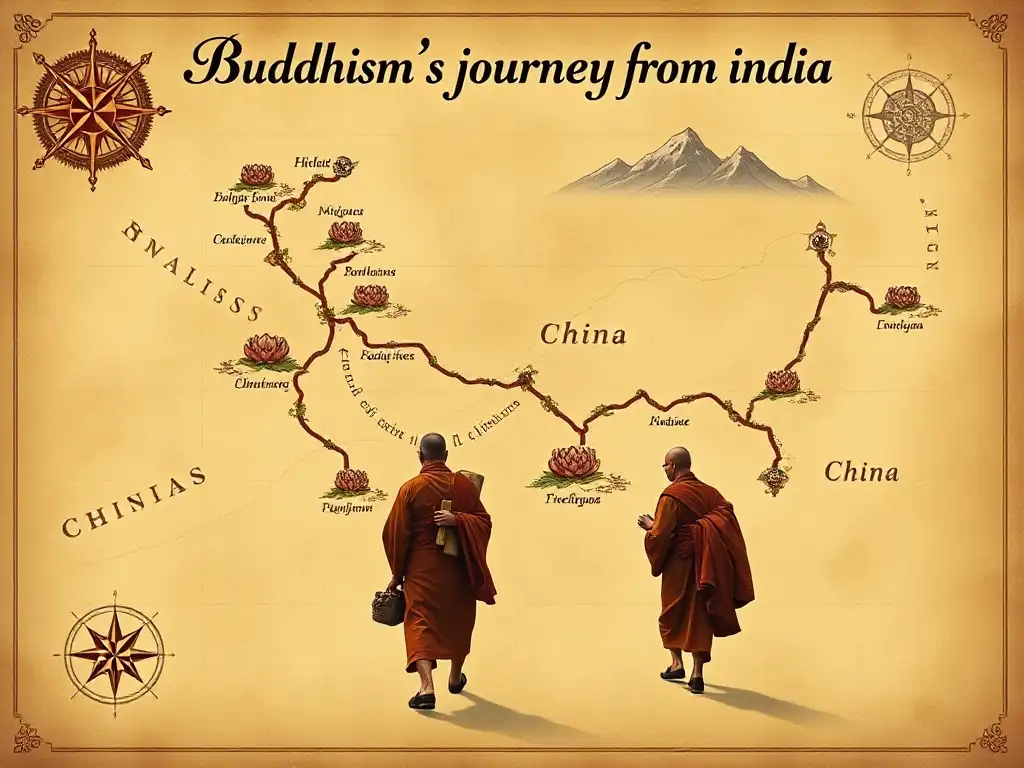
Introduction to Buddhism's Journey from India
Buddhism's journey from India is a fascinating narrative that spans centuries, showcasing the profound impact of this ancient religion on the cultural and spiritual landscapes of Asia. Originating in the 5th century BCE with the teachings of Siddhartha Gautama, known as the Buddha, Buddhism emerged as a formidable philosophical and spiritual movement.
As it spread beyond the Indian subcontinent, it not only transformed the lives of millions but also influenced art, literature, and governance in various cultures. This article delves into the intricate pathways along which Buddhism traveled, particularly its transition from India to China, highlighting key milestones and figures that played pivotal roles in this transformation.
Brief Overview of Buddhism's Origins in India
Buddhism originated in the fertile plains of northern India, where Siddhartha Gautama attained enlightenment after years of meditation and ascetic practice. His insights into the nature of suffering, impermanence, and the path to liberation led to the formulation of the Four Noble Truths and the Eightfold Path, foundational elements of Buddhist philosophy. These teachings resonated with a diverse audience, offering a practical approach to spiritual development that was accessible to all, regardless of caste or social status.
As Buddhism began to flourish, it attracted followers from various strata of society, including merchants, scholars, and kings. The establishment of monastic communities, or Sanghas, provided a structured environment for the dissemination of Buddhist teachings, which began to take root in the cultural fabric of ancient India.
Importance of Buddhism in Ancient Indian Civilization
Buddhism played a significant role in shaping the socio-political landscape of ancient India. During the reign of Emperor Ashoka in the 3rd century BCE, Buddhism received royal patronage, leading to its expansion across the Mauryan Empire and beyond. Ashoka's commitment to spreading the teachings of the Buddha included the construction of stupas, monastic institutions, and the issuance of edicts promoting ethical conduct.
Moreover, Buddhism fostered a spirit of tolerance and dialogue with other religious traditions, including Hinduism and Jainism. This cultural exchange enriched Indian philosophy and contributed to a more inclusive spiritual environment. As a result, Buddhism became an integral part of India's heritage, influencing not only religious practices but also art, architecture, and literature.
The Spread of Buddhism Beyond India
The geographic and cultural diffusion of Buddhism beyond the Indian subcontinent marked a significant chapter in its history. This journey was facilitated by trade routes, cultural exchanges, and the efforts of dedicated missionaries who sought to share the Buddha's teachings with diverse populations.
Early Transmission of Buddhist Teachings
The initial spread of Buddhism occurred through various means, including the Silk Road and maritime routes. Merchants traveling between India and Central Asia played a crucial role in introducing Buddhist concepts to new regions. Notable figures, such as Bodhidharma and Xuanzang, are celebrated for their contributions to the transmission of Buddhist teachings, often undertaking arduous journeys to spread the Dharma.
As Buddhism reached China, it began to adapt and integrate with local beliefs and practices. This syncretism led to the development of distinct schools of Buddhism, such as Chan (Zen) and Pure Land, each reflecting the cultural nuances of their respective environments. The establishment of monasteries and the translation of texts further solidified Buddhism's presence in China, laying the groundwork for its enduring legacy.
As we explore the historical journey of Buddhism from India to China, we will uncover the myriad influences and transformations that occurred, revealing the rich tapestry of cultural exchange that defined this remarkable evolution.
Key Historical Figures in Buddhism's Journey from India
The journey of Buddhism from India to China was influenced by several key historical figures whose contributions played significant roles in the establishment and spread of Buddhist teachings. These individuals not only shaped the religion itself but also facilitated cultural exchanges that enriched both Indian and Chinese societies.
Siddhartha Gautama: The Buddha
Siddhartha Gautama, known as the Buddha, is the foundational figure of Buddhism. Born in Lumbini around the 5th century BCE, he renounced his royal life in search of enlightenment. After achieving Nirvana under the Bodhi tree in Bodh Gaya, he dedicated his life to teaching the Four Noble Truths and the Eightfold Path. His teachings, emphasizing the importance of compassion, mindfulness, and the alleviation of suffering, laid the groundwork for Buddhism's ethical framework.
The Buddha’s direct influence on the early spread of Buddhism is undeniable, as his disciples traveled across India, spreading his teachings. The core principles of Buddhism, such as non-attachment and the pursuit of wisdom, resonated with many, establishing a strong foundation that would eventually facilitate its journey to China.
Ashoka the Great: The Promoter of Buddhism
Ashoka the Great, the third Mauryan emperor who ruled from 268 to 232 BCE, was pivotal in promoting Buddhism throughout his empire and beyond. After the Kalinga War, which deeply affected him, Ashoka adopted Buddhism and became its most ardent supporter. He used his position to spread the teachings of the Buddha, constructing stupas and edicts that outlined Buddhist principles.
Ashoka's missionary efforts extended beyond India; he sent monks, including Mahinda and Sanghamitra, to regions such as Sri Lanka and, eventually, to Central Asia and China. His establishment of the concept of Dhamma (moral law) underlined the importance of ethical governance and compassion, influencing how Buddhism was perceived in foreign lands. His role as a promoter not only solidified Buddhism's presence in India but also paved the way for its acceptance in diverse cultures.
Missionaries and Monks: Key Contributors to the Spread
Following the Buddha and Ashoka, numerous missionaries and monks played crucial roles in the dissemination of Buddhism to China. These figures, such as Xuanzang and Bodhidharma, were instrumental in translating texts and adapting Buddhist teachings to fit the cultural context of the regions they entered.
Xuanzang, a Chinese monk who traveled to India in the 7th century, is particularly noteworthy. His journey included the collection of sacred texts and insights into Buddhist philosophy, which he later translated into Chinese. Bodhidharma, credited as the founder of Zen Buddhism, brought with him unique meditation practices that resonated with Chinese spiritual traditions.
These missionaries not only spread Buddhist teachings but also facilitated the development of schools of thought that merged Indian and Chinese philosophies, enriching the spiritual landscape of both cultures.
Cultural Exchanges Along Buddhism's Journey
Buddhism's journey from India to China was marked by significant cultural exchanges that transformed both societies. The interplay of ideas, beliefs, and artistic expressions contributed to a rich tapestry of cultural interaction.
Interaction Between Indian and Chinese Cultures
The interaction between Indian and Chinese cultures during Buddhism's transmission was characterized by a mutual exchange of ideas and practices. As Buddhist monks traveled along trade routes, such as the Silk Road, they encountered various aspects of Chinese civilization, including Confucianism and Daoism.
This exchange led to a synthesis of beliefs, where Buddhist concepts of compassion and mindfulness began to merge with Chinese philosophical thought. Such interactions facilitated the development of unique schools of Buddhism in China, such as Chan (Zen) Buddhism, which emphasized meditation and direct experience over textual study.
Influence of Buddhism on Chinese Philosophy and Religion
Buddhism profoundly influenced Chinese philosophy and religion by introducing new concepts of ethics, metaphysics, and soteriology. The Buddhist notions of impermanence, suffering, and the cyclical nature of existence resonated with existing Chinese beliefs, allowing for a seamless integration into the local spiritual landscape.
Furthermore, Buddhist texts and ideas prompted the development of syncretic philosophies that blended Buddhist and Daoist principles, enriching Chinese thought. The introduction of concepts such as karma and rebirth altered the religious discourse in China, leading to a broader acceptance of Buddhist practices and beliefs alongside traditional Chinese religions.
Artistic Representations of Buddhism in China
The artistic representations of Buddhism in China illustrate the cultural synthesis that occurred as the religion spread. Early Buddhist art, influenced by Indian styles, evolved into distinct forms that reflected Chinese aesthetics.
Temples, sculptures, and paintings began to incorporate elements from both traditions, resulting in a unique artistic expression. For instance, the iconic statues of the Buddha, often depicted in serene postures, drew on Indian artistic influences while simultaneously adapting to Chinese cultural motifs.
Additionally, the integration of Buddhist themes into Chinese literature and poetry further showcased the impact of Buddhism on the artistic landscape. This fusion of art not only conveyed religious narratives but also served as a medium for fostering cross-cultural understanding and appreciation.
Major Milestones in Buddhism's Journey to China
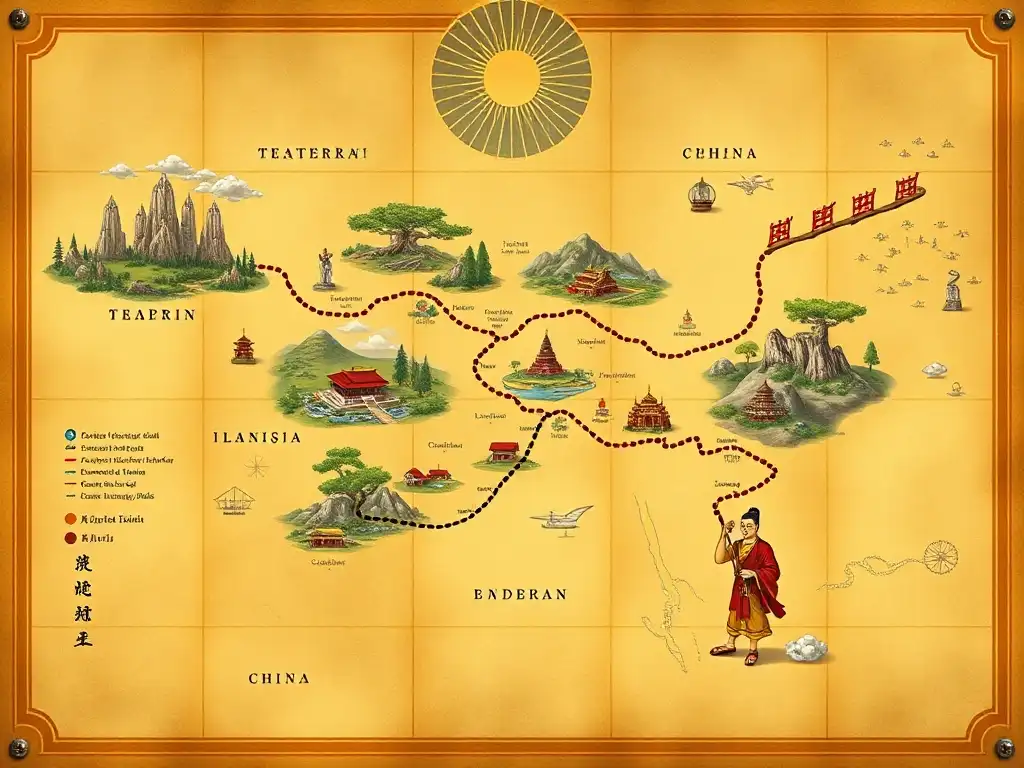
Buddhism's journey from India to China is marked by several significant milestones that not only facilitated the spread of its teachings but also contributed to the transformation of the religion as it adapted to new cultural contexts. The origins of this journey can be traced back to the early centuries of the Common Era, when trade routes began to flourish between the two regions.
The Introduction of Buddhism to China
The introduction of Buddhism to China is believed to have occurred during the Han Dynasty (206 BCE – 220 CE). Historical records suggest that a group of Buddhist monks, possibly originating from the western regions of India, traveled to China, bringing with them Buddhist texts and teachings.
One of the pivotal moments in this process was the arrival of the monk Kasyapa Matanga, who is often credited with establishing the first Buddhist temple in China, the White Horse Temple in Luoyang. This temple became a center for Buddhist learning and played a crucial role in disseminating Buddhist teachings throughout China.
As the religion gained traction, it attracted the interest of scholars and emperors alike, leading to increased translations of Buddhist texts into Chinese. The early stages of Buddhism's introduction were characterized by a struggle for recognition amidst the prevailing Confucian and Daoist ideologies, yet its philosophical appeal gradually found resonance among the Chinese populace.
The Role of the Silk Road in Facilitating Buddhism's Journey
The Silk Road served as a vital artery for cultural exchange between India and China, significantly aiding Buddhism's spread. This network of trade routes, which connected the East and West, facilitated not only the movement of goods but also ideas and religious beliefs.
Buddhist missionaries and traders traveled along these routes, sharing their teachings and experiences. The establishment of monasteries along the Silk Road provided travelers with places to rest and engage in discussions about philosophy and spirituality. These interactions allowed for the exchange of Buddhist concepts, leading to the gradual adoption of Buddhism in various Chinese regions.
Furthermore, the Silk Road's influence extended beyond mere transportation; it enabled the cross-fertilization of Buddhist thought with local beliefs, which helped Buddhism to adapt and thrive within the Chinese cultural milieu.
Translators and Scholars: Bridging the Cultural Gap
The role of translators and scholars in bridging the cultural gap between India and China was crucial for Buddhism's successful integration into Chinese society. Key figures such as Kumarajiva, a renowned translator and scholar, played a significant role in translating Buddhist texts into Chinese, making them accessible to a wider audience.
Kumarajiva's translations were notable for their clarity and philosophical depth, and they laid the groundwork for understanding Buddhist doctrines among Chinese intellectuals. His work, along with that of other translators, helped to create a rich corpus of Buddhist literature in Chinese, which included texts on ethics, meditation, and philosophy.
Additionally, these scholars often engaged in dialogue with local philosophers, which facilitated a mutual understanding and adaptation of Buddhist ideas. This exchange fostered a synthesis of Buddhist and Chinese thought, contributing to the development of a unique Chinese Buddhist tradition.
The Transformation of Buddhism in China
As Buddhism took root in China, it underwent significant transformations that reflected the cultural and social dynamics of the Chinese context. This transformation was marked by the adaptation of Buddhist teachings and practices to align with local beliefs and philosophies.
Adaptation of Buddhist Teachings to Chinese Context
The adaptation of Buddhist teachings to the Chinese context involved reconciling Buddhist concepts with existing Chinese philosophies, particularly Confucianism and Daoism. For instance, the Buddhist notion of karma and rebirth found parallels in Chinese beliefs about fate and ancestral worship.
Chinese Buddhists began to reinterpret Buddhist texts to resonate with local cultural values, leading to the emergence of new practices and rituals. The incorporation of meditation techniques and ethical guidelines into Confucian practices exemplifies this blending of traditions. This adaptation was essential for Buddhism to gain acceptance among the Chinese populace, as it presented Buddhism not as a foreign religion but as a complementary worldview.
The Rise of Chinese Buddhist Schools and Sects
The rise of Chinese Buddhist schools and sects marked a significant phase in the evolution of Buddhism in China. By the Tang Dynasty (618–907 CE), distinct schools such as Chan (Zen), Pure Land, and Tiantai emerged, each offering unique interpretations of Buddhist teachings and practices.
- Chan Buddhism, emphasizing meditation and direct experience, resonated deeply with the Chinese emphasis on simplicity and spontaneity.
- Pure Land Buddhism, focused on devotion to Amitabha Buddha and the promise of rebirth in the Western Paradise, appealed widely to laypeople seeking hope and solace.
- Tiantai Buddhism, which integrated philosophical inquiry with a systematic approach to Buddhist teachings, attracted scholars and intellectuals.
These schools not only enriched the spiritual landscape of China but also fostered a vibrant community of monks, practitioners, and lay followers. The establishment of monastic institutions and the production of Buddhist literature further solidified the presence of Buddhism in Chinese society, allowing it to flourish and evolve as a distinctly Chinese tradition.
Conclusion: The Enduring Legacy of Buddhism's Journey from India
The journey of Buddhism from India to China represents not just a historical migration of ideas but also the profound transformations that these ideas underwent as they traveled across cultures. This exchange enriched both Indian and Chinese societies, leading to the development of unique schools of thought and practices within Buddhism. The legacy of this journey is evident in the architecture, art, and literature that flourished as a result of these interactions. Temples, sculptures, and texts such as the "Heart Sutra" and the "Lotus Sutra" became symbols of the synthesis of Indian and Chinese Buddhist philosophies.
Moreover, the establishment of the Silk Road facilitated not only trade but also the interchange of spiritual beliefs and practices, making Buddhism an integral part of the cultural fabric of East Asia. As Buddhism adapted to local customs and traditions, it formed various sects, such as Chan (Zen) Buddhism, which emphasizes meditation and personal enlightenment. This adaptability showcases Buddhism's resilience and its capacity to resonate with diverse audiences.
Reflection on the Cultural and Religious Impact of Buddhism

Buddhism's arrival in China had a monumental impact on Chinese culture and spirituality. It introduced new philosophical concepts, such as the notions of impermanence and the nature of suffering, which were deeply integrated into Chinese thought and practice. The teachings of Buddha resonated with existing Daoist and Confucian ideas, leading to a unique amalgamation that shaped the spiritual landscape of China.
Artistic expressions, particularly in the form of Buddhist sculpture and painting, flourished as a result of this cultural exchange. The creation of stupas, cave temples, and frescoes, such as those found in the Dunhuang Caves, illustrate the synthesis of Indian artistic techniques and Chinese aesthetics. Furthermore, Buddhist festivals and rituals became part of the social and religious life of communities, fostering a sense of unity and shared values.
The Ongoing Influence of Buddhism in Modern China
Today, Buddhism continues to play a significant role in the lives of many Chinese people. Despite historical challenges, including periods of suppression, Buddhism has seen a resurgence in modern times. Temples are being restored, and Buddhist practices are being embraced by a new generation. This revival is not only spiritual but also cultural, as people seek to reconnect with their heritage.
Moreover, Buddhism's teachings on mindfulness and compassion have gained global recognition, influencing various fields such as psychology, education, and environmentalism. In contemporary China, the principles of Buddhism are increasingly being integrated into discussions about ethics, social responsibility, and personal well-being, demonstrating the enduring relevance of its teachings.
Further Reading on Buddhism's Journey from India to China
To deepen your understanding of Buddhism's historical journey from India to China, a variety of resources are available that explore the rich tapestry of this narrative.
Recommended Books and Resources for Deeper Understanding
-
"The Spread of Buddhism" by Andrew T. H. Tan
This comprehensive text examines how Buddhism expanded from its Indian roots to various parts of Asia, including China, highlighting key figures and events.
-
"Buddhism in China: A Historical Survey" by Kenneth Ch'en
This book provides an in-depth look at the evolution of Buddhism in China, detailing its interactions with indigenous philosophies and its impact on Chinese culture.
-
"Buddhism: A Very Short Introduction" by Damien Keown
This concise introduction offers insights into the fundamental teachings of Buddhism and its journey across different regions, making it ideal for beginners.
Online Resources for Exploring Buddhism's Historical Context
-
Buddhist Studies Resources
Websites such as the Buddhist Studies Internet Resources offer a wealth of articles and papers on the history and teachings of Buddhism, along with its spread to various countries.
-
Digital Archives
The Digital Silk Road Project provides access to a repository of texts, maps, and artifacts that illustrate the historical connections between India and China through Buddhism.
-
Online Courses
Platforms like Coursera and edX frequently offer courses on Buddhism that explore its teachings, history, and cultural significance, often featuring lectures from renowned scholars in the field.
By engaging with these resources, readers can gain a deeper appreciation for the complexities and nuances of Buddhism's journey from India, its establishment in China, and its ongoing influence in modern society.
- Introduction to Buddhism's Journey from India
- The Spread of Buddhism Beyond India
- Key Historical Figures in Buddhism's Journey from India
- Cultural Exchanges Along Buddhism's Journey
- Major Milestones in Buddhism's Journey to China
- The Transformation of Buddhism in China
- Conclusion: The Enduring Legacy of Buddhism's Journey from India
- Reflection on the Cultural and Religious Impact of Buddhism
- The Ongoing Influence of Buddhism in Modern China
- Further Reading on Buddhism's Journey from India to China
Frequently Asked Questions
What is the significance of Buddhism's journey from India?
Buddhism's journey from India was crucial for the spread of its philosophies and teachings across Asia, influencing many cultures and societies.
How did Buddhism reach China?
Buddhism reached China primarily through trade routes like the Silk Road, which facilitated cultural exchange and the movement of missionaries and monks.
What impact did Buddhism have on Chinese culture?
Buddhism profoundly influenced Chinese culture by introducing new ideas about spirituality, ethics, and art, leading to the development of unique Chinese Buddhist practices.
Who were the key figures in the transmission of Buddhism to China?
Key figures included monks like Bodhidharma, who played a significant role in establishing Zen Buddhism and integrating Buddhist principles into Chinese thought.
Significant texts include the Tripitaka, which contains the teachings of the Buddha, and various translations made by monks during their journeys to China, enriching the local literature.
Final Reflection: The Enduring Legacy of Buddhism's Journey from India
Buddhism's journey from India to China is not just a historical narrative; it is a testament to the transformative power of ideas and beliefs. Today, as we navigate a world increasingly defined by cultural exchanges and globalization, the lessons learned from this ancient journey resonate more than ever. The spread of Buddhism illustrates how spiritual teachings can transcend borders, adapting to new environments while maintaining their core essence. This adaptability is a striking reminder of the potential for understanding and harmony among diverse cultures.
Culturally, the influence of Buddhism has been profound and continues to shape societies across the globe. From art and philosophy to social practices and ethics, the principles of Buddhism have woven themselves into the fabric of many cultures, fostering compassion and mindfulness. As the Dalai Lama once said, Love and compassion are necessities, not luxuries. Without them, humanity cannot survive.
This perspective underscores the ongoing relevance of Buddhist teachings in addressing contemporary challenges, such as conflict resolution and mental well-being, inviting us to reflect on how these ancient principles can guide our modern lives.
As we conclude this exploration of Buddhism's journey from India, I invite you to reflect on how these teachings can inspire your own path. Consider how the values of compassion, mindfulness, and interconnectedness can enrich your daily life and interactions with others. In a world that often feels divided, embracing the lessons of Buddhism offers a way to cultivate peace and understanding within ourselves and our communities. Let us carry forward this legacy, allowing the wisdom of the past to illuminate our future.
Embark on Your Own Journey of Discovery!
Thank you for joining us on this enlightening exploration of Buddhism's transformative journey from India to China! We hope you gained a deeper understanding of this rich history and its impact on various cultures. Now it's time to take your interest a step further with actionable steps that will deepen your connection to this fascinating topic.
- Dive deeper into Buddhism: Consider reading a well-regarded book or enrolling in an online course to further explore its philosophical teachings and practices.
- Visit a local Buddhist temple: Experience the culture firsthand and participate in community events or services to enrich your understanding.
- Share your insights: Discuss what you’ve learned with friends or on social media—initiate a conversation about Buddhism's global influence!
What aspect of Buddhism’s journey resonates with you the most, and how do you plan to explore it further?