
The Legacy of Buddhist Councils: Key Figures Who Shaped Early Doctrine

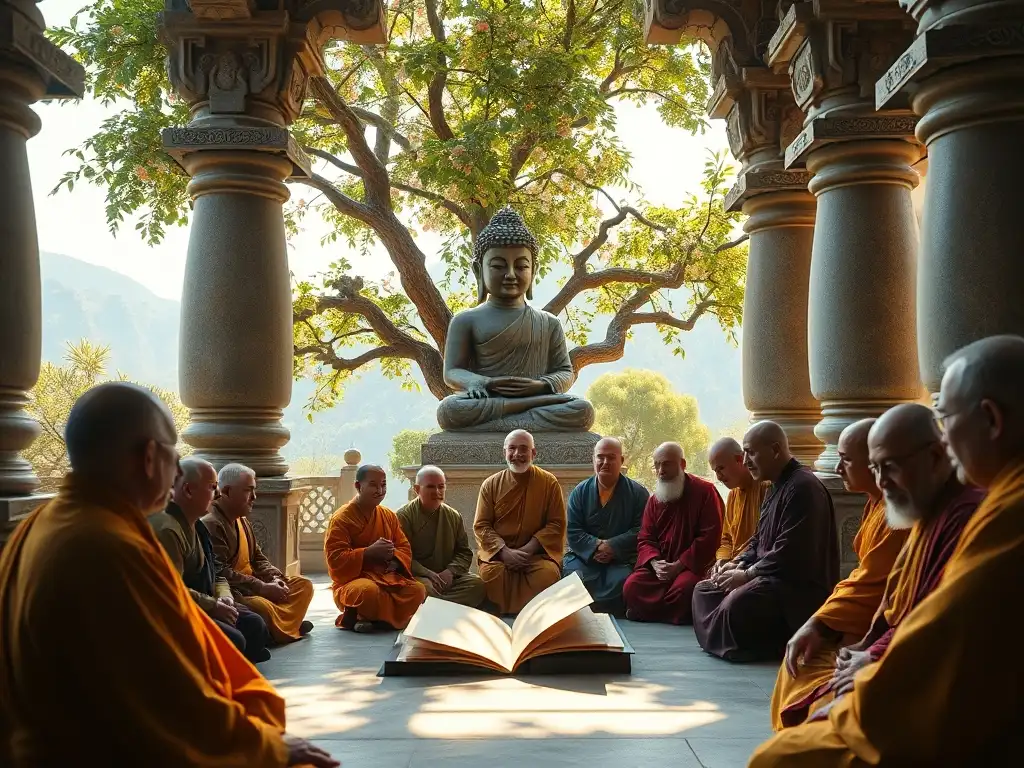
Welcome to Ancient India History, where we embark on a fascinating journey through the rich tapestry of ancient Indian civilizations. From the profound insights of the Indus Valley to the intellectual heights of the Gupta Empire, we delve deep into the cultural and historical milestones that shaped a nation. In our feature article, "The Legacy of Buddhist Councils: Key Figures Who Shaped Early Doctrine," we invite you to explore the pivotal Buddhist councils that laid the foundation for early Buddhist teachings.
Discover how these gatherings influenced doctrine and the key figures behind this transformative period. Prepare to unlock the mysteries of ancient wisdom as you continue reading!
Introduction to Buddhist Councils and Early Doctrine
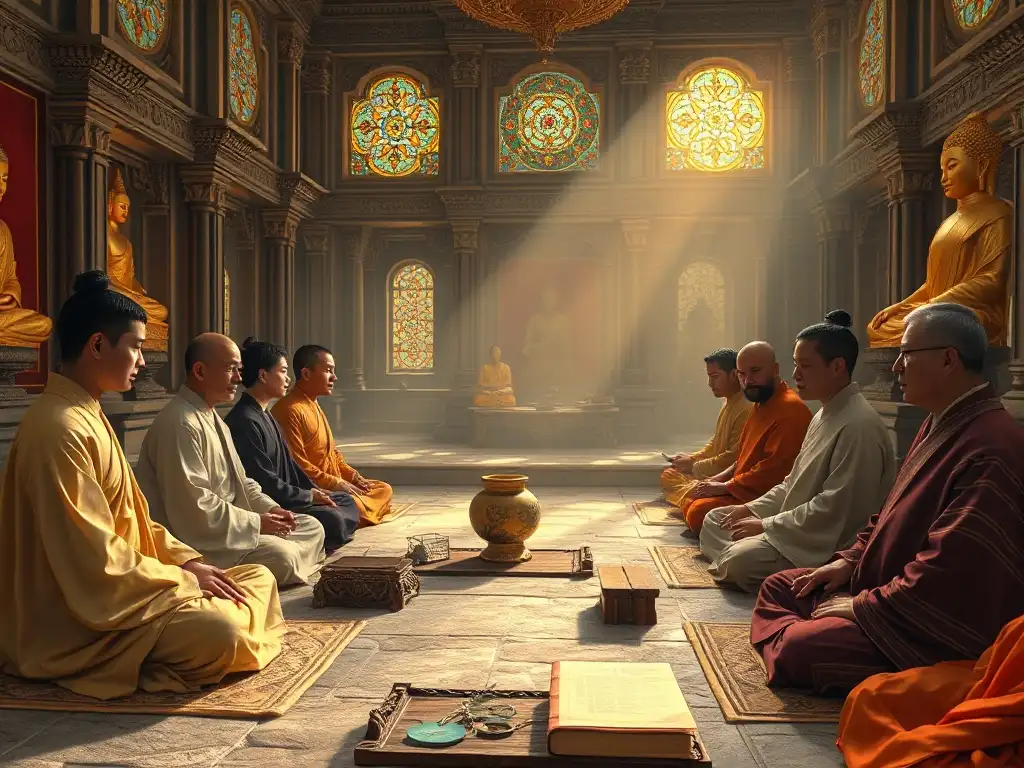
The history of Buddhism is marked by a series of significant councils that played a crucial role in shaping its doctrines and practices. These councils served as platforms for discussion, debate, and consensus among early Buddhists, ensuring the preservation and transmission of the Buddha's teachings.
Understanding the legacy of these councils not only provides insight into the development of early Buddhist doctrine but also highlights the influential figures who participated in these pivotal gatherings. This article delves into the intricate relationships between the Buddhist councils and the key personalities that contributed to the establishment of foundational principles that continue to resonate in contemporary Buddhist practices.
Understanding the Importance of Buddhist Councils in Shaping Doctrine
Buddhist councils were instrumental in the formulation and clarification of core teachings. They addressed various challenges, including differing interpretations of the Buddha's messages and the need for a unified approach to monastic discipline. Some of the key aspects of these councils include:
- Consensus Building: Councils fostered a spirit of collaboration among monks, allowing for collective decisions on doctrinal issues.
- Preservation of Texts: The oral transmission of teachings was at risk of distortion; councils helped to standardize texts and practices.
- Conflict Resolution: Disputes among followers were settled, ensuring continuity and coherence within the community.
Through these functions, the councils not only solidified early Buddhist doctrine but also ensured its adaptability in the face of evolving societal contexts.
Overview of Key Figures in Early Buddhism
The formation of Buddhist doctrine cannot be discussed without acknowledging the pivotal figures who emerged during this transformative period. Some notable personalities include:
- Siddhartha Gautama (Buddha): The founder of Buddhism, whose teachings laid the groundwork for all subsequent councils.
- Ananda: A prominent disciple known for his exceptional memory and his role in the First Buddhist Council, where he helped recite the Buddha's discourses.
- Upali: A monk renowned for his knowledge of monastic rules, Upali's contributions were vital in shaping the Vinaya Pitaka.
These figures, among others, helped to create a framework that has influenced numerous generations of practitioners across the globe.
Historical Context of Buddhist Councils
The Emergence of Buddhism in Ancient India
Buddhism originated in the 5th century BCE in the context of ancient Indian society, characterized by a diverse array of beliefs and practices. As Siddhartha Gautama attained enlightenment, he began to articulate a philosophy that emphasized the Four Noble Truths and the Eightfold Path. The rapid spread of his teachings necessitated the establishment of councils to maintain doctrinal integrity and address the complexities arising from a growing and diverse follower base.
The Role of Councils in Preserving Buddhist Teachings
The early councils, particularly the First Council held shortly after the Buddha's death, were critical in preserving the teachings and ensuring their accurate transmission. Key functions included:
- Establishing Canonical Texts: The councils aimed to compile and codify the teachings into texts that would serve as references for future generations.
- Defining Orthodoxy: By clarifying essential doctrines, the councils helped delineate orthodox beliefs from emerging sects and interpretations.
- Strengthening Community: The councils fostered unity and a sense of belonging among monks and lay followers alike, reinforcing the communal aspect of Buddhist practice.
Through these efforts, the councils not only safeguarded the teachings of the Buddha but also shaped the trajectory of Buddhism as a major world religion.
The First Buddhist Council: Key Figures and Outcomes
Background of the First Buddhist Council
The First Buddhist Council was convened shortly after the death of Siddhartha Gautama, known as the Buddha, around 483 BCE in Rajgir, India. This pivotal assembly aimed to preserve the Buddha's teachings and ensure their accurate transmission. The council was organized by Mahakasyapa, one of the Buddha's foremost disciples, in response to concerns about the potential fragmentation of the Buddhist community and the distortion of teachings.
The council brought together 500 enlightened monks who were tasked with reciting and compiling the Buddha's discourses, known as the Suttas, as well as the monastic rules, or Vinaya. This event marked the first concerted effort to codify the teachings of Buddhism, setting the stage for future councils and the development of Buddhist doctrine.
Prominent Figures: Mahakasyapa and Ananda
Among the prominent figures at the First Buddhist Council, Mahakasyapa played a crucial leadership role. Renowned for his deep understanding of the Buddha's teachings, he was instrumental in keeping the community united during a time of uncertainty. Ananda, another key figure and the Buddha's cousin, contributed significantly to the council by recalling many of the Buddha's discourses from memory.
His exceptional memory and adherence to the teachings made him a vital asset for the assembly. Their collaboration not only solidified the teachings but also helped establish a strong monastic foundation for the future of Buddhism, emphasizing the importance of unity and discipline within the community.
Decisions Made and Their Impact on Early Doctrine
The First Buddhist Council resulted in the formalization of key texts that would shape early Buddhist doctrine. The council members agreed on the canonical texts that would be revered by future generations. The compilation of the Suttas and the Vinaya laid the groundwork for the Theravada tradition and influenced subsequent schools of thought.
The decisions made regarding monastic conduct and the emphasis on meditation and ethical living established a framework for Buddhist practice. This council also marked the beginning of the oral tradition of transmission, which would later evolve into written texts, thus ensuring that the teachings of the Buddha would endure and adapt through the ages.
The Second Buddhist Council: Evolution of Teachings
Circumstances Leading to the Second Council
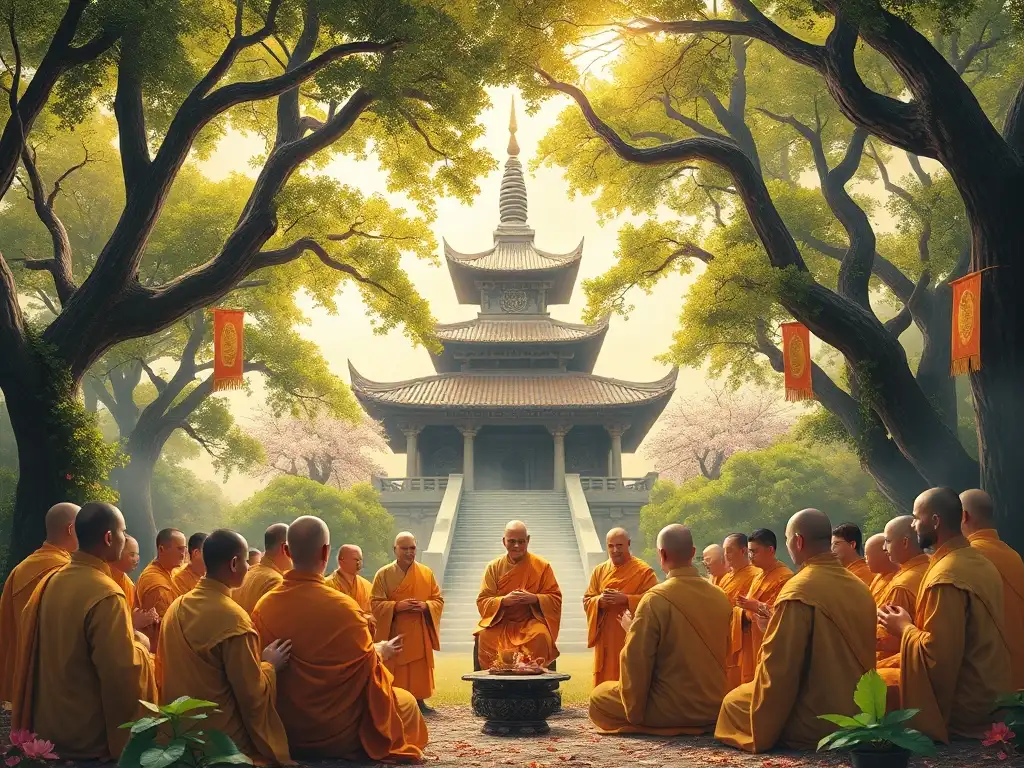
The Second Buddhist Council was convened approximately a century later, around 383 BCE, in Vaisali. This assembly emerged from growing concerns about the integrity of the monastic community and the adherence to the original teachings of the Buddha. Disputes regarding monastic discipline, particularly concerning the Vinaya rules, prompted the need for a reassessment of practices within the Buddhist community. The council aimed to address these issues and re-establish a unified interpretation of the teachings, which had begun to diverge across different regions and sects.
Key Figures: Upali and the Role of Monastic Discipline
Upali, a prominent monk known for his expertise in the Vinaya, emerged as a key figure during the Second Buddhist Council. His deep understanding of monastic rules made him pivotal in the discussions regarding discipline and ethical conduct. The council sought to clarify various interpretations of the Vinaya and resolve disputes among different factions within the community. Upali's contributions were essential in reinforcing the importance of monastic discipline as a cornerstone of Buddhist practice, ensuring that the community remained aligned with the Buddha's original intentions.
Changes in Doctrine and Practices
The Second Buddhist Council led to significant changes in doctrine and practices, particularly concerning monastic regulations. The council reaffirmed the necessity of strict adherence to the Vinaya, resulting in the rejection of several practices that were deemed inconsistent with the original teachings.
This assembly also highlighted the importance of maintaining a cohesive interpretation of Buddhist doctrine, which would later influence the development of various schools of Buddhism. The decisions made during this council not only solidified the framework for monastic life but also contributed to the broader understanding of Buddhist teachings, setting the stage for future councils and developments in the Buddhist tradition.
The Third Buddhist Council: Consolidation of the Teachings
The Third Buddhist Council, convened in the 3rd century BCE, marked a pivotal moment in the consolidation of Buddhist teachings and practices. Held in Pataliputra (modern-day Patna), this council was primarily aimed at addressing the growing schisms within the Buddhist community and ensuring the integrity of the Dharma. The council played a critical role in unifying various Buddhist sects under a common doctrinal framework, which ultimately influenced the trajectory of Buddhism in India and beyond.
Context and Objectives of the Third Council
The Third Buddhist Council was initiated during the reign of Emperor Ashoka, who is renowned for his support of Buddhism and its propagation across his vast empire. The council was convened in response to the perceived deviations from the original teachings of the Buddha, which had emerged due to the proliferation of sects and interpretations.
The primary objectives of the council included:
- Establishing Orthodoxy: To reaffirm the core teachings of Buddhism and eliminate distortions that had arisen in the practice and understanding of the Dharma.
- Standardizing Texts: To compile and authenticate the teachings attributed to the Buddha, ensuring a cohesive textual tradition.
- Promoting Unity: To foster harmony among the various Buddhist sects and facilitate a unified approach to practice and dissemination of Buddhism.
Influential Leaders: Ashoka and Moggaliputta-Tissa
Two key figures emerged as central to the proceedings of the Third Council: Emperor Ashoka and the monk Moggaliputta-Tissa. Ashoka's commitment to Buddhism was both political and spiritual; he sought to use his influence to promote Buddhist values throughout his realm. His patronage was instrumental in gathering monks from various regions to participate in the council.
Moggaliputta-Tissa, a prominent monk, served as the president of the council. His scholarly acumen and understanding of the Dharma made him a crucial figure in the council’s deliberations. He played a significant role in articulating the arguments for doctrinal purity and the need for a consolidated textual tradition. Under his leadership, the council successfully addressed the challenges posed by the various sects and reaffirmed the teachings of the Buddha.
Contributions to the Pali Canon and Early Textual Tradition
The outcomes of the Third Buddhist Council had a lasting impact on the Pali Canon and the early textual tradition of Buddhism. One of the major contributions of this council was the formalization of the Theravada tradition, which sought to preserve the original teachings of the Buddha as transmitted through oral tradition.
Key contributions included:
- Compilation of Texts: The council led to the systematic compilation of texts that would later form the basis of the Pali Canon, including the Sutta Pitaka and the Vinaya Pitaka.
- Clarification of Doctrinal Issues: The council addressed various doctrinal disputes and clarified key concepts such as the Four Noble Truths and the Eightfold Path, ensuring a unified understanding among followers.
- Promotion of Monastic Discipline: Emphasis was placed on the Vinaya rules governing monastic conduct, which contributed to the establishment of a rigorous monastic community dedicated to the preservation and dissemination of the Buddha’s teachings.
The Fourth Buddhist Council: Expanding the Doctrine
The Fourth Buddhist Council, held in the 1st century BCE in Kashmir, was a significant event that aimed to expand and adapt Buddhist doctrine in light of new philosophical developments and cultural contexts. This council is particularly noteworthy for its role in the emergence of Mahayana Buddhism, which introduced new ideas and practices that would reshape the landscape of Buddhism.
Overview of the Fourth Council's Goals
The Fourth Buddhist Council was convened to address the growing diversity within the Buddhist community and to respond to the challenges posed by the evolving philosophical landscape. The primary goals of the council included:
- Incorporating New Ideas: To explore and integrate new philosophical insights that had emerged since the time of the Buddha, particularly those related to the concept of emptiness and the nature of reality.
- Mahayana Development: To provide a platform for the articulation of Mahayana doctrines, which emphasized the role of the Bodhisattva and the aspiration for universal enlightenment.
- Textual Preservation: To ensure that the teachings of the Buddha were preserved and accurately transmitted, reflecting both the original teachings and the new developments within the tradition.
Key Figures: Vasubandhu and the Mahayana Influence
Prominent figures in the Fourth Buddhist Council included Vasubandhu, a renowned philosopher and scholar known for his contributions to Mahayana thought. His works, particularly the "Abhidharmakosa," played a significant role in shaping the philosophical underpinnings of Mahayana Buddhism.
Vasubandhu's influence can be summarized as follows:
- Philosophical Expansion: He introduced new interpretations of Buddhist teachings that transcended traditional Theravada perspectives, emphasizing the significance of compassion and the Bodhisattva ideal.
- Textual Contributions: His writings contributed to the development of key Mahayana texts, facilitating a broader understanding of Buddhist philosophy and practice.
The Shift Towards Mahayana Buddhism and Its Doctrinal Implications
The Fourth Buddhist Council marked a significant shift towards Mahayana Buddhism, which would become one of the two major branches of Buddhism alongside Theravada. This transition brought about several doctrinal implications that would influence the evolution of Buddhist thought:
- Emphasis on Bodhisattva Ideal: Mahayana Buddhism introduced the concept of the Bodhisattva, a being who seeks enlightenment not only for themselves but for all sentient beings. This shift emphasized altruism and compassion as central tenets of the faith.
- New Textual Canon: The council led to the creation and endorsement of new scriptures, such as the Lotus Sutra and the Heart Sutra, which articulated Mahayana principles and practices.
- Inclusivity and Adaptability: Mahayana Buddhism's emphasis on inclusivity allowed for the integration of diverse cultural practices and beliefs, facilitating its spread across Asia.
The Fourth Buddhist Council thus played a crucial role in laying the foundations for Mahayana Buddhism, influencing its doctrinal development and its appeal to a broader audience throughout the centuries.
The Impact of Buddhist Councils on Later Developments
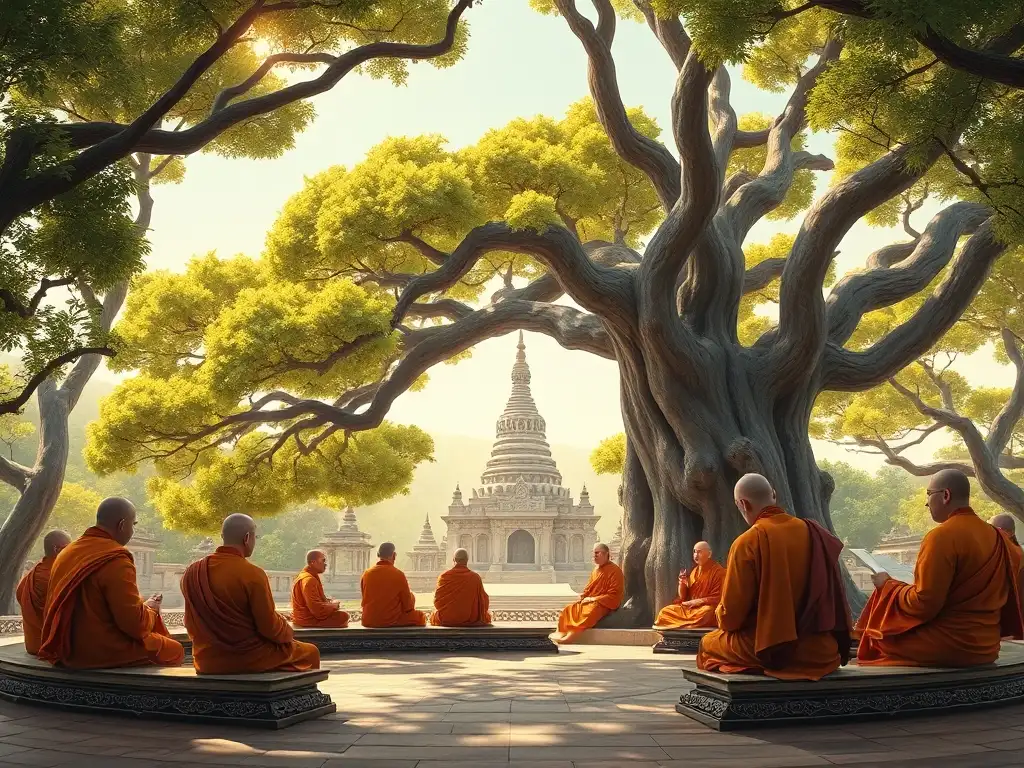
The Buddhist councils played a pivotal role in shaping the trajectory of Buddhism, influencing its doctrines, practices, and organizational structure. The councils, particularly the first few held shortly after the death of the Buddha, established a framework for the transmission of Buddhist teachings that would resonate throughout the centuries. They not only served as a platform for the consolidation of the Buddha's teachings but also addressed critical issues related to monastic discipline and the interpretation of his words.
The decisions made during these councils had far-reaching consequences, leading to the emergence of various schools of thought within Buddhism. As the teachings traveled across regions, they adapted to local contexts, resulting in a rich tapestry of traditions. The councils instilled a sense of unity among practitioners, yet they also laid the groundwork for doctrinal diversity that characterizes Buddhism today.
How Early Councils Influenced Subsequent Buddhist Traditions
The early councils, particularly the First Council convened in Rajgir and the Second Council held in Vaishali, set significant precedents for the development of Buddhist philosophy and practice. The First Council, which took place approximately three months after the Buddha's parinirvana, aimed to preserve his teachings through recitation, ultimately leading to the compilation of the Pali Canon. This canon became the cornerstone of Theravada Buddhism, influencing its doctrines and practices.
In contrast, the Second Council addressed doctrinal disputes and led to the schism between the Theravada and Mahayana traditions. This division was crucial as it allowed for the development of diverse interpretations of Buddhist teachings, such as the emphasis on bodhisattva ideals in Mahayana Buddhism. Moreover, later councils, including the Third Council under Emperor Ashoka, emphasized the importance of missionary activity, which facilitated the spread of Buddhism beyond India and encouraged the establishment of monastic communities in various regions, such as Sri Lanka, Central Asia, and Southeast Asia.
The Legacy of Key Figures in Modern Buddhism
The key figures associated with the early Buddhist councils, such as Mahakasyapa and Ananda, have left an indelible mark on modern Buddhism. Mahakasyapa, recognized as the leader of the First Council, is revered in many Buddhist traditions for his role in preserving the Buddha’s teachings. His emphasis on community and monastic discipline continues to resonate in contemporary monastic practices.
Ananda, known for his exceptional memory and close association with the Buddha, played a crucial role in the transmission of teachings. His contributions to the oral tradition have been acknowledged across various Buddhist schools, and his legacy is celebrated in practices that prioritize mindfulness and meditation. The reverence for these figures illustrates how the foundations laid in the councils continue to influence the spiritual lives of millions.
Conclusion: The Enduring Legacy of Buddhist Councils and Their Key Figures
The legacy of the Buddhist councils and their key figures is profoundly ingrained in the fabric of Buddhist thought and practice. These councils not only preserved the teachings of the Buddha but also fostered discussions that shaped the interpretations and applications of these teachings across different cultures and eras. The impact of their decisions can be observed in the diversity of practices and beliefs that characterize Buddhism today.
Reflection on the Importance of Councils in Shaping Buddhist Thought
The councils served as a critical juncture in the history of Buddhism, emphasizing the importance of communal dialogue in shaping religious thought. They provided a platform for resolving disputes and reinforcing core teachings, ensuring that the essence of the Buddha's message was maintained. The discussions that took place during these councils reflect a commitment to understanding and interpreting the Buddha's teachings in ways that resonate with subsequent generations.
The Relevance of Early Doctrine in Contemporary Practice
In contemporary practice, the early doctrines established during the councils remain relevant, guiding practitioners in their spiritual journeys. Concepts such as the Four Noble Truths and the Eightfold Path, firmly rooted in the early councils' teachings, continue to inform the ethical and philosophical frameworks of modern Buddhism. As practitioners engage with these foundational principles, they navigate the complexities of life while drawing inspiration from the rich historical legacy that the early councils and their key figures bequeathed to future generations.
References and Further Reading on Buddhist Councils and Early Doctrine
Understanding the profound impact of Buddhist councils on early doctrine necessitates a thorough exploration of various texts and scholarly works. These resources provide insights into the historical context, developments, and teachings that emerged from these councils, shaping the trajectory of Buddhism. Below are some recommended texts and contributions that can enhance one’s knowledge in this area.
Suggested Texts and Resources for In-Depth Understanding
-
"The Buddha and His Teachings" by Narada Thera
This comprehensive book offers an overview of the life of the Buddha, the origins of Buddhism, and the major teachings that were consolidated during the early councils. It serves as a foundational text for understanding how early doctrines were established.
-
"The History of Buddhism in India and Tibet" by Alexander Csoma de Körös
This historical account delves into the spread of Buddhism in India and its subsequent influence in Tibet, detailing how the councils contributed to doctrinal variations.
-
"The Pali Canon: The Sacred Writings of Theravada Buddhism"
As a primary source, the Pali Canon includes many of the teachings that were formalized in the early councils. It provides essential texts that reflect the core doctrines of Buddhism.
-
"Buddhist Councils: Their History and Significance" by Bhikkhu Bodhi
This scholarly work focuses specifically on the councils, exploring their historical significance and the doctrines that were debated and ratified during these gatherings.
-
"Buddhism: A Very Short Introduction" by Damien Keown
This concise introduction offers an overview of Buddhism, including insights into its foundational councils and their role in shaping early doctrine.
Notable Scholars and Their Contributions to the Study of Buddhist History
-
Rhys Davids, T.W.
A pioneering figure in the study of Pali texts, Rhys Davids contributed extensively to the understanding of early Buddhist doctrine through his translations and interpretations of the Pali Canon. His work laid the groundwork for future scholars examining the historical implications of the councils.
-
Edward Conze
A renowned scholar of Buddhist philosophy, Conze's studies on Mahayana Buddhism have provided valuable insights into how early doctrinal developments influenced later traditions. His translations and commentaries on Buddhist texts have been instrumental in understanding the evolution of Buddhist thought.
-
Gombrich, Richard
Gombrich’s writings, particularly "What the Buddha Thought," challenge common misconceptions about early Buddhism and highlight the significance of the councils in shaping doctrinal evolution. His critical approach to historical sources has enriched the field of Buddhist studies.
-
Buddhaghosa
As an ancient commentator, Buddhaghosa’s work, particularly the "Visuddhimagga," synthesizes early teachings and doctrines, reflecting the historical context of the Buddhist councils. His interpretations have had a lasting impact on Theravada Buddhism.
-
Melford E. Spiro
Spiro’s anthropological approach to Buddhism has provided insights into the cultural and social dimensions of the religion, emphasizing how early doctrinal developments were influenced by the broader societal context, including the role of the councils.
These texts and scholars collectively contribute to a richer understanding of Buddhist councils and early doctrine, providing essential resources for anyone interested in the historical and doctrinal development of Buddhism in ancient India.
- Introduction to Buddhist Councils and Early Doctrine
- Historical Context of Buddhist Councils
- The First Buddhist Council: Key Figures and Outcomes
- The Second Buddhist Council: Evolution of Teachings
- The Third Buddhist Council: Consolidation of the Teachings
- The Fourth Buddhist Council: Expanding the Doctrine
- The Impact of Buddhist Councils on Later Developments
- Conclusion: The Enduring Legacy of Buddhist Councils and Their Key Figures
- References and Further Reading on Buddhist Councils and Early Doctrine
Frequently Asked Questions
What were the Buddhist councils?
The Buddhist councils were gatherings of monks and scholars aimed at discussing and codifying Buddhist teachings and doctrines. They played a crucial role in preserving the Buddhist tradition.
How did the Buddhist councils influence early Buddhist doctrine?
These councils helped to establish and clarify the doctrines of Buddhism, ensuring a unified approach to the teachings of the Buddha across different regions and communities.
Who were the key figures involved in the Buddhist councils?
Notable figures included King Ashoka, who supported the Third Council, and Buddhist monks like Upali and Moggaliputta-Tissa, who contributed to the formulation of early doctrines.
What is the significance of the First Buddhist Council?
The First Buddhist Council, held shortly after the Buddha's death, was significant for compiling the Pali Canon and establishing the foundational texts of Buddhism.
How do the Buddhist councils relate to the spread of Buddhism?
The councils facilitated the dissemination of Buddhist teachings, which were crucial for spreading Buddhism beyond India, influencing cultures and religions across Asia.
Final Reflection: Embracing the Wisdom of Buddhist Councils
The legacy of Buddhist councils and their pivotal role in shaping early doctrine remains profoundly relevant today. As we navigate an increasingly complex world, the teachings and decisions made during these councils offer timeless guidance and insight into the nature of suffering, community, and enlightenment. The impact of these gatherings resonates not only within the walls of temples but also in the hearts of individuals seeking a deeper understanding of their own lives and the world around them.
The influence of the Buddhist councils extends far beyond historical significance; it continues to shape the cultural and social landscape of our time. The dialogues and debates that took place among key figures laid the groundwork for a rich tapestry of beliefs and practices that have inspired millions. As the Dalai Lama once said, The purpose of our lives is to be happy.
This pursuit of happiness, rooted in the teachings of early councils, encourages us to cultivate compassion, mindfulness, and a sense of interconnectedness in our daily lives.
As we reflect on the teachings and legacies of these councils, I invite you to consider how their insights can be woven into your own journey. Take a moment to contemplate the values of compassion, wisdom, and community that emerged from these pivotal gatherings. How can you embody these principles in your interactions, decisions, and personal growth? By embracing the lessons of the past, we can illuminate our paths forward, fostering a more harmonious and enlightened world for ourselves and future generations.
Embrace the Wisdom of Buddhist Councils!
Thank you for taking the time to explore the profound legacy of Buddhist councils and the key figures who shaped early doctrine. Your interest not only enhances your understanding but also enriches your appreciation of this pivotal aspect of history. Now, let’s take **inspired action** to deepen your connection and exploration of this fascinating topic!
- Dive deeper into the teachings of prominent Buddhist scholars by reading their translated texts or watching documentaries that illuminate their philosophies.
- Engage with your community: Share insights from this article on social media to spark conversations about how these ancient teachings resonate in today's world.
- Join a local meditation group or an online forum dedicated to exploring Buddhist practices and philosophies. Connect and learn from others on a similar journey!
Which figure from the Buddhist councils do you find most intriguing, and how do their teachings inspire your life today?