
The Role of Symbols in Buddhism: Understanding the Iconography


Welcome to Ancient India History, where we embark on a fascinating journey through the rich tapestry of ancient Indian civilizations. From the enigmatic Indus Valley to the illustrious Gupta Empire, our exploration reveals the profound cultural and spiritual contributions that have shaped our world. In this article, we delve into the intriguing realm of Buddhist symbols and their meanings, uncovering the layers of significance behind these powerful icons.
Join us as we unravel the mysteries of Buddhist iconography and discover how these symbols encapsulate the essence of a religion that has transcended time and borders. Prepare to be inspired and enlightened—your adventure into the depths of ancient Indian religions begins now!

Introduction to Buddhist Symbols and Their Meanings
Buddhism, a profound spiritual tradition that originated in ancient India, has left an indelible mark on the cultural and philosophical landscape of not only the Indian subcontinent but also the entire world. Central to its teachings are a variety of symbols that embody core principles and beliefs of the faith. These symbols serve as visual representations of the profound concepts found in Buddhist teachings, guiding practitioners in their spiritual journeys. Understanding Buddhist symbols and their meanings is essential for comprehending the multifaceted nature of Buddhism itself, as these icons encapsulate the essence of its philosophy, ethics, and practices.
In this article, we will explore the significance of these symbols, their historical context, and how they continue to resonate within the contemporary Buddhist landscape, enriching the lives of millions around the globe.
Overview of Buddhism and Its Cultural Significance
Buddhism emerged around the 5th to 4th century BCE with the teachings of Siddhartha Gautama, known as the Buddha, who sought to address the existential suffering inherent in human life. This religion emphasizes the Four Noble Truths and the Eightfold Path as guiding principles to attain enlightenment (Nirvana).
- Cultural Impact: The spread of Buddhism from India to various parts of Asia, including China, Japan, and Southeast Asia, has significantly influenced local cultures, art, and philosophy.
- Syncretism: As it integrated with indigenous beliefs, Buddhism adapted, giving rise to diverse schools of thought and practices, each employing unique symbols that reflect local customs and traditions.
Importance of Iconography in Buddhist Tradition
The use of iconography in Buddhism is not merely decorative; it serves as a vital educational tool. Symbols communicate profound teachings and philosophies in a visually accessible manner, allowing practitioners and observers to engage with complex concepts.
- Visual Language: Each symbol carries specific meanings and narratives, offering a way to convey Buddhist teachings without reliance solely on text.
- Meditative Focus: Symbols also act as focal points for meditation, helping practitioners concentrate and deepen their spiritual practice.
Key Buddhist Symbols and Their Meanings
In the following sections, we will delve into some of the most prominent symbols in Buddhism, exploring their meanings and significance within the tradition.
The Dharma Wheel (Dharmachakra)
The Dharma Wheel, or Dharmachakra, symbolizes the teachings of the Buddha and the path to enlightenment.
- Symbolism: The wheel has eight spokes, representing the Eightfold Path, which is the essence of Buddhist practice.
- Historical Context: It is often depicted in art and architecture, signifying the Buddha's first sermon at Sarnath, where he set in motion the wheel of Dharma.
The Lotus Flower (Padma)
The Lotus Flower, or Padma, is a powerful symbol of purity and spiritual awakening.
- Growth from Mud: The lotus grows in muddy waters, yet blossoms pristine and beautiful above the surface, representing the potential for enlightenment amid the struggles of life.
- Association with Deities: It is often associated with various Buddhist deities, symbolizing divine beauty and purity.
The Bodhi Tree
The Bodhi Tree holds immense significance as the tree under which Siddhartha Gautama attained enlightenment.
- Symbol of Enlightenment: It represents the quest for knowledge and the realization of one's true nature.
- Cultural Depictions: Revered in Buddhist culture, it is commonly found in temples as a symbol of wisdom and spiritual growth.
The Endless Knot (Shrivasta)
The Endless Knot, or Shrivasta, symbolizes the interconnectedness of all things in the universe.
- Infinite Cycles: It represents the cyclic nature of life, death, and rebirth (samsara) and the intertwining of wisdom and compassion.
- Cultural Significance: Often used in Buddhist art, it serves as a reminder of the unity and interdependence of all beings.
The Stupa
The Stupa is a mound-like structure containing relics and representing the enlightened mind of the Buddha.
- Symbol of Protection: Stupas serve as pilgrimage sites, embodying the essence of the Buddha's teachings and offering a place for reflection and meditation.
- Architectural Influence: They are a significant architectural element in Buddhist culture, symbolizing the path to enlightenment through their design and function.
As we explore these symbols further, we can gain deeper insights into the rich tapestry of Buddhist philosophy and its enduring legacy in the world today.
The Evolution of Buddhist Symbols Over Time
Buddhist symbols have undergone significant transformation since the inception of Buddhism in the 5th century BCE. Initially, during the time of the Buddha, there was a notable absence of anthropomorphic representations. Instead, symbols like the Dharma Wheel (Dharmachakra) and the Bodhi Tree were utilized to convey teachings and principles of Buddhism. These early symbols served to represent the teachings without depicting the Buddha in human form, aligning with the Buddha’s teachings of non-attachment and the transcendence of the physical body.
As Buddhism spread across Asia, it absorbed and integrated local symbols and artistic styles, leading to a diversification of its iconography. For instance, in the Gandhara region, which was significantly influenced by Greco-Roman culture, symbols began to depict more human forms of the Buddha and other Bodhisattvas, showcasing a blending of artistic traditions. Over centuries, the symbolism in Buddhism has continued to evolve, reflecting the changing cultural landscapes of the regions where it has taken root.
Historical Context of Buddhist Symbolism
The historical context of Buddhist symbolism is deeply intertwined with the life and teachings of Siddhartha Gautama, the Buddha. The earliest symbols emerged during the Mauryan Empire, particularly under Emperor Ashoka, who played a pivotal role in spreading Buddhism and its iconography. Ashoka’s edicts often featured symbols like the Lion Capital and the Dharma Wheel, which became emblematic of the faith.
As Buddhism spread through trade routes to Central Asia, China, Japan, and beyond, the historical context of each region influenced the interpretation and adoption of symbols. The Silk Road facilitated not only the exchange of goods but also ideas and artistic traditions, leading to a rich tapestry of Buddhist symbolism that reflects the historical narratives of the cultures it touched.
Regional Variations in Symbolic Interpretation
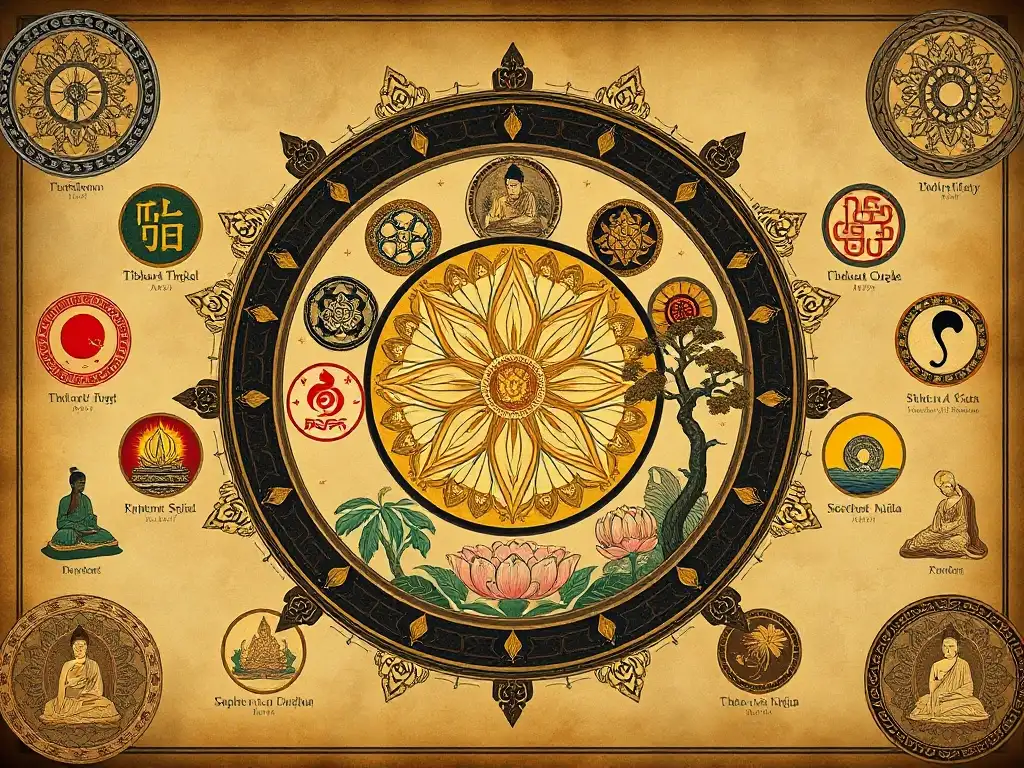
Buddhist symbols are not universally interpreted; instead, their meanings can vary significantly across different cultures and regions. For example, the lotus flower, a key symbol in Buddhism representing purity and enlightenment, is interpreted differently in Southeast Asia compared to Tibet. In the Theravada tradition, the lotus symbolizes the journey of the soul rising above the muddy waters of desire, while in Tibetan Buddhism, it often embodies the idea of spiritual awakening and the unfolding of potential.
Additionally, the Dharma Wheel holds varying significance. In Thailand, it is often associated with the teachings of the Buddha, while in Tibet, it may symbolize the cyclical nature of existence (samsara) and the path to liberation. These regional variations highlight the adaptability of Buddhist symbols to local contexts, making them dynamic and multifaceted.
Influence of Local Cultures on Buddhist Iconography
As Buddhism spread to different regions, local cultures significantly influenced its iconography, leading to the creation of unique representations. In Japan, for instance, the incorporation of Shinto elements resulted in distinctive forms of Buddhist art and symbols, such as the use of torii gates in Buddhist temples. Similarly, in China, the blending of Daoist and Confucian symbols with Buddhist imagery resulted in a rich iconographic tradition that is distinctly Chinese.
The interaction between Buddhism and local cultures not only enriched its symbolism but also facilitated the integration of Buddhist ideas into everyday life. This cultural syncretism is evident in the various depictions of deities and Bodhisattvas, where local artistic styles and religious practices merge with traditional Buddhist themes.
The Function of Symbols in Buddhist Practice
Buddhist symbols serve multiple functions within the practice of Buddhism, acting as tools for understanding, meditation, and communal rituals. They provide practitioners with visual representations of the teachings and principles of Buddhism, encapsulating complex ideas in accessible forms. The use of symbols in practice reinforces the teachings of the Buddha, reminding followers of the core concepts of the faith and guiding their spiritual journeys.
Symbols as Tools for Meditation and Mindfulness

In meditation, symbols play a crucial role in focusing the mind and facilitating deeper states of awareness. The use of mandalas, for instance, represents the universe in symbolic form, providing a visual aid for practitioners to concentrate on during meditation. By contemplating these symbols, individuals can cultivate mindfulness, develop insight, and foster a sense of connection to the cosmos and their own spiritual path.
Moreover, specific symbols like the Om (Aum) and the Vajra are often chanted or visualized during meditation practices, serving to enhance concentration and invoke specific qualities associated with the symbol, such as compassion and wisdom. This integration of symbols into meditation practices illustrates their importance in guiding practitioners toward enlightenment.
The Role of Symbols in Rituals and Ceremonies
Buddhist rituals and ceremonies heavily rely on symbols to convey meanings and facilitate a spiritual connection among practitioners. During important ceremonies, such as ordinations or festivals, symbols are often employed to represent key teachings and concepts. For example, the offering of flowers symbolizes impermanence, reminding practitioners of the transient nature of life.
Additionally, the use of specific ritual objects, such as the bell and dorje in Tibetan Buddhism, embodies the union of wisdom and method, reinforcing the principles underlying Buddhist practice. These symbols not only enhance the aesthetic of rituals but also deepen the participants' understanding of their spiritual significance.
Symbolism in Buddhist Art and Architecture
Buddhist art and architecture are rich in symbolism, with each element carrying profound meanings. Stupas, for instance, are not merely architectural structures; they represent the enlightened mind of the Buddha and serve as a focal point for devotion and meditation. The design of stupas often incorporates symbolic elements like the square base, representing the earth, and the circular dome, symbolizing the cosmos.
In addition, murals and sculptures found in temples depict stories from the Buddha’s life and teachings, using symbolism to communicate moral lessons and spiritual truths. The use of vibrant colors, intricate patterns, and specific iconographic elements in Buddhist art creates a powerful visual narrative that is both educational and spiritually enriching, inviting practitioners and visitors alike to contemplate the deeper meanings embedded within the artwork.
Understanding the Interpretation of Buddhist Symbols

Buddhist symbols serve as visual representations of profound teachings and philosophies inherent in the religion. These symbols encapsulate complex ideas, making them accessible to practitioners and followers. The interpretation of Buddhist symbols is not monolithic; rather, it varies across different cultures and historical contexts. Commonly recognized symbols include the Dharma Wheel, Lotus Flower, and Bodhi Tree, each carrying unique meanings that resonate with the core tenets of Buddhism.
The significance of these symbols often intertwines with the life of Siddhartha Gautama (Buddha) and his teachings. For instance, the Dharma Wheel, or Dharmachakra, symbolizes the path to enlightenment and the teachings of the Buddha. Understanding these symbols requires a deep engagement with Buddhist philosophy, as they reflect the core values of compassion, mindfulness, and the pursuit of enlightenment.
How Symbols Convey Teachings and Philosophies
Symbols in Buddhism convey teachings and philosophies through visual language that transcends words. Each symbol tells a story or illustrates a principle central to Buddhist thought. For example, the Lotus Flower represents purity and spiritual awakening, flourishing in muddy waters yet remaining untainted. This duality illustrates the potential for enlightenment amidst worldly challenges.
Moreover, symbols such as the Endless Knot represent the interconnectedness of all things and the cyclical nature of existence, echoing the Buddhist understanding of impermanence and interdependence. Through these symbols, teachings are not only preserved but also communicated in a manner that encourages reflection and meditation among practitioners.
The Relationship Between Symbols and the Four Noble Truths
The Four Noble Truths, which outline the essence of Buddhist teaching, are often represented through various symbols. Each of the truths can be visualized through specific symbols that encapsulate their meanings. For instance:
- The Truth of Suffering (Dukkha) is often symbolized by the Wheel of Dharma, reflecting the cyclical nature of suffering and the path to liberation.
- The Truth of the Cause of Suffering (Samudaya) may be illustrated through symbols of desire, such as the Three Poisons (ignorance, attachment, and aversion), which are frequently depicted in art.
- The Truth of the End of Suffering (Nirodha) can be represented by symbols of serenity, such as the Bodhi Tree, where the Buddha attained enlightenment.
- The Truth of the Path to the End of Suffering (Magga) is often depicted through the Eightfold Path, symbolized by the Eight Spoked Wheel.
By understanding these connections, practitioners gain deeper insights into the foundational principles of Buddhism and their implications for daily life.
The Impact of Symbols on Devotional Practices
Symbols play a crucial role in devotional practices within Buddhism, serving as focal points for meditation and prayer. The presence of symbols in temples, shrines, and personal altars enhances the spiritual atmosphere, allowing practitioners to connect more deeply with their faith. For example, the Buddha statues serve as reminders of the Buddha's teachings and inspire followers to cultivate mindfulness and compassion.
Additionally, rituals often incorporate symbols to signify various aspects of Buddhist beliefs. For instance, during ceremonies, practitioners may use incense, which symbolizes the purification of thoughts and actions. The act of visualizing these symbols during meditation can lead to a heightened sense of awareness and spiritual growth.
Conclusion: The Enduring Legacy of Buddhist Symbols
The legacy of Buddhist symbols is profound, extending beyond the mere representation of teachings to embody the lived experiences of countless practitioners throughout history. These symbols serve as enduring reminders of the path to enlightenment and the values inherent in Buddhist philosophy. As Buddhism spread across different cultures, symbols adapted and evolved, enriching the tapestry of Buddhist iconography and making it relevant to diverse societies.
The Role of Symbols in Modern Buddhism
In contemporary practice, Buddhist symbols continue to hold significant importance. They serve not only as artistic expressions but also as tools for education and awareness about Buddhist teachings. Modern interpretations of symbols can be seen in various forms, including jewelry, art, and literature, facilitating a connection to the spiritual heritage of Buddhism for new generations.
Moreover, symbols are increasingly being used to promote mindfulness and well-being in various secular contexts, highlighting their universal appeal and relevance in today’s world. As such, they bridge the gap between ancient traditions and modern practices, illustrating the timeless nature of Buddhist teachings.
Future Directions in the Study of Buddhist Iconography
The study of Buddhist iconography is an evolving field that promises to uncover new insights into the meanings and functions of symbols within various cultural contexts. Future research may focus on the impact of globalization on Buddhist symbolism, exploring how symbols are reinterpreted and adapted in non-traditional settings.
Moreover, interdisciplinary approaches that incorporate psychology, sociology, and art history could yield richer understandings of how symbols affect individual and communal practices. As scholars continue to examine the layers of meaning within Buddhist symbols, their relevance to contemporary life will likely inspire renewed interest and engagement with the teachings of Buddhism.
Additional Resources for Learning About Buddhist Symbols
Understanding the intricate world of Buddhist symbols and their meanings requires access to a variety of educational resources. Whether you prefer reading, engaging in online courses, or attending lectures, there are numerous avenues to deepen your knowledge of Buddhist iconography. Below are some valuable resources to explore.
Recommended Books and Articles
-
"Buddhism: A Very Short Introduction" by Damien Keown
This concise book provides a clear overview of Buddhism, including its symbols and practices. It is an excellent starting point for those new to the subject.
-
"The Art of Buddhism: An Introduction to Its History and Meaning" by Stephen Addiss
This book delves into the artistic expressions of Buddhism, exploring various symbols and their historical context. Addiss connects art with the spiritual teachings of Buddhism, making it a comprehensive resource.
-
"Buddhist Symbols in Tibetan Culture" by David Snellgrove
This work focuses on the particular symbols found in Tibetan Buddhism, providing insights into their meanings and significance within the culture.
-
"The Symbols of Buddhism" by John Snelling
This article discusses the most common symbols used in Buddhism, detailing their interpretations and relevance in Buddhist teachings.
-
"Understanding Buddhist Symbols" (Journal Article)
This scholarly article provides an in-depth analysis of various symbols in Buddhism and discusses their philosophical implications. It is a must-read for those seeking a deeper understanding.
Online Courses and Lectures on Buddhist Iconography
-
Coursera - "The History of Buddhism"
This online course offers a comprehensive overview of Buddhism's history, including its symbols. Taught by expert instructors, it features video lectures and interactive assignments.
-
edX - "Buddhism and Modern Psychology"
This course examines the intersection of Buddhist teachings and contemporary psychological practices. Symbolism is discussed in context, providing insights into their relevance today.
-
YouTube - "Buddhist Symbols Explained"
This series of lectures by renowned scholars covers various Buddhist symbols, their meanings, and their applications in different cultures. The visual presentations enhance understanding.
-
The Great Courses - "Buddhism: A History"
This lecture series offers in-depth discussions on the development of Buddhism, including a focus on its symbols and iconography throughout history.
-
Udemy - "Introduction to Buddhist Art and Iconography"
This course explores Buddhist art and the symbolism within it. It provides a hands-on approach to understanding how symbols convey deeper spiritual meanings in Buddhist traditions.
By utilizing these resources, learners can gain a solid foundation in Buddhist symbols and their meanings, enriching their understanding of this profound tradition.
- Introduction to Buddhist Symbols and Their Meanings
- Key Buddhist Symbols and Their Meanings
- The Evolution of Buddhist Symbols Over Time
- Historical Context of Buddhist Symbolism
- Regional Variations in Symbolic Interpretation
- Influence of Local Cultures on Buddhist Iconography
- The Function of Symbols in Buddhist Practice
- Symbols as Tools for Meditation and Mindfulness
- The Role of Symbols in Rituals and Ceremonies
- Symbolism in Buddhist Art and Architecture
- Understanding the Interpretation of Buddhist Symbols
- Conclusion: The Enduring Legacy of Buddhist Symbols
- Additional Resources for Learning About Buddhist Symbols
Frequently Asked Questions
What are the most common Buddhist symbols?
The most common Buddhist symbols include the Dharma Wheel, Lotus Flower, and Bodhi Tree, each representing significant aspects of Buddhist teachings and beliefs.
How do Buddhist symbols convey meaning?
Buddhist symbols convey meaning through their iconography, where each symbol is associated with specific concepts, such as enlightenment, purity, and the path to nirvana.
What is the significance of the Dharma Wheel in Buddhism?
The Dharma Wheel, or Dharmachakra, symbolizes the teachings of Buddha and the cycle of birth, life, and death. Its eight spokes represent the Noble Eightfold Path.
How does the Lotus Flower relate to Buddhist teachings?
The Lotus Flower represents purity and spiritual awakening, as it rises beautifully from muddy waters, signifying the journey towards enlightenment despite challenges.
Can you explain the meaning of the Bodhi Tree in Buddhism?
The Bodhi Tree is sacred because it is where Buddha attained enlightenment. It symbolizes wisdom, compassion, and the potential for awakening within all beings.
Final Reflection: The Profound Significance of Buddhist Symbols
In exploring the intricate tapestry of Buddhist symbols and their meanings, we uncover not just a visual language but a profound connection to the teachings and philosophies of Buddhism. These symbols serve as gateways to deeper understanding, inviting us to reflect on the principles of compassion, mindfulness, and enlightenment that are as relevant today as they were centuries ago. The enduring power of these symbols reminds us that, in a world often clouded by chaos, there exists a path to clarity and peace through mindful interpretation.
The impact of Buddhist symbols extends far beyond religious practice; they permeate our cultural and social landscapes, influencing art, literature, and even modern mindfulness movements. As we engage with these symbols, we find ourselves part of a larger narrative that transcends time and space. The lotus flower, for instance, symbolizes purity and spiritual awakening, reminding us that beauty can emerge from the murkiest of waters. Just as the lotus rises from the mud, so too can we rise from our struggles to find enlightenment.
This ongoing dialogue between the past and present highlights the importance of these symbols in fostering a sense of community and shared understanding among diverse cultures.
As we conclude this exploration, I invite you to reflect on the symbols that resonate with you personally and consider how they can inform your journey toward mindfulness and compassion. Take a moment to observe the symbols in your own life—whether they be in nature, art, or daily interactions—and contemplate their meanings. Let these reflections inspire you to cultivate a deeper connection with yourself and the world around you, embracing the wisdom that Buddhist symbols offer as a guiding light on your path to enlightenment.
Unlock the Wisdom of Buddhist Symbols Today!
Thank you for diving into the fascinating world of Buddhist iconography with us! We hope you gained valuable insights into how symbols enrich the understanding of Buddhism. Now, it’s time to take your exploration even further. Here’s how you can deepen your knowledge and connect with this meaningful tradition:
- Join a local meditation group to experience Buddhist practices firsthand and learn about the significance of various symbols in a communal setting.
- Visit a nearby temple or museum featuring Buddhist art to see these symbols in person, allowing their meanings to resonate with you on a deeper level.
- Share your newfound knowledge on social media or among friends; invite them to explore the richness of Buddhist symbols alongside you!
Which symbol or piece of iconography do you find most intriguing, and how do you believe it reflects the teachings of Buddhism?