
The Spread of Jainism Beyond India: Global Influence and Contributions


Welcome to Ancient India History, where we embark on a fascinating journey through the rich tapestry of ancient Indian civilizations. Here, we delve into the profound influence of Jainism beyond India, uncovering its global impact and contributions to various cultures. Have you ever wondered how a philosophy that originated in the heart of India has resonated across continents? Join us as we explore the enduring legacy of Jainism, its teachings, and the ways it has shaped societies far from its birthplace. Dive in and discover the remarkable stories waiting to be told!
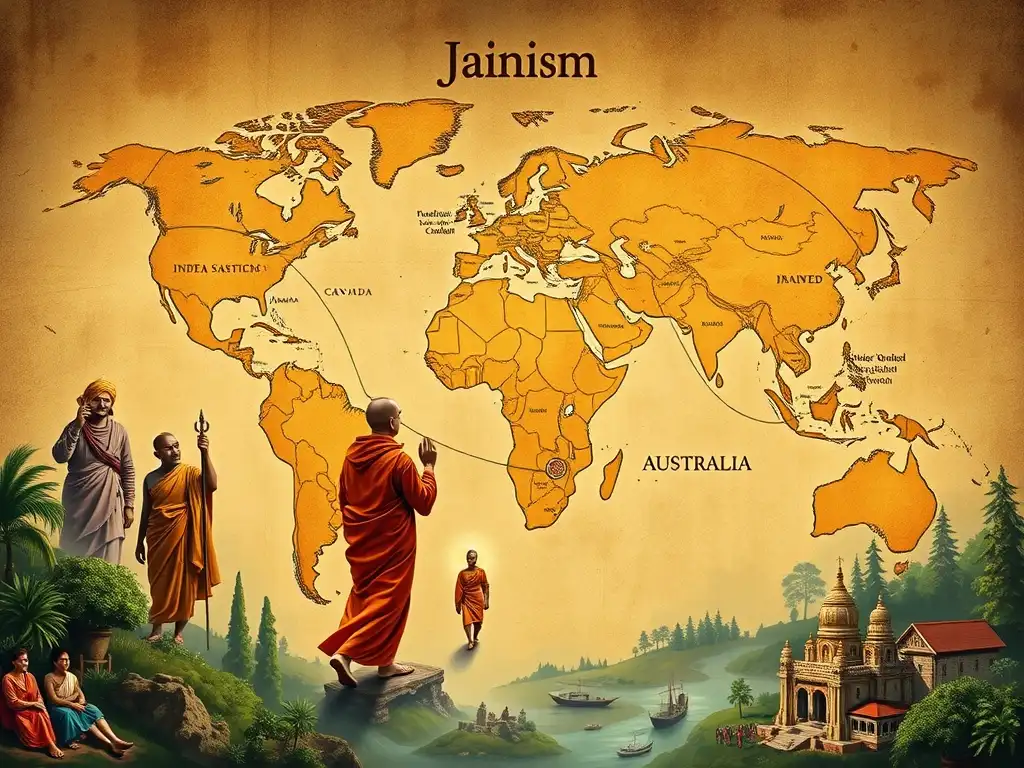
Jainism, one of the oldest religions originating from ancient India, has profoundly influenced not only Indian culture but also extended its reach across the globe. Renowned for its teachings on non-violence, truth, and asceticism, Jainism has contributed significantly to various aspects of philosophy, ethics, and environmental awareness. The journey of Jainism beyond India is a testament to its adaptability and the universal appeal of its core principles. This article explores the global influence of Jainism, tracing its historical journey, understanding its foundational beliefs, and identifying key figures who played pivotal roles in its dissemination.
Introduction to Jainism and Its Core Principles
Jainism emphasizes the importance of ahimsa (non-violence), satya (truth), asteya (non-stealing), brahmacharya (celibacy), and aparigraha (non-possessiveness). These principles not only shape the lives of Jains but also resonate with broader ethical discussions in various cultures worldwide.
Overview of Jainism: Beliefs and Practices
- Core Beliefs: Jainism teaches that every living being has a soul, and the ultimate goal is to achieve liberation (moksha) through the purification of the soul.
- Practices: Jains practice strict vegetarianism, meditation, and rituals aimed at personal and spiritual development. They also engage in community service, which reflects their commitment to non-violence and compassion.
Historical Context of Jainism in India
Jainism emerged in India around the 6th century BCE, during a time of significant philosophical and religious transformation. It coexisted with other major religions, such as Hinduism and Buddhism, contributing to a vibrant tapestry of spiritual thought. The teachings of Mahavira, the 24th Tirthankara, are particularly significant, as he is credited with consolidating and formalizing Jain beliefs and practices.
The Historical Journey of Jainism Beyond India
The spread of Jainism beyond the Indian subcontinent is closely linked to trade routes, migrations, and cultural exchanges.
Early Migration and Trade Routes
- Trade Influence: Jain merchants played a crucial role in the dissemination of Jainism as they traveled along trade routes to regions such as Southeast Asia, the Middle East, and Africa.
- Cultural Exchange: Through their interactions with diverse cultures, Jains adapted their teachings while maintaining core principles, allowing Jainism to resonate with various societies.
Key Figures in the Dissemination of Jainism
Several key figures have been instrumental in the spread of Jainism beyond India:
- Dharmachakra: One of the first missionaries who traveled to spread Jain teachings to foreign lands.
- Merchants and Scholars: Numerous Jain merchants and scholars acted as cultural ambassadors, sharing their beliefs and practices with local populations, which facilitated the integration of Jainism into different cultural contexts.
The journey of Jainism beyond India highlights its adaptability and the enduring nature of its core philosophies. As we delve deeper into this topic, we will uncover more about its historical journey, influence on global cultures, and the lasting contributions of Jainism in various domains.
Jainism Influence Beyond India: Regions and Countries
Jainism, one of the oldest religions in India, has made significant inroads beyond its birthplace, influencing various regions and cultures across the globe. Its core principles, such as non-violence (ahimsa), truth (satya), and asceticism, resonate with individuals from diverse backgrounds, fostering a spirit of tolerance and ethical living. The spread of Jainism can be traced to several regions, each adapting its teachings to local contexts while retaining the essential tenets of the faith.
Jainism in Southeast Asia
In Southeast Asia, Jainism found its way primarily through trade routes and cultural exchanges that connected India with countries like Indonesia, Malaysia, and Thailand. Historical records suggest that Jain merchants played a crucial role in the dissemination of Jain principles and practices in these regions.
- Indonesia: The island of Java has remnants of ancient Jain temples, such as the Candi Jago and Candi Singosari, which display intricate carvings and sculptures reflecting Jain iconography. The influence of Jainism is evident in the local customs and practices that emphasize respect for life and the environment.
- Malaysia: Jainism has influenced Malaysian culture, particularly in the form of festivals and rituals among the Indian diaspora. The presence of Jain temples in urban centers showcases the continued practice and adaptation of Jain beliefs in a multicultural society.
- Thailand: The Theravada Buddhism predominant in Thailand has absorbed some Jain ethical teachings over centuries, particularly in the areas of non-violence and meditation.
Jainism in the Middle East
While Jainism's footprint in the Middle East is less pronounced than in Southeast Asia, historical evidence indicates some interaction between Jain communities and neighboring cultures.
- Persia: During the Achaemenid Empire, Jainism may have influenced Zoroastrian practices, particularly regarding concepts of truth and ethics. Scholars suggest that some Jain texts were translated into Pahlavi, the Middle Persian language, facilitating an exchange of ideas.
- Modern Influence: In contemporary times, the Jain community has established a presence in countries like Iran and Iraq, where they engage in interfaith dialogues, emphasizing the shared values of compassion and non-violence.
Jainism in the Western World
The arrival of Jainism in the Western world can be attributed to migration, globalization, and the increasing interest in Eastern philosophies.
- United States: Jainism gained a foothold in the U.S. during the mid-20th century, particularly among Indian immigrants. Jain temples have been established in various cities, serving as cultural and spiritual hubs. The teachings of Jainism are increasingly recognized for their contributions to discussions on ethics, sustainability, and peace.
- Europe: In the UK, Jainism has found a supportive environment, with temples and community centers promoting awareness of Jain principles. The influence of Jain thought can be seen in the growing interest in vegetarianism and non-violent practices among the broader public.
Contributions of Jainism to Global Culture

Jainism's influence extends beyond its religious practices, contributing significantly to global culture through its philosophy, art, and advocacy for environmental sustainability.
Philosophy and Ethics of Jainism: A Global Perspective
The philosophical underpinnings of Jainism, particularly its emphasis on non-violence, truth, and the interconnectedness of all life, have found resonance in various ethical frameworks worldwide.
- Non-Violence (Ahimsa): The principle of ahimsa has inspired global movements for peace and civil rights, most notably influencing figures like Mahatma Gandhi and Martin Luther King Jr. Their advocacy for non-violent resistance draws heavily from Jain teachings, showcasing how Jain philosophy has shaped modern ethical thought.
- Interconnectedness: Jainism's view of the universe as an interconnected web encourages a holistic approach to ethics, prompting discussions on social justice, environmental stewardship, and animal rights.
Art and Architecture Influenced by Jainism
Jain artistic expression is renowned for its intricate detail and spiritual significance, contributing richly to the cultural tapestry of various regions.
- Temples and Sculpture: Jain temples, characterized by their ornate carvings and serene statues, are architectural marvels. Notable examples include the Dilwara Temples in Rajasthan and the temples in Gujarat, which showcase the craftsmanship and devotion of Jain artisans.
- Miniature Paintings: Jain manuscripts often feature exquisite miniature paintings that depict religious narratives. These artworks not only reflect Jain themes but also influenced broader Indian art styles.
Jainism’s Impact on Environmentalism
Jainism's teachings on non-violence and respect for all life forms have positioned it as a pioneering voice in the environmental movement.
- Sustainable Practices: The Jain concept of non-violence extends to environmental conservation, advocating for sustainable living and responsible stewardship of natural resources. Many Jains practice vegetarianism, minimizing harm to animals and the ecosystem.
- Global Advocacy: Jain organizations are increasingly participating in global environmental initiatives, promoting awareness and action on issues such as climate change, deforestation, and biodiversity loss. Their commitment to protecting life aligns with a growing global recognition of the need for environmental ethics rooted in respect for all living beings.
Comparative Analysis: Jainism and Other Religions
Jainism, one of the oldest religions in the world, has coexisted with other major religions, particularly Buddhism and Hinduism, throughout its history. A comparative analysis reveals both shared principles and distinct beliefs that have shaped its development and influence beyond India. Understanding these relationships provides insight into how Jainism has carved a unique path while also adapting and interacting with other faiths.
Jainism and Buddhism: Similarities and Differences
Both Jainism and Buddhism emerged in India around the same time, sharing several philosophical concepts such as non-violence (ahimsa) and the cycle of birth and rebirth (samsara). However, their approaches to these concepts vary significantly.
- Similarities:
- Ahimsa: Both religions emphasize non-violence as a fundamental principle. This shared commitment has influenced their followers' lifestyles, advocating for vegetarianism and compassion towards all living beings.
- Karma and Rebirth: Jainism and Buddhism believe in karma's role in determining the circumstances of rebirth, promoting ethical living to achieve liberation (moksha or nirvana).
- Differences:
- The Concept of God: Jainism is strictly non-theistic, rejecting the notion of a creator god, while Buddhism, though also non-theistic, acknowledges higher spiritual beings in some sects.
- Path to Liberation: Jains believe in the importance of personal effort and rigorous asceticism, while Buddhists emphasize the Middle Path, which avoids extremes of indulgence and asceticism.
These fundamental differences and similarities have allowed Jainism and Buddhism to coexist and influence one another over centuries, especially as they spread beyond India.
Jainism and Hinduism: Interactions and Influences
Jainism and Hinduism share a long history of interaction, given their simultaneous development in ancient India. Both religions recognize the concepts of karma, dharma, and samsara, yet they diverge significantly in their practices and theological frameworks.
- Interactions:
- Cultural Exchange: Jainism has influenced Hindu thought, particularly in the areas of ethics and cosmology. Many Jains practice within Hindu cultural contexts, celebrating festivals and rituals that overlap with Hindu traditions.
- Philosophical Dialogues: Jain philosophers and Hindu thinkers engaged in debates, enriching both traditions. The concept of non-violence heavily influenced Hindu reform movements, particularly during the 19th and 20th centuries.
- Distinguishing Features:
- Ritual Practices: Jainism places a strong emphasis on asceticism and self-discipline, while Hinduism encompasses a wide range of rituals and devotional practices, including the worship of deities.
- Theological Approach: Hinduism accepts a pantheon of gods and goddesses, whereas Jainism strictly adheres to a non-theistic perspective, focusing on individual soul liberation.
This dynamic relationship has allowed Jainism not only to maintain its distinct identity but also to contribute to the broader spiritual landscape of India.
Jainism and Modern Spiritual Movements
In recent years, Jainism's principles have resonated with various modern spiritual movements that emphasize peace, tolerance, and environmental consciousness. The emphasis on non-violence and respect for all forms of life aligns closely with contemporary values surrounding sustainability and ethical living.
- Influence on New Age Movements: Modern spiritual seekers often draw inspiration from Jain teachings, particularly those related to meditation, mindfulness, and holistic living. The global rise in vegetarianism and veganism has also been greatly influenced by Jain dietary practices.
- Interfaith Dialogues: Jain leaders actively participate in interfaith initiatives, promoting peace and understanding among diverse religious groups. Their commitment to non-violence and coexistence aligns well with global movements advocating for social justice and environmental protection.
As Jainism continues to adapt to contemporary contexts, its core teachings provide valuable insights for addressing modern challenges.
Challenges and Adaptations of Jainism in a Global Context
As Jainism spreads beyond its Indian roots, it faces various challenges and opportunities in maintaining its identity while adapting to new cultural landscapes. The globalized world presents unique considerations for Jains, including the preservation of traditions and community cohesion.
Maintaining Identity in a Globalized World
Jain communities outside India often grapple with the tension between maintaining traditional practices and integrating into diverse cultural environments.
- Cultural Retention: Many Jains strive to preserve rituals, festivals, and dietary customs while facing pressures to conform to mainstream practices. Initiatives like cultural centers and educational programs aim to sustain Jain values among younger generations.
- Adaptation Strategies: Some communities adopt a hybrid approach, blending traditional Jain practices with local customs to create a unique cultural expression that honors their heritage while appealing to contemporary sensibilities.
This balancing act is crucial for the survival of Jain identity as it navigates the complexities of a globalized world.
Contemporary Jain Communities Worldwide
Jainism has seen a significant diaspora, with vibrant communities establishing themselves in various parts of the world, including the United States, Canada, the United Kingdom, and Australia.
- Community Building: These communities often organize cultural events, spiritual gatherings, and educational initiatives to foster a sense of belonging and cultural pride among members. The establishment of Jain temples serves as a focal point for worship and community activities.
- Philanthropic Contributions: Jain organizations are actively involved in social and environmental causes, reflecting the religion's principles of compassion and service. Initiatives focused on education, healthcare, and sustainability resonate with the global community and highlight Jainism's relevance in contemporary society.
As Jain communities continue to grow and evolve, they contribute significantly to the global tapestry of spiritual traditions, emphasizing values of peace, non-violence, and respect for life.
Conclusion: The Lasting Legacy of Jainism

Jainism, with its profound philosophical teachings and ethical practices, has left an indelible mark on cultures and societies far beyond its Indian origins. Its core principles of ahimsa (non-violence), anekantavada (non-absolutism), and aparigraha (non-possessiveness) resonate with universal values that have transcended geographical boundaries. The influence of Jainism is seen not only in the spiritual realm but also in social, political, and environmental discourses across the world. As communities worldwide embrace these concepts, Jainism's legacy continues to evolve, impacting diverse fields such as ecology, peace studies, and ethical economics.
The establishment of Jain communities in various countries has facilitated the dissemination of these principles. In regions like the United States, Canada, and several European nations, Jains have formed vibrant communities that actively promote their religious teachings while also contributing to local cultures. This integration demonstrates Jainism's adaptability and relevance in contemporary global society.
Reflecting on Jainism’s Global Influence
The global influence of Jainism can be traced through various channels, including migration, trade, and the spread of ideas during historical periods. As Jain merchants traveled along trade routes, they not only exchanged goods but also shared their philosophical insights, leading to significant cultural exchanges. Today, Jainism's emphasis on peace and environmental sustainability aligns closely with global movements advocating for social justice, animal rights, and ecological conservation.
In academic circles, the study of Jainism has gained traction, with scholars recognizing its contributions to ethical philosophy and non-violent activism. The teachings of Jain leaders, such as Mahatma Gandhi, who drew inspiration from Jain principles, have been pivotal in shaping non-violent resistance movements worldwide. This legacy is reflected in contemporary peace initiatives and dialogues on conflict resolution, where Jain philosophy serves as a guiding framework.
Moreover, Jain art and architecture, characterized by intricate designs and devotion to non-violence, have influenced artistic expressions in various cultures. The promotion of vegetarianism and veganism, rooted in Jain values, has also gained momentum globally, further solidifying the religion's impact on modern dietary practices.
Future Prospects for Jainism Beyond India
Looking ahead, the future prospects for Jainism beyond India appear promising. As globalization continues to erase cultural barriers, Jain communities are poised to play a vital role in fostering intercultural dialogue and understanding. The challenges of the modern world, such as climate change and societal inequality, present opportunities for Jain teachings to offer relevant solutions rooted in compassion and non-attachment.
Efforts to promote Jainism through education and outreach are essential in ensuring its principles resonate with younger generations. Institutions dedicated to Jain studies are emerging globally, providing platforms for research and discussion on how Jainism can contribute to contemporary issues. Additionally, the rise of digital media offers innovative avenues for disseminating Jain teachings, engaging a broader audience, and encouraging interfaith dialogues.
Jainism's influence beyond India is a testament to its universal appeal and enduring relevance. As it continues to spread and adapt, Jainism has the potential to inspire future generations, promoting a legacy of peace, tolerance, and ethical living on a global scale.
- Introduction to Jainism and Its Core Principles
- The Historical Journey of Jainism Beyond India
- Jainism Influence Beyond India: Regions and Countries
- Contributions of Jainism to Global Culture
- Comparative Analysis: Jainism and Other Religions
- Challenges and Adaptations of Jainism in a Global Context
- Conclusion: The Lasting Legacy of Jainism
- Reflecting on Jainism’s Global Influence
- Future Prospects for Jainism Beyond India
Frequently Asked Questions
What is Jainism and its core beliefs?
Jainism is an ancient Indian religion that emphasizes non-violence, truth, and asceticism. Its followers seek to achieve spiritual purity and liberation through ethical living and self-discipline.
How did Jainism spread beyond India?
Jainism expanded through trade routes, migration, and cultural exchanges. Merchants and travelers played a significant role in introducing Jain principles to various regions, especially in Southeast Asia.
What contributions did Jainism make to global culture?
Jainism contributed to philosophy, art, and architecture worldwide. Its teachings on non-violence influenced various global movements, promoting a more compassionate society.
In which countries is Jainism practiced today?
While primarily practiced in India, Jain communities can be found in countries like the United States, Canada, the United Kingdom, and parts of Africa, showcasing its global reach.
How has Jainism influenced other religions?
Jainism's principles of ahimsa (non-violence) and austerity have significantly influenced other religions, particularly Buddhism and Hinduism, highlighting its lasting impact on spiritual thought.
Final Reflection: The Global Resonance of Jainism's Influence
The exploration of Jainism's influence beyond India reveals a profound interconnectedness that resonates with our contemporary world. As we navigate an era marked by cultural exchange and global awareness, the principles of non-violence, compassion, and respect for all living beings that Jainism embodies are more relevant than ever. In a time when the planet faces numerous challenges, the teachings of Jainism offer a guiding light, urging us to adopt a more harmonious and sustainable way of living.
Cultural and social landscapes continue to evolve, and Jainism's teachings are increasingly embraced by diverse communities worldwide. The emphasis on ahimsa (non-violence) and environmental stewardship has inspired movements for peace and sustainability across various cultures. The greatness of a nation and its moral progress can be judged by the way its animals are treated.
- Mahatma Gandhi. This quote encapsulates the essence of Jainism's influence, reminding us that the values we uphold today will shape the future we create for generations to come.
As you reflect on the insights shared in this article, consider how you can embody the principles of Jainism in your daily life. Embrace the call to action by fostering compassion in your interactions, advocating for environmental sustainability, and promoting peace within your community. The ripple effect of these small yet significant actions can contribute to a more just and harmonious world, echoing the timeless teachings of Jainism and ensuring its influence continues to thrive beyond borders.
Unveil the Global Insights of Jainism!
Thank you for taking the time to explore the incredible journey of Jainism and its global influence! Your interest in this profound philosophy not only highlights its rich heritage but also the timeless values it brings to today's world. Now, let's harness that knowledge and take action!
- Dive deeper: Engage with a classic Jain text to enhance your understanding of its teachings and principles.
- Share your thoughts: Participate in a local or online discussion group dedicated to Jainism or its connections with other philosophies to broaden your perspective.
- Spread awareness: Craft a post or article sharing your insights on social media or a personal blog, inviting others to discover the beauty of Jainism.
Which aspect of Jainism’s teachings do you find most relevant to today's global challenges? Let's spark a conversation in the comments below!