
Artistic and Cultural Syncretism
Artistic and Cultural Syncretism
49 articles in this topic
Start here
- Artistic and Cultural SyncretismMusical Traditions: The Blend of Indian Classical Music with Global Influences
- Artistic and Cultural SyncretismCrossroads of Creativity: The Fusion of Indian and Persian Artistic Traditions
- Artistic and Cultural SyncretismThe Interplay of Science and Art: How Ancient Indian Innovations Enhanced Cultural Syncretism
Read more about this topic
Explore Artistic and Cultural Syncretism in ancient India, where diverse traditions, beliefs, and creative practices converged to shape a vibrant cultural heritage. Discover how trade, migration, religion, and political exchange influenced architecture, sculpture, painting, music, literature, and rituals from the Indus Valley to the Gupta Empire. Uncover the enduring legacy of cultural fusion that made ancient Indian civilization a crossroads of innovation and artistic expression.
More in Artistic and Cultural Syncretism
Artistic and Cultural Syncretism
The Interconnection of Philosophy and Art in Ancient Indian Culture
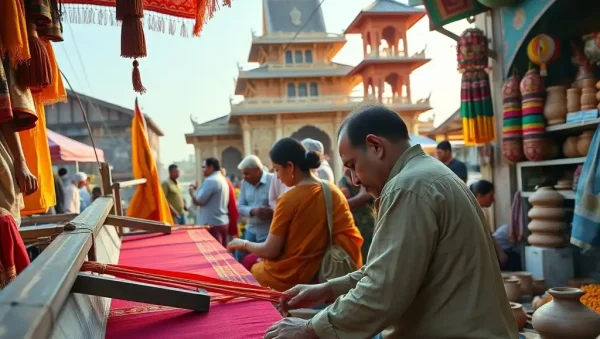
Artistic and Cultural Syncretism
From Temples to Textiles: Unveiling the Cultural Exchange Between India and Southeast Asia
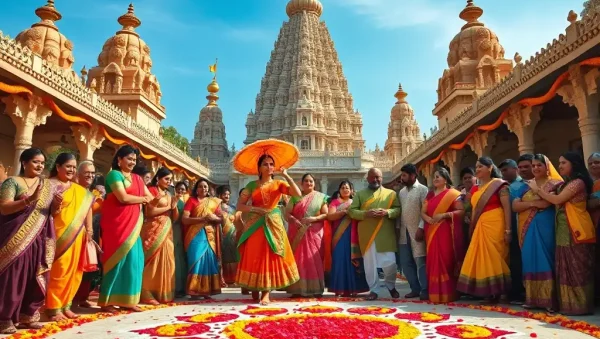
Artistic and Cultural Syncretism
Celebrating Diversity: The Role of Festivals in Artistic Syncretism in Ancient India
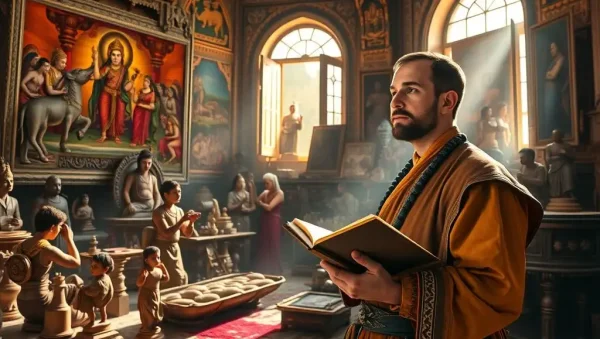
Artistic and Cultural Syncretism
How Ancient Indian Art Forms Inspired the Renaissance in Europe
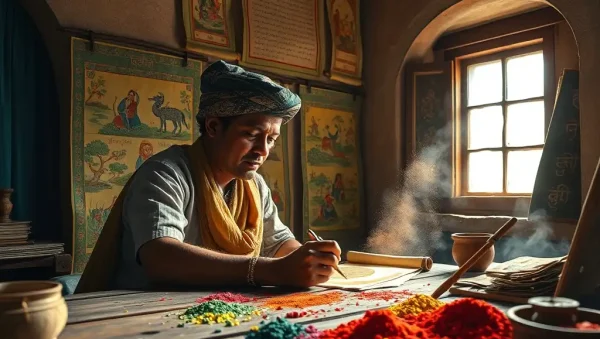
Artistic and Cultural Syncretism
The Language of Colors: Exploring the Palette of Ancient Indian Artists
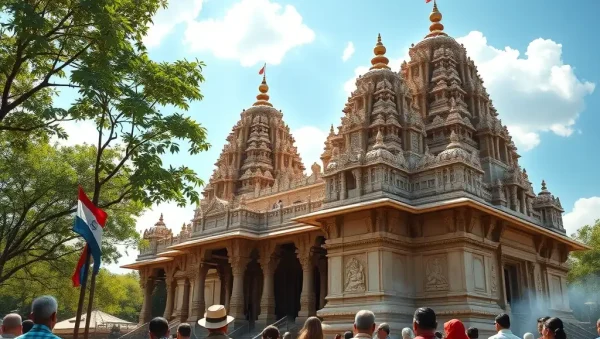
Artistic and Cultural Syncretism
Architectural Marvels: How CrossCultural Influences Shaped Indian Temples
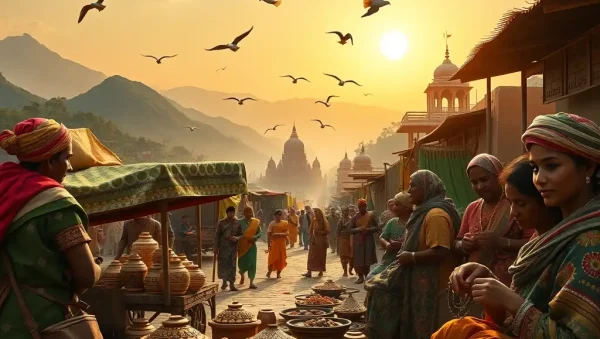
Artistic and Cultural Syncretism
The Role of Trade Routes in Shaping India’s Artistic Syncretism
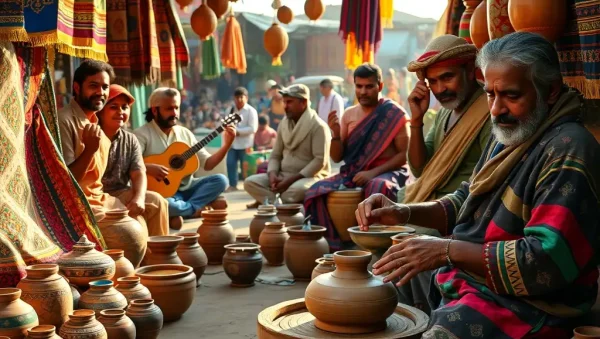
Artistic and Cultural Syncretism
The Enigma of Syncretism: Understanding India's Diverse Artistic Heritage
🎨 Artistic and Cultural Syncretism in Ancient India
Explore how artistic and cultural syncretism shaped ancient Indian history through the blending of religious traditions, artistic styles, languages, technologies, and social customs. Within the wider study of Cultural Exchanges and Influence, this subcategory examines how Indian civilizations interacted with Persia, Central Asia, Greece, Rome, Southeast Asia, and neighboring regions. Discover how trade routes, migration, diplomacy, conquest, pilgrimage, and intellectual exchange created new forms of architecture, sculpture, painting, literature, music, ritual, and philosophy across the Indian subcontinent.
🏛️ Blending of Artistic Traditions
Readers can expect detailed discussions of how ancient Indian art absorbed and transformed outside influences while preserving local symbolism and spiritual meaning. Topics may include Gandharan sculpture, Mathura art, Hellenistic artistic features, Persian decorative motifs, Roman trade connections, and the development of distinctive styles during the Mauryan, Kushan, Satavahana, and Gupta periods.
This section highlights artistic exchange in ancient India rather than treating cultural influence as simple imitation. Compare facial features, clothing, hairstyles, artistic techniques, materials, and visual storytelling to understand how Indian artists adapted foreign ideas into uniquely Indian forms.
🛕 Religious Syncretism and Sacred Art
Ancient India was home to Hindu, Buddhist, Jain, and numerous regional religious traditions. This section explores how religious syncretism influenced temple architecture, Buddhist stupas, rock-cut caves, sacred images, inscriptions, pilgrimage centers, and ritual practices. Readers will learn how religious communities exchanged symbols, narratives, artistic conventions, and philosophical ideas.
Special attention is given to the coexistence and interaction of traditions during the Mauryan and Gupta eras, as well as in regions connected by Buddhist networks. Discover how shared sacred spaces, artistic motifs, and stories reveal the complexity of religious and cultural interaction in ancient Indian civilization.
🗿 Gandharan, Mathura, and Cross-Cultural Sculpture
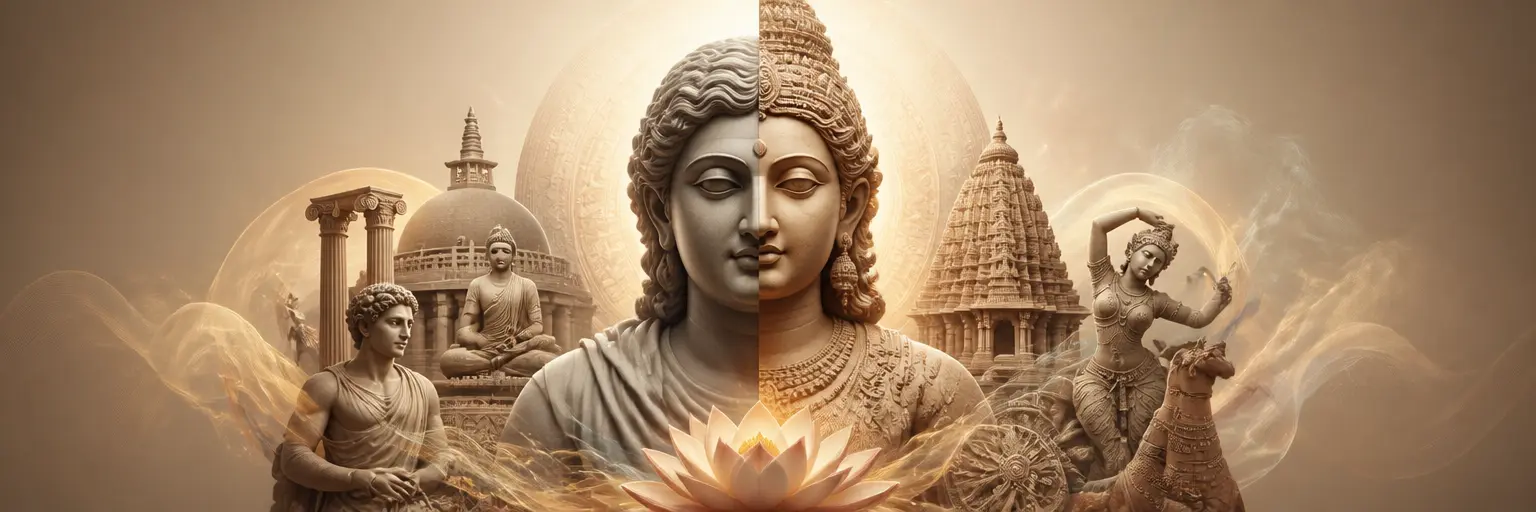
One of the clearest examples of cultural syncretism is the development of early Buddha images in the Gandhara and Mathura regions. Learn how Gandharan art incorporated elements associated with Greek and Roman sculpture, including naturalistic drapery and realistic bodily proportions, while Mathura artists developed forms rooted in Indian religious and artistic traditions.
These regional styles demonstrate how cross-cultural sculpture in ancient India emerged from movement along trade routes and the interaction of local communities with Central Asian and Mediterranean cultures. Readers can compare materials, iconography, artistic purpose, and regional identity across major centers of ancient Indian art.
🧭 Trade Routes and Cultural Exchange
Trade was one of the most important forces behind cultural syncretism. This section examines the Silk Roads, maritime trade routes, ports of the Indian Ocean, and overland connections linking India with Central Asia, Persia, the Roman world, and Southeast Asia. Merchants, monks, artisans, diplomats, and travelers carried not only goods but also ideas, beliefs, artistic methods, and languages.
Explore how trade in spices, textiles, gemstones, ivory, metals, and luxury goods encouraged cultural diffusion in ancient India. Archaeological evidence, coins, inscriptions, imported objects, and artistic comparisons help reveal the international character of ancient Indian cities and commercial centers.
📜 Language, Literature, and Intellectual Influence
Cultural syncretism also transformed language and scholarship. Readers can discover how Sanskrit, Prakrits, Pali, Tamil, and other regional languages developed through contact between communities. This section considers translated texts, borrowed vocabulary, inscriptions, philosophical debates, and the circulation of Buddhist, Hindu, Jain, scientific, and literary knowledge.
Learn how ancient Indian intellectual traditions interacted with Persian, Greek, Central Asian, and Southeast Asian cultures. Subjects may include ancient Indian literature, mathematics, astronomy, medicine, grammar, and philosophy, showing how knowledge was preserved, adapted, and transmitted across political and cultural boundaries.
🌏 India’s Influence on Southeast Asia
Ancient Indian cultural influence extended across Southeast Asia through maritime trade, migration, religious missions, and political connections. Explore the spread of Sanskrit inscriptions, Hindu and Buddhist traditions, Indian epics, temple design, scripts, calendars, royal titles, and artistic themes in regions such as Cambodia, Indonesia, Thailand, Myanmar, Vietnam, and Malaysia.
This section explains that Indianization was a process of cultural adaptation, not merely one-way expansion. Southeast Asian societies selected and reshaped Indian ideas according to local traditions, producing distinctive forms of architecture, mythology, kingship, sculpture, and ritual practice.
👑 Empires, Migration, and Cultural Transformation
Political change frequently encouraged artistic and cultural exchange. The Mauryan Empire, Indo-Greek kingdoms, Kushan Empire, Satavahana dynasty, and Gupta Empire connected diverse populations and regions. Readers will learn how migration, military alliances, imperial administration, and urban development encouraged the movement of artists, religious teachers, merchants, technologies, and customs.
By examining ancient Indian empires and cultural integration, this section reveals how new communities contributed to the evolution of Indian society. Coins, monuments, inscriptions, sculpture, and literary sources provide evidence of multicultural identities and changing forms of political and artistic expression.
🔍 Frequently Asked Questions About Artistic and Cultural Syncretism
❓ What does artistic and cultural syncretism mean in ancient Indian history?
Artistic and cultural syncretism refers to the blending, adaptation, and transformation of ideas from different cultures. In ancient India, this included the combination of local artistic traditions with Greek, Persian, Central Asian, Roman, and Southeast Asian influences in sculpture, architecture, religion, language, and literature.
❓ What is the best-known example of artistic syncretism in ancient India?
Gandharan art is one of the best-known examples. It combined Buddhist themes with artistic features associated with Greek and Roman sculpture, including realistic drapery, human proportions, and detailed facial forms. Mathura art offers another important example rooted more strongly in indigenous Indian traditions.
❓ How did trade encourage cultural exchange in ancient India?
Merchants and travelers used overland and maritime trade routes to connect India with Central Asia, Persia, the Roman Empire, and Southeast Asia. Along with goods, they carried religious beliefs, artistic techniques, languages, technologies, stories, and customs, encouraging cultural exchange in ancient Indian cities and ports.
❓ Did foreign influences replace traditional Indian culture?
No. Ancient Indian communities generally adapted outside influences to existing religious, social, and artistic systems. The result was often a new synthesis that preserved local identity while incorporating selected foreign features. Syncretism therefore reflects cultural creativity, interaction, and transformation rather than simple replacement.
❓ Why is cultural syncretism important for understanding ancient India?
Cultural syncretism shows that ancient India was connected to a wider world through trade, migration, religion, diplomacy, and scholarship. Studying these connections provides a deeper understanding of Indian art, architecture, religious history, literature, and the international influence of civilizations from the Indus Valley to the Gupta Empire.