

Ayurveda - Foundations and Practices
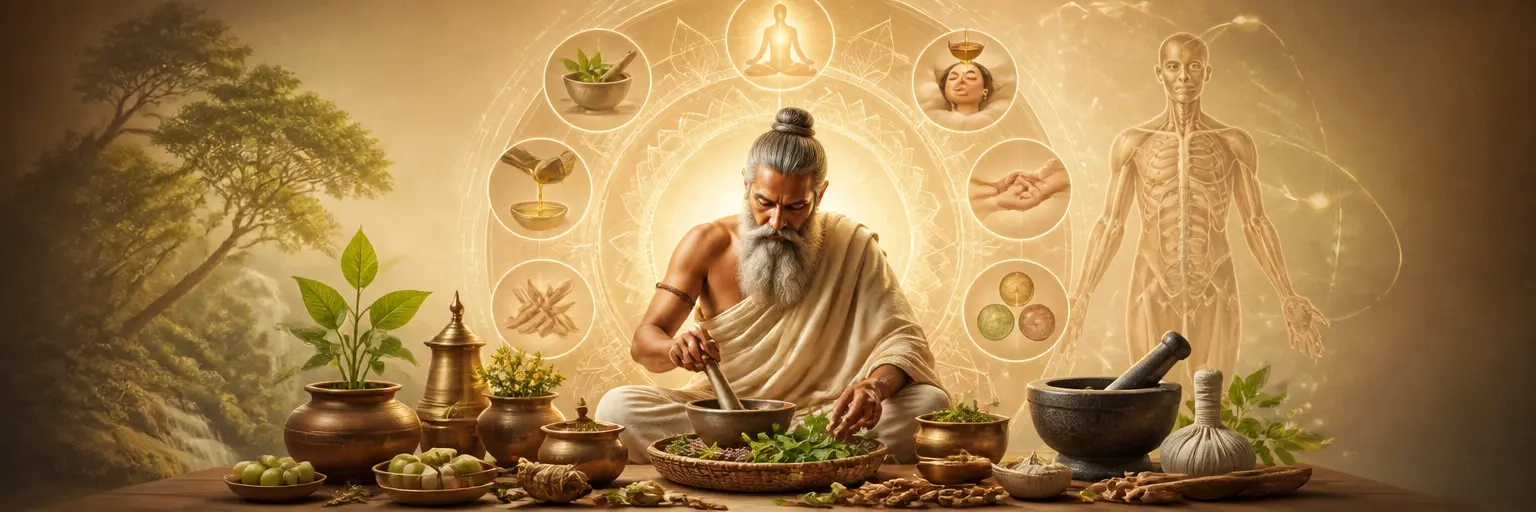

Ayurveda - Foundations and Practices
60 articles in this topic
Start here
- Ayurveda - Foundations and PracticesHow Ayurveda Can Enhance Emotional Wellbeing: Ancient Insights
- Ayurveda - Foundations and PracticesUnderstanding the Ayurvedic Concept of Sattva, Rajas, and Tamas
- Ayurveda - Foundations and PracticesThe Role of Ayurveda in Cardiovascular Health: Ancient Prevention Techniques
Read more about this topic
Explore the foundations and practices of Ayurveda, India’s ancient system of holistic medicine rooted in balance, wellness, and natural healing. Discover key concepts such as doshas, herbs, nutrition, daily routines, meditation, and traditional therapies while gaining insight into Ayurveda’s enduring role in ancient Indian science and medicine.
More in Ayurveda - Foundations and Practices

Ayurveda - Foundations and Practices
How to Create Your Own Ayurvedic Herbal Remedies at Home

Ayurveda - Foundations and Practices
Ancient Ayurvedic Practices to Boost Immunity and Vitality

Ayurveda - Foundations and Practices
How to Design Your Ayurvedic Daily Routine: A StepbyStep Guide

Ayurveda - Foundations and Practices
The Role of Ayurveda in Women's Health: Ancient Practices for Modern Issues

Ayurveda - Foundations and Practices
The Science Behind Ayurveda: Bridging Tradition and Modernity

Ayurveda - Foundations and Practices
How to Start Your Ayurvedic Journey: Tips for Beginners

Ayurveda - Foundations and Practices
The Science of Ayurveda: Research and Evidence Supporting Ancient Practices

Ayurveda - Foundations and Practices
The Impact of Ayurveda on Mental Health: Ancient Wisdom for Modern Minds
🌿 Ayurveda – Foundations and Practices in Ancient India
Explore the origins, principles, and practical traditions of Ayurveda, the ancient Indian system of health and medicine. This subcategory examines how Ayurveda developed within the broader history of ancient India, including its connections to early philosophy, natural science, diet, surgery, herbal medicine, and daily wellbeing. Discover how classical Ayurvedic knowledge was preserved in important Sanskrit texts such as the Charaka Samhita, Sushruta Samhita, and Ashtanga Hridaya, while gaining a historically informed understanding of concepts such as doshas, dhatus, agni, prakriti, and dinacharya.
📜 Origins and Historical Development of Ayurveda
Learn how Ayurvedic medicine emerged in ancient India and evolved through centuries of observation, teaching, and textual scholarship. Articles in this section explore the relationship between Ayurveda and Vedic traditions, early Indian philosophy, temple and monastic learning, and the intellectual developments that shaped the history of Indian medicine.
Readers can expect accessible explanations of Ayurveda’s historical timeline, its connection with ancient Indian civilization, and its influence across South Asia. Content also considers how physicians, scholars, and medical schools contributed to the development of traditional Indian healthcare without separating Ayurveda from its cultural and scientific context.
⚖️ The Three Doshas and Ayurvedic Body Types
Discover the foundational Ayurvedic theory of Vata, Pitta, and Kapha, commonly known as the three doshas. This section explains how classical Ayurvedic texts associated these principles with movement, transformation, structure, digestion, temperament, and bodily balance.
Explore the concept of prakriti, or individual constitution, and learn how traditional practitioners used observations of lifestyle, environment, digestion, and physical characteristics. The content presents these ideas as part of the history and philosophy of Ayurveda, helping readers distinguish ancient medical theory from modern clinical science.
🌿 Ayurvedic Herbs, Plants, and Natural Remedies
Investigate the role of medicinal plants, spices, oils, minerals, and natural preparations in ancient Indian medicine. Topics may include the historical use of herbs such as turmeric, neem, ashwagandha, tulsi, ginger, and brahmi, along with the methods used to identify, prepare, and preserve Ayurvedic remedies.
This section highlights the importance of Indian medicinal plants and herbal knowledge in Ayurveda while explaining that traditional remedies can vary in quality, dosage, and safety. Readers will find historical context alongside responsible guidance, including the importance of consulting qualified healthcare professionals before using herbs or supplements.
🍚 Ayurvedic Diet, Digestion, and Daily Routine
Learn how Ayurveda connected health with food, digestion, seasonal changes, sleep, exercise, hygiene, and personal routine. Concepts such as agni, balanced meals, mindful eating, and seasonal living reveal how ancient Indian physicians viewed prevention as an essential part of wellbeing.
Readers can explore traditional practices including dinacharya, or daily routine, and ritucharya, or seasonal routine. These articles explain how Ayurvedic lifestyle principles developed within the environmental and cultural settings of ancient India, while making clear that historical practices should not replace personalized medical advice.
🩺 Ayurvedic Diagnosis and Preventive Health
Examine traditional Ayurvedic approaches to understanding health, illness, and bodily imbalance. Articles may discuss observation of appearance, speech, pulse, digestion, sleep, lifestyle, and other factors used by Ayurvedic practitioners to form a holistic picture of an individual.
This subcategory also explores the Ayurvedic emphasis on prevention, moderation, and maintaining equilibrium. By studying these methods in their historical setting, readers can better understand the development of holistic medicine in ancient India and compare traditional concepts with the methods of modern healthcare.
🧘 Yoga, Meditation, and Ayurvedic Wellbeing
Discover the historical relationship between Ayurveda, yoga, meditation, breath practices, and Indian philosophical traditions. This section explains how physical discipline, mental focus, ethical conduct, and spiritual reflection were often considered connected to health and personal balance.
Readers will learn how Ayurvedic and yogic ideas influenced one another while recognizing that they are distinct traditions with different texts, goals, and methods. The content offers historical insight into ancient Indian wellness practices rather than presenting spiritual or lifestyle techniques as guaranteed medical treatments.
🏺 Classical Ayurvedic Texts and Medical Knowledge
Explore the major works that shaped the study and practice of Ayurveda, including the Charaka Samhita, associated with internal medicine, and the Sushruta Samhita, renowned for its discussions of surgery, anatomy, and medical procedures. Other influential works reveal the breadth of Ayurvedic scholarship across diagnosis, pharmacology, pediatrics, and rejuvenation.
This section helps readers understand how medical knowledge was organized, transmitted, and interpreted in ancient India. Topics may include Sanskrit terminology, commentarial traditions, physician training, and the preservation of manuscripts, offering valuable context for anyone researching Ayurvedic history and ancient Indian science.
🔬 Ayurveda and the History of Indian Science
Study Ayurveda as part of the wider scientific and intellectual achievements of ancient Indian civilization. Its observations of plants, anatomy, diet, disease, and surgical techniques demonstrate how medical knowledge developed through experience, classification, debate, and written transmission.
Readers can also examine the limits and historical context of Ayurvedic knowledge. This balanced approach respects Ayurveda’s cultural importance while encouraging evidence-based thinking, careful source evaluation, and a clear distinction between historical medical traditions and contemporary scientific medicine.
❓ Frequently Asked Questions About Ayurveda
What is Ayurveda?
Ayurveda is a traditional system of medicine that developed in ancient India. It focuses on ideas of balance, diet, lifestyle, herbal preparations, prevention, and individualized wellbeing. Its foundational concepts include doshas, prakriti, agni, and dinacharya.
What are the three doshas in Ayurveda?
The three doshas are Vata, Pitta, and Kapha. Classical Ayurvedic theory associates them with different combinations of natural qualities and bodily functions. Dosha theory is a traditional framework and should not be treated as a modern medical diagnosis.
Which ancient texts are important in Ayurveda?
Major Ayurvedic texts include the Charaka Samhita, the Sushruta Samhita, and the Ashtanga Hridaya. These works discuss internal medicine, surgery, diagnosis, medicinal substances, daily routines, and other areas of ancient Indian healthcare.
Are Ayurvedic herbs safe for everyone?
No. The safety of an Ayurvedic herb depends on its identity, preparation, dosage, quality, possible contamination, and interactions with medicines or health conditions. Always consult a qualified healthcare professional before using herbal products, especially during pregnancy or for children.
How is Ayurveda connected to ancient Indian history?
Ayurveda reflects the scientific, philosophical, linguistic, and cultural traditions of ancient India. Its texts and practices developed alongside broader Indian civilization, making it an important subject for understanding the history of ancient Indian medicine, healthcare, botany, and intellectual life.