
The Impact of Ancient Indian Mathematical Texts on Modern Education

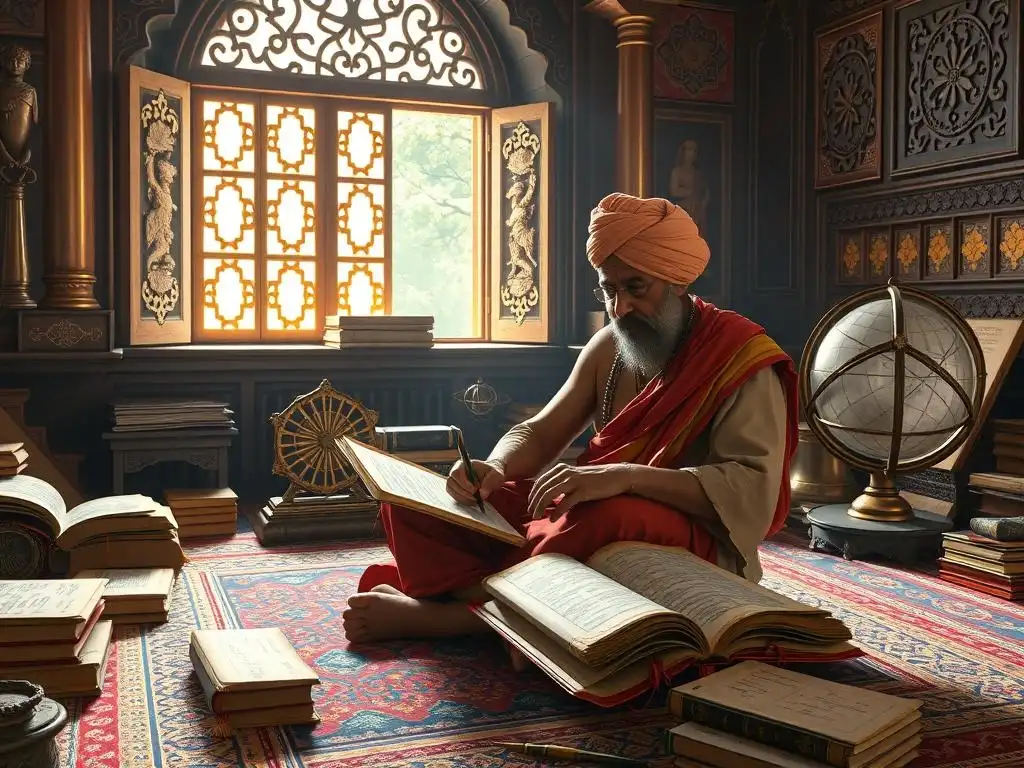
Welcome to Ancient India History, where we embark on a fascinating journey through the vibrant tapestry of ancient Indian civilizations. Here, we delve into the profound contributions that these cultures have made to our modern world, particularly in the realm of mathematics.
In our featured article, "The Impact of Ancient Indian Mathematical Texts on Modern Education," we uncover how the brilliance of ancient Indian mathematics influence continues to shape educational practices today. Join us as we explore this captivating intersection of history and knowledge, revealing insights that will not only enlighten you but also spark your curiosity to learn more about the remarkable legacy of ancient India.
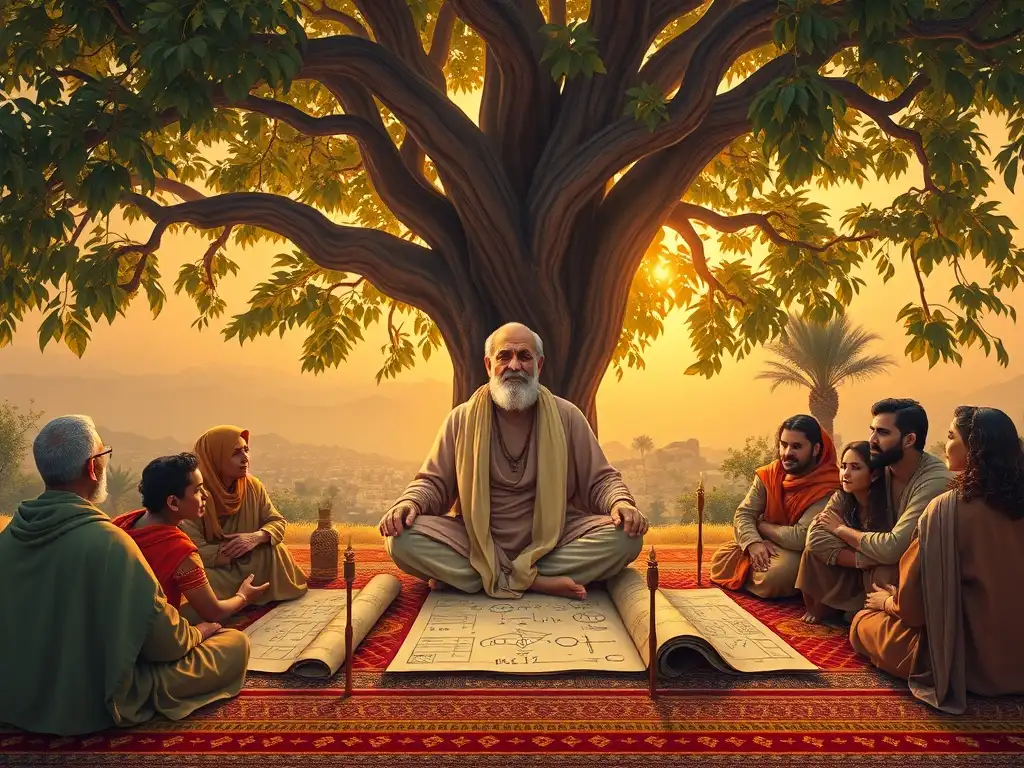
Introduction to Ancient Indian Mathematics Influence
The profound legacy of ancient Indian mathematics is not only a testament to the intellectual prowess of its time but also serves as a cornerstone for modern mathematical education. From the sophisticated numeral system to groundbreaking concepts in algebra and calculus, the contributions of ancient Indian mathematicians have left an indelible mark on the development of mathematics globally. This article explores how ancient Indian mathematical texts have shaped contemporary education, revealing the intricate connections between past innovations and present-day practices in mathematics.
Overview of Ancient Indian Mathematics
Ancient India was a cradle of mathematical thought, with roots tracing back to as early as 3000 BCE. The civilization showcased remarkable advancements in various mathematical fields, including arithmetic, geometry, and astronomy. Key developments include:
- The Decimal System: The introduction of the base-10 numeral system, which is the foundation of modern mathematics.
- Zero as a Concept: The conceptualization of zero, which transformed mathematical calculations and paved the way for algebra.
- Algebra and Trigonometry: Development of various algebraic techniques and trigonometric functions that are still in use today.
These innovations illustrate the depth and breadth of ancient Indian mathematics, highlighting its influence on the mathematical landscape that followed.
Significance of Ancient Indian Mathematical Texts
The texts produced by ancient Indian mathematicians are of paramount importance, not only for their historical value but also for their practical applications in modern education. Key aspects include:
- Influence on Global Mathematics: Ancient Indian texts, such as the Aryabhatiya and Brahmasphutasiddhanta, were translated into Arabic and influenced scholars in the Islamic Golden Age, who further disseminated this knowledge to Europe.
- Curriculum Development: Many modern mathematical concepts can be traced back to these ancient texts, forming the backbone of curricula in mathematics programs around the world.
- Problem-Solving Techniques: The methodologies outlined in these texts provide a foundation for problem-solving approaches taught in contemporary mathematics education.
The significance of these texts lies in their ability to bridge the gap between historical mathematics and current educational practices.
Key Ancient Indian Mathematicians
Aryabhata: The Pioneer of Algebra and Astronomy
Aryabhata, active around 476 CE, is often regarded as one of the first significant mathematicians of ancient India. His work laid the groundwork for algebra and astronomy, with notable contributions including:
- Development of algorithms for arithmetic calculations.
- Introduction of a place-value system for numbers.
- Formulation of the Aryabhatiya, which contains rules for solving quadratic equations and techniques for astronomical calculations.
Aryabhata's innovative approaches to mathematics exemplify the high level of mathematical understanding in ancient India.
Brahmagupta: Contributions to Number Theory
Brahmagupta, who lived in the 7th century CE, made substantial advancements in number theory and mathematical operations. His major contributions include:
- The formulation of rules for arithmetic operations involving zero and negative numbers.
- The introduction of the concept of the "Brahmagupta's identity," an important theorem in algebra.
- His seminal work, the Brahmasphutasiddhanta, which systematically documented mathematical principles and problem-solving methods.
Brahmagupta's influence on mathematics is evident in the foundational principles he established, which are still taught in modern mathematics classes.
Bhaskara II: Advancements in Calculus and Geometry
Bhaskara II, also known as Bhaskara the Great, lived during the 12th century CE and is celebrated for his contributions to calculus and geometry. Key highlights of his work include:
- The exploration of the concept of infinitesimals and the approximation of derivatives.
- Detailed discussions on the properties of geometric shapes in his work, Lilavati.
- Solutions to complex equations and methods for calculating areas and volumes.
Bhaskara II's pioneering work in these fields showcases the advanced mathematical thinking present in ancient India, influencing future generations and contemporary education.
The exploration of ancient Indian mathematics’ influence on modern education underscores the importance of these historical texts and mathematicians, as their contributions continue to resonate within today's mathematical landscape.
Ancient Indian Mathematical Texts and Their Influence
Ancient Indian mathematical texts have had a profound impact on modern education, shaping not only mathematical concepts but also the pedagogical techniques used to teach mathematics today. These texts, created by renowned mathematicians such as Aryabhata, Brahmagupta, and Bhaskara II, laid the groundwork for various mathematical principles that are still relevant. Their contributions include innovative techniques in arithmetic, algebra, geometry, and astronomy, which were documented in accessible formats that facilitated learning and the dissemination of knowledge.
The influence of these texts is evident in various educational systems around the world, where many of the concepts introduced by these ancient scholars have been integrated into contemporary mathematics curricula. Furthermore, the systematic approaches to problem-solving and logical reasoning found in these texts continue to inspire educators to develop effective teaching methods that engage students in critical thinking.
The Aryabhatiya: A Foundation for Future Scholars
Composed by the eminent mathematician Aryabhata in the 5th century CE, the Aryabhatiya is one of the most significant mathematical texts in ancient India. It serves as a comprehensive guide to various mathematical topics, including arithmetic, algebra, and geometry. Aryabhata's systematic approach to mathematics introduced the concept of zero, place value, and the decimal system, which are fundamental to modern mathematics.
The Aryabhatiya is notable for its innovative methods for solving complex equations, particularly quadratic equations. Aryabhata presented these concepts in a way that was easily understandable, allowing future scholars to build upon his work. His emphasis on rigorous proofs and logical deductions has influenced the way mathematics is taught today, reinforcing the importance of clarity and reasoning in education.
Brahmasphutasiddhanta: Innovations in Mathematics
Written by Brahmagupta in the 7th century CE, the Brahmasphutasiddhanta is another landmark text that contributed significantly to the field of mathematics. This work introduced groundbreaking ideas, including the rules for arithmetic operations with negative numbers and the formulation of solutions for quadratic equations. Brahmagupta's contributions to astronomy and calendar calculations also underscored the practical applications of mathematics in everyday life.
The text is structured to serve as a comprehensive guide for students and scholars alike, making complex mathematical ideas accessible. Brahmagupta's innovative methods and clear explanations set a precedent for future mathematical education, influencing both the content and structure of mathematical textbooks. His work exemplifies the blend of theoretical and practical mathematics, an approach that continues to resonate in modern educational practices.
Lilavati: The Role of Textbooks in Education
The Lilavati, attributed to the mathematician Bhaskara II in the 12th century CE, serves as a crucial educational resource that illustrates the application of mathematical concepts through a series of problems and solutions. This text is notable for its engaging narrative style, which features real-life scenarios that help students understand the relevance of mathematics in daily activities.
Bhaskara II's approach in the Lilavati emphasizes problem-solving and critical thinking, encouraging students to explore mathematics creatively. The text covers a wide range of topics, from basic arithmetic to more advanced concepts like permutations and combinations. By framing mathematics within relatable contexts, the Lilavati has played a significant role in making mathematics accessible and enjoyable for learners, reinforcing the importance of effective teaching methods in modern education.
Bridging Ancient and Modern Mathematics
The legacy of ancient Indian mathematics is not confined to history; it continues to bridge the gap between ancient and modern mathematical practices. The foundational concepts developed by ancient mathematicians have been integrated into current educational frameworks, highlighting the relevance of their contributions.
Comparative Analysis of Ancient and Modern Mathematical Concepts
A comparative analysis of ancient and modern mathematical concepts reveals both continuity and evolution in mathematical thought. For instance, the principles of arithmetic and algebra introduced by ancient Indian scholars have been refined and expanded in contemporary mathematics. The introduction of zero and the decimal system by Aryabhata represent a pivotal shift that has influenced mathematical notation and calculation methods used today.
Moreover, ancient techniques for solving equations and geometric problems have paved the way for modern algorithms and computational methods. By studying these historical influences, educators and students can gain a deeper appreciation for the development of mathematics and its applications throughout history, fostering a sense of continuity in the learning process.
Transfer of Knowledge from Ancient India to the World
The transfer of knowledge from ancient India to the world is a testament to the global impact of Indian mathematics. Ancient texts were translated into Arabic and Latin, facilitating the exchange of ideas between cultures. This cross-cultural dialogue played a crucial role in the development of mathematics in the Islamic Golden Age and later in Europe.
The work of Indian mathematicians influenced prominent figures such as Al-Khwarizmi and Fibonacci, who incorporated Indian mathematical principles into their own writings. This historical exchange underscores the importance of ancient Indian mathematics in shaping the global mathematical landscape, illustrating how the influence of these texts has transcended time and geography, continuing to inform modern education and scholarly pursuits in mathematics.
The Role of Ancient Indian Mathematics in Modern Education
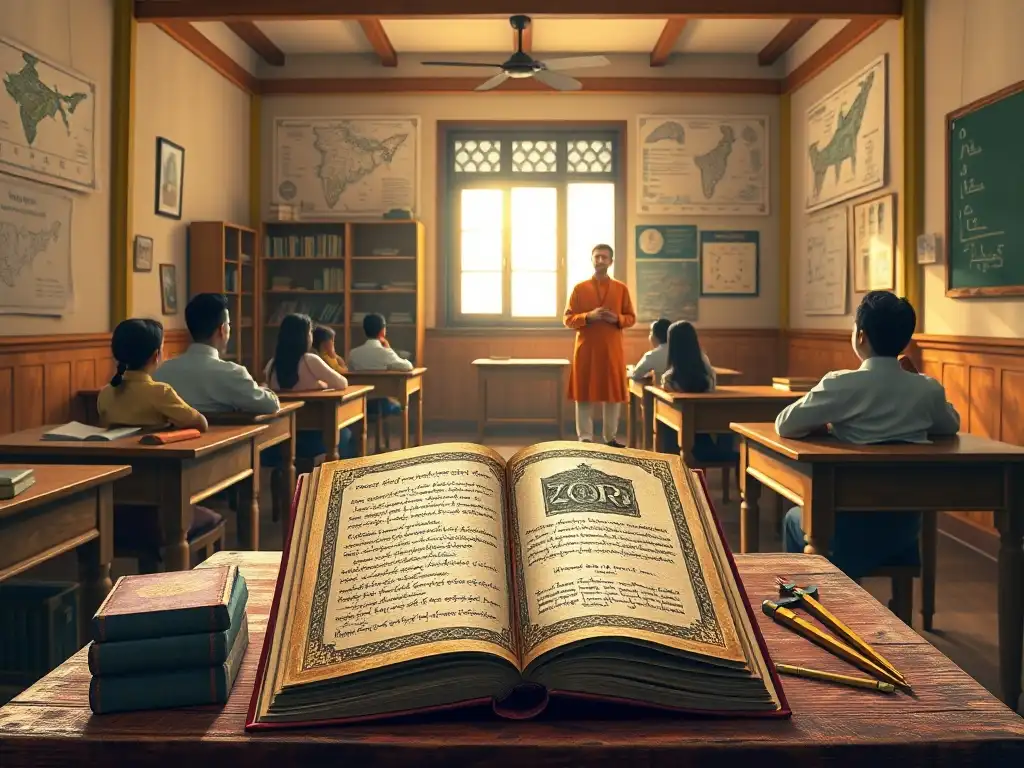
Ancient Indian mathematics has played a pivotal role in shaping the foundations of modern mathematical education. The mathematical texts from ancient India, such as the works of Aryabhata, Brahmagupta, and Bhaskara, introduced concepts that are still relevant today. These texts not only laid the groundwork for various branches of mathematics, including algebra, trigonometry, and arithmetic, but also emphasized the importance of logical reasoning and problem-solving skills.
The systematic approach to mathematics found in these ancient texts provides valuable insights into mathematical principles that can enhance contemporary teaching methods. For instance, Aryabhata's contributions to place value and zero have revolutionized numerical systems worldwide. By analyzing the methodologies used in ancient Indian mathematics, educators can develop a more holistic curriculum that enriches students' understanding of mathematical concepts while fostering an appreciation for historical contributions to the field.
Incorporating Ancient Texts into Contemporary Curricula
Integrating ancient Indian mathematical texts into contemporary curricula can provide students with a unique perspective on the evolution of mathematical thought. Educators can select key excerpts from texts like Brahmagupta's "Brahmasphutasiddhanta" or Bhaskara's "Lilavati" to illustrate fundamental mathematical principles.
- Real-life Applications: Lessons can include problem-solving based on ancient texts that demonstrate mathematical concepts in practical scenarios, such as trade and astronomy, which were common in ancient India.
- Cross-disciplinary Links: Incorporating these texts also allows for connections between mathematics and other subjects such as history and culture, fostering a more integrated educational experience.
Moreover, modern technology can be harnessed to create interactive learning experiences. Digital platforms can present ancient mathematical problems alongside their modern counterparts, encouraging students to explore the development of mathematical thought across cultures and time periods.
Influence on Modern Mathematical Pedagogy
The influence of ancient Indian mathematics extends beyond mere content; it encompasses pedagogical approaches that prioritize critical thinking, exploration, and inquiry-based learning. Ancient texts often employed storytelling and contextual problems, which can be adapted to modern teaching strategies.
- Inquiry-Based Learning: Teachers can encourage students to engage with mathematical concepts through exploration and questioning, mirroring the investigative nature seen in ancient texts.
- Culturally Responsive Teaching: Recognizing the historical significance of ancient Indian mathematics helps foster a culturally inclusive classroom environment, allowing students from diverse backgrounds to connect with the material.
Additionally, the emphasis on rigorous proofs and logical reasoning in ancient texts aligns with contemporary educational standards that value critical thinking skills. By adopting these pedagogical strategies, educators can cultivate a deeper understanding of mathematics that resonates with students on multiple levels.
Challenges and Misconceptions
Despite the rich heritage of ancient Indian mathematics, several challenges and misconceptions hinder its integration into modern educational frameworks. Addressing these issues is crucial for a comprehensive understanding of the subject.
Common Misconceptions About Ancient Indian Mathematics
One prevalent misconception is that ancient Indian mathematics was rudimentary or primitive compared to its contemporaries in Greece or the Middle East. This view undermines the sophisticated nature of ancient Indian mathematical concepts, such as the use of algorithms, advanced arithmetic operations, and the early understanding of calculus principles evident in texts like "Siddhanta Shiromani" by Bhaskara II.
Another misconception is that the contributions of ancient Indian mathematicians are largely unknown or irrelevant today. In reality, many foundational concepts, such as the decimal numeral system and the concept of zero, are integral to modern mathematics and are directly traceable to ancient Indian scholars.
Challenges in Integrating Ancient Texts into Modern Education
Integrating ancient mathematical texts into modern education systems faces several challenges. One significant barrier is the lack of awareness and understanding of these texts among educators and students. Many teachers may not have been exposed to this aspect of mathematics during their training, leading to a gap in knowledge and resources.
- Resource Availability: Access to reliable translations and adaptations of ancient texts is essential. However, many original works are not readily available in modern languages, limiting their use in classrooms.
- Curriculum Constraints: Standardized curricula often focus on contemporary mathematics, leaving little room to explore historical contributions. This lack of flexibility in educational frameworks can hinder the introduction of ancient texts into the classroom.
To overcome these challenges, educational institutions must prioritize the inclusion of diverse mathematical histories and provide teachers with training and resources to effectively incorporate ancient Indian mathematics into their teaching practices.
Conclusion: The Lasting Legacy of Ancient Indian Mathematics
The influence of ancient Indian mathematics extends far beyond the historical context in which it was developed. Its contributions have laid the groundwork for various mathematical concepts, methods, and educational practices that continue to shape modern mathematics. The works of prominent mathematicians such as Aryabhata, Brahmagupta, and Bhaskara have not only enriched the global mathematical landscape but have also provided a framework for understanding complex mathematical concepts. The principles of zero, place value, and the use of algorithms are just a few examples of how ancient Indian mathematics has permeated contemporary education and practice.
Summary of Contributions and Influence
Ancient Indian mathematicians made groundbreaking strides in various areas, including arithmetic, algebra, and geometry. Their texts, such as the "Aryabhatiya" and "Brahmasphutasiddhanta," introduced revolutionary ideas that laid the foundation for subsequent mathematical developments. Key contributions include:
- The Concept of Zero: The introduction of zero as a numeral revolutionized arithmetic and paved the way for advanced mathematical operations.
- Place Value System: This system allowed for more complex calculations and is fundamental to our current understanding of mathematics.
- Trigonometry and Astronomy: Ancient Indian texts contributed to the development of trigonometric concepts, which were crucial for astronomical calculations.
The enduring influence of these contributions is evident in modern educational curricula, where principles derived from ancient texts are taught as foundational concepts.
Future Prospects for Integrating Ancient Mathematics in Education
As educational systems around the world continue to evolve, there is a growing recognition of the importance of integrating diverse mathematical traditions into the curriculum. Ancient Indian mathematics, with its rich history and innovative concepts, presents a unique opportunity to enhance mathematical understanding among students.
Future educational initiatives could focus on:
- Curriculum Development: Incorporating ancient Indian mathematical concepts into the standard curriculum can provide students with a broader perspective on mathematics.
- Interdisciplinary Studies: By linking mathematics with history, culture, and philosophy, educators can foster a deeper appreciation for the subject.
- Workshops and Seminars: Hosting educational events that highlight the contributions of ancient Indian mathematicians can inspire both students and educators.
By embracing these prospects, the legacy of ancient Indian mathematics can continue to enrich modern education.
Call to Action
Encouraging Further Exploration of Ancient Indian Mathematics Influence
To fully appreciate the depth of ancient Indian mathematics and its impact on modern education, individuals are encouraged to delve deeper into this fascinating subject. Whether you are a student, educator, or mathematics enthusiast, exploring the historical texts and concepts can provide valuable insights.
Consider:
- Reading Ancient Texts: Engaging with original works can illuminate the thought processes and methodologies employed by ancient mathematicians.
- Participating in Discussions: Joining forums or study groups focused on ancient mathematics can enhance understanding and foster collaborative learning.
Resources for Students and Educators on Ancient Indian Mathematics
For those interested in further exploring the influence of ancient Indian mathematics, a variety of resources are available:
- Books: Look for texts that cover the contributions of ancient Indian mathematicians, such as "Mathematics in India" by Kim Plofker or "The History of Mathematics: A Brief Course" by Roger L. Cooke.
- Online Courses: Platforms like Coursera and edX often offer courses on the history of mathematics, including ancient Indian contributions.
- Documentaries and Lectures: Educational videos and lectures can provide engaging overviews of ancient Indian mathematical concepts and their applications.
By utilizing these resources, individuals can deepen their understanding of ancient Indian mathematics and appreciate its lasting influence on modern education.
- Introduction to Ancient Indian Mathematics Influence
- Key Ancient Indian Mathematicians
- Ancient Indian Mathematical Texts and Their Influence
- Bridging Ancient and Modern Mathematics
- The Role of Ancient Indian Mathematics in Modern Education
- Challenges and Misconceptions
- Conclusion: The Lasting Legacy of Ancient Indian Mathematics
- Call to Action
Frequently Asked Questions
What are the main contributions of ancient Indian mathematics?
Ancient Indian mathematics introduced concepts like zero, the decimal system, and algebra, which significantly influenced modern mathematical practices.
How did ancient Indian texts influence modern education?
The mathematical texts from ancient India laid the foundation for various mathematical principles taught in schools today, enhancing curriculum development in mathematics.
What role did the Gupta Empire play in mathematics?
The Gupta Empire was a golden age for mathematics, where scholars like Aryabhata and Brahmagupta made significant advancements, particularly in geometry and astronomy.
How is the concept of zero important in mathematics?
The concept of zero, developed by ancient Indian mathematicians, revolutionized numerical systems and calculations, paving the way for modern arithmetic and algebra.
Are there any specific ancient Indian texts that are pivotal?
Yes, texts such as Aryabhata's Aryabhatiya and Brahmagupta's Brahmasphutasiddhanta are pivotal for their comprehensive treatises on mathematics and astronomy, influencing later mathematical thought.
Final Reflection: The Enduring Legacy of Ancient Indian Mathematics Influence
The profound insights of ancient Indian mathematical texts continue to shape modern education, illustrating that the wisdom of the past is not merely historical but a vital part of our present learning landscape. As we delve into the intricacies of mathematical principles that originated centuries ago, we realize that these ancient scholars laid the groundwork for concepts that are still relevant today. Their innovative approaches to problem-solving and numerical systems resonate in our classrooms, reminding us that education is a continuum, bridging generations and cultures.
The influence of ancient Indian mathematics is not just a relic of history; it is a living testament to the power of knowledge that transcends time. The principles derived from texts such as the "Aryabhatiya" and "Brahmasphutasiddhanta" have not only enriched mathematical theory but have also fostered a spirit of inquiry and exploration in education. As we reflect on this ongoing influence, we are reminded of the words of the great mathematician Srinivasa Ramanujan: An equation for me has no meaning unless it represents a thought of God.
This sentiment encapsulates the reverence for knowledge that has been passed down through the ages, urging us to appreciate the depth and beauty of mathematical thought.
As we look to the future, let us embrace the lessons of ancient Indian mathematics and integrate their timeless wisdom into our educational practices. I invite you to reflect on how these historical insights can inspire your own learning journey and encourage a deeper appreciation for the interconnectedness of knowledge. By acknowledging the influence of ancient scholars, we not only honor their contributions but also empower ourselves to innovate and explore new horizons in mathematics and beyond. Together, let us cultivate a learning environment that celebrates the past while forging a path toward a brighter, more informed future.
Unveil the Wisdom of Ancient Mathematicians!
Thank you for exploring the profound impact of ancient Indian mathematical texts on modern education. Your interest in this rich history not only showcases your curiosity but also opens the door to a deeper understanding of how these texts continue to shape learning today.
Now, it’s time to take action! Here are some exciting ways you can engage further with this fascinating topic:
- Dive into the texts! Read excerpts from ancient mathematical works to see their teachings in action. You may uncover insights that can enhance your understanding of mathematics.
- Share the knowledge! Discuss your favorite discoveries with friends or on social media to inspire others about the wonders of ancient Indian mathematics.
- Join a community! Engage with online forums or local study groups focused on ancient Indian education—collaborative learning can provide fresh perspectives!
What aspect of ancient Indian mathematics do you find most inspiring, and how do you believe it can influence today’s teaching methods?