
The Forgotten Mathematicians of Ancient India: A Closer Look

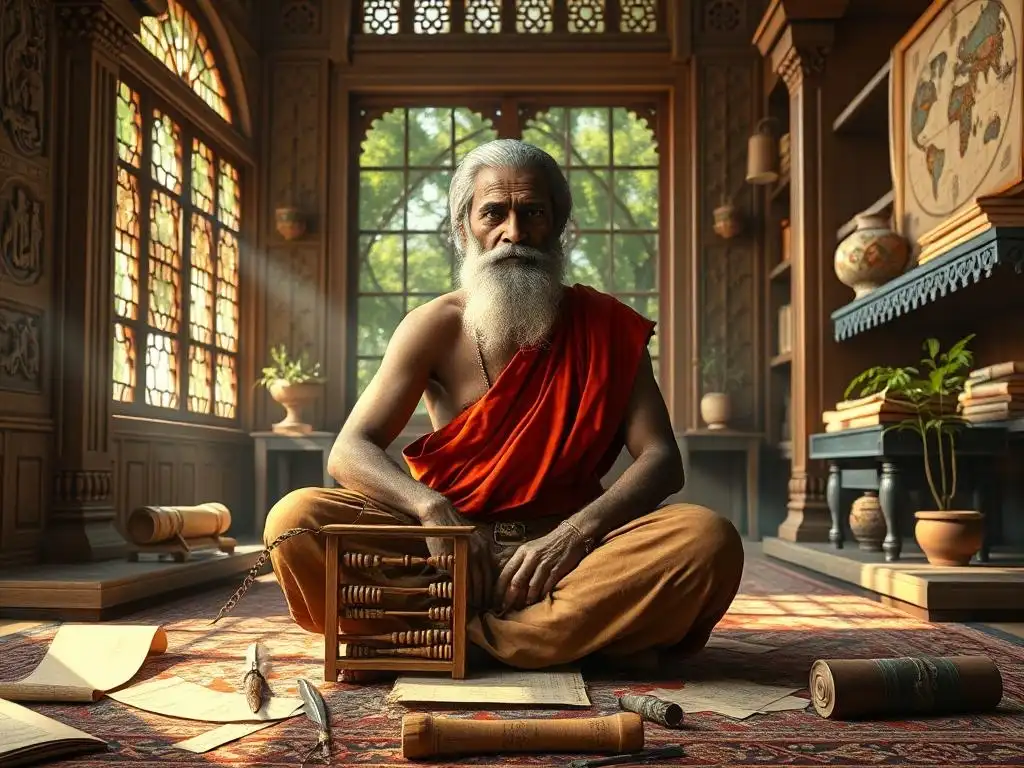
Welcome to Ancient India History, where we embark on a fascinating journey through the rich tapestry of ancient Indian civilizations. Today, we delve into the extraordinary contributions of ancient Indian mathematicians—a topic that not only showcases the brilliance of these thinkers but also their enduring impact on the world of mathematics.
In our featured article, “The Forgotten Mathematicians of Ancient India: A Closer Look,” we invite you to uncover the stories of intellect and innovation that have shaped mathematical thought for centuries. Prepare to be inspired and intrigued as we reveal the secrets of these remarkable minds—your exploration begins now!

Introduction to Ancient Indian Mathematicians
Ancient India was home to a multitude of scholars and thinkers whose contributions to mathematics have often been overshadowed by their more prominent contemporaries in other parts of the world. Yet, the legacy of ancient Indian mathematicians is profound and far-reaching, influencing not just the mathematical landscape of India but also shaping the global understanding of mathematics.
From the sophisticated number systems developed during the Indus Valley Civilization to the groundbreaking concepts introduced during the Gupta Empire, the mathematicians of ancient India laid the groundwork for many mathematical principles that are still in use today. This article seeks to bring to light the often-overlooked contributions of these brilliant minds, examining their innovations and the cultural context in which they thrived.
Overview of Ancient Indian Mathematics
The journey of mathematics in ancient India can be traced back to several key periods and civilizations. The earliest known mathematical texts, such as the Sulbasutras, date back to around 800 BCE and provide insight into the mathematical knowledge of the time, including geometry used for constructing altars. As we move forward in history, we find that the contributions of mathematicians like Aryabhata and Brahmagupta in the classical period (circa 5th to 12th centuries CE) revolutionized the field.
- Key Features of Ancient Indian Mathematics:
- Development of the decimal system and zero as a number.
- Use of algebraic methods and concepts.
- Advanced understanding of geometry and trigonometry.
These foundational elements were not merely theoretical but were often applied in practical fields such as astronomy, architecture, and trade, showcasing the integral role mathematics played in ancient Indian society.
Importance of Mathematicians in Ancient Indian Culture
Mathematicians in ancient India were not viewed merely as scholars; they were often revered as sages and philosophers. Their work was deeply intertwined with religion, philosophy, and the arts, which elevated the status of mathematics within society.
- Cultural Significance:
- Mathematics was essential for rituals, astronomy, and calendar systems.
- Scholars often worked in royal courts, receiving patronage to pursue their studies.
- The teachings were transmitted orally and later codified in texts, influencing generations.
This cultural reverence for mathematics fostered an environment where intellectual exploration flourished, allowing mathematicians to push the boundaries of knowledge and innovation.
Major Contributions of Ancient Indian Mathematicians
Ancient Indian mathematicians made several groundbreaking contributions that have had a lasting impact on the study of mathematics. Their innovations not only advanced mathematical theory but also provided practical tools that would be utilized in various fields.
Innovations in Number Systems and Place Value
One of the most significant contributions of ancient Indian mathematicians is the development of the place value system, which is the foundation of modern mathematics. The concept of zero as a number was revolutionary, allowing for more complex calculations and the representation of large numbers.
Key Innovations:
- Decimal System: The use of ten symbols (0-9) laid the groundwork for the numeral system we use today.
- Zero: Introduced as a placeholder and a number, enabling calculations that were previously impossible.
These innovations made calculations more efficient and accurate, significantly influencing mathematics in other cultures, particularly during the transmission of knowledge to the Islamic world and later to Europe.
Advancements in Geometry
Ancient Indian mathematicians made remarkable strides in geometry, particularly through texts like the Sulbasutras, which provided rules for constructing altars and other structures. Their geometric understanding was applied in various fields, including architecture and astronomy.
- Notable Contributions:
- Formulation of geometrical theorems, including the Pythagorean theorem.
- Techniques for constructing complex shapes and understanding spatial relationships.
These advancements showcase the depth of mathematical understanding that existed in ancient India, underpinning many architectural marvels of the time.
Influence on Astronomy and Mathematics
Mathematics in ancient India was closely linked with astronomy, as mathematicians sought to calculate planetary positions and understand cosmic phenomena. This interplay between mathematics and astronomy led to significant developments in both fields.
- Influential Figures:
- Aryabhata: Introduced concepts of spherical trigonometry and calculated the value of π (pi) with remarkable accuracy.
- Brahmagupta: Developed rules for arithmetic operations involving zero and negative numbers, crucial for astronomical calculations.
The contributions of these mathematicians not only advanced mathematical thought but also laid the groundwork for future explorations in the sciences, illustrating the interconnectedness of knowledge in ancient Indian culture.
Notable Forgotten Mathematicians of Ancient India
Ancient India was home to several remarkable mathematicians whose contributions laid the groundwork for various mathematical fields. Despite their groundbreaking work, many of these figures are often overshadowed by their contemporaries from other cultures. Their ideas, however, continue to influence modern mathematics and science. In this section, we will delve into the lives and contributions of some of these notable mathematicians, shedding light on their lasting legacy.
Aryabhata: Pioneer of Indian Mathematics
Aryabhata, born in 476 CE, is often regarded as the first significant mathematician and astronomer of India. His seminal work, the Aryabhatiya, is a compendium of mathematics and astronomy that covers a wide array of topics, including arithmetic, algebra, and geometry. Aryabhata introduced the concept of zero as a placeholder and utilized decimal notation, which was revolutionary for its time.
He also explored the calculation of areas and volumes, providing methods for computing the areas of triangles and circles. His approximation of π (pi) as 3.1416 was remarkably accurate for the era. Aryabhata's influence extended beyond mathematics; he proposed the heliocentric theory, suggesting that the Earth rotates on its axis, a concept that would not be widely accepted until centuries later. His work laid the foundation for subsequent mathematicians and set the stage for the rich tradition of Indian mathematics that followed.
Brahmagupta: The Mathematician of Algebra
Brahmagupta, active in the 7th century CE, is noted for his contributions to algebra and number theory. His work, Brahmasphutasiddhanta, is one of the first texts to systematically address solving quadratic equations. He introduced rules for arithmetic operations involving negative numbers and zero, which were groundbreaking concepts at the time.
One of Brahmagupta's most significant contributions was the formulation of rules for calculating the area of cyclic quadrilaterals and the solution of linear and quadratic equations. He also provided rules for calculating the area of triangles based on their sides, showcasing his deep understanding of geometric principles. Brahmagupta's work greatly influenced later mathematicians in India and beyond, ultimately contributing to the development of algebra as a distinct branch of mathematics.
Bhaskara I and II: The Dual Legacy
Bhaskara I, who lived in the 7th century, made significant contributions to the field of mathematics, particularly in trigonometry. He is credited for his work on sine tables and approximations for sine values, which were foundational for later developments in trigonometric functions. His text, the Aryabhatiyabhashya, offers valuable commentary on Aryabhata's work, emphasizing the collaborative nature of mathematical development in ancient India.
Bhaskara II, also known as Bhaskara Acharya, flourished in the 12th century and is perhaps the most celebrated mathematician of ancient India. His renowned work, Lilavati, is a treatise that presents mathematics through poetic verses, making it accessible and engaging. Bhaskara II's contributions include advancements in calculus, particularly in understanding the concepts of derivatives and integrals, as well as the famous "Bhaskara's Lemma" in number theory.
Both Bhaskara I and II represent a dual legacy that showcases the continuity and evolution of mathematical thought in ancient India, demonstrating the richness of their contributions across centuries.
The Decline of Recognition for Ancient Indian Mathematicians
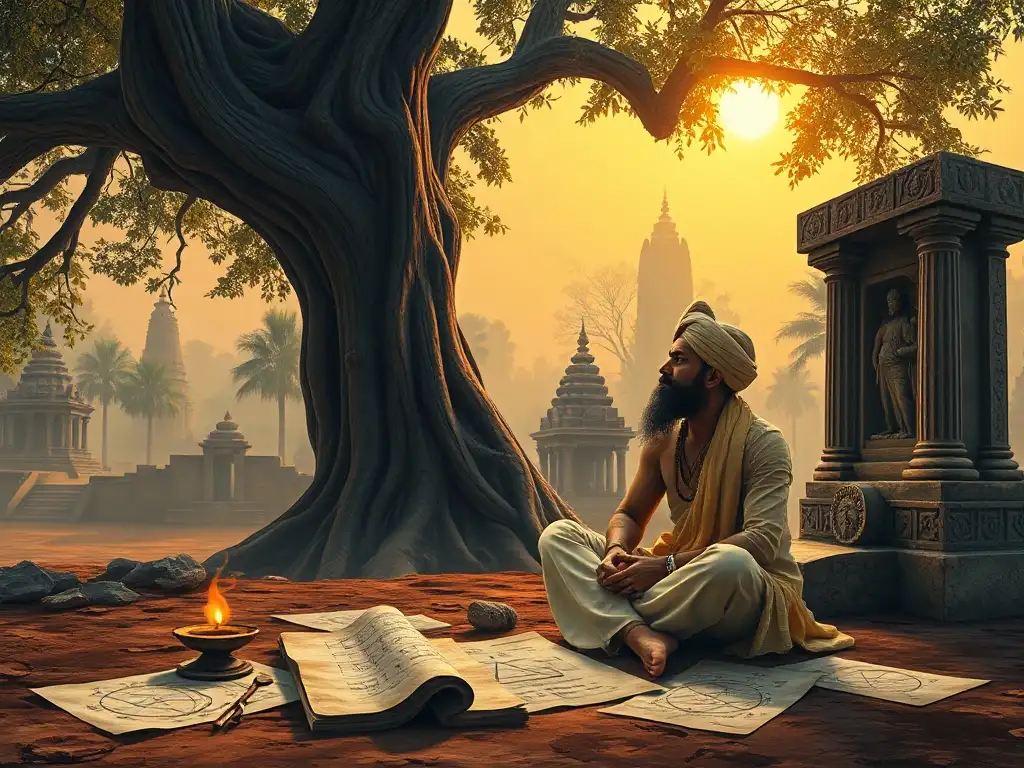
The remarkable contributions of ancient Indian mathematicians have not always received the recognition they deserve. Various factors have contributed to the decline in acknowledgment of their work, leading to a historical oversight that persists even today.
Historical Context of Mathematicians' Contributions
The historical context surrounding ancient Indian mathematicians is complex. Following the decline of the Gupta Empire around the 6th century CE, many intellectual pursuits, including mathematics, suffered setbacks. The subsequent invasions and the shift of power dynamics led to a decline in patronage for scholars, resulting in a loss of many texts and knowledge.
Additionally, the translation of works into Arabic and later into Latin during the medieval period primarily focused on Greek and Roman mathematics, often overlooking the rich tapestry of Indian contributions. This led to a significant gap in the transmission of knowledge, causing the achievements of ancient Indian mathematicians to be marginalized in global narratives of mathematical history.
Factors Leading to Their Neglect in History
Several factors have contributed to the neglect of ancient Indian mathematicians in modern historical accounts. The Eurocentric perspective that dominated the study of mathematics for centuries often sidelined non-European contributions. As a result, many significant mathematical ideas from India were either attributed to later European mathematicians or went unacknowledged altogether.
Moreover, the lack of preservation of original texts and manuscripts has hindered the ability to study these mathematicians' contributions comprehensively. Many ancient works were lost over time due to wars, invasions, and the passage of time, resulting in gaps in the historical record.
Furthermore, the oral tradition of knowledge transmission in ancient India did not always translate effectively into written forms. This, combined with the socio-political changes that led to a decline in scholarly activities, has perpetuated the cycle of neglect regarding the contributions of ancient Indian mathematicians in the broader context of mathematical history.
Reviving Interest in Ancient Indian Mathematicians
In recent years, there has been a growing interest in the contributions of ancient Indian mathematicians, largely driven by academic research, popular literature, and digital platforms. Scholars are increasingly focusing on the mathematical texts that originated in ancient India, unveiling the sophistication and depth of knowledge possessed by these mathematicians. Such revival is not merely about recognizing past achievements but also about appreciating the cultural context in which these ideas flourished.
This resurgence is reflected in various initiatives, including conferences, publications, and online courses that delve into ancient Indian mathematics. Institutions are now offering specialized courses that explore the works of mathematicians like Aryabhata, Brahmagupta, and Bhaskara. Moreover, cultural exhibitions and documentaries aim to educate the public about the mathematical prowess of ancient India, fostering a sense of pride and identity in this aspect of the nation’s heritage.
Importance of Recognizing Historical Contributions
Recognizing the historical contributions of ancient Indian mathematicians is crucial for several reasons. Firstly, it enriches the narrative of global mathematics, placing Indian scholars on the world stage alongside their Greek, Chinese, and Arab counterparts. This recognition helps dismantle the Eurocentric view of mathematical history, showcasing the diverse intellectual heritage that has contributed to modern mathematics.
Secondly, acknowledging these contributions can inspire current and future generations of mathematicians and scientists in India and beyond. It highlights the importance of cultural and historical contexts in the development of scientific thought and encourages a holistic understanding of mathematics as a universal language.
Lastly, understanding the methodologies and concepts used by ancient Indian mathematicians can provide valuable insights into contemporary mathematical problems and theories. By studying their work, modern scholars can uncover principles that may still apply today, fostering innovation and creativity in mathematical research.
Modern Implications of Ancient Indian Mathematical Concepts
The concepts developed by ancient Indian mathematicians have far-reaching implications in modern mathematics and related fields. For instance, the introduction of the decimal system and the concept of zero, attributed to Indian scholars, revolutionized numerical representation and arithmetic operations globally. These foundational concepts are fundamental in various applications, including computer science, engineering, and economics.
Furthermore, ancient Indian texts such as the Aryabhatiya and Brahmasphutasiddhanta contain advanced ideas in algebra, trigonometry, and astronomical calculations that are still relevant in today’s mathematical research. The sophisticated methods of approximation and problem-solving found in these texts can inform modern algorithms and computational techniques.
Additionally, the philosophical underpinnings of ancient Indian mathematics, which often relate to the natural world and spirituality, offer a unique perspective on the relationship between mathematics and life. This holistic view can inspire interdisciplinary approaches, merging mathematics with art, philosophy, and science.
Conclusion: The Legacy of Ancient Indian Mathematicians
The legacy of ancient Indian mathematicians is vast and enduring, representing a wealth of knowledge that has shaped not only the field of mathematics but also the broader scientific community. Their innovative ideas and methodologies laid the groundwork for future generations, influencing both Eastern and Western mathematical traditions.
Summary of Contributions to Mathematics
Ancient Indian mathematicians made significant contributions across various domains of mathematics. Key achievements include:
- The Concept of Zero: Pioneered the use of zero as a numeral, fundamentally changing the way calculations were performed.
- Decimal System: Developed the base-10 number system, which is the foundation of modern arithmetic.
- Algebra: Advanced algebraic techniques, including the formulation of equations and the solutions to quadratic and linear equations.
- Trigonometry: Introduced concepts of sine, cosine, and other trigonometric functions, which are essential in modern mathematics and engineering.
- Astronomical Calculations: Created accurate methods for calculating celestial phenomena, influencing both astronomy and navigation.
Call to Action for Further Exploration of Ancient Indian Mathematics
To fully appreciate the contributions of ancient Indian mathematicians, further exploration is essential. Engaging with primary texts, attending lectures, and participating in workshops can enhance understanding of their methodologies and ideas.
Moreover, educators should integrate the history of Indian mathematics into curricula to inspire students and foster a deeper appreciation for the subject. By advocating for the inclusion of ancient Indian mathematical concepts in modern education, we can ensure that these invaluable contributions are not forgotten but celebrated and built upon for generations to come.
As a community, let's commit to reviving and sharing the rich legacy of ancient Indian mathematicians, not only to honor their achievements but also to inspire a new wave of innovative thinkers in the field of mathematics.
- Introduction to Ancient Indian Mathematicians
- Major Contributions of Ancient Indian Mathematicians
- Notable Forgotten Mathematicians of Ancient India
- The Decline of Recognition for Ancient Indian Mathematicians
- Reviving Interest in Ancient Indian Mathematicians
- Conclusion: The Legacy of Ancient Indian Mathematicians
- What were the major contributions of ancient Indian mathematicians?
- Who are some prominent ancient Indian mathematicians?
- How did ancient Indian mathematicians influence global mathematics?
- What role did the Indus Valley Civilization play in mathematics?
- How can we learn more about the forgotten mathematicians of ancient India?
Frequently Asked Questions
What were the major contributions of ancient Indian mathematicians?
Ancient Indian mathematicians made significant contributions in areas like geometry, algebra, and the development of the decimal system. Their work laid the foundation for many mathematical principles used today.
Who are some prominent ancient Indian mathematicians?
Notable figures include Aryabhata, who introduced the concept of zero, and Brahmagupta, known for his work on arithmetic and quadratic equations. Their contributions were pivotal in the evolution of mathematics.
How did ancient Indian mathematicians influence global mathematics?
The contributions of ancient Indian mathematicians spread through trade and scholarship, influencing Islamic mathematics and later European mathematics. Their work on the number system and mathematical concepts was foundational.
What role did the Indus Valley Civilization play in mathematics?
The Indus Valley Civilization is believed to have laid early groundwork for mathematical concepts, particularly in measurement and geometry, which later mathematicians built upon during subsequent periods.
How can we learn more about the forgotten mathematicians of ancient India?
Exploring historical texts, researching academic papers, and visiting museums dedicated to ancient Indian history can provide insights into the contributions of these forgotten mathematicians and their impact on the world.
Final Reflection: Rediscovering the Legacy of Ancient Indian Mathematicians
The contributions of ancient Indian mathematicians are not just relics of the past; they are foundational pillars that continue to shape modern mathematics and science. In an era where we often overlook the brilliance of historical figures, it is crucial to recognize how their innovations laid the groundwork for contemporary mathematical thought. The profound insights and methodologies developed by these scholars resonate in our current educational systems and technological advancements, underscoring the timeless relevance of their work.
The impact of ancient Indian mathematicians extends far beyond their time, influencing cultures and societies worldwide. Their pioneering ideas in areas such as algebra, geometry, and calculus have woven themselves into the very fabric of global mathematics. As we explore their contributions, we find that their legacy is not merely academic; it is a testament to human ingenuity and the quest for knowledge. Mathematics knows no race or geographic boundaries; for mathematics, the cultural world is one country.
– David Hilbert. This quote encapsulates the universal nature of mathematics and highlights the importance of acknowledging the diverse contributions that have shaped its evolution.
As we reflect on the remarkable achievements of these forgotten mathematicians, let us commit to honoring their legacy by fostering a deeper appreciation for the history of mathematics in our own lives. Take a moment to explore the rich tapestry of mathematical history, and consider how you can contribute to the ongoing dialogue about its evolution. Whether through further study, sharing knowledge, or simply celebrating the diversity of thought that has propelled mathematics forward, each of us has a role to play in ensuring that these brilliant minds are remembered and revered.
Unveil the Wisdom of Ancient Mathematicians!
Thank you for immersing yourself in the rich history of ancient Indian mathematics! From the brilliant minds that shaped our understanding of numbers to the innovative concepts that still influence us today, you’ve uncovered valuable insights that deserve further exploration. Now, it's time to take action and deepen your connection to this fascinating subject.
- Dive deeper into the lives of these mathematicians by reading about their groundbreaking discoveries; consider picking up a book or exploring documentaries that bring their stories to life.
- Share your newfound knowledge with friends and family—discuss how these ancient techniques continue to be relevant in our modern world.
- Join an online community focused on the history of mathematics and ancient civilizations; engage with others who share your passion for these topics and exchange ideas.
What aspect of ancient Indian mathematics intrigues you the most, and how would you like to explore it further?