
The Unseen Threads: How Ancient India Shaped Southeast Asian Cultures


Welcome to Ancient India History, where we embark on a fascinating journey through time to uncover the rich tapestry of India's past. In our featured article, "The Unseen Threads: How Ancient India Shaped Southeast Asian Cultures," we delve into the profound influence that ancient Indian civilizations had on the cultures of Southeast Asia. From art and architecture to religion and trade, the connections forged across these regions are both intricate and awe-inspiring.
Prepare to be captivated by the stories and legacies that continue to resonate today. Join us as we explore these hidden connections and discover how they transformed the cultural landscape of Southeast Asia!
The influence of ancient India on Southeast Asia is a captivating narrative that unveils the profound connections forged between these two regions over centuries. From the early days of trade and cultural exchange to the establishment of religions and art forms, the threads of ancient Indian civilization intricately wove themselves into the fabric of Southeast Asian cultures.
This article delves into the multifaceted relationship that blossomed over time, highlighting how the teachings, philosophies, and innovations of ancient India significantly shaped the cultures, languages, and societies of Southeast Asia. By exploring key aspects such as trade routes, religious exchanges, and artistic influences, we uncover the unseen threads that bind these regions in a shared heritage, fostering a deeper understanding of their interconnected histories.
The Role of Trade in Cultural Exchange
The ancient trade routes, particularly the maritime Silk Road, served as vital conduits for the exchange of goods and ideas between India and Southeast Asia. Merchants and traders not only transported valuable commodities like spices and textiles but also carried with them the rich cultural practices and beliefs of their homelands.
- Key Trade Routes:
- Maritime Silk Route: Facilitated trade between the Indian subcontinent and the islands of Southeast Asia.
- Land Routes: Connected India to regions like Cambodia and Vietnam, enhancing cultural interactions.
The bustling ports of ancient India, such as those in Gujarat and Tamil Nadu, became melting pots of diverse cultures, where Southeast Asian traders could engage and exchange knowledge about art, religion, and governance.
Religious Influence: Buddhism and Hinduism
One of the most significant contributions of ancient India to Southeast Asia was the introduction of Buddhism and Hinduism. These religions not only spread spiritual teachings but also influenced art, architecture, and social structures in the region.
- Spread of Buddhism:
- Originating in India, Buddhism traveled to Southeast Asia through trade routes, leading to the establishment of important centers such as Borobudur in Indonesia.
- Hindu Influence:
- Hindu epics like the Ramayana and Mahabharata became integral to the cultural fabric of Southeast Asian societies, inspiring local adaptations and performances.
Through temples, sculptures, and inscriptions, ancient Indian religious concepts became embedded in Southeast Asian cultures, showcasing a blend of local traditions with Indian influences.
Artistic and Architectural Contributions
The artistic expressions of ancient India left an indelible mark on the architecture and visual arts of Southeast Asia. The intricate designs and motifs seen in temples and sculptures reflect a deep appreciation for Indian aesthetics.
- Architectural Marvels:
- The Angkor Wat temple complex in Cambodia is a prime example of Indian architectural influence, showcasing the grandeur of Khmer artistry intertwined with Hindu and Buddhist themes.
- Sculptural Styles:
- Indian iconography influenced the depictions of deities and mythological scenes in Southeast Asian art, leading to unique regional interpretations.
These artistic exchanges reveal how ancient Indian techniques and styles were adapted and transformed, resulting in a rich tapestry of cultural heritage.
Linguistic Impact
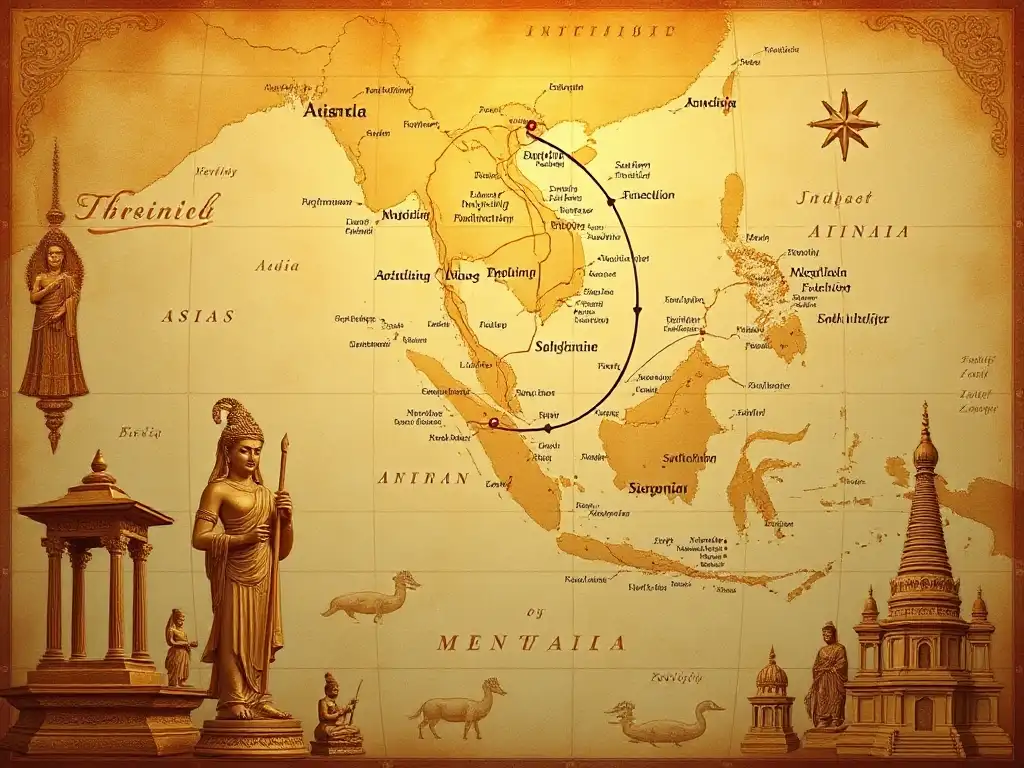
The languages of Southeast Asia were also shaped by ancient Indian influence, particularly through the adoption of Sanskrit and Pali. These languages played a crucial role in the documentation of religious texts, literature, and historical records.
- Sanskrit Influence:
- Many Southeast Asian languages, including Malay and Thai, incorporated Sanskrit vocabulary, enriching their linguistic heritage.
- Literary Contributions:
- Ancient Indian literary works inspired local literature, leading to the creation of original texts that blended Indian narratives with local themes.
The linguistic ties further illustrate the deep-rooted connections between ancient India and Southeast Asia, enhancing communication and cultural exchange.
Conclusion
The unseen threads of ancient India's influence on Southeast Asia are woven through trade, religion, art, and language. This historical interplay not only enriched the cultures of Southeast Asia but also fostered a shared heritage that continues to resonate today. Understanding these connections allows us to appreciate the complexities of cultural exchange and the lasting impact of ancient Indian civilization on the broader Southeast Asian landscape.
- The Role of Trade in Cultural Exchange
- Religious Influence: Buddhism and Hinduism
- Artistic and Architectural Contributions
- Linguistic Impact
- Conclusion
- What is the main focus of the article "The Unseen Threads: How Ancient India Shaped Southeast Asian Cultures"?
- How did ancient Indian trade impact Southeast Asia?
- What cultural elements did ancient India contribute to Southeast Asia?
- Can you give examples of specific Southeast Asian countries influenced by ancient India?
- Why is the study of ancient India's influence on Southeast Asia important?
Introduction to Ancient India’s Influence on Southeast Asia
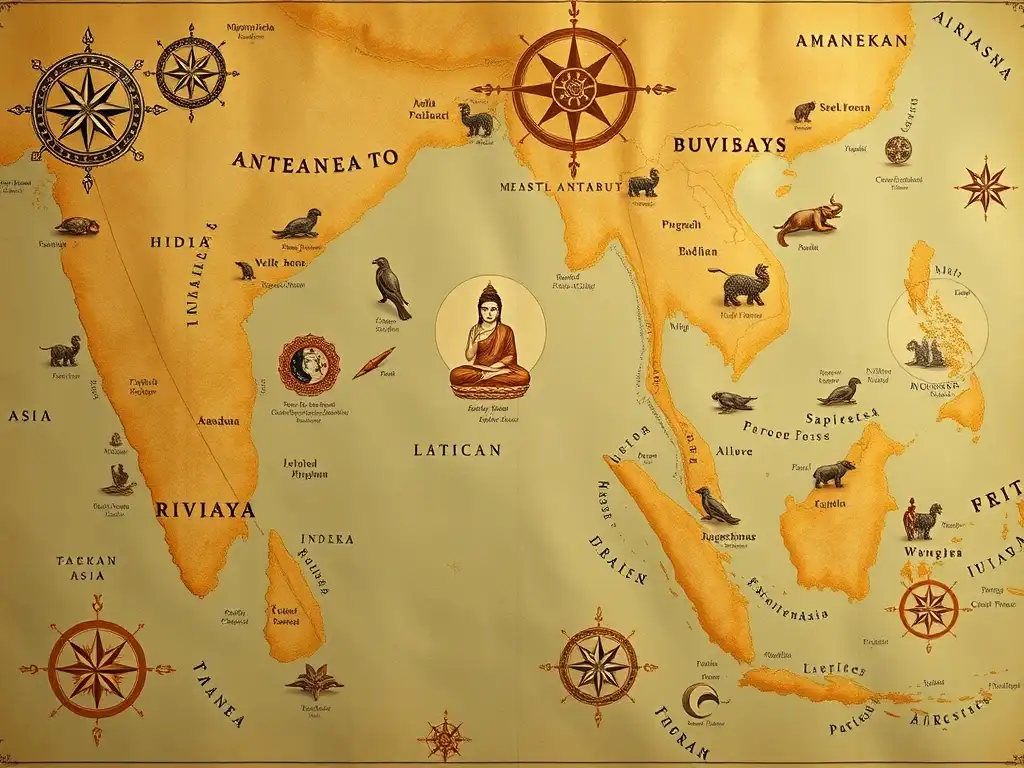
The influence of ancient India on Southeast Asia is a fascinating subject that underscores the complexity and depth of historical cultural exchanges. As trade routes expanded and maritime navigation improved, Indian merchants, travelers, and scholars traversed the Indian Ocean and ventured into Southeast Asian territories, leaving behind a rich tapestry of cultural, religious, and social influences. This interaction not only facilitated the exchange of goods but also fostered the transmission of ideas, languages, and artistic expressions, which significantly shaped the region's development.
Through these exchanges, Southeast Asia encountered various aspects of Indian civilization, including Buddhism, Hinduism, art, architecture, and governance. The blend of these elements with local traditions led to the creation of unique cultural identities that are still evident today. Understanding this influence provides crucial insights into how ancient India contributed to the cultural fabric of Southeast Asia, establishing a foundation that continues to resonate in the region.
Overview of Cultural Exchanges between Ancient India and Southeast Asia
Cultural exchanges between ancient India and Southeast Asia can be categorized into several key areas:
- Trade and Commerce:
- The bustling maritime trade routes facilitated the movement of not only goods like spices, textiles, and metals but also ideas and cultural practices. Major trading ports such as Funan, Srivijaya, and the Malay Peninsula became melting pots where Indian culture met indigenous traditions.
- Religion:
- Hinduism and Buddhism were the primary religions that spread from India to Southeast Asia. The establishment of Hindu kingdoms, such as the Khmer Empire, led to the construction of magnificent temples, like Angkor Wat, that are deeply rooted in Indian cosmology and mythology.
- Local adaptations of these religions resulted in a syncretic blend, influencing local beliefs and practices.
- Language and Literature:
- Sanskrit became a prominent language of administration and scholarship in many Southeast Asian kingdoms. The use of Sanskrit inscriptions in temples and monuments is a testament to its enduring influence on local languages and literature.
- Literary works, such as the Ramayana and Mahabharata, were also integrated into local narratives, further shaping regional folklore and storytelling traditions.
- Art and Architecture:
- The artistic styles of ancient India profoundly impacted Southeast Asian art, evident in sculptures, reliefs, and architectural styles. The intricate carvings and motifs found in temples reflect Indian artistic traditions while also showcasing local innovation.
- The influence of Indian architectural principles can be seen in the design of stupas and temples across the region, representing a fusion of Indian and indigenous styles.
Importance of Understanding Ancient Indian Contributions
Understanding the contributions of ancient India to Southeast Asia is essential for several reasons:
- Cultural Identity:
- The interplay of Indian and local cultures has played a crucial role in shaping the cultural identities of Southeast Asian nations. Recognizing these influences allows for a deeper appreciation of the region's diverse heritage.
- Historical Context:
- Acknowledging ancient India's role in shaping Southeast Asia provides valuable historical context for the socio-political and cultural developments in the region. It helps to trace the evolution of governance, social structures, and religious practices.
- Contemporary Relevance:
- The legacies of ancient Indian influence are still visible in modern Southeast Asian societies, from religious practices to festivals and artistic expressions. Understanding these connections can enhance cultural exchanges and foster greater regional cooperation today.
- Academic Exploration:
- Scholars and researchers benefit from studying these ancient interactions, as they reveal the complexities of cultural diffusion and the mechanisms of influence that transcend geographical boundaries. This exploration enriches our understanding of global history.
The influence of ancient India on Southeast Asia is a multi-faceted narrative that encapsulates trade, religion, language, art, and societal structures. By delving into this topic, we gain valuable insights into the historical connections that have shaped the rich tapestry of cultures in Southeast Asia.
Historical Context of Ancient India
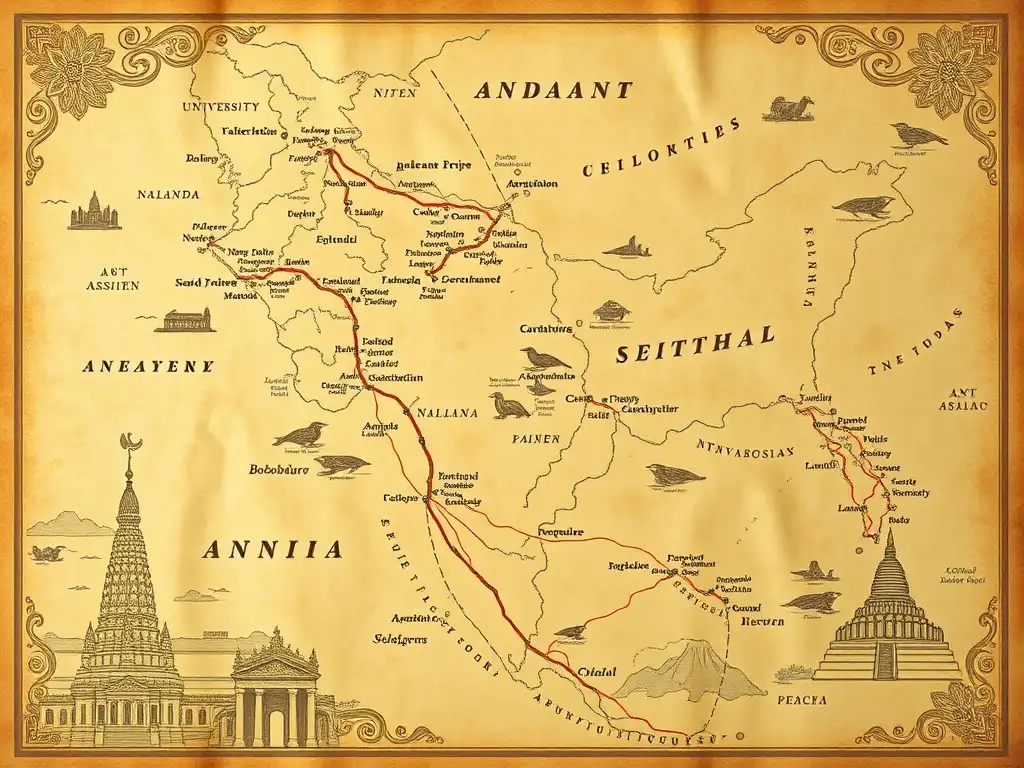
The historical context of ancient India highlights the region's significant influence on Southeast Asia through various cultural, economic, and political exchanges. From the early urban settlements of the Indus Valley to the philosophical teachings of the Vedic period and the expansive empires of the Maurya and Gupta, ancient India's legacy profoundly shaped the cultures of neighboring regions. Understanding this influence requires delving into the key civilizations that flourished in ancient India and their interactions with Southeast Asia.
The Indus Valley Civilization and Its Global Connections
The Indus Valley Civilization (circa 3300–1300 BCE) was one of the world's earliest urban cultures, known for its advanced city planning, architecture, and trade networks. Major cities like Harappa and Mohenjo-Daro showcased sophisticated drainage and sanitation systems, which significantly influenced urban planning in subsequent cultures.
- Trade Networks: The Indus Valley engaged in extensive trade with neighboring regions, including Mesopotamia and the Arabian Peninsula. Archaeological findings suggest that goods such as beads, textiles, and metals were exchanged, establishing a foundation for cultural exchanges that would later include Southeast Asia.
- Cultural Artifacts: Artifacts like seals featuring animals and script are believed to have had symbolic meanings that could have transcended geographical boundaries. These artifacts hint at a shared cultural language that influenced early Southeast Asian societies.
Quote: “The connections between ancient civilizations were not merely economic but also cultural, fostering an exchange of ideas, art, and technology.”
The Vedic Period and Cultural Developments
Following the decline of the Indus Valley Civilization, the Vedic Period (circa 1500–500 BCE) marked a significant transformation in Indian society. This era is characterized by the composition of the Vedas, which are among the oldest sacred texts of Hinduism.
- Philosophical and Religious Influence: The Vedas introduced complex philosophical ideas, including concepts of dharma (duty) and karma (action), which permeated into Southeast Asian cultures through trade and migration. The establishment of Hinduism and later Buddhism as dominant religions in Southeast Asia can be traced back to these foundational texts.
- Linguistic Connections: The spread of Sanskrit during the Vedic period facilitated communication and cultural exchange. As traders and missionaries traveled to Southeast Asia, they brought with them not only religious texts but also the language, which influenced local languages and scripts.
- Cultural Practices: Rituals and social customs introduced during the Vedic period found resonance in Southeast Asian cultures. For example, the practice of temple construction and idol worship became central to various Southeast Asian societies.
The Maurya and Gupta Empires: A Golden Age of Influence
The Maurya Empire (circa 322–185 BCE) and the Gupta Empire (circa 240–550 CE) are often regarded as a golden age of ancient India, marked by remarkable achievements in governance, arts, and sciences.
- Political and Economic Expansion: The Maurya Empire, under Ashoka the Great, expanded its influence across the Indian subcontinent and into Southeast Asia. Ashoka's promotion of Buddhism led to the establishment of trade routes that facilitated cultural exchanges, impacting local governance and societal structures in Southeast Asian kingdoms.
- Art and Architecture: The Gupta period saw a flourishing of art and architecture, with the construction of grand temples and stupas. These architectural styles influenced the design of religious structures in Southeast Asia, notably in places like Cambodia and Indonesia, where Hindu and Buddhist temples reflect Indian styles.
- Scholarly Exchanges: The period also witnessed significant advancements in science, mathematics, and literature, with scholars like Aryabhata and Kalidasa making profound contributions. These intellectual achievements were transmitted to Southeast Asian scholars, enriching their own academic traditions.
| Empire | Key Contributions | Influence on Southeast Asia |
|---|---|---|
| Maurya | Spread of Buddhism, trade expansion | Adoption of Buddhism, trade links |
| Gupta | Advancements in arts, sciences | Architectural styles, literature |
The influence of ancient India on Southeast Asia is a testament to the power of cultural exchange. Through trade, religion, and intellectual discourse, ancient India laid down the unseen threads that wove diverse Southeast Asian cultures into a rich tapestry of shared heritage.
Key Areas of Influence of Ancient India on Southeast Asia
Religion and Spirituality: The Spread of Hinduism and Buddhism
The influence of ancient India on Southeast Asia is most prominently observed in the realms of religion and spirituality, particularly through the dissemination of Hinduism and Buddhism. These faiths traveled beyond the Indian subcontinent, shaping the spiritual landscapes of various Southeast Asian nations, including Indonesia, Thailand, and Cambodia.
Emergence of Hindu Kingdoms in Southeast Asia
The establishment of Hindu kingdoms in Southeast Asia can be traced back to the early centuries CE, particularly during the period of the Funan Kingdom (1st to 6th centuries CE) in present-day Cambodia and Vietnam. These kingdoms adopted Hindu cultural and religious practices, leading to the construction of grand temples and the establishment of dynasties that revered Hindu deities.
The Khmer Empire, for instance, is renowned for its magnificent temple complex, Angkor Wat, which was originally dedicated to the Hindu god Vishnu before later being transformed into a Buddhist temple. This shift illustrates the dynamic nature of religious practices influenced by ancient Indian culture.
The Role of Buddhist Monasteries in Cultural Exchange
Buddhism played a pivotal role in cultural exchange between India and Southeast Asia. The spread of Buddhism, particularly during the reign of Emperor Ashoka in the 3rd century BCE, facilitated the establishment of monasteries that served as centers for education, trade, and cultural interaction. Monasteries not only propagated Buddhist teachings but also acted as hubs for the exchange of art, architecture, and literature. Notably, the Srivijaya Empire in Sumatra became a significant center for Buddhist scholarship, influencing the broader region and fostering a unique blend of local and Indian cultural elements.
Language and Literature: Sanskrit’s Impact on Southeast Asian Languages
The linguistic influence of ancient India is evident through the adoption of Sanskrit in various Southeast Asian languages. Sanskrit, as the liturgical language of Hinduism and Buddhism, permeated local languages, enriching them with a plethora of vocabulary, religious terminology, and literary forms.
Adoption of Sanskrit in Local Texts
The incorporation of Sanskrit into Southeast Asian languages is particularly notable in inscriptions, epics, and religious texts. For instance, the Kawi language used in Java exhibits a significant Sanskrit influence, showcasing how local languages adapted and integrated Indian linguistic elements. This adoption not only facilitated the documentation of historical events but also allowed for the preservation of religious and philosophical ideas, making Sanskrit a foundational element in the literary traditions of Southeast Asia.
Influence of Indian Epics on Southeast Asian Literature
The Indian epics, particularly the Ramayana and the Mahabharata, have left an indelible mark on Southeast Asian literature. These texts were not merely translated; they were reinterpreted and localized to resonate with the cultural contexts of the region. In Indonesia, for example, the Wayang Kulit (shadow puppetry) tradition brings these epics to life, blending Indian narratives with local folklore and artistic expressions. Such adaptations demonstrate the deep-rooted influence of ancient Indian literature on the storytelling traditions of Southeast Asia, highlighting the enduring legacy of cultural exchange between these regions.
Art and Architecture: Indian Aesthetics in Southeast Asian Temples
The influence of ancient India on Southeast Asian art and architecture is profound and multifaceted. As Indian culture spread through trade, migration, and religious exchange, it left an indelible mark on the architectural styles and artistic expressions of various Southeast Asian civilizations. The integration of Indian aesthetics is particularly evident in temple architecture, where local builders adapted and transformed Indian designs to suit their cultural contexts.
Indian architectural principles, particularly those outlined in ancient texts such as the Shilpa Shastras, played a pivotal role in shaping the temple structures across Southeast Asia. Temples became central to community life, serving as not only places of worship but also as cultural hubs. The grandeur and intricacy of these structures reflect a synthesis of Indian and local artistic traditions, creating a unique architectural identity that still resonates today.
Iconography and Sculptural Techniques
One of the most notable aspects of the Indian influence on Southeast Asian art is the adoption and adaptation of iconography and sculptural techniques. Southeast Asian temples are often adorned with intricate carvings and sculptures that depict Hindu and Buddhist deities, narratives, and motifs derived from Indian mythology. This is particularly evident in countries like Cambodia, Indonesia, and Thailand, where the influence of Indian religious iconography is prominent.
For instance, the depiction of the Hindu god Shiva, alongside other deities like Vishnu and Durga, can be found in numerous temples across the region. The sculptural techniques employed, such as bas-relief and free-standing statues, showcase a high level of craftsmanship and an understanding of proportion and form inspired by Indian artisanship.
Moreover, the use of specific iconographic elements, such as the lotus and the garuda (mythical bird), illustrates a blend of Indian and indigenous symbolism. These elements often convey deeper meanings within the local cultural context, enriching the spiritual and artistic narrative of the temples.
Examples of Indian Influences in Southeast Asian Architecture
Several prominent examples highlight the Indian influence on Southeast Asian architecture, showcasing how ancient Indian designs were adapted and integrated into local contexts:
- Angkor Wat, Cambodia: Originally constructed in the early 12th century as a Hindu temple dedicated to Vishnu, Angkor Wat is perhaps the most famous example of Indian architectural influence in Southeast Asia. Its layout, extensive bas-reliefs, and towering central spire reflect classical Indian temple design, while also incorporating elements of Khmer architecture.
- Borobudur, Indonesia: This 9th-century Buddhist temple is a remarkable example of the fusion of Indian influence and local artistry. Built in the shape of a mandala, Borobudur features intricate carvings that depict Buddhist teachings, demonstrating the integration of Indian architectural principles with indigenous forms and beliefs.
- Prambanan, Indonesia: Another significant Hindu temple complex, Prambanan showcases the verticality characteristic of Indian temple architecture. The tall, pointed structures are dedicated to the Trimurti—Brahma, Vishnu, and Shiva—and are adorned with detailed reliefs that narrate epic tales from Indian epics like the Ramayana.
- Wat Phra Kaew, Thailand: Known as the Temple of the Emerald Buddha, this temple complex in Bangkok reflects a blend of traditional Thai and Indian influences. The intricate decorations and the central chedi (stupa) echo the architectural styles seen in Indian temples, while also incorporating local artistic elements.
Through these examples, it is evident that the artistic and architectural legacy of ancient India has had a lasting impact on the cultural landscape of Southeast Asia, fostering a rich exchange that continues to be celebrated and studied today.
Trade and Economic Links between Ancient India and Southeast Asia

Maritime Trade Routes: Connecting Cultures and Economies
The maritime trade routes established between Ancient India and Southeast Asia were crucial in facilitating not only economic exchanges but also cultural interactions. These routes, primarily traversed by Indian merchants, linked the Indian subcontinent with various Southeast Asian islands and coastal regions, creating a vibrant network of trade that flourished from around the 1st century CE.
- Key Routes: The most significant maritime pathways included the routes through the Bay of Bengal and the Strait of Malacca. These routes enabled the exchange of goods such as spices, textiles, and precious stones, which were highly sought after in both regions.
- Cultural Exchange: Alongside tangible goods, these trade routes facilitated the exchange of ideas, religions, and cultural practices. The spread of Hinduism and Buddhism into Southeast Asia can be traced back to these maritime interactions, as Indian traders often served as cultural ambassadors, introducing their beliefs and customs to local populations.
Economic Impact
The economic impact of these trade routes was profound:
- Growth of Port Cities: Coastal cities such as Palembang, Srivijaya, and Funan emerged as significant trade hubs, benefiting from the influx of Indian merchants. These cities became melting pots of culture, where local and Indian influences blended.
- Wealth Accumulation: The trade generated immense wealth for both Indian and Southeast Asian rulers, leading to the establishment of powerful kingdoms that could fund further infrastructure and cultural development.
- Integration of Economies: The integration of Indian textiles, metalwork, and agricultural products into Southeast Asian markets transformed local economies, encouraging the development of new crafts and trade practices.
Influence of Indian Trade Practices on Southeast Asian Markets
The trade practices of Ancient India had a lasting influence on the economic frameworks of Southeast Asian societies. These practices introduced new methods of commerce, banking, and trade regulations that shaped the economic landscape of the region.
- Barter and Currency Systems: While barter was common, Indian merchants introduced the concept of currency, which gradually influenced the economic systems in Southeast Asia. This shift allowed for more efficient trade and the establishment of market centers.
- Trade Regulations: Indian traders often operated under specific trade regulations that emphasized fairness and mutual benefit. These practices laid the groundwork for the development of organized trade guilds and regulatory frameworks in Southeast Asian markets.
Case Studies
- Srivijaya Empire: The Srivijaya Empire, flourishing between the 7th and 13th centuries, exemplified how Indian trade practices were adopted. Its strategic location allowed it to control maritime trade routes, leading to significant economic prosperity influenced by Indian trading methods.
- Funan Kingdom: Similarly, the Funan Kingdom, located in present-day Cambodia and Vietnam, adopted various Indian trade practices, which contributed to its rise as a regional power in trade and commerce.
Conclusion
The trade and economic links between Ancient India and Southeast Asia were characterized by dynamic maritime routes and profound influences on local markets. The exchange of goods, cultures, and innovative trade practices not only enriched the economies of Southeast Asian societies but also laid the foundation for enduring cultural ties that continue to resonate in the region today. The influence of Ancient India on Southeast Asia remains a pivotal chapter in the history of cultural exchanges, highlighting the importance of trade in shaping civilizations.
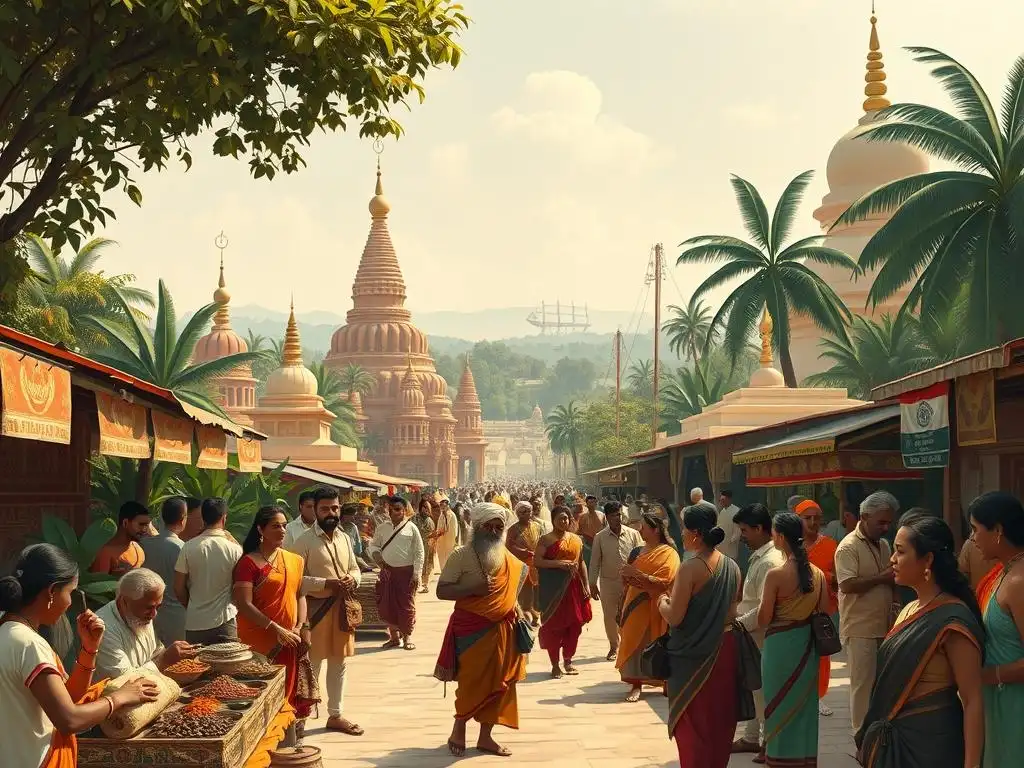
The Role of Indian Kingship Ideologies in Southeast Asia
The influence of ancient India on Southeast Asia is prominently reflected in the region's kingship ideologies. The concept of kingship in ancient India, particularly the idea of the Dharma Raja, which emphasizes the ruler's duty to govern justly and ethically, resonated deeply with Southeast Asian societies. This concept was pivotal in shaping the legitimacy of rulers in kingdoms such as Srivijaya, Majapahit, and Angkor.
Southeast Asian kings often adopted Indian titles such as "Raja" or "Maharaja" and aligned themselves with Hindu deities, particularly Vishnu and Shiva, to legitimize their rule. This syncretism not only reinforced their authority but also established a divine right to rule, which was critical in societies that prioritized spiritual and temporal leadership.
- Cultural Syncretism: The integration of Indian mythology and cosmology into local traditions led to the creation of hybrid cultural practices. For instance, the Khmer Empire’s temple architecture, such as Angkor Wat, reflects Hindu cosmological principles, showcasing the intermingling of Indian religious practices with local beliefs.
- Political Alliances: Indian kingship ideologies also facilitated diplomatic relations through marriage alliances and tribute systems. Rulers in Southeast Asia would often marry Indian princesses or send tributes to Indian courts to solidify their status and secure military support, weaving a complex web of political ties that were crucial for maintaining power.
The adoption of Indian kingship ideologies was instrumental in establishing political legitimacy and cultural coherence in Southeast Asian societies, showcasing the profound impact of ancient India on the region's governance systems.
Integration of Indian Administrative Practices in Local Governance
The administrative frameworks established by ancient Indian civilizations significantly influenced the governance of Southeast Asian states. Indian texts, particularly the Arthashastra attributed to Kautilya, provided a blueprint for effective statecraft, including taxation, law, and military organization. These practices were adapted to suit local contexts, enhancing the administrative efficiency of emerging Southeast Asian polities.
- Taxation and Revenue Systems: Indian influence introduced sophisticated methods for revenue collection, which were essential for sustaining large kingdoms. The kharāj, or land revenue system, found its way into Southeast Asian economies, allowing rulers to generate income through agricultural production. This system was often modified to account for local agricultural practices and land tenure systems.
- Legal Frameworks: The codification of laws, inspired by Indian legal texts, helped establish a sense of order in rapidly expanding empires. For instance, the Dharmaśāstra influenced the legal principles adopted by Southeast Asian kingdoms, providing guidelines that governed civil and criminal matters. This resulted in a more structured approach to law enforcement and dispute resolution.
- Bureaucratic Organization: The establishment of bureaucracies modeled after Indian administrative practices led to the creation of specialized ministerial roles and a hierarchy of officials. This organization improved governance by ensuring that local affairs were managed efficiently while aligning with royal directives.
The integration of Indian administrative practices into Southeast Asian governance not only facilitated effective rule but also contributed to the development of complex societies capable of managing diverse populations and resources, showcasing the lasting legacy of ancient India's influence on the region.
Conclusion: Legacy of Ancient India’s Influence on Southeast Asian Cultures
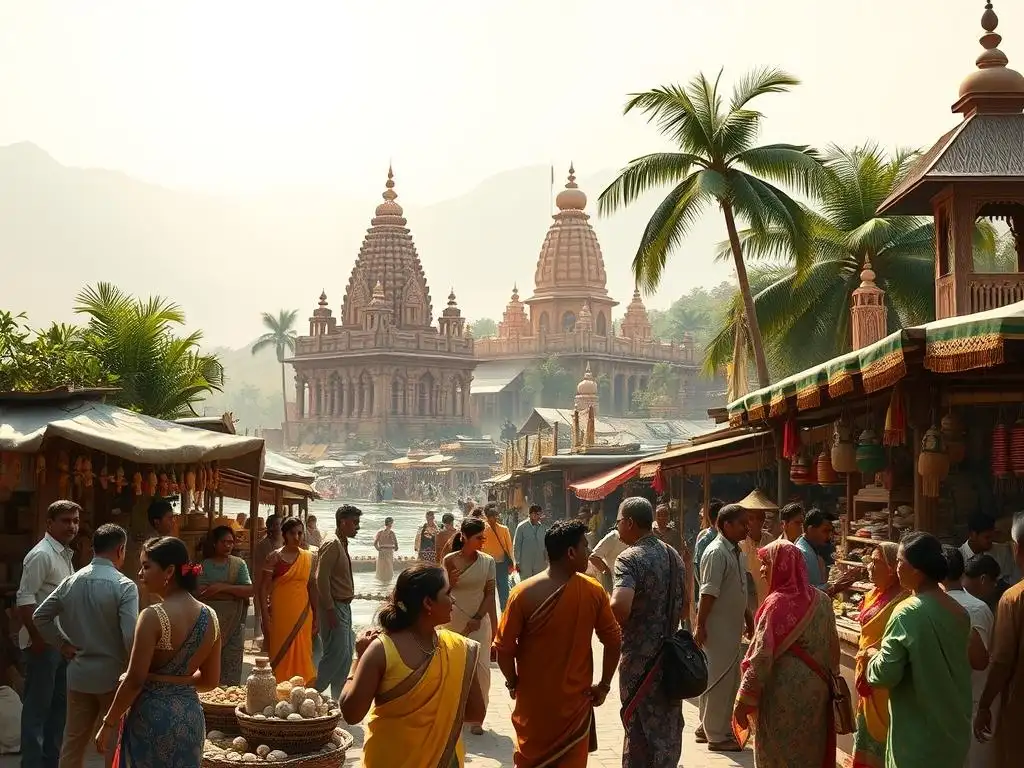
The intricate tapestry of Ancient India's influence on Southeast Asia is woven with threads of cultural, religious, and economic exchanges that have left an indelible mark on the region. Through trade routes, migration, and the spread of ideas, ancient Indian civilizations contributed significantly to the development of Southeast Asian societies. This legacy is evident in various aspects, from language and literature to art forms and religious practices.
The cultural syncretism that resulted from these exchanges is a testament to the adaptability and resilience of Southeast Asian societies. Indian concepts merged with local traditions, creating unique cultural identities that continue to flourish today. The impact of Indian epics, such as the Ramayana and Mahabharata, on Southeast Asian literature and theater is a prime example of this profound influence, illustrating how stories transcended geographical boundaries and resonated with local audiences.
Lasting Impacts on Modern Southeast Asian Societies
The effects of ancient Indian influence are still visible in modern Southeast Asian societies, where cultural practices and traditions have evolved but retain significant Indian elements. Some of the most notable impacts include:
- Religious Practices:
- Hinduism and Buddhism: These religions, which originated in India, spread to Southeast Asia and became integral to the cultural fabric of countries like Indonesia, Thailand, and Cambodia. The existence of temples such as Borobudur and Angkor Wat reflects the architectural and spiritual legacies of these belief systems.
- Rituals and Festivals: Many festivals celebrated in Southeast Asia, such as Diwali in Bali and Songkran in Thailand, can be traced back to Indian traditions, showcasing the enduring nature of these cultural practices.
- Language and Literature:
- Sanskrit and Pali Influence: The incorporation of Sanskrit and Pali vocabulary into local languages has enriched the linguistic landscape of Southeast Asia. For example, many Indonesian words and Javanese scripts are derived from Sanskrit.
- Literary Traditions: The adaptation of Indian epics into local narratives has led to the emergence of unique literary forms that reflect regional characteristics while honoring their Indian roots.
- Art and Architecture:
- Sculpture and Reliefs: The influence of Indian art is evident in the intricate carvings and sculptures found in various Southeast Asian temples, which often depict Hindu deities and mythological scenes.
- Architectural Styles: The architectural designs of ancient temples in Southeast Asia often bear resemblance to Indian styles, showcasing the cross-cultural exchanges that shaped their construction.
Reflections on the Cultural Heritage and Exchange
The exploration of ancient India's influence on Southeast Asia reveals a complex interplay of cultures that has enriched both regions. This cultural heritage is not merely historical; it continues to evolve and adapt, influencing contemporary art, literature, and social practices across Southeast Asia.
The mutual exchange that characterized these interactions has fostered a sense of shared identity and understanding among diverse communities. As Southeast Asian nations embrace their historical connections to India, they celebrate a legacy that is not just about influence, but also about collaboration and enrichment.
The legacy of ancient India's influence on Southeast Asia can be seen as a vital thread in the broader narrative of human civilization—one that promotes unity through diversity, illustrating how cultures can intertwine to create a vibrant and dynamic tapestry of life. The ongoing exploration and appreciation of this rich heritage will ensure that the unseen threads of ancient India's presence continue to shape Southeast Asian cultures for generations to come.
Further Reading and Resources on Ancient India and Southeast Asia
Suggested Books and Articles on Cultural Exchanges
Exploring the intricate relationship between ancient India and Southeast Asia provides rich insights into how cultural exchanges influenced the development of civilizations in the region. Here are some recommended books and articles that delve into this fascinating topic:
-
Books
-
"India and Southeast Asia: A Cultural History" by R. C. Majumdar
This comprehensive work outlines the historical ties between India and Southeast Asia, focusing on trade, religion, and cultural practices.
-
"The Indianization of Southeast Asia" by J. G. de Casparis
An essential read that examines how Indian culture, language, and religion permeated Southeast Asian societies.
-
"Southeast Asia: A Historical Encyclopedia, from Angkor Wat to East Timor" edited by O. W. Wolters
This encyclopedia provides a broad overview of Southeast Asian history, with specific sections dedicated to Indian influence.
-
-
Articles
-
"The Influence of Indian Culture in Southeast Asia"
This article explores various aspects of Indian culture that were adopted in Southeast Asia, from art and architecture to religious practices.
-
"Trade Routes and Cultural Exchange Between India and Southeast Asia"
A scholarly article that details the trade networks that facilitated cultural exchanges and showcases how they shaped regional identities.
-
Online Resources for Exploring Ancient Indian Influence
The digital age has made it easier than ever to access a wealth of information regarding ancient India’s influence on Southeast Asia. Here are some valuable online resources:
-
Digital South Asia Library (DSAL)
A comprehensive repository offering a variety of texts, maps, and primary sources related to South Asian history, including sections on cultural exchanges with Southeast Asia.
-
Internet Archive
A vast collection of digitized texts and historical documents. Searching for keywords like "ancient India Southeast Asia" can yield interesting results, including out-of-print books and academic papers.
-
JSTOR
An extensive database of academic journal articles. You can find numerous papers discussing the cultural, religious, and economic exchanges between ancient India and Southeast Asia.
-
The British Museum’s Collection Online
This resource allows users to explore artifacts that illustrate the connections between ancient Indian and Southeast Asian cultures. Look for items related to trade and cultural artifacts.
-
YouTube Educational Channels
Channels like "Crash Course" and "History Time" often have well-researched videos on ancient civilizations, including episodes specifically focused on India and its influence on Southeast Asia.
By delving into these resources, readers can gain a deeper understanding of the profound impact that ancient India had on the cultures, religions, and societies of Southeast Asia.
Frequently Asked Questions
What is the main focus of the article "The Unseen Threads: How Ancient India Shaped Southeast Asian Cultures"?
The article explores the significant influence of ancient Indian civilizations on the cultures, religions, and societies of Southeast Asia, highlighting connections from the Indus Valley to the Gupta Empire.
How did ancient Indian trade impact Southeast Asia?
Ancient Indian trade routes facilitated the exchange of goods, ideas, and cultures, leading to the spread of Hinduism and Buddhism, which were crucial in shaping Southeast Asian societies.
What cultural elements did ancient India contribute to Southeast Asia?
The influence of ancient India is evident in art, architecture, literature, and religious practices, which were integrated into the local cultures of Southeast Asian nations.
Can you give examples of specific Southeast Asian countries influenced by ancient India?
Countries such as Indonesia, Thailand, and Cambodia exhibit Indian influences in their temples, art forms, and cultural festivals, demonstrating the deep-rooted connections between the regions.
Why is the study of ancient India's influence on Southeast Asia important?
Understanding this influence provides insights into the historical interactions between regions, highlighting how cultural exchanges have shaped the identities and histories of both India and Southeast Asia.
Final Reflection: The Enduring Legacy of Ancient India's Influence on Southeast Asia
The intricate tapestry of cultures in Southeast Asia is woven with the unseen threads of ancient India, illustrating how historical connections continue to resonate today. The profound influence of ancient Indian civilization on Southeast Asian cultures is not merely a relic of the past; it is a living legacy that shapes identities, traditions, and social structures in the region. As we navigate the complexities of globalization and cultural exchange in the modern world, understanding these historical ties becomes increasingly vital.
The cultural and social landscapes of Southeast Asia are rich with the imprints of ancient Indian philosophy, art, and religion, which have fostered a unique blend of identities. This ongoing influence is evident in the region's languages, rituals, and artistic expressions, reminding us that our histories are interconnected. As the renowned historian Romila Thapar once said, "> History is not just about the past; it is about the present and the future." This perspective encourages us to appreciate the depth of our shared heritage and recognize how it continues to shape contemporary societies.
As we reflect on the lessons of ancient India's influence, let us embrace the opportunity to explore our own cultural narratives and connections. I invite you to delve deeper into your heritage, to celebrate the diversity that enriches our world, and to recognize the unseen threads that bind us all. By fostering an appreciation for our shared histories, we can cultivate a more inclusive and harmonious future, honoring the legacies that have shaped us while paving the way for new connections and understanding.
Embrace the Legacy: Dive into Southeast Asia’s Cultural Tapestry!
Thank you for exploring the incredible ways ancient India has woven its influence into Southeast Asian cultures. Your curiosity not only enriches your knowledge but also helps keep this fascinating history alive. Now, it’s time to put that newfound understanding into action!
Here’s how you can dive deeper and make a difference:
- Visit local museums or browse online exhibits that showcase artifacts from ancient Indian trade routes and their significant impact on Southeast Asia.
- Participate in community discussion groups or online forums to share insights and exchange ideas with fellow history enthusiasts about these cultural connections.
- Consider volunteering with organizations committed to cultural preservation, helping to sustain the legacy of ancient influences.
What aspect of ancient India’s influence on Southeast Asia resonates with you the most, and how do you plan to share this knowledge with others?