
Ancient Indian Scholars: Their Contribution to Southeast Asian Education and Knowledge

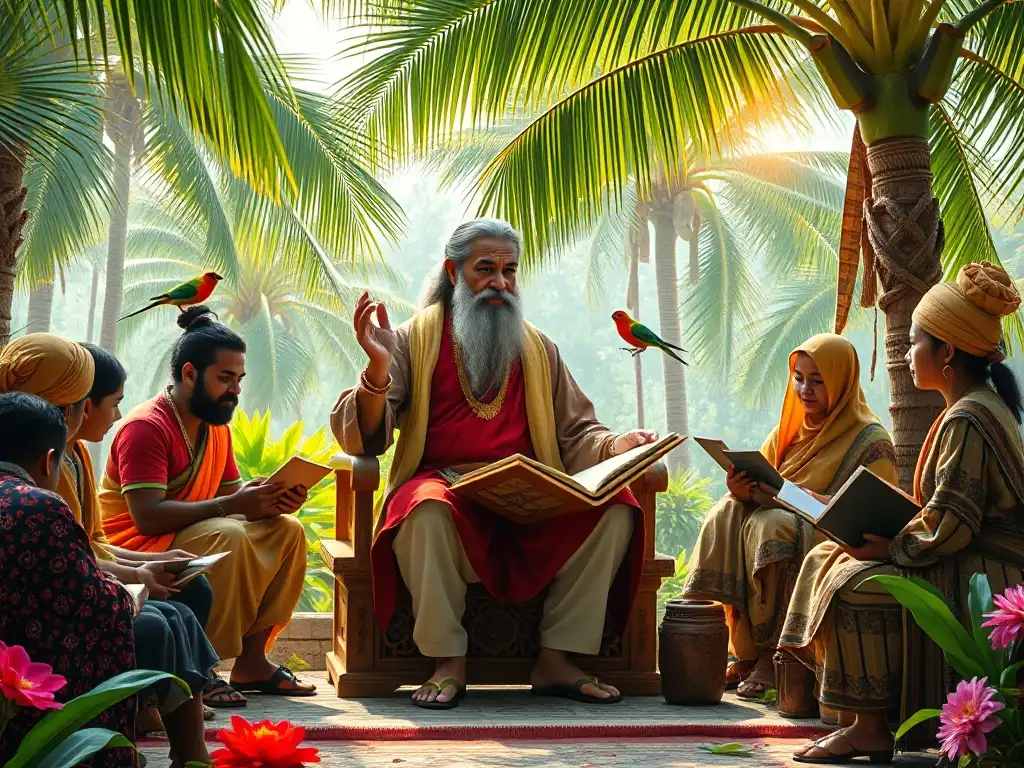
Welcome to Ancient India History, where we embark on a fascinating journey through the rich tapestry of ancient Indian civilizations. Delve into the profound influence of ancient Indian scholars on Southeast Asia, a topic that reveals the remarkable cultural exchanges that have shaped educational landscapes across the region. Have you ever wondered how the wisdom of the Indus Valley or the intellectual prowess of the Gupta Empire reached far beyond their borders?
Join us as we uncover the intricate connections and lasting legacies that continue to impact societies today. Prepare to be captivated by the stories of knowledge and enlightenment that transcend time and geography!
- Introduction to Ancient Indian Scholars and Their Influence on Southeast Asia
- Key Ancient Indian Scholars and Their Contributions
- The Spread of Indian Educational Practices in Southeast Asia
- The Impact of Indian Philosophical Thought on Southeast Asian Education
- Case Studies of Ancient Indian Influence in Southeast Asian Kingdoms
- Legacy of Ancient Indian Scholars in Modern Southeast Asian Education
- Conclusion: The Lasting Impact of Ancient Indian Scholars on Southeast Asian Education
-
Frequently Asked Questions
- What were the main contributions of ancient Indian scholars to Southeast Asia?
- How did the spread of Hinduism and Buddhism influence Southeast Asia?
- What role did trade play in the exchange of knowledge between India and Southeast Asia?
- Can you name some famous Indian scholars who impacted Southeast Asian education?
- How did ancient Indian texts affect the education systems in Southeast Asia?
- Final Reflection: The Enduring Legacy of Ancient Indian Scholars in Southeast Asia
- Embrace the Wisdom of Ancient India!
Introduction to Ancient Indian Scholars and Their Influence on Southeast Asia
The profound impact of ancient Indian scholars on the educational landscape of Southeast Asia is a subject of great significance, reflecting centuries of cultural exchange and intellectual collaboration. From the early days of the Indus Valley civilization, Indian scholars laid the groundwork for various fields of knowledge, including mathematics, astronomy, philosophy, and medicine. Their contributions transcended geographical boundaries, influencing not only their homeland but also the societies in Southeast Asia.
This article will explore how ancient Indian scholars shaped educational practices in Southeast Asia, fostering a legacy that continues to resonate to this day. By understanding this intricate relationship, we can better appreciate the rich tapestry of historical interactions that have defined the region’s cultural heritage.
Overview of Ancient Indian Scholarship
Ancient Indian scholarship, characterized by its diversity and depth, produced luminaries such as Aryabhata, Charaka, and Panini, who made groundbreaking contributions in mathematics, medicine, and linguistics, respectively.
- Mathematics: Aryabhata's work introduced concepts such as the place value system and zero, which were pivotal in advancing mathematical thought.
- Medicine: The Sushruta Samhita, attributed to Sushruta, laid the foundations for surgical practices and medicinal treatments that would later influence medical traditions in Southeast Asia.
- Linguistics: Panini's Ashtadhyayi not only codified Sanskrit grammar but also set a standard for linguistic studies, impacting languages across the region.
The dissemination of these ideas was facilitated through trade routes and cultural exchanges, allowing Southeast Asian societies to adopt and adapt these scholarly traditions.
Importance of Education in Ancient India
Education in ancient India was not merely a pursuit of knowledge but a holistic system aimed at developing the individual in accordance with societal values. Centers of learning, such as Nalanda and Takshashila, became renowned for their rigorous academic environments:
- Curriculum: Subjects ranged from philosophy and theology to mathematics and the arts, reflecting a comprehensive approach to education.
- Pedagogy: The guru-shishya (teacher-student) tradition emphasized mentorship and dialogue, fostering a deep understanding of subjects rather than rote memorization.
- Inclusivity: While education was predominantly accessible to the elite, there were efforts to include various social classes, especially in certain Buddhist monastic schools.
This robust educational framework not only nourished the intellectual life of ancient India but also served as a model for emerging educational systems in Southeast Asia.
Introduction to Southeast Asia's Educational Landscape
The educational landscape of Southeast Asia was significantly shaped by the influx of Indian scholars and their teachings. As Indian cultural and religious influences permeated the region, several key features emerged:
- Adaptation of Indian Systems: Local scholars adapted Indian educational models, integrating them with indigenous traditions and practices.
- Buddhist Monasteries: These institutions became pivotal in the spread of Indian educational philosophies, serving as centers for learning and cultural exchange.
- Language and Literature: The introduction of Sanskrit and Pali enriched local languages and literature, leading to the creation of texts that reflected a blend of Indian and indigenous thought.
This melding of traditions helped establish a unique educational framework in Southeast Asia, characterized by both the retention of local customs and the incorporation of Indian knowledge systems.
Through this exploration, it becomes evident that ancient Indian scholars played a crucial role in shaping the educational narratives of Southeast Asia, fostering an enduring legacy of learning and cultural exchange.
Key Ancient Indian Scholars and Their Contributions

Contributions of Varahamihira
Varahamihira, one of the most prominent scholars of ancient India, made significant contributions that shaped the fields of astronomy, astrology, and mathematics. Born in the 6th century CE in Ujjain, Varahamihira was a polymath whose works had a profound impact beyond India, particularly in Southeast Asia.
- Brihat Samhita:
- Varahamihira's most notable work, the Brihat Samhita, is a comprehensive treatise that covers various topics, including meteorology, architecture, and astrology. This text was instrumental in disseminating knowledge across cultures, influencing local practices in regions such as Cambodia and Indonesia.
- The text's detailed observations and predictions about weather phenomena helped in agricultural planning, which was vital for the agrarian economies of Southeast Asian countries.
- Astrological Influence:
- His work in astrology, particularly the predictive techniques, found resonance in Southeast Asian cultures where astrology played a crucial role in daily life and decision-making. The integration of Varahamihira’s astrological principles into local traditions underscored the adaptability and relevance of his ideas.
- Cultural Integration:
- Varahamihira's emphasis on the interrelationship between humans and celestial bodies laid the groundwork for various cultural practices in Southeast Asia, demonstrating how ancient Indian scholars influenced local belief systems and educational frameworks.
Influence of Aryabhata in Mathematics and Astronomy
Aryabhata, the celebrated mathematician and astronomer of the 5th century CE, is renowned for his pioneering contributions that significantly influenced mathematics and astronomy, not only in India but also in Southeast Asia.
- Mathematical Innovations:
- Aryabhata introduced concepts such as the place value system and zero, which transformed mathematical calculations. His work, Aryabhatiya, served as a foundational text for mathematicians in Southeast Asia, where these concepts were integrated into local educational curriculums.
- The introduction of trigonometric functions and approximations for π (pi) advanced the mathematical understanding of the time, leading to the development of more sophisticated astronomical models in countries like Thailand and Vietnam.
- Astronomy and Calendar Systems:
- His astronomical observations and methods for calculating the positions of celestial bodies were widely adopted in Southeast Asia. The lunar calendar, which Aryabhata elaborated upon, became a critical aspect of timekeeping and agricultural planning in the region.
- Aryabhata’s methods for eclipse prediction and his explanations regarding the rotation of the Earth challenged existing views and enriched the scientific discourse in Southeast Asian societies.
- Legacy and Cultural Exchange:
- The influence of Aryabhata is evident in various inscriptions and texts found in Southeast Asia that reflect his mathematical and astronomical principles. His legacy continues to inspire modern scholars and practitioners in the region.
Contributions of Panini to Linguistics and Grammar
Panini, the ancient Indian grammarian from the 5th century BCE, is best known for his work Ashtadhyayi, a comprehensive treatise on Sanskrit grammar. His contributions laid the groundwork for linguistic studies and had a lasting impact on the development of languages across Southeast Asia.
- Grammatical Framework:
- Panini’s systematic approach to grammar organized the rules of Sanskrit in a manner that was both precise and comprehensive. This work not only standardized the language but also influenced the development of local languages in Southeast Asia, which adopted similar grammatical structures.
- The principles established by Panini regarding syntax and morphology helped shape the linguistic traditions in countries like Indonesia and Malaysia, where the study of grammar became integral to education.
- Cultural Transmission:
- Through trade and cultural exchanges, Panini’s grammatical theories spread to Southeast Asia, where they were adapted and incorporated into local language instruction. This integration facilitated the preservation and evolution of regional languages, contributing to their literary heritage.
- His influence is evident in the way local scholars approached language learning and linguistic analysis, emphasizing the importance of grammar in communication and education.
- Legacy in Linguistics:
- The methodologies developed by Panini continue to be relevant in contemporary linguistic studies. His work inspired various linguistic theories and practices, demonstrating the enduring legacy of ancient Indian scholars in shaping the educational landscape of Southeast Asia.
These contributions by ancient Indian scholars underscore the rich tapestry of knowledge exchanged between India and Southeast Asia, highlighting the enduring influence of their ideas on education, culture, and society.
Role of Brahmagupta in Mathematics
Brahmagupta, a prominent mathematician and astronomer of the 7th century CE, made significant contributions that laid the foundation for mathematical practices in both India and Southeast Asia. His seminal work, the Brahmasphutasiddhanta, presented revolutionary ideas that influenced mathematical thought across cultures.
One of Brahmagupta's most notable contributions is his treatment of zero and its role in arithmetic. He was among the first to define zero as a number and explain its operations. This was a crucial advancement that allowed for more complex calculations and laid the groundwork for the positional number system. Brahmagupta stated:
A fraction is to be expressed as a ratio of two numbers, with the numerator and the denominator being positive integers. If the denominator is zero, the fraction is undefined.
This understanding of zero not only transformed mathematics in India but also spread to Southeast Asia, where it influenced local counting systems and mathematical education.
In addition to his work with zero, Brahmagupta developed rules for solving linear and quadratic equations. He provided methods for calculating the area of cyclic quadrilaterals and offered solutions to various mathematical problems, which were revolutionary for their time. For instance, he formulated the formula for finding the area of a cyclic quadrilateral as:
\[
\text{Area} = \sqrt{(s-a)(s-b)(s-c)(s-d)}
\]
where \( s \) is the semi-perimeter, and \( a, b, c, d \) are the lengths of the sides. This formula and its applications not only enhanced the study of geometry in India but also served as a reference in Southeast Asian mathematics.
Brahmagupta’s influence extended beyond pure mathematics; his works were translated and adapted in various cultures, including Arabic and later European mathematics. The principles he established were integral to the development of mathematical education in Southeast Asian societies, where scholars incorporated his ideas into their curricula.
Brahmagupta's contributions to mathematics—particularly his work with zero and equation solving—were pivotal in shaping the mathematical landscape of ancient India. His legacy continued to resonate in Southeast Asia, where his concepts became foundational in the region's educational systems.
The Spread of Indian Educational Practices in Southeast Asia
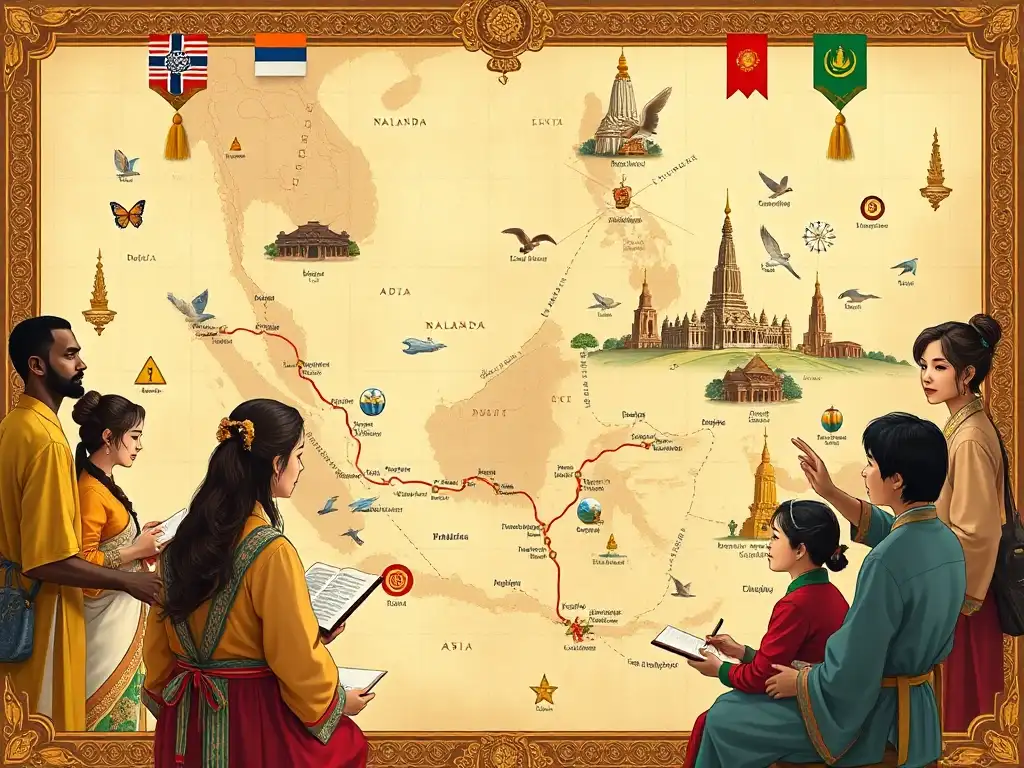
The influence of ancient Indian scholars on Southeast Asia is profound, particularly in the realm of education. As Indian civilization evolved, it not only flourished at home but also extended its intellectual reach to neighboring regions. This dissemination of knowledge was facilitated through various means, including trade routes, the establishment of temples and monasteries, and the linguistic impact of Sanskrit.
Trade Routes as Catalysts for Knowledge Exchange
The maritime and overland trade routes that connected India with Southeast Asia were pivotal in the exchange of not just goods but also ideas and educational practices.
- Maritime Trade: The Indian Ocean trade network, which flourished from around the 1st century CE, allowed for the movement of scholars, traders, and ideas. Ports such as those in present-day Indonesia, Malaysia, and Vietnam became melting pots of cultures. Indian merchants played a crucial role in introducing educational concepts and texts to these regions.
- Silk Road Influence: The overland Silk Road connected the Indian subcontinent with regions as far as China and the Middle East, allowing for the transfer of knowledge and learning practices. Indian scholars traveled these routes, sharing their insights on mathematics, astronomy, and philosophy.
The result of this extensive network was a rich cultural tapestry where Indian educational practices were integrated with local traditions, leading to the establishment of early educational institutions in places like Java and Sumatra.
The Role of Temples and Monasteries in Education
Temples and monasteries served as essential centers of learning in ancient Southeast Asia. They were not only places of worship but also hubs for intellectual exchange and education.
- Buddhist Monasteries: The spread of Buddhism from India to Southeast Asia brought along a structured educational framework. Monasteries became repositories of knowledge where monks studied and taught various subjects, including philosophy, medicine, and literature. Notable examples include the famous Nalanda University, whose teachings influenced many Southeast Asian monastic institutions.
- Hindu Temples: Similarly, Hindu temples played a significant role in promoting education. They often housed scholars who would teach Sanskrit and other subjects. Temples like those in Cambodia and Indonesia served as crucial sites for disseminating Indian educational practices, including the writing of texts and conducting rituals that emphasized learning.
These religious institutions not only preserved knowledge but also adapted it to fit local cultural contexts, ensuring a lasting legacy of Indian educational influence.
Influence of Sanskrit and Local Languages
The linguistic impact of ancient Indian scholars on Southeast Asia cannot be overstated. Sanskrit, as the language of administration and scholarship in ancient India, left an indelible mark on the languages of Southeast Asia.
- Sanskrit as a Lingua Franca: Sanskrit was used in religious texts and inscriptions across Southeast Asia, often serving as a lingua franca among the educated elite. This facilitated not only the spread of Indian religious and philosophical ideas but also educational methodologies.
- Integration with Local Languages: Over time, many Southeast Asian languages absorbed Sanskrit vocabulary, particularly in the fields of literature, science, and governance. For example, the Indonesian language incorporates numerous Sanskrit terms, reflecting the deep educational ties established during this period.
The blending of Sanskrit with local languages enriched the linguistic landscape of Southeast Asia, fostering a unique educational environment that combined Indian scholarly traditions with indigenous knowledge systems.
The influence of ancient Indian scholars on Southeast Asian education is a testament to the dynamic cultural exchanges that shaped the region. Through trade routes, religious institutions, and linguistic integration, the legacy of Indian educational practices endures, highlighting a significant chapter in the history of Southeast Asia.
The Impact of Indian Philosophical Thought on Southeast Asian Education

Introduction of Indian Philosophy and Its Implications
The arrival of Indian philosophical thought in Southeast Asia marked a significant turning point in the region's educational landscape. The foundations of this influence can be traced back to the early centuries CE when trade routes facilitated the exchange of ideas, culture, and religion between India and Southeast Asian kingdoms. Prominent philosophies such as Vedanta, Buddhism, and Jainism permeated the cultural fabric of Southeast Asia, leading to profound implications for local educational systems.
Indian scholars, particularly those versed in Buddhist and Hindu philosophies, traveled to regions like Java, Sumatra, and the Malay Peninsula. These scholars introduced a system of education that emphasized moral values, spiritual development, and intellectual inquiry. This approach encouraged critical thinking and a holistic understanding of life, which resonated deeply with the local populations.
As a result, local rulers began to adopt and adapt these philosophies, incorporating them into governance and education. This integration fostered a culture of learning that emphasized the importance of knowledge as a means to achieve both personal enlightenment and societal harmony.
Integration of Hindu and Buddhist Teachings
The synthesis of Hindu and Buddhist teachings played a pivotal role in shaping educational practices in Southeast Asia. Both religions brought with them distinct philosophies that prioritized the pursuit of knowledge, ethical conduct, and the development of the self.
- Hindu Influence: The introduction of Hindu texts, such as the Vedas and Upanishads, established a framework for understanding the cosmos, morality, and the nature of reality. These texts laid the groundwork for subjects such as mathematics, astronomy, and metaphysics within educational institutions. Hindu temples often served as centers of learning, where students studied under the guidance of learned scholars.
- Buddhist Contribution: Conversely, Buddhism introduced principles of compassion, mindfulness, and the quest for enlightenment. The teachings of the Buddha emphasized experiential learning and introspection, leading to the establishment of monasteries as educational hubs. These monasteries not only provided spiritual guidance but also became centers for the study of philosophy, medicine, and the arts.
The blend of these two powerful traditions resulted in a rich tapestry of educational practices, which encouraged students to explore diverse subjects ranging from literature to science, all while fostering a sense of ethical responsibility and spiritual growth.
Influence on Southeast Asian Educational Systems and Structures
The influence of ancient Indian scholars on Southeast Asian educational systems is evident in various aspects of their educational structures.
- Curriculum Development:
- The incorporation of Indian philosophical texts and religious teachings into local curricula laid the groundwork for a comprehensive education that emphasized both practical skills and spiritual growth.
- Subjects such as philosophy, literature, and the sciences became fundamental components of education, reflecting the holistic approach to learning promoted by Indian scholars.
- Establishment of Learning Institutions:
- Prominent educational institutions, such as the Nagarjuna University in India, inspired the creation of similar centers in Southeast Asia, like the Nalanda University and Tamralipta. These institutions attracted students from across the region, fostering an environment of scholarly exchange and collaboration.
- Additionally, local rulers established schools and universities modeled after Indian systems, further institutionalizing the educational framework introduced by Indian scholars.
- Pedagogical Techniques:
- Indian pedagogical techniques, including the use of dialogues and debates as methods of instruction, were adopted by Southeast Asian educators. This approach encouraged active participation and critical thinking among students, moving away from rote memorization.
- The emphasis on discussion and discourse in the classroom reflected the Indian philosophical tradition, enabling students to engage deeply with complex ideas and concepts.
The impact of ancient Indian scholars on Southeast Asian education is profound and multifaceted. By integrating Indian philosophical thought and teachings, Southeast Asia developed a rich and diverse educational landscape that emphasized ethical development, intellectual inquiry, and spiritual growth. This legacy continues to influence educational practices in the region today, highlighting the enduring significance of ancient Indian scholarly contributions.
Case Studies of Ancient Indian Influence in Southeast Asian Kingdoms
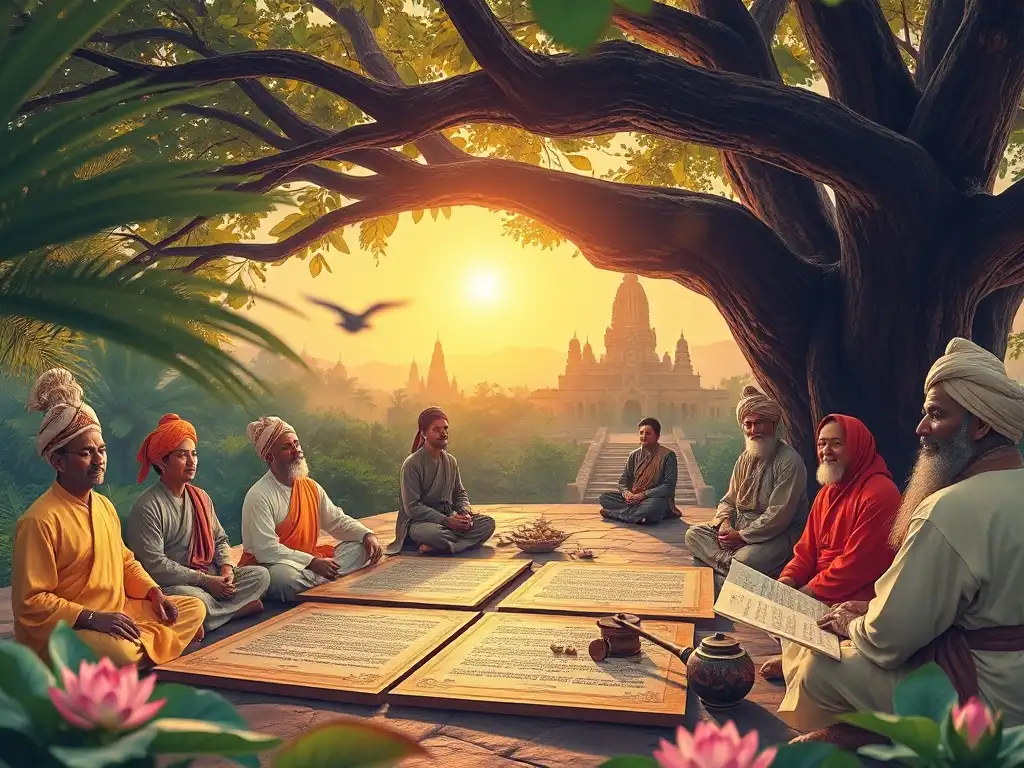
The Khmer Empire: Adoption of Indian Knowledge
The Khmer Empire, which flourished from the 9th to the 15th centuries in what is now Cambodia, is a prime example of the extensive influence of ancient Indian scholars on Southeast Asian cultures. This empire adopted various aspects of Indian civilization, including religion, art, and governance, greatly enriching its own cultural landscape.
Political and Administrative Systems
The political framework of the Khmer Empire was heavily influenced by Indian models. The concept of kingship in the Khmer Empire mirrored the Indian notion of Devaraja, or "God-King." Kings were viewed as divine figures, which legitimized their rule and authority. This divine aspect was crucial in solidifying the monarch's power and facilitating effective governance.
Religious Syncretism
The Khmer Empire was notable for its adoption of Hinduism and later, Buddhism, both of which were transmitted by Indian scholars. Temples such as Angkor Wat showcase the intricate carvings and architectural styles inspired by Indian motifs. The synergy between Hindu and Buddhist beliefs led to a unique spiritual landscape, with Indian texts, rituals, and philosophies being integrated into local practices.
Cultural Achievements
The influence of ancient Indian scholars is evident in the artistic achievements of the Khmer. The empire produced exquisite sculptures and bas-reliefs that depict scenes from Hindu epics like the Ramayana. These works not only demonstrate the technical prowess of Khmer artisans but also reflect the deep cultural ties with India.
Srivijaya: A Hub of Indian Learning
The Srivijaya Empire, which thrived from the 7th to the 13th centuries, was strategically located in present-day Indonesia and served as a significant maritime trade hub. It played a pivotal role in fostering the spread of Indian knowledge and culture throughout Southeast Asia.
Educational Institutions
Srivijaya became known for its centers of learning, where Indian scholars taught subjects such as philosophy, medicine, and astrology. The Buddhist monastery of Nalanda in India had exchanges with Srivijaya, allowing for the flow of knowledge and ideas. This educational exchange contributed to the development of a learned elite within the empire.
Influence on Trade and Culture
The thriving trade networks established by Srivijaya attracted Indian merchants, who brought not only goods but also cultural practices. The exchange of ideas led to the dissemination of Indian literature and philosophy, which were embraced by local scholars. This cultural amalgamation enriched the local traditions and created a vibrant intellectual environment.
Maritime Influence
The maritime prowess of Srivijaya facilitated connections with various regions, allowing Indian scholars to influence multiple cultures across Southeast Asia. The empire's significance as a naval power ensured that Indian cultural and educational practices spread widely, shaping the intellectual landscape of the region.
The Role of Indian Scholars in the Spread of Buddhism
Indian scholars played a crucial role in the propagation of Buddhism across Southeast Asia, significantly impacting the region's spiritual and cultural development.
Early Missionaries
Buddhism began to spread to Southeast Asia around the 3rd century BCE, largely due to the efforts of Indian missionaries. Scholars like Mahinda, who was sent by Emperor Ashoka, were instrumental in establishing Buddhist communities and educational centers. These early efforts laid the groundwork for Buddhism to flourish in countries like Thailand, Myanmar, and Indonesia.
Textual Transmission
The translation of Indian Buddhist texts into local languages was pivotal in making Buddhist teachings accessible. Indian scholars authored commentaries and treatises that were disseminated throughout Southeast Asia, contributing to a deeper understanding of Buddhist philosophy.
Cultural Integration
As Buddhism took root in Southeast Asia, Indian scholars helped to integrate Indian cultural elements into local practices. Festivals, rituals, and monastic practices were influenced by Indian traditions, creating a rich tapestry of beliefs that blended both local and Indian elements.
Conclusion
The influence of ancient Indian scholars on Southeast Asia is profound and multifaceted. From the Khmer Empire's adoption of Indian political systems to Srivijaya's role as a center of learning and the spread of Buddhism, the contributions of these scholars have left an indelible mark on the history and culture of Southeast Asia. Their legacy continues to resonate in the region's educational and spiritual practices today.
Legacy of Ancient Indian Scholars in Modern Southeast Asian Education

The legacy of ancient Indian scholars has profoundly shaped the educational landscape of Southeast Asia. From the early days of trade and cultural exchanges, Indian scholars introduced a variety of concepts, philosophies, and educational methodologies that have been integrated into the region's educational systems. This legacy continues to resonate in the modern context, influencing both curricula and pedagogical approaches in Southeast Asian countries.
Continuity of Indian Educational Practices
The educational practices established by ancient Indian scholars, particularly during the Gupta Empire, laid the groundwork for learning in Southeast Asia. Key features of these practices include:
- Gurukul System: The traditional Indian educational model emphasized close student-teacher relationships, where students lived with their teachers (gurus) and received personalized instruction. This model was adopted and adapted in Southeast Asia, fostering a similar respect for teachers and holistic education.
- Curriculum Focus: Ancient Indian scholars emphasized a wide-ranging curriculum that included subjects like mathematics, astronomy, philosophy, and literature. This broad educational scope influenced the curricula of institutions in Southeast Asia, leading to the establishment of comprehensive educational systems that addressed various fields of knowledge.
- Oral Tradition and Textual Study: The reliance on oral transmission of knowledge alongside written texts was another significant aspect. Southeast Asian education incorporated both oral teachings and written scriptures, ensuring the preservation and transmission of knowledge across generations.
In essence, the continuity of these educational practices has allowed Southeast Asia to maintain a connection to its ancient Indian heritage, shaping both its academic structures and cultural values.
Influence on Contemporary Southeast Asian Universities
Modern Southeast Asian universities continue to reflect the influence of ancient Indian scholarship through their curricula, research initiatives, and academic collaborations. Notable aspects include:
- Integration of Indian Philosophies: Many universities in Southeast Asia incorporate Indian philosophies, such as Buddhism and Hinduism, into their religious studies and philosophy departments, fostering a deeper understanding of the region's cultural roots.
- Language and Literature Programs: Programs focusing on Sanskrit and classical Indian literature are prevalent in several universities, facilitating the study of ancient texts and their relevance to contemporary issues.
- Research Collaborations: Universities actively engage in research partnerships with Indian institutions, promoting academic exchanges that emphasize the shared historical ties and knowledge systems. This collaboration often leads to joint research projects, conferences, and publications that address both historical and modern challenges.
These influences not only enrich the academic environment but also enhance the global perspective of Southeast Asian universities, positioning them as centers of knowledge that draw from a diverse intellectual heritage.
Preservation of Ancient Indian Knowledge in Modern Curriculum
The preservation of ancient Indian knowledge in modern Southeast Asian curricula is evident in various educational frameworks. Key elements include:
- Incorporation of Classical Texts: Educational institutions often include classical Indian texts, such as the Vedas and Upanishads, in their curricula, emphasizing their philosophical and cultural significance.
- Cultural Festivals and Academic Conferences: Many universities organize cultural festivals and academic conferences that celebrate ancient Indian contributions to science, mathematics, and the arts, fostering a sense of continuity and appreciation for this shared heritage.
- Interdisciplinary Studies: Programs that combine history, anthropology, and cultural studies often highlight the influence of ancient Indian scholars on Southeast Asian societies, encouraging students to explore the interconnectedness of knowledge across regions.
Through these efforts, Southeast Asian educational institutions not only honor the contributions of ancient Indian scholars but also ensure that their wisdom continues to enlighten future generations. The integration of ancient knowledge into modern education reflects a commitment to preserving cultural heritage while adapting to contemporary educational needs.
Conclusion: The Lasting Impact of Ancient Indian Scholars on Southeast Asian Education
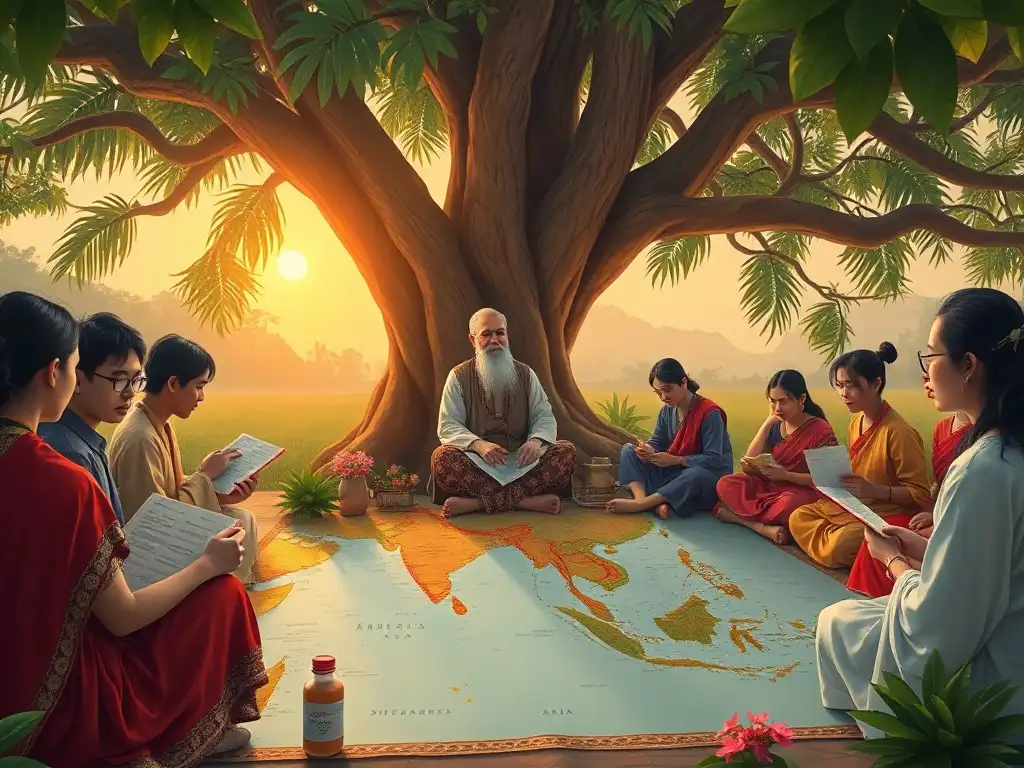
Summary of Contributions
The influence of ancient Indian scholars on Southeast Asian education and knowledge is profound and multifaceted. Key contributions include:
- Buddhism and Hinduism: The transmission of religious texts and philosophies significantly shaped the spiritual landscape of Southeast Asia. Scholars like Vasubandhu and Nagarjuna provided foundational texts that were pivotal in the establishment of Buddhist education systems in countries such as Thailand and Cambodia.
- Language and Literature: Ancient Indian scholars introduced Sanskrit and Pali to Southeast Asia, which became integral to the region's literary and educational traditions. For example, the Kawi script, derived from Sanskrit, was a cornerstone of Javanese literature.
- Mathematics and Astronomy: The mathematical concepts and astronomical knowledge brought by scholars like Aryabhata influenced local practices. The adoption of the zero and advancements in astronomy were particularly evident in the maritime navigation techniques of Southeast Asian traders.
- Architecture and Urban Planning: Scholars influenced the architectural styles of Southeast Asian temples, most notably the Angkor Wat in Cambodia, which showcases Indian architectural principles merged with local aesthetics.
This rich tapestry of contributions reflects a significant transfer of knowledge that reshaped the educational landscapes of various Southeast Asian nations.
Reflection on Cultural Exchange and Knowledge Transfer
The cultural exchange between ancient India and Southeast Asia was not a one-way street; it was characterized by reciprocity and adaptation. Ancient Indian scholars acted as conduits of knowledge, but they also absorbed and transformed local traditions.
- Adaptation of Indian Epics: The Ramayana and Mahabharata were not merely copied; they were adapted to reflect local cultures and values. This adaptation created a unique Southeast Asian narrative tradition that resonated deeply with local populations.
- Integration of Indigenous Knowledge: Indian scholars often integrated indigenous knowledge systems into their teachings. For instance, local medicinal practices and agricultural techniques were blended with Ayurvedic principles, resulting in a holistic approach to health and farming.
- Trade and Interaction: The vibrant trade routes facilitated not just the exchange of goods but also ideas. Scholars traveled with merchants, establishing networks that fostered a dynamic flow of knowledge across the region.
This continuous interaction fostered a rich educational environment, leading to the establishment of institutions such as Nalanda and Taxila, which attracted students from far and wide, including Southeast Asia.
Future of Research on Ancient Indian Influence in Southeast Asia
As scholars continue to explore the historical ties between ancient India and Southeast Asia, several avenues for future research emerge:
- Archaeological Studies: Ongoing excavations in regions like Bali and Java may uncover artifacts that provide deeper insights into the cultural exchanges that occurred.
- Linguistic Analysis: The study of ancient texts and inscriptions can reveal how languages evolved under Indian influence, offering clues to the extent of cultural integration.
- Comparative Studies: Researchers can benefit from comparative studies of educational systems influenced by Indian scholars across different Southeast Asian nations to understand the unique adaptations and impacts in each context.
- Interdisciplinary Approaches: Combining history, anthropology, and cultural studies will yield a more comprehensive understanding of the influence of ancient Indian scholars on Southeast Asian education and knowledge.
The legacy of ancient Indian scholars is not only evident in historical texts but continues to resonate in contemporary Southeast Asian cultures. The exploration of this influence is crucial for understanding the region's past and its ongoing cultural evolution.
Frequently Asked Questions
What were the main contributions of ancient Indian scholars to Southeast Asia?
Ancient Indian scholars contributed significantly to education, religion, and philosophy in Southeast Asia, influencing local cultures and practices through texts and intellectual exchange.
How did the spread of Hinduism and Buddhism influence Southeast Asia?
The spread of Hinduism and Buddhism, facilitated by Indian scholars, resulted in the establishment of religious institutions, art, and architecture that shaped the cultural landscape of Southeast Asia.
What role did trade play in the exchange of knowledge between India and Southeast Asia?
Trade routes enabled not just the exchange of goods but also the movement of ideas and scholars, fostering a rich environment for learning and cultural integration between the regions.
Can you name some famous Indian scholars who impacted Southeast Asian education?
Notable figures like Aryabhata and Vātsyāyana inspired educational systems in Southeast Asia, promoting advancements in mathematics and astronomy that were adopted and adapted by local scholars.
How did ancient Indian texts affect the education systems in Southeast Asia?
Ancient Indian texts, such as the Vedas and Brahmanas, were translated and integrated into local curricula, providing a foundation for learning in various fields, including literature, science, and philosophy.
Final Reflection: The Enduring Legacy of Ancient Indian Scholars in Southeast Asia
The contributions of ancient Indian scholars to Southeast Asian education and knowledge remain profoundly relevant today, as their influence continues to shape the cultural and intellectual landscape of the region. In an era where globalization often overshadows local traditions, recognizing the foundational role these scholars played in the development of educational systems and philosophical thought is crucial. Their insights and teachings not only enriched Southeast Asian societies but also fostered a spirit of inquiry and intellectual exchange that resonates even in contemporary discourse.
The impact of ancient Indian scholarship is evident in the rich tapestry of Southeast Asian culture, where languages, religions, and educational practices intertwine. This enduring legacy serves as a reminder of the interconnectedness of human knowledge across borders. As we reflect on this historical relationship, we are reminded of the words of the renowned scholar, Rabindranath Tagore: The highest education is that which does not merely give us information but makes our life in harmony with all existence.
This sentiment encapsulates the essence of what ancient Indian scholars aimed to achieve—an education that harmonizes knowledge with the broader human experience.
As we look to the future, let us embrace the lessons imparted by these ancient thinkers and strive to cultivate a spirit of collaboration and mutual respect in our own educational endeavors. Consider how you can integrate the wisdom of the past into your learning journey, fostering a deeper understanding of the world around you. By doing so, we honor the legacy of ancient Indian scholars and ensure that their contributions continue to inspire generations to come.
Embrace the Wisdom of Ancient India!
Thank you for joining us on this enlightening journey through the contributions of ancient Indian scholars to Southeast Asian education and knowledge. We hope you found inspiration in their rich legacy and how it continues to influence today's learning.
Now, it's time to take your newfound understanding a step further! Here are a few actions you can take:
- Dive deeper into the world of ancient texts by exploring a significant work from a renowned ancient Indian scholar. Share your insights with friends or in a reading group!
- Discuss the impact of these scholars on modern educational strategies. Engage with your community by hosting a discussion circle on this fascinating topic.
- Spread the knowledge! Share this article on social media or with someone who would appreciate learning about the historical connections in education.
What aspect of ancient Indian scholarship inspires you the most, and how do you see it influencing education today?