
The Language of Power: How Kings Used Inscriptions to Cement Their Rule

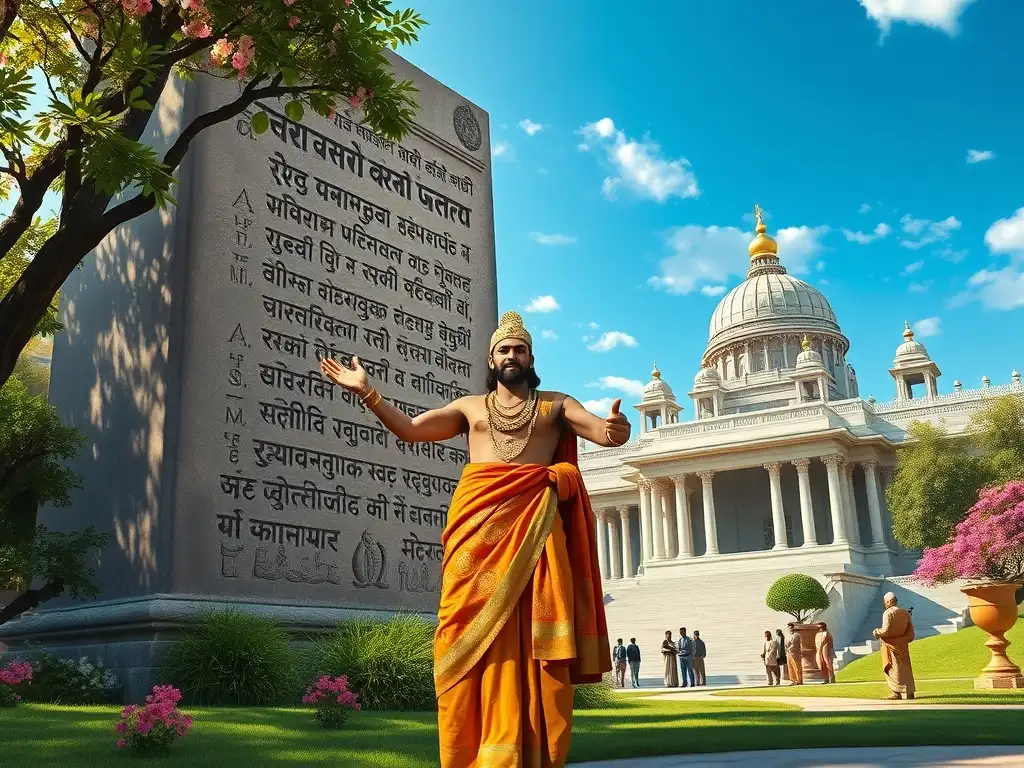
Welcome to Ancient India History, where we embark on a fascinating journey through the rich tapestry of India’s past! Here, you'll uncover the secrets hidden in stone as we delve into the compelling world of ancient Indian inscriptions history. In our featured article, "The Language of Power: How Kings Used Inscriptions to Cement Their Rule," we explore how these inscriptions were not just mere markings, but powerful tools of governance and cultural identity that shaped the destinies of empires.
Are you ready to unlock the mysteries of the written word that once echoed through the halls of ancient palaces? Dive in and let the story of India's remarkable civilizations unfold before you!
Introduction to Ancient Indian Inscriptions History
The history of ancient Indian inscriptions is a fascinating journey through time, revealing how rulers utilized written language as a powerful tool to establish and maintain their authority. Inscriptions, carved into stone, metal, and other durable materials, served multiple purposes ranging from the declaration of royal decrees to the commemoration of victories and territorial expansions. These artifacts not only provide insight into the political landscape of ancient India but also reflect the cultural, religious, and social dynamics of the time.
From the early Indus Valley Civilization to the illustrious Gupta Empire, inscriptions played a pivotal role in the governance and administration of various kingdoms. They were instrumental in communicating the ruler’s intentions and fostering a sense of legitimacy among the populace. By analyzing these ancient texts, historians and archaeologists can reconstruct narratives of power that shaped the subcontinent's history.
This article delves into the intricate relationship between kingship and inscriptions, examining how these written records helped cement the rulers' legacies and influence throughout ancient India.
The Significance of Inscriptions in Ancient Indian Rule
Inscriptions held a profound significance in the realm of ancient Indian politics and culture. They served as a means of communication that transcended the spoken word, ensuring that the messages of kings were preserved for posterity. Below are some key aspects that highlight the importance of inscriptions in ancient Indian rule:
- Legitimization of Authority:
- Rulers often inscribed their edicts to affirm their divine right to rule, linking their governance to religious beliefs.
- Inscriptions were employed to announce royal lineage and accomplishments, reinforcing the legitimacy of the monarch's position.
- Documentation of Laws and Policies:
- Many inscriptions detailed laws, regulations, and administrative policies, providing a record of governance that could be referenced in the future.
- They served to inform the subjects of their rights and duties, fostering a sense of order and structure within society.
- Commemoration of Achievements:
- Inscriptions often celebrated military victories, construction projects, and public works, ensuring that the ruler's successes were remembered.
- Such records contributed to the king's legacy, allowing future generations to recognize and honor their contributions.
- Cultural and Religious Influence:
- Many inscriptions were dedicated to deities or religious events, reflecting the intertwining of religion and governance in ancient India.
- They played a crucial role in promoting cultural narratives and values, shaping the social fabric of the time.
By examining these facets, we can gain a clearer understanding of how inscriptions were not merely decorative elements but rather essential instruments of power in ancient Indian history. Their enduring presence continues to intrigue scholars and enthusiasts alike, as they unravel the complexities of a civilization that profoundly influenced the world.
- Introduction to Ancient Indian Inscriptions History
- The Significance of Inscriptions in Ancient Indian Rule
Understanding Ancient Indian Inscriptions
Definition and Purpose of Inscriptions
Ancient Indian inscriptions are textual records carved or inscribed on durable materials such as stone, metal, and clay. These inscriptions served various purposes, acting as vital historical documents that provide insight into the socio-political, religious, and economic aspects of ancient Indian civilizations.
The primary purposes of these inscriptions include:
- Commemoration: Many inscriptions were created to honor significant events, such as victories in battles or the establishment of new cities. For instance, the Ashoka Edicts commemorate Emperor Ashoka’s conversion to Buddhism and his efforts to promote moral governance.
- Legal Documentation: Inscriptions often served as formal records for legal matters, such as land grants or treaties. The Brahmi inscriptions found in the Indus Valley provide evidence of land ownership and transactions.
- Religious Significance: Numerous inscriptions are dedicated to deities or commemorate religious events. The temple inscriptions offer insights into the patronage of temples and the religious practices of the time.
- Political Propaganda: Kings utilized inscriptions to propagate their authority and legitimacy. This is evident in the inscriptions of the Gupta Empire, where rulers claimed divine right and lineage through their inscriptions.
Ancient Indian inscriptions are not merely artifacts; they encapsulate the essence of governance, culture, and the religious ethos of the time, making them indispensable to the study of ancient Indian history.
Overview of Key Languages Used in Inscriptions
Ancient Indian inscriptions were composed in several languages, reflecting the diverse linguistic landscape of the subcontinent. The most prominent languages used include:
- Sanskrit:
- The classical language of ancient India, Sanskrit was widely used in religious, literary, and administrative inscriptions. The Gupta period saw an extensive use of Sanskrit in inscriptions, often celebrating the accomplishments of rulers and their divine connections.
- Prakrit:
- A vernacular language closely associated with the common people, Prakrit was often used in inscriptions aimed at local populations. The Ashoka Edicts are a notable example where Prakrit was employed to communicate moral and ethical codes to the masses.
- Brahmi:
- One of the earliest scripts used in ancient India, Brahmi inscriptions date back to the 3rd century BCE. The script has been pivotal in deciphering ancient Indian history, as it was used for various languages, including Sanskrit and Prakrit.
- Kharosthi:
- Predominantly used in the northwestern regions of India, Kharosthi inscriptions provide critical insights into the administrative and commercial practices of the time. This script was primarily utilized for Buddhist texts and inscriptions.
- Tamil:
- Inscriptions in Tamil date back to the early Chola and Pandya dynasties, showcasing the rich literary and cultural heritage of southern India. The Tamil-Brahmi script is an essential link in understanding the evolution of the Tamil language.
| Language | Script | Historical Context |
|---|---|---|
| Sanskrit | Devanagari | Used extensively during the Gupta Empire |
| Prakrit | Brahmi | Communicated moral codes in the Ashoka Edicts |
| Brahmi | Brahmi | Early script crucial to deciphering history |
| Kharosthi | Kharosthi | Used in the northwestern regions for Buddhism |
| Tamil | Tamil-Brahmi | Rich literary heritage in southern India |
The languages and scripts utilized in ancient Indian inscriptions are fundamental to understanding the region's complex history, culture, and governance. They not only provide clues about the political dynamics of ancient India but also illustrate the linguistic diversity that flourished over millennia.
Historical Context of Inscriptions in Ancient India
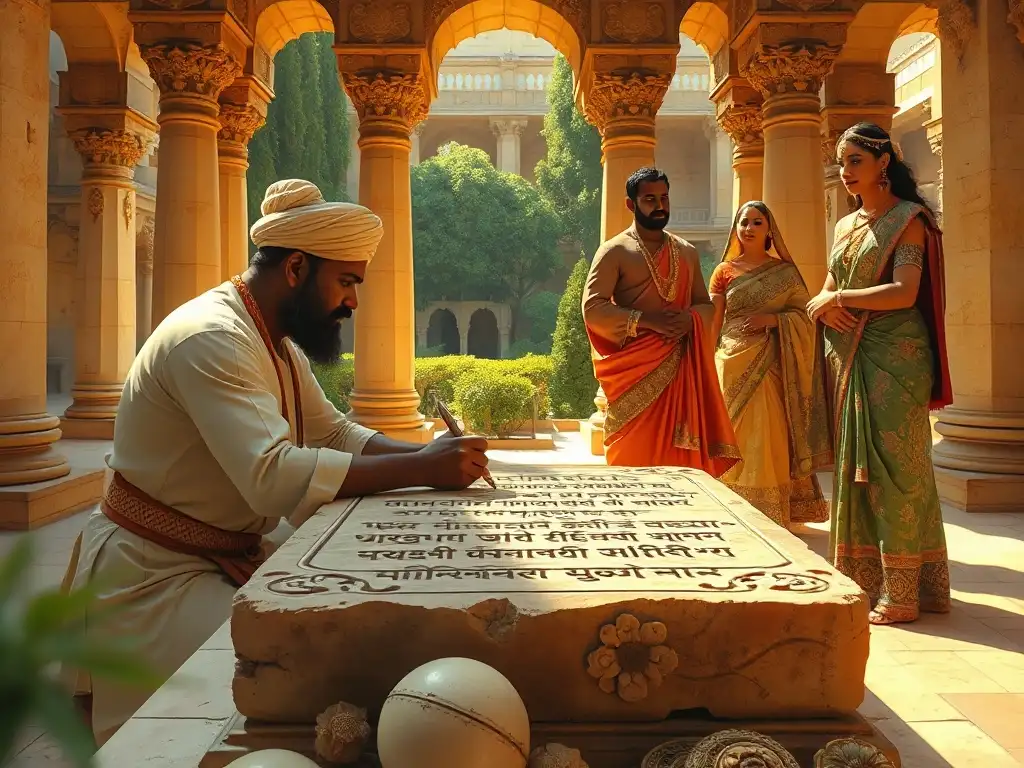
In ancient India, inscriptions played a crucial role in the political, religious, and cultural landscape of various civilizations. From the early scriptural forms found in the Indus Valley Civilization to the more elaborate edicts of the Mauryan and Gupta empires, inscriptions served as a primary medium through which rulers communicated their authority, intentions, and achievements. This form of written expression was not merely a tool for record-keeping; it was a powerful means of establishing legitimacy, promoting doctrines, and fostering unity among diverse populations.
The emergence of inscriptions can be traced back to around 2500 BCE with the Indus Valley Civilization, where seals and pottery featured early forms of script. As Indian society evolved, so did the complexity and purpose of inscriptions. By the time of the Mauryan Empire (circa 322–185 BCE), inscriptions became more formalized, often inscribed on stone pillars or edicts, marking significant events or proclaiming royal decrees.
The practice continued to flourish in subsequent dynasties, such as the Satavahanas, Kushanas, and finally the Guptas (circa 240–550 CE), who utilized inscriptions not only for administrative purposes but also to promote cultural and religious ideologies. For these rulers, inscriptions were a means of immortalizing their reigns, ensuring their legacies were preserved for future generations.
Timeline of Major Inscriptions from the Indus Valley to the Gupta Empire
| Period | Major Inscriptions | Description |
|---|---|---|
| Indus Valley (c. 2500–1900 BCE) | Indus Seals | Early script found on seals, possibly used for trade and identity. |
| Mauryan Empire (c. 322–185 BCE) | Edicts of Ashoka | Rock and pillar edicts promoting Dharma, social welfare, and moral governance. |
| Shunga Period (c. 185–73 BCE) | Inscriptions of the Shungas | Various inscriptions reflecting Buddhist patronage and political power. |
| Kushana Empire (c. 1–375 CE) | Inscriptions of Kanishka | Celebrated the spread of Buddhism and the king’s achievements. |
| Gupta Empire (c. 240–550 CE) | Allahabad Pillar Inscription | Commemorates Samudragupta’s conquests and patronage of arts. |
The timeline above highlights the significant milestones in the history of ancient Indian inscriptions, illustrating how they evolved alongside the civilizations that created them. Each inscription not only provides insights into the language and script of the time but also reveals the socio-political dynamics and cultural priorities of the respective eras.
The Role of Inscriptions in Different Dynasties
Inscriptions served various purposes across different dynasties in ancient India, reflecting the unique political and cultural contexts of each period.
- Mauryan Dynasty (322–185 BCE)
- The most notable inscriptions from this era are the Edicts of Ashoka, which are found carved into rocks and pillars throughout the Indian subcontinent. These inscriptions emphasized Ashoka's commitment to Dharma (moral law) and his efforts in promoting non-violence and welfare for his subjects, illustrating how inscriptions were used to solidify the ruler's moral authority.
- Shunga and Kanva Dynasties (185–30 BCE)
- During this period, inscriptions often reflected the revival of Brahmanical traditions and the promotion of Buddhism. Rulers used inscriptions to document their patronage of temples and Buddhist stupas, thereby reinforcing their divine right to rule and their roles as protectors of the faith.
- Kushana Empire (circa 1–375 CE)
- Inscriptions from this period, particularly those attributed to Kanishka, highlight the cultural syncretism that characterized the Kushana rule. These inscriptions often celebrated Buddhist ideals and integrated various cultural influences, showcasing the role of inscriptions in promoting religious tolerance and cultural exchange.
- Gupta Empire (240–550 CE)
- The Gupta period is often referred to as the "Golden Age" of ancient India, with inscriptions that celebrated the achievements of rulers like Samudragupta. The Allahabad Pillar inscription, for instance, details his military conquests and artistic patronage, using inscriptions as a tool to legitimize power and promote cultural advancements.
- Regional Dynasties
- Various regional powers also employed inscriptions to assert their authority and document local governance. For instance, the Chola and Chalukya dynasties used bronze and stone inscriptions to record temple donations and military victories, reinforcing their power and influence in specific locales.
Ancient Indian inscriptions played a multifaceted role in shaping the political, cultural, and religious landscapes of the time. Each dynasty utilized this powerful medium to reinforce their authority, document their accomplishments, and communicate their values, leaving a rich legacy that continues to inform our understanding of ancient Indian history.
Types of Inscriptions in Ancient India

In ancient India, inscriptions served as a vital means of communication, documentation, and expression for rulers and their administrations. These inscriptions, etched on stones, metal plates, and even pottery, convey essential information about governance, culture, and significant events. Understanding the various types of inscriptions provides insight into the dynamics of power and the role of language in ancient Indian history.
Royal Edicts and Their Impact on Governance
Royal edicts were formal proclamations issued by kings, often inscribed in public spaces to ensure visibility and accessibility. These inscriptions served multiple purposes:
- Legal Authority: Edicts articulated laws, regulations, and administrative orders, establishing the king's authority. For instance, the Ashoka Edicts, inscribed by Emperor Ashoka in the 3rd century BCE, emphasized moral governance and social welfare, advocating for dharma (righteousness) and non-violence.
- Policy Communication: Through royal edicts, kings communicated policies related to taxation, trade, and military matters. The Delhi Pillar Edicts of the Mauryan Empire, for example, addressed taxation policies and the importance of public welfare projects, such as irrigation and road construction.
- Public Engagement: These inscriptions were a way to engage the populace, as they often included messages aimed at educating citizens about their rights and responsibilities. By placing edicts in prominent locations, rulers ensured the dissemination of important information to the common people.
Royal edicts were not just practical tools of governance; they were also symbolic acts that reinforced the legitimacy of the ruler. The permanence of inscriptions contrasted with the transient nature of oral communication, thereby cementing the authority of the king in the public consciousness.
Religious Inscriptions and Their Cultural Significance
Religious inscriptions played a crucial role in shaping the spiritual landscape of ancient India. They often reflected the beliefs, practices, and patronage of various religious traditions, including Hinduism, Buddhism, and Jainism. Key aspects include:
- Dedications to Deities: Many inscriptions were dedicated to gods and goddesses, showcasing the devotion of rulers and the community. These inscriptions often accompanied temples and shrines, reinforcing the connection between governance and spirituality. For instance, the Buddhist rock edicts not only conveyed moral teachings but also expressed the emperor's patronage of Buddhism.
- Pilgrimage and Rituals: Inscriptions served to mark sacred sites and delineate pilgrimage routes, enhancing their significance. The inscriptions found at Sanchi Stupa detail the rituals associated with Buddhist practices, further solidifying the stupa's status as a pilgrimage center.
- Cultural Identity: Religious inscriptions reflect the cultural identity of communities and their historical narratives. They often record the lineage of rulers, significant events, and the contributions of local artisans. For example, the inscriptions at Khajuraho highlight not only the artistic achievements of the Chandela dynasty but also the religious tolerance and cultural syncretism prevalent during that period.
Through these religious inscriptions, one can trace the evolution of spiritual practices and the interplay between religion and politics in ancient India.
Commemorative Inscriptions: Celebrating Victories and Achievements
Commemorative inscriptions serve as historical records celebrating significant victories, achievements, and milestones of rulers and their empires. These inscriptions hold both historical and cultural value, illustrating the ideals of glory and legacy. Key features include:
- Military Victories: Many inscriptions commemorate military conquests, emphasizing the strength and valor of the king. The Allahabad Pillar Inscription of Samudragupta, for instance, extols his military campaigns and expansion of the Gupta Empire, illustrating the significance of warfare in establishing power.
- Civic Achievements: Inscriptions also celebrate civic accomplishments, such as the construction of infrastructure projects like roads, wells, and irrigation systems. These records not only highlight the ruler's commitment to public welfare but also serve as propaganda to enhance their reputation. The inscriptions from the Chola dynasty often lauded the construction of temples and public works, reinforcing the ruler's role as a benefactor.
- Cultural Legacy: Commemorative inscriptions reflect the values and aspirations of a society. They often incorporate poetic language and artistic expressions, contributing to the cultural heritage of the region. The Ajanta Caves inscriptions, for example, showcase the artistic and architectural achievements of the period, celebrating the confluence of religion and art.
Commemorative inscriptions thus serve as powerful reminders of the achievements of ancient Indian rulers, encapsulating their contributions to society and their enduring legacy in the annals of history.
Analyzing the Language of Power in Inscriptions
Linguistic Features of Ancient Indian Inscriptions
Ancient Indian inscriptions are a treasure trove of linguistic features that reveal the complexities of governance and societal structure during various dynasties. The language used in these inscriptions reflects the political, social, and cultural milieu of the time, serving not only as a record of events but also as a tool of power.
1. Use of Sanskrit and Prakrit
Most royal inscriptions were composed in Sanskrit, owing to its status as the language of the elite and scholars. However, Prakrit was also employed, especially in regions where it was the vernacular. This duality allowed rulers to communicate across different strata of society. For instance, the inscriptions of the Maurya and Gupta empires often featured Sanskrit, while local edicts might be found in Prakrit to ensure broader understanding among the populace.
2. Epigraphic Variations
The epigraphic styles varied significantly across regions and time periods. For example, the Brahmi script was predominant in the early inscriptions of the Mauryan period, whereas the Devanagari script became more common during the Gupta period. This evolution not only marks a chronological development but also reflects the shifting power dynamics and cultural exchanges between different regions.
3. Specialized Vocabulary
Royal inscriptions often employed a specialized vocabulary that conveyed authority and divine sanction. Terms like dharma (righteousness), raja (king), and maharaja (great king) were strategically used to project the ruler’s legitimacy. Additionally, phrases indicating divine favor, such as anugraha, were common, as they reinforced the notion that the king was chosen by the gods to rule.
Symbolism and Imagery in Royal Inscriptions
The visual aspects of ancient Indian inscriptions, such as symbolism and imagery, played a crucial role in conveying the power and divine right of kings. These elements added layers of meaning to the written text and served as powerful propaganda tools.
1. Iconography of Kingship
Many inscriptions feature specific symbols associated with kingship, such as the lion (symbolizing strength and courage) or the elephant (representing wisdom and power). The presence of these symbols in inscriptions was not merely decorative; they served to reinforce the king's authority and his connection to the divine. For example, the Ashoka Edicts prominently feature lions, emphasizing King Ashoka’s strength and imperial status.
2. Depictions of Deities
Inscriptions often included imagery of deities to signify the ruler’s divine endorsement. For instance, inscriptions from the Gupta period frequently depicted gods like Vishnu or Shiva, aligning the king’s rule with cosmic order and religious legitimacy. Such depictions were crucial for legitimizing the king's authority, as they suggested that the ruler was a protector of dharma, thus making rebellion against him tantamount to defiance against the divine.
3. Ceremonial Imagery
Ceremonial practices depicted in inscriptions also reflect the power dynamics of ancient Indian society. Inscriptions detailing royal ceremonies, such as coronations or sacrificial rituals, illustrate the king's role as a mediator between the divine and the earthly realms. These events were often inscribed on stone slabs or pillars, serving as permanent records of the king’s divine right to rule and his responsibilities towards his subjects.
By analyzing the linguistic features and symbolism in ancient Indian inscriptions, we gain insight into the multifaceted ways in which kings used written language to establish their rule and influence societal structures. The ancient Indian inscriptions history not only provides a glimpse into the past but also emphasizes the importance of language and imagery in the exercise of power.
Case Studies of Prominent Inscriptions
The Ashoka Edicts: A Model of Governance and Morality
The Ashoka Edicts, inscribed during the reign of Emperor Ashoka (circa 268-232 BCE), are among the most significant examples of ancient Indian inscriptions history. These edicts are a series of inscriptions carved on rocks and pillars across the Indian subcontinent, reflecting Ashoka's commitment to the principles of Dharma (righteousness) and his efforts to promote moral governance.
- Content and Purpose: The edicts encompass various themes, including ethical conduct, social welfare, and the promotion of Buddhist values, aiming to guide the populace towards a harmonious society. For instance, the Rock Edict I emphasizes the importance of non-violence, while Rock Edict XIII reflects Ashoka’s remorse over the Kalinga War, highlighting the need for compassion and peace.
- Linguistic Features: Written primarily in Brahmi script, the edicts exhibit a blend of formal and colloquial language, making them accessible to a broader audience. The use of local dialects in some edicts indicates Ashoka's intent to communicate directly with diverse communities, fostering a sense of unity and shared purpose.
- Impact on Governance: The edicts served as a tool for Ashoka to legitimize his rule, promoting his image as a benevolent ruler who prioritized the well-being of his subjects. This strategic use of inscriptions helped to solidify his power and influence, demonstrating how language can be wielded as a form of governance.
The Inscriptions of the Gupta Empire: Cultural and Historical Insights
The inscriptions from the Gupta Empire (circa 320-550 CE) provide a rich tapestry of cultural, political, and economic life during one of ancient India’s golden ages. These inscriptions are vital for understanding the social dynamics and administrative practices of the period.
- Diverse Themes: Gupta inscriptions cover a range of subjects, including royal decrees, land grants, and commemorations of victories. For example, the Mehrauli Inscription details a land grant to a Brahmin, showcasing the administrative practices of the empire and the role of religion in legitimizing authority.
- Artistic and Architectural Significance: Many inscriptions are accompanied by intricate carvings and artistic motifs, revealing the aesthetic sensibilities of the time. This reflects not only the technological advancements in stone carving but also the cultural emphasis on art as a medium of expression and power.
- Economic Insights: Inscriptions also provide insights into the economy, detailing trade practices, taxation, and the roles of various social classes. The Sarnath Pillar Inscriptions offer valuable information on trade routes and commercial activities, indicating the prosperity of the Gupta period.
- Legacy and Influence: The Gupta inscriptions have had a lasting impact on subsequent Indian dynasties, influencing their administrative practices and cultural expressions. By analyzing these texts, historians gain a deeper understanding of how inscriptions functioned as instruments of power and cultural continuity.
The study of ancient Indian inscriptions history through these case studies underscores the profound role that language and writing played in shaping governance, culture, and societal norms in ancient India. Each inscription serves as a window into the values and aspirations of its time, revealing the intricate relationship between power and communication.
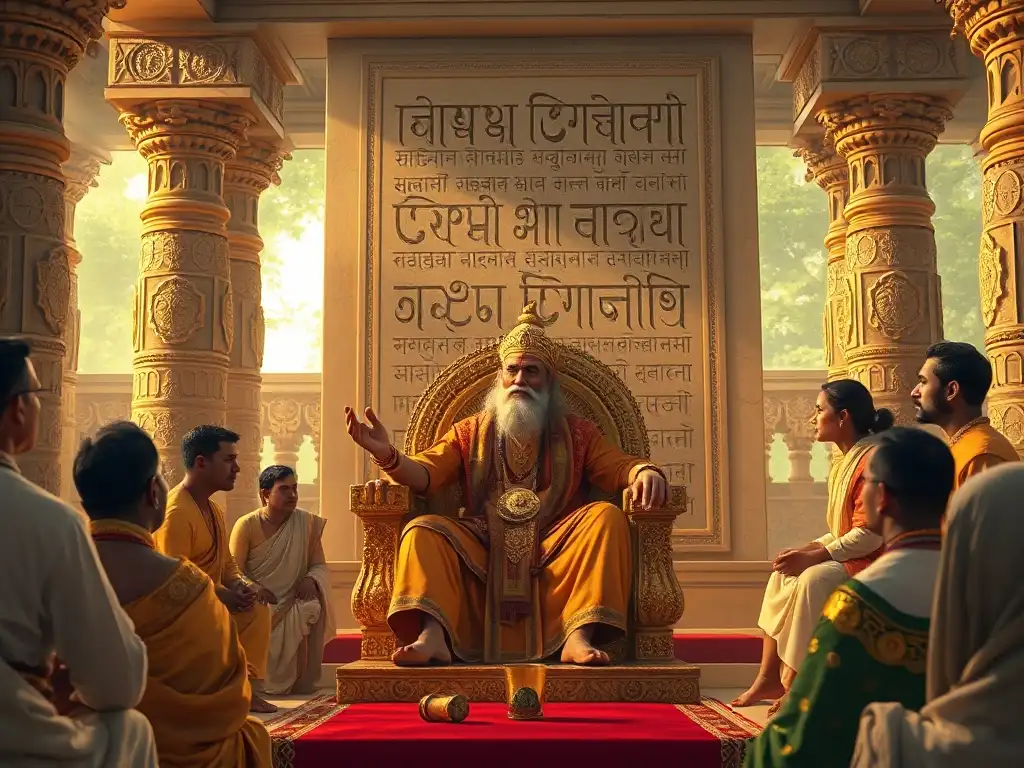
In ancient India, inscriptions served as a powerful tool for kings and rulers to establish and reinforce their authority. These inscriptions were not merely decorative; they were carefully crafted messages intended to communicate the ruler's achievements, divine right to rule, and commitment to their subjects. The strategic placement of these inscriptions in public spaces ensured that they reached a wide audience, reinforcing the king's presence in the daily lives of the populace.
Propaganda and Public Perception through Inscriptions
Inscriptions often acted as a form of propaganda, shaping public perception and fostering loyalty among subjects. Rulers frequently employed grand proclamations or edicts that highlighted their victories, divine blessings, and contributions to society. For example, the inscriptions from the Mauryan Emperor Ashoka are notable for promoting Buddhist values and his commitment to dharma (moral law). His edicts, inscribed on rocks and pillars, emphasized moral governance and social welfare, thus cultivating an image of a benevolent ruler.
- Key Techniques in Propaganda:
- Heroic Narratives: Inscriptions often recounted the king's heroic deeds in battle or governance, presenting them as larger-than-life figures.
- Divine Sanction: Many rulers claimed divine approval for their rule, often citing celestial omens or endorsements from deities.
- Promises of Prosperity: Inscriptions frequently contained promises of prosperity, justice, and protection, aimed at winning the hearts of the people.
By employing such techniques, inscriptions became instrumental in crafting a narrative that not only justified the ruler’s power but also engaged the public's support, creating a sense of unity and shared identity.
The presence of inscriptions also played a crucial role in establishing and maintaining social hierarchies within ancient Indian society. They often delineated the relationship between the ruler and various social classes, reinforcing the legitimacy of the king’s rule.
- Establishing Legitimacy:
- Record of Lineage: Many inscriptions detailed the lineage of the rulers, linking them to legendary figures or gods, thereby reinforcing their right to rule based on ancestry.
- Feudal Relationships: Inscriptions often mentioned important vassals or regional governors, illustrating the hierarchical structure of governance and the king's role as the supreme authority.
- Social Impact:
- Cultural Integration: By promoting local customs and integrating them into royal decrees, inscriptions helped in consolidating diverse cultures under a unified rule.
- Resource Allocation: Inscriptions sometimes specified land grants or tax exemptions for certain communities, thus solidifying loyalty among influential local leaders.
Through such mechanisms, inscriptions not only served as a record of power but also as a means to perpetuate social order and hierarchy, creating a complex interplay between authority, legitimacy, and community cohesion. Ultimately, the ancient Indian inscriptions history reveals how adept rulers were at using written word as a fundamental aspect of their governance, ensuring their legacy would endure through time.
Challenges in Deciphering Ancient Indian Inscriptions

The study of ancient Indian inscriptions is a complex field that presents numerous challenges to historians and archaeologists. These challenges stem from a variety of factors, including linguistic nuances, archaeological contexts, and preservation issues. Understanding these hurdles is essential for a comprehensive grasp of the ancient Indian inscriptions history.
Linguistic and Archaeological Hurdles
Deciphering ancient inscriptions often requires a deep understanding of the languages and dialects in which they were written. Many inscriptions are composed in languages that have evolved over time, such as Sanskrit, Prakrit, and Tamil. Each of these languages has its own regional variations and scripts, which can complicate the translation process.
- Script Variations: Ancient Indian inscriptions employ a range of scripts, including Brahmi, Kharosthi, and later scripts like Devanagari. Each script has distinct characteristics that require specialized knowledge to interpret properly.
- Dialectical Differences: Regional dialects can significantly alter the meaning of words and phrases. For instance, the same term might have different connotations in different regions, leading to potential misinterpretations.
- Limited Contextual Clues: Inscriptions often lack context, making it difficult to ascertain their intended meaning. Many inscriptions were created for specific audiences or purposes, which might not be clear to modern scholars.
Moreover, the archaeological context in which these inscriptions are found can influence their interpretation. Factors such as:
- Site Location: The geographical and cultural context of an inscription can provide critical insight into its meaning. For example, inscriptions found in temples may carry religious significance, while those in fortifications might relate to political power.
- Cultural Interactions: The influence of neighboring cultures can also affect language use and inscription practices. The presence of foreign trade or conquest might introduce new terms or scripts, complicating the deciphering process.
Preservation Issues and Their Impact on Historical Understanding
The condition of ancient inscriptions is a significant factor that affects their decipherability. Many inscriptions have been subjected to natural erosion, vandalism, or neglect over centuries, leading to partial or complete loss of text.
- Material Degradation: Inscriptions carved into stone may weather away due to environmental factors, while those on metal or wood can corrode or decay. This degradation can result in missing letters or entire sections of text, making it challenging to reconstruct the original message.
- Fragmentation: Many inscriptions exist only as fragments, which can complicate the interpretation process. Scholars often have to rely on comparative analysis with other inscriptions or historical records to fill in the gaps.
- Modern Interventions: Restoration efforts intended to preserve inscriptions can sometimes alter their original state, leading to further misunderstandings. The application of modern techniques may inadvertently obscure or misrepresent the original text.
The impact of these preservation issues extends beyond mere translation difficulties; they can also skew our understanding of ancient Indian civilizations. The loss of crucial inscriptions can lead to incomplete historical narratives, affecting our comprehension of political, cultural, and social dynamics of the time.
While ancient Indian inscriptions offer invaluable insights into the past, the challenges of linguistic diversity, archaeological context, and preservation must be navigated with care. Overcoming these hurdles is essential for unlocking the rich history embedded within these inscriptions and understanding their role in the governance and cultural expression of ancient Indian civilizations.
Conclusion: The Legacy of Ancient Indian Inscriptions
The legacy of ancient Indian inscriptions is profound, serving as a powerful testament to the intricate relationship between language, authority, and governance. These inscriptions not only provide insight into the socio-political landscapes of ancient India but also reflect the cultural and spiritual ethos of the time. By examining the ways in which inscriptions were utilized by rulers, we gain a deeper understanding of how language was strategically employed to legitimize power, convey divine right, and maintain social order.
Ancient Indian inscriptions have significantly influenced contemporary interpretations of power dynamics and authority. They reveal how kings and emperors framed their rule through eloquent proclamations, often invoking religious or cultural symbolism to reinforce their legitimacy. For instance, the Edicts of Ashoka are a prime example where Emperor Ashoka used inscriptions to propagate his policies of Dharma, emphasizing moral governance and social welfare. This practice of linking authority with ethical governance resonates in modern political discourse, where leaders often strive to project an image of moral integrity.
Through these inscriptions, scholars can trace the evolution of governance in ancient India, illustrating the transition from regional kingdoms to vast empires. The inscriptions also highlight the role of language as a tool of power, showcasing the importance of script and literacy in administration. As such, they serve as a critical resource for historians aiming to decode the complexities of ancient political systems and their impact on contemporary governance.
Future Directions in the Study of Ancient Indian Inscriptions History
The field of ancient Indian inscriptions history is ripe for exploration and innovation. As technological advancements continue to evolve, scholars can leverage digital tools for more effective analysis and preservation of these invaluable texts. Future research could focus on:
- Interdisciplinary Approaches: Collaborating with fields such as archaeology, anthropology, and linguistics to enrich the understanding of inscriptions within their broader cultural contexts.
- Digital Epigraphy: Utilizing software and digital imaging techniques to enhance the readability of inscriptions, especially those that are deteriorating or difficult to access.
- Comparative Studies: Examining inscriptions from different regions and periods to identify common themes and divergences in the representation of power, authority, and society.
The ongoing study of ancient Indian inscriptions not only sheds light on historical narratives but also opens avenues for dialogue about the enduring nature of power and authority in human societies. By engaging with these ancient texts, modern scholars can forge connections between past and present, ensuring that the lessons of history continue to inform contemporary discussions on governance and leadership.
Frequently Asked Questions
What are ancient Indian inscriptions?
Ancient Indian inscriptions are texts carved on stone, metal, or other materials that provide insights into the administrative practices, cultural norms, and historical events of ancient Indian civilizations.
Why were inscriptions important for kings in ancient India?
Kings used inscriptions to cement their rule by publicly declaring their achievements, divine right to rule, and administrative policies, which reinforced their authority and legitimacy among the populace.
What types of content can be found in ancient Indian inscriptions?
Ancient Indian inscriptions typically contain royal edicts, religious proclamations, donations, and historical records, reflecting the political, social, and cultural dynamics of the time.
How did ancient Indian inscriptions contribute to our understanding of history?
These inscriptions serve as primary sources that help historians piece together the political structures, cultural practices, and interactions of various ancient Indian civilizations, enriching our understanding of ancient Indian history.
Where can one find ancient Indian inscriptions today?
Many ancient Indian inscriptions can be found in archaeological sites, temples, and museums across India, preserved as crucial artifacts that shed light on the language, culture, and power dynamics of the time.
Final Reflection: The Enduring Legacy of Ancient Inscriptions
The exploration of ancient Indian inscriptions reveals their profound role in shaping power dynamics and governance throughout history. Today, as we navigate a world where communication remains a cornerstone of authority, the lessons from these inscriptions resonate more than ever. The ability to wield language as a tool of influence is not just a relic of the past; it is a vital skill that continues to define leadership and societal structures in contemporary times.
Cultural narratives and social hierarchies have long been influenced by the written word, and the inscriptions of ancient kings serve as a testament to this enduring truth. The power of these inscriptions lies not only in their historical significance but also in their ability to reflect the values and aspirations of a society. As noted by historian Romila Thapar, Inscriptions are not merely records; they are a dialogue between the past and the present, shaping our understanding of authority and identity.
This ongoing dialogue highlights the importance of recognizing how language can both empower and constrain, influencing the course of history and the lives of individuals.
As we reflect on the lessons drawn from the inscriptions of ancient India, I invite you to consider how language shapes your own world. How can you harness the power of words to inspire change, foster understanding, and build connections in your community? Embrace the legacy of those who came before us by using your voice to advocate for justice, inclusion, and empowerment. In doing so, you not only honor the past but also contribute to a future where the language of power is wielded with wisdom and compassion.
Unleash Your Curiosity: Explore the Power of Inscriptions!
Thank you for diving into the fascinating world of ancient kings and their powerful use of inscriptions. You've gained insights into how language shaped authority and reigns. Now, let's take this knowledge further and connect with the rich history that surrounds us!
Here’s how you can deepen your understanding and engagement:
- Delve into Local History: Visit a nearby museum or historical site to discover inscriptions. Capture photos of your discoveries and share them on social media to spark engaging conversations.
- Join the Conversation: Share your thoughts on how language influences power in today’s world in the comments below. Let’s exchange ideas and keep the dialogue alive!
- Read More: Explore additional articles on our website to uncover more secrets of ancient civilizations and their enduring legacies.
Which historical inscription do you believe had the most significant impact on societal power structures? We would love to hear your thoughts!