
How Persian Customs Influenced Indian Royal Courts

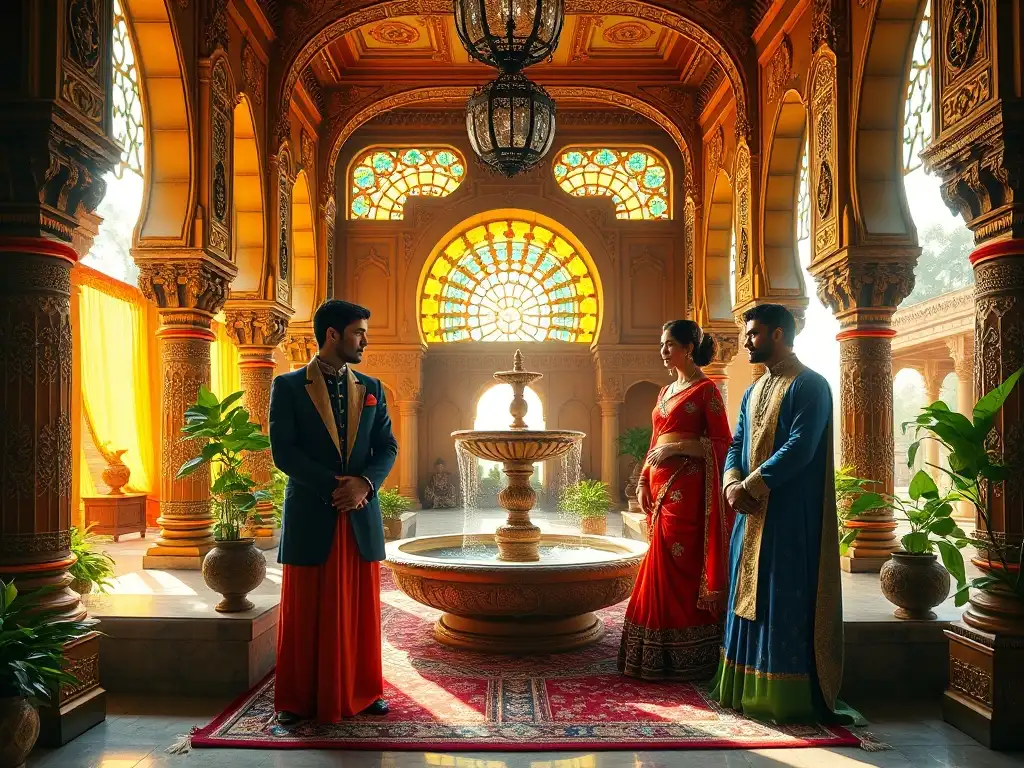
Welcome to Ancient India History, where we embark on a fascinating journey through the rich tapestry of India's past. As we explore the intricate web of cultural exchanges, this article delves into the captivating topic of the Persian influence on Indian royalty. Discover how the majestic customs and traditions from Persia shaped the royal courts of India, creating a unique blend of cultures that left an indelible mark on our heritage. Join us as we unravel the stories of interaction between civilizations, igniting your curiosity to learn more about the legacies that continue to resonate today.
- Introduction to Persian Influence on Indian Royalty
- Historical Context of Persian Influence
- Persian Customs and Their Adoption in Indian Royalty
- Language and Literature: The Persian Impact on Indian Royal Courts
- Religion and Philosophy: Persian Contributions to Indian Thought
- Case Studies of Persian Influence on Specific Indian Dynasties
- Legacy of Persian Influence on Modern Indian Culture
- Conclusion: The Enduring Impact of Persian Customs on Indian Royalty
- Frequently Asked Questions
- Final Reflection: The Enduring Legacy of Persian Influence on Indian Royalty
- Unveil the Tapestry of Cultural Exchange!
Introduction to Persian Influence on Indian Royalty
The history of ancient India is a tapestry woven with the threads of diverse cultures, traditions, and interactions with numerous civilizations. Among these, the profound influence of Persian customs on Indian royalty stands out as a significant chapter in the narrative of Indian history. This interaction, particularly during the periods of the Achaemenid Empire and later the Sassanian rule, has left an indelible mark on various aspects of Indian royal courts, including governance, art, architecture, and ceremonial practices.
Understanding the nuances of this influence not only enriches our knowledge of Indian history but also sheds light on the broader context of cultural exchanges that shaped the subcontinent's heritage. In this article, we will delve into the multifaceted Iranian impact on Indian royalty, exploring how Persian traditions were assimilated and adapted within the Indian context, ultimately creating a unique blend of cultural practices.
Overview of Indian-Persian Interactions
The interactions between Indian and Persian cultures date back to ancient times, with the initial connections established during the Achaemenid Empire (c. 550–330 BCE). Persian influence penetrated into the Indian subcontinent primarily through trade, diplomacy, and military conquests. Notable Persian rulers, such as Cyrus the Great and Darius I, extended their empires into regions of northwestern India, which facilitated cultural exchanges.
Key points of interaction include:
- Trade Relations: The establishment of trade routes between Persia and India facilitated economic exchanges that also promoted cultural interactions.
- Cultural Exchanges: The migration of traders and artisans led to a sharing of ideas, art forms, and architectural styles.
- Political Alliances: Marriages between Persian royalty and Indian kings helped solidify alliances, bringing Persian customs into Indian royal courts.
As a result, Persian art, literature, and administrative practices began to permeate Indian society, influencing local traditions and governance.
Importance of Persian Culture in Ancient India
The assimilation of Persian culture into Indian royal courts was not merely a matter of superficial adoption; it profoundly affected the political and cultural landscape of ancient India. Persian customs and practices were embraced for their sophistication and organizational efficiency, contributing to the evolution of Indian royalty.
Key aspects of Persian influence include:
- Administrative Practices: The adoption of Persian bureaucratic structures helped streamline governance in Indian states, promoting a more organized approach to administration.
- Art and Architecture: Persian styles influenced Indian architecture, leading to the development of unique structures that blended Persian aesthetics with local traditions. Notable examples include the Mausoleum of Humayun and the Taj Mahal.
- Literature and Language: Persian literature, particularly poetry, found a prominent place in Indian courts, with many Indian rulers becoming patrons of Persian poets and scholars. The Urdu language, which developed later, is a testament to this linguistic influence.
These elements illustrate how Persian customs not only enriched Indian culture but also transformed the very fabric of its royal courts, creating a legacy that resonates through history.
Historical Context of Persian Influence
The Achaemenid Empire and Its Reach in India
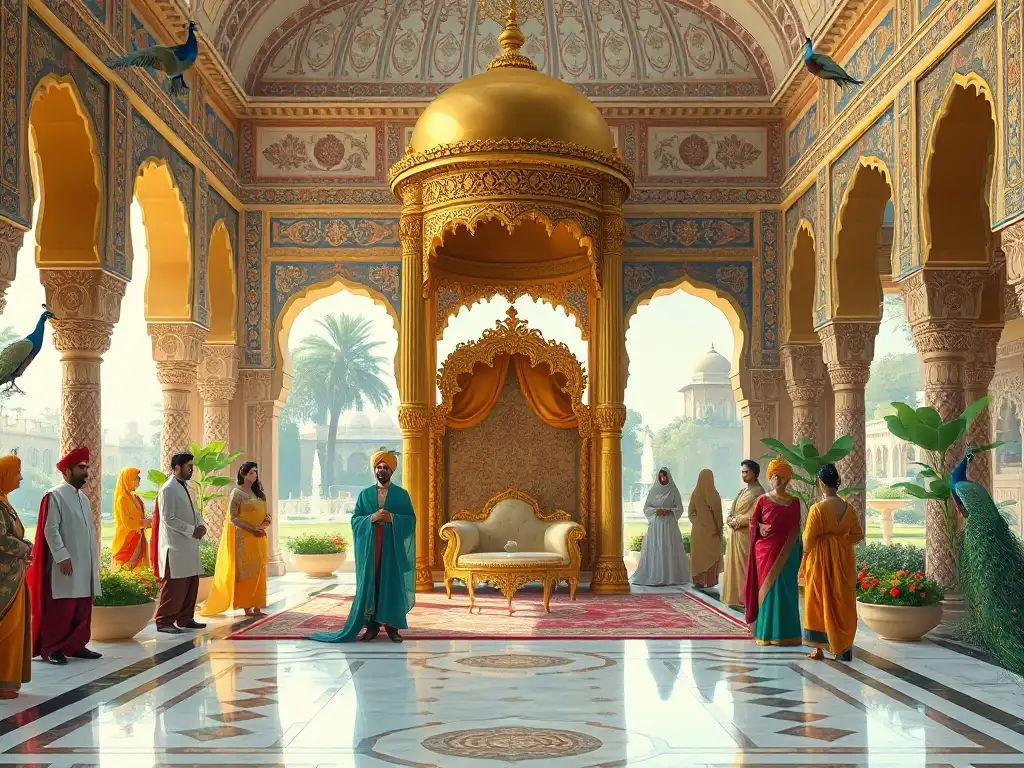
The Achaemenid Empire, founded by Cyrus the Great in the 6th century BCE, was one of the largest empires in ancient history, stretching from the Balkans to the Indus Valley. This vast empire not only facilitated military conquests but also established a complex network of administrative practices and cultural exchanges that significantly influenced the regions under its control, including parts of present-day India.
Key Features of Achaemenid Influence
- Administrative Innovations: The Achaemenid system of governance, characterized by satrapies (provinces), inspired various administrative practices in Indian kingdoms. These satraps were responsible for local governance, taxation, and law enforcement, which echoed in subsequent Indian royal courts.
- Cultural Syncretism: The Persian influence manifested in various forms of art, architecture, and ceremonial practices. For instance, the introduction of Persian motifs in Indian architecture, such as intricate stone carvings and grand palatial designs, can be traced back to Achaemenid aesthetics.
- Religious Tolerance: The Achaemenid rulers upheld a policy of religious tolerance, allowing various beliefs to coexist. This approach influenced Indian royalty, fostering an environment where multiple religions and philosophies could flourish side by side.
Notable Interactions
- Darius I's Campaigns: Darius I expanded into the northwestern regions of India, establishing contact with the local tribes and kingdoms. His inscriptions found in the region, such as those at Behistun, highlight the acknowledgment of Indian satraps, indicating a formal recognition of local governance.
- Cultural Exchanges: The presence of Persian administrators and merchants in the Indian subcontinent led to a blend of cultural practices. For example, the use of the Persian language in administration and courtly affairs became notable in Indian royal courts, especially during the Mauryan period.
The Role of Trade Routes in Cultural Exchange
The trade routes connecting Persia and India played a pivotal role in the dissemination of Persian customs and practices within Indian royal courts. These routes facilitated not only the exchange of goods but also the intermingling of cultures and ideas.
Major Trade Routes
- The Silk Road: This ancient trade network linked the East and West, allowing for the flow of silk, spices, and precious stones. Persian merchants played a significant role in this trade, bringing with them cultural artifacts, literature, and customs that found their way into Indian society.
- The Royal Road: Connecting Sardis in Asia Minor to Susa in Persia, this road was crucial for the movement of goods and ideas. Its extension into the Indian territories enabled Persian customs to permeate Indian royal practices.
Impact on Indian Royalty
- Art and Architecture: The influence of Persian decorative styles is evident in the intricate frescoes and stucco work found in Indian palaces. The use of ornamental gardens, reminiscent of Persian designs, became a hallmark of Indian royal architecture.
- Court Ceremonies and Etiquette: The Indian royal courts adopted various Persian customs, such as elaborate court rituals and the concept of a grand audience (darbar). This shift not only elevated the status of Indian kings but also formalized the royal court’s structure and functions.
- Culinary Influences: The introduction of Persian cuisine, characterized by rich flavors and the use of spices, significantly impacted Indian culinary practices. Dishes that blended Persian and Indian elements became staples in royal feasts.
The Persian influence on Indian royalty was multifaceted, rooted in the expansive reach of the Achaemenid Empire and reinforced by the vibrant trade routes that facilitated cultural exchange. This historical context underscores the significant interactions between these two ancient civilizations, shaping the evolution of Indian royal customs and practices.
Persian Customs and Their Adoption in Indian Royalty
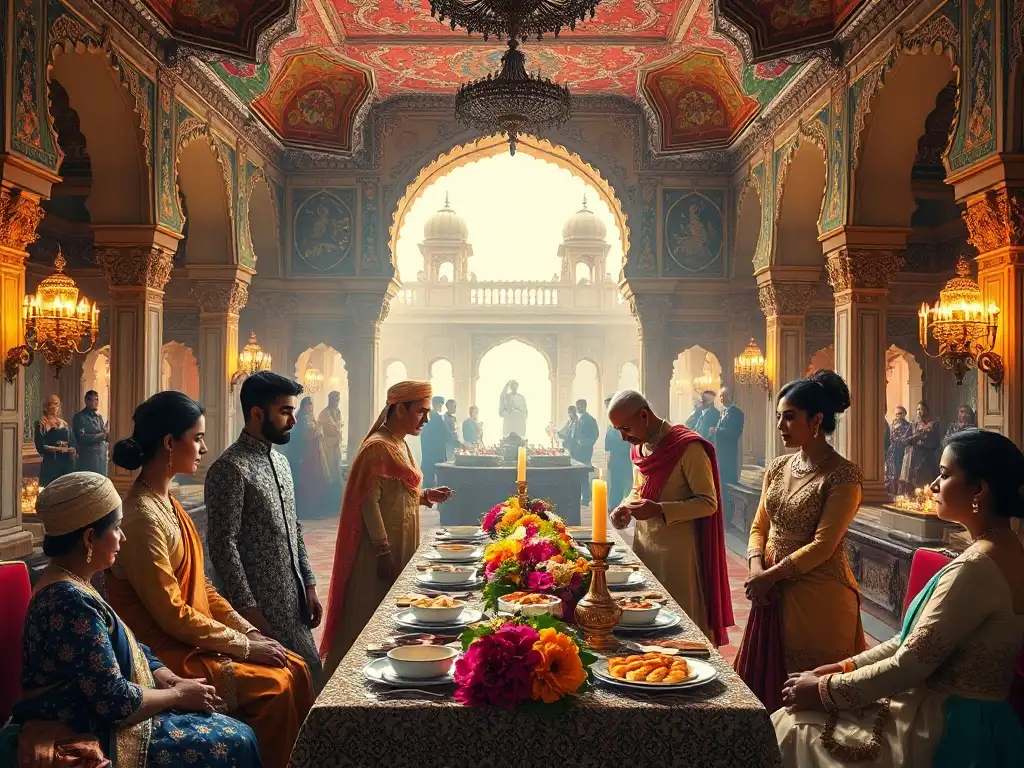
The influence of Persian customs on Indian royalty is a fascinating aspect of history that reflects the cultural exchanges between two rich civilizations. Persian customs permeated various facets of Indian royal life, leading to a synthesis of traditions that enriched the cultural landscape of India. This blend was particularly pronounced during the medieval period, especially after the establishment of the Delhi Sultanate and the Mughal Empire.
Architectural Influences: From Persian Palaces to Indian Forts
Persian architecture significantly shaped the design and aesthetics of Indian royal structures. The introduction of intricate gardens, expansive courtyards, and elaborate domes are just a few examples of Persian architectural elements that found their way into Indian forts and palaces.
- Gardens: The concept of the charbagh (four gardens) layout, which symbolizes paradise in Persian culture, became a hallmark of Mughal architecture. This design was prevalent in the Mughal gardens of Kashmir, notably the Shalimar Bagh, which showcases the Persian love for nature and symmetry.
- Domes and Arches: Persian architectural features like grand domes and pointed arches were adopted and further evolved in Indian architecture. The Taj Mahal, with its stunning white marble dome, exemplifies the amalgamation of Persian and Indian styles, creating a unique architectural identity.
- Materials and Techniques: Persian artisans brought with them advanced techniques in masonry, tile work, and inlay. The intricate pietra dura work seen in Indian palaces illustrates this influence, showcasing a blend of Persian motifs with Indian designs.
Persian Art and Its Integration into Indian Culture
Persian art left an indelible mark on Indian cultural practices, particularly during the Mughal period. The fusion of styles resulted in a unique artistic heritage that is still celebrated today.
- Miniature Painting: Persian miniature painting techniques influenced Indian artists, leading to the development of Mughal miniature paintings. These artworks often depicted court scenes, battles, and natural landscapes, characterized by delicate brush strokes and vibrant colors. Artists like Bichitr and Murad adopted Persian styles while integrating Indian themes, creating a distinctive genre of art.
- Calligraphy: The Persian art of calligraphy was highly esteemed in Indian courts. Persian scripts adorned royal documents, adding an element of elegance and sophistication. The use of beautiful script in inscriptions and manuscripts facilitated the spread of Persian literature and poetry across Indian royalty.
- Textile Designs: Persian textile patterns influenced Indian fabric designs, particularly in the realm of silk and brocade. The intricate floral motifs and rich colors became a staple in royal attire, symbolizing status and wealth.
Influence on Ceremonial Practices and Court Etiquette
The Persian influence extended beyond the visual arts and architecture into the ceremonial practices and etiquette observed in Indian royal courts.
- Court Rituals: Persian customs shaped the structure of courtly life, including the darbar (court assembly) rituals. The practice of holding grand audiences, where the ruler would display their power and wealth, was influenced by Persian traditions. This included the use of the takht (throne) and elaborate processions that marked significant events.
- Titles and Formalities: The adoption of Persian titles such as Shah (king) and Begum (noblewoman) became commonplace in Indian royal courts. These titles not only reflected the influence of Persian language but also reinforced social hierarchies within the royal framework.
- Diplomatic Practices: Persian customs also influenced the diplomatic relations between Indian rulers and their counterparts. The practice of gifting luxurious items, such as textiles, jewelry, and horses, was a customary Persian practice that Indian royalty embraced to solidify alliances.
The Persian influence on Indian royalty is a testament to the rich interactions between these two civilizations. The architectural innovations, artistic developments, and ceremonial practices that emerged from this exchange enriched India's cultural heritage, leaving a lasting legacy that is still evident in contemporary Indian culture.
Language and Literature: The Persian Impact on Indian Royal Courts
The Emergence of Persian as a Literary Language in India
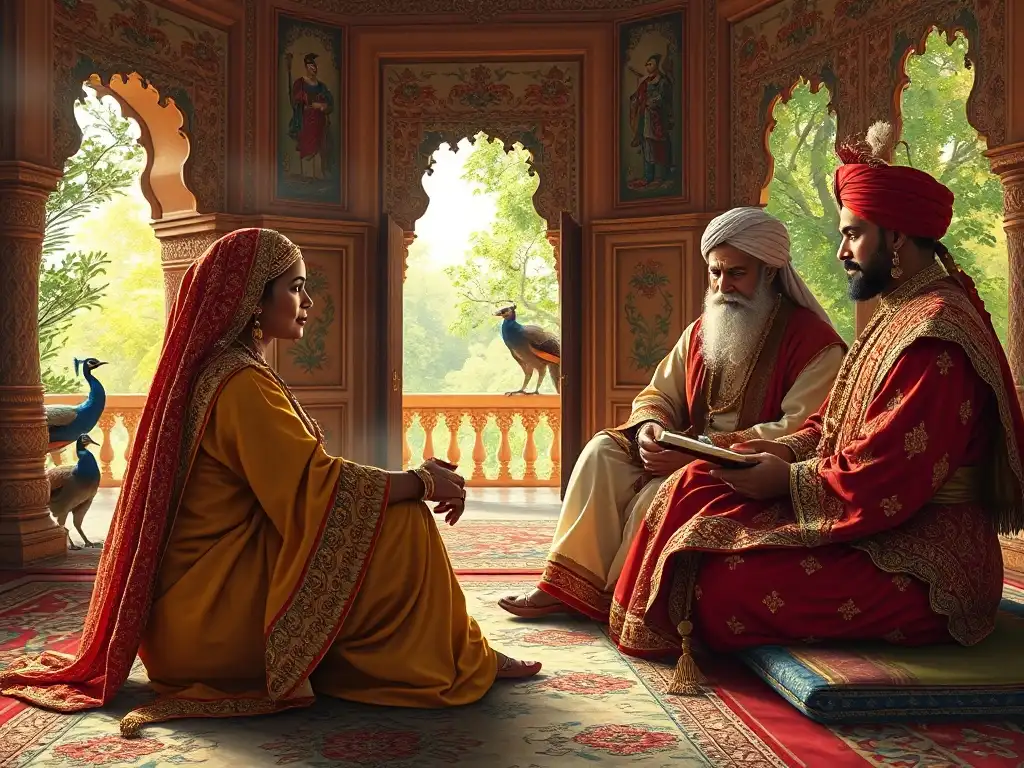
The introduction of Persian into the Indian subcontinent is a significant chapter in the historical narrative of language and literature. With the establishment of the Delhi Sultanate in the 13th century, Persian began to emerge as the language of administration and high culture. This transition marked a pivotal shift in the Indian literary landscape, where Persian replaced Sanskrit and regional languages in many royal courts.
- Cultural Exchange: The arrival of Persian not only influenced the administrative practices but also facilitated a rich cultural exchange. The Persian language served as a bridge between Indian and Central Asian cultures, allowing for the infusion of new ideas, artistic expressions, and literary forms.
- Royal Patronage: Persian was highly regarded by Indian royalty, who recognized its prestige and sophistication. Many rulers, including those of the Mughal Empire, patronized poets and scholars who wrote in Persian, further entrenching its status as a literary language.
The impact of Persian can be observed in various spheres, including poetry, prose, and historical writing. This linguistic evolution contributed to the emergence of a unique Indo-Persian literary tradition that blended elements from both cultures.
Notable Literary Works Reflecting Persian Influence
The literary contributions stemming from the Persian influence on Indian royalty are numerous and noteworthy. Several key works exemplify how Persian literature was embraced and adapted within Indian contexts:
- Ain-i-Akbari: Written by Abu'l-Fazl ibn Mubarak during the reign of Emperor Akbar, this text is an essential historical document that outlines the administration, culture, and society of Akbar's empire. Its sophisticated Persian prose reflects the royal patronage of the time and offers insights into the cultural syncretism of the era.
- Gulistan: Composed by Saadi Shirazi, the Gulistan, or "The Rose Garden," is a collection of poetry and prose that was translated and adapted by Indian scholars. The tales within this work highlight moral lessons and social commentary, resonating deeply with Indian audiences.
- Shah Jahan Nama: This historical account of Emperor Shah Jahan's reign, written by the Persian historian Abdul Hamid Lahori, showcases the architectural and cultural achievements of the Mughal Empire. The eloquence of its language and the richness of its content underscore the high esteem in which Persian literature was held in Indian royal courts.
- Diwan-i-Ghalib: The poetry of Mirza Ghalib, although later than the Mughal period, exemplifies the enduring legacy of Persian influence. His works, written in Urdu and Persian, reflect a deep engagement with Persian literary traditions and themes.
The blending of Persian and Indian literary traditions not only enriched the linguistic fabric of the subcontinent but also laid the groundwork for future literary developments. The Persian influence on Indian royalty thus represents a significant cultural synergy, contributing to a distinctive literary heritage that continues to be celebrated today.
Religion and Philosophy: Persian Contributions to Indian Thought
Zoroastrianism and Its Influence on Indian Spiritual Practices
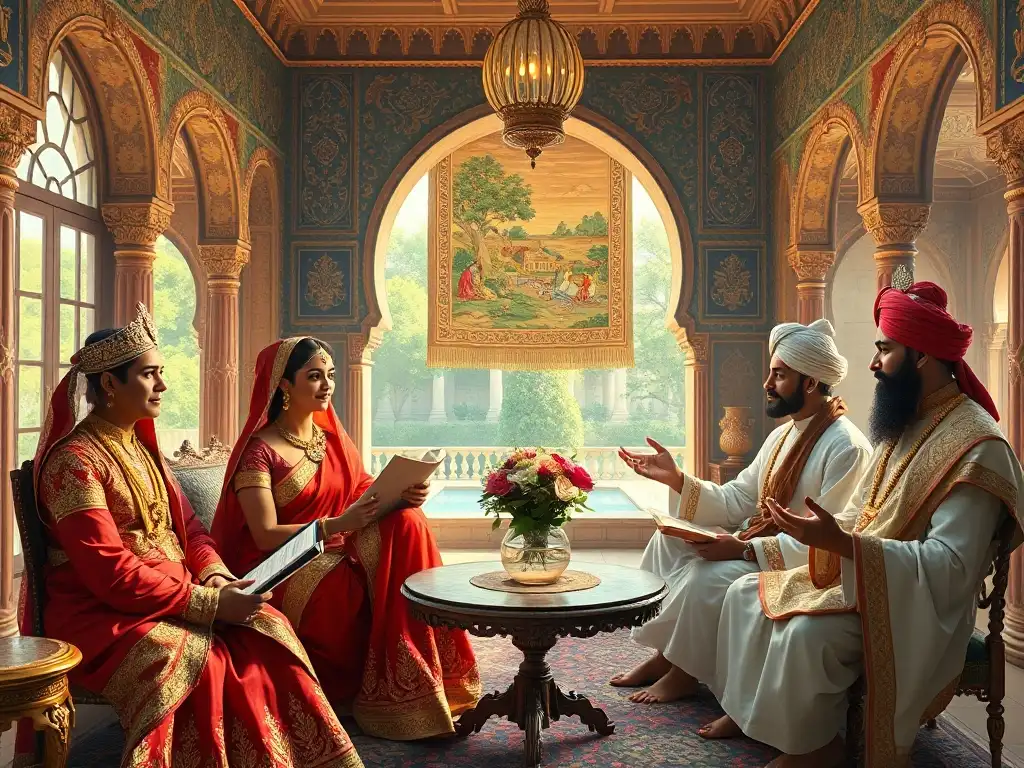
Zoroastrianism, one of the world's oldest monotheistic religions, has had a notable impact on Indian spirituality, particularly during the Achaemenid Empire's interactions with the Indian subcontinent. The teachings of Zoroaster emphasized the duality of good and evil, the importance of individual choice, and the notion of an afterlife, concepts that resonated with certain aspects of Indian philosophical thought.
Key Influences:
- Concept of Dualism:
- The Zoroastrian belief in the constant struggle between Ahura Mazda (the supreme god) and Angra Mainyu (the evil spirit) introduced a dualistic perspective to Indian thought. This can be observed in later Hindu texts, which depict similar themes of cosmic battles between good and evil forces.
- Ethical Framework:
- Zoroastrian ethics, emphasizing truth (Asha) and righteousness, found echoes in the moral teachings of ancient Indian texts like the Mahabharata and Bhagavad Gita. The idea that one's actions determine their fate in the afterlife resonated with the principles of karma prevalent in Indian philosophy.
- Ritual Practices:
- Certain rituals associated with fire worship in Zoroastrianism paralleled Hindu fire rituals (yajnas). Both traditions hold fire as a sacred element, symbolizing purity and the divine presence.
The influence of Zoroastrianism on Indian spirituality illustrates a significant exchange of ideas that enriched the spiritual landscape of ancient India, leading to a more nuanced understanding of morality, cosmology, and the human experience.
Cross-Pollination of Philosophical Ideas Between Persia and India
The philosophical discourse between Persia and India during ancient times reflects a rich tapestry of intellectual exchange that shaped both cultures. The interactions were facilitated by trade, conquests, and the migration of scholars, leading to a cross-pollination of ideas that would influence various schools of thought.
Notable Philosophical Interactions:
- Shared Concepts of Cosmology:
- Both Persian and Indian philosophies explored the nature of the universe. The Persian concept of a created cosmos, governed by a divine order, mirrored Indian cosmological views found in texts like the Vedas and Upanishads. This shared understanding emphasized the role of a supreme force in maintaining cosmic balance.
- Influence on Political Philosophy:
- The Persian model of governance, which included the idea of a king as a divine representative on earth, influenced Indian royal courts. Indian rulers began to adopt similar philosophies regarding kingship, which can be seen in the writings of Kautilya in the Arthashastra. The integration of Persian administrative practices reinforced the notion of a centralized authority.
- Development of Ethics and Morality:
- Philosophers from both cultures contributed to discussions on ethics. The Persian emphasis on social justice and community welfare found resonance in Indian ethical thought, with both traditions advocating for the welfare of society and the importance of righteous leadership.
The blending of Persian and Indian philosophical ideas not only enriched both traditions but also laid the groundwork for future dialogues in ethics, governance, and spirituality, forging a legacy that continues to influence modern thought.
Case Studies of Persian Influence on Specific Indian Dynasties
The Mughal Empire: A Synthesis of Persian and Indian Traditions
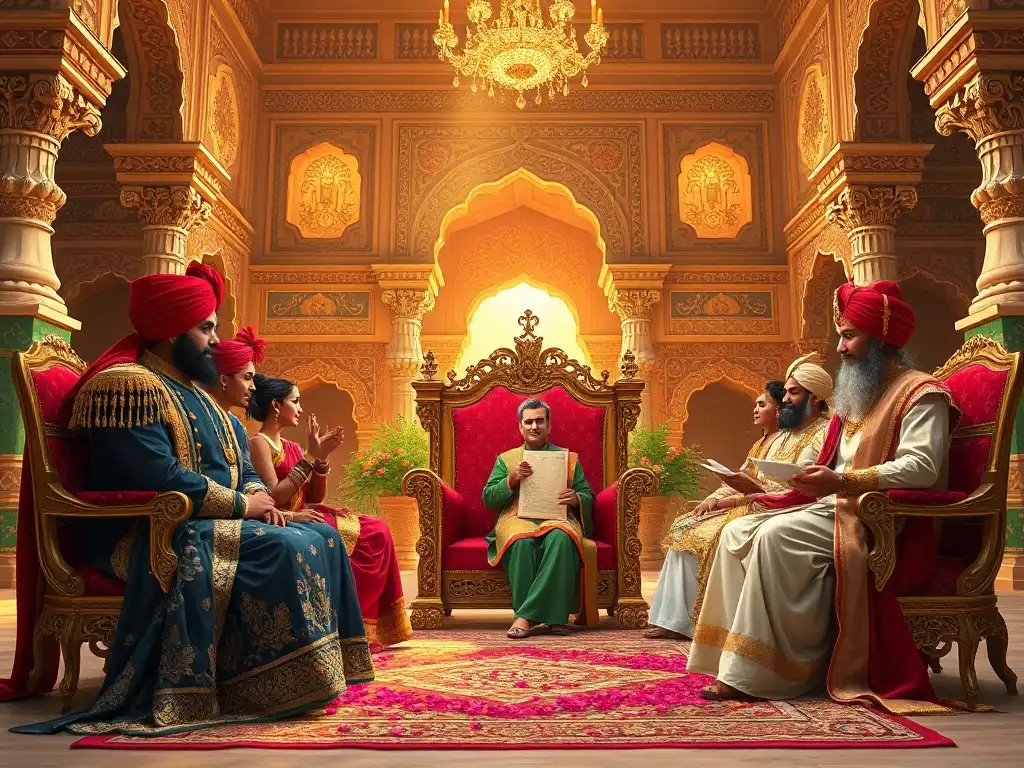
The Mughal Empire, which reigned from the early 16th to the 18th century, stands as a paramount example of the profound Persian influence on Indian royalty. The Mughals, of Turco-Mongol origin, were significantly shaped by their Persian heritage, especially under the reign of emperors like Akbar, Jahangir, and Shah Jahan. This synthesis of cultures was evident in various aspects of governance, art, and architecture.
Governance and Administrative Practices
The Mughals adopted several Persian administrative practices, which included the introduction of a centralized bureaucracy. This system was characterized by the use of Persian as the official language, which facilitated communication and governance across the vast empire. The Mughals also implemented the Persian land revenue system, known as Zabt, which standardized tax collection and was crucial for the empire's economic structure.
Artistic and Architectural Contributions
Persian influence permeated Mughal art and architecture, where the fusion of Persian and Indian styles created a unique aesthetic. The famous Taj Mahal, commissioned by Shah Jahan, is a testament to this blend, featuring intricate Persian calligraphy and motifs alongside Indian craftsmanship. Additionally, miniature paintings, which flourished during the Mughal era, often depicted scenes that combined Persian themes with Indian narratives, showcasing the cultural intermingling.
Literature and Cultural Patronage
Under Mughal rule, Persian literature thrived, with emperors themselves being patrons of poets and scholars. The Akbarnama, written by Abu'l-Fazl, is an essential historical text that reflects the cultural synthesis of the time. The Mughal court became a hub for Persian poets, significantly influencing the literary landscape of India. Furthermore, the Persian language became a vehicle for expressing Indian ideas and philosophies, enriching the cultural tapestry of the subcontinent.
The Impact of Persian Culture on Regional Kingdoms
Beyond the Mughal Empire, Persian customs permeated various regional kingdoms throughout India, showcasing a broader impact of Persian influence on Indian royalty. This influence can be observed in smaller princely states and kingdoms, where Persian traditions were seamlessly integrated into local customs.
The Deccan Sultanates
The Deccan Sultanates, comprising five independent kingdoms in southern India, were heavily influenced by Persian culture. These sultanates adopted Persian as their court language and incorporated Persian architectural styles into their forts and palaces. Notable examples include the Gol Gumbaz in Bijapur, which reflects Persian engineering and aesthetic principles.
Rajput Kingdoms
Even the Rajput kingdoms, known for their warrior ethos and distinct culture, were not immune to Persian influence. The Rajputs often intermarried with Mughal royalty, leading to the adoption of Persian customs in their courts. Persian poetry became popular among Rajput nobles, who appreciated the art form and often patronized Persian poets, further entrenching these customs into their courtly life.
The Influence in Bengal
In Bengal, the influence of Persian culture was also significant, especially during the rule of the Nawab of Bengal. The Nawabs embraced Persian customs in their administration and culture, resulting in the construction of magnificent gardens and palatial buildings reminiscent of Persian designs. The Nawabi culture in Bengal epitomized the synthesis of local and Persian elements, creating a distinct regional identity that celebrated this rich cultural exchange.
The Persian influence on Indian royalty is evident across various dynasties and regional kingdoms. This cultural interplay between Persia and India not only shaped the governance and aesthetics of the time but also enriched the literary and artistic expressions, leaving an indelible mark on the historical landscape of India.
Legacy of Persian Influence on Modern Indian Culture
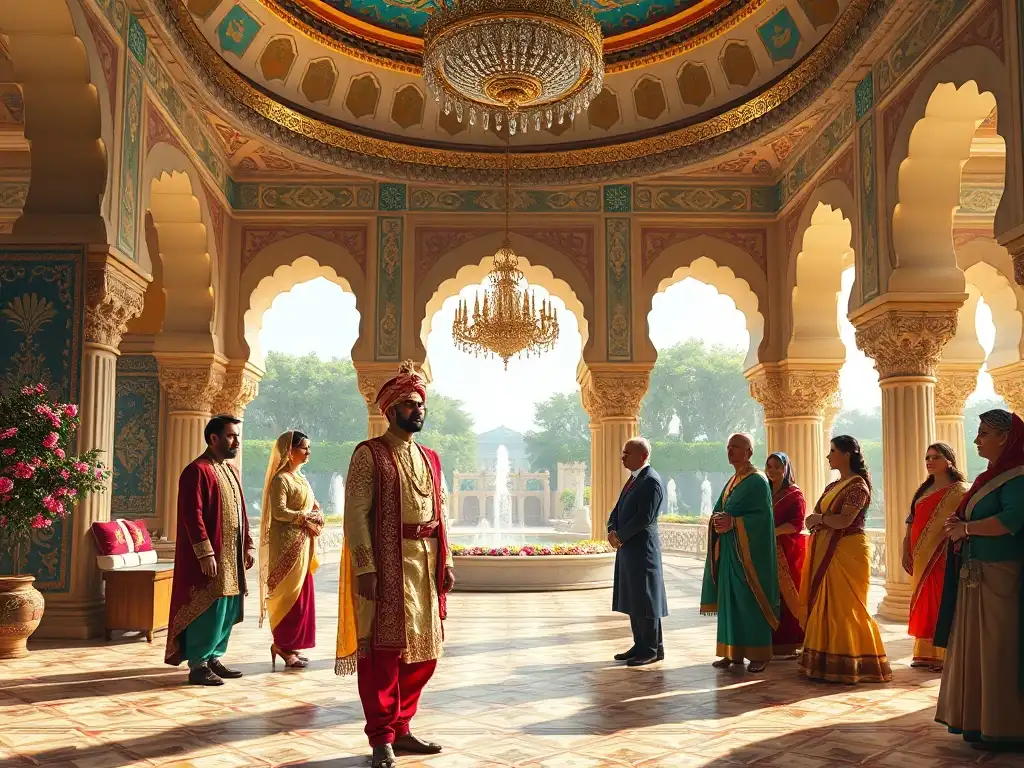
The legacy of Persian influence on modern Indian culture is profound and multifaceted, stemming from centuries of interactions that began during the Achaemenid Empire and continued through various dynasties, notably the Mughal Empire. This influence is evident not only in the arts and architecture but also in the linguistic, culinary, and social fabrics of Indian society today.
Persian Elements in Contemporary Indian Royalty
The echoes of Persian customs can still be observed in the ceremonial practices of contemporary Indian royalty. Many royal families, particularly in regions like Rajasthan and Gujarat, have retained Persian-inspired elements in their courtly traditions. These include:
- Titles and Etiquette: Many princely titles and forms of address in modern Indian royalty are derived from Persian. Terms such as sultan and nawab reflect the historical significance of Persian language in the royal courts.
- Ceremonial Practices: The grandeur of royal ceremonies often incorporates Persian elements, such as elaborate durbars (courts), where the regalia and attire reflect a blend of Indian and Persian styles. The use of richly embroidered fabrics and intricate jewelry often draws from Persian aesthetics.
- Art and Architecture: The architectural styles seen in modern royal palaces frequently exhibit Persian influences. For instance, the use of intricate tile work, large arched doorways, and expansive gardens are reminiscent of Persian gardens, which symbolize paradise in Persian culture.
- Culinary Traditions: The royal kitchens have also inherited Persian culinary techniques, blending spices and flavors that originated from Persia. Dishes such as biryani and kebabs showcase a synthesis of Indian and Persian culinary arts, often served on grand occasions.
Ongoing Cultural Exchanges Between India and Persia
The cultural exchanges between India and Persia continue to thrive, marking an enduring relationship that adapts to contemporary contexts. These exchanges manifest in various ways:
- Artistic Collaborations: Modern artists in India often explore Persian themes and techniques in their work. This includes Persian miniatures and calligraphy, which have found a place in contemporary Indian art galleries, reflecting a blend of old traditions with modern interpretations.
- Literary Influences: Persian literature, especially poetry, continues to influence contemporary Indian writers. The works of poets like Ghalib resonate with Indian sensibilities, and the incorporation of Persian phrases and styles in Indian poetry remains prevalent.
- Cultural Festivals and Events: Cultural festivals that celebrate the shared heritage of India and Persia, such as literature festivals and art exhibitions, promote ongoing dialogue between the two cultures. These events often feature discussions on the historical impact of Persian culture on India and foster mutual appreciation.
- Fashion and Design: The fusion of Persian design elements in modern Indian fashion is increasingly popular. Designers draw inspiration from Persian motifs, fabrics, and styles to create contemporary pieces that pay homage to this rich cultural history.
The Persian influence on Indian royalty and culture is not a relic of the past but a living legacy that continues to shape and enrich modern Indian society. The ongoing exchanges highlight the dynamic nature of cultural interactions, showcasing how ancient traditions can evolve and find relevance in contemporary contexts.
Conclusion: The Enduring Impact of Persian Customs on Indian Royalty
The intricate tapestry of Indian history is significantly woven with Persian influences, particularly regarding the royal courts. This enduring impact has shaped not only the aesthetics of governance but also the cultural fabric of Indian society. The infusion of Persian customs can be traced through various aspects of administration, art, literature, and even the culinary traditions that permeated the royal households.
Summary of Key Influences and Their Significance
The Persian influence on Indian royalty can be distilled into several key areas:
- Administrative Practices
- The adoption of Persian bureaucratic structures introduced more sophisticated governance methods. This included the implementation of a centralized administration, which allowed for more efficient tax collection and law enforcement.
- Example: The Mughal Empire, which embraced Persian administrative techniques, led to a more structured and organized state compared to earlier Indian dynasties.
- Art and Architecture
- Persian aesthetics profoundly influenced Indian architecture, particularly during the Mughal era. The incorporation of intricate floral patterns, domes, and gardens created a unique Indo-Persian architectural style.
- Example: The Taj Mahal stands as a testament to this blend, showcasing Persian elements in its symmetrical gardens and calligraphy alongside traditional Indian motifs.
- Literature and Language
- The Persian language became a lingua franca in the courts of many Indian rulers, fostering a rich literary tradition. Persian poetry and prose were celebrated, and Indian poets began to write in Persian, contributing to a cross-cultural literary dialogue.
- Example: Notable figures like Amir Khusrau emerged, blending Persian poetic forms with Indian themes, thus enriching the literary landscape.
- Culinary Exchange
- Persian culinary traditions introduced new flavors and cooking techniques that transformed Indian cuisine. Dishes such as biryani and various kebabs became staples in royal kitchens.
- Example: The integration of saffron and dry fruits in Indian recipes can be traced back to Persian influences, enhancing the richness of Indian gastronomy.
The significance of these influences is manifold. They not only represent a blending of cultures but also highlight the adaptability and openness of Indian societies to external ideas, ultimately leading to a more diverse and enriched cultural heritage.
Future Perspectives on Indian-Persian Relations
Looking ahead, the legacy of Persian influence on Indian royalty continues to offer valuable insights for contemporary cultural exchanges. As global interactions increase, the historical ties between India and Persia (modern-day Iran) can be rekindled to foster mutual understanding and collaboration.
- Cultural Collaborations
- Future initiatives could focus on art exhibitions, literary festivals, and culinary fairs that celebrate Indo-Persian heritage, encouraging young artists and chefs to explore this rich tradition.
- Academic Exchanges
- Universities in both countries could benefit from collaborative research programs that delve into the historical interactions between Indian and Persian civilizations, providing a platform for scholars to share insights and findings.
- Tourism and Heritage Conservation
- Promoting historical sites that showcase Indo-Persian architecture can boost tourism while raising awareness about the shared cultural heritage, leading to conservation efforts that preserve these valuable artifacts for future generations.
The Persian influence on Indian royalty is a testament to the enduring power of cultural exchange. By recognizing and nurturing these historical connections, both India and Iran can continue to enrich their cultural landscapes and foster a spirit of cooperation that honors their shared past.
Frequently Asked Questions
What are the main Persian customs that influenced Indian royalty?
Persian customs such as court etiquette, artistic expression, and ceremonial practices significantly shaped the royal courts in India, particularly during the Mughal era.
How did Persian influence manifest in Indian architecture?
The Persian influence led to the incorporation of intricate ornamental designs, gardens, and grandiose structures in Indian architecture, as seen in famous monuments like the Taj Mahal.
Did Persian literature impact Indian culture?
Yes, Persian literature influenced Indian culture by introducing new poetic forms and themes, which were embraced by many Indian poets, thus enriching the literary landscape.
What role did Persian art play in Indian society?
Persian art played a crucial role by introducing miniature painting techniques and styles that blended with local traditions, leading to a unique artistic heritage in India.
How did the Persian influence extend to Indian governance?
The Persian influence on Indian governance is evident in the adoption of administrative practices such as centralized bureaucracy, which enhanced the efficiency of royal rule in Indian states.
Final Reflection: The Enduring Legacy of Persian Influence on Indian Royalty
The intricate tapestry of Persian customs woven into the fabric of Indian royal courts underscores the profound impact of cultural exchange in shaping societies. Today, as we navigate a globalized world, the historical intertwining of Persian and Indian traditions serves as a reminder of how interconnected our cultures truly are. The elegance of Persian art, poetry, and governance not only enriched Indian royalty but also laid the groundwork for a unique blend of customs that continue to resonate in contemporary society.
The influence of Persian culture on Indian royalty is not merely a relic of the past; it remains a vibrant thread in the cultural landscape of India. From the majestic architecture of palaces to the poetic expressions found in literature, the legacy of Persian customs is evident in various aspects of Indian life. As noted by historian Romila Thapar, Cultural interactions are the lifeblood of civilizations, shaping identities and fostering mutual respect.
This ongoing dialogue between cultures highlights the importance of embracing diversity and recognizing the shared heritage that enriches our lives.
As we reflect on the lessons drawn from the Persian influence on Indian royalty, let us consider how we can foster cultural appreciation in our own lives. I invite you to explore the rich tapestry of traditions that surround you, to engage with different cultures, and to celebrate the beauty of diversity. By doing so, we not only honor the past but also pave the way for a more inclusive and harmonious future, where the legacies of our shared histories continue to inspire generations to come.
Unveil the Tapestry of Cultural Exchange!
Thank you for diving into the intricate world of Persian customs and their influence on Indian royal courts. Your curiosity enriches your understanding of history and deepens your appreciation for the vibrant tapestry of cultural exchange. Now, it’s time to take your learning further!
Here are a few inspiring steps you can take:
- Explore the rich legacy of Persian influence on Indian art and literature by visiting a local museum or accessing a digital resource.
- Share your insights with friends or on social media. Initiate a conversation about how cultural exchanges shape societies and inspire creativity.
- Join a community of history enthusiasts—seek out local groups or online forums where you can discuss your findings and connect with like-minded individuals.
What unexpected connections between different cultures inspire you the most?