
The Shared Heritage of Ancient Indian and Greek Philosophers

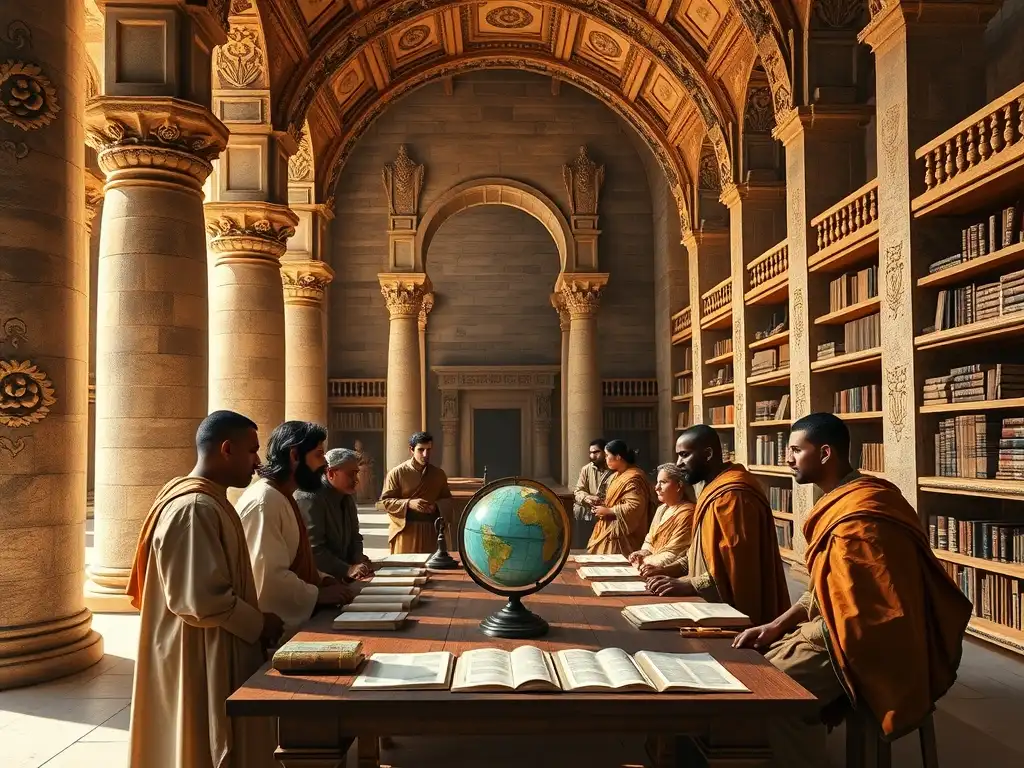
Welcome to Ancient India History, where we embark on a fascinating journey through the rich tapestry of ancient Indian civilizations and their profound influence on the world. In our featured article, “The Shared Heritage of Ancient Indian and Greek Philosophers,” we delve into the intriguing connections between Ancient Indian and Greek philosophies, revealing how these two great cultures interacted and shaped each other’s thoughts.
Prepare to uncover the layers of wisdom and shared insights that have transcended time, inviting you to explore how these philosophical exchanges have contributed to our understanding of the human experience. Join us as we unravel the threads of history that bind these remarkable civilizations together!
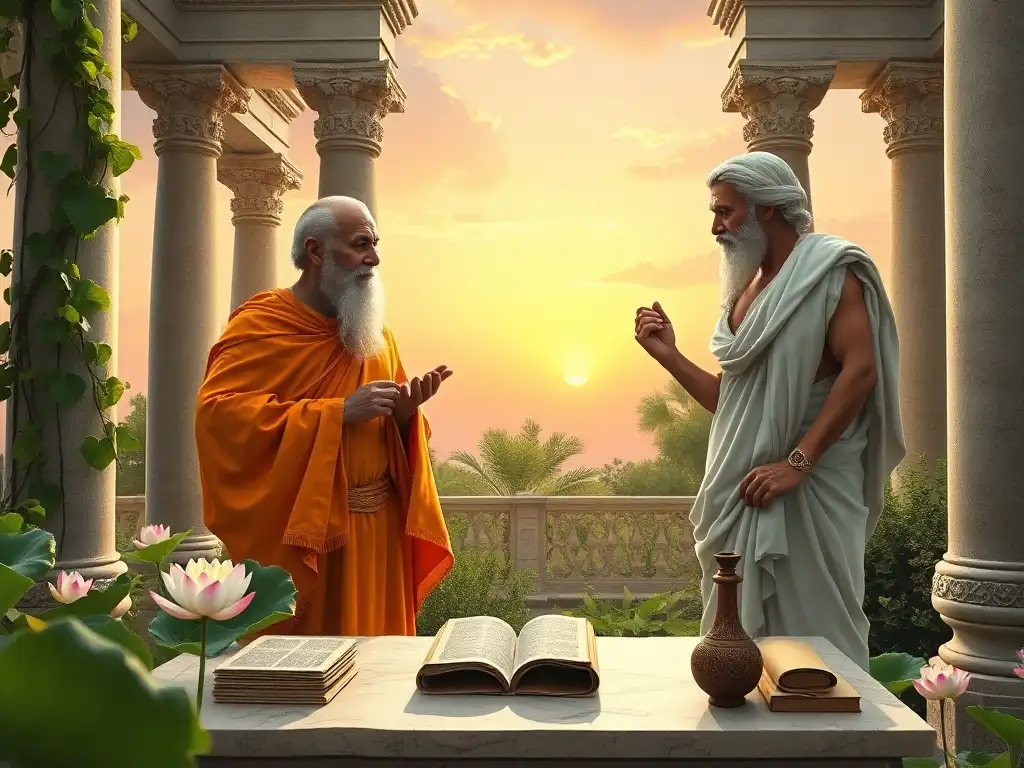
Introduction to Ancient Indian Greek Philosophy Connections
The rich tapestry of ancient philosophy is often woven with threads from various cultures, each contributing unique insights and perspectives. Among these, the interactions between ancient Indian and Greek philosophers stand out, showcasing a profound shared heritage that has shaped global thought. This article delves into the connections between ancient Indian and Greek philosophies, exploring how these two great civilizations influenced each other's intellectual landscapes. By understanding their philosophical exchanges, we can appreciate the depth and complexity of these traditions, illuminating their lasting impact on contemporary thought and culture.
Overview of Indian and Greek Philosophical Traditions
Ancient Indian philosophy is characterized by its spiritual depth and metaphysical inquiries, encompassing a variety of schools such as Vedanta, Buddhism, and Jainism. These traditions often emphasize concepts such as karma, moksha (liberation), and the nature of reality.
In contrast, Greek philosophy, with its roots in the works of Socrates, Plato, and Aristotle, focuses on rational inquiry, ethics, and the nature of knowledge. Greek philosophers often engaged in dialogues and debates, leading to the development of logical reasoning and empirical investigation.
Both traditions, despite their distinct methodologies, grapple with similar existential questions, such as the nature of reality, the purpose of life, and the pursuit of knowledge.
Importance of Studying Philosophical Interactions
Studying the interactions between Indian and Greek philosophies is crucial for several reasons:
- Cultural Exchange: It highlights the exchanges that occurred along trade routes and through conquests, revealing how ideas traverse geographical boundaries.
- Mutual Influence: Understanding these connections can elucidate how Indian texts may have influenced Greek thinkers and vice versa, particularly during the Hellenistic period.
- Philosophical Development: It allows scholars to trace the evolution of ideas and concepts that are foundational to both Eastern and Western philosophical thought.
Historical Context of Indian and Greek Philosophers
Timeline of Indian and Greek Civilizations
The timeline of interaction between Indian and Greek civilizations is rich and complex, marked by significant events:
| Period | Indian Civilization | Greek Civilization |
|---|---|---|
| 6th Century BCE | Emergence of Buddhism | Pre-Socratic Philosophy |
| 4th Century BCE | Mauryan Empire | Classical Greek Philosophy |
| 3rd Century BCE | Spread of Buddhism to Greece | Hellenistic Philosophy |
| 1st Century CE | Gupta Empire | Roman Influence on Greece |
Key Philosophical Movements in Ancient India
Ancient India was home to several influential philosophical movements:
- Vedanta: Focuses on the nature of reality and the self, emphasizing the non-duality of the ultimate reality (Brahman) and the individual soul (Atman).
- Buddhism: Founded by Siddhartha Gautama, it teaches the Four Noble Truths and the Eightfold Path as a means to achieve enlightenment and liberation from suffering.
- Jainism: Highlights the importance of non-violence (ahimsa) and the pursuit of truth, emphasizing the liberation of the soul through right conduct.
Major Philosophical Schools in Ancient Greece
Similarly, ancient Greece produced several key philosophical schools:
- Platonism: Founded by Plato, it emphasizes the concept of ideal forms and the importance of the philosopher-king.
- Aristotelianism: Developed by Aristotle, focusing on empirical observation and categorization of knowledge.
- Stoicism: A school that teaches the development of self-control and fortitude as a means to overcome destructive emotions.
The intersections between these philosophical schools reveal a rich dialogue that has shaped human understanding over millennia, making the study of these connections essential for comprehending the shared heritage of ancient Indian and Greek thought.
Influential Philosophers and Their Contributions
The dialogue between ancient Indian and Greek philosophy has been a rich tapestry woven with profound insights and ideas that have shaped the course of human thought. Both civilizations produced influential philosophers whose contributions have not only resonated within their respective cultures but have also laid the groundwork for philosophical discourse across the globe. This section will explore some of the prominent thinkers from both traditions, delving into their unique perspectives and the shared intellectual heritage that emerged from their interactions.
Prominent Indian Philosophers and Their Ideas
Indian philosophy has a vast spectrum of thinkers, each contributing distinct ideas that reflect the civilization's depth. Among them, Adi Shankaracharya stands out for his advocacy of Advaita Vedanta, which emphasizes the non-dual nature of reality, asserting that the individual self (Atman) is identical to the ultimate reality (Brahman). His commentaries on the Upanishads and the Bhagavad Gita have been instrumental in shaping Hindu philosophical thought.
Another key figure is Buddha, who introduced the Four Noble Truths and the Eightfold Path, presenting a practical approach to overcoming suffering and achieving enlightenment. His teachings on impermanence and the concept of Anatta (non-self) challenged established notions of identity and existence.
Mahatma Gandhi, though more modern, drew from ancient Indian philosophies, applying the principles of Ahimsa (non-violence) and Satyagraha (truth-force) in his struggle for India's independence. His integration of ethical and political philosophy has had a lasting impact on social movements worldwide.
Notable Greek Philosophers and Their Thought
Greek philosophy boasts a lineage of thinkers whose inquiries into existence, knowledge, and ethics have profoundly influenced Western thought. Socrates, often regarded as the father of Western philosophy, emphasized the importance of self-examination and ethical living, encapsulated in his famous dictum, "The unexamined life is not worth living." His dialectical method of inquiry paved the way for critical thinking.
Plato, a student of Socrates, introduced the concept of Forms, proposing that the material world is a shadow of a higher reality of perfect forms. His dialogues explore justice, virtue, and the ideal state, significantly shaping philosophical and political theory.
Aristotle, a student of Plato, diverged by focusing on empirical observation and categorization of knowledge. His works on ethics, metaphysics, and logic laid the foundation for various fields of study, influencing both Western and Eastern thought.
Points of Intersection: Indian and Greek Philosophical Ideas
The philosophical traditions of ancient India and Greece, while distinct, exhibit remarkable parallels and points of intersection. This convergence can be seen in their exploration of fundamental concepts such as reality, ethics, and knowledge, revealing a shared quest for understanding the human condition.
Concept of Reality: Brahman and the Greek Idea of the One
Both Indian and Greek philosophies grapple with the nature of reality, albeit through different lenses. In Indian philosophy, the concept of Brahman represents the ultimate, unchanging reality that transcends the physical world. It is the source of all existence and is often described as infinite and formless.
Conversely, in Greek thought, particularly in the writings of Plotinus, the idea of the One reflects a similar understanding. The One is the ultimate principle of existence, from which all things emanate. This notion resonates with the Indian perspective, suggesting a shared metaphysical inquiry into the nature of the cosmos.
Ethics and Morality: Dharma vs. Eudaimonia
The ethical frameworks of ancient India and Greece also reveal fascinating intersections. In Indian philosophy, Dharma refers to the moral order and one's duty, emphasizing the importance of righteousness in personal and social conduct. It presents a context-dependent approach to morality, where the fulfillment of one's duty is paramount.
In contrast, Greek philosophy, particularly through the lens of Aristotle, presents the concept of Eudaimonia, often translated as flourishing or happiness, as the ultimate goal of human life. While both concepts advocate for a virtuous life, Dharma focuses on duty and societal roles, whereas Eudaimonia emphasizes individual fulfillment and ethical virtue.
The Nature of Knowledge: Pramana and Epistemology in Greek Thought
The pursuit of knowledge forms a critical aspect of both Indian and Greek philosophical traditions. In Indian philosophy, Pramana refers to the means of obtaining knowledge, encompassing perception, inference, and testimony. This framework systematically categorizes different sources of knowledge, reflecting a robust epistemological inquiry.
Greek philosophers like Aristotle also engaged deeply with epistemology, categorizing knowledge into different types and emphasizing empirical observation. His work on syllogistic reasoning and the classification of sciences parallels the Indian discourse on how knowledge is acquired and validated.
The exploration of these philosophical intersections not only highlights the shared intellectual heritage of ancient Indian and Greek thought but also underscores the universal nature of philosophical inquiry, transcending cultural and geographical boundaries.
Comparative Analysis of Philosophical Methods

The philosophical methods employed by ancient Indian and Greek philosophers reveal both distinct characteristics and fascinating overlaps. In ancient Greece, philosophers predominantly relied on rational argumentation and systematic inquiry. Figures such as Socrates, Plato, and Aristotle emphasized the importance of dialectics, or the art of conversation, as a means of exploring complex ideas. This method involved rigorous questioning, often leading to a synthesis of opposing views and a deeper understanding of philosophical concepts.
In contrast, Indian philosophy, particularly during the Vedic and post-Vedic periods, employed a variety of methods, including debate (vāda), discussion (saṁvāda), and direct experience (anubhava). Indian philosophers, such as Nagarjuna and Adi Shankaracharya, often engaged in dialectical reasoning, but their approaches were more inclusive of spiritual and experiential dimensions. The focus on inner experience and meditation distinguished Indian philosophical discourse, emphasizing the subjective aspect of knowledge acquisition.
Despite these differences, both traditions sought to address fundamental questions about existence, ethics, and the nature of reality, revealing a shared intellectual heritage. Their methods, while culturally specific, illustrate a universal quest for understanding that transcends geographic boundaries.
Dialectics in Greek Philosophy vs. Indian Debates
Dialectics, a cornerstone of Greek philosophy, exemplified the pursuit of truth through dialogue. Socratic questioning, for instance, aimed to deconstruct assumptions and encourage critical thinking. This method fostered an environment where ideas could be rigorously tested and refined, culminating in a deeper insight into philosophical principles.
In comparison, the Indian debate system (vāda) also prioritized dialogue but encompassed a broader range of methodologies. Indian philosophers often engaged in formal debates called "śāstra," which involved not only logical reasoning but also scriptural references and experiential insights. These debates were less about winning and more about uncovering truth through collaboration and synthesis.
While both traditions valued dialectical reasoning, the Greek method often emphasized logical deduction and rationality, whereas Indian debates integrated spirituality and holistic experience. This distinction highlights the rich interplay between logic and spirituality in shaping philosophical discourse in both cultures.
The Role of Logic in Indian and Greek Philosophies
Logic played a pivotal role in both Indian and Greek philosophical traditions, albeit with differing emphases. In Greek philosophy, particularly with the works of Aristotle, logic became a formalized discipline. Aristotle's syllogistic reasoning laid the groundwork for deductive logic, influencing Western philosophical thought for centuries. This rigorous approach enabled philosophers to develop systematic frameworks for understanding reality and ethical conduct.
Conversely, Indian philosophy approached logic through various schools, such as Nyaya, which focused on epistemology and the means of acquiring knowledge. The Nyaya Sutras outlined a system of inference and reasoning that emphasized the importance of valid arguments (pramāṇa) and the role of perception, testimony, and analogy in establishing truth. This nuanced understanding of logic also encompassed debates on the nature of reality, leading to a robust discourse on metaphysics and ethics.
Despite their different trajectories, both traditions recognized the importance of logical reasoning as a tool for philosophical inquiry. The cross-pollination of ideas between Greek and Indian thinkers during periods of cultural exchange enriched the logical frameworks within both civilizations.
The Impact of Cultural Exchange on Philosophy
The cultural exchanges between ancient India and Greece had a profound impact on the development of philosophical thought in both regions. As trade routes flourished and empires expanded, ideas moved along with goods, facilitating a dialogue that transcended cultures. This exchange enriched philosophical discourse, allowing for the blending of concepts and fostering innovations in thought.
Trade Routes and Their Influence on Philosophical Thought
Ancient trade routes, such as the Silk Road and the maritime routes connecting the Mediterranean to the Indian subcontinent, played a crucial role in the dissemination of philosophical ideas. Greek merchants and scholars traveled to India, while Indian philosophers and traders ventured to the Hellenistic world. This cross-cultural interaction led to the exchange of texts, ideas, and practices, significantly influencing the philosophical landscape.
One notable example of this exchange is the transmission of ideas related to ethics and metaphysics. Concepts such as karma, dharma, and the nature of reality found their way into Hellenistic philosophy, enriching the ethical frameworks of figures like the Stoics. Similarly, Indian philosophers incorporated elements of Greek thought, leading to a more integrated understanding of existence that incorporated both rational and experiential dimensions.
The impact of trade on philosophical thought was not merely transactional; it cultivated a fertile ground for intellectual developments that shaped the philosophical traditions of both cultures.
The Role of Alexander the Great in Promoting Cultural Exchange
Alexander the Great's conquests in the 4th century BCE marked a significant turning point in the cultural interactions between India and Greece. His campaigns extended into the Indian subcontinent, where he encountered various philosophical schools and traditions. The encounters between his troops and Indian philosophers facilitated a remarkable exchange of ideas.
Alexander's establishment of cities, such as Alexandria, became melting pots of culture and philosophy, attracting scholars from diverse backgrounds. This blending of Greek and Indian thought led to the emergence of syncretic philosophies, where elements from both traditions were synthesized. For instance, the concepts of Stoicism found resonance with Indian ideas about inner peace and detachment.
Moreover, the dissemination of Greek texts and ideas into India during this period had lasting effects on Indian philosophy, influencing later thinkers and schools. The philosophical dialogues initiated during Alexander's time laid the groundwork for enduring connections between ancient Indian and Greek philosophies, illustrating the profound impact of cultural exchange on intellectual development.
Legacy of Ancient Indian Greek Philosophy Connections
The legacy of ancient Indian and Greek philosophy is a rich tapestry woven from the threads of mutual influence and shared intellectual pursuits. This connection, which blossomed during key historical periods, particularly from the 6th century BCE to the 3rd century CE, laid the groundwork for numerous philosophical inquiries that continue to resonate today. Both civilizations, through trade, conquests, and cultural exchanges, engaged in dialogues that resulted in the cross-pollination of ideas, particularly in metaphysics, ethics, and epistemology.
Significant figures such as Aristotle and the Indian philosopher, Nagarjuna, contributed to a philosophical discourse that explored questions of existence, reality, and morality. These exchanges were not merely superficial; they prompted deep reflections on the nature of the self, the universe, and the principles governing ethical behavior. The synthesis of these ideas has carved out a unique philosophical legacy that remains relevant in contemporary discussions on morality and metaphysical inquiry.
Lasting Influence on Modern Philosophy
The impact of ancient Indian and Greek philosophical connections on modern philosophy cannot be overstated. Thinkers such as Immanuel Kant and Friedrich Nietzsche drew from both traditions, integrating concepts of duty, virtue, and existential inquiry into their frameworks. The dual focus on rationality and spirituality from these ancient traditions has influenced various philosophical schools, including existentialism and pragmatism.
Moreover, the intersection of Indian and Greek thought has prompted modern scholars to revisit foundational philosophical questions. For instance, the Indian concepts of Maya (illusion) and Brahman (ultimate reality) find parallels in Plato's theory of forms, encouraging contemporary philosophers to engage in comparative studies that enrich the understanding of both traditions. This cross-fertilization of ideas has fostered a more holistic view of philosophy, bridging Eastern and Western thought.
Contemporary Relevance of Ancient Philosophical Ideas
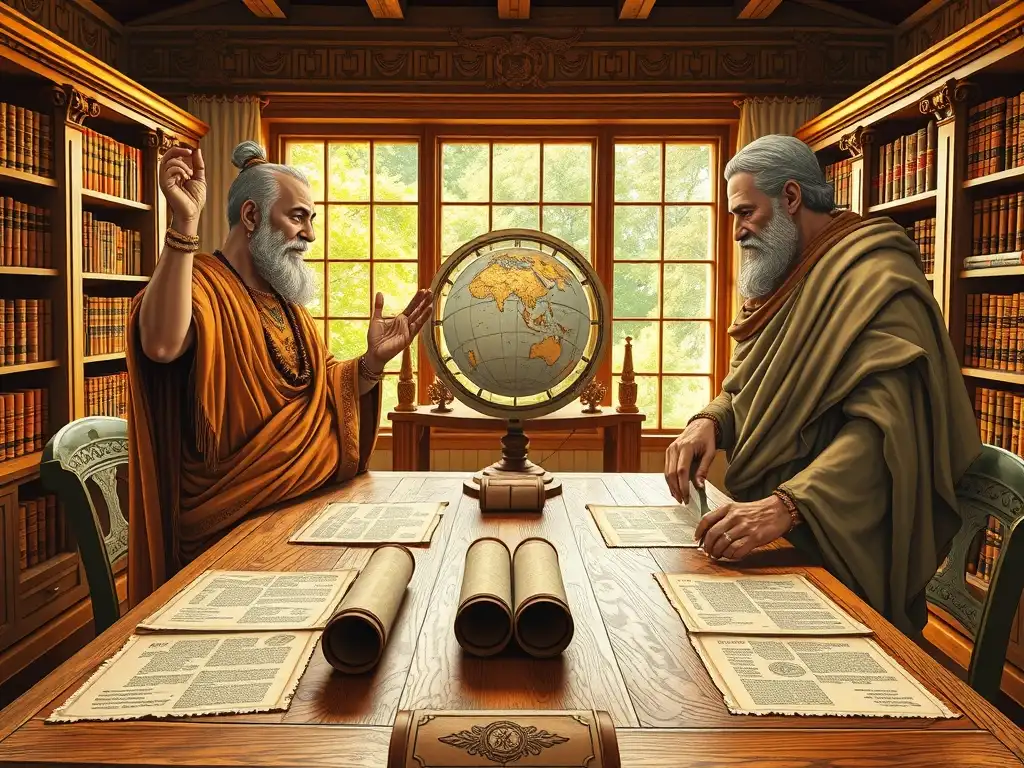
In today's globalized world, the relevance of ancient Indian and Greek philosophical ideas is more pronounced than ever. Concepts such as mindfulness and ethical living from Indian philosophy resonate with modern societal challenges, including mental health and environmental ethics. Simultaneously, the Greek emphasis on reason and logical argumentation continues to shape debates in political philosophy and ethical theory.
Educational institutions increasingly incorporate comparative philosophy into their curricula, recognizing the importance of these ancient traditions in addressing contemporary issues. The dialogue between these philosophies encourages students and thinkers alike to approach problems from multiple perspectives, fostering a more inclusive and comprehensive understanding of human experience.
The shared heritage of ancient Indian and Greek philosophers highlights the profound interconnectedness of human thought. This legacy not only enriches our understanding of philosophy but also serves as a testament to the power of intercultural dialogue in shaping ideas. As we explore this shared intellectual tradition, we uncover insights that remain vital in navigating the complexities of modern life.
Reflection on the Importance of Intercultural Philosophical Dialogue
Reflecting on the importance of intercultural philosophical dialogue reveals how these exchanges can lead to greater understanding and tolerance among diverse cultures. Engaging with the philosophical traditions of other civilizations fosters a sense of unity and shared purpose, as it emphasizes common human questions and concerns. This dialogue is essential in a world often marked by divisiveness, as it promotes empathy and a willingness to learn from one another.
Encouragement for Further Exploration of Ancient Indian and Greek Connections
Encouraging further exploration of ancient Indian and Greek connections invites scholars, students, and enthusiasts to delve deeper into the rich philosophical heritage that both civilizations offer. Engaging with primary texts, participating in discussions, and attending lectures on comparative philosophy are excellent ways to expand one's understanding of this fascinating interplay. By continuing to explore these ancient connections, we not only honor the wisdom of our ancestors but also enrich our own philosophical journeys.
- Introduction to Ancient Indian Greek Philosophy Connections
- Historical Context of Indian and Greek Philosophers
- Influential Philosophers and Their Contributions
- Points of Intersection: Indian and Greek Philosophical Ideas
- Comparative Analysis of Philosophical Methods
- The Impact of Cultural Exchange on Philosophy
- Legacy of Ancient Indian Greek Philosophy Connections
- Lasting Influence on Modern Philosophy
- Contemporary Relevance of Ancient Philosophical Ideas
- Conclusion: The Enduring Shared Heritage
- Reflection on the Importance of Intercultural Philosophical Dialogue
- Encouragement for Further Exploration of Ancient Indian and Greek Connections
- What are the main themes discussed in the article on Ancient Indian and Greek philosophy?
- How did Ancient Indian and Greek philosophies influence each other?
- What are some key figures mentioned in the article?
- What significance do Ancient Indian and Greek philosophies hold today?
- Where can I find more information on this topic?
Frequently Asked Questions
What are the main themes discussed in the article on Ancient Indian and Greek philosophy?
The article explores the shared heritage and connections between Ancient Indian and Greek philosophers, highlighting their contributions to philosophy, science, and culture.
How did Ancient Indian and Greek philosophies influence each other?
Ancient Indian and Greek philosophies influenced each other through trade, cultural exchanges, and the travel of scholars, leading to a fusion of ideas and concepts in various fields.
What are some key figures mentioned in the article?
The article discusses prominent figures such as Buddha and Aristotle, noting how their ideas shaped the philosophical landscape in both cultures.
What significance do Ancient Indian and Greek philosophies hold today?
The article emphasizes that the connections between these two philosophies continue to impact modern thought, particularly in areas such as ethics, logic, and metaphysics.
Where can I find more information on this topic?
For more insights into the shared heritage of Ancient Indian and Greek philosophies, refer to resources like academic journals, historical texts, and specialized websites on Ancient Indian history.
Final Reflection: Embracing the Wisdom of Ancient Philosophies
The connections between Ancient Indian and Greek philosophies are not merely historical curiosities; they are timeless reflections of our shared human quest for understanding and meaning. In an age where cultural boundaries often seem insurmountable, revisiting the dialogues between these two great traditions can illuminate pathways toward unity and deeper comprehension of our existence. The insights gleaned from these ancient thinkers continue to resonate, reminding us that wisdom knows no borders.
Cross-cultural exchanges have always shaped our collective consciousness, and the dialogues between Indian and Greek philosophers serve as a testament to the power of shared inquiry. The synthesis of ideas from figures like Plato and Nagarjuna invites us to explore the fundamental questions of life, ethics, and the nature of reality. As we navigate the complexities of modern society, we are reminded of the words of Socrates: The unexamined life is not worth living.
This call to introspection is as relevant today as it was in ancient times, urging us to seek knowledge and understanding through the lens of diverse philosophies.
As we reflect on the profound connections between Ancient Indian and Greek philosophies, let us embrace the invitation to explore these teachings in our own lives. Consider how the principles of these ancient thinkers can inspire you to cultivate a more thoughtful and reflective existence. Engage with their ideas, challenge your assumptions, and foster a dialogue that transcends cultural divides. In doing so, we not only honor the legacy of these great minds but also contribute to a more harmonious and enlightened future for ourselves and generations to come.
Unveil the Wisdom of Ancient Philosophers!
Thank you for taking the time to explore the fascinating connection between Ancient Indian and Greek philosophies with us! You've gained valuable insights into how these two great traditions shaped thought and culture across the globe. Now, it’s time to take your newfound knowledge further.
Here are some empowering actions you can take today:
- Dive Deeper: Read a significant philosophical text from either tradition—whether it's the **Bhagavad Gita** or the **works of Plato**. Let their wisdom inspire your own thinking!
- Engage with Others: Participate in a discussion group or online community to share your insights and learn from fellow philosophy enthusiasts.
- Explore Cross-Cultural Connections: Investigate and write about the influence of these philosophies on contemporary thought or philosophies from other cultures—surprise yourself with what you discover!
What aspect of Ancient Indian or Greek philosophy do you find most intriguing, and how do you think it can be applied to today’s world?