
Philosophical Dialogues: The Interactions of Indian and Greek Thinkers

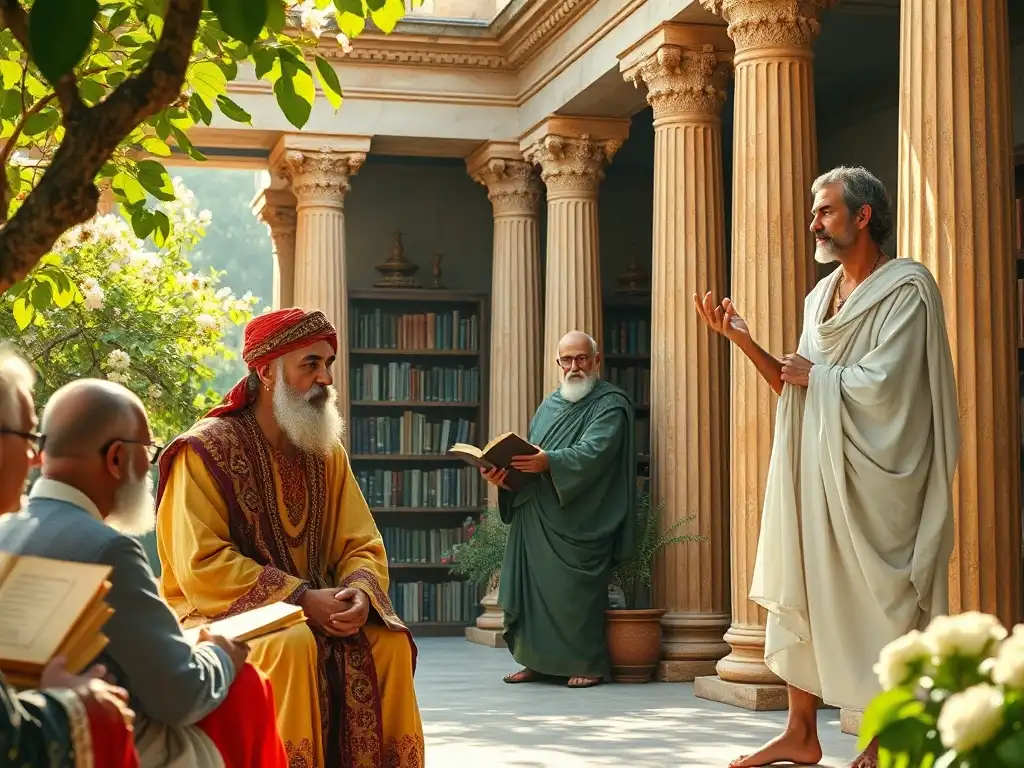
Welcome to Ancient India History, where we embark on a journey through the rich tapestry of India's past, exploring the profound interactions that shaped its diverse civilizations. In our featured article, "Philosophical Dialogues: The Interactions of Indian and Greek Thinkers," we delve into the fascinating realm of Indian Greek philosophical interactions—a compelling narrative that reveals the exchange of ideas between two great cultures.
Prepare to uncover how these dialogues influenced not only philosophy but also the very fabric of ancient societies. Join us as we unravel the threads of history that connect the wisdom of the East and West, sparking curiosity and inviting you to explore deeper into this captivating era.

Introduction to Indian Greek Philosophical Interactions
The exploration of Indian Greek philosophical interactions reveals a profound and intricate tapestry woven from the threads of two distinct yet overlapping civilizations. Ancient India and Greece, while geographically distant, shared a vibrant intellectual exchange that significantly influenced their respective philosophical landscapes. This article delves into the notable dialogues between Indian and Greek thinkers, illustrating how these interactions not only shaped philosophical thought but also enriched cultural understanding across borders. By examining this cross-cultural engagement, we can uncover the foundational ideas and concepts that emerged from these dialogues, highlighting their relevance in our contemporary understanding of philosophy.
Overview of Indian and Greek Philosophical Traditions
Both Indian and Greek philosophical traditions boast rich histories characterized by deep inquiries into existence, ethics, and the nature of knowledge.
- Indian Philosophy encompasses diverse schools of thought, including Hinduism, Buddhism, and Jainism, each offering unique perspectives on reality and morality.
- Greek Philosophy, on the other hand, is primarily rooted in the works of figures such as Socrates, Plato, and Aristotle, who laid the groundwork for Western philosophical thought, emphasizing rational inquiry and empirical observation.
These traditions, while distinct, share common themes in their quests for truth and understanding, providing fertile ground for interaction and synthesis.
Importance of Cross-Cultural Exchanges in Ancient Philosophy
Cross-cultural exchanges between Indian and Greek philosophers were crucial for several reasons:
- Intellectual Enrichment: The dialogue fostered a dynamic environment where ideas could be challenged and refined, leading to the evolution of philosophical concepts.
- Cultural Understanding: Through these interactions, both civilizations gained insights into each other's beliefs and practices, promoting tolerance and pluralism.
- Foundation for Future Thinkers: The synthesis of ideas influenced later philosophical developments in both traditions, paving the way for future intellectual movements.
Historical Context of Indian and Greek Philosophical Interactions
The historical context of Indian-Greek philosophical interactions is marked by significant events and cultural exchanges that shaped the landscape of ancient thought.
Timeline of Key Events in Indian-Greek Relations
- 6th Century BCE: Early interactions occur as Persian conquests bring Greek influence to the Indian subcontinent.
- 327-325 BCE: Alexander the Great's invasion of India opens new dialogues between Greek and Indian philosophers, particularly in regions like Taxila.
- 3rd Century BCE: The Maurya Empire, particularly under Ashoka, fosters an environment of cultural exchange, including Hellenistic influences.
- 1st Century BCE: The establishment of the Indo-Greek Kingdom facilitates further philosophical and cultural interactions.
Geographical and Cultural Proximity: The Role of Trade Routes
Trade routes played a pivotal role in facilitating the exchange of ideas between Indian and Greek civilizations. The Silk Road and maritime routes allowed not only for the movement of goods but also for the flow of knowledge. Key aspects include:
- Cultural Melting Pots: Cities along trade routes became hubs of learning, where merchants, scholars, and travelers exchanged not just commodities but also philosophies and worldviews.
- Influence of Buddhism: The spread of Buddhism from India to the Mediterranean invited Greek thinkers to engage with Indian philosophical concepts, further intertwining their intellectual traditions.
Understanding these historical contexts allows us to appreciate the depth and complexity of the Indian Greek philosophical interactions, setting the stage for a deeper exploration of their specific contributions and legacies.
Major Indian Philosophers Influenced by Greek Thought
The interactions between Indian and Greek philosophers during the Hellenistic period led to significant developments in Indian philosophical thought. Notable Indian philosophers such as Charvaka, Jain thinkers, and later Buddhist scholars demonstrated an openness to Greek ideas, particularly in the realms of logic, metaphysics, and ethics. This exchange enriched Indian philosophy, creating a unique blend of indigenous and foreign elements.
For instance, the arrival of Greek thought introduced Indian philosophers to new methods of reasoning and argumentation. The emphasis on rational inquiry in Greek philosophy resonated with Indian intellectual traditions, prompting philosophers to explore their own doctrines with renewed vigor. The influence can be particularly seen in the evolution of Buddhist philosophy, where concepts of logic and dialectics were refined through engagement with Greek philosophical frameworks.
Moreover, the introduction of scientific and mathematical concepts from Hellenistic thinkers had a profound impact on Indian philosophy, particularly in the fields of astronomy and mathematics. This cross-pollination fostered a rich dialogue, encouraging Indian philosophers to reassess and expand their own systems of thought.
Contributions of Indian Philosophers in the Hellenistic Period
During the Hellenistic period, Indian philosophers made notable contributions that reflected their engagement with Greek thought. One of the most significant impacts was in the realm of ethics and moral philosophy. Indian thinkers began to incorporate Hellenistic ideals of virtue and ethics, blending them with traditional Indian concepts like dharma (duty/righteousness).
The development of the Madhyamaka school of thought, attributed to Nagarjuna, demonstrated a synthesis of Indian and Greek philosophical ideas. Nagarjuna's dialectical method paralleled the logical rigor found in Greek philosophy, particularly the works of Aristotle. This synthesis encouraged deeper explorations of concepts such as emptiness and the nature of reality, significantly influencing both Buddhist and later Indian philosophical traditions.
Additionally, Indian philosophers contributed to the discourse on metaphysics and epistemology, drawing parallels with Greek discussions on the nature of knowledge and existence. The cross-cultural exchange fostered a vibrant intellectual environment, leading to diverse interpretations of fundamental philosophical questions.
Case Study: Nagarjuna and Greek Philosophy
Nagarjuna, a seminal figure in Buddhist philosophy, exemplifies the profound impact of Greek thought on Indian philosophy. His works, primarily the Mūlamadhyamakakārikā, present a sophisticated understanding of emptiness (śūnyatā) and dependent origination, concepts that can be seen through a lens influenced by Greek dialectics.
Through his dialectical method, Nagarjuna engaged with the ideas of logical contradictions and paradox, reminiscent of the Socratic method used by Greek philosophers. His approach not only challenged the prevailing notions of inherent existence but also echoed the critical inquiries present in Greek philosophical traditions. The similarities in argumentation suggest a mutual influence, where Greek logic provided a framework for Nagarjuna's explorations of Buddhist metaphysics.
Furthermore, Nagarjuna’s engagement with questions of existence and non-existence parallels discussions found in Greek philosophy, particularly in the works of Heraclitus and Plato. This connection highlights a fascinating dialogue between the two traditions, showcasing how Indian philosophical inquiries were shaped by Hellenistic influences.
Major Greek Philosophers Influenced by Indian Thought
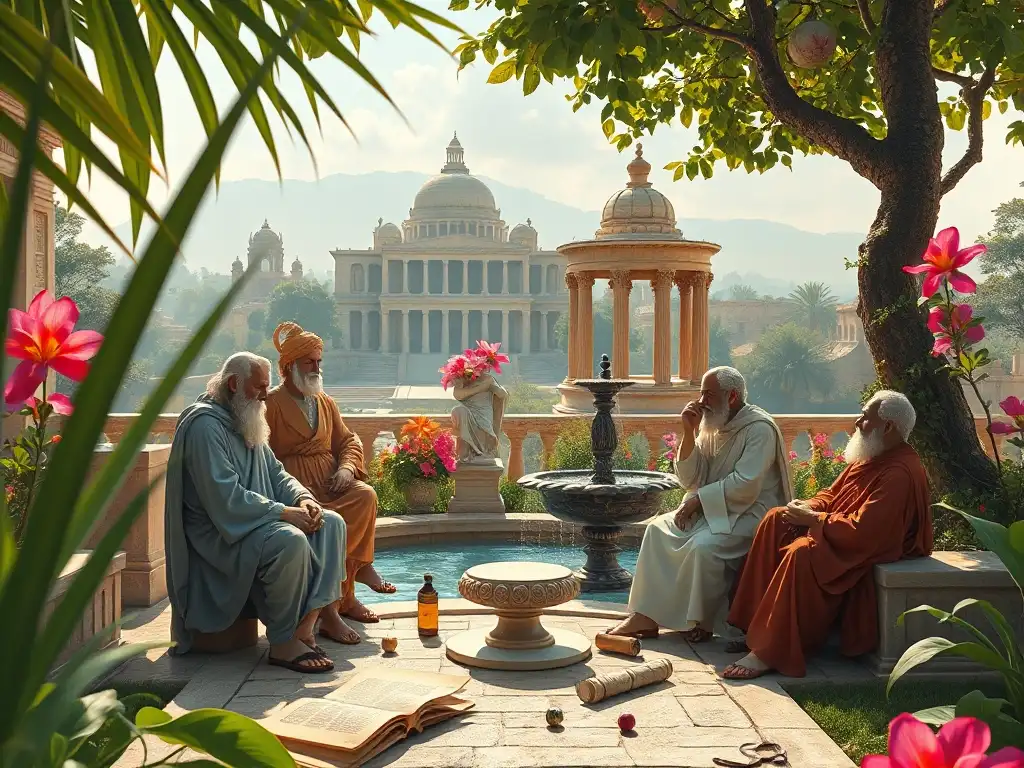
The influence of Indian philosophy on Greek thought can be traced through several prominent Greek philosophers who engaged with Indian ideas. The cross-cultural interactions, particularly during the conquests of Alexander the Great, facilitated a flow of philosophical ideas that significantly impacted Greek philosophical discourse.
Philosophers such as Pythagoras are often cited as having been influenced by Indian concepts, particularly those related to mathematics, cosmology, and the idea of the transmigration of souls. This exchange of ideas fostered a deeper philosophical inquiry into the nature of existence and the universe.
Key Greek Thinkers and Their Engagement with Indian Philosophy
Key Greek thinkers such as Plato and Plotinus engaged with ideas from Indian philosophy, particularly notions of idealism and metaphysics. Plato's theory of forms resonates with Indian concepts of Brahman (the ultimate reality) and the illusion of Maya (the material world). The parallels between the two philosophical frameworks indicate a possible exchange of ideas, particularly during the period of increased contact between the Greek and Indian civilizations.
Moreover, the Stoics, who emphasized virtue and rationality, found common ground with Indian philosophies such as Buddhism and Jainism. Their ethical teachings reflected similar principles of self-control and the pursuit of a virtuous life, showcasing the deeper philosophical connections that transcended cultural boundaries.
The Influence of Indian Philosophy on Plotinus
Plotinus, the founder of Neoplatonism, exhibited a significant influence from Indian philosophical thought, particularly through his concept of the One, a transcendent source of all existence. This idea parallels the Indian notion of Brahman, where both philosophies explore the relationship between the ultimate reality and the material world.
Plotinus's emphasis on introspection and the inner journey towards the divine also resonates with Indian meditative practices, suggesting an exchange of spiritual methodologies. His writings reflect a keen interest in metaphysical inquiries that align closely with the teachings of Indian sages, particularly regarding the nature of reality and the path to enlightenment.
The synthesis of Indian and Greek philosophies in Plotinus's work illustrates the profound impact of Indian thought on the development of Western philosophical traditions, highlighting the enduring legacy of these cross-cultural interactions.
Themes in Indian Greek Philosophical Interactions
The interactions between Indian and Greek thinkers during ancient times were marked by a rich tapestry of themes that highlighted both convergence and divergence in their intellectual pursuits. These themes include metaphysics, ethics, and epistemology, which each provide a unique lens through which we can understand the philosophical dialogues that transpired between these two great civilizations. As Indian and Greek philosophers engaged in discussions, they not only shared insights but also questioned each other’s beliefs, leading to a profound exchange of ideas that contributed to the evolution of philosophical thought in both cultures.
The dialogues often revolved around fundamental questions of existence, morality, and knowledge, reflecting the diverse ways in which these civilizations approached similar philosophical inquiries. By examining these themes, we can gain a deeper appreciation for the complexities and nuances of Indian-Greek philosophical interactions, as well as the lasting impact these exchanges have had on subsequent philosophical developments.
Metaphysics: Comparing Concepts of Reality
Metaphysics played a crucial role in the philosophical interactions between Indian and Greek thinkers, as both traditions sought to understand the nature of reality and existence. In Indian philosophy, particularly in schools like Vedanta, the concept of Brahman as the ultimate reality is central. This non-dualistic view posits that the material world is an illusion (Maya) and that true understanding comes from realizing one's identity with Brahman.
Conversely, Greek metaphysics, particularly through the works of philosophers like Plato and Aristotle, emphasized the existence of forms and substances. Plato’s Theory of Forms suggests that the material world is a mere shadow of the true reality found in the abstract world of forms. Aristotle, on the other hand, focused on the nature of substance itself, investigating the essence of things through empirical observation.
The dialogues between Indian and Greek thinkers often highlighted these differing perspectives. For example, when discussing the nature of the soul, Indian philosophers would emphasize its eternal and unchanging nature, whereas Greek philosophers like Socrates and Plato would explore its immortality and role in seeking knowledge.
Ethics: Diverging and Converging Moral Philosophies
Ethical considerations were another significant theme in the philosophical exchanges between Indian and Greek thinkers. Indian ethics, influenced by texts such as the Bhagavad Gita, often centers on concepts like Dharma (duty/righteousness) and Karma (action and its consequences). The emphasis is on living in accordance with one's responsibilities and the moral law governing the universe, which leads to spiritual advancement.
In contrast, Greek ethical thought, particularly in the works of philosophers like Aristotle and the Stoics, often focused on the concept of virtue and the pursuit of eudaimonia, or human flourishing. Aristotle's virtue ethics posits that moral excellence is achieved through the cultivation of virtues and the practice of moderation.
Despite these differences, there were areas of convergence. Both traditions recognized the importance of self-control, the pursuit of wisdom, and the role of community in ethical behavior. The dialogues often explored how individual conduct contributes to societal welfare, highlighting a shared understanding of the ethical responsibilities of individuals within their respective cultures.
Epistemology: Knowledge and Perception in Indian and Greek Thought
Epistemology, or the study of knowledge, was a vital area of inquiry for both Indian and Greek philosophers. In Indian philosophy, particularly within the schools of Nyaya and Buddhism, the sources of knowledge are examined through the lenses of perception (pratyaksha), inference (anumana), and testimony (shabda). The Indian approach often emphasizes the practical application of knowledge in achieving liberation (moksha) and understanding the nature of reality.
Greek epistemology, on the other hand, was heavily influenced by the works of Plato and Aristotle. Plato’s allegory of the cave illustrates the distinction between the world of appearances and the world of forms, underscoring the importance of philosophical inquiry in attaining true knowledge. Aristotle, with his empirical approach, emphasized observation and experience as key avenues for acquiring knowledge.
The philosophical dialogues between these traditions often centered around the validity and limits of human perception. Indian thinkers questioned the reliability of sensory experience, while Greek philosophers sought to establish a systematic approach to understanding the world through rational inquiry. This exchange enriched both traditions, leading to a more nuanced understanding of knowledge and perception.
Methods of Philosophical Exchange Between Indian and Greek Thinkers
The philosophical exchanges between Indian and Greek thinkers were facilitated through various methods, including the translation of texts, oral traditions, and direct interactions. These methods not only allowed for the sharing of ideas but also contributed to the development of a hybrid philosophical discourse that drew from both traditions.
The Role of Texts and Translations in Philosophical Dialogues
Written texts and translations played a pivotal role in the philosophical interactions between Indian and Greek thinkers. The translation of important works, such as the Upanishads and Buddhist texts, into Greek during the Hellenistic period allowed Greek philosophers access to Indian philosophical concepts. This exchange was particularly evident in the writings of thinkers like Plotinus, who showcased elements of Indian metaphysical thought within his own philosophical framework.
Additionally, the transmission of Greek texts into India through trade routes and cultural exchanges facilitated a reciprocal flow of ideas. Works by philosophers like Aristotle and Plato were translated into Sanskrit, which in turn influenced Indian philosophical discourse. This cross-pollination of ideas through texts laid the foundation for a deeper understanding of metaphysics, ethics, and epistemology across both traditions.
Oral Traditions and Their Impact on Philosophical Exchange
Oral traditions also played a significant role in the philosophical exchanges between Indian and Greek thinkers. In ancient India, the oral transmission of knowledge was a key method of teaching and preserving philosophical ideas. Philosophers would engage in debates and discussions, sharing their insights and challenging one another’s views in a dynamic oral environment.
Similarly, Greek philosophy was characterized by the practice of dialogue, as seen in the works of Socrates, who often engaged others in conversations to explore philosophical questions. The method of dialectics allowed for a back-and-forth exchange of ideas, fostering an environment where philosophical concepts could be rigorously examined and refined.
This oral exchange complemented written texts, allowing for a more vibrant and immediate interaction between the two traditions. The combination of oral and written methods of communication enriched the philosophical dialogues, leading to a more comprehensive understanding of the themes and ideas that emerged from these interactions.
The Legacy of Indian Greek Philosophical Interactions
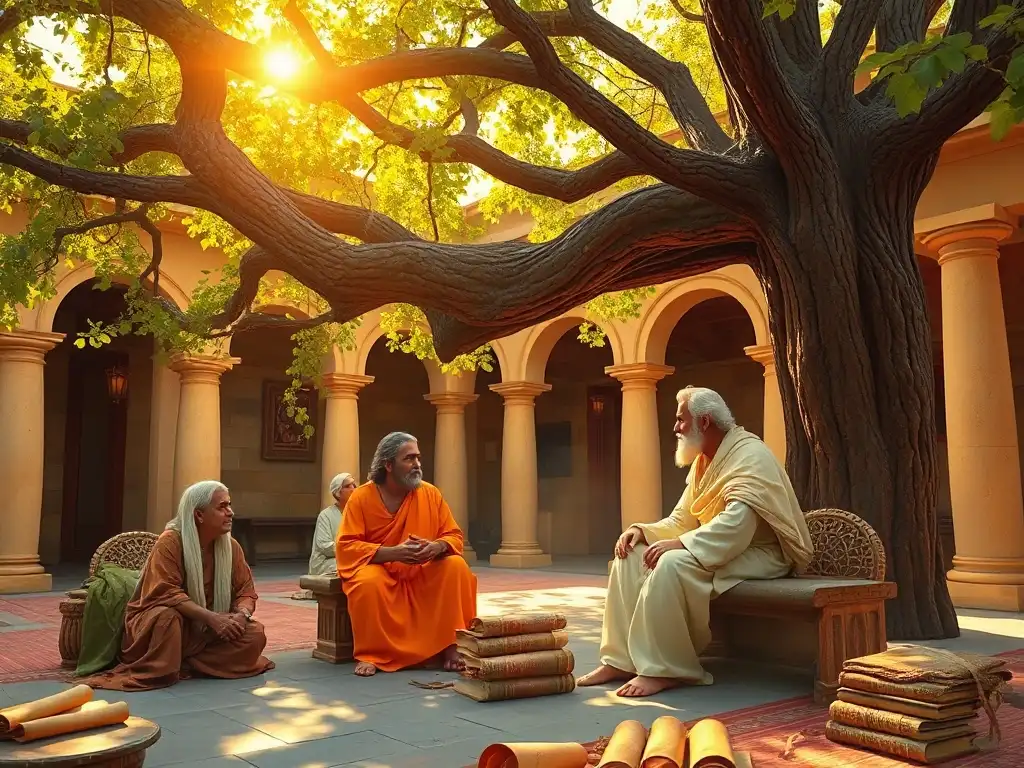
The interactions between Indian and Greek philosophers laid a foundation that influenced various aspects of philosophical thought. This legacy is evident in the synthesis of ideas that emerged from dialogues between these two rich traditions. The exchange of concepts, especially during the period of Hellenistic influence in India, fostered a unique philosophical environment. Thinkers such as Megasthenes, who documented Indian society and philosophy, played a crucial role in bridging the gap between these distinct cultures.
Moreover, the translation of Indian texts into Greek and vice versa facilitated a deeper understanding of metaphysical concepts, ethics, and epistemology. This cross-pollination enriched both traditions, leading to developments in logic, rhetoric, and ethics that resonate in contemporary philosophical discourse. The legacy of these interactions is not merely historical; it continues to inspire modern philosophical inquiry and multicultural dialogues.
Lasting Influences on Later Philosophical Traditions
The philosophical exchanges between Indian and Greek thinkers have significantly shaped later philosophical traditions, particularly in the realms of metaphysics and ethics. Concepts such as the nature of reality (Brahman in Indian philosophy and the concept of forms in Greek thought) exhibit similarities that suggest a shared intellectual heritage.
For instance, the ideas of self-realization in Indian philosophy found echoes in the works of later Western philosophers, such as Descartes and Kant. The emphasis on introspection and the quest for knowledge in both traditions fostered a holistic approach to understanding the self and the universe. Furthermore, the dialogues between figures like Aristotle and Indian philosophers on ethics and moral responsibility have left an indelible mark on subsequent philosophical discourse, influencing schools of thought throughout the ages.
Impact on Global Philosophical Discourse
The Indian Greek philosophical interactions contributed significantly to the global philosophical discourse by providing a framework for comparative philosophy. The melding of ideas facilitated a broader understanding of universal truths that transcend cultural boundaries. This cross-cultural dialogue encouraged thinkers across the world to explore and integrate diverse perspectives on existence, ethics, and knowledge.
The impact is evident in the Renaissance and the Enlightenment periods, where scholars rediscovered ancient texts and engaged with ideas from both traditions. This led to a more pluralistic approach in philosophy, encouraging the incorporation of diverse methodologies and viewpoints. Today, the legacy of Indian Greek philosophical interactions continues to inspire global philosophical discussions, emphasizing the importance of inclusivity and the sharing of knowledge across cultures.
Conclusion: The Significance of Indian Greek Philosophical Interactions
The significance of Indian Greek philosophical interactions lies not only in their historical context but also in their enduring influence on contemporary thought. These exchanges fostered a rich intellectual environment where ideas could flourish, leading to a deeper understanding of human experience and existence. The interactions between these two great civilizations highlight the importance of dialogue in the pursuit of wisdom and knowledge.
Reflection on the Importance of Cultural Dialogue in Philosophy
Cultural dialogue in philosophy is essential for fostering mutual understanding and respect among diverse traditions. The Indian Greek interactions exemplify how philosophical discourse can transcend geographical and cultural boundaries, leading to a richer tapestry of thought. By engaging with different perspectives, philosophers can address complex questions about morality, existence, and the nature of knowledge more effectively. This dialogue not only enriches philosophical inquiry but also promotes a sense of global community, recognizing the shared human experience.
Future Directions for Research on Indian Greek Philosophical Interactions
Future research on Indian Greek philosophical interactions should focus on uncovering lesser-known texts and ideas that may have shaped these dialogues. There is a need for interdisciplinary approaches that incorporate archaeology, linguistics, and comparative philosophy to gain a more comprehensive understanding of these interactions.
Additionally, exploring the implications of these exchanges on modern philosophical practices and contemporary issues can provide valuable insights. Encouraging collaborative research efforts between scholars from both traditions may further enrich the discourse and highlight the relevance of ancient philosophical interactions in addressing today’s challenges in a globalized world.
References
Key Texts and Resources on Indian Greek Philosophical Interactions
The interactions between Indian and Greek philosophies have been documented in various texts and resources throughout history. Key texts include:
- The Upanishads: These ancient Indian texts explore metaphysical concepts and have parallels with Greek thought, particularly in discussions of the self and the universe.
- The Bhagavad Gita: A critical philosophical dialogue that touches on duty, righteousness, and the nature of reality, offering insights that resonate with Greek ethical theories.
- Aristotle's Works: Aristotle's writings, especially on ethics, politics, and metaphysics, provide a foundational perspective that can be compared with Indian philosophical ideas.
- Diodorus Siculus' "Bibliotheca Historica": This work includes accounts of interactions between Indian and Greek thinkers, shedding light on the cultural exchanges of the time.
- The "Yoga Sutras of Patanjali": This text presents a systematic approach to yoga and meditation, aligning with philosophical inquiries found in Hellenistic thought.
- "The Philosophy of the Upanishads" by Paul Deussen: A comprehensive examination of Upanishadic philosophy and its resonance with Greek philosophical traditions.
These texts serve as essential resources for understanding the nature and depth of Indian-Greek philosophical interactions.
Suggested Further Reading on Ancient Philosophies
For those interested in delving deeper into the philosophical dialogues between Indian and Greek thinkers, the following readings are recommended:
- "Indian Philosophy: A Very Short Introduction" by Sue Hamilton: This book provides a concise overview of the main schools of Indian philosophy, enabling readers to appreciate its complexity and nuances.
- "The World's Religions" by Huston Smith: This text includes comparative analyses of Eastern and Western philosophies, offering insights into the connections between Indian and Greek thought.
- "Hellenistic Philosophy: A Study of the New Academy" by Richard D. McKirahan: This book focuses on the philosophical developments in the Hellenistic period and their potential influences from Indian philosophies.
- "The Philosophy of Greek Tragedy" by M. A. K. Halliday: While primarily about Greek tragedy, this book discusses the philosophical underpinnings that may have been influenced by Eastern thought.
- "Comparative Philosophy: Chinese and Western Approaches" by Tzuchien Tho: Although centered on Chinese and Western philosophies, it provides frameworks that are applicable to the study of Indian and Greek philosophical interactions.
These readings can enhance understanding and appreciation of the rich tapestry of ideas exchanged between ancient Indian and Greek thinkers, highlighting their lasting impact on philosophical discourse.
- Introduction to Indian Greek Philosophical Interactions
- Historical Context of Indian and Greek Philosophical Interactions
- Major Indian Philosophers Influenced by Greek Thought
- Major Greek Philosophers Influenced by Indian Thought
- Themes in Indian Greek Philosophical Interactions
- Methods of Philosophical Exchange Between Indian and Greek Thinkers
- The Legacy of Indian Greek Philosophical Interactions
- Conclusion: The Significance of Indian Greek Philosophical Interactions
- References
Frequently Asked Questions
What were the key features of Indian and Greek philosophical interactions?
The Indian Greek philosophical interactions were characterized by cultural exchanges, where both traditions influenced each other's thoughts, particularly in metaphysics and ethics.
How did these interactions impact Indian philosophy?
The interactions introduced new ideas and concepts, leading to the development of syncretic philosophies that combined elements from both traditions, enriching the intellectual landscape of ancient India.
What role did trade routes play in these exchanges?
Trade routes, such as the Silk Road, facilitated the movement of philosophers and ideas, allowing for a dynamic exchange of knowledge between Indian and Greek thinkers.
Who were some prominent figures involved in these dialogues?
Notable figures included Nagarjuna and Buddhaghosa from India, and Plato and Aristotle from Greece, whose works reflect the cross-cultural influences in philosophical thought.
Why are these interactions significant today?
The Indian Greek philosophical interactions are significant as they highlight the importance of cultural dialogue in shaping philosophical traditions, which continues to inform contemporary discussions on ethics and metaphysics.
Final Reflection: The Timeless Exchange of Ideas
The interactions between Indian and Greek thinkers illustrate the profound impact of cross-cultural dialogues on the evolution of philosophy. In an increasingly interconnected world, the exchange of ideas across borders has never been more relevant. The rich tapestry of Indian and Greek philosophical interactions not only shaped their respective traditions but also laid the groundwork for contemporary philosophical discourse. This timeless dialogue reminds us that wisdom knows no boundaries and that the sharing of knowledge can transcend cultural divides.
The legacy of these philosophical exchanges continues to resonate in today's cultural and social landscape. The insights gleaned from the synthesis of Indian and Greek thought encourage us to embrace diverse perspectives and foster a spirit of inquiry. As we navigate the complexities of modern life, the teachings of these ancient thinkers serve as a guiding light. Philosophy is the highest music.
– Plato. This quote encapsulates the harmonious blend of ideas that emerges when different traditions engage in meaningful dialogue, inspiring us to seek harmony in our own intellectual pursuits.
As we reflect on the lessons from Indian and Greek philosophical interactions, let us commit to nurturing our own dialogues and embracing the richness of diverse thought. I invite you to explore the depths of your own beliefs and engage with others in meaningful conversations. By doing so, we not only honor the legacy of these great thinkers but also contribute to a more enlightened and compassionate world. Together, we can continue the tradition of philosophical inquiry that has the power to transform lives and societies.
Unveil New Perspectives: Engage with Ancient Wisdom!
Thank you for exploring the rich interplay between Indian and Greek thinkers through philosophical dialogues! Your curiosity contributes to a deeper understanding of how these ancient civilizations shaped human thought. Now that you've gained insights, it's time to put this knowledge into action.
- Dive deeper into intercultural philosophy by reading more texts from both traditions. Consider selecting a specific philosopher from each culture and examining their works side by side to uncover their unique perspectives.
- Share your insights! Discuss what you've learned with friends or join an online community dedicated to philosophical exchanges. Encourage others to explore the connections between these profound thinkers and the relevance of their ideas today.
- Join a local or virtual study group focused on ancient philosophy. Engaging with others can lead to stimulating discussions and new friendships with individuals who share your interest in these timeless topics.
What unexpected connections between Indian and Greek philosophies can you discover that might influence your own way of thinking?