
Exploring the Dialectical Variations of Prakrit Across Regions

Welcome to Ancient India History, where we take you on a captivating journey through the rich tapestry of ancient Indian civilizations! Dive deep into the fascinating world of Prakrit dialect variations in India as we explore how language reflects the diverse cultural landscapes of the subcontinent. From the melodic tones of the Indus Valley to the intricate nuances of the Gupta Empire, this article will unveil the layers of history embedded in these dialects.
Prepare to be intrigued and inspired as you uncover the stories that shaped the linguistic heritage of one of the world's oldest civilizations. Read on to discover how these dialects continue to resonate within India's cultural narrative today!
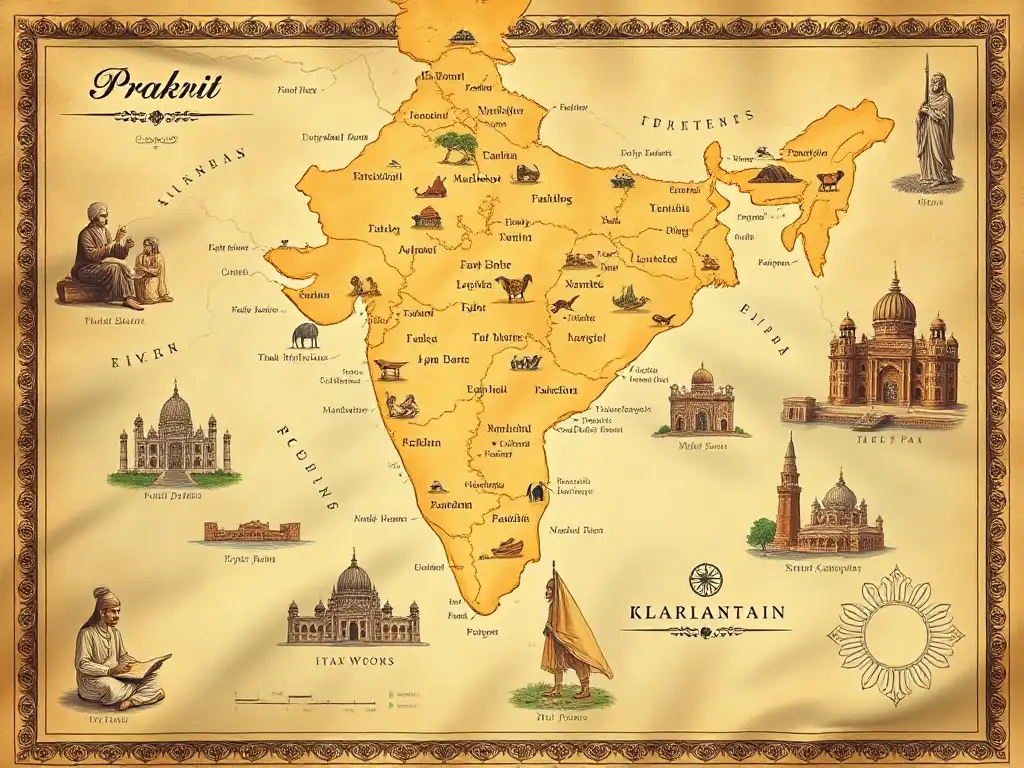
Introduction to Prakrit and Its Significance
The study of Prakrit dialect variations in India is an essential aspect of understanding the linguistic landscape of ancient Indian civilizations. Prakrit, a group of Middle Indo-Aryan languages, serves as a significant link between the Vedic Sanskrit and modern languages spoken in the Indian subcontinent today.
It is not merely a linguistic entity but a reflection of the vibrant cultural and social milieu of ancient India, showcasing the interplay between language, literature, and regional diversity. This article delves into the dialectical variations of Prakrit across different regions, illuminating how these variations contribute to our understanding of ancient Indian society and its complexities.
Overview of Prakrit Languages
Prakrit languages emerged around the 3rd century BCE and were widely used in various forms across the Indian subcontinent. Unlike the more rigid and formal Sanskrit, Prakrits were characterized by their fluidity and adaptability, making them suitable for everyday communication among diverse populations. The primary Prakrit languages include:
- Ardhamagadhi: Predominantly used in Jain texts and spoken in the regions of modern-day Bihar and Jharkhand.
- Shauraseni: Spoken in the western parts of India, particularly in regions like Gujarat and Rajasthan.
- Maharashtri: Associated with the Marathi-speaking areas and prominent in the literature of the time.
These dialects are not just linguistic variations but also embody the cultural nuances and historical contexts of their respective regions.
Importance of Dialectical Variations in Ancient India
The dialectical variations of Prakrit are crucial for several reasons:
- Cultural Reflection: Each dialect encapsulates the unique cultural practices, beliefs, and traditions of the communities that spoke them. For instance, Maharashtri Prakrit is rich in poetic forms that reflect the aesthetics of the region's literature.
- Linguistic Evolution: The variations reveal the evolution of language over time, showcasing how regional languages borrowed from and influenced one another.
- Historical Insights: By studying these dialects, historians and linguists can gain insights into the social, political, and economic interactions between ancient Indian states and communities.
Historical Context of Prakrit Dialects
Evolution of Prakrit Through Time
The evolution of Prakrit dialects can be traced through various historical milestones, from their inception to their decline with the rise of modern Indo-Aryan languages. Initially, Prakrits were primarily oral languages, gaining prominence in literary forms during the Mauryan period (322–185 BCE). They were used by poets and playwrights, including revered figures like Ashvaghosha and Kalidasa, who contributed significantly to the literary heritage of India.
Over time, the Prakrit languages underwent significant transformations influenced by regional dialects, socio-political changes, and cultural exchanges. The emergence of new kingdoms and trade routes facilitated the spread and adaptation of these dialects, contributing to a rich tapestry of linguistic diversity.
Influence of Regional Cultures on Prakrit
Regional cultures played a pivotal role in shaping the dialects of Prakrit. As different communities interacted, they infused their local customs, traditions, and linguistic characteristics into the Prakrit spoken in their areas. For example:
- In Gujarat, the influence of trade and commerce led to the incorporation of unique vocabulary and expressions in Shauraseni.
- In Maharashtra, the rich folk traditions and regional folklore heavily influenced the development of Maharashtri, making it distinct from its contemporaries.
These intermingling of cultures not only enriched the Prakrit dialects but also provided a foundation for the modern languages that evolved from them, making them a vital part of India's linguistic heritage.
Major Dialects of Prakrit in India
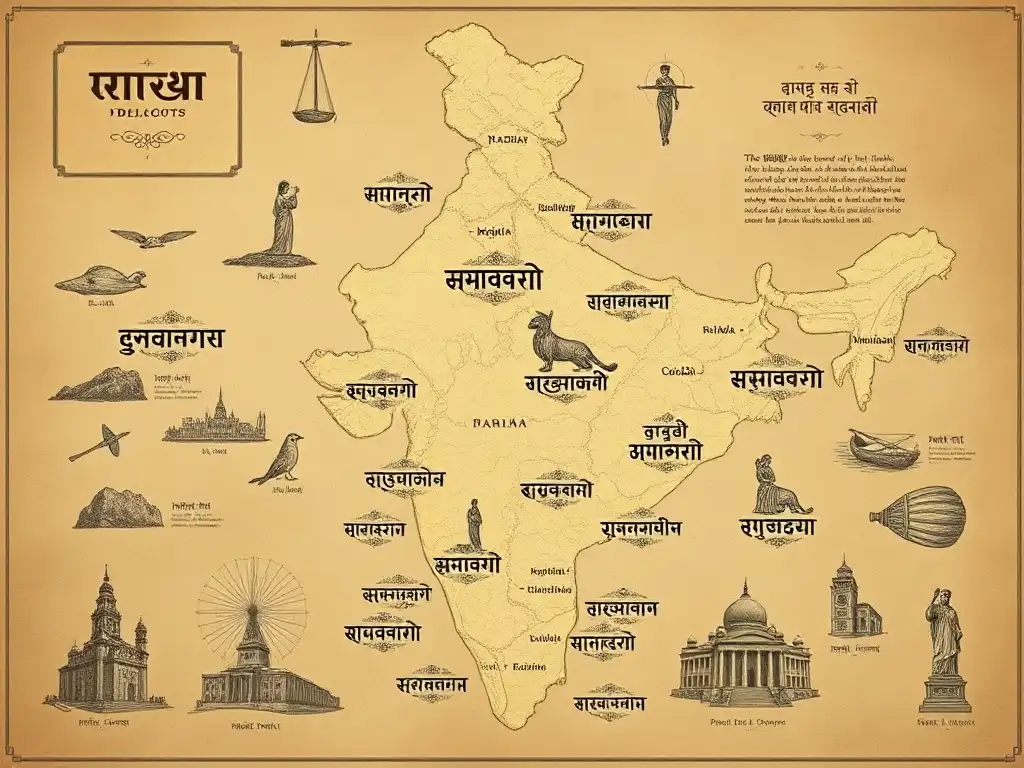
Prakrit languages, emerging from the ancient roots of Sanskrit, exhibit rich dialectical variations across different regions of India. These dialects reflect the diverse cultural and linguistic landscapes of India, with each dialect serving as a medium for the expression of local literature, traditions, and philosophies. The major dialects of Prakrit include Ardhamagadhi, Maharashtri, and Sauraseni, among others, each possessing unique characteristics that set them apart.
These dialects not only served as spoken languages but also contributed significantly to the development of early literary traditions in India. The Prakrit dialects were used extensively in Jain and Buddhist texts, poetry, and drama, often seen as more accessible forms of language compared to classical Sanskrit. The evolution of these dialects is intrinsically linked to the socio-political changes and the diffusion of cultural practices throughout Indian history.
Overview of Key Prakrit Dialects
- Ardhamagadhi:
- Predominantly spoken in the regions of modern-day Bihar and Jharkhand, Ardhamagadhi is closely associated with Jain literature. It is recognized as the language of the Jain Agamas and has a significant historical presence in religious texts. The dialect also exhibits influences from Magadhi Prakrit, which was prevalent in the ancient Magadha kingdom.
- Maharashtri:
- This dialect flourished in the western regions, particularly in Maharashtra. Maharashtri Prakrit is known for its extensive use in classical drama and poetry, significantly contributing to the literary heritage of the region. Notable poets like Kalidasa and Bhasa utilized this dialect to create timeless works that are still celebrated today.
- Sauraseni:
- Originating from the region around the city of Mathura, Sauraseni Prakrit became prominent in the north-central parts of India. It is recognized for its use in early theatrical performances and poetic compositions, influencing later forms of Hindi and other regional languages.
- Magadhi:
- Used primarily in the eastern part of India, particularly Bihar, Magadhi Prakrit is characterized by its distinct phonetic and grammatical features. It holds historical significance as the language spoken by Gautama Buddha, making it an essential part of Buddhist literature.
Comparison of Western and Eastern Prakrit Dialects
The Western and Eastern Prakrit dialects exhibit notable differences in phonology, vocabulary, and syntax, which reflect the cultural and linguistic diversity of the regions they represent.
- Phonological Differences:
- Western dialects like Maharashtri often have a more pronounced use of certain consonants and vowels compared to Eastern dialects such as Ardhamagadhi and Magadhi, which may present softer sounds and more nasalized vowels.
- Vocabulary:
- There is a clear divergence in vocabulary, with Western dialects incorporating a greater number of loanwords from Sanskrit and regional languages, while Eastern dialects tend to retain a more original Prakrit lexicon.
- Syntax:
- The syntactical structures can also vary, with Western dialects frequently employing more complex sentence constructions, whereas Eastern dialects may favor simpler, more direct expressions.
This contrast illustrates how geography and cultural exchanges influenced the development of these dialects, leading to their unique identities within the broader Prakrit family.
Geographical Distribution of Prakrit Dialects
The geographical distribution of Prakrit dialects in India is a reflection of the historical migrations, trade routes, and cultural interactions that shaped the subcontinent. Each dialect corresponds to specific regions, where they have thrived and evolved, often influenced by the local languages and customs.
- Ardhamagadhi: Found primarily in Bihar and Jharkhand, this dialect has deep roots in Jain culture.
- Maharashtri: Predominantly spoken in Maharashtra, it played a vital role in the development of regional literature.
- Sauraseni: Located in the north-central region, particularly around Mathura, it has historical significance in the context of early Indian drama.
- Magadhi: Associated with eastern India, this dialect is crucial for understanding the linguistic landscape during the time of Buddhism.
Regional Variations of Prakrit Across India
Within these major dialects, regional variations also exist, showcasing the rich tapestry of Prakrit languages across India. Factors such as local customs, historical influences, and interactions with other languages have contributed to these variations.
- Influence of Local Languages:
- As Prakrit dialects spread across regions, they absorbed elements from local languages, leading to variations in pronunciation, vocabulary, and idiomatic expressions. For instance, Maharashtri has seen significant influence from Marathi.
- Literary and Cultural Expressions:
- Different regions have utilized Prakrit dialects in unique ways, often in local folklore, songs, and narratives, creating a diverse literary tradition. The dialects have been employed to express regional identities and cultural nuances.
- Preservation and Evolution:
- Over time, these dialects have either evolved into modern languages or have been preserved in classical literature, demonstrating the dynamic nature of linguistic development in ancient India.
The study of Prakrit dialect variations in India reveals a complex interplay of geography, culture, and history, emphasizing the importance of these languages in understanding the broader narrative of Indian civilization.
Linguistic Features of Prakrit Dialects
Prakrit languages, derived from Sanskrit, exhibit a fascinating array of dialectical variations across different regions of ancient India. These dialects are characterized by distinct phonetic, morphological, and syntactic features that reflect the social and cultural landscapes of their respective areas. The variations can be attributed to factors such as geographic isolation, cultural exchanges, and interactions with local languages. Understanding these linguistic features provides insight into the evolution of Prakrit and its role in shaping regional identities.
Phonological Variations in Prakrit Dialects
Phonological variations in Prakrit dialects significantly influence their pronunciation and sound systems. For instance, the Western Prakrit dialects, which include Maharashtri, are noted for their frequent use of vowel lengthening and the reduction of consonant clusters. In contrast, Eastern Prakrit, represented by dialects like Magadhi, often exhibits a tendency towards nasalization and a more complex vowel system.
- Key Phonological Features:
- Maharashtri: Vowel lengthening, cluster reduction.
- Magadhi: Nasalization, complex vowel sounds.
- Sauraseni: Characterized by a simplified consonantal structure.
These phonological traits not only distinguish one dialect from another but also influence the intelligibility between speakers of different Prakrit dialects.
Morphological Differences in Prakrit
The morphological structure of Prakrit dialects reveals notable differences in how words are formed and inflected. Generally, Prakrit employs a simplified morphological system compared to its parent language, Sanskrit. For instance, the use of case markers and verb conjugations tends to be less complex.
- Examples of Morphological Variations:
- Maharashtri: Tends to drop certain case endings and simplify verb forms.
- Magadhi: Retains some Sanskritic inflections, particularly in religious texts.
- Sauraseni: Shows innovative noun forms that diverge significantly from Sanskrit.
These morphological differences highlight the regional adaptations of Prakrit, reflecting the influence of local languages and cultural contexts.
Syntax and Semantics: A Comparative Analysis
The syntax and semantics of Prakrit dialects exhibit important variations that affect sentence structure and meaning. While all Prakrit dialects generally follow a Subject-Object-Verb (SOV) order, specific constructions can differ remarkably.
- Syntactical Features:
- Maharashtri: More frequent use of postpositions than in Sanskrit.
- Magadhi: Shows a preference for clause chaining, which impacts overall sentence flow.
- Sauraseni: Exhibits a tendency towards ellipsis, where elements can be omitted without losing meaning.
Semantically, these dialects convey cultural nuances that are often lost in translation, making the study of syntax and semantics essential for a deeper understanding of ancient Indian texts.
Cultural Impact of Prakrit Dialects
The cultural impact of Prakrit dialects is profound, influencing literature, philosophy, and daily communication in ancient India. These dialects served as a bridge between the elite Sanskrit language and the common vernacular, enabling the expression of diverse cultural narratives.
Prakrit in Literature and Poetry
Prakrit played a crucial role in the literary landscape of ancient India, especially in dramatic and poetic forms. Renowned playwrights like Kalidasa and Bhavabhuti utilized Prakrit to depict the speech of characters, often reflecting their social status and region.
- Literary Contributions:
- The Mahabharata and Ramayana: Incorporation of Prakrit in dialogues adds authenticity to character representation.
- Classical Poetry: Poets like Jayadeva and Vallabhadeva composed verses in Prakrit, showcasing its lyrical beauty.
The use of Prakrit in literature allowed for a broader audience to engage with cultural narratives, making it a vital part of India's literary heritage.
Role of Prakrit in Ancient Indian Philosophy
In the realm of ancient Indian philosophy, Prakrit dialects served as a medium for expressing complex ideas and doctrines. Philosophical texts and discussions often utilized Prakrit to reach a wider audience, thus democratizing knowledge.
- Philosophical Texts:
- Jain Literature: Many significant Jain texts were composed in Prakrit, emphasizing its importance in religious discourse.
- Buddhist Teachings: The Pali Canon, while distinct, shares roots with Prakrit, demonstrating its influence on early Buddhist philosophy.
The adoption of Prakrit in philosophical discussions underscores its role as a vehicle for intellectual exchange, allowing for the dissemination of ideas across diverse social strata.
Challenges in Studying Prakrit Dialect Variations
Studying the dialectical variations of Prakrit presents several challenges that complicate linguistic analysis and understanding. These challenges stem from historical, sociolinguistic, and methodological factors that impact the way Prakrit dialects have evolved and been documented.
Lack of Comprehensive Documentation
One of the primary hurdles in studying Prakrit dialect variations is the lack of comprehensive documentation. Unlike Sanskrit, which has a well-preserved corpus of texts, Prakrit literature is often fragmented and scattered across various regions. Many dialects were primarily oral and did not have extensive written records. This scarcity of documentation means that researchers often rely on inscriptions, literary references, and secondary sources, which can be inconsistent or biased. Additionally, the variations in Prakrit spoken in different geographical areas were not always captured systematically, further complicating efforts to create a cohesive understanding of these dialects.
Influence of Other Languages on Prakrit Dialects
The influence of other languages on Prakrit dialects also poses a significant challenge. Over centuries, Prakrit has interacted with various languages, including Sanskrit, Apabhramsha, and regional vernaculars. This linguistic interplay has led to the emergence of hybrid dialects, making it difficult to distinguish what is uniquely Prakrit and what is borrowed from surrounding languages. The regional influences can alter phonetics, vocabulary, and syntax, adding another layer of complexity to the study of Prakrit dialect variations. Researchers must navigate these influences carefully to avoid oversimplifying or misrepresenting the dialects' unique characteristics.
Conclusion: The Importance of Understanding Prakrit Dialect Variations
Understanding the dialectical variations of Prakrit is crucial for several reasons, encompassing linguistic, cultural, and historical perspectives. As a language that served as a bridge between Sanskrit and the vernacular languages of India, Prakrit provides insight into the evolution of language in the subcontinent.
Summary of Key Points
The study of Prakrit dialect variations reveals the rich tapestry of linguistic diversity in ancient India. The challenges presented by a lack of comprehensive documentation and the influence of other languages highlight the need for rigorous research methodologies. By recognizing these dialectical differences, scholars can better appreciate the nuances of ancient Indian culture and communication.
Future Directions for Research in Prakrit Dialects
Future research in Prakrit dialects should focus on several key areas. First, there is a need for comprehensive field studies that document living dialects and their contemporary usage. Additionally, employing modern linguistic analysis techniques, such as computational methods for dialect mapping, could yield new insights. Collaborative efforts with local scholars and communities can also enhance the understanding of Prakrit's regional variations. Finally, interdisciplinary approaches that incorporate historical, sociological, and anthropological perspectives will enrich the study of Prakrit dialect variations, ensuring a holistic understanding of their significance in the broader context of Indian history and linguistics.
References
The study of Prakrit dialect variations in India is enriched by various scholarly works, historical texts, and linguistic analyses. Here, we provide a curated list of references that delve into the nuances of Prakrit languages, their regional variations, and their historical significance. These resources will be beneficial for those interested in understanding the complexity and richness of Prakrit dialects.
Suggested Reading on Prakrit Languages
-
"Prakrit: The Language of the Jain Tradition"
This book explores the significance of Prakrit in Jain literature, detailing its dialectical variations and regional influences, highlighting how it served as a medium for religious expression.
-
"The Prakrit Languages" by R. A. Jain
An in-depth analysis of the Prakrit languages, this text discusses their grammar, vocabulary, and variations across different regions of ancient India.
-
"A Historical Grammar of the Prakrit Languages" by R. S. Sharma
This comprehensive grammar provides insights into the evolution of Prakrit dialects, mapping out their development from earlier languages and their interactions with other linguistic traditions.
-
"The Dialects of Prakrit: A Comparative Study"
This comparative study examines the major dialects of Prakrit, providing a thorough overview of their distinctive features and historical context.
-
"Prakrit Literature in Historical Context"
This book contextualizes Prakrit literature within the broader scope of Indian history, shedding light on how dialectical variations reflect cultural and regional dynamics.
Academic Journals and Articles on Dialectical Variations
-
Journal of South Asian Linguistics
This journal publishes articles on various aspects of South Asian languages, including studies specifically focused on Prakrit dialect variations. Notable articles include comparative analyses of dialects and their socio-linguistic implications.
-
Language and Culture in South Asia
A scholarly journal that features articles discussing language use in different cultural settings in South Asia, including studies on Prakrit and its dialectical diversity.
-
"Dialectology of Prakrit: An Overview"
This article provides a comprehensive overview of the dialectal landscape of Prakrit, discussing methodologies for studying dialect variations and presenting case studies from different regions of India.
-
"The Influence of Regional Languages on Prakrit Dialects"
An insightful article that examines how regional languages impacted the evolution and characteristics of various Prakrit dialects, highlighting the interplay between languages in historical contexts.
-
"Prakrit and Its Variations in Ancient Indian Inscriptions"
This research paper analyzes ancient inscriptions to illustrate the dialectical variations of Prakrit across different regions, offering a unique perspective on its historical usage.
- Introduction to Prakrit and Its Significance
- Overview of Prakrit Languages
- Importance of Dialectical Variations in Ancient India
- Historical Context of Prakrit Dialects
- Major Dialects of Prakrit in India
- Geographical Distribution of Prakrit Dialects
- Linguistic Features of Prakrit Dialects
- Cultural Impact of Prakrit Dialects
- Challenges in Studying Prakrit Dialect Variations
- Conclusion: The Importance of Understanding Prakrit Dialect Variations
- References
Frequently Asked Questions
What are Prakrit dialect variations in India?
Prakrit dialect variations refer to the different forms of the Prakrit language that developed across regions in India, particularly during ancient times. These variations reflect regional influences and cultural exchanges.
How did Prakrit dialects influence literature?
The Prakrit dialects played a crucial role in ancient Indian literature, providing a more accessible form of language for the common people. This led to the creation of important literary works, including plays and poetry.
What regions are known for their Prakrit dialect variations?
Notable regions with Prakrit dialect variations include Madhya Pradesh, Gujarat, and Rajasthan. Each of these areas has its unique dialect, shaped by local cultural and linguistic factors.
How did the Gupta Empire contribute to the study of Prakrit dialects?
The Gupta Empire was instrumental in promoting the use of Prakrit dialects through literature and administration. This period saw a flourishing of arts and education, which included the study of various Prakrit forms.
Are there any modern languages derived from Prakrit dialects?
Yes, several modern languages, such as Hindi, Marathi, and Bengali, have roots in Prakrit dialects. The evolution of these languages reflects the linguistic heritage of ancient Indian civilizations.
Final Reflection: Embracing the Rich Tapestry of Prakrit Dialect Variations
In an era where cultural homogenization is increasingly prevalent, the exploration of Prakrit dialect variations in India serves as a vital reminder of our rich linguistic heritage. The nuances of these dialects not only reflect the historical and cultural diversity of the regions they originate from but also highlight the importance of preserving such linguistic treasures in our rapidly changing world. As we delve into the intricate layers of Prakrit, we uncover a striking narrative that connects us to our roots and emphasizes the significance of language as a vessel of identity.
The influence of Prakrit dialects extends far beyond mere communication; it shapes our understanding of regional identities and cultural expressions. Each dialect tells a story of its people, their traditions, and their evolution over time. This ongoing dialogue between language and culture is beautifully encapsulated in the words of linguist A. K. Ramanujan: A language is something infinitely greater than grammar and philology. It is the poetic testament of the genius of a race and the culture of a nation.
As we reflect on the enduring legacy of Prakrit, we recognize its role in fostering a sense of belonging and continuity in an ever-evolving society.
As we conclude our exploration of Prakrit dialect variations, I invite you to take a moment to reflect on the languages that shape your own identity. Consider how these dialects, with their unique sounds and structures, enrich your understanding of the world around you. Let this reflection inspire you to engage with and celebrate the linguistic diversity that surrounds us, ensuring that the stories embedded within these dialects continue to be passed down through generations. Embrace the beauty of language as a bridge to our past and a pathway to a more inclusive future.
Unveil the Rich Tapestry of Prakrit Dialects!
Thank you for diving into the fascinating world of Prakrit dialects! Your interest enriches the understanding of this pivotal aspect of ancient languages. Now, let’s transform your enthusiasm into action and deepen your exploration!
Here are some engaging ways to connect further with this remarkable topic:
- Dive Deeper: Explore local resources or online courses focused on Prakrit language studies to **enhance your understanding of the various dialects**.
- Join the Conversation: Participate in forums or social media groups dedicated to historical linguistics to **share your insights and learn from others**.
- Spread the Knowledge: Share this article with friends or on your social media to **spark discussions about the rich diversity of ancient languages**.
What aspect of Prakrit dialects intrigues you the most, and how do you think it shaped cultural exchanges in ancient India?