
The Intersection of Caste and Property Rights in Ancient India


Welcome to Ancient India History, where we embark on a journey through the rich and diverse tapestry of ancient Indian civilizations. Today, we delve into a fascinating exploration of caste property rights in ancient India, a subject that reveals the intricate relationship between social hierarchy and economic power. What were the implications of these rights on the lives of individuals and the evolution of society?
Join us as we unravel the layers of history and uncover the legal systems that shaped a civilization, inviting you to discover more about how these age-old principles continue to resonate today. Your adventure into the depths of ancient legal codes begins now!

Introduction to Caste and Property Rights in Ancient India
The intricate relationship between caste and property rights in ancient India is a fascinating subject that sheds light on the socio-economic fabric of early Indian civilizations. The caste system, a hierarchical social structure, not only influenced social interactions but also determined the distribution of property and inheritance.
Understanding how these two elements intersect reveals the complexities of social organization and the legal frameworks that governed property ownership and rights in ancient Indian societies. This article delves into the nuances of caste property rights in ancient India, exploring their historical significance, implications, and the overall impact on the lives of individuals within various castes.
Overview of Caste System in Ancient India
The caste system in ancient India is believed to have originated from the Vedic texts, which categorized society into four primary groups, known as varnas:
- Brahmins: Priests and scholars, responsible for religious rituals and teachings.
- Kshatriyas: Warriors and rulers, charged with governance and protection.
- Vaishyas: Merchants and landowners, engaged in agriculture, trade, and commerce.
- Shudras: Laborers and service providers, serving the higher castes.
This classification was not merely a social construct; it had profound implications for legal rights, responsibilities, and access to resources. Over time, these broad categories evolved into a more complex system of sub-castes, or jatis, which further stratified society and reinforced social boundaries.
Significance of Property Rights in Ancient Societies
Property rights played a crucial role in shaping ancient Indian societies. They determined not only individual wealth and status but also the economic sustainability of families and communities. Ownership of land and resources was often linked to one's caste, with higher castes typically holding more significant property rights and control over agricultural production.
Key aspects of property rights included:
- Inheritance: Property was usually passed down within families, often favoring sons over daughters, reflecting the patriarchal nature of society.
- Control and Management: The ability to manage and control property was often restricted by caste, limiting economic mobility for lower castes.
Historical Context of Caste and Property Rights
The historical context of caste and property rights is intertwined with ancient Indian texts and legal codes, such as the Manusmriti, which codified social norms and expectations. These texts established rules regarding property ownership, inheritance, and the rights of different castes.
For instance, the Manusmriti outlined that:
- Brahmins had the highest claims to wealth and property.
- Kshatriyas were entitled to land and military resources.
- Vaishyas could engage in trade and own businesses, while
- Shudras were often restricted from owning property altogether.
This codification significantly influenced the economic landscape of ancient India, with enduring effects that can still be observed in modern society.
The Caste System: Structure and Implications
Definition and Categories of the Caste System
The caste system's definition extends beyond mere social stratification; it encapsulates a comprehensive worldview that governs personal identity, social interaction, and economic engagement. Each caste's categorization dictated not only social roles but also the legal rights associated with property ownership, inheritance, and economic participation.
The rigidity of this structure often imposed limitations, preventing individuals from lower castes from acquiring property or engaging in certain economic activities, thereby perpetuating cycles of poverty and social exclusion.
Role of Caste in Social Hierarchies
Caste played a pivotal role in establishing social hierarchies that were deeply embedded in the cultural psyche of ancient Indian society. The higher one's caste, the greater the access to resources, education, and property rights. This stratification influenced the distribution of wealth and power, reinforcing the notion that one's caste was determinative of their role in society.
The implications of these hierarchies were profound, as they dictated not only individual destinies but also the collective fate of communities, leading to systemic inequalities that persisted throughout history.
Influence of Caste on Economic Activities and Property Ownership
The intersection of caste and economic activities is evident in the specific roles and responsibilities assigned to each caste. For instance, while Brahmins and Kshatriyas engaged in scholarly and military pursuits, Vaishyas were primarily involved in trade and agriculture.
This division of labor had significant implications for property ownership:
- Higher castes often monopolized land ownership, leading to disparities in wealth.
- Lower castes faced legal and social barriers to property acquisition, limiting their economic opportunities.
Understanding this intersection provides valuable insights into the socio-economic dynamics of ancient India, highlighting the intricate connections between caste, property rights, and the overall legal framework that governed these aspects of life.
Property Rights in Ancient Indian Legal Texts
The legal frameworks governing property rights in ancient India can be primarily traced back to a variety of texts known as Dharmashastras, which serve as foundational legal documents. Among these, the Manusmriti, composed around the 2nd century BCE, stands out as one of the most influential texts. These texts not only codified laws but also reflected the social hierarchies prevalent at the time, particularly the caste system. Property rights were intricately linked to one's caste, and various categories of individuals were granted different rights concerning ownership, transfer, and inheritance of property.
The Dharmashastras detailed laws of ownership that included rules on land, movable property, and the rights of women within the family structure. They often emphasized the importance of dharma (duty) in determining property rights, indicating that adherence to one’s prescribed role within society influenced legal entitlements.
Examination of Manusmriti and Other Dharmashastras
The Manusmriti articulates a complex relationship between caste and property rights, delineating specific rights for each caste. For example, the text suggests that Brahmins, as the priestly class, had the right to receive gifts and property but were discouraged from engaging in trade or agriculture, whereas the Kshatriyas were expected to own land and engage in warfare. The Vaishyas were permitted to trade and own property, reflecting their commercial roles, while the Shudras were largely excluded from property ownership and inheritance rights.
Other Dharmashastras, such as the Yajnavalkya Smriti and Narada Smriti, also provide insights into property rights, often expanding upon or contrasting with the views presented in the Manusmriti. They highlight the legal intricacies that governed property transfers, inheritance, and the roles of women, who often had limited rights compared to men.
Property Rights and Caste: Legal Perspectives
The legal perspectives surrounding property rights in ancient India were deeply intertwined with caste identity. The caste system dictated not only social interactions but also legal entitlements. Legal texts supported the notion that property rights were not uniformly applicable but varied according to one's caste status. For instance, while higher castes enjoyed more comprehensive property rights, lower castes faced restrictions that limited their ability to own or inherit land.
Moreover, the legal frameworks recognized the concept of joint family property, especially among the higher castes, where property was held collectively rather than individually. This arrangement reinforced the control of property within caste groups and limited opportunities for lower castes to gain significant ownership.
Variations in Property Rights Among Different Castes
Property rights varied significantly among the four main caste categories. Brahmins were often granted rights to receive property through gifts, reflecting their elevated status, while Kshatriyas were seen as landowners and warriors, thus having explicit rights to land ownership. Vaishyas, as merchants and traders, had the right to accumulate wealth through commerce, leading to a distinct form of property ownership that differed from agricultural landholding.
In contrast, Shudras were generally excluded from property ownership, relegated to servitude roles with minimal rights. This stratification not only influenced individual wealth accumulation but also affected the economic dynamics of ancient Indian society, leading to disparities in land ownership and access to resources.
The Interplay Between Caste and Property Rights
The interplay between caste and property rights in ancient India created a structured yet restrictive system that shaped the socio-economic landscape. Caste identity significantly influenced the distribution and inheritance of property, reinforcing social hierarchies and limiting mobility for lower castes.
How Caste Influenced Inheritance Laws
Inheritance laws, as outlined in texts like the Manusmriti, were closely tied to caste. The laws dictated that property should primarily be inherited by male heirs, often prioritizing sons over daughters, which reflected the patriarchal nature of society. However, some texts did provide for daughters' rights, albeit in a limited capacity, allowing them to inherit property only if there were no male heirs.
These laws reinforced the idea that property was a tool for maintaining caste status and socioeconomic stability, with inheritance serving to perpetuate the existing social order. The focus on male heirs also illustrated the deep-rooted patriarchal values that governed property rights, often sidelining women's roles in property ownership.
Case Studies: Property Disputes Among Different Castes
Historical records and case studies reveal numerous property disputes among different castes, often arising from the rigid enforcement of caste-based property rights. For example, conflicts frequently emerged between Brahmins and Kshatriyas over land ownership claims, as both groups sought to assert their rights based on their respective societal roles.
Additionally, disputes involving lower castes attempting to claim rights over land previously owned by higher castes often led to legal battles. These conflicts highlight how the intersection of caste and property rights not only shaped individual lives but also contributed to broader tensions within the social fabric of ancient India.
The Impact of Caste on Land Ownership and Agricultural Practices
Caste significantly influenced land ownership patterns and agricultural practices in ancient India. Higher castes, particularly Brahmins and Kshatriyas, were more likely to own substantial tracts of land, which allowed them to control agricultural production and labor. This ownership created a system where agricultural practices were deeply intertwined with caste identity, leading to specialized roles within the agrarian economy.
Conversely, lower castes often worked the land owned by higher castes, with minimal compensation and no rights to the land itself. This dynamic not only perpetuated economic disparities but also reinforced social hierarchies, as land ownership became synonymous with power and status. The consequences of this system are evident in the long-term socio-economic patterns observed in historical analyses of ancient Indian society.
The Evolution of Caste Property Rights in Ancient India
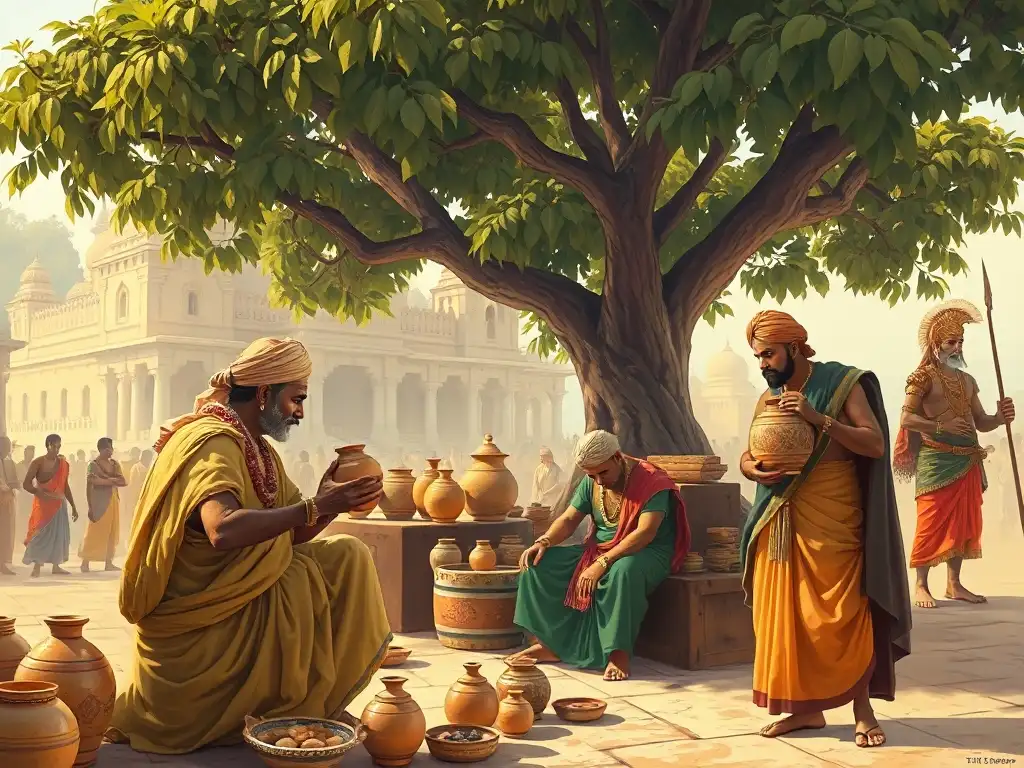
The concept of caste in ancient India was intricately linked to social hierarchy, which significantly influenced property rights. The origins of caste can be traced back to the Vedic period, where the division of society into four primary varnas—Brahmins, Kshatriyas, Vaishyas, and Shudras—established a framework for social organization. Each varna had specific roles, responsibilities, and rights concerning property ownership and inheritance.
As societies evolved, so did the nuances of caste property rights. Initially, property was communally owned within clans or families, but over time, the emergence of private ownership began to take shape, particularly among the higher varnas. This shift was accompanied by the codification of laws in texts such as the Manusmriti, which outlined distinct inheritance rules based on caste. The Brahmins, for example, were generally afforded greater property rights due to their higher societal status, while the Shudras had minimal rights, often limited to the property held by their masters.
The evolution of these rights was not linear; it was influenced by various socio-economic and political changes, leading to varying interpretations and implementations across different regions and time periods.
Changes in Property Rights Over Time
Throughout different epochs of ancient Indian history, property rights associated with caste underwent significant transformations. During the early Vedic period, property was largely collective, reflecting a communal lifestyle. However, as agrarian practices became prominent, the notion of individual land ownership emerged, particularly among the ruling and priestly classes.
The Gupta period marked a notable shift, where land grants and feudal systems became prevalent. Land was often granted to Brahmins and Kshatriyas, which reinforced their wealth and social standing. In contrast, the Shudras and lower castes continued to face restrictions, effectively limiting their property rights.
The Islamic invasions and subsequent establishment of various dynasties introduced new property laws, which sometimes conflicted with traditional caste norms. In this period, we see an amalgamation of different legal principles, where caste dynamics could alter property entitlements, often favoring those in power.
Influence of Political Powers on Caste and Property Laws
Political powers played a crucial role in shaping the intersection of caste and property rights in ancient India. Rulers often instituted laws that reinforced the caste system, thus legitimizing their authority and control over resources. The patronage of Brahmins by kings, for instance, led to the codification of laws that favored Brahminical interpretations of property rights.
Different empires, such as the Maurya and Gupta, influenced property rights through their administrative frameworks. The Mauryan legal system, for example, recognized various property rights based on caste, while the Gupta period saw a greater emphasis on land ownership and taxation, which affected how property was inherited and distributed among different castes.
Moreover, local rulers often adapted these laws to fit regional customs, leading to a diverse legal landscape that varied significantly across India. This localized approach meant that while some castes could gain property rights in certain areas, they might face restrictions elsewhere.
The Role of Religion in Shaping Caste and Property Rights
Religion played an instrumental role in defining and perpetuating the relationship between caste and property rights in ancient India. Hindu texts, particularly the dharma shastras, provided a religious justification for the caste system and the associated property laws. These texts prescribed detailed guidelines on inheritance and property distribution, often based on one's caste status.
For instance, the Manusmriti delineated clear inheritance laws that favored male heirs, particularly among the higher castes, while denying significant rights to women and lower castes. This religious underpinning of property rights not only reinforced social hierarchies but also shaped individual identities within the caste framework.
Furthermore, the ascendance of Jainism and Buddhism introduced alternative perspectives on property and caste, challenging the status quo. While these religions promoted egalitarian principles, they often coexisted with traditional caste norms, reflecting the complexity of ancient Indian society.
Conclusion: The Legacy of Caste and Property Rights in Ancient India
The legacy of caste and property rights in ancient India is profound and multifaceted. The intertwining of social hierarchy and property ownership has left an indelible mark on Indian society, influencing contemporary norms and practices.
Summary of Key Findings
Key findings reveal that caste significantly influenced property rights, with higher castes enjoying greater entitlements while lower castes faced systemic restrictions. Throughout history, political powers and religious texts played critical roles in shaping these rights, leading to a complex legal landscape. Changes over time reflected broader socio-economic transformations, illustrating the dynamic nature of caste property rights.
Contemporary Relevance of Ancient Caste Property Rights
The ancient caste property rights system continues to resonate in modern India, where issues of land ownership and inheritance are still often viewed through the lens of caste. While legal reforms have aimed to address these disparities, the historical legacies persist, affecting socio-economic mobility and access to resources for marginalized communities.
Future Research Directions on Caste and Property Rights
Future research should delve into the regional variations and nuances of caste property rights across different historical contexts. Comparative studies examining the impact of alternative legal frameworks in post-colonial India could shed light on how ancient practices continue to influence contemporary legal systems. Additionally, exploring the intersection of gender within the caste-property framework may provide insights into the evolving landscape of property rights in India today.
References for Further Reading on Caste and Property Rights in Ancient India
Understanding the intricate relationship between caste and property rights in ancient India requires a deep dive into various scholarly resources. The following references offer comprehensive insights into this complex topic, shedding light on how these social structures influenced legal systems and property inheritance.
Recommended Books and Articles
-
"Caste, Property, and the Law in India" by Susan Bayly
This book explores the intersection of caste systems and property rights, analyzing how these elements shaped social hierarchies and legal frameworks in India throughout history. Bayly's work is a critical resource for understanding the sociocultural dynamics of ancient Indian society.
-
"The Law of Inheritance in Ancient India" by R. C. Dutt
Dutt provides an in-depth examination of inheritance laws as they pertained to various castes, including the implications of these laws on property distribution. This text is particularly useful for those interested in the legal aspects of caste and inheritance.
-
"Caste and Class in India: A Historical Perspective" by A. R. Desai
This article discusses the evolution of caste and class systems in India, highlighting their effects on property ownership and rights across different periods. Desai's analysis offers valuable historical context for understanding contemporary issues related to caste and property.
-
"Property Rights and the Caste System in Ancient India" by R. S. Sharma
Sharma's work focuses on the relationship between property rights and the caste system, providing numerous examples from ancient texts and legal codes. This piece is essential for anyone studying the legal implications of caste in ancient Indian society.
-
"The Role of Women in the Inheritance Process in Ancient India" by R. Mukherjee
This article delves into women's rights concerning inheritance within the caste framework, offering a nuanced view of gender relations in ancient property laws. Mukherjee's findings are crucial for understanding the broader implications of caste on property rights.
Online Resources for Ancient Indian Legal Systems
-
Ancient India: A Historical Overview
A comprehensive online resource that provides an overview of ancient Indian history, including legal systems and property rights. This site features articles, timelines, and primary source documents that are invaluable for research.
-
Digital South Asia Library (DSAL)
The DSAL offers access to a variety of texts and resources related to South Asian studies, including legal documents and historical texts pertinent to caste and property rights in ancient India.
-
The Indian History Congress
This platform hosts a wealth of research papers, articles, and discussions on various aspects of Indian history, including the caste system and property rights. It serves as a forum for scholars to share their findings and engage with contemporary interpretations of ancient texts.
-
Internet Archive
A digital library that offers free access to historical books and documents. Researchers can find a range of materials related to ancient Indian law, caste, and property rights, making it a valuable tool for scholars.
-
JSTOR
An online repository of academic journals and articles, JSTOR provides access to numerous peer-reviewed papers on the historical context of caste and property rights in ancient India. Users can search for specific topics to find relevant scholarly work.
These resources collectively provide a solid foundation for anyone interested in exploring the complex interplay of caste and property rights in ancient India, enhancing our understanding of legal systems and social structure during that era.
- Introduction to Caste and Property Rights in Ancient India
- The Caste System: Structure and Implications
- Property Rights in Ancient Indian Legal Texts
- The Interplay Between Caste and Property Rights
- The Evolution of Caste Property Rights in Ancient India
- Conclusion: The Legacy of Caste and Property Rights in Ancient India
- References for Further Reading on Caste and Property Rights in Ancient India
Frequently Asked Questions
What were the caste property rights in ancient India?
In ancient India, caste property rights determined the ownership and management of land and resources based on social hierarchy. Each caste had specific rights and responsibilities regarding property, influencing economic activities.
The caste system significantly restricted social mobility, as individuals were typically bound to the occupations and property rights of their caste. This structure often limited opportunities for upward mobility and access to resources.
What role did religion play in shaping property rights?
Religion played a crucial role in shaping property rights in ancient India by intertwining with the caste system. Religious texts often dictated the rights of different castes, reinforcing social norms around property ownership.
Were there any exceptions to the caste property rights rules?
Yes, there were exceptions in certain regions or periods where individuals from lower castes could acquire property, especially if they gained wealth or status through merit or exceptional circumstances.
How did the Gupta Empire influence caste and property rights?
During the Gupta Empire, there was a notable codification of caste and property rights, which helped to solidify the existing social order. This period saw increased economic activity and a more structured approach to property ownership.
Final Reflection: The Enduring Legacy of Caste and Property Rights in Ancient India
The exploration of caste and property rights in ancient India reveals a complex interplay that continues to resonate in contemporary society. Understanding how these systems shaped social hierarchies and economic opportunities provides critical insights into the persistent inequalities we observe today. As we navigate modern discussions around equity and justice, it becomes clear that the historical foundations of caste and property rights still influence our legal and social frameworks, reminding us that history is not merely a record of the past but a living force that shapes our present and future.
The impact of caste on property rights has profoundly influenced the cultural and social landscape of India, creating a legacy that is both rich and challenging. This historical context emphasizes the importance of recognizing how deeply entrenched systems can dictate individual agency and societal structure. As we reflect on this intersection, we are reminded of the words of Dr. B.R.
Ambedkar, who stated, "> Cultivation of mind should be the ultimate aim of human existence." This quote encapsulates the necessity of understanding our history to cultivate a more equitable future, as we strive to dismantle the barriers that have been erected over centuries.
As we conclude this exploration, I invite you to reflect on the lessons drawn from the intersection of caste and property rights in ancient India. Consider how these historical narratives inform your understanding of social justice today. Let this reflection inspire you to engage in conversations about equity, challenge existing norms, and advocate for a society where everyone has equal access to opportunities. Together, we can work towards a future that honors the lessons of the past while striving for a more inclusive and just world.
Unveil the Impact of Caste on Property Rights!
Thank you for taking the time to explore the fascinating interplay of caste and property rights in ancient India. Your interest highlights the importance of understanding historical contexts that shape societies even today. Now, it's time to take action and deepen your knowledge!
- Dive deeper into the nuances of ancient property laws by reading related articles on our website.
- Share your insights with friends or family—discuss how these ancient structures might resonate in contemporary debates around property rights and social equity.
- Join our community! Engage with fellow enthusiasts by commenting below or starting a conversation on our social media platforms.
How do you think the influence of the caste system on property rights has shaped modern societal structures?