
The Role of Kings and Rulers in Ancient Indian Judicial Systems


Welcome to Ancient India History, where we embark on an exciting journey through the vibrant tapestry of ancient Indian civilizations. In this exploration, we will delve into the fascinating Ancient Indian judicial systems, revealing how kings and rulers shaped the legal landscape and maintained order in society. What roles did these sovereigns play in establishing laws that governed everyday life? As you navigate through our insights and rich narratives, prepare to uncover the intricate connections between power, justice, and cultural evolution. Join us as we unveil the legacy of governance that still resonates today!
- Introduction to Ancient Indian Judicial Systems
- Historical Context of Kings and Rulers in Ancient Indian Judicial Systems
- The Role of Kings as Judicial Authorities
- Functions of Rulers in Judicial Practices
- The Interaction Between Kings and Other Judicial Figures
- Case Studies: Notable Rulers and Their Judicial Contributions
- The Impact of Kingship on Ancient Indian Legal Systems
- Conclusion: The Legacy of Kings and Rulers in Ancient Indian Judicial Systems
-
Frequently Asked Questions
- What was the role of kings in ancient Indian judicial systems?
- How did ancient Indian judicial systems differ from modern systems?
- What principles guided the judicial decisions in ancient India?
- Were there any specific courts in ancient India?
- How did the Gupta Empire influence judicial systems in ancient India?
- Final Reflection: The Enduring Legacy of Ancient Indian Judicial Systems
- Unveil the Legacy: Take Action on Ancient Indian Justice!
Introduction to Ancient Indian Judicial Systems
The study of Ancient Indian judicial systems reveals a complex interplay between law, governance, and society that has shaped the legal landscape of India for centuries. From the early days of the Indus Valley Civilization to the sophisticated structures of the Gupta Empire, kings and rulers played a pivotal role in the establishment and execution of justice.
This article delves into the intricate relationships between monarchical authority and judicial practices, shedding light on how these systems functioned, evolved, and influenced the social order. By exploring the various judicial frameworks employed in ancient India, we aim to highlight the significance of leadership in maintaining law and order, as well as the cultural values that underpinned their legal systems.
Overview of Judicial Systems in Ancient India
Ancient India boasted a rich tapestry of judicial systems that varied across regions and epochs. The foundations of these systems can be traced back to several key elements:
- Dharma Shastras: These texts, such as the Manusmriti, provided comprehensive guidelines on law and moral conduct, addressing various aspects of life, including duty, rights, and justice.
- Village Assemblies (Panchayats): Local governance structures played a crucial role in resolving disputes at the community level, often involving elders or respected figures who acted as mediators.
- Royal Courts: Kings established formal courts that dealt with more significant legal matters, where they presided over cases and ensured that justice was administered fairly.
The integration of these elements created a multifaceted judicial system that balanced local customs with overarching legal principles. For instance, while Dharma Shastras dictated legal norms, local panchayats had the autonomy to interpret and apply these laws in accordance with regional practices. As a result, ancient Indian judicial systems were not monolithic; they adapted to the sociopolitical context of different periods.
Importance of Kings and Rulers in Legal Frameworks
The influence of kings and rulers on ancient Indian judicial systems cannot be overstated. Their roles extended beyond mere governance; they were seen as the ultimate arbiters of justice. Here are several key aspects of their importance:
- Legitimacy and Authority: Kings were often believed to be divinely ordained, which bestowed upon them the moral authority to enact and uphold laws. This divine connection reinforced their decisions and the societal respect for the legal system.
- Law Codification: Rulers played a significant role in codifying laws, ensuring that legal principles were documented and accessible. This contributed to a more structured legal framework and facilitated consistency in legal proceedings.
- Judicial Oversight: Kings often oversaw the functioning of lower courts and local assemblies, ensuring that justice was not only served but also aligned with the broader objectives of the state. Through their involvement, they could address grievances and adapt laws to the changing needs of society.
- Conflict Resolution: In instances of disputes that escalated beyond local capacities, the king's court served as the final authority, emphasizing the ruler's role in maintaining peace and order within the realm.
The judicial systems of ancient India were thus deeply intertwined with the political landscape, with kings acting as pivotal figures in the administration of justice. Their contributions laid the groundwork for future legal developments and shaped the understanding of law and governance in the Indian subcontinent.
Historical Context of Kings and Rulers in Ancient Indian Judicial Systems

The role of kings and rulers in ancient Indian judicial systems was pivotal, as they served not only as sovereigns but also as the primary arbiters of justice within their realms. The evolution of these judicial systems is intricately linked to the transformation of monarchical power, which was influenced by various factors, including religion, philosophy, and socio-political dynamics.
Evolution of Monarchical Power in Ancient India
The evolution of monarchical power in ancient India can be traced through various dynasties, each contributing uniquely to the judicial landscape.
-
Early Kingdoms and the Indus Valley Civilization
The earliest evidence of governance and legal systems can be traced back to the Indus Valley Civilization (c. 2500–1900 BCE). Archaeological findings suggest a degree of urban planning and social order, indicating early forms of governance that likely included rulers who upheld a set of laws. It is believed that local leaders maintained order and justice, paving the way for more structured legal systems in subsequent periods.
-
Vedic Period and Kshatriyas
With the advent of the Vedic Period (c. 1500–500 BCE), the concept of kingship evolved significantly. The Kshatriyas, or warrior class, emerged as rulers who were responsible for maintaining dharma (moral order). The Manusmriti, one of the oldest legal texts, emphasizes the duty of kings to uphold justice, illustrating that the monarch's role was intrinsically linked to the judicial system. Kings were expected to be wise and just, often consulting with learned Brahmins to guide their legal decisions.
-
Mauryan Empire and Legal Codification
The Mauryan Empire (c. 322–185 BCE), particularly under Emperor Ashoka, marked a significant turning point in the evolution of ancient Indian judicial systems. Ashoka's edicts, inscribed on pillars and rocks, communicated laws and ethical guidelines to the populace. This era witnessed the codification of laws and the establishment of a more structured judiciary, where royal courts became instrumental in administering justice throughout the empire.
-
Gupta Period and Administrative Innovations
The Gupta Empire (c. 320–550 CE) further refined these judicial systems. Rulers like Chandragupta II implemented administrative innovations that included the delegation of judicial authority to local officials, allowing for more efficient governance. The king was seen not just as a ruler but as a custodian of justice, with a duty to protect the rights of his subjects. This period also saw the compilation of legal texts, further formalizing the relationship between kingship and law.
The Influence of Religion and Philosophy on Law
The judicial systems of ancient India were heavily influenced by the prevailing religious and philosophical ideologies, which shaped the laws and the role of kings as enforcers of justice.
-
Hindu Philosophy and Dharma
Central to ancient Indian legal thought was the concept of dharma, which encompassed duties, rights, laws, and ethics. The king was viewed as the embodiment of dharma, responsible for maintaining it within his kingdom. This philosophical underpinning not only guided the rulers in their judicial decisions but also legitimized their authority. The intertwining of law and morality meant that the king's role was not merely administrative but deeply ethical.
-
Buddhism and Legal Reform
The spread of Buddhism during the Mauryan period introduced new ideas regarding justice and compassion. Emperor Ashoka's embrace of Buddhist principles led to reforms that emphasized non-violence and moral governance. His edicts called for fair treatment and the welfare of subjects, reflecting a shift towards a more humane judicial system that sought to resolve conflicts through dialogue rather than punishment.
-
Islamic Influence in Later Periods
As Islamic rulers gained prominence in India from the 12th century onwards, the legal frameworks began to incorporate Sharia principles alongside traditional Hindu laws. This blending of legal systems resulted in a more pluralistic approach to justice, where rulers were expected to administer laws that respected the diverse beliefs and practices of their subjects.
-
Legal Texts and Commentaries
The production of legal texts, such as the Arthashastra by Kautilya and various Smritis, provided detailed guidelines on governance and law. These texts often outlined the responsibilities of the king regarding judicial matters, emphasizing the need for fairness and equity in the administration of justice. The philosophical teachings contained within these works shaped the judicial practices of the time and reinforced the king's role as a protector of justice.
The interplay between monarchical power and the influence of religion and philosophy profoundly shaped ancient Indian judicial systems. The evolution of these systems reflects the dynamic nature of governance in ancient India, where kings served not only as rulers but also as chief upholders of law and justice.
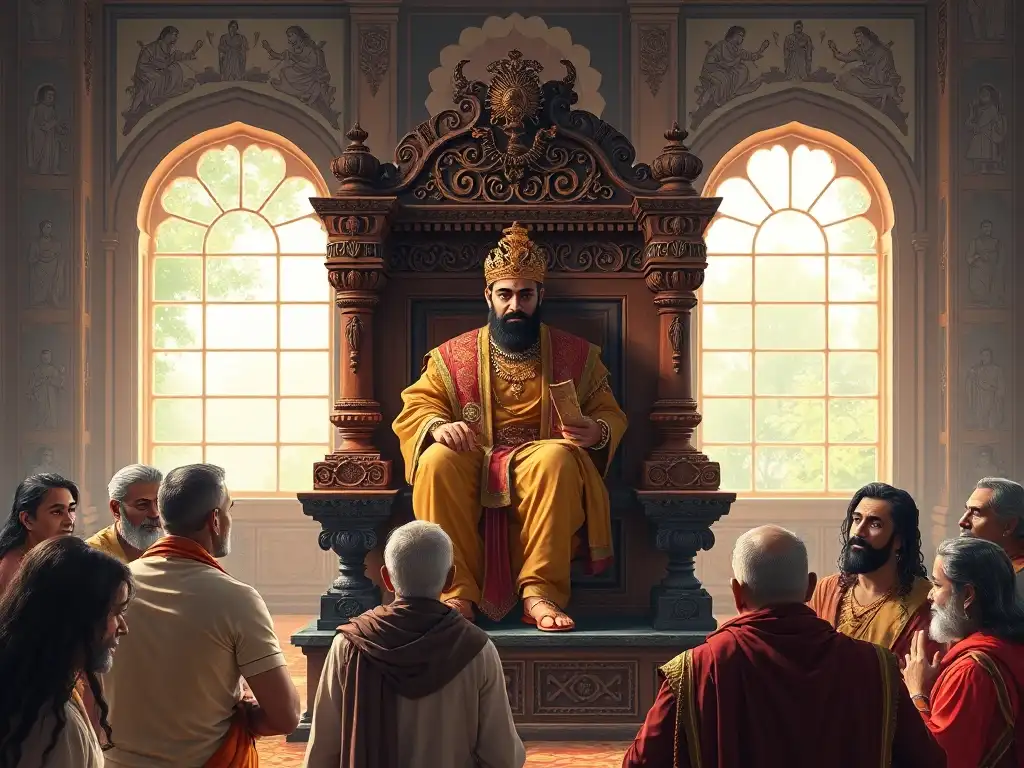
Kings as Lawgivers in Ancient Indian Society
In ancient India, kings held a pivotal role not only as rulers but also as lawgivers. The concept of kingship was deeply intertwined with the legal framework of the time, with monarchs often perceived as the divine representatives on earth. This connotation gave them the authority to legislate and enforce laws that governed society. The laws enacted by kings were often documented in texts known as Dharma Shastras, which provided guidelines for moral conduct, social duties, and legal principles.
The significance of kings as lawgivers can be illustrated through several key aspects:
- Divine Right: Rulers were often seen as appointed by divine forces, which imbued their decrees with a sense of righteousness. For example, the Manu Smriti, one of the earliest legal texts, outlines the responsibilities of a king, emphasizing that they should enact laws that align with the moral order of society.
- Code of Conduct: Kings established codes that were expected to be followed by their subjects. These codes not only dealt with criminal law but also with civil matters, thus encompassing various aspects of daily life. A notable example is the Arthashastra, attributed to Kautilya (Chanakya), which outlined the duties of a king in maintaining justice and order.
- Judicial Authority: Kings had the ultimate judicial authority. Disputes were often settled in royal courts, where the king or appointed judges would preside. This system emphasized the king's role in resolving conflicts and ensuring the enforcement of laws, thereby maintaining societal harmony.
The interrelation of kingship and legal authority in ancient India highlights the unique position rulers held in shaping judicial systems and practices.
The Concept of Dharma and Its Impact on Judicial Decisions
The concept of Dharma, which loosely translates to "duty" or "righteousness," played a fundamental role in shaping the judicial decisions of ancient Indian kings. It was more than just a legal principle; Dharma encompassed ethical and moral dimensions that guided the behavior of individuals and rulers alike. Understanding its impact on judicial systems reveals the complexity of ancient Indian legal thought.
- Foundation of Justice: Dharma served as the foundation for justice in ancient Indian courts. Kings were expected to rule in accordance with Dharma, ensuring that their decisions reflected moral and ethical considerations. This was crucial in maintaining legitimacy and public trust in the judicial system.
- Flexibility in Interpretation: The application of Dharma was not rigid; it allowed for contextual interpretation based on the circumstances of each case. This flexibility meant that judges and kings could consider various factors, including societal norms and individual circumstances, when making decisions. Such a nuanced approach helped cater to the complexities of human behavior and societal variations.
- Moral Responsibility: Kings were not only expected to uphold Dharma but also to embody it. Their personal adherence to moral principles significantly influenced their judicial rulings. A king's failure to act in accordance with Dharma could lead to loss of authority and support from their subjects, reinforcing the idea that rulers were accountable to both divine and societal standards.
- Legacy of Judicial Philosophy: The integration of Dharma into legal practices laid the groundwork for future judicial philosophies in India. The emphasis on moral reasoning in legal matters can be seen in later legal texts and systems, highlighting the enduring influence of ancient Indian judicial principles.
The concept of Dharma was central to the functioning of ancient Indian judicial systems, guiding kings in their roles as judicial authorities while ensuring that laws were not only enforced but also aligned with ethical standards. This intricate relationship between kingship, law, and morality underscores the depth of legal traditions in ancient India.
Functions of Rulers in Judicial Practices

The rulers of ancient India played a pivotal role in shaping the judicial systems that governed their kingdoms. Their authority extended beyond mere governance, encompassing a significant responsibility towards the administration of justice and the resolution of disputes among their subjects. The intricate relationship between kingship and judicial authority was a hallmark of ancient Indian judicial systems, reflecting a blend of law, morality, and tradition.
Administration of Justice: The King's Responsibilities
In ancient Indian societies, the king was often seen as the ultimate arbiter of justice. His responsibilities included:
- Enforcement of Law: The king was tasked with enforcing the dharma (moral and ethical law) of the land, which was considered crucial for maintaining social order.
- Judicial Authority: Rulers held the power to adjudicate disputes directly, especially in serious cases involving significant implications for the community.
- Appointment of Officials: Kings appointed judges and officials who would assist in the judicial process, ensuring that justice was administered fairly and efficiently.
- Public Hearings: Kings would often hold public hearings, allowing subjects to present their grievances and ensuring transparency in the judicial process.
Justice is the foundation of the state; without it, the king's rule is but a shadow.
The king's role in these processes was not merely procedural; it was deeply tied to the concept of divine kingship, where the king was perceived as a representative of the gods on earth, tasked with upholding justice.
The Role of Royal Courts in Dispute Resolution
Royal courts in ancient India served as the principal institutions for dispute resolution. Their functions included:
- Court Structure: The royal court typically consisted of various judges, advisors, and sometimes the king himself, who would oversee legal proceedings.
- Types of Cases: Courts handled a wide array of cases, from civil disputes like property issues to criminal cases involving theft or violence.
- Legal Codes: The rulers often codified laws, which were derived from texts such as the Manusmriti and Arthashastra, providing a legal framework for court proceedings.
| Court Features | Description |
|---|---|
| Judicial Hierarchy | Different levels of courts, from local to royal courts |
| Legal Representation | Allowing parties to be represented by advocates |
| Evidence and Witnesses | The process of gathering evidence and calling witnesses |
| Punitive Measures | Imposition of fines, imprisonment, or other penalties |
The royal court acted as a mediator in conflicts, often emphasizing reconciliation over punishment. Kings sometimes encouraged disputants to seek amicable solutions, reflecting the idea that harmony was essential for societal stability.
The judicial systems in ancient India were characterized by their integration of social customs, legal codes, and the overarching authority of the king, which together formed a unique framework for administering justice. This system not only highlights the importance of rulers in maintaining law and order but also illustrates the complexities of ancient Indian judicial systems that contributed to the region's rich legal heritage.
The Interaction Between Kings and Other Judicial Figures

In ancient Indian judicial systems, kings occupied a central role, not only as sovereign rulers but also as pivotal figures in the administration of justice. Their authority was often intertwined with various judicial figures, including Brahmin judges and local officials, creating a complex web of interactions that shaped the legal landscape of the time. This synergy between kings and other judicial figures was crucial for maintaining order and enforcing laws within their realms.
Relationship Between Kings and Brahmin Judges
The relationship between kings and Brahmin judges was characterized by mutual respect and interdependence. Brahmins, as the priestly class, were seen as the custodians of knowledge, including legal wisdom. They often served as judges in royal courts, interpreting laws based on ancient texts and scriptures. This connection provided legitimacy to the king's rule, as the endorsement of Brahmin judges lent a divine aspect to the judicial process.
- Functions of Brahmin Judges:
- Legal Interpretation: Brahmin judges were responsible for interpreting dharma (moral law) and applying it to cases presented in court.
- Advisory Role: They advised kings on matters of law, ethics, and governance, helping to align royal decrees with established customs.
- Conflict Resolution: Brahmin judges mediated disputes, ensuring that justice was served in accordance with ancient traditions.
The king's reliance on Brahmin judges also meant that the latter wielded significant influence. Their judgments could sway public opinion and affect a king's reputation. Thus, the relationship was symbiotic; while kings provided authority and protection, Brahmin judges offered legal expertise and moral guidance.
The Role of Local Officials and Community Leaders
Local officials and community leaders played an essential role in the ancient Indian judicial systems, acting as intermediaries between the king and the populace. These figures were often responsible for maintaining law and order at the grassroots level, ensuring that the king's decrees were implemented effectively.
- Functions of Local Officials:
- Enforcement of Laws: Local officials were tasked with enforcing the king's laws and ensuring compliance within their jurisdictions.
- Dispute Resolution: They often resolved minor disputes, acting as the first point of contact for citizens seeking justice.
- Collection of Taxes and Fines: Local officials managed the collection of taxes and fines, further integrating legal and economic aspects of governance.
Community leaders, such as village heads or elders, also contributed to the judicial process. Their intimate knowledge of local customs and traditions allowed them to mediate disputes in a culturally relevant manner. Often, they worked alongside local officials, ensuring that justice was not only served but was also perceived as fair by the community.
- Influence of Community Leaders:
- Cultural Custodians: They upheld local traditions and customs, which were crucial in the application of justice.
- Mediation: Community leaders often facilitated mediation before disputes escalated to formal judicial proceedings, fostering harmony within the community.
The interaction between kings, Brahmin judges, local officials, and community leaders formed a cohesive judicial framework that was integral to the functioning of ancient Indian judicial systems. Their collaborative efforts ensured that justice was administered fairly and in accordance with both royal authority and local customs.
Case Studies: Notable Rulers and Their Judicial Contributions
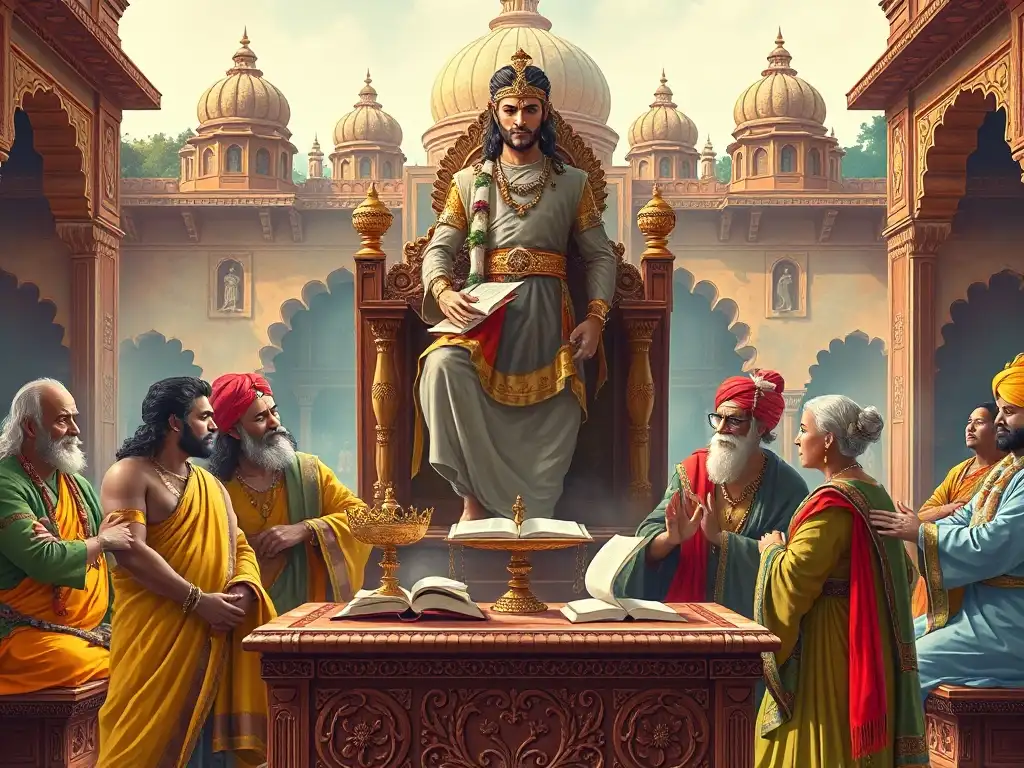
The judicial systems in ancient India were significantly influenced by various kings and rulers who implemented reforms, edicts, and legal codes that shaped the legal landscape of their times. This section explores some prominent figures and their contributions to ancient Indian judicial systems.
Emperor Ashoka and His Edicts
Emperor Ashoka, who ruled from 268 to 232 BCE, is one of the most celebrated figures in ancient Indian history, especially regarding his contributions to legal systems. Following his conversion to Buddhism after the Kalinga War, Ashoka sought to govern with compassion and justice, leading to the establishment of a more ethical judicial framework.
The Edicts of Ashoka
Ashoka is best known for his Edicts, which were inscribed on pillars and rocks throughout his empire. These edicts serve as some of the earliest recorded laws and moral guidelines in Indian history. Key aspects include:
- Promotion of Dharma: Ashoka emphasized the importance of Dharma (moral law) as the foundation of governance. His edicts called for the protection of all living beings, encouraging non-violence and compassion.
- Judicial Reforms: Ashoka mandated fair treatment in the judicial process, stating that even the lowest subjects should have access to justice. He established a system of officials known as Dharma Mahamatras, responsible for overseeing moral conduct and administering justice.
- Public Welfare: The edicts reflected a commitment to public welfare, including the establishment of hospitals and the promotion of education, which indirectly supported the judicial system by fostering an informed citizenry.
“Let all be well, let all be happy, let all be free from suffering.” – Edict of Ashoka
These principles laid the groundwork for a more humane judicial system, impacting subsequent rulers and their approaches to law and justice.
The Gupta Dynasty's Legal Innovations
The Gupta Dynasty (approximately 320 to 550 CE) is often considered a golden age in Indian history, marked by significant advancements in arts, science, and law. The rulers of this dynasty made notable contributions to the ancient Indian judicial systems through legal texts and practices that influenced future generations.
Key Legal Texts and Codes
During the Gupta period, several important legal texts emerged, reflecting the sophisticated nature of their judicial practices:
- Manusmriti: Also known as the Laws of Manu, this ancient text was codified during the Gupta era and became a cornerstone of Hindu law. It provided guidelines on various aspects of law, including:
- Personal law: Covering marriage, inheritance, and family matters.
- Criminal law: Outlining offenses and corresponding punishments, thus establishing a formal legal framework.
- Judicial Procedures: The Gupta rulers instituted a structured approach to trials, including:
- Witness testimonies: The importance of credible witnesses was emphasized in legal proceedings.
- Evidence submission: Clear guidelines were established for presenting evidence in court, which enhanced fairness in the judicial process.
| Aspect | Gupta Innovations |
|---|---|
| Legal Texts | Manusmriti and other Dharmashastras |
| Trial Procedures | Structured witness and evidence guidelines |
| Punishments | Varied based on social standing and crime |
Influence on Future Legal Systems
The legal innovations during the Gupta period had a lasting impact on subsequent Indian judicial systems. The emphasis on codified laws, structured trials, and ethical governance created a legacy that influenced both medieval and modern legal practices in India.
As we delve deeper into the role of kings and rulers in shaping ancient Indian judicial systems, it becomes clear that their contributions were pivotal in establishing laws that addressed the needs and values of society.
The Impact of Kingship on Ancient Indian Legal Systems

In ancient Indian civilizations, kingship played a pivotal role in the establishment and enforcement of judicial systems. The monarch was not only a political leader but also viewed as a divine authority whose duty was to uphold dharma (moral law) and ensure justice for all subjects. This dual role significantly influenced the ancient Indian judicial systems, as it centralized legal authority and promoted a sense of order and stability within the realm.
-
Divine Right and Legal Authority:
Kings were often considered representatives of the gods on earth, which granted them a divine right to rule. This belief reinforced their legitimacy and authority in judicial matters. For instance:
- The Mauryan Empire, under Emperor Ashoka, exemplified this connection between kingship and justice. Ashoka's edicts emphasized moral governance and the importance of justice, reflecting his commitment to uphold the law as a sacred duty.
- Kautilya's Arthashastra outlines the responsibilities of the ruler in maintaining law and order and ensuring fairness in the judicial process.
-
Establishment of Courts:
The king's authority extended to the establishment of various courts, which operated under their patronage. The structure of these courts often varied:
- Local Courts: Handled minor disputes and were presided over by local officials appointed by the king.
- Royal Courts: Dealt with more significant cases and were often attended by the king or his trusted advisors, ensuring that higher standards of justice were maintained.
-
Legal Codes and Procedures:
Kings were responsible for codifying laws and establishing legal procedures. Prominent texts, such as the Manusmriti, reflect this process, providing guidelines on various aspects of law, including family, property, and criminal justice. The integration of these legal codes into the governance framework helped standardize judicial practices throughout the kingdom.
Challenges Faced by Kings in Upholding Justice
Despite the authoritative position of kings in ancient Indian judicial systems, they faced numerous challenges in their quest to uphold justice. These challenges often stemmed from social, political, and economic factors that complicated the administration of law.
-
Social Hierarchies and Inequality:
Ancient Indian society was structured around rigid caste systems, which often influenced judicial outcomes. The application of law could vary significantly based on an individual's social status:
- Upper caste individuals might receive more lenient treatment compared to lower caste individuals, leading to inequitable justice.
- Kings had to navigate these complexities to maintain social harmony while adhering to the principles of fairness.
-
Corruption and Abuse of Power:
The concentration of judicial power in the hands of the king and his officials sometimes led to corruption. This was particularly evident when:
- Local officials exploited their positions for personal gain, resulting in injustices for the common people.
- Kings struggled to monitor and control the actions of their officials, which undermined the integrity of the judicial system.
-
Political Rivalries and Internal Conflicts:
The political landscape of ancient India was often tumultuous, with rival factions and power struggles complicating the administration of justice. Kings faced the challenge of:
- Balancing the interests of powerful nobles and clans, which could lead to partiality in judicial decisions.
- Addressing disputes arising from succession crises, which often diverted attention from justice-related issues.
While kings in ancient India were instrumental in shaping judicial systems, their ability to maintain justice was frequently challenged by societal structures, corruption, and political dynamics. Understanding these complexities is crucial for comprehending the evolution of ancient Indian judicial systems and their lasting legacy.
Conclusion: The Legacy of Kings and Rulers in Ancient Indian Judicial Systems
The legacy of kings and rulers in ancient Indian judicial systems is profound and multifaceted. Throughout history, monarchs played a pivotal role in shaping the legal landscape, ensuring justice, and establishing norms that governed society. Their influence extended beyond mere enforcement of laws; they were often seen as the embodiment of dharma, the moral order that governed the universe and societal interactions. The judicial practices they instituted were deeply intertwined with the cultural and ethical fabric of ancient Indian civilization, leaving a lasting impact that resonates even today.
Reflections on the Historical Significance of Monarchical Justice
Monarchical justice in ancient India was not simply about the application of laws; it was a reflection of the ruler's moral authority and responsibility. Kings were expected to be just, wise, and benevolent, serving as protectors of their subjects’ rights. The concept of Rajadharma (the duty of the king) emphasized that a ruler's legitimacy depended on their ability to uphold justice and maintain order.
- Institutions of Justice: Many ancient Indian texts, such as the Arthashastra by Kautilya, outline the responsibilities of kings in administering justice. Rulers established courts and appointed judges to ensure that disputes were resolved fairly. The king was often the highest authority in legal matters, embodying the law and ensuring that it was applied justly.
- Court Practices: Rulers employed various methods to dispense justice, including public hearings and mediation processes. The presence of the king in judicial proceedings served to emphasize the importance of fairness and transparency in the legal system. This hierarchical structure ensured that justice was accessible to all, from the highest noble to the common citizen.
- Cultural Integration: The judicial systems established by kings also integrated local customs and traditions, which helped to maintain social harmony. This adaptability allowed ancient Indian judicial practices to resonate with diverse communities, fostering a sense of belonging and justice among the populace.
The Influence of Ancient Indian Judicial Practices on Modern Legal Systems
The judicial frameworks established by ancient Indian monarchs have had a significant and lasting influence on modern legal systems in India and beyond.
- Principles of Justice: Many principles that govern contemporary legal practices can trace their roots back to ancient Indian judicial systems. Concepts such as fairness, equality before the law, and the right to a fair hearing were emphasized in ancient texts and practices, forming the basis of modern legal ethics.
- Legal Codes: The Manusmriti and other ancient texts laid down comprehensive legal codes that addressed various aspects of life, including property rights, family law, and criminal justice. These codes have influenced modern legal statutes, demonstrating the continuity of legal thought from ancient times to the present.
- Judiciary Structure: The organizational structure of courts established in ancient times, with various levels of authority, has parallels in today's judicial hierarchy. The idea of appellate courts and specialized tribunals can also be traced back to practices established during the reigns of ancient kings.
The role of kings and rulers in ancient Indian judicial systems was not merely administrative but deeply rooted in the cultural and moral ethos of the time. Their contributions have shaped the course of legal history, leaving a legacy that continues to inform and inspire current judicial practices. The exploration of these ancient systems provides valuable insights into the evolution of justice and governance in India, highlighting the enduring impact of monarchical principles on contemporary law.
Frequently Asked Questions
What was the role of kings in ancient Indian judicial systems?
Kings served as the supreme authority in the judicial systems, ensuring justice was upheld and resolving disputes among their subjects. They were often seen as protectors of dharma (moral law).
How did ancient Indian judicial systems differ from modern systems?
Ancient Indian judicial systems were deeply rooted in customs and religious texts, whereas modern systems are more structured and based on codified laws. Additionally, local customs played a significant role in resolving disputes.
What principles guided the judicial decisions in ancient India?
Judicial decisions were primarily guided by the principles of dharma, which encompassed morality, ethics, and justice. Rulers often consulted ancient texts like the Manusmriti to ensure their decisions aligned with these principles.
Were there any specific courts in ancient India?
Yes, ancient India had various types of courts, such as the Rajya Sabha for royal matters and local assemblies (panchayats) for community disputes. Each served to address different levels of legal issues within society.
How did the Gupta Empire influence judicial systems in ancient India?
The Gupta Empire is known for its more organized and systematic approach to justice, promoting written laws and a greater emphasis on fair trials. This period saw the establishment of legal codes that influenced future judicial practices.
Final Reflection: The Enduring Legacy of Ancient Indian Judicial Systems
The exploration of ancient Indian judicial systems reveals a profound connection between governance and justice that remains relevant today. The role of kings and rulers in shaping these systems underscores the importance of leadership in maintaining societal order and fairness. As we navigate contemporary legal frameworks, it becomes clear that the principles established in ancient times continue to influence our understanding of justice and authority.
Cultural and social landscapes have been significantly shaped by the judicial practices of ancient India. The intertwining of law and morality in these systems reflects a deep-rooted belief in the ruler's responsibility to uphold justice for their subjects. This legacy is echoed in the words of Mahatma Gandhi, who said, An unjust law is itself a species of violence.
This observation highlights the ongoing relevance of justice in governance and the moral obligation of leaders to ensure fairness and equity.
As we reflect on the lessons from ancient Indian judicial systems, I invite you to consider your role in promoting justice within your own community. How can you embody the principles of fairness and responsibility that were championed by ancient rulers? By engaging in acts of justice and standing up for what is right, you contribute to a legacy that transcends time and continues to shape our world. Let us carry forward the wisdom of the past and strive to create a more just and equitable society for future generations.
Unveil the Legacy: Take Action on Ancient Indian Justice!
Thank you for diving into the fascinating world of ancient Indian judicial systems! Your curiosity has unlocked insights into how kings and rulers shaped justice in remarkable ways. Now, it’s time to channel that knowledge into action!
Here are a few ways you can further engage with this topic:
- Explore more! Visit our extensive archives on ancient Indian governance to uncover more stories and judicial practices.
- Share the wisdom! Discuss these insights with friends or post on social media to spark conversations about the evolution of justice across cultures.
- Reflect deeply! Consider writing a short piece on how ancient principles of justice can be applied to today’s systems—feel free to share your thoughts with us!
What aspect of ancient Indian judicial systems resonates most with you, and how do you think it can influence modern legal practices?