
The Evolution of Military Hierarchies in Ancient Indian Societies

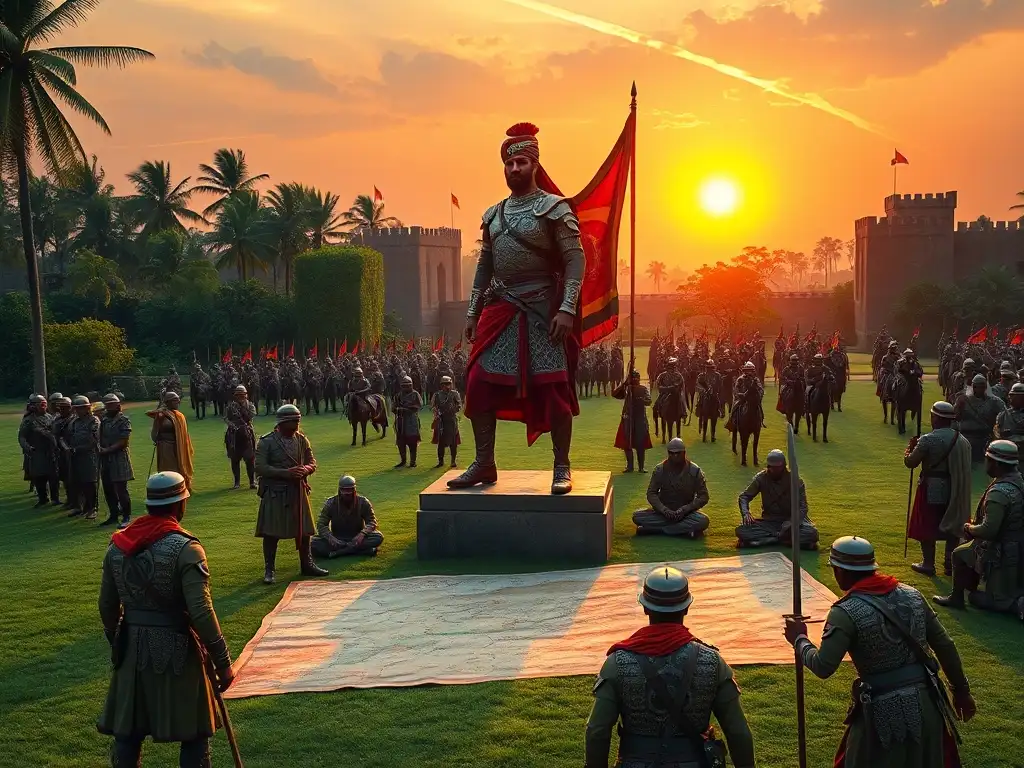
Welcome to Ancient India History, where we embark on a fascinating journey through the rich tapestry of ancient Indian civilizations. From the intricate designs of the Indus Valley to the grandeur of the Gupta Empire, we delve into the profound cultural contributions that have shaped our world. In our featured article, “The Evolution of Military Hierarchies in Ancient Indian Societies,” we uncover the ancient Indian military structures that played a pivotal role in the rise and fall of dynasties.
Join us as we explore the intricate layers of military organization and strategy that defined these remarkable societies, sparking curiosity and igniting your passion for history. Dive in and discover the untold stories that await!
Introduction to Ancient Indian Military Structures
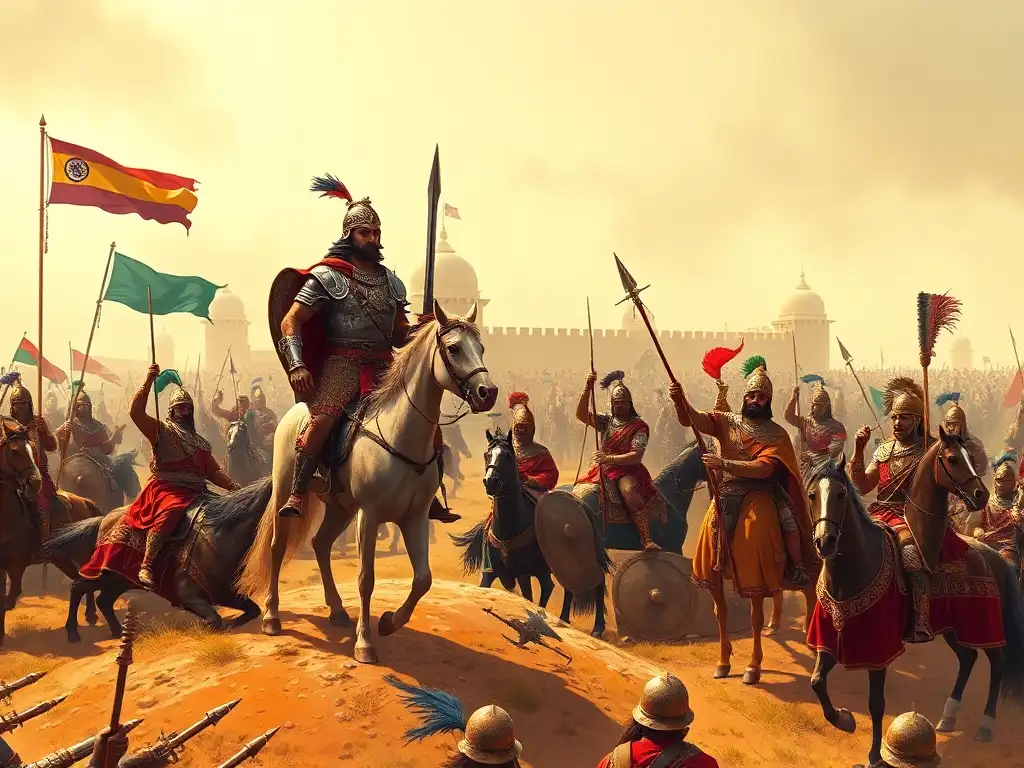
The study of ancient Indian military structures provides profound insights into how societies organized, operated, and executed their defense and warfare strategies throughout history. From the sprawling cities of the Indus Valley Civilization to the sophisticated empires of the Gupta period, military hierarchies played a pivotal role in shaping not only the political landscape but also the cultural and social dynamics of ancient India.
This article delves into the evolution of these military structures, highlighting their significance and the various roles individuals played within them. By understanding the complexities of ancient Indian military organization, we can better appreciate the contributions of these civilizations to the broader narrative of military history.
Overview of Ancient Indian Warfare
Ancient Indian warfare was characterized by a blend of strategic thinking, valor, and the use of advanced technology for its time. The military structures varied significantly across different regions and periods, influenced by geographical, cultural, and political factors.
- Key Features of Ancient Indian Warfare:
- Diverse Armies: The composition of armies ranged from infantry and cavalry to elephants, each playing a unique role in battle tactics.
- Fortifications and Strategy: Cities were often fortified, and strategic planning was crucial in both offensive and defensive campaigns.
- Military Texts: Ancient texts, such as the Arthashastra by Kautilya, provide insights into the principles of warfare and governance, emphasizing the importance of a well-structured military.
Importance of Military Hierarchies in Ancient Indian Societies
The military hierarchy in ancient India was not merely a chain of command but a reflection of the social structure and values of the time.
- Significance of Military Hierarchies:
- Social Status: Military leaders often held significant social power, influencing politics and governance.
- Resource Allocation: Hierarchies facilitated the organization of resources, enabling efficient mobilization during conflicts.
- Training and Discipline: Structured ranks ensured that soldiers were well-trained and disciplined, crucial for maintaining order in military operations.
The Early Military Structures in Ancient India
As we explore the early military structures, it is essential to consider the foundational civilizations that set the stage for subsequent developments in military organization.
The Indus Valley Civilization and Military Organization
The Indus Valley Civilization (circa 3300-1300 BCE) is one of the earliest urban cultures in South Asia, and evidence suggests that it had a form of military organization, albeit not extensively documented.
- Military Aspects:
- Urban Planning: Cities like Mohenjo-Daro and Harappa featured fortified structures, indicating a need for defense against potential invasions.
- Artifacts and Tools: Archaeological findings, including weapons and tools, suggest a degree of sophistication in warfare.
Military Roles in Early Vedic Societies
The transition from the Indus Valley period to the Vedic Age (circa 1500-500 BCE) marked significant changes in military structures and roles.
- Vedic Military Structure:
- Kshatriyas: This warrior class emerged as the principal military leaders, emphasizing the valor and duty associated with warfare.
- Brahmanical Influence: The intertwining of military and religious duties created a unique hierarchy where spiritual leaders also played critical roles in military decisions.
The evolution of military hierarchies in ancient Indian societies reflects a rich tapestry of culture, strategy, and social dynamics, setting the stage for the complexities of warfare that would define subsequent Indian empires.
The Development of Military Hierarchies
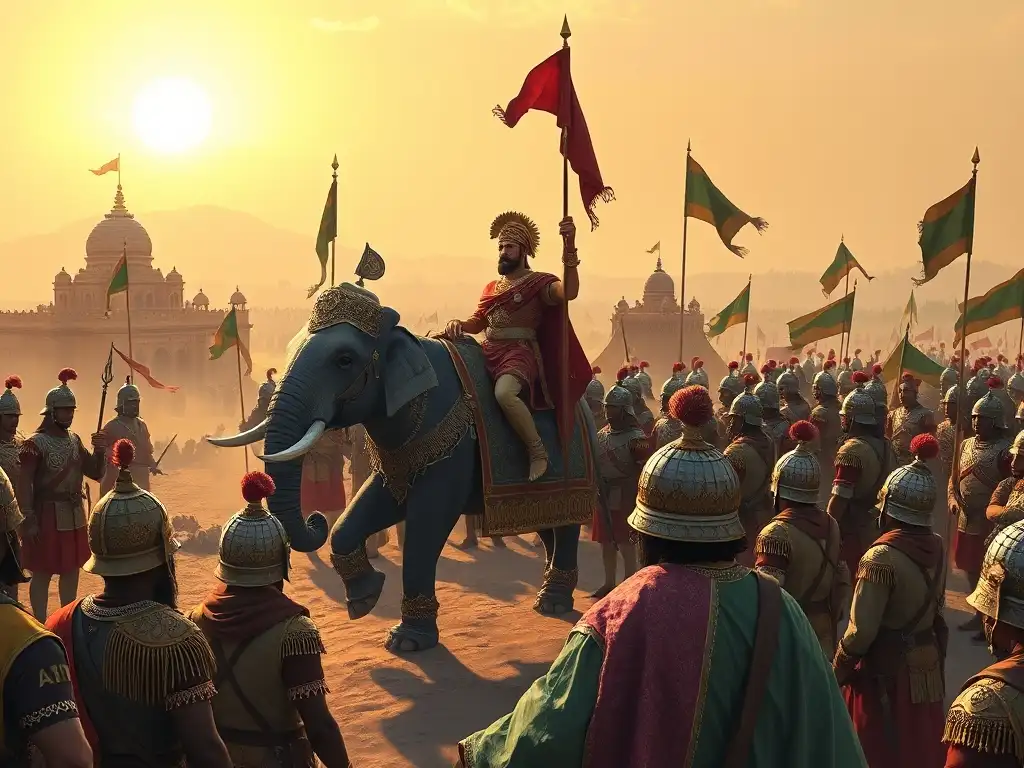
The evolution of military hierarchies in ancient Indian societies marks a significant transformation from ad-hoc tribal conflicts to structured military organizations. In the early stages, warfare was predominantly tribal, characterized by small bands or clans engaging in skirmishes over resources, territory, or honor. However, as civilizations progressed, notably with the rise of powerful kingdoms, the need for organized military forces became imperative. This transition led to the establishment of formal military ranks and roles, which were essential for effective governance and defense.
In the Vedic period, the concept of a structured army began to take shape. Texts such as the Rigveda mention the organization of forces, including chariots, infantry, and cavalry, reflecting the increasing complexity of warfare. As states like the Maurya and Gupta empires rose, military hierarchies evolved further, incorporating a range of officers, units, and specialized roles. This development was pivotal in facilitating large-scale campaigns and maintaining control over expansive territories.
Transition from Tribal Warfare to Organized Armies
The shift from tribal warfare to organized armies in ancient India can be traced through several key developments. Initially, tribal communities relied on spontaneous group efforts to defend their lands or retaliate against enemies. However, with the emergence of urban centers and larger political entities, there was a pressing need for more coordinated military efforts.
This transformation was influenced by:
- Centralized Leadership: As kings and rulers consolidated power, they began to form standing armies that were loyal to the state rather than individual tribes or clans. This loyalty was essential for maintaining order and executing military strategies.
- Professional Soldiers: The establishment of a class of professional soldiers, known as "Kshatriyas," who dedicated their lives to warfare, further solidified military organization. These warriors were often well-trained and equipped, allowing for more effective combat strategies.
- Strategic Alliances: The formation of alliances between various kingdoms necessitated organized military structures to support coordinated efforts in warfare. Treaties and pacts often included provisions for military support, further embedding the concept of organized forces in the political framework.
This transition laid the foundation for sophisticated military hierarchies that would dominate the landscape of ancient Indian warfare.
The Role of Kings and Rulers in Military Structures
In ancient Indian societies, kings and rulers played a pivotal role in shaping military structures. Their authority not only dictated the organization of the military but also influenced the strategies employed in warfare. The king was typically seen as the ultimate commander-in-chief, responsible for the defense of the kingdom and its subjects.
Key aspects of their role included:
- Military Strategy: Rulers devised strategies for expansion and defense, often consulting with military advisors and generals. This strategic planning was crucial for success in both offensive and defensive campaigns.
- Resource Allocation: Kings were responsible for the funding and provisioning of the army, ensuring that soldiers were equipped with necessary weapons and supplies. This included the establishment of treasuries and logistics systems to support military operations.
- Symbol of Power: The presence of a strong military under the king's command served as a symbol of power and authority, reinforcing the ruler's legitimacy. Military victories were often celebrated, enhancing the ruler's status and influence.
Through these roles, kings and rulers were instrumental in establishing and maintaining the complex military hierarchies that characterized ancient Indian societies.
Key Features of Ancient Indian Military Structures
Ancient Indian military structures exhibited several distinctive features that defined their organization and operational effectiveness. These features were influenced by the geographical, cultural, and technological contexts of the time.
Classifications of Military Personnel
Military personnel in ancient India were classified into various categories, each fulfilling specific roles within the hierarchy. The main classifications included:
- Kshatriyas: This warrior class was responsible for the bulk of military engagement. They were trained in combat, strategy, and leadership and often held noble status within society.
- Infantry: Comprised of foot soldiers, the infantry formed the backbone of the military. They were typically armed with spears, swords, and shields, and were crucial in hand-to-hand combat situations.
- Cavalry: Cavalry units, consisting of horse-mounted soldiers, provided mobility and speed in battle. They were vital for flanking maneuvers and quick assaults.
- Charioteers: Chariots were a significant component of ancient Indian warfare, and those skilled in handling them played a crucial role in battles. Charioteers often worked alongside archers to maximize their effectiveness.
- Support Roles: This category included engineers, archers, and logistics personnel, who provided essential support in various aspects of military operations, from constructing fortifications to managing supplies.
This classification allowed for specialization, enhancing the overall effectiveness of military campaigns.
Weapons and Tactics Used in Ancient Indian Warfare
Ancient Indian warfare was marked by a variety of weapons and tactics, reflecting the advancements in technology and the strategic needs of the time. Some notable weapons and tactics included:
- Weapons:
- Bows and Arrows: Archery was a dominant form of warfare, with skilled archers playing a critical role in battles. Longbows and composite bows allowed for increased range and power.
- Swords and Spears: Close combat weapons such as swords (e.g., the khanda) and spears (e.g., the trident) were prevalent, allowing soldiers to engage effectively in melee situations.
- Chariots: Chariots, often pulled by horses, were used in battle for both transport and as platforms for archers. Their mobility made them essential in various tactics.
- Siege Weapons: As warfare evolved, so did the need for siege weapons, such as battering rams and catapults, to breach fortifications during sieges.
- Tactics:
- Flanking Maneuvers: Ancient Indian commanders often employed flanking tactics to surprise and outmaneuver enemy forces, leveraging the mobility of cavalry and chariots.
- Formations: Military formations, such as the "Chakra" (circle) or "Vyuha" (array), were utilized to maximize the effectiveness of troops and to protect key personnel, including the king.
- Psychological Warfare: Ancient commanders understood the importance of morale and often used tactics designed to intimidate or demoralize the enemy before battle.
These weapons and tactics were integral to the success of ancient Indian military campaigns and reflect the ingenuity and adaptability of these societies in the art of warfare.
Case Studies of Prominent Ancient Indian Military Structures
The military hierarchies in ancient Indian societies were not monolithic; they evolved significantly across different empires and regions. Two prominent examples are the Mauryan and Gupta Empires, each exhibiting unique military structures and strategies tailored to their specific contexts. These case studies reveal how ancient Indian military organizations adapted to political, cultural, and geographic factors, demonstrating the complexity of their military systems.
The Mauryan Empire: Centralized Military Organization
The Mauryan Empire (circa 322-185 BCE) represents one of the earliest and most significant centralized military organizations in ancient India. Under the leadership of Chandragupta Maurya and his grandson Ashoka, the Mauryan military was characterized by a robust and organized structure.
- Central Authority: The emperor held supreme command over military operations, supported by a council of war that included experienced generals and advisors. This centralization allowed for rapid mobilization and strategic planning across vast territories.
- Diverse Forces: The Mauryan military comprised infantry, cavalry, elephants, and chariots, showcasing a diverse array of combat units. The use of war elephants was particularly notable; they could charge into enemy lines, creating chaos and breaking formations.
- Administrative Framework: Military administration was rigorous, with clear ranks and responsibilities. Officers were appointed based on merit and loyalty, ensuring a professional and disciplined military force.
- Use of Spies: Intelligence gathering played a crucial role, with a network of spies providing vital information on enemy movements and internal dissent, enhancing the effectiveness of Mauryan military campaigns.
This comprehensive approach to military organization allowed the Mauryan Empire to expand its influence across much of the Indian subcontinent, establishing a model that would influence future empires.
Military Strategies of the Gupta Empire
The Gupta Empire (circa 320-550 CE) is often referred to as the "Golden Age" of ancient India, marked by significant advancements in arts, sciences, and military strategies. The military structure of the Gupta Empire was characterized by adaptability and strategic innovation.
- Decentralized Command: Unlike the Mauryan Empire, the Gupta military utilized a more decentralized approach, empowering regional governors (Uparikas) to maintain local forces. This allowed for quick responses to threats while fostering local loyalty.
- Cavalry Dominance: The Gupta military heavily emphasized cavalry, which became the backbone of their forces. Fast-moving cavalry units could engage in swift raids and exploit weaknesses in enemy formations.
- Fortifications and Defense: The Gupta Empire invested in fortifications and defensive strategies. Cities were often surrounded by walls and moats, providing a strategic advantage against invasions. This defense system was complemented by the use of archers positioned on walls to repel attackers.
- Diplomacy and Alliances: Military strategy under the Guptas also included diplomatic maneuvers. The empire often formed alliances with local rulers, which helped in maintaining stability and deterring potential aggressors.
Overall, the Gupta military's strategies reflect an understanding of both offensive and defensive warfare, enabling the empire to thrive during a period of relative peace and prosperity.
Influence of Geography and Culture on Military Hierarchies
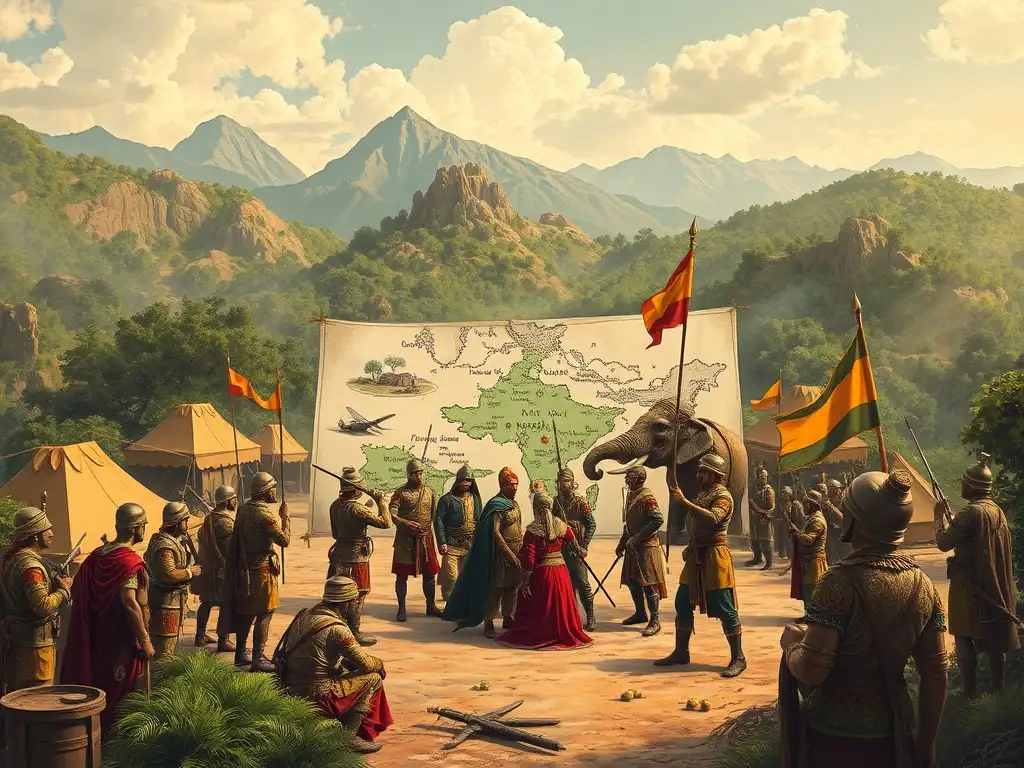
Geography and culture played pivotal roles in shaping the military hierarchies of ancient Indian societies. The diverse landscapes, ranging from the Himalayan mountains to the vast plains of the Indo-Gangetic region, influenced military organization and tactics, while cultural factors determined the ethos and values that underpinned warfare.
Regional Variations in Military Structures
The geographical diversity of ancient India led to significant regional variations in military structures.
- Himalayan Regions: In the northern mountainous regions, military structures were often smaller and more agile, favoring guerrilla tactics that utilized the challenging terrain. Local tribes maintained their autonomy and employed hit-and-run strategies against larger armies.
- Plains and River Valleys: In contrast, the fertile plains of the Indo-Gangetic region supported larger, more centralized military organizations. The proximity to major rivers facilitated logistics and troop movements, enabling empires to sustain large armies.
- Coastal Areas: The coastal regions developed naval capabilities, with empires like the Chola Dynasty employing maritime strategies for trade and warfare. The importance of naval power led to distinct military hierarchies that integrated naval and land forces.
These regional adaptations highlight how geography influenced not only the structure of military forces but also the strategies employed in warfare.
Cultural Factors Shaping Ancient Indian Warfare
Cultural factors significantly influenced the development of military hierarchies in ancient India, intertwining with social norms, religious beliefs, and the ethos of chivalry.
- Religious Influences: Hindu texts, such as the Mahabharata and Ramayana, depicted valor and dharma (duty) as central themes in warfare. These epics shaped the mindset of warriors, emphasizing honor and ethical conduct on the battlefield.
- Social Hierarchies: The caste system also impacted military structures, with certain groups traditionally serving as warriors (Kshatriyas). This social stratification influenced recruitment, training, and the organization of military units.
- Rituals and Symbolism: Military campaigns were often preceded by rituals and sacrifices to seek divine favor. The cultural significance of warfare was deeply ingrained, with leaders invoking religious symbolism to legitimize their authority and inspire troops.
These cultural dimensions not only shaped the hierarchical structures of ancient Indian militaries but also influenced the broader societal perception of warfare, blending martial prowess with ethical considerations and cultural identity.
The Decline and Transformation of Military Hierarchies
The decline and transformation of military hierarchies in ancient Indian societies can be attributed to a myriad of factors, including shifts in political power, economic changes, and the influence of foreign invasions. As dynasties rose and fell, the military structures that once defined their strength and strategy underwent significant modifications. The transition from centralized armies to more decentralized forces reflected broader changes in governance and societal organization.
With the advent of new technologies and warfare strategies, ancient Indian military hierarchies began to adapt. The introduction of cavalry units and advancements in weaponry necessitated a reevaluation of traditional infantry-based systems. This evolution was not merely a response to external pressures but also a reflection of the dynamic nature of Indian society, where local rulers and regional powers started to wield more influence over military organization.
Factors Leading to Changes in Military Structures
Several factors contributed to the changes in military structures in ancient India. One primary factor was the shift in political power from large empires to smaller kingdoms. As empires like the Maurya and Gupta fell into decline, regional powers emerged, leading to a more fragmented military landscape. This decentralization resulted in a variety of military structures tailored to local needs and resources.
Economic changes also played a crucial role. The rise of trade and commerce introduced new wealth into certain regions, enabling local rulers to maintain larger and better-equipped forces. This economic dynamism allowed for the establishment of mercenary units, which often replaced traditional conscription-based armies.
Moreover, cultural and social dynamics influenced military hierarchies. The increasing significance of caste systems and social stratification affected recruitment and the composition of forces. Warriors from different castes brought unique skills and traditions, diversifying the military approach and altering established hierarchies.
The Impact of Foreign Invasions on Ancient Indian Military Systems
Foreign invasions significantly impacted ancient Indian military systems, prompting both adaptation and transformation. The arrival of various invaders, such as the Persians, Greeks, and later the Huns, forced Indian states to reevaluate their military strategies. These encounters introduced new tactics, weaponry, and organizational structures that were often assimilated into local practices.
For instance, the invasions by Alexander the Great in the 4th century BCE showcased the effectiveness of cavalry and phalanx formations, which were subsequently adopted and modified by Indian rulers to enhance their military capabilities. Additionally, the invasions highlighted the vulnerabilities of existing military hierarchies, leading to a shift from rigid central command structures to more flexible and responsive military organizations.
The constant threat of foreign incursions also fostered alliances between kingdoms, altering traditional rivalries. These alliances led to cooperative military efforts, further transforming the hierarchical nature of ancient Indian warfare. The integration of diverse military traditions resulted in a rich tapestry of strategies and structures that defined the evolving landscape of ancient Indian military systems.
Conclusion: Legacy of Ancient Indian Military Structures
The legacy of ancient Indian military structures is profound, influencing not only the course of Indian history but also contributing to the development of military practices in neighboring regions. The evolution of these hierarchies laid the groundwork for future military organizations, showcasing a blend of indigenous strategies and adaptations from foreign influences.
Lasting Influence on Modern Military Organizations
The principles and strategies developed in ancient Indian military hierarchies have had a lasting impact on modern military organizations. Concepts such as the importance of cavalry, the use of fortifications, and the integration of various combat units can be traced back to ancient practices. Moreover, the emphasis on flexibility and adaptability within military structures continues to resonate in contemporary military strategies.
Training and discipline, as emphasized in ancient Indian warfare, also find parallels in modern military training programs. The hierarchical command structures that evolved in ancient times paved the way for the organized military frameworks we see today, illustrating the enduring influence of ancient military thought on modern tactical approaches.
Reflection on the Evolution of Military Hierarchies in Ancient India
The evolution of military hierarchies in ancient India reflects a complex interplay of internal and external factors that shaped the region’s military landscape. From the rise of centralized empires to the fragmentation of power and the integration of foreign military innovations, these changes illustrate the dynamic nature of ancient Indian societies.
As we reflect on this evolution, it is essential to acknowledge the resilience and adaptability of ancient Indian military structures. Their legacy not only informs our understanding of historical military practices but also serves as a testament to the ingenuity and strategic thinking that characterized ancient Indian warfare. The lessons learned from these evolving military hierarchies continue to inspire military thought and strategy in the modern era, highlighting the importance of history in shaping contemporary practices.
- Introduction to Ancient Indian Military Structures
- Overview of Ancient Indian Warfare
- Importance of Military Hierarchies in Ancient Indian Societies
- The Early Military Structures in Ancient India
- The Development of Military Hierarchies
- Key Features of Ancient Indian Military Structures
- Case Studies of Prominent Ancient Indian Military Structures
- Influence of Geography and Culture on Military Hierarchies
- The Decline and Transformation of Military Hierarchies
- Conclusion: Legacy of Ancient Indian Military Structures
- What are the main military structures in ancient Indian societies?
- How did military hierarchies evolve in ancient India?
- What was the role of kshatriyas in the military?
- How did ancient Indian military structures influence regional powers?
- What contributions did the Gupta Empire make to military organization?
Frequently Asked Questions
What are the main military structures in ancient Indian societies?
Ancient Indian societies had various military structures, including cavalry, infantry, and war elephants, which were integral to their defense and conquests.
How did military hierarchies evolve in ancient India?
Military hierarchies in ancient India evolved from simple formations to complex organizations, with ranks such as senapati (general) and padati (infantry) emerging over time.
What was the role of kshatriyas in the military?
The kshatriyas, or warrior class, played a crucial role in ancient Indian military structures, serving as leaders and protectors of their kingdoms throughout different eras.
How did ancient Indian military structures influence regional powers?
Ancient Indian military structures enabled regional powers to establish dominance, facilitating the rise and fall of empires through strategic warfare and alliances.
What contributions did the Gupta Empire make to military organization?
The Gupta Empire is noted for refining military organization, incorporating advanced tactics and weaponry, which greatly enhanced their defensive and offensive capabilities.
Final Reflection: The Enduring Legacy of Ancient Indian Military Structures
The evolution of military hierarchies in ancient Indian societies is not just a historical narrative; it is a testament to the intricate interplay between power, strategy, and culture that continues to resonate in contemporary discussions about governance and organization. As we explore the complexities of these ancient military structures, we uncover insights that are remarkably relevant today, reminding us that the foundations of leadership and strategy were being laid centuries ago.
The influence of these ancient military frameworks extends beyond mere historical interest; they have shaped the very fabric of modern Indian society and its military ethos. The hierarchical structures established in ancient times laid the groundwork for contemporary military organization and leadership principles. As we reflect on this legacy, we are reminded of the words of historian K.M. Panikkar: The past is not a dead past; it is alive and continues to shape our present.
This observation encourages us to recognize the ongoing impact of these ancient systems on our cultural identity and social structures.
As we conclude, I invite you to reflect on the lessons embedded within the evolution of ancient Indian military structures. Consider how the principles of leadership, strategy, and organization can be applied in your own life, whether in personal endeavors or professional pursuits. Embrace the wisdom of the past as you navigate the complexities of the present, and let the rich history of ancient Indian military hierarchies inspire you to forge your own path with strength and purpose.
Unravel the Fascinating Layers of Ancient Indian Military Hierarchies!
Thank you for joining us on this enlightening journey through the evolution of military hierarchies in ancient Indian societies! We hope you've uncovered valuable insights into how these structures shaped their historical narratives. Now, it's time to put that knowledge into action and further explore this intriguing topic.
Here are some specific steps you can take:
- Dive deeper: Explore additional resources such as books and documentaries focused on ancient Indian military strategies to broaden your understanding.
- Engage with others: Share your newfound knowledge by discussing it with friends or engaging on social media. Spark a conversation about military hierarchies in various cultures!
- Join a community: Consider becoming a member of online forums or local history groups dedicated to ancient Indian history. Connect with like-minded enthusiasts and share your discovery experiences.
What aspect of military hierarchies in ancient India intrigues you the most, and how do you think they have influenced modern military practices?