
The Critique of Nyaya: Challenges and Responses from Other Schools


Welcome to Ancient India History, where we delve into the fascinating tapestry of India's past, weaving together tales of its rich civilizations and profound philosophies. In this exploration, we invite you to uncover the Nyaya philosophy in ancient India, a pivotal school of thought that shaped the intellectual landscape of the subcontinent.
Our featured article, "The Critique of Nyaya: Challenges and Responses from Other Schools," promises to ignite your curiosity about the debates and dialogues that defined ancient philosophical discourse. Join us on this journey as we unravel the complexities and insights of a culture that continues to influence modern thought.
- Introduction to Nyaya Philosophy in Ancient India
- Key Principles of Nyaya Philosophy
- Challenges Faced by Nyaya Philosophy
- Responses from the Nyaya School
- Comparative Analysis of Nyaya and Other Schools
- The Legacy of Nyaya Philosophy
- Conclusion
-
Frequently Asked Questions
- What is Nyaya philosophy in ancient India?
- How did the Nyaya school respond to critiques from other philosophical schools?
- What were some key challenges faced by Nyaya philosophy?
- How did Nyaya contribute to the overall landscape of ancient Indian philosophy?
- Why is the study of Nyaya philosophy important for understanding ancient Indian civilization?
- Final Reflection: The Enduring Legacy of Nyaya Philosophy in Ancient India
- Embrace the Wisdom of Ancient Debates!
Introduction to Nyaya Philosophy in Ancient India
Nyaya philosophy, one of the six orthodox schools of Indian philosophy, holds a prominent place in the rich tapestry of ancient Indian thought. Originating around the 2nd century BCE, the Nyaya school emphasizes logic, reasoning, and epistemology, offering a systematic approach to understanding reality. It is recognized for its rigorous methodology in analyzing arguments and establishing truth, which has significantly influenced various philosophical discourses throughout Indian history.
This article delves into the critiques faced by Nyaya philosophy, exploring the challenges posed by rival schools of thought and the responses that emerged in defense of its principles. By examining these dynamics, we can gain a deeper appreciation of how Nyaya philosophy not only shaped ancient Indian intellectual traditions but also engaged in a vibrant dialogue with other philosophical perspectives.
Brief Overview of Nyaya Philosophy
Nyaya philosophy, attributed primarily to the sage Gautama, is fundamentally concerned with the nature of knowledge and the means through which it can be acquired. The central tenets of this school are outlined in the "Nyaya Sutras," which serve as a foundational text. Key concepts include:
- Pramanas (Means of Knowledge): Nyaya identifies four pramanas—perception, inference, comparison, and testimony—as the pathways to valid knowledge.
- Epistemology: The school emphasizes the importance of correct reasoning and logical inference, positing that understanding arises from a structured approach to knowledge.
- Logic and Debate: Nyaya has been instrumental in developing formal logic in ancient India, providing frameworks for argumentation that are still referenced today.
Through these principles, Nyaya philosophy seeks to establish a clear understanding of reality, laying the groundwork for subsequent philosophical inquiry.
Importance of Nyaya in Ancient Indian Thought
The significance of Nyaya philosophy extends beyond its logical framework; it plays a crucial role in the broader context of ancient Indian intellectual traditions. Its contributions include:
- Influence on Other Schools: Nyaya’s rigorous approach to logic and epistemology has impacted various other schools of thought, including Vaisheshika, Mimamsa, and Vedanta, leading to fruitful dialogues and debates.
- Legal and Ethical Implications: The principles of Nyaya have influenced ancient Indian jurisprudence and ethics, emphasizing the importance of justice and rational inquiry in societal governance.
- Cultural Legacy: The emphasis on logical reasoning and argumentation has shaped the educational practices in ancient India, fostering a culture of intellectual engagement and philosophical discourse.
Nyaya philosophy not only represents a critical philosophical school but also serves as a cornerstone of ancient Indian thought, influencing various domains of knowledge and practice. Understanding its critiques and responses provides valuable insights into the dynamic interplay of ideas in ancient India.
Key Principles of Nyaya Philosophy

Nyaya philosophy, one of the six orthodox schools of Indian philosophy, offers a systematic approach to logic, epistemology, and metaphysics. Its principles are foundational to understanding debates and discussions in ancient Indian philosophical traditions. The Nyaya system emphasizes the importance of reasoning and inference, aiming to establish a comprehensive framework for acquiring knowledge and understanding reality.
At its core, Nyaya philosophy is concerned with the nature of truth, the means of acquiring knowledge, and the validity of arguments. This school of thought laid the groundwork for various philosophical inquiries by proposing methodologies for assessing knowledge claims, distinguishing between valid and invalid reasoning, and addressing metaphysical questions. The interplay of these elements manifests in several key principles:
- Pramana (Means of Knowledge): Nyaya identifies four primary means of knowledge (pramana): perception (pratyaksha), inference (anumana), comparison (upamana), and verbal testimony (shabda). These pramanas serve as the foundation for valid knowledge and are essential for philosophical discourse.
- Tarka (Logic): The Nyaya school emphasizes the role of logical reasoning (tarka) in arriving at truth. Through structured argumentation, Nyaya philosophers seek to clarify concepts, resolve contradictions, and establish valid conclusions.
- Anumana (Inference): A cornerstone of Nyaya philosophy, anumana refers to the process of deriving conclusions based on premises. This method is vital for understanding causal relationships and drawing insights from observable phenomena.
- Definition of Truth: Nyaya philosophers define truth as a correspondence between a statement and the reality it describes. This objective stance on truth sets the stage for critical analysis and debate among various philosophical schools.
Fundamental Concepts of Nyaya
The foundational concepts of Nyaya philosophy revolve around the systematic analysis of knowledge, its sources, and the logical structures underpinning arguments. Here are some essential elements:
- Pratyaksha (Perception): This is the direct experience of objects through the senses. Nyaya asserts that perception is a primary source of knowledge, and it must be accurate to be deemed valid.
- Anumana (Inference): Inference is crucial for knowledge that cannot be directly observed. For example, if one sees smoke, they can infer that there is fire. This process involves logical reasoning to connect premises with conclusions.
- Upamana (Analogy): This concept involves understanding something new by comparing it to something familiar. For instance, knowing what a horse is can help one understand what a zebra is by analogy.
- Shabda (Verbal Testimony): Nyaya acknowledges the importance of language and authoritative texts as sources of knowledge. This means that statements made by credible sources are considered valid knowledge.
By exploring these fundamental concepts, Nyaya philosophy provides a robust framework for inquiry and understanding, allowing philosophers to engage with complex ideas and refine their arguments.
Epistemology in Nyaya: Sources of Knowledge
Epistemology, the study of knowledge, is central to Nyaya philosophy. The school identifies distinct sources of knowledge, categorized into four primary pramanas:
- Perception (Pratyaksha): Direct observation is the most immediate source of knowledge. Nyaya emphasizes that valid perception must be free from error and must engage the senses effectively.
- Inference (Anumana): This source allows individuals to derive knowledge from what is not immediately observable. Nyaya philosophers detail the structure of valid inferences, which must follow logical rules to be considered legitimate.
- Comparison (Upamana): This method involves learning through analogies. Nyaya posits that by understanding known entities, one can grasp the characteristics of unknown entities.
- Verbal Testimony (Shabda): Language and scripture play a critical role in acquiring knowledge. Nyaya holds that credible sources of verbal testimony can provide reliable knowledge even when direct experience or observation is not possible.
These sources collectively contribute to a comprehensive understanding of knowledge, allowing for a nuanced exploration of reality and truth.
Logic and Reasoning in Nyaya Philosophy
Logic and reasoning are vital components of Nyaya philosophy, providing the tools needed for philosophical inquiry and debate. The Nyaya school developed sophisticated methods of reasoning that are still studied today. Key aspects of Nyaya logic include:
- Syllogism (Vyapti): Nyaya philosophers employed a structured approach to argumentation, often illustrating their points through syllogistic reasoning. A typical syllogism consists of a major premise, a minor premise, and a conclusion, which must follow logically.
- Prakriya (Methodology): The methodology of Nyaya involves a step-by-step approach to establishing validity in arguments. Each step must be justified, ensuring that the conclusions reached are sound.
- Refutation of Opposing Views: Nyaya philosophy is notable for its engagement with rival philosophies. By systematically addressing and refuting opposing arguments, Nyaya strengthens its positions and demonstrates the robustness of its reasoning.
- Critical Analysis: Nyaya encourages a critical examination of assumptions and beliefs. This analytical approach fosters deeper understanding and promotes clarity in philosophical discourse.
Through these logical frameworks, Nyaya philosophy not only contributes to the field of epistemology but also influences the broader philosophical landscape in ancient India, highlighting the importance of rational thought and structured argumentation in the pursuit of knowledge.
Challenges Faced by Nyaya Philosophy
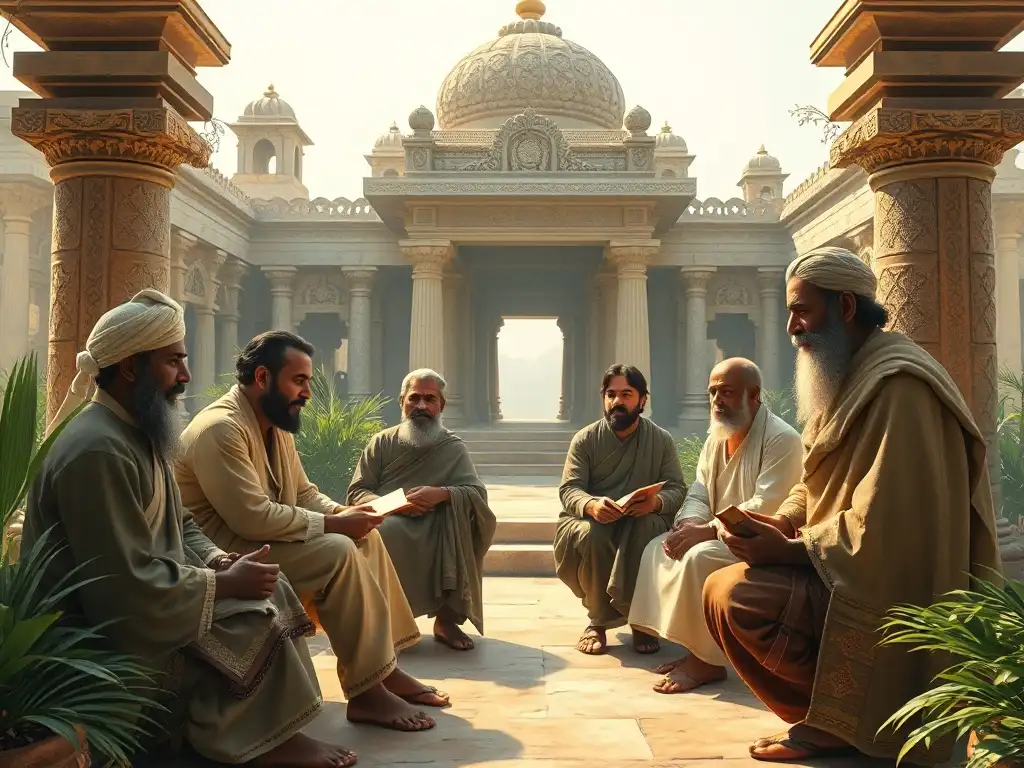
Critiques from Other Indian Philosophical Schools
Nyaya philosophy, with its emphasis on logic and epistemology, faced numerous critiques from various Indian philosophical schools. These critiques often stemmed from differing foundational beliefs and methodologies. Each opposing school raised specific concerns regarding Nyaya's assertions, particularly its epistemological framework and its reliance on inference as a means of acquiring knowledge.
- Buddhism, for instance, challenged the Nyaya reliance on permanent objects of knowledge, emphasizing the transient nature of reality. They argued that knowledge derived from perception is inherently flawed due to the impermanence of objects.
- Jainism critiqued Nyaya's understanding of truth and reality, advocating for a more pluralistic view of reality that recognizes the multiplicity of perspectives. Jain philosophers posited that Nyaya's search for absolute truth overlooks the nuances of existence.
- Advaita Vedanta, with its non-dualist perspective, questioned the Nyaya's dualistic framework of knowledge acquisition, suggesting that it fails to account for the ultimate unity of consciousness and reality.
These critiques highlight the rich tapestry of philosophical discourse in ancient India, where each school sought to refine and redefine the understanding of knowledge, reality, and existence.
Buddhism's Perspective on Nyaya
Buddhism presents a robust critique of Nyaya philosophy, particularly focusing on its epistemological claims. Central to Buddhist thought is the doctrine of anatta (non-self) and impermanence. Here’s how Buddhism's perspective unfolds:
- Impermanence of Phenomena: Buddhists assert that all phenomena are transient, which challenges Nyaya's notion of stable and permanent objects of knowledge. This perspective raises questions about the validity of Nyaya's epistemological categories, suggesting that if objects are impermanent, knowledge derived from them can also be deemed unreliable.
- Critique of Inference: Nyaya places a heavy emphasis on inference (anumana) as a valid means of knowledge. However, Buddhists argue that inference can lead to misconceptions and does not guarantee the truth of the conclusion. They advocate for a more direct form of knowledge, such as direct perception (pratyaksha), which they consider more reliable.
- Nature of Reality: The Buddhist critique extends to the Nyaya conception of reality, which posits that reality can be comprehended through analytical reasoning. Buddhists contend that such an analytical approach is insufficient for grasping the essence of reality, which transcends conceptualization.
This Buddhist critique not only challenges the foundational assumptions of Nyaya but also invites a deeper exploration of knowledge and reality.
Jainism's Response to Nyaya Arguments
Jain philosophy offers a unique perspective in response to Nyaya's arguments, emphasizing the concept of anekantavada or the doctrine of manifold viewpoints. Here are the salient points of Jain critique:
- Multiplicity of Truth: Jains argue that truth is not singular but multifaceted. This standpoint challenges Nyaya's pursuit of an absolute truth, suggesting that what is true can vary depending on the observer's perspective. Nyaya's insistence on a definitive conclusion is viewed as overly simplistic.
- Nature of Knowledge: Jainism posits that knowledge is inherently limited by the observer's perspective, which contrasts with Nyaya's objective stance. Jains advocate that knowledge is conditioned by various factors, including the observer's sensory capacities and mental state.
- Epistemic Diversity: The Jain response highlights the limits of Nyaya's epistemological frameworks. Jains suggest that a comprehensive understanding of reality requires acknowledging and integrating multiple perspectives, thus enriching the discourse on knowledge.
This critique from Jainism emphasizes the importance of acknowledging diverse viewpoints in philosophical inquiry.
The Advaita Vedanta Critique
Advaita Vedanta, rooted in non-dualism, presents a significant philosophical challenge to Nyaya's dualistic framework. The following points summarize the critiques posed by Advaita:
- Unity of Existence: Advaita Vedanta posits that all existence is ultimately one (Brahman), which contradicts Nyaya's dualistic approach that separates the knower from the known. This viewpoint suggests that the Nyaya's insistence on analyzing knowledge as a relation between two distinct entities is fundamentally flawed.
- True Knowledge vs. Perception: Advaita philosophers argue that true knowledge transcends empirical perception and inference. They maintain that ultimate reality can only be understood through self-realization and that Nyaya’s empirical methods are inadequate for grasping the non-dual nature of existence.
- Critique of Logic: While Nyaya celebrates logic as a pathway to knowledge, Advaita Vedanta critiques this reliance, asserting that logical reasoning is limited and cannot capture the essence of reality. Instead, Advaita emphasizes direct experience and intuition as the means to understanding the ultimate truth.
The Advaita Vedanta critique significantly reshapes the philosophical landscape surrounding Nyaya, inviting deeper contemplation of the nature of knowledge and reality.
The critiques from Buddhism, Jainism, and Advaita Vedanta reveal the complexities and challenges faced by Nyaya philosophy in ancient India. Each school contributes to a rich dialogue that continues to influence philosophical thought today.
Responses from the Nyaya School

The Nyaya School of Thought, known for its rigorous logic and epistemological insights, has faced critiques from various philosophical traditions in ancient India. In response to these critiques, Nyaya philosophers developed robust rebuttals that highlight the strengths of their arguments and the validity of their epistemological frameworks. This section delves into the specific responses provided by Nyaya philosophers to challenges posed by Buddhist, Jain, and Advaita Vedanta thinkers.
Nyaya Rebuttals to Buddhist Critiques
The Buddhist school, particularly the Madhyamaka and Yogacara schools, presented significant challenges to Nyaya's assertions regarding perception and inference as valid means of knowledge. Nyaya philosophers, in their rebuttals, emphasized the following points:
- Defense of Perception:
- Nyaya argues that perception is a reliable means of knowledge that provides direct experience of reality. They counter Buddhist skepticism by asserting that sensory experiences cannot be dismissed as mere illusions, as they provide consistent and coherent information about the world.
- Example: Nyaya utilizes the example of a pot, which can be directly perceived and thus validates the epistemological framework where perception serves as a foundational means of knowledge.
- Inference as a Valid Means:
- Nyaya philosophers contend that inference (anumana) is grounded in logical reasoning, which is necessary for understanding phenomena that are not directly perceivable. They argue that the process of inferring the existence of fire from the presence of smoke is a legitimate logical deduction that cannot be undermined by Buddhist assertions.
- Key Principle: The Nyaya system emphasizes the importance of pramaṇas (valid means of knowledge), asserting that inference holds its ground as a necessary tool for knowledge acquisition.
- Critique of Buddhist Concepts of Emptiness:
- Nyaya thinkers challenge the Buddhist concept of śūnyatā (emptiness) by arguing that it leads to an epistemological contradiction. If all phenomena are empty of inherent existence, then the assertion itself must also be empty, ultimately leading to a nihilistic stance that undermines meaningful discourse.
Jain Responses to Nyaya's Epistemology
The Jain tradition, with its emphasis on non-absolutism (anekāntavāda), presents a distinct perspective that critiques the Nyaya epistemological framework. Jains argue that:
- Multiplicity of Truths:
- Jains posit that reality is multifaceted, and thus, Nyaya's reliance on strict logical categorization fails to capture the complexity of existence. They advocate that different perspectives can yield valid truths, emphasizing the need for a more inclusive epistemological approach.
- Example: The Jain view suggests that while Nyaya may focus on the existence of a pot, other interpretations (like those of the pot's utility, material composition, and its relation to the environment) are equally valid and must be considered.
- Critique of Universals:
- Jains challenge the Nyaya philosophy's handling of universals (sāmānya) by asserting that they cannot exist independently of particular instances. The Nyaya position that universals can be abstracted from particulars is critiqued for potentially leading to a misunderstanding of the nature of reality.
- Philosophical Principle: Jain philosophy emphasizes parāmarśa (the act of considering different viewpoints), which counters Nyaya's tendency to simplify complex realities into binary oppositions.
- Epistemological Pluralism:
- Jain philosophers advocate for an epistemological pluralism that acknowledges various means of knowledge, including testimony ( śabda), which they argue can provide insights that are overlooked by Nyaya's more rigid framework.
Nyaya's Defense Against Advaita Vedanta
Advaita Vedanta, with its non-dualistic approach, posits a different understanding of reality that challenges Nyaya's dualistic framework. In response, Nyaya philosophers argue the following:
- Critique of Non-Dualism:
- Nyaya counters the Advaita assertion of Brahman as the sole reality by arguing that such a perspective dismisses the validity of empirical experiences and the diverse existence of entities. They maintain that the multiplicity of objects, such as pot, cloth, and water, cannot be reduced to a singular reality without losing the richness of experience.
- Key Argument: Nyaya emphasizes that while ultimate reality may be debated, the existence of the material world is undeniable and must be accounted for in any philosophical exploration.
- Validity of Duality:
- Nyaya philosophers defend the concept of duality as essential for understanding relationships between the perceiver, the perceived, and the process of knowing. They argue that the Advaita perspective may lead to a form of solipsism that undermines the significance of interpersonal and worldly relationships.
- Philosophical Insight: Nyaya stresses that knowledge, perception, and inference are crucial for engaging with reality, and denying this leads to a disconnection from the world.
- Logical Consistency:
- In their defense, Nyaya employs logical arguments to illustrate the inconsistencies within Advaita's teachings, particularly in relation to the nature of ignorance ( avidya). They argue that if ignorance is seen as an illusion, then the means of knowledge (including logic and inference) must remain operative to dispel this ignorance effectively.
The Nyaya School has engaged deeply with critiques from various philosophical traditions, showcasing its commitment to a rigorous analysis of knowledge and reality. By responding to challenges from Buddhism, Jainism, and Advaita Vedanta, Nyaya philosophers have not only defended their epistemological positions but have also enriched the broader discourse on philosophy in ancient India.
Comparative Analysis of Nyaya and Other Schools

The Nyaya school of thought, known for its rigorous logical framework and epistemological inquiries, has always been subject to critique and comparison with other philosophical traditions in ancient India. This section delves into the comparative analysis of Nyaya philosophy in ancient India against its contemporaries, particularly Buddhism and Jainism, and its position among the six orthodox schools of Indian philosophy.
Nyaya vs. Buddhism: A Clash of Epistemologies
The fundamental differences between Nyaya and Buddhism arise primarily from their epistemological frameworks. Nyaya philosophy emphasizes the pramanas (means of knowledge) as essential tools for acquiring valid knowledge, which include perception, inference, comparison, and testimony. In contrast, Buddhism, particularly the school of Madhyamaka, challenges the very notion of inherent existence and posits that all phenomena are ultimately empty of essence (śūnyatā).
- Key Differences:
- Nature of Reality: Nyaya asserts that reality can be understood through logical reasoning and empirical evidence, while Buddhism argues for a more subjective understanding of reality, emphasizing the impermanence of all things.
- Pramanas: While Nyaya accepts a set of pramanas to establish knowledge, Buddhist epistemologists, such as Dignāga and Dharmakīrti, introduce their own criteria, focusing on the role of perception and inference but rejecting the validity of the self as a permanent entity.
The clash between these two schools also extends to ethical considerations, as the practical implications of their epistemologies influence their views on karma and liberation. For Nyaya, the logical deduction of ethical behavior is foundational, whereas Buddhism emphasizes mindfulness and the cessation of suffering through understanding the nature of reality.
Nyaya and Jainism: Divergence in Logic and Ethics
The relationship between Nyaya and Jainism reveals both complementary and divergent aspects of their philosophical inquiries, particularly in the realms of logic and ethics. While both schools value logical reasoning, their conclusions about the nature of reality and ethics differ significantly.
- Logical Framework:
- Nyaya employs a formalized system of logic and dialectics, aiming to establish truths through rigorous analysis of arguments. Jainism, on the other hand, focuses on the concept of anekāntavāda (many-sidedness), which posits that truth is multifaceted and can be understood from various perspectives.
- Ethical Implications:
- In terms of ethics, Nyaya philosophy emphasizes justice and the role of rationality in moral decision-making, proposing a structured approach to ethics derived from logical principles. Jainism, however, is rooted in the principles of non-violence (ahimsa) and truthfulness (satya), advocating for a more ascetic lifestyle to achieve spiritual liberation.
This divergence illustrates how Nyaya's logical apparatus can sometimes conflict with Jain ethical imperatives, leading to rich dialogues and critiques between the two schools.
Nyaya's Place Among the Six Orthodox Schools of Indian Philosophy
Nyaya's position among the six orthodox schools of Indian philosophy, which also include Samkhya, Yoga, Mimamsa, Vedanta, and Vaisheshika, underscores its significance in the broader philosophical landscape of ancient India.
- Integration with Other Schools:
- Nyaya's analytical approach complements the metaphysical and epistemological inquiries of other schools. For instance, its logic has been integrated into the philosophical frameworks of Vaisheshika, which focuses on atomism and the nature of substances.
- Influence on Modern Philosophy:
- The principles of Nyaya philosophy have not only influenced its contemporaries but have also shaped modern philosophical discourse in India. Its rigorous methods of reasoning and emphasis on debate have laid the groundwork for many contemporary philosophical inquiries.
Nyaya philosophy in ancient India stands as a crucial player in the philosophical dialogues of the time, continuously engaging with and responding to critiques from Buddhism, Jainism, and other schools of thought. The comparative analysis of these interactions provides a deeper understanding of the complexities and richness of ancient Indian philosophy.
The Legacy of Nyaya Philosophy

The Nyaya philosophy, one of the six orthodox schools of Indian philosophy, has left a profound impact on the intellectual landscape of ancient India. Originating around the 2nd century BCE with the foundational text Nyaya Sutras attributed to Gautama (also known as Akshapada), Nyaya is primarily concerned with logic, epistemology, and the methods of obtaining knowledge.
The legacy of Nyaya extends beyond its own tenets; it has significantly influenced various other philosophical traditions within and outside India. This school of thought emphasized critical thinking and rational discourse, which prompted other schools to refine their arguments and methodologies. As a result, Nyaya has been a pivotal force in shaping the discourse of Indian philosophy.
Influence on Later Philosophical Thought
The impact of Nyaya philosophy on later philosophical thought can be observed in several ways:
- Integration with Other Schools: Nyaya's principles were absorbed and adapted by various other philosophical systems, including Vedanta and Buddhism. For example, the Nyaya approach to logic and reasoning was utilized by the followers of Advaita Vedanta to bolster their metaphysical claims.
- Development of Logic: Nyaya's rigorous analysis of logical reasoning laid the groundwork for the development of formal logic in India. The detailed examination of inference (anumana) and its conditions has influenced later thinkers, who built upon these ideas to construct more complex systems of logic.
- Debate and Discourse: The Nyaya philosophy encouraged a culture of debate, which became integral to the scholarly traditions of ancient India. This environment fostered the growth of dialectics and critical examination across various philosophical schools, promoting a spirit of inquiry that was essential for intellectual advancements.
- Ethics and Epistemology: Nyaya's exploration of the nature of knowledge and the processes of perception and inference have enriched ethical discussions within other schools. The emphasis on valid means of knowledge (pramana) informed the ethical frameworks developed by later philosophers.
Nyaya Philosophy in Contemporary Context
In the contemporary context, Nyaya philosophy continues to attract interest from scholars and philosophers alike. The resurgence of interest in Indian philosophical traditions has led to a reevaluation of Nyaya's contributions to logic and epistemology. Some of the key aspects of its relevance today include:
- Interdisciplinary Studies: Modern scholars are increasingly recognizing the value of Nyaya's logical frameworks in various disciplines, including cognitive science, artificial intelligence, and legal theory. The structured approach to reasoning and argumentation provides insights that are applicable in diverse fields.
- Philosophical Dialogues: The principles of Nyaya can contribute to contemporary philosophical dialogues, especially in areas concerning ethics, morality, and the nature of truth. Its emphasis on rational discourse is particularly pertinent in today's polarized intellectual climate.
- Educational Initiatives: Institutions focusing on Indian philosophy are beginning to incorporate Nyaya studies into their curricula, recognizing its foundational role in the development of logical thought. This educational effort aims to foster a deeper understanding of ancient Indian philosophical traditions among new generations of thinkers.
The legacy of Nyaya philosophy remains vital in shaping both historical and contemporary philosophical discourse, demonstrating its enduring significance in the quest for knowledge and understanding. The challenges it faced from other schools, and the responses it formulated, continue to inform philosophical inquiry, making the study of Nyaya philosophy an essential pursuit for those interested in the rich tapestry of ancient Indian thought.
Conclusion

Summary of Challenges and Responses
The Nyaya philosophy, one of the six orthodox schools of Indian philosophy, has faced various critiques and challenges from other philosophical traditions throughout its history. Notably, the primary critiques have emerged from schools such as Buddhism, Jainism, and even Advaita Vedanta. Each of these schools has raised significant objections regarding the epistemological foundations and logical rigor of Nyaya thought.
- Buddhism: The Buddhist philosophers challenge the Nyaya's reliance on sense perception and inference as valid means of knowledge. They argue that perception is inherently subjective and can lead to erroneous conclusions. This critique is rooted in the Buddhist doctrine of anatta (non-self), which posits that there is no permanent self to perceive and thus questions the stability of knowledge acquired through sense perception.
- Jainism: The Jain critique focuses on the concept of anekantavada, or the doctrine of non-absolutism. Jains argue that Nyaya's deterministic approach fails to account for the multifaceted nature of reality. They contend that reality cannot be fully captured through rigid logical structures and that a more nuanced understanding is essential.
- Advaita Vedanta: Philosophers from this school criticize Nyaya for its dualistic approach and insistence on the existence of a permanent self. Advaita proponents argue that ultimate reality is non-dual ( advaita), and thus the distinctions made by Nyaya between the observer and the observed are misguided.
In response to these critiques, the Nyaya school has defended its principles by refining its epistemological frameworks and emphasizing the importance of logical analysis. Nyaya philosophers have engaged in extensive debates, illustrating the robustness of their arguments while also integrating insights from opposing views. This dynamic interchange has allowed Nyaya thought to evolve, showcasing its adaptability and resilience in the face of philosophical challenges.
The Relevance of Nyaya Philosophy in Modern Discourse
The relevance of Nyaya philosophy extends beyond its historical context and continues to influence modern philosophical discourse. In contemporary discussions on epistemology, logic, and ethics, Nyaya's rigorous analytical methods offer valuable insights.
- Epistemology: The Nyaya framework of pramanas (means of knowledge) remains significant in understanding the nature of knowledge. Its systematic approach to categorizing different sources of knowledge—perception, inference, comparison, and testimony—provides a comprehensive model that is applicable in various fields, including cognitive science and artificial intelligence.
- Logic: Modern logical theories can benefit from the Nyaya's emphasis on valid reasoning and structured argumentation. The Nyaya syllogism, with its emphasis on clarity and rigor, aligns closely with contemporary logical frameworks, fostering a deeper understanding of argumentation techniques.
- Ethics: Nyaya's exploration of the relationship between knowledge and moral responsibility offers a foundation for contemporary ethical discussions. The idea that knowledge should lead to virtuous action resonates with current debates on moral philosophy, emphasizing the importance of informed decision-making.
The challenges posed to Nyaya philosophy by other schools have not diminished its significance. Instead, these critiques have fostered a rich dialogue that underlines the enduring relevance of Nyaya thought in understanding complex philosophical issues in both ancient and modern contexts. By examining Nyaya philosophy in ancient India, we not only gain insight into historical debates but also appreciate its contributions to the ongoing discourse in philosophy today.
Frequently Asked Questions
What is Nyaya philosophy in ancient India?
Nyaya philosophy is a school of thought in Hinduism that focuses on logic and epistemology, aiming to establish a systematic method for acquiring knowledge and understanding reality.
How did the Nyaya school respond to critiques from other philosophical schools?
The Nyaya school addressed critiques by refining its arguments, emphasizing logical reasoning, and demonstrating the validity of its methods through rigorous analysis and debate with other schools like Buddhism and Advaita Vedanta.
What were some key challenges faced by Nyaya philosophy?
Nyaya philosophy faced challenges primarily from Buddhism, which questioned its epistemological foundations, and Mīmāṃsā, which critiqued its reliance on inference over textual authority.
How did Nyaya contribute to the overall landscape of ancient Indian philosophy?
Nyaya significantly influenced the development of logic and debate techniques in ancient India, establishing a framework that would later be adopted and adapted by other philosophical schools.
Why is the study of Nyaya philosophy important for understanding ancient Indian civilization?
Studying Nyaya philosophy provides insights into the intellectual traditions of ancient India, illustrating how philosophical discourse shaped cultural and spiritual developments in the region.
Final Reflection: The Enduring Legacy of Nyaya Philosophy in Ancient India
In exploring the challenges and responses of Nyaya philosophy, we uncover a rich tapestry of intellectual discourse that remains profoundly relevant today. The debates surrounding Nyaya not only shaped ancient Indian thought but also laid the groundwork for critical thinking and logical reasoning that we continue to value in contemporary society. The resilience of Nyaya philosophy amidst critiques from other schools illustrates its foundational role in the evolution of philosophical inquiry, reminding us that the pursuit of knowledge is an ongoing journey.
The influence of Nyaya extends beyond its historical context, permeating the cultural and social landscape of modern India. As we navigate the complexities of our own beliefs and values, the principles of Nyaya encourage us to engage critically with differing perspectives. The dialogues initiated by Nyaya scholars foster a spirit of inquiry that is essential in today’s world, where understanding and tolerance are paramount. The unexamined life is not worth living,
as Socrates famously stated, resonates with the essence of Nyaya, urging us to question and reflect on our assumptions.
As we conclude this exploration of Nyaya philosophy, I invite you to reflect on how these ancient teachings can inform your own understanding and approach to life's challenges. Consider how the principles of logic, debate, and reason can enhance your interactions and decision-making processes.
Embrace the spirit of inquiry that Nyaya embodies, and let it inspire you to seek deeper truths in your own life and the world around you. The legacy of Nyaya is not just a relic of the past; it is a call to action for all who seek wisdom and clarity in an increasingly complex world.
Embrace the Wisdom of Ancient Debates!
Thank you for diving into the intriguing world of Nyaya and its philosophical challenges! Your interest in the diverse schools of thought in ancient Indian philosophy enriches the conversation and helps us all understand these complex ideas better.
Now, it's time to take that newfound knowledge and put it into action:
- Engage in a discussion: Join a local philosophy group or participate in an online forum. Share your insights and hear different perspectives on Nyaya and its critiques!
- Explore further: Read works from other philosophical traditions, such as Buddhism or Jainism, to deepen your understanding of how they respond to Nyaya's assertions.
- Share your thoughts: Write a blog post or social media update reflecting on what you learned. Encourage your friends or followers to explore these fundamental questions together.
What is one idea from Nyaya's critique that resonates with you the most, and how might it influence your thoughts or beliefs today?